 Serpa
Serpa
Overview of the ‘Caminho dos Rios’ loft, featuring a neon installation and Amazonian vegetation at the entrance. Photo: Studio Tuca
Designed by Studio Tuca, the architecture and design firm led by Tuane Costa, the loft ‘Caminho dos Rios’ represents the state of Pará at the inaugural show, celebrating Amazonian identity through local materials, indigenous art, and ancestral knowledge.
SÃO PAULO | March 31, 2026 | Updated at 09:00 a.m.
Inspired by the hydrographic network of the state of Pará, the loft ‘Caminho dos Rios’ is featured in the inaugural edition of the Brazilian Architecture Biennial (BAB), an event held in São Paulo with the goal of bringing architecture closer to everyday Brazilian life. Conceived by Studio Tuca, the firm led by architect and designer Tuane Costa, the project represents the state of Pará at the show and offers a sensory immersion built around the power of the rivers that shape space, culture, and life in the Amazon. Opening in 2026, the BAB brings together diverse voices in national architecture through an experience that goes far beyond a conventional exhibition.
Anchored in the hydrographic map of Pará, the project rests on a clear premise: rivers are the heart of the world, pulsing and essential to the existence of life on the planet. Territories such as Xingu, Guamá, Marajó, and Tapajós serve as narrative axes that organize the flow between the loft’s spaces, creating what the studio calls a living map. Each area tells the story of a different region through forms, textures, scents, and materials carefully selected to compose a fully immersive experience.
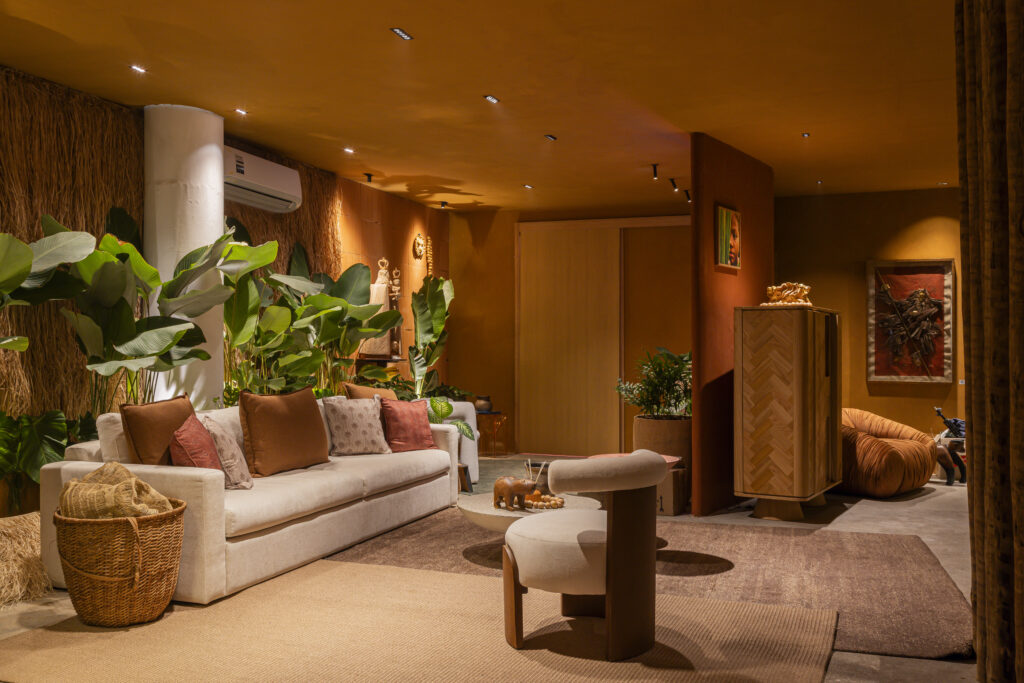
Living room with buriti straw-covered wall and lush tropical vegetation. Photo: Studio Tuca
Silk dyed with brazilwood, miriti palm, buriti straw, and Marajoara graphic patterns are not mere decorative elements in this project. Rather, they are constitutive components of the concept, responsible for translating ancestral knowledge into a contemporary expression of Amazonian living. Craftspeople and artists from across Brazil helped build this material narrative, with particular emphasis on creators from Ceará, São Paulo, and above all, Pará, the state that concentrates the majority of the project’s collaborators.
“Rivers are the heart of the world, pulsing and essential to the existence of life on this planet. Architecture translates that idea into every detail of the space, connecting territory, memory, and everyday life.”
Marble evoking the river inlets, playful lighting designed to create distinct atmospheres in each room, and a careful curation of indigenous art from various ethnic groups make up the project’s visual collection. All of these elements seek to preserve a unique cultural heritage while entering into dialogue with contemporary artistic production from Pará. Accessories curation was handled by Verobio, and the indigenous art collection was sourced by Canoa Indígena, a national reference in the preservation and promotion of native Brazilian production.
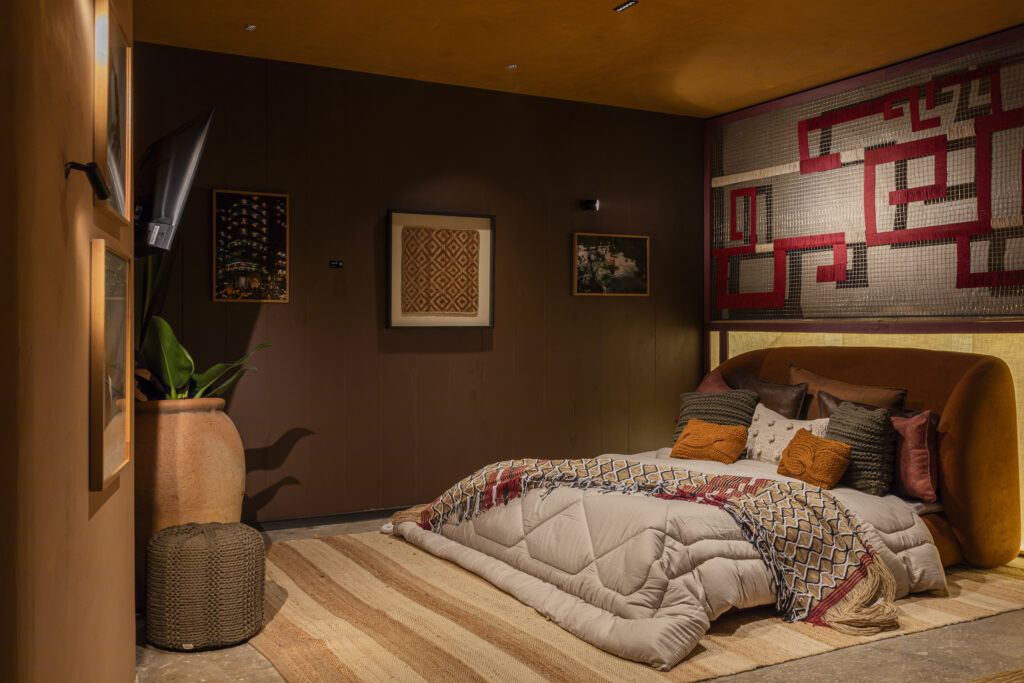
Bedroom featuring a Marajoara graphic pattern panel and a work of art from Pará in the background. Photo: Studio Tuca
Sustainability and innovation in the use of forest resources are central pillars of the proposal. Design solutions were deeply informed by local materiality and craft, revealing creative responses to the specific environmental conditions of the Amazon. Rainfall — vital to the regional ecosystem — is celebrated as both a symbolic and aesthetic element throughout the loft, reinforcing the idea that nature is not a backdrop but an active agent of architecture.
Fluid circulation between the spaces draws on the dynamics of navigating the rivers of Pará. Just as a traveler journeying through the waterways encounters distinct landscapes, peoples, and cultures around each bend, visitors to the loft are guided through a sequence of sensory experiences that shift along the way. Lighting, scent, texture, and sound combine to create the sensation of being immersed in a living, ever-moving territory.
The Studio and the Architect
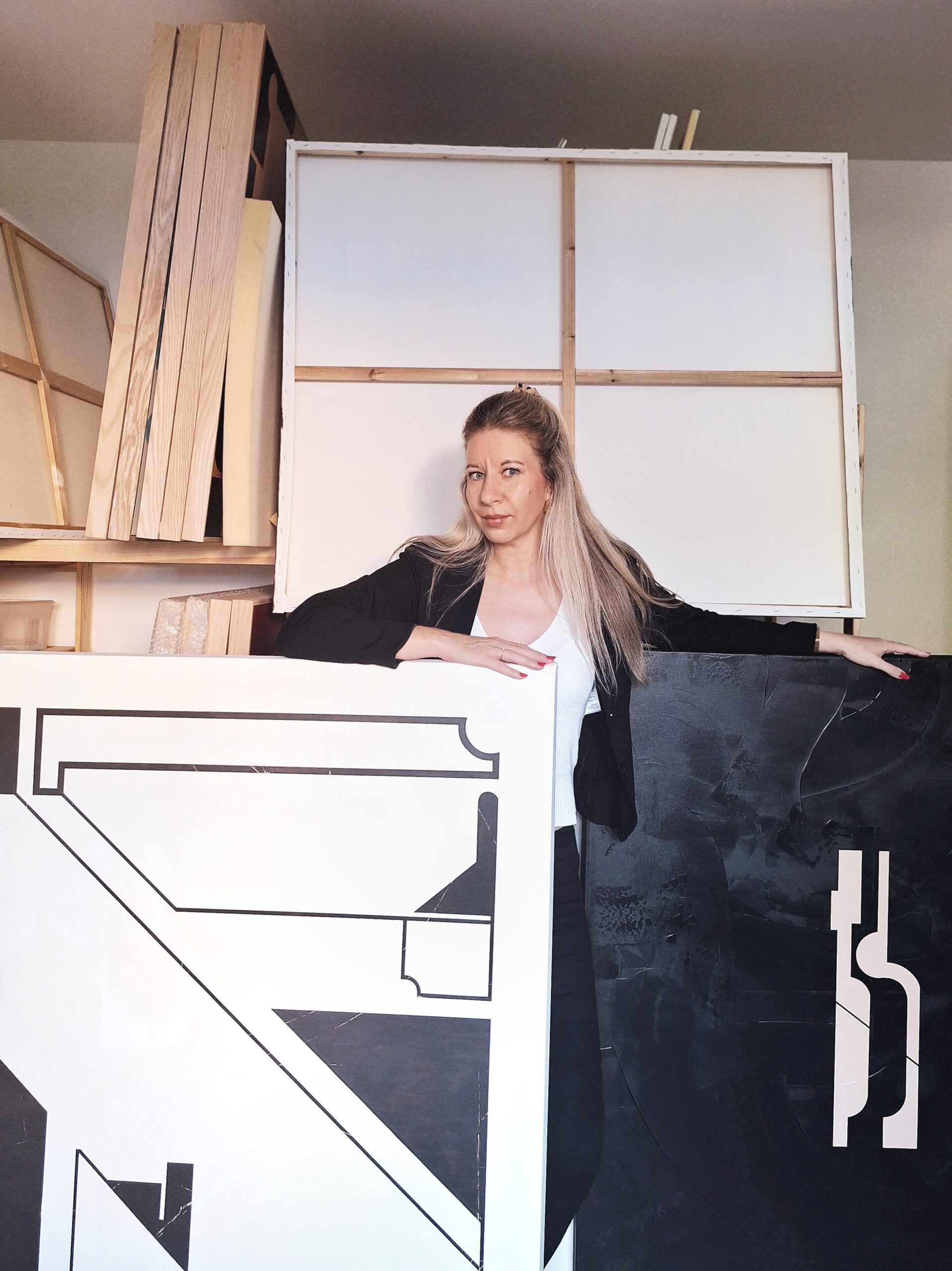
Architect and designer Tuane Costa poses alongside a work from the project’s art collection. Photo: Studio Tuca
Founded in 2013 and based in Belém, Studio Tuca develops commercial, residential, and event projects with a presence in cities such as Belém, São Paulo, and Rio de Janeiro. Led by Tuane Costa, the firm has built, over more than a decade, a distinctive language — contemporary and creative — that draws on rare raw materials from the Amazon region and delivers design of high aesthetic and cultural impact. With its participation in the BAB, the studio now brings that language to the center of the national architectural debate.
Years of research into sustainability and cultural preservation define the studio’s portfolio, weaving consumer behavior and storytelling into every intervention. For Tuane Costa, architecture is a narrative tool: each project tells a story, and that story must be rooted in the place where it unfolds. In the case of ‘Caminho dos Rios,’ what is being told is the story of Pará in all its complexity, diversity, and creative power.
The Spaces
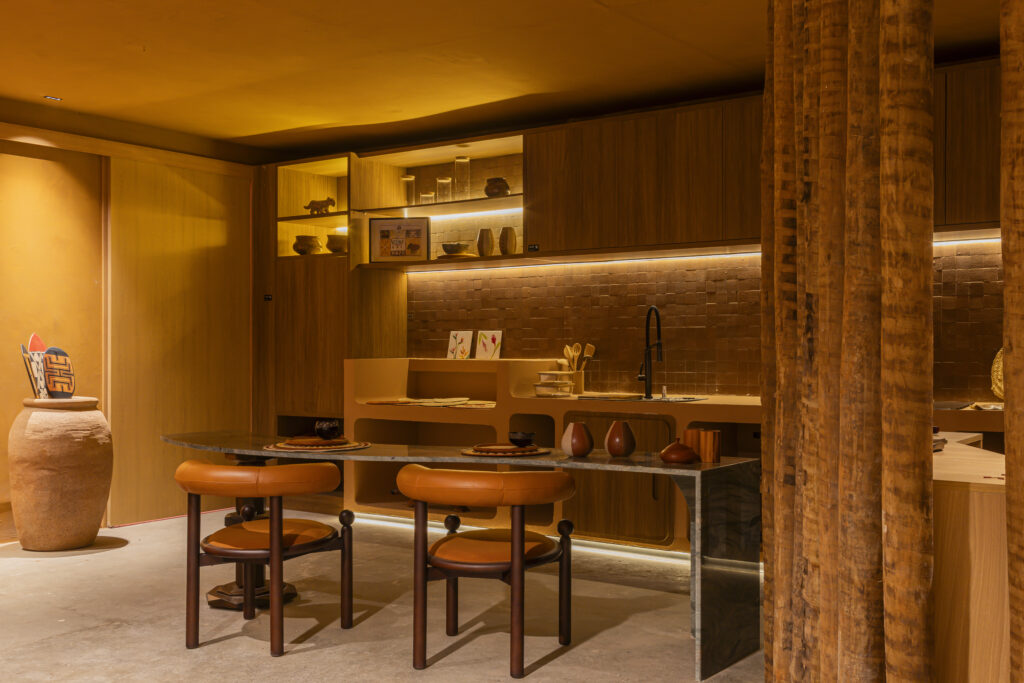
Open kitchen with marble countertop, natural wood cabinetry, and leather accents. Photo: Studio Tuca
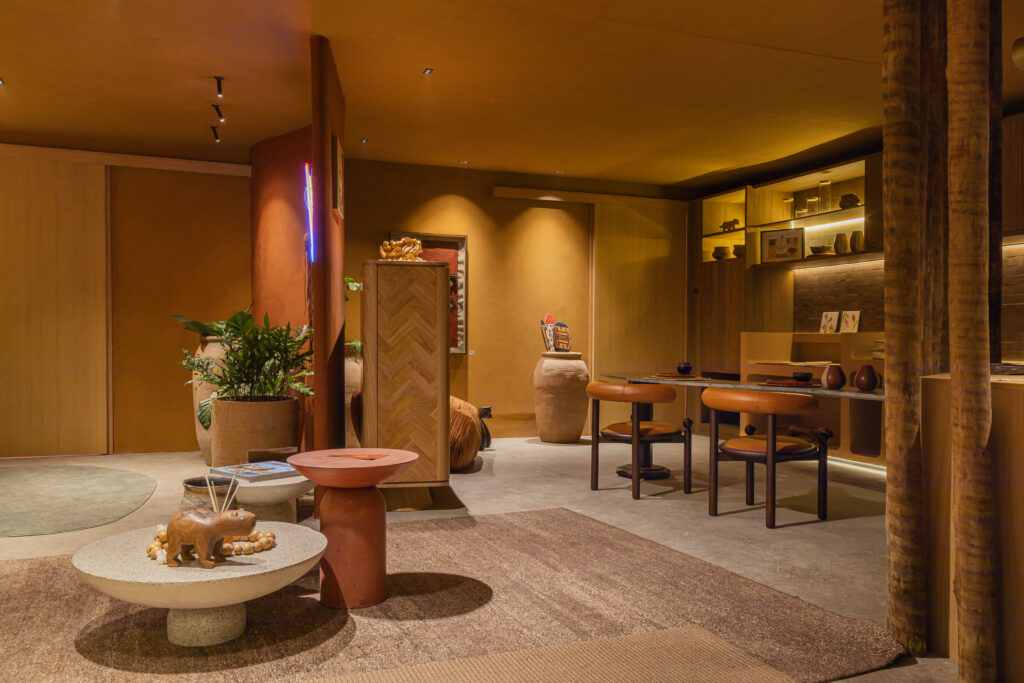
Every space in the loft was conceived as a distinct chapter within the same narrative. An open kitchen, with a marble countertop that visually recalls the inlets and curves of Pará’s rivers, blends regional aesthetics with everyday functionality. Natural wood millwork, handcrafted ceramic pieces, and warm lighting evoke the atmosphere of riverside living without sacrificing contemporary comfort.
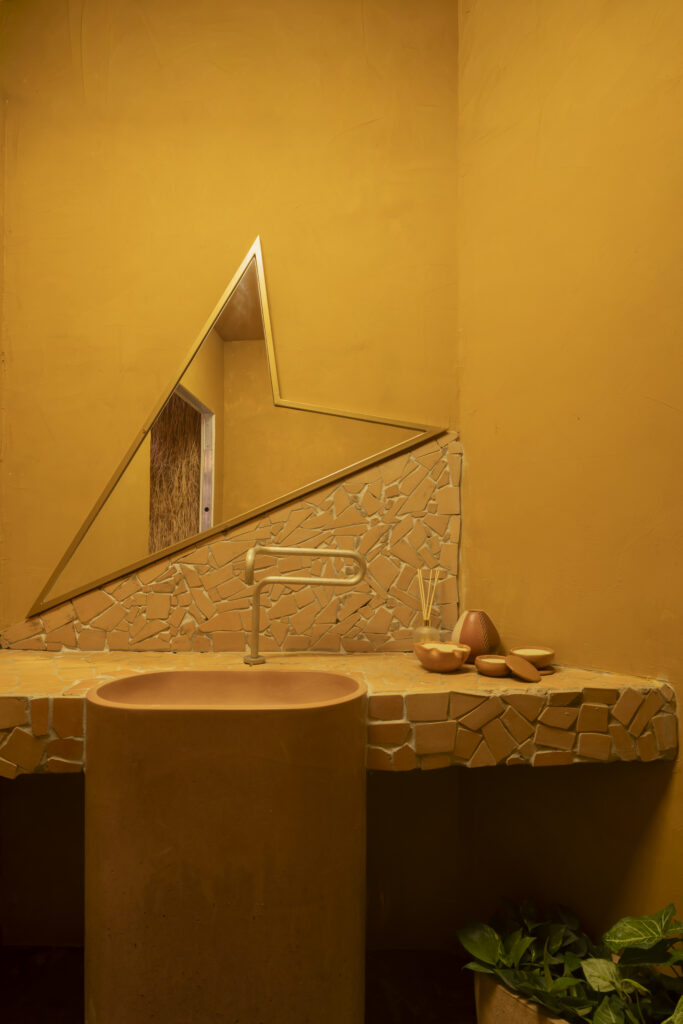
Powder room with clay vessel sink, triangular mirror, and neon sign referencing the Amazonian sky. Photo: Studio Tuca
A wash of intense yellow in the powder room evokes the Pará sun and the humid warmth of the rainforest. A raw clay sink, a triangular-cut mirror, and a neon sign spelling ‘the sky’ across the ceiling come together in a composition that mixes craftsmanship, wit, and visual poetry. Every detail was chosen to provoke an immediate sensory reaction, expanding the experience well beyond the functional.
The Biennial
Created in São Paulo and conceived for all of Brazil, the Brazilian Architecture Biennial was founded with the goal of bringing architecture closer to the daily lives of Brazilians, presenting it as a practical, cultural, and human-centered tool for transforming spaces. More than a conventional exhibition, the BAB aims to be an immersive and educational experience, bringing together different voices, territories, and ways of living within a single space for encounter and reflection.
In its inaugural edition, the event gathers real-life installations, sensory activations, brand showcases, and a platform for emerging talent. Visitors are not meant to merely observe architecture but to live it, understanding in concrete terms how the design of spaces shapes quality of life, human relationships, and the cultural expression of each territory. In this context, the presence of the Pará-based project represents an affirmation of regional diversity as a core value of national architecture.
Team and Suppliers
An extensive network of collaborators from across Brazil came together to realize the project. Among the participating artists and designers are Aline Folha, Bárbara Savannah, Erica Saraiva, Lorena Fadul, Marinando Santos, Natalia Costa, Nelson Nabiça, and Tereza Maciel — all with established careers in Pará — as well as M Massuci from Ceará, and AP Luan Colares and Tiago Tormin from São Paulo. This diverse composition reinforces the project’s mission to build bridges between Pará’s creative output and the rest of the country.
Execution was carried out by BAB and LarqHouse, with millwork by Priori and J&J Marcenaria. Official suppliers include brands such as Electrolux, Suvinil, Flora, Zissou, Breton, and Westwing. Lighting was designed by Maisluz and La Lampe; marble was supplied by WM Mármores; landscaping by Favva Paisagismo, with planters by Jatti. Media production was handled by Imersa Criativa, and the ambient fragrances were developed by Santé Nutrir and Lenvie.
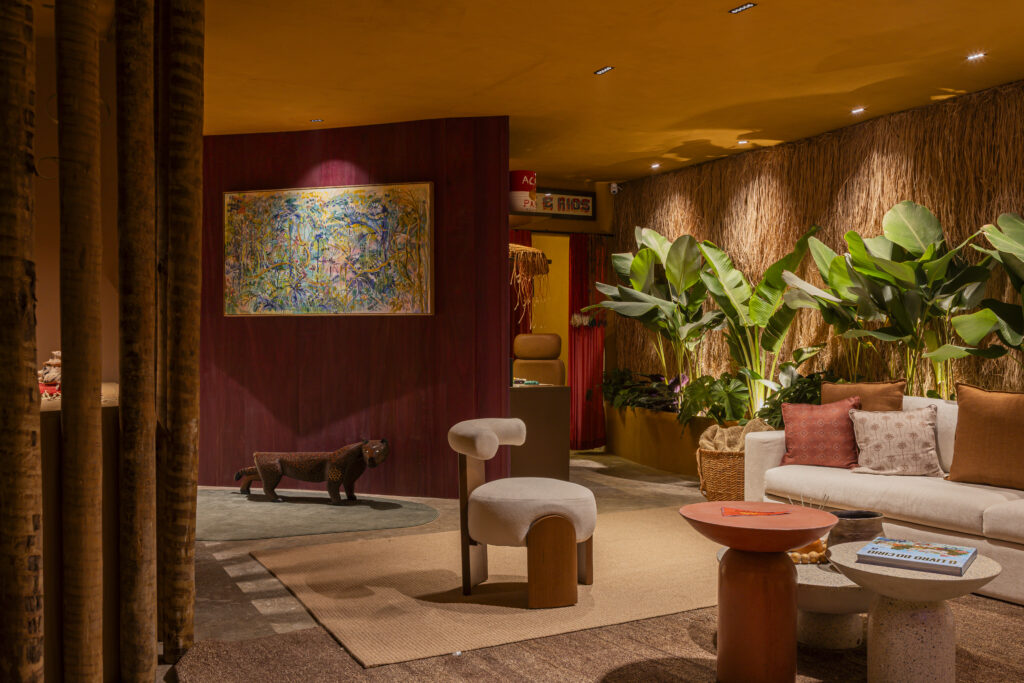
Detail of the living area with a contemporary designer chair and buriti straw wall in the background. Photo: Studio Tuca
Sponsored by Setur (Pará State Tourism Secretariat), Sebrae/PA, and Boteco Meu Garoto, with support from Assobio, ‘Caminho dos Rios’ arrives at the Biennial as the synthesis of a research journey rooted in listening and creation deeply tied to the Amazon. What Studio Tuca brings to São Paulo audiences is an architecture of territory and memory — one that pursues sensitivity and innovation to express the strength and beauty of Amazonian life, asserting Pará as a legitimate and urgent protagonist of contemporary Brazilian architecture.
VISITOR INFORMATION
Exhibition: Brazilian Architecture Biennial (BAB)
Project: Caminho dos Rios – Studio Tuca – @studiotuca
Dates: March 25–April 30, 2026
Hours: Noon–7 p.m.
Location: Ibirapuera Park, São Paulo, Brazil
Website: https://www.bienaldearquiteturabrasileira.com/