 Serpa
Serpa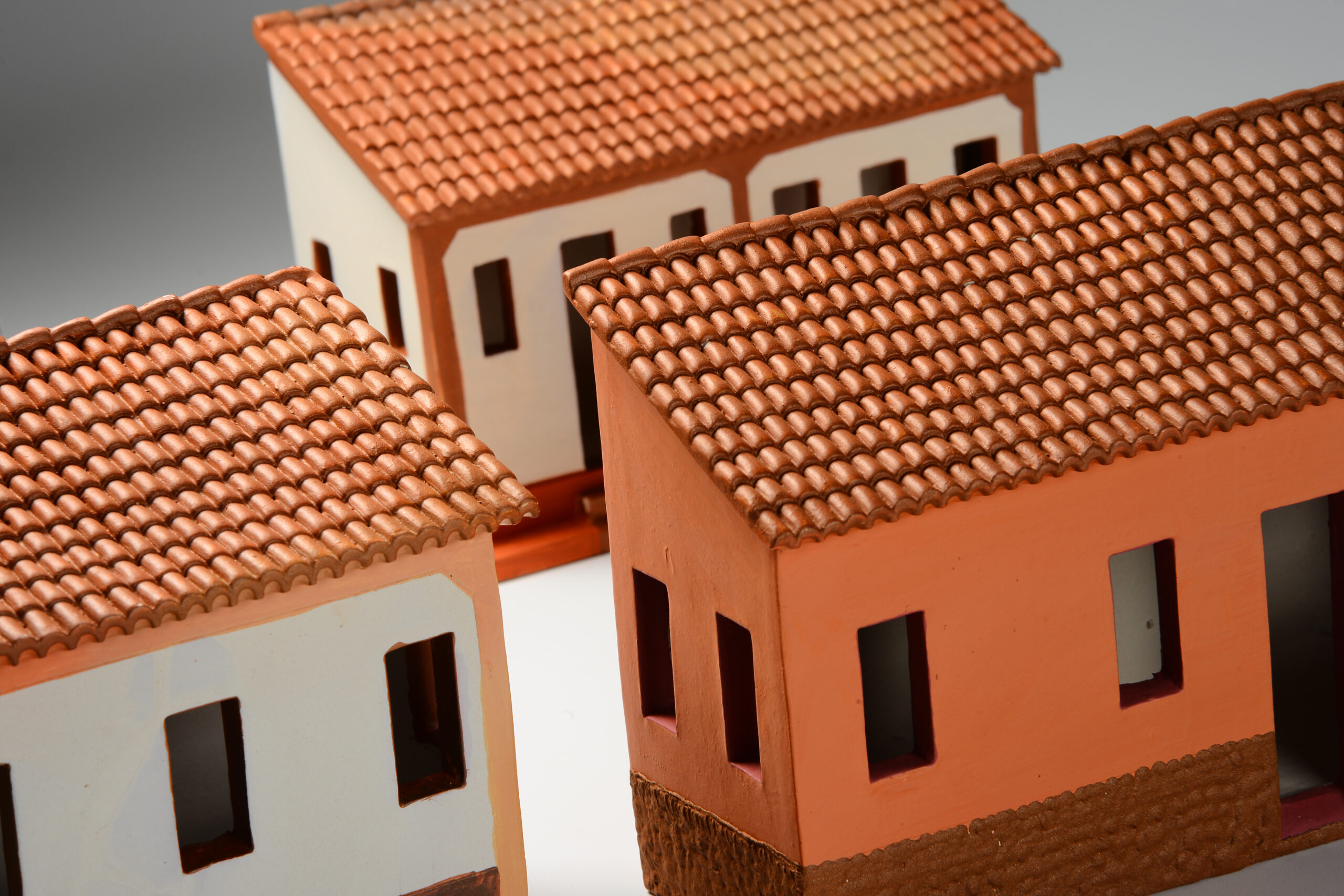
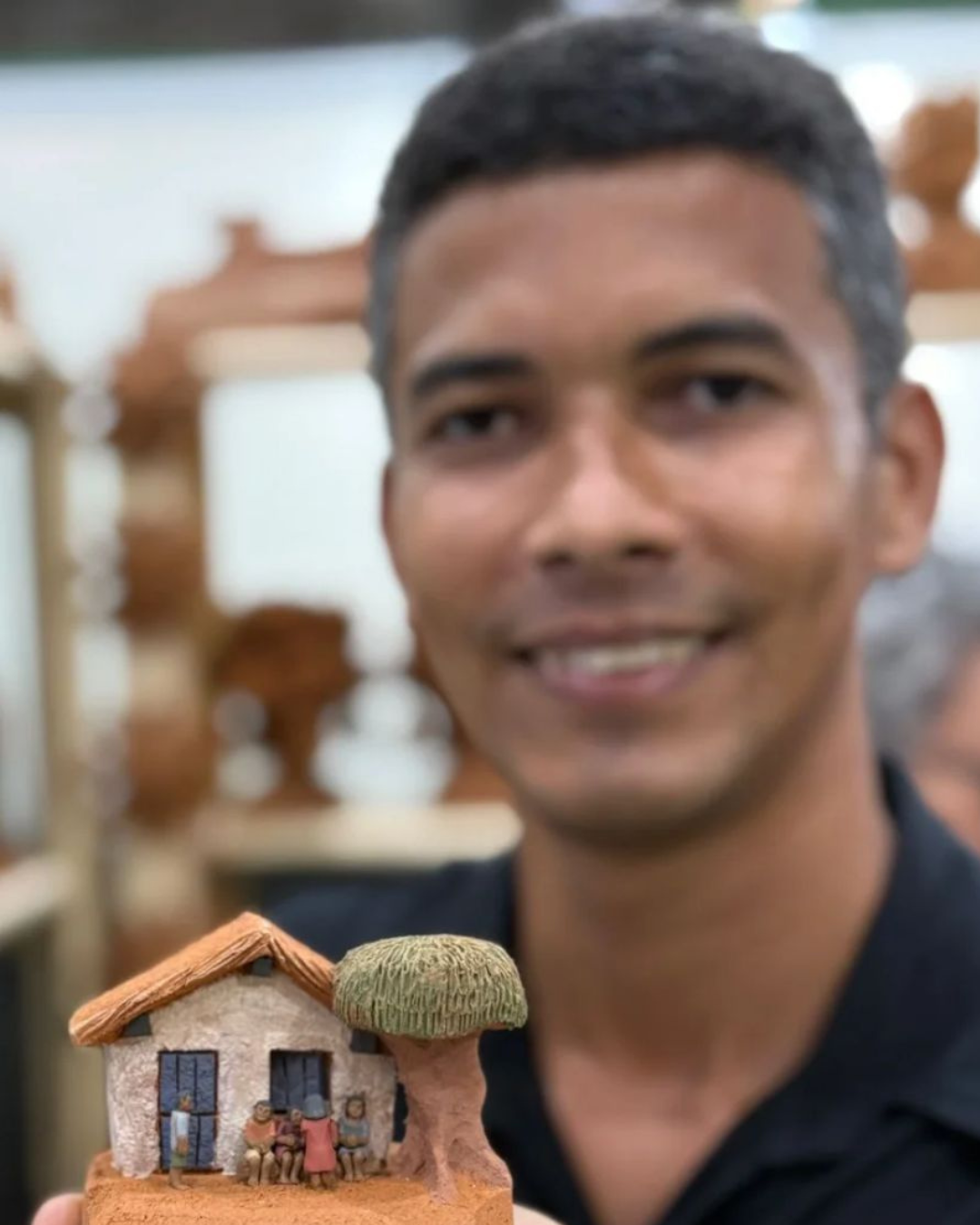
Ceramic houses inspired by the architecture of Cachoeira do Fanado, one of the four communities represented in the Paris exhibition. Photo: Courtesy.
Sebrae Minas and the Minas Gerais state government bring 150 sculptures from four mining communities to Maison & Objet and a parallel exhibit in the Marais neighborhood.
Parisian Exhibit Brings Together Ceramics From Minas Gerais
Ceramic pieces made by artisans from the Jequitinhonha Valley, in Minas Gerais, land in Paris in September to take over two of international design’s leading stages. About 150 sculptures, created by artisans from four communities in the region, will be shown at Maison & Objet Paris 2026, Sept. 10-14, and at the Ricardo Fernandes Gallery, in the Marais district, Sept. 8-18. A partnership between Sebrae Minas and the Minas Gerais state government, through the State Secretariat of Economic Development (Sede), is behind the initiative.
Held twice a year in the French capital, the event is considered by the industry one of the leading indicators of trends in decor, architecture, design and lifestyle. It draws thousands of exhibitors and visitors from dozens of countries and typically generates business between creators and international buyers.
In the 2026 edition, Sebrae Minas will have a booth dedicated to handcrafted ceramics from the Jequitinhonha Valley, bringing together works exclusively from artisans in the communities of Campo Alegre, Coqueiro Campo, Santana do Araçuaí and Cachoeira do Fanado.
A parallel exhibit, titled “The Earth Shaped by Art: Jequitinhonha Valley,” occupies space at the Ricardo Fernandes Gallery, in the heart of the Marais, a Parisian neighborhood historically linked to art galleries and studios. Gallery owner Ricardo Fernandes curated the show.
Under the Curatorial Lens
Marco Aurélio Pulchério, curator of the exhibit at Maison & Objet, believes crafts from the Jequitinhonha Valley carry expressive strength capable of drawing international attention. “Curating the sculptures was a challenging yet extremely rewarding process,” he said. According to him, even though he had known the region’s output for years, following the artisans’ creative process up close was an experience that surprised him.
Fernandes, the gallery owner behind the Marais show, describes the space as an open door to human reflection and recalls the legacy of Dona Izabel, a ceramicist who brought together a collective of artisans around her work. “We expect the gallery to serve as a tool for expanding this knowledge and, over time, to establish this heritage as a historic and cultural landmark for the world,” he said.
Marcelo de Souza e Silva, chairman of the Sebrae Minas deliberative council, said the international market seeks authenticity, provenance and original craftsmanship, qualities the region offers in abundance. For him, the presence at Paris Design Week strengthens an ongoing effort to build skills, expand market access and elevate traditional knowledge.
Nearly 20 Years of Work
For more than 20 years, Sebrae Minas has worked in the Jequitinhonha Valley to strengthen local governance, business management, entrepreneurship, digital presence and access to better-qualified markets. In 2019, that work entered a new chapter with the creation of the Identity and Origin project, aimed at promoting the cultural elements that set the region apart.
Two years later, the Jequitinhonha Valley Territory Brand emerged, developed by the region’s Council of Artisans in partnership with Sebrae Minas. It helps publicize the origin of the pieces, raise the territory’s profile and encourage crafts as a source of income for the families involved.
Survey data from Sebrae Minas show that efforts to promote local knowledge, traceability and market access generated an average revenue increase of 30% for artisans in recent years, boosting the region’s economy and expanding opportunities for hundreds of families.
Artisans’ Journey to Paris
Five artisans make up the delegation, bringing to Paris their own pieces along with the stories of their families and communities. Among them is Andréia Andrade, granddaughter of ceramicist Dona Izabel, known as the Clay Lady of Jequitinhonha and creator of the moringa dolls that became a symbol of the region.
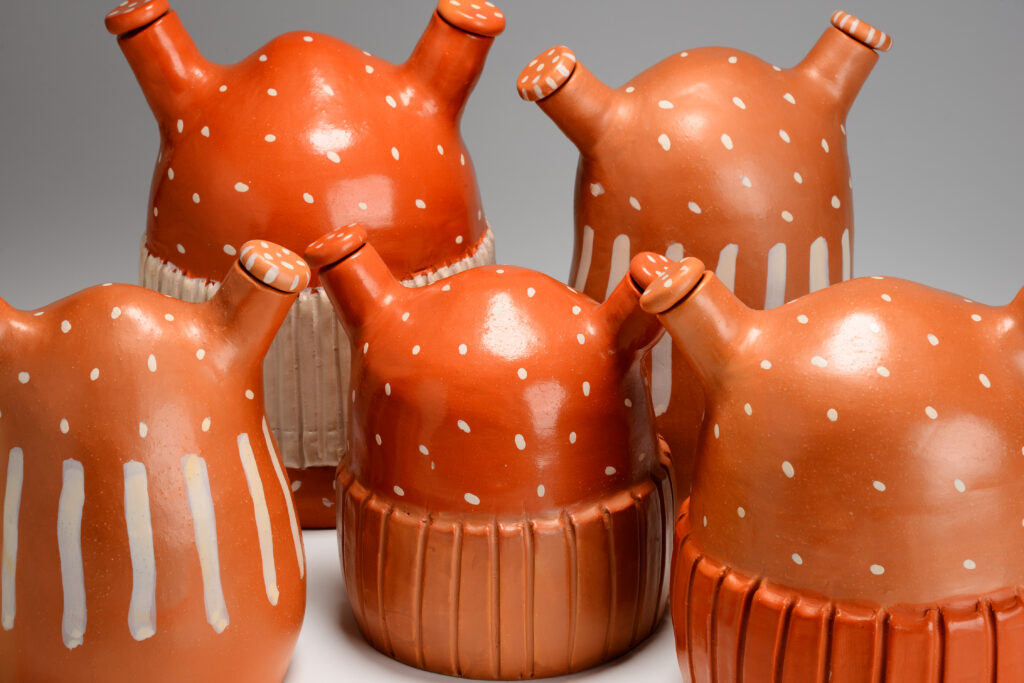
Polychrome ceramic moringa vessels, a technique associated with the legacy of Dona Izabel, the “Lady of the Clay” of Jequitinhonha, in Santana do Araçuaí. Photo: Courtesy.
Inspired by her grandmother’s work, Andréia brings ceramic bride dolls to Paris, along with a sculpture honoring the matriarch. “Each piece carries the stories, memories and legacy of a family that turned art into cultural heritage and continues to conquer new spaces around the world,” she said.
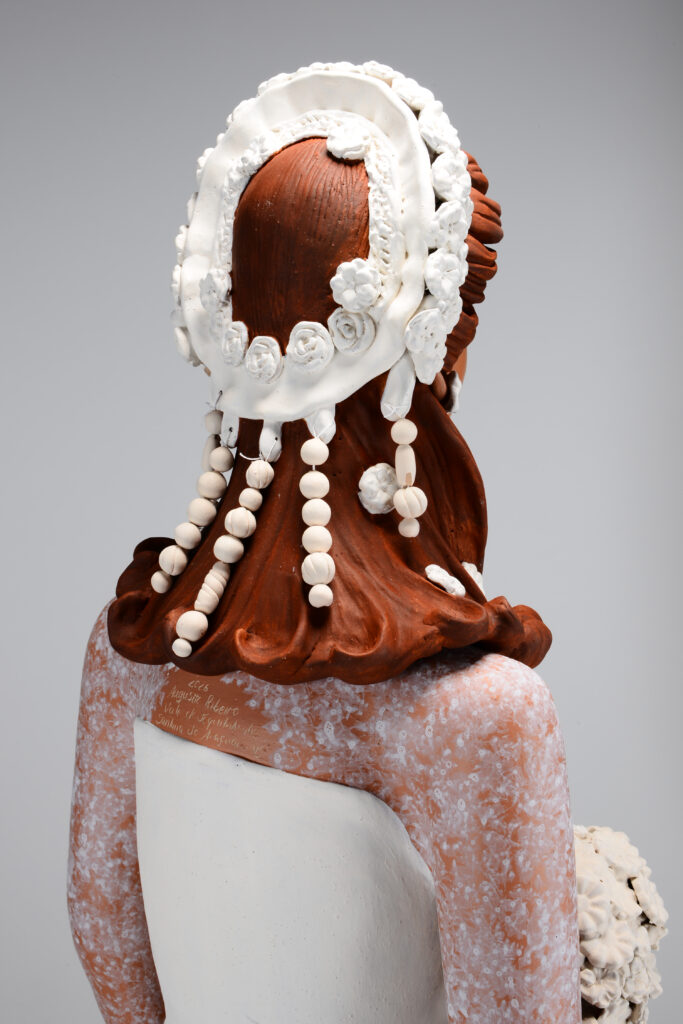
Close-up of the veil of a ceramic bride doll, a piece from Santana do Araçuaí that pays tribute to the legacy of Dona Izabel. Photo: Courtesy.
Augusto Ribeiro, a neighbor of Andréia’s in Santana do Araçuaí, traded toys for clay as a boy and grew into a tradition sustained for generations by women artisans in the region. He selected pieces for the trip that reflect different layers of his work. “When one of my dolls gets recognized, I feel that my story, my family’s history, the work of the women who came before me and the culture of the Jequitinhonha Valley are also being seen,” he said.
Growing up in Campo Alegre, Anísia Lima learned the craft at age 8, watching her mother shape utilitarian pieces, and never stopped. She recalls that participating in national fairs had already taken her work to cities such as Recife, Brasília, São Paulo and Rio de Janeiro. “My main dream is coming true, showing my craftwork outside Brazil,” she said.
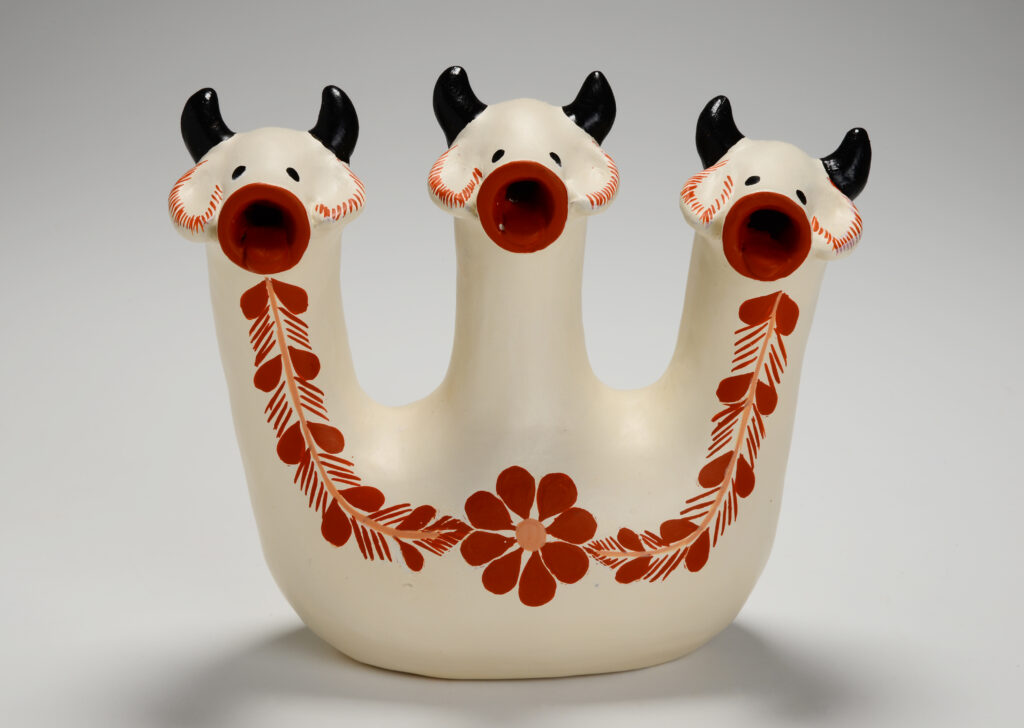
A utilitarian ceramic piece from Campo Alegre, a community where artisans like Anísia Lima have been learning the craft since childhood. Photo: Courtesy.
Alice Costa, a member of the Cachoeira do Fanado community, began working in crafts as a child and never imagined the small ceramic houses inspired by her region’s dwellings would cross the Atlantic. For the artisan, each piece carries a fragment of her community’s history and identity. “I go with a heart full of joy, pride and responsibility, carrying with me the certainty that dreams can come true when built with dedication, love and perseverance,” she said.
Rounding out the group of five, Adriana Xavier began modeling clay sculptures at age 10 in the community of Campo Alegre, in Turmalina, and brings to Maison & Objet ceramic dolls of different sizes, the piece she is best known for. She recalls that she carries to Paris the journey of 52 women from the Campo Buriti Artisans Association, along with other artisans from the region. “We’re very proud that our work is being recognized internationally,” she said.
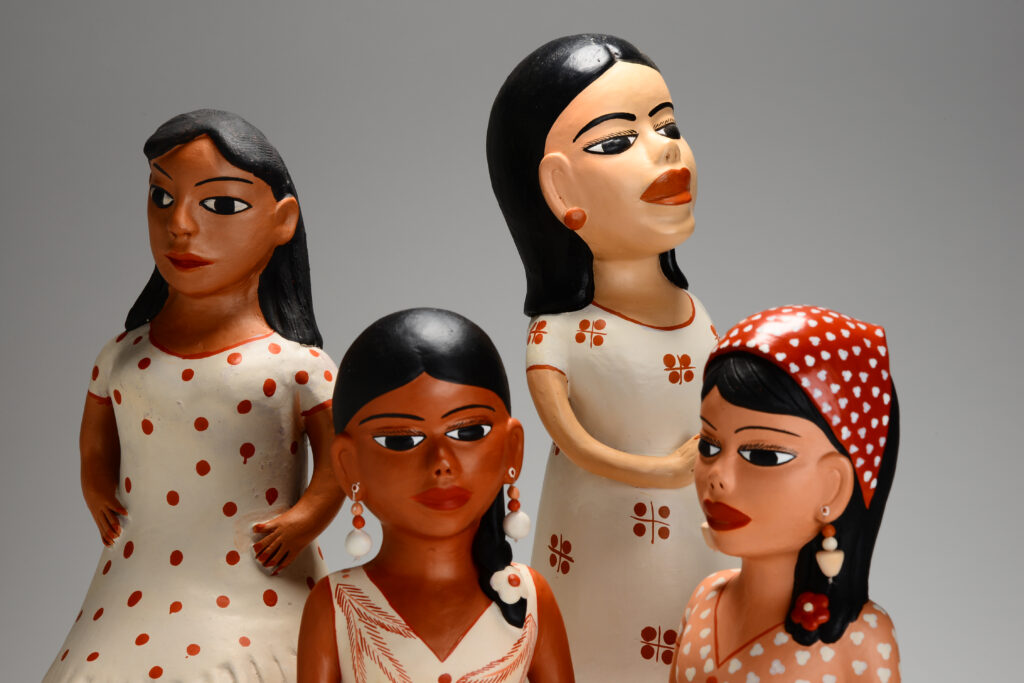
Ceramic dolls of various sizes, a signature technique of Adriana Xavier, an artisan from Campo Alegre. Photo: Courtesy.
Authenticity Drives the Market
Work like this, organizers say, responds to a market that increasingly values authenticity as a mark of luxury. Appearances at Maison & Objet and the Ricardo Fernandes Gallery open the door to connections with galleries, specialty stores and architecture and interior design professionals interested in original work whose cultural value is recognized across the industry.
Vale do Jequitinhonha — Paris 2026
When: Sept. 8–18, 2026 (Maison & Objet: Sept. 10–14)
Where: Paris Design Week venues — Maison & Objet Paris and Ricardo Fernandes Gallery
Exhibition: A Terra Modelada pela Arte – Vale do Jequitinhonha at Ricardo Fernandes Gallery
Region: Vale do Jequitinhonha, Minas Gerais, Brazil
Focus: Traditional ceramic sculpture and contemporary expressions of local craftsmanship
Information: Maison & Objet Paris; Ricardo Fernandes Gallery; Paris Design Week