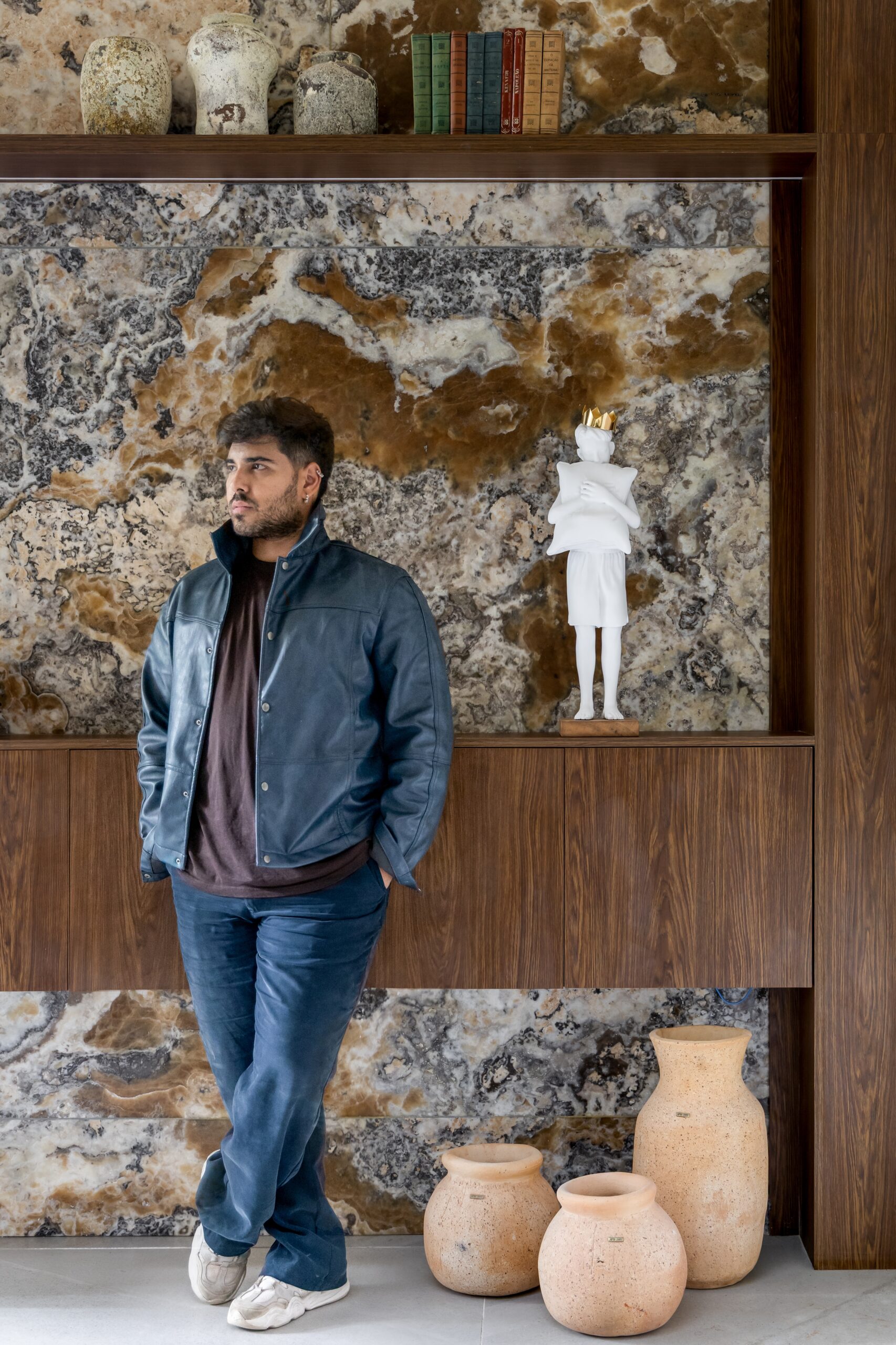
 Samuel Navarro Serpa

Photo: Fernanda Grings
Camilo Jr. Architect & Columnist BUSINESS OF LIVING
Woodworking shops, architects and suppliers draw closer as wood and stone unite technically
NEW YORK — With advances in machinery and technologies built for the sector, contemporary furniture is gaining a hybrid design in which wood and stone fuse into joint structural solutions and stone is no longer a “mere tabletop.” Wood and stone have long been foundational materials in architecture, but their uses in interiors were historically compartmentalized: wood appeared in paneling, custom furniture and flooring, while stone was confined to countertops and wet areas.
Viability of this integration starts with specification and the raw material’s mechanical strength. Brazil, one of the world’s main extraction hubs, has a vast portfolio, and companies serving the high-end export market, such as Crivo, supply hard, stable slabs. Exotic quartzites and marbles are no longer just cladding; they now serve as the support and focal point of a project, which requires material sound enough to withstand precise cuts and complex processing.
Exports of Brazilian ornamental stone totaled $705 million and just over 1 million metric tons in the first half of 2026, according to a survey by the Brazilian Association of the Ornamental Stone Industry (Abirochas).
On the scale of custom furniture, joining wood panels to stone blocks demands rigorous load calculations and concealed fasteners. Ateliê Sette, an artisanal woodworking shop, and other firms in the sector rely on cutting-edge equipment to ensure alignment, as CASACOR São Paulo 2026 showed. The result is pieces in which the joinery wraps around the stone in tight-tolerance fittings, with no visible seams, forming monolithic volumes that combine the ergonomics of wood paneling with the durability of the mineral material.
“Joining wood and stone in the same piece takes precision down to the millimeter. The challenge is not just visual but technical: we have to calculate the weight of the rock, hide the fittings and work side by side with the stone fabricators and architects. It is a joint effort to ensure a flawless delivery,” said Ricardo Eugênio, a partner at Ateliê Sette.
Multifunctionality is also on display in the CO/RTINA panel, presented by the architecture firm Studio Plano at CASACOR Rio 2026, which works as both a divider and a connector between rooms. Freestanding and built from a single base piece, the system creates different effects and lets users adjust openness, privacy and spatial continuity.
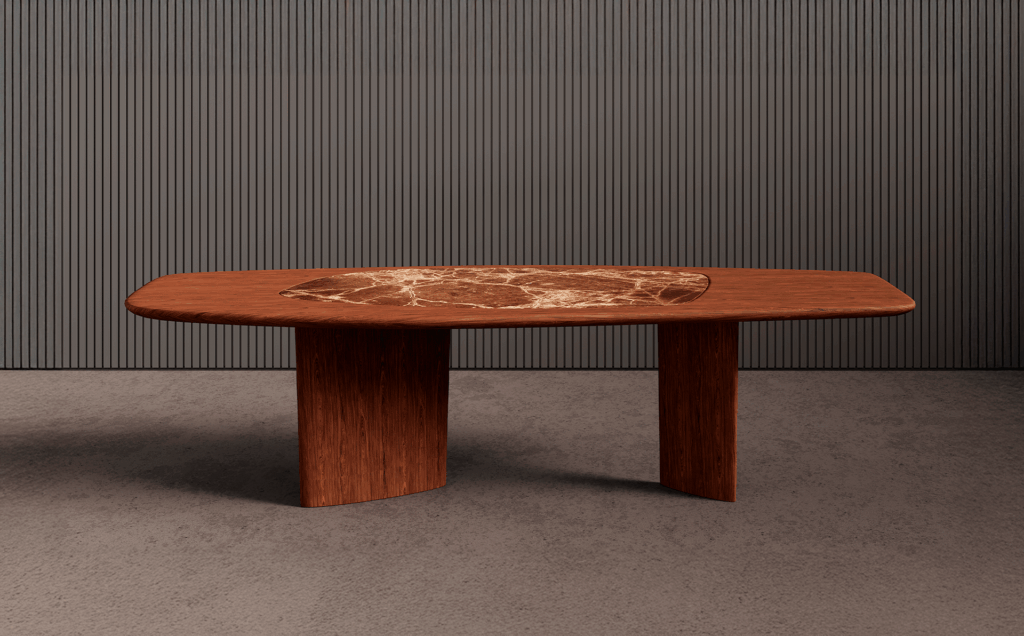
Mantiqueira Table by Fernanda Marques. Photo: Acervo Breton
Large stone tops on timber bases change the math: with no wall or supporting panel, the balance of weight, the center of gravity and the variation in thickness decide the project. Brazilian furniture maker Breton translates that engineering into its contemporary line. In sideboards, coffee tables and dining tables, the company uses solid wood structures, turned or machined, to hold up sturdy stone tops. The counterweight is calculated to allow generous overhangs, and the transition between the smooth finish of the rock and the grain of the wood is resolved with tightly fitted joints.
From a commercial standpoint, this union of high-density materials meets the demands of sustainable architecture. At the top of the market, the concept is necessarily tied to a piece’s long lifespan. Choosing furniture that pairs woods from certified forest management with robust natural stone guarantees physical and aesthetic soundness for many years. These items are conceived to avoid structural obsolescence, withstand daily wear and uphold the premise of design made to last, as opposed to throwaway logic.
To architects and interior designers, mastering the specification of these compositions and having rigorous partners for execution is what ensures projects in which design, function and strength go hand in hand. The integrated use of stone and wood is no longer a purely visual matter; it has become an exercise in construction intelligence.
Sources: Abirochas (first-half 2026 review)