 Samuel Navarro Serpa
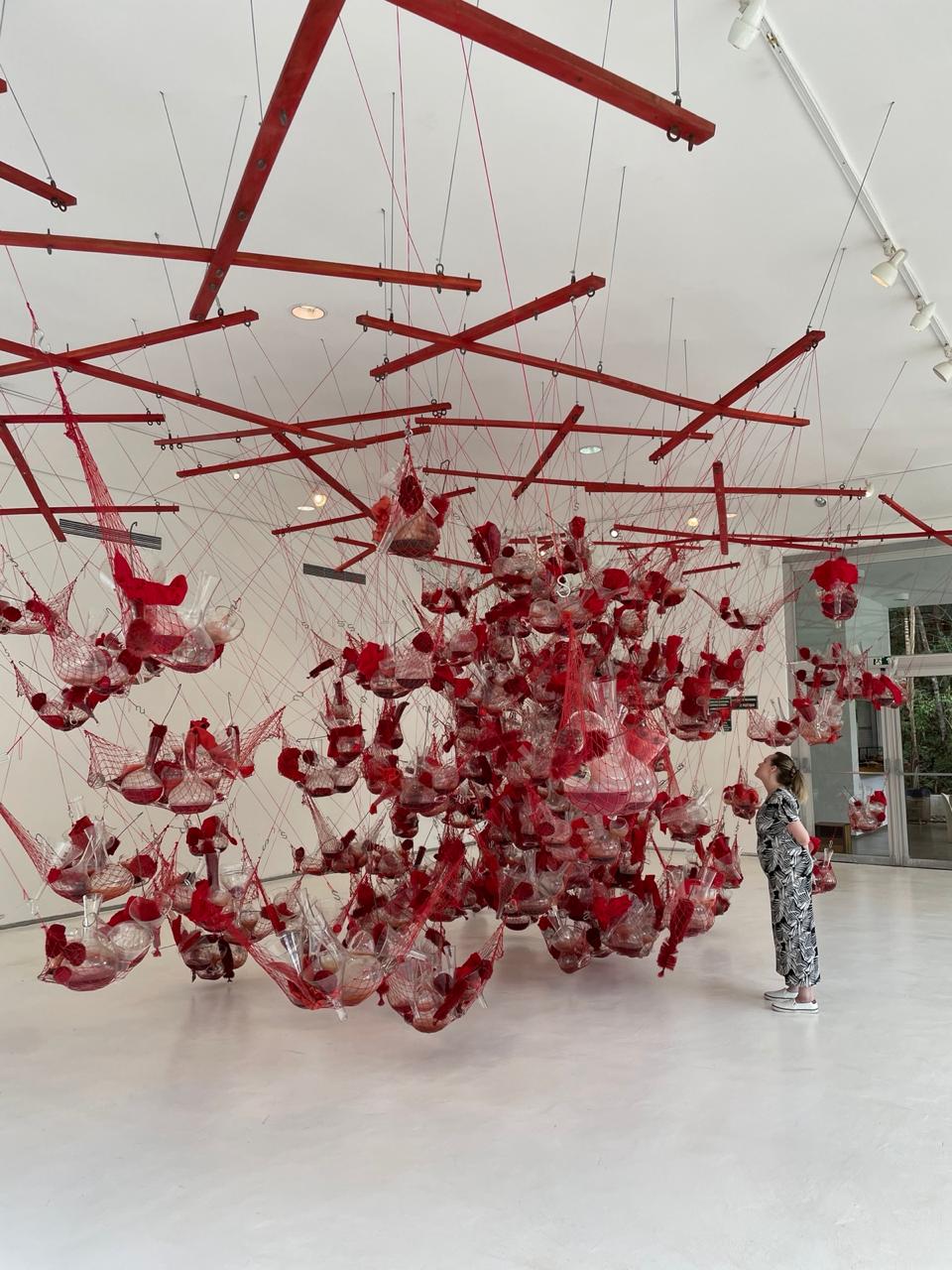
True Rouge, 1997, by Tunga.
Lifestyle & Travel
By Fernanda Artibani
Inhotim Brazil: between art, architecture and nature, a Brazilian creation defies definitions and invites visitors to rediscover the pleasure of contemplation.
I have had the privilege of visiting more than 25 countries. I have seen extraordinary museums, impressive gardens, carefully planned parks and architectural spaces capable of making a trip unforgettable. But one address in the interior of Minas Gerais occupies a very particular category in my memory: Inhotim.
Twice I have been there, and I would go back a third time, a fourth, perhaps many more.
Not because the earlier visits fell short, but because Inhotim has a rare quality: the more you learn about it, the more you realize there is still something to discover.
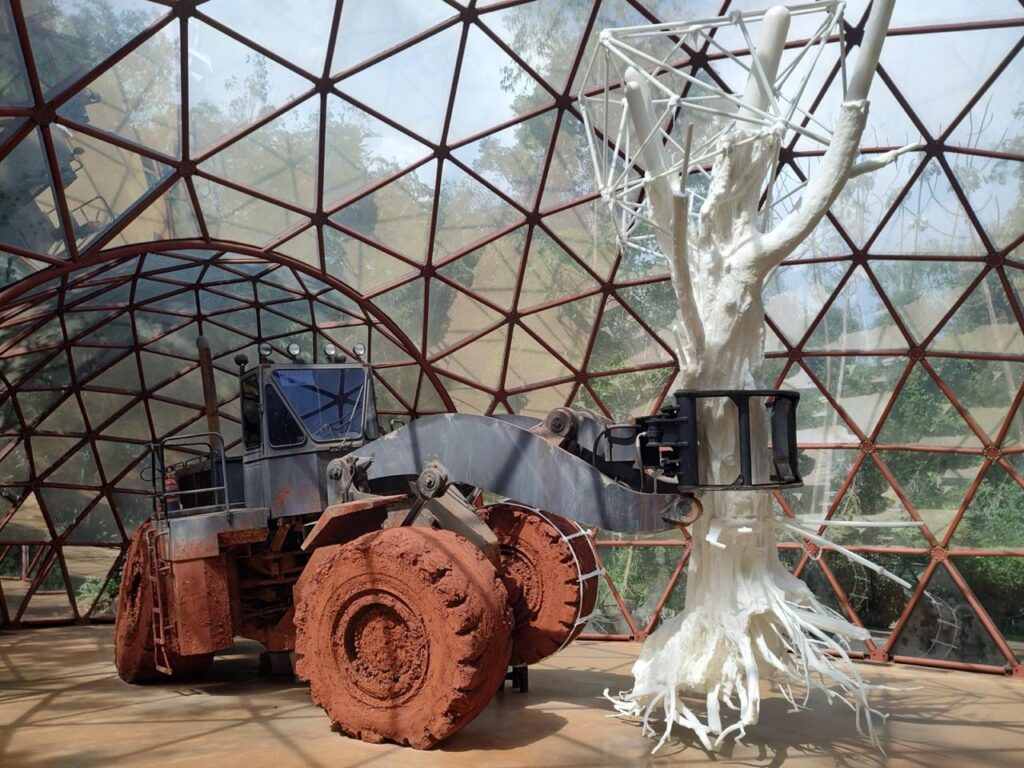
De Lama Lâmina (From Mud to Blade), 2004, by Matthew Barney. Photo: Fernanda Artibani
The feeling of arriving there for the first time is hard to explain. At certain moments, it seems we are not in Brazil. Still, I cannot associate that scenery with any international reference I know.
It is not exactly a museum. It is not just a botanical garden. Nor is it a park or a collection of notable architectural buildings. It is all of that at once. And something more.
Perhaps its greatest merit is that it fits no conventional definition.
Located in Brumadinho, about 60 kilometers (37 miles) from Belo Horizonte, the Inhotim Institute was born from an initiative of businessman and collector Bernardo de Mello Paz. The story began to take shape in the 1980s, when the property underwent landscaping transformations and later received contemporary works of art.
Over time, the project grew, bringing in artists, architects, landscape designers and botany specialists, until it officially opened to the public in 2006.
Two decades later, Inhotim is often described as one of the largest open-air museums in the world, bringing together contemporary art and an internationally recognized botanical garden.
Visitors can explore more than 140 hectares, in a region where two major Brazilian biomes meet: the Atlantic Forest and the Cerrado.
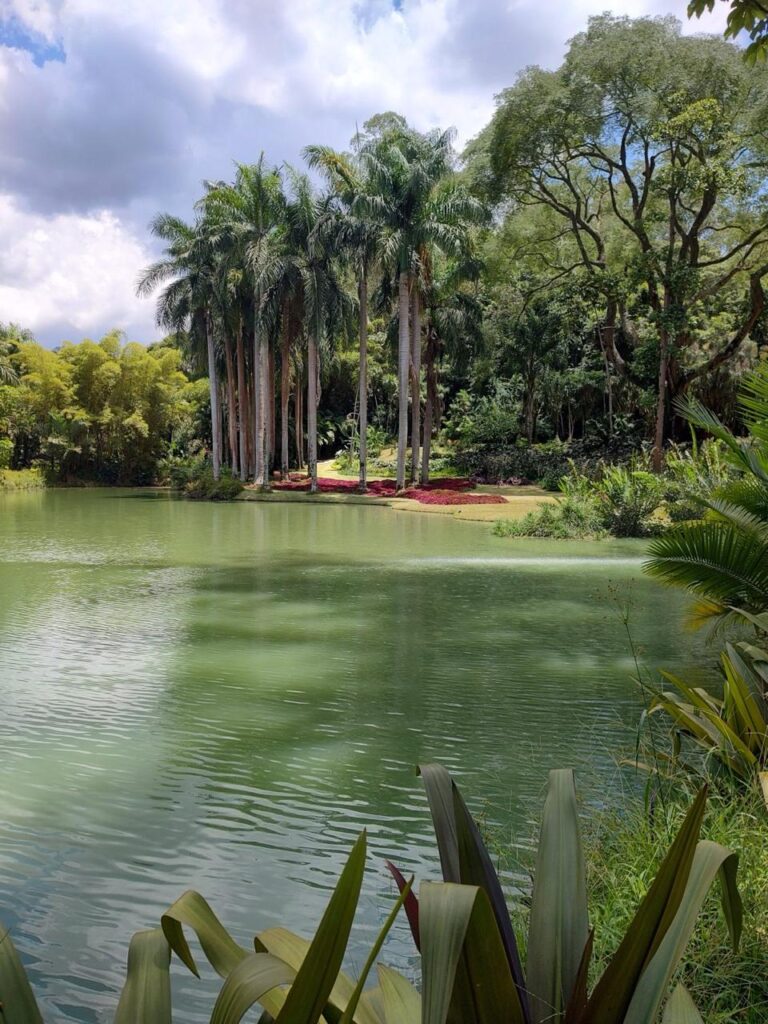
Royal palms frame a lake at Inhotim in Brumadinho, Brazil. Photo: Fernanda Artibani
Landscaping alone would already justify the trip.
Developed over decades with contributions from professionals such as Luiz Carlos Orsini and Pedro Nehring, the gardens go beyond ornament. They are an essential part of the route and create an almost choreographed interaction among vegetation, lakes, paths, sculptures and architecture.
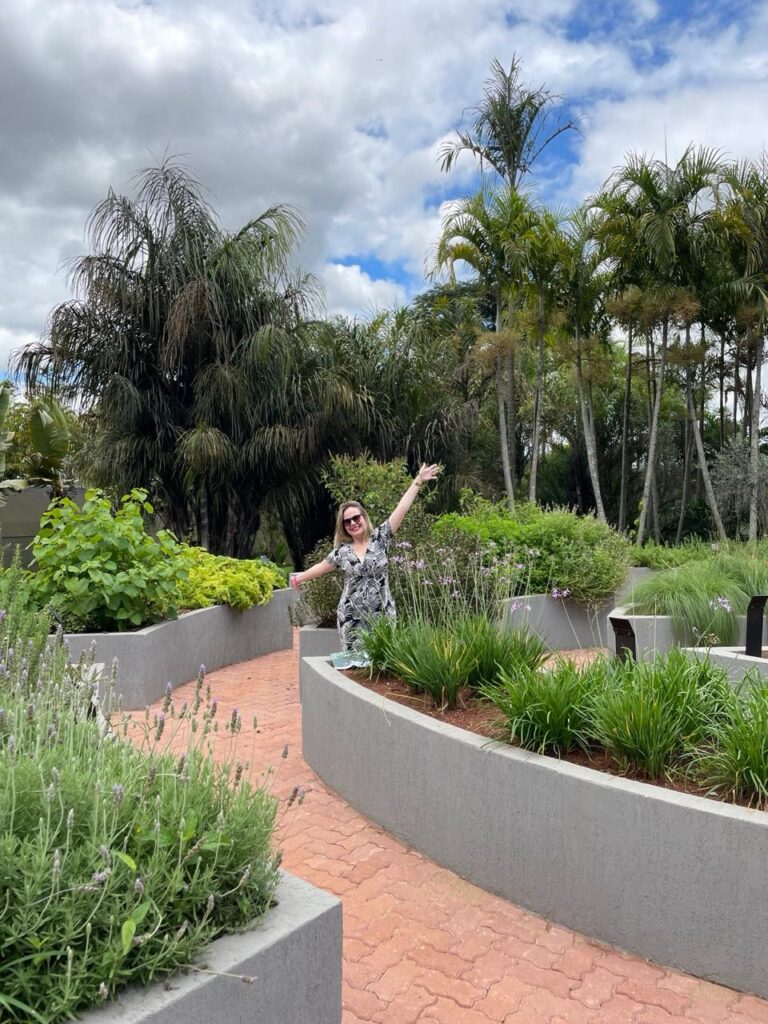
Fernanda Artibani stands among raised garden beds at Inhotim. Photo: Fernanda Artibani
At times, those walking through the gardens feel they are strolling through a carefully designed tropical paradise. At others, vegetation takes center stage and reveals buildings that appear suddenly among the trees.
Perhaps it is this alternation between the natural and the built that makes everything so fascinating.
For those who appreciate architecture and design, Inhotim offers a particularly stimulating experience. There, the buildings do not merely serve as containers for works of art. Often, they are part of the artistic narrative itself.
At the Adriana Varejão Gallery, for example, geometry, concrete, water and landscape establish a striking relationship. Other spaces explore light, shadow, silence and sensory perception, inviting visitors to experience art very differently from how they do in traditional museums.
Visitors cease to be mere observers in front of a work hanging on a wall. They experience art with their own bodies.
It is possible to walk through installations, listen to sound compositions, cross rooms and notice how architecture changes the way we see what is in front of us.
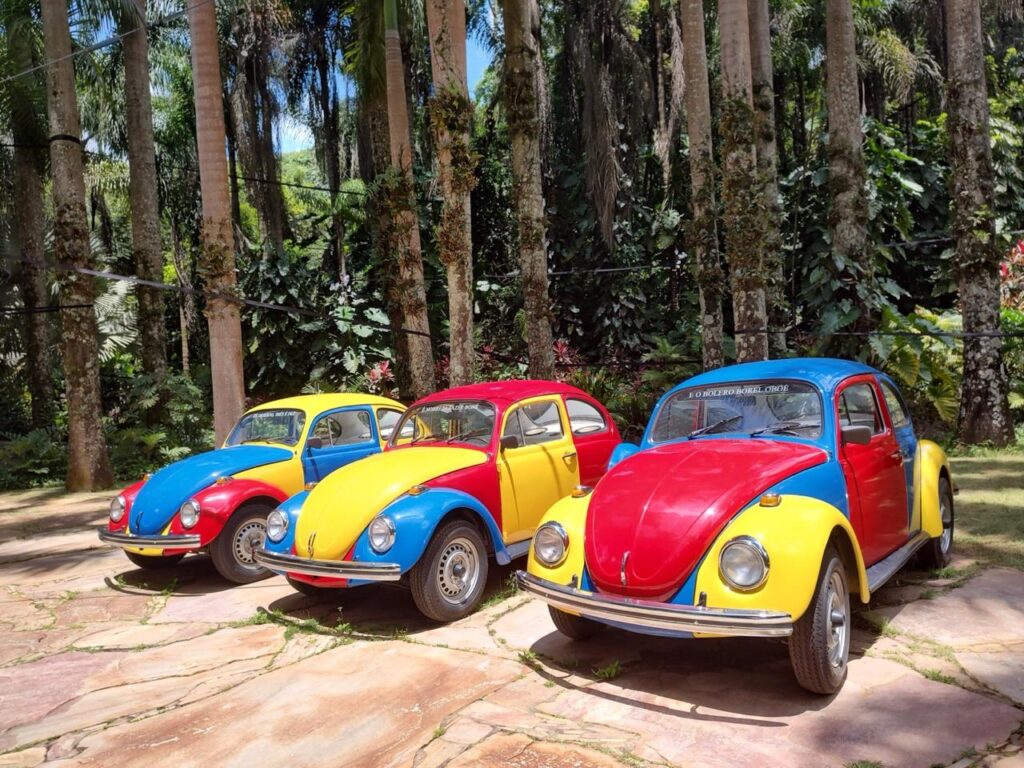
Troca-Troca (Swap), 2002, by Jarbas Lopes. Photo: Fernanda Artibani
Names such as Jarbas Lopes, Tunga, Cildo Meireles, Hélio Oiticica, Adriana Varejão and Yayoi Kusama are part of the collection, which brings together Brazilian and international artists. Permanent galleries coexist with temporary exhibitions, while sculptures and installations are scattered across the gardens, and every route holds something new.
Speaking of surprises, one detail deserves attention.
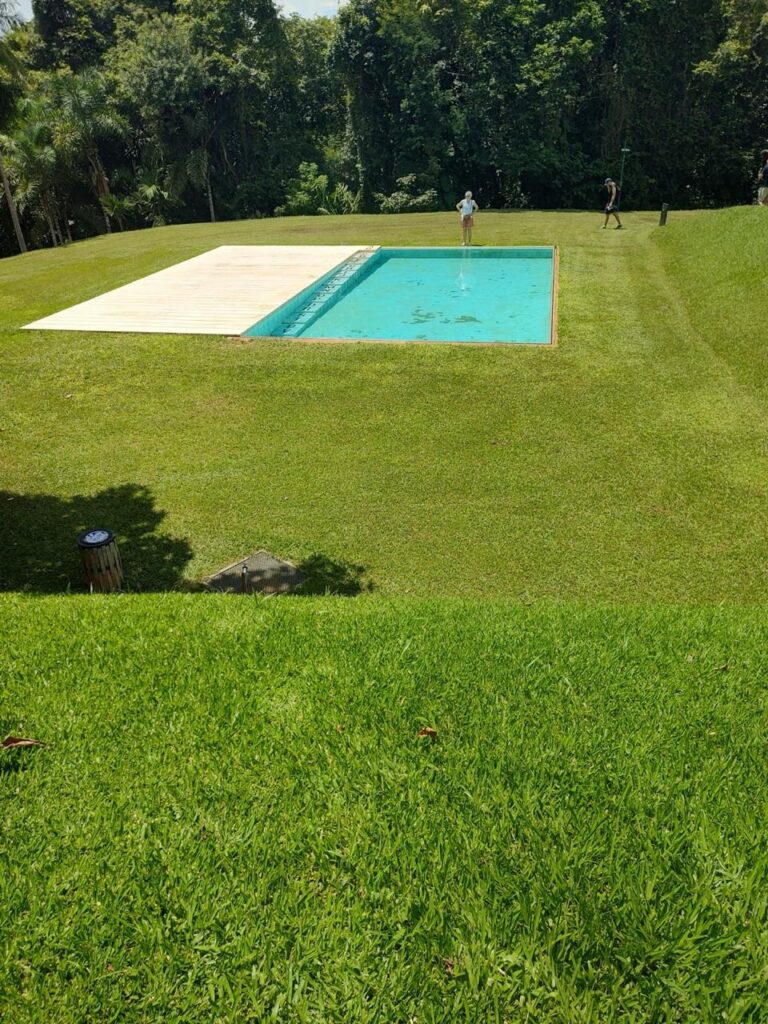
Piscina (Swimming Pool), 2009, by Jorge Macchi. Photo: Fernanda Artibani
Inhotim has a swimming pool that is a work of art, and the public can get in the water.
Created in 2009 by Argentine artist Jorge Macchi, the installation Piscina turns an image originally conceived as a watercolor into three-dimensional reality. The ladder displays letters that recall the alphabetical index of an old telephone address book, playing with scale, the function of everyday objects and the relationship between imagination and reality.
More than that, the work need not be contemplated only from a distance. Swimming is allowed under the visiting rules and operating conditions.
It is a quite literal way of diving into art.
Here lies one of Inhotim’s great differentiators: art stops being something distant and untouchable and becomes part of the visitor’s experience.
But if there is one thing I learned in my two visits, it is that trying to see all of Inhotim in a single day can be a mistake.
Not necessarily because it is impossible to cover many of the spaces, but because there is an enormous difference between visiting and experiencing a place.
Inhotim was not made to be consumed in a hurry.
At some point, visitors simply stop.
Perhaps in front of a lake, a tree of unusual shape or on a bench, trying to understand an installation they have just encountered.
Then something happens that I consider increasingly rare in contemporary travel: you forget the clock.
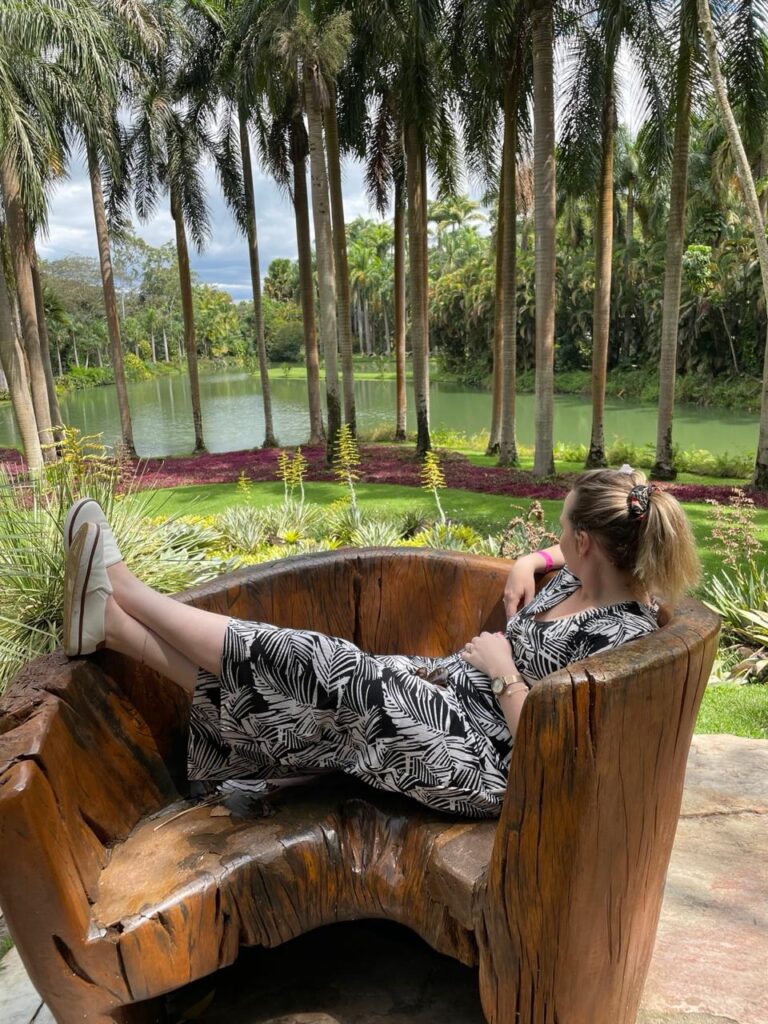
Fernanda Artibani sits in a wooden armchair by Hugo França, overlooking the lake. Photo: Fernanda Artibani
No urgency pushes anyone toward the next attraction. There is no need to turn every minute into a photograph. All that remains is the wish to stay.
My confession: it was one of the most striking sensations of my visits.
In a world where the quality of travel is often measured by the number of places visited, Inhotim proposes the opposite. The real privilege lies in the time devoted to each place.
For that reason, I consider two days a far better choice for getting to know the institute at a relaxed pace, or three, for those who appreciate art, architecture and landscaping.
Even so, I have the impression that some corner will always go unnoticed.
We tend to admire international destinations and often fail to recognize first-rate experiences that exist within our own country.
Inhotim could rank among the great cultural destinations on any international itinerary. Not because it tried to reproduce foreign references, but because it built an identity of its own.
Across the worlds of architecture, design and tourism, that is increasingly valuable.
Creating something grand is not always synonymous with originality. Originality lies in developing a proposal that could not exist in the same way anywhere else.
Inhotim did it.
My first visit left me impressed. The second left me even more convinced that the place deserves to be discovered by many more people.
I still believe some trips do not need to take us far away to transform the way we see the world.
Sometimes, it is enough to walk through a garden in Minas Gerais.
And allow yourself to stop.
Because there are places we visit to get to know.
And there are places, like Inhotim, we return to so we can feel again.

Fernanda Artibani
Lifestyle & Travel Columnist | Arch Gallery & Design Magazine