 Samuel Navarro Serpa
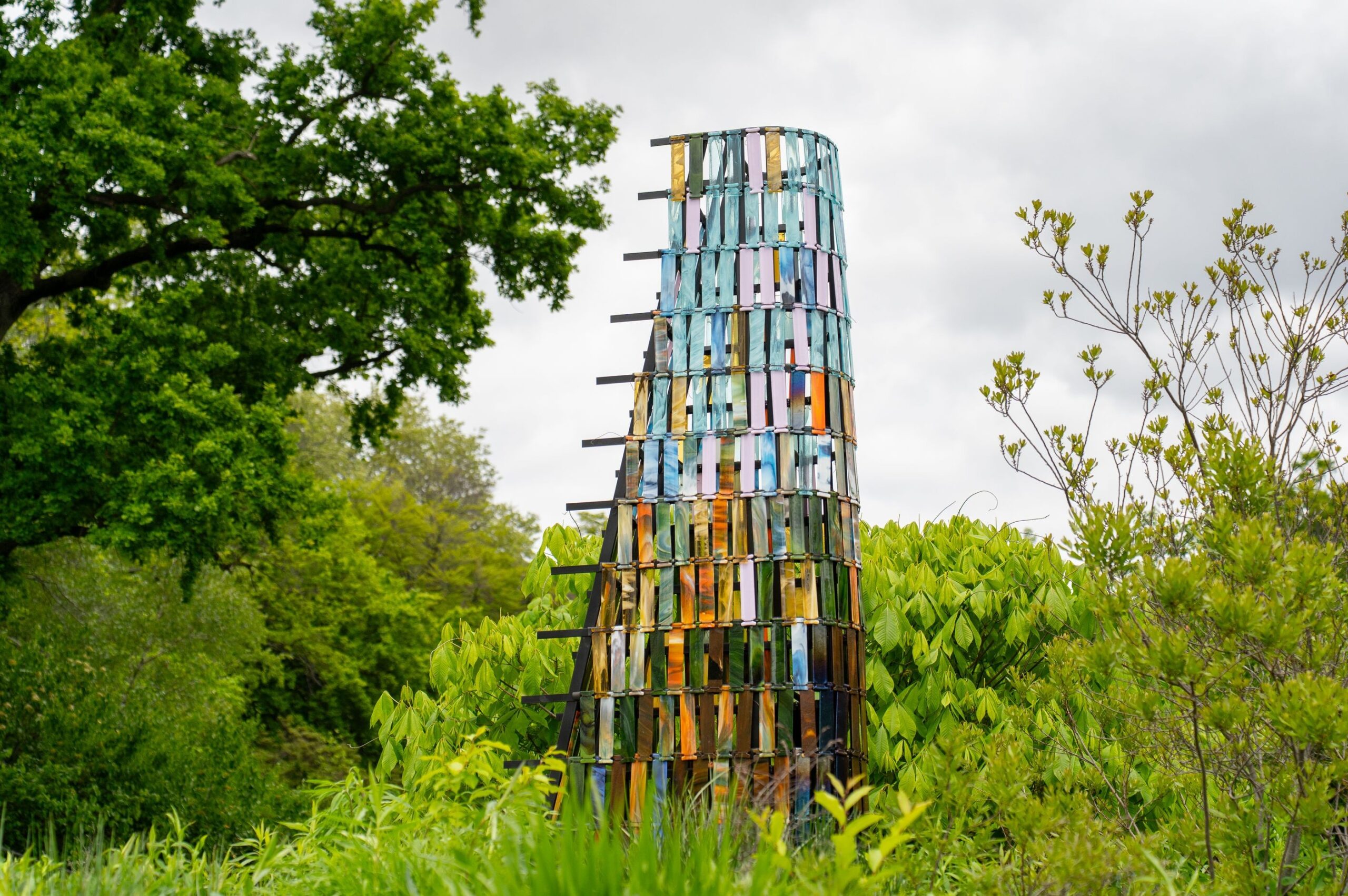
Serpentine Specter. Photo: Jeremy Weine
Four installations rooted in African diasporic and Latino perspectives respond to place and climate
By Samuel Navarro Serpa
NEW YORK — At Brooklyn Botanic Garden, artist Olalekan Jeyifous and the environmental art and architecture practice AD-WO present the exhibition “Ancestral Ecologies,” on view through Oct. 25, 2026. The two are the 2026 Heidi Nitze Art × Environment Fellows, and the project responds to phenomena found in the garden and its communities. The result is a trail of works that react to their surroundings.
Cosmology as method
Recognizing the vitality of all beings is the principle of animism, an Indigenous worldview that underpins the project and contrasts with human-centered frameworks. Rather than objects to contemplate from a distance, the pieces invite visitors to imagine reciprocity and kinship with nature through multisensory experiences. The work grew from collaboration with community members, climate scientists and horticulturists, and the research behind it is on display in the Conservatory Gallery.
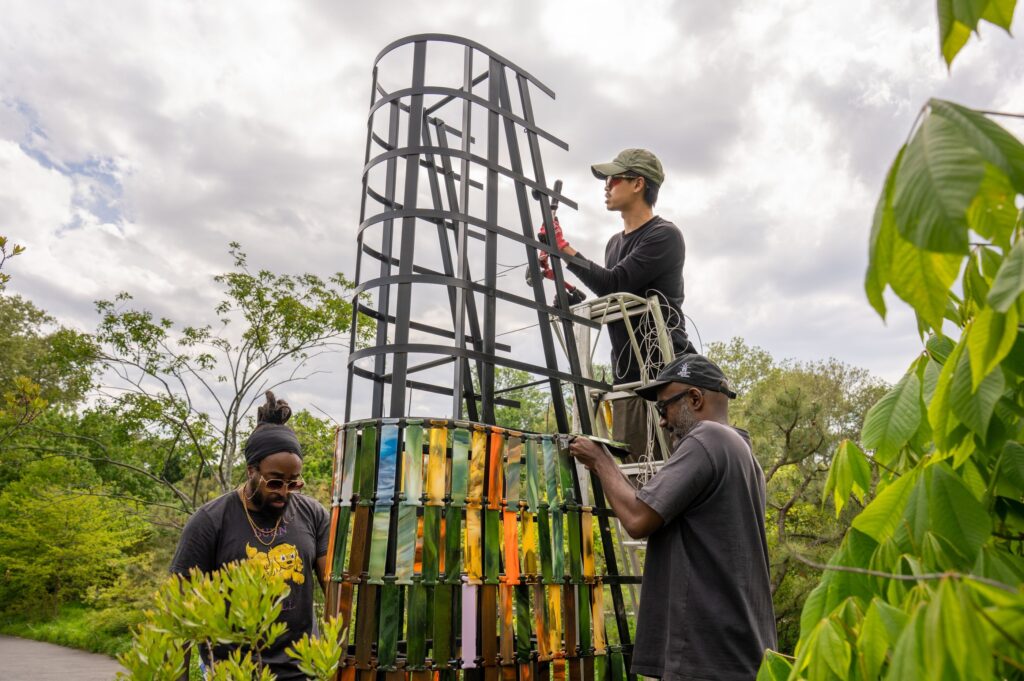
Serpentine Specter. Photo: Jeremy Weine
Kiln-fired glass, a steel frame, waxed thread and leather make up “Serpentine Specter,” in the Native Flora Garden. The sculpture draws on the local ecologies of the meadow, modeled on rare serpentine and pine barren landscapes where only especially hardy, specialized plants thrive. It shows how harsh conditions can support diverse forms of life, offering insights for climate-resilient adaptation.
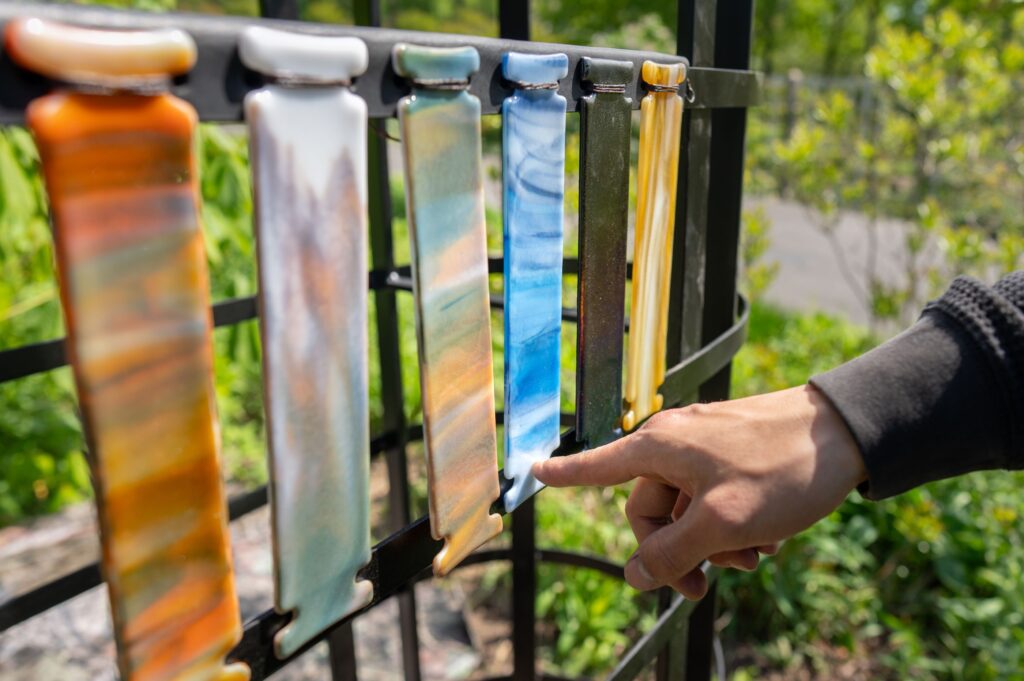
Serpentine Specter. Photo: Jeremy Weine
The work links ancient geologic processes to present-day industrial materials: blacks, deep greens and stonelike grays at the base recall ultramafic igneous rock and mineral-rich soils; above, smoky blues, amber and vivid yellow-green evoke fire-adapted plants, lichen, seeds and new growth.
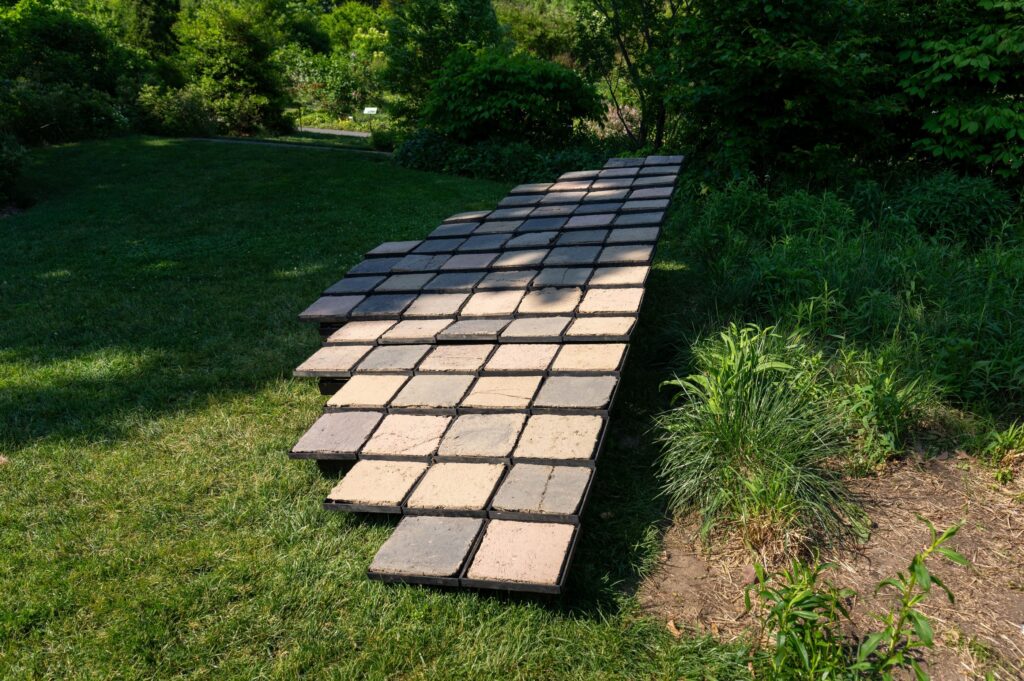
Earthen Tiles. Photo: Jeremy Weine
Excavated soil and clay from the garden, tinted with mineral pigment, shape “Earthen Tiles,” in the Woodland Garden. The grid rises from the ground as pixelated strata, and its variations in color, texture and finish reflect local terrain, mineral compositions and earthen building traditions.
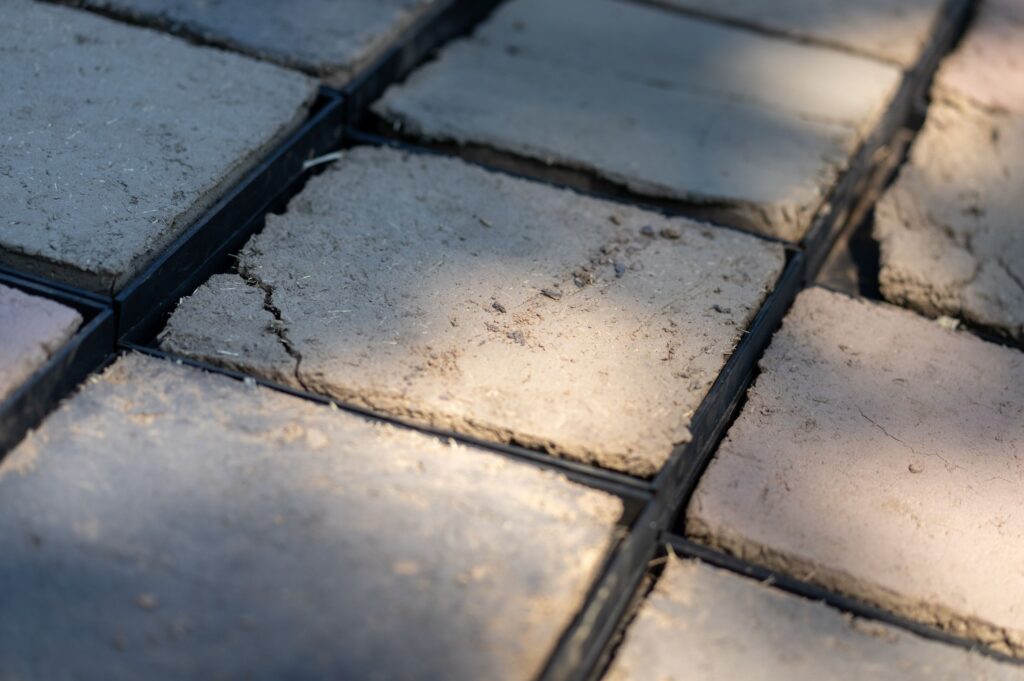
Earthen Tiles. Photo: Jeremy Weine
The piece treats that substrate as both construction material and a record of cultural knowledge shaped across generations. Under rain and shifting seasons, the surfaces may crack, fade, darken or host organic growth.
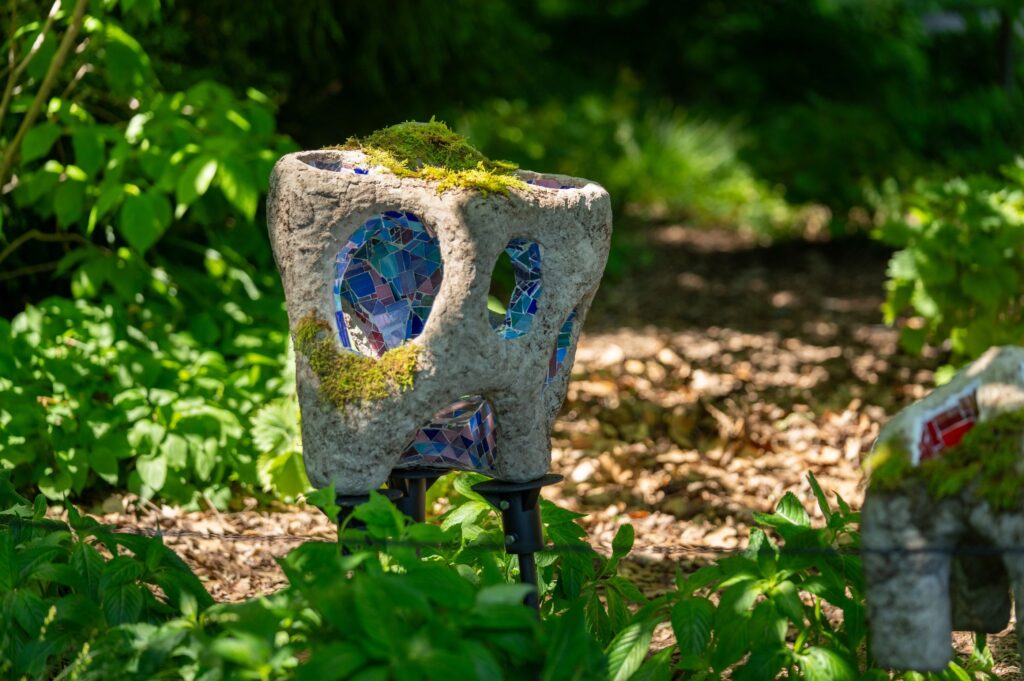
Animist Capsules. Photo: Jeremy Weine
Hypertufa, a mix of concrete, sand and moss slurry, forms “Animist Capsules,” also in the Woodland Garden. Inspired by nooks and crannies the artists found in aging trees and limestone, the pieces are designed to weather over time: the porous mass encourages mosses, lichens and other small organisms to emerge, and frames decomposition as a regenerative force.
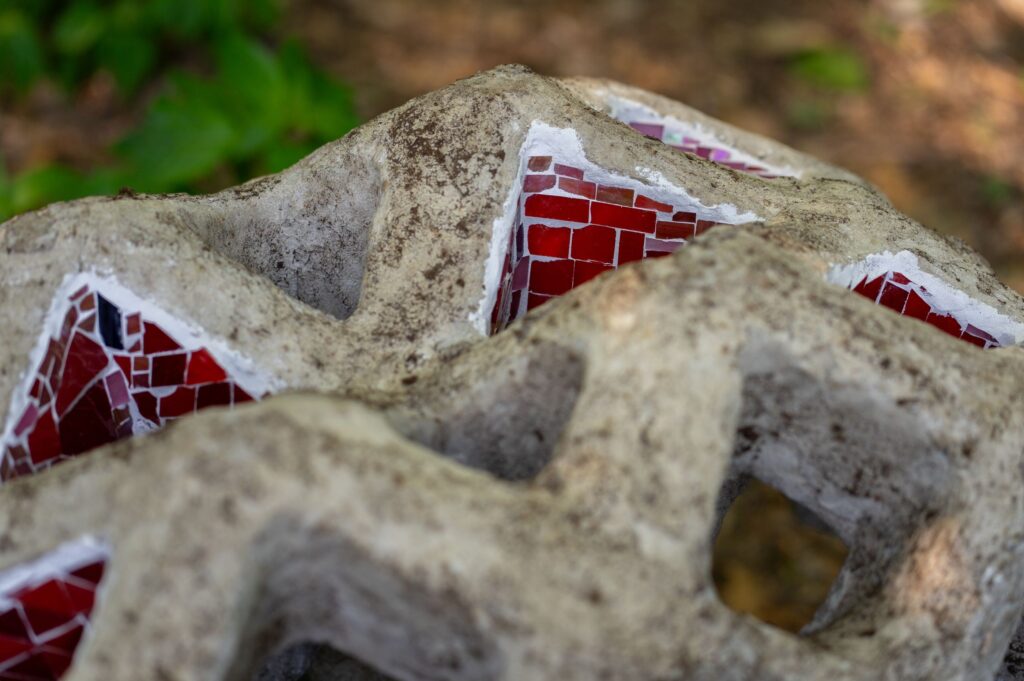
Animist Capsules. Photo: Jeremy Weine
Inside, hand-laid glass and ceramic tile recall mosaic traditions of the Caribbean and the global diaspora.
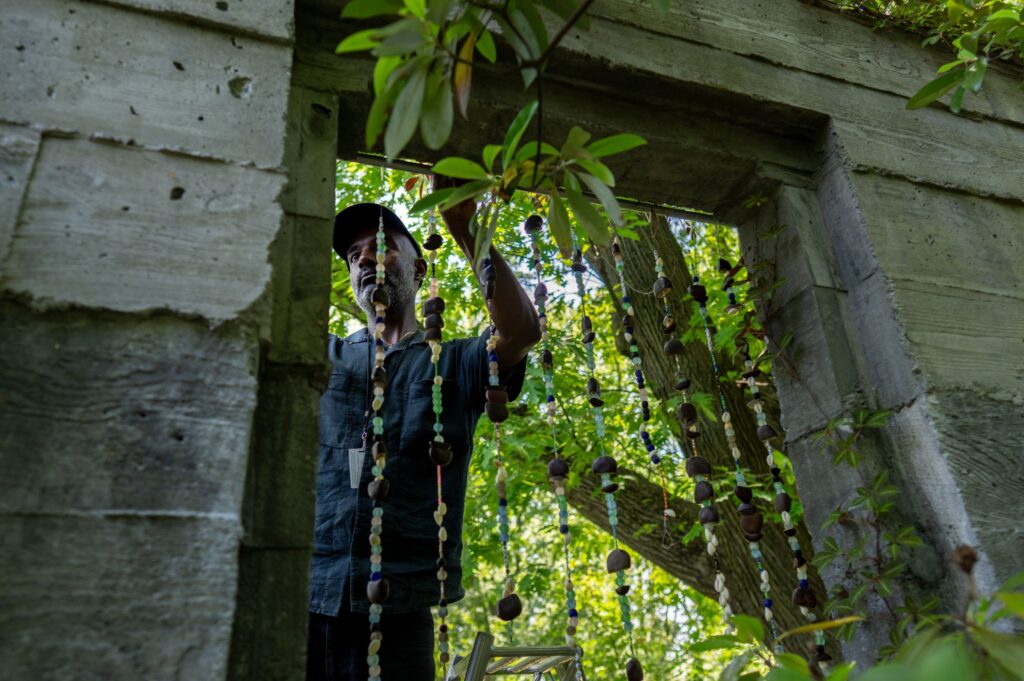
Sonic Strands. Photo: Jeremy Weine
Sea beans, cowrie shells, recycled glass beads and assorted components are threaded into “Sonic Strands,” in the same woodland. Moved by wind, gravity and passersby, the strands filter light and air and create a sonic field that blends with the animals, plants and surroundings.
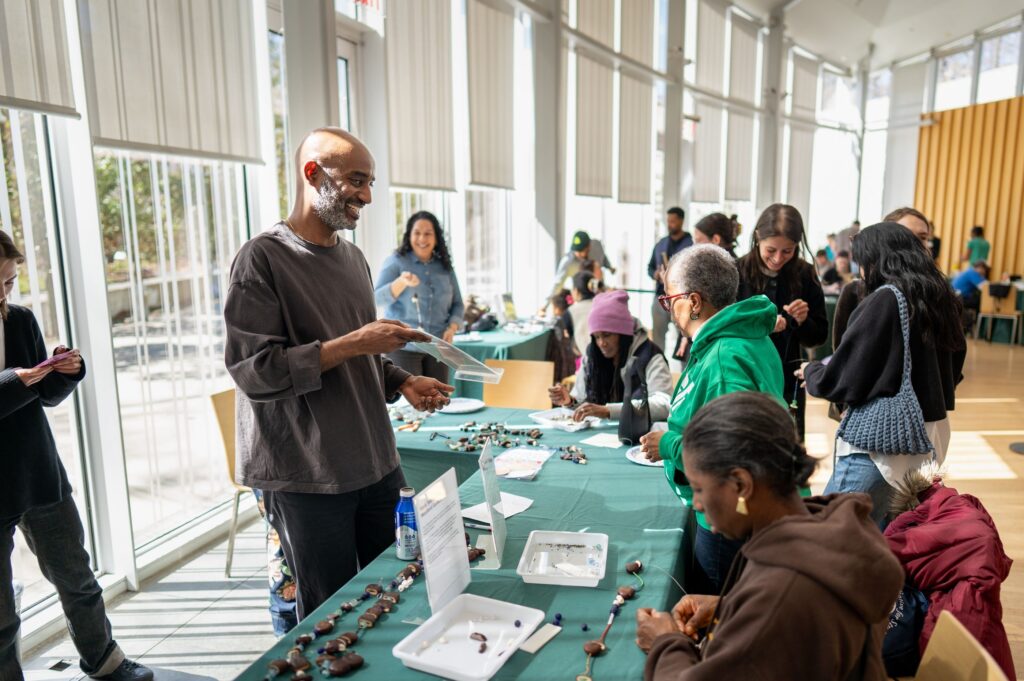
Photo: Jeremy Weine
Visitors took part in making them by embedding names, initials and phrases that link nature and culture, carrying layered histories of exchange, survival, spirituality and movement across continents and seas.
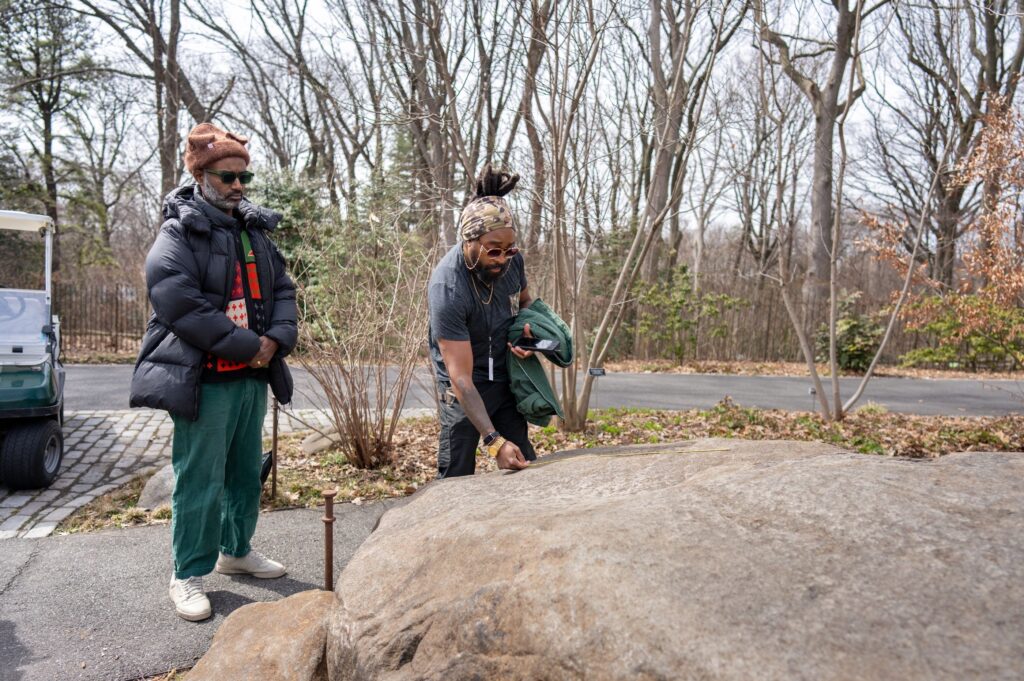
Emanuel Admassu, left, and Olalekan Jeyifous. Photo: Jeremy Weine
Jeyifous created the exhibition with AD-WO, whose team included Emanuel Admassu, principal in charge; Jen Wood, principal; and David Zhang, project lead. Lola Ben-Alon of the Natural Materials Lab at Columbia Graduate School of Architecture, Planning and Preservation served as materials consultant for “Earthen Tiles”; Hermona Tamrat of hgt studio, as structural engineering consultant. Additional fabrication came from Bullseye Glass Company, Cain Cain Studio, Gene Han, André Santos and Leah Liu Yutong. The Heidi Nitze Foundation supports the fellowship.
Details
“Ancestral Ecologies”
Through Oct. 25, 2026
Where: 990 Washington Ave., Brooklyn, NY 11225
Organization: Brooklyn Botanic Garden
To explore the archive project, visit https://www.bbg.org/visit/event/ancestral_ecologies