 Samuel Navarro Serpa
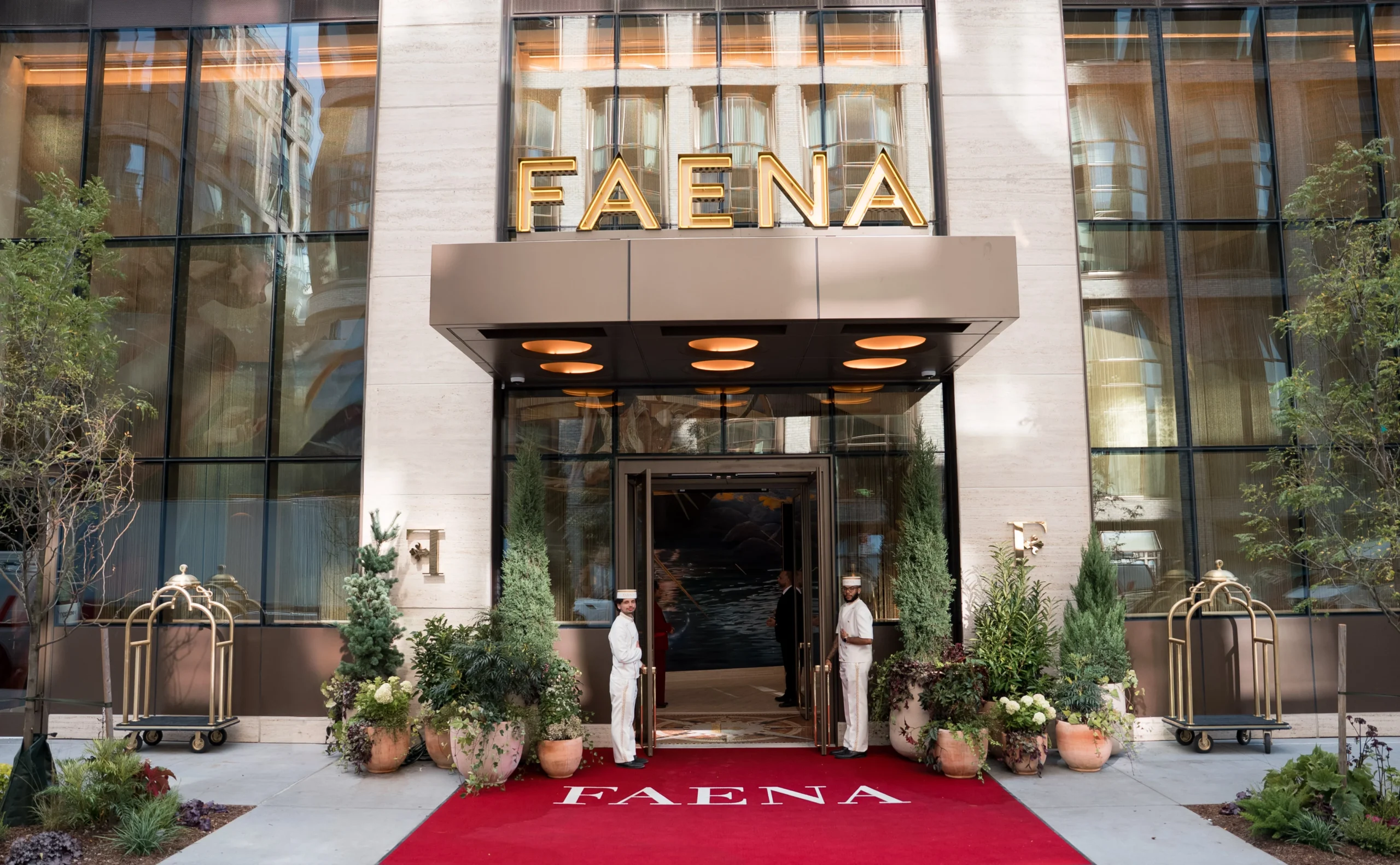
Facade of Faena New York hotel with a red carpet leading to the entrance, framed by trees. Photo:Nikolas Koenig
Designed by architecture firm Bjarke Ingels Group, with interiors by Faena Design Studio and a mural by Diego Gravinese in the lobby, Faena New York brings to Manhattan the cultural district model tested in Buenos Aires and Miami Beach.
By Samuel Navarro Serpa
NEW YORK – Few hoteliers treat hospitality as a cultural platform with the conviction that drives Alan Faena. Two decades after its debut in Puerto Madero and a decade since arriving in Miami Beach, the brand opens its most urban chapter in New York. Located at 500 West 18th Street, Faena New York occupies an entire block facing the High Line. It has 120 rooms and suites, plus a restaurant, bars, spa and theater, all gathered at an address conceived as a destination in itself.
What kind of neighborhood is this?
In one of Manhattan’s most dynamic corridors, between the Meatpacking District and West Chelsea, Faena New York makes its location part of the argument.
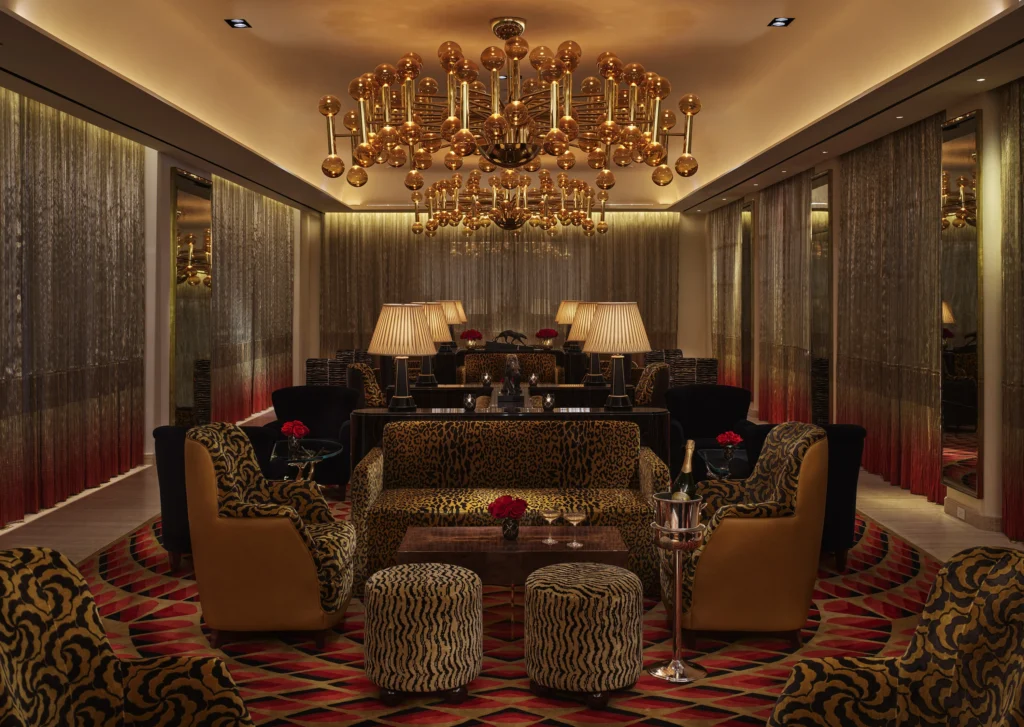
Photo:Nikolas Koenig
Facing the High Line, the building ensures views from the terrace of its lounge, The Living Room, while the aroma from the kitchen of La Boca reaches 10th Avenue and High Line Plaza. The architecture by Bjarke Ingels Group frames a program that extends from the ground floor to the guest floors and that the street is invited to see.
Who is behind the project?
Everything began in Buenos Aires: the first Faena District transformed the abandoned docks of Puerto Madero into a social and cultural center where design, technology, architecture, gastronomy, dance and music coexisted. In 2015, Faena Miami Beach reinvented Mid Beach as a living canvas, catalyzing a cultural renaissance. In Manhattan, Faena New York takes up the method at the scale of the city. “Culture is at the heart of Faena; it is the fuel behind all of our ventures,” said Alan Faena.
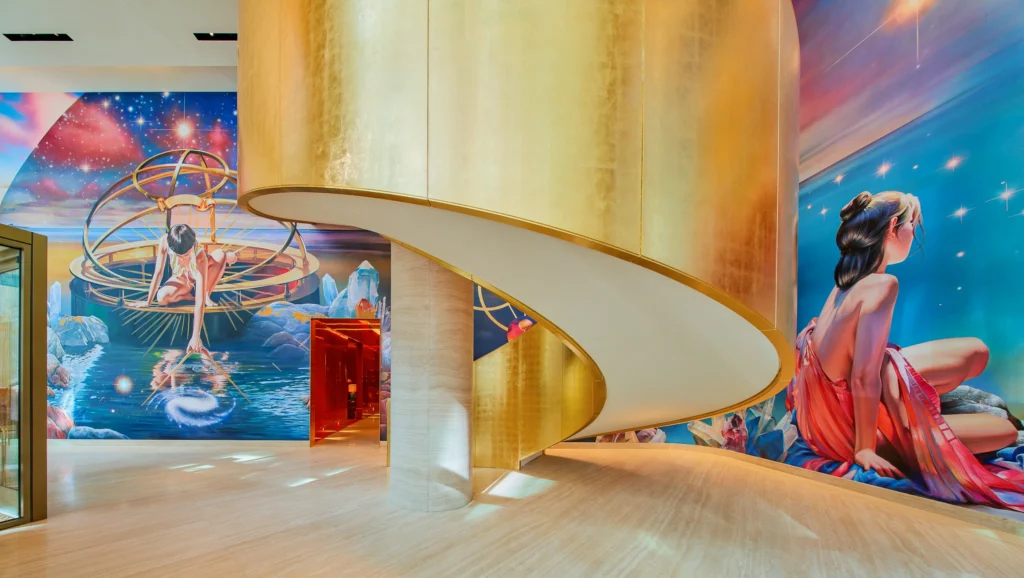
Photo:Nikolas Koenig
Bold patterns and iconic symbolism define the interiors of Faena New York, conceived by Faena Design Studio in collaboration with Peter Mikic, beneath a theatrical elegance that recalls the glamour of old New York. In the Cathedral, the lobby, the story begins: Argentine artist Diego Gravinese created “The Sephirotic Journey,” a mural made specifically for the site and commissioned by Faena Art. With a career spanning more than three decades, he is known for a hyperrealism infused with surreal and symbolic elements. His work, which combines technical rigor and dreamlike narratives, unfolds across the tall walls of the space.
And the rooms?
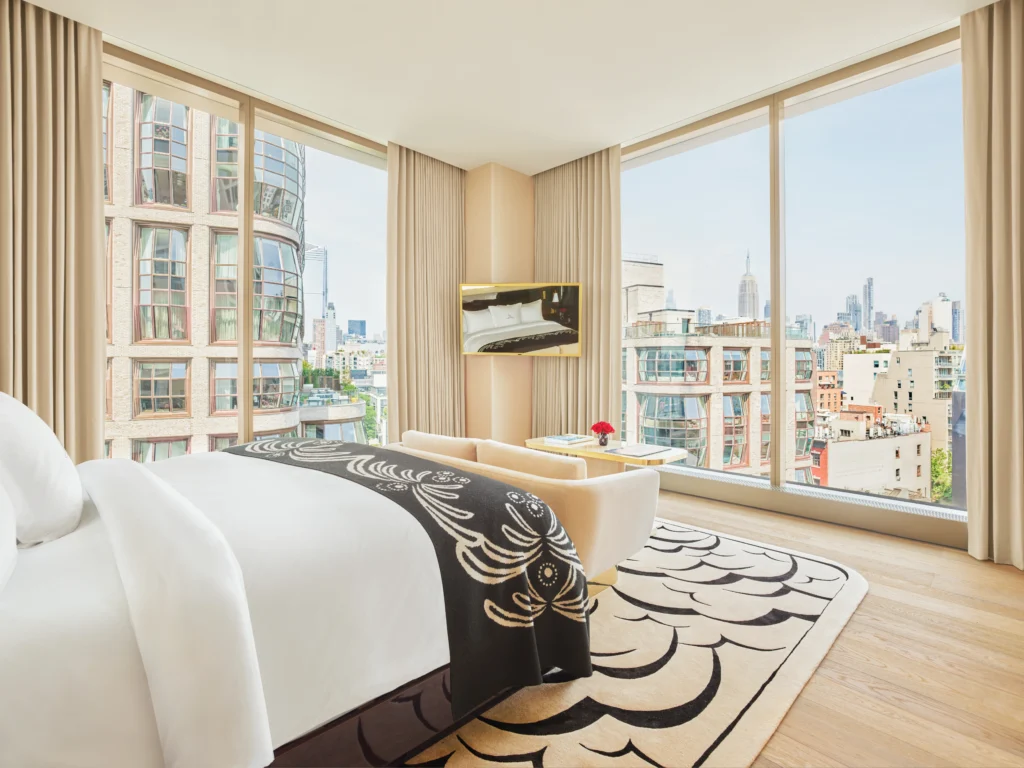
Photo:Nikolas Koenig
Floor-to-ceiling windows facing the Hudson River and the Manhattan skyline define the rooms and suites of Faena New York, designed by Faena Design Studio.
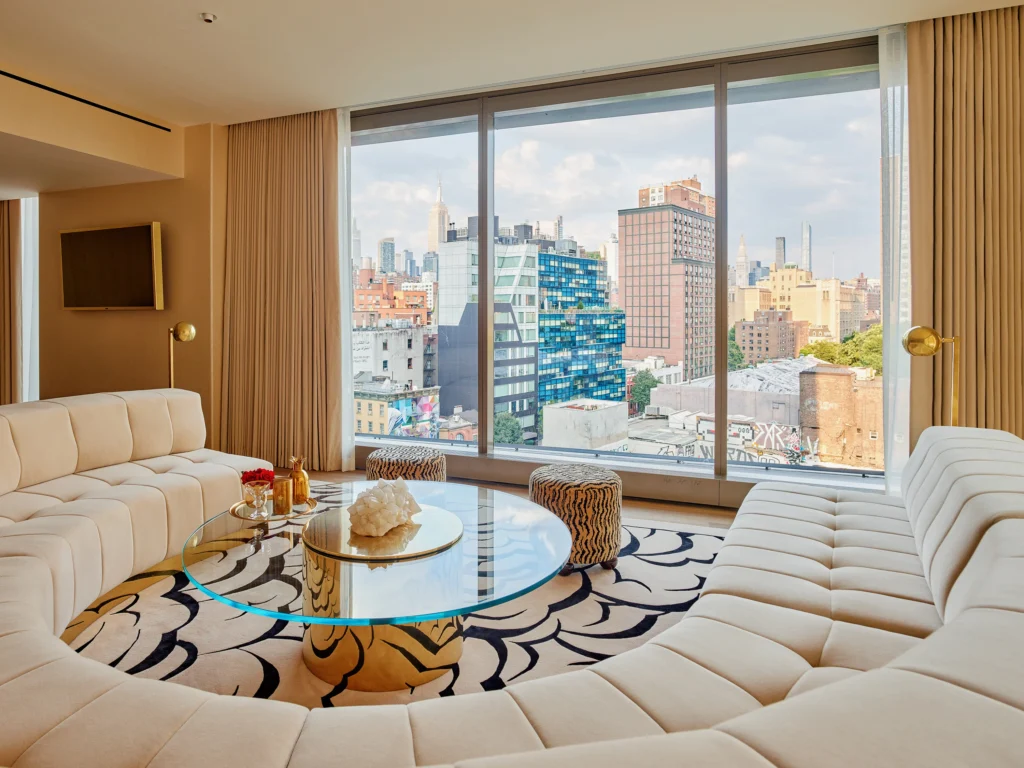
Photo:Nikolas Koenig
After the decorative density of the public areas, the view gives guests a breather: art below, city above.
Where to drink and dine?
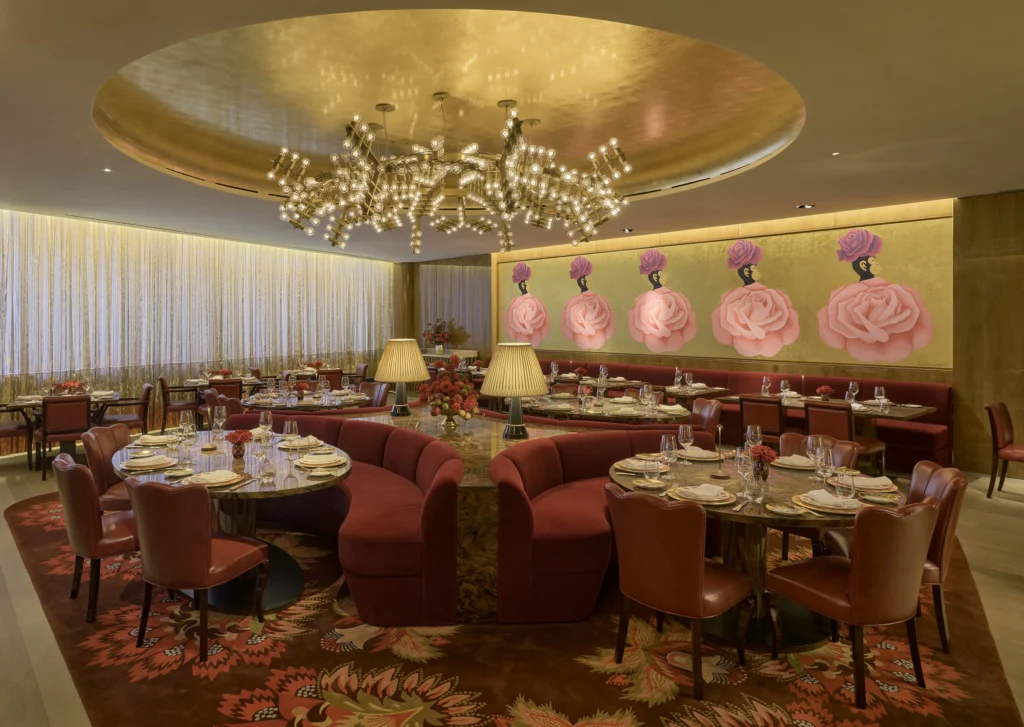
Photo:Nikolas Koenig
Francis Mallmann, the chef who runs La Boca, the main restaurant of Faena New York, translates into space the Buenos Aires neighborhood of the same name, his home, where Italian immigrants settled on the banks of the Río de la Plata.
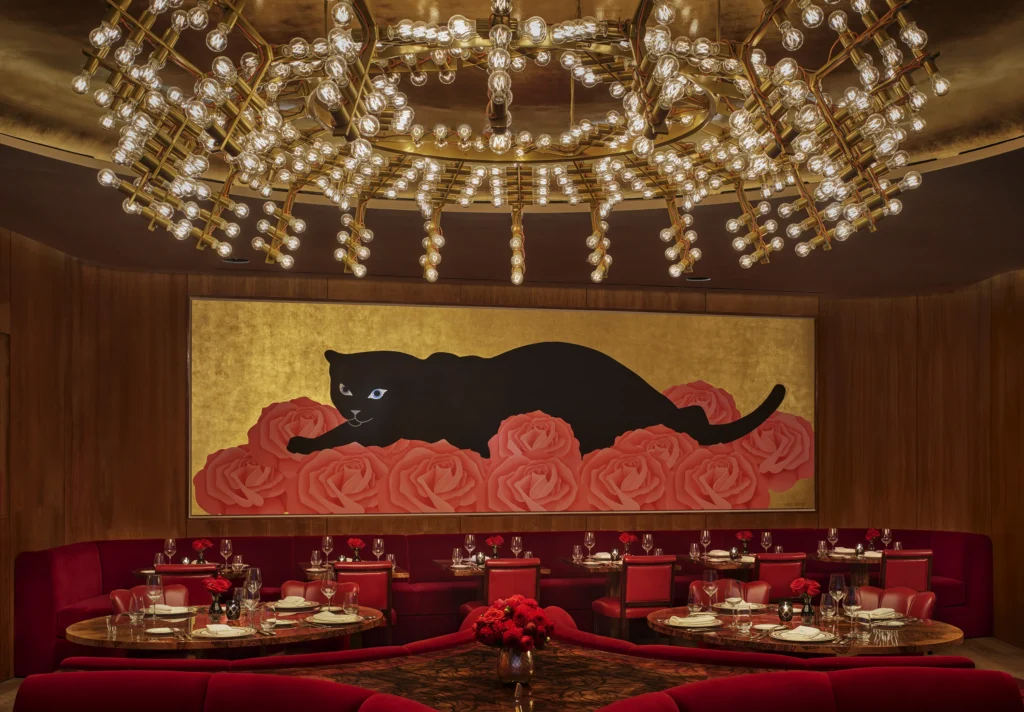
Photo:Nikolas Koenig
Pop artist Edgardo Giménez created the original works that decorate the dining room. Curtains of copper, bronze and bamboo, intricately woven by Colombian Jorge Lizarazo, filter the sunlight, and brass chandeliers by Alberto Garrutti crown the setting.
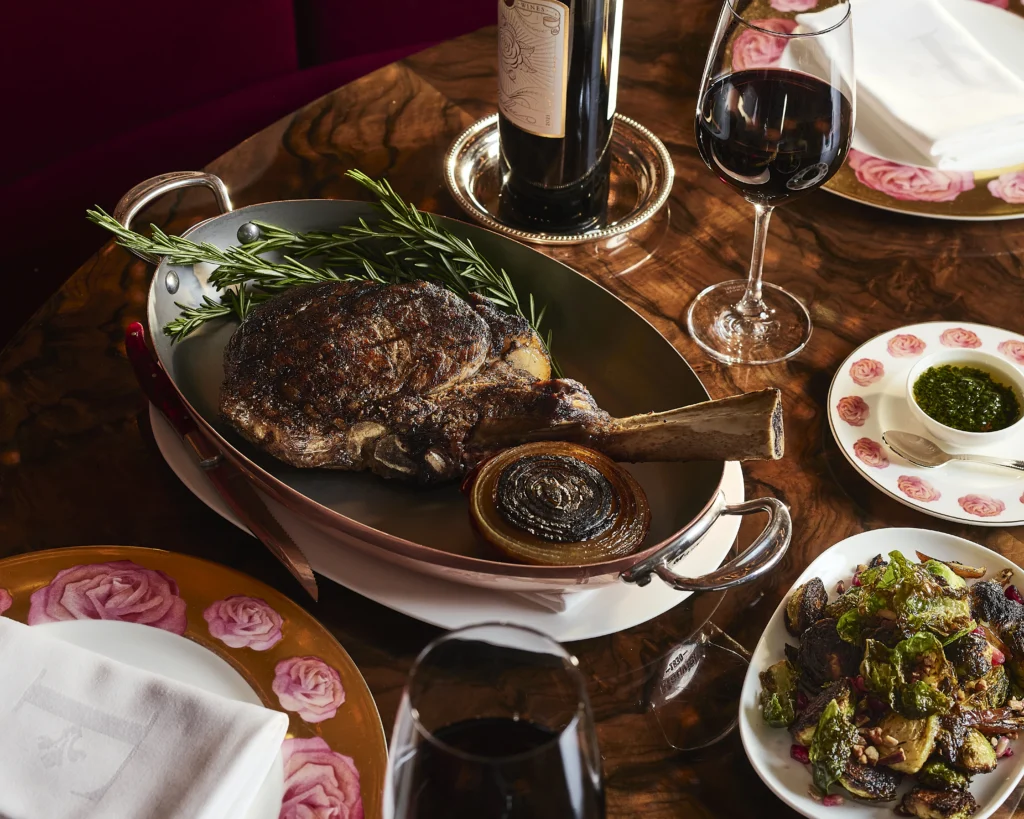
Photo:Nikolas Koenig
At night, a live band plays and dishes finished over embers set the tone. “La Boca is not a sophisticated neighborhood, but it holds the soul of Argentina,” Mallmann said. “It was here that tango was born; … where soccer transcends the field and becomes myth.”
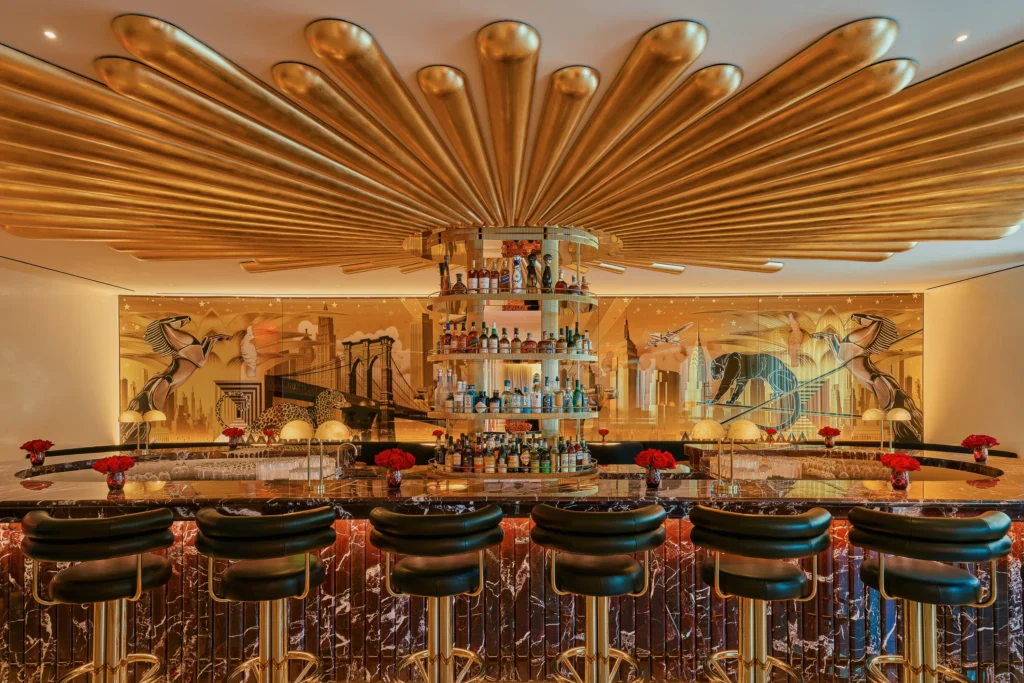
Photo:Nikolas Koenig
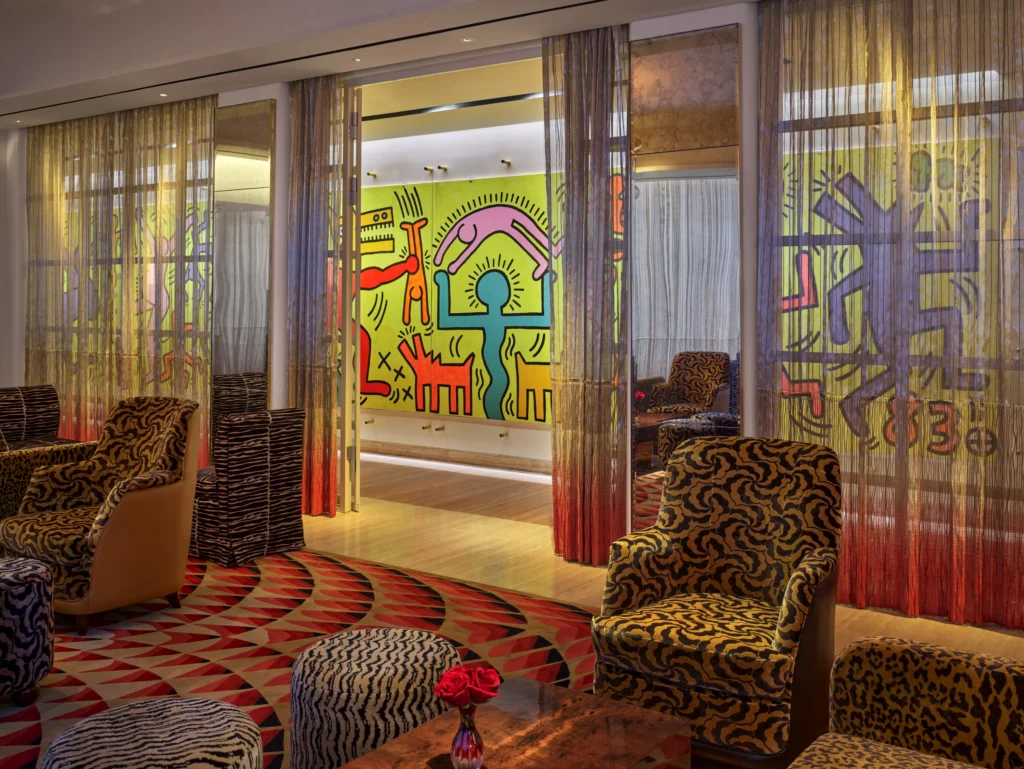
Photo:Nikolas Koenig
Bordered by two bars, the lounge The Living Room anchors Faena New York and opens onto an 84-square-meter terrace with views of the High Line. Local and international artists perform every night, followed by DJ sets until the early hours. At the back, Juan Gatti’s mural, in silver and gold leaf, shines beneath three chandeliers inspired by Alan Faena’s private homes.
Concealed behind an unmarked door, El Secreto is a speakeasy with works by Chilean artist Sebastian Errazuriz. Undulating mirrored panels wrap visitors in a reflective portal, and an avant-garde version of the disco ball rotates slowly at the center, like a fragmented iceberg. The sculpture projects a mosaic of shining shapes over the six-seat bar and the sinuous benches. “It is a kind of dazzling and dizzying beauty by nature, but at the same time deeply intimate and precious in a way that we sorely miss,” Errazuriz said.
How to relax?
Wellness has its own address: the Tierra Santa Healing House, within Faena New York, covers 1,580 square meters and is one of the largest spas in the city.
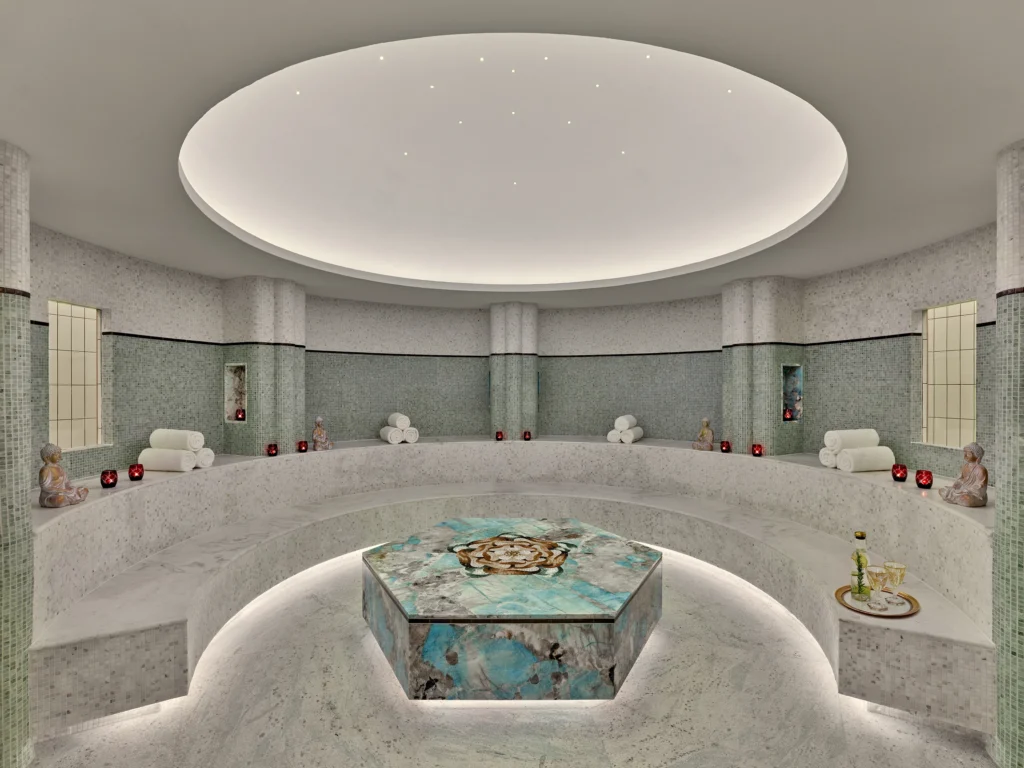
Photo:Nikolas Koenig
Inside are 10 treatment rooms, an exclusive hammam, infrared saunas, a Turkish bath and five pools, each with a distinct temperature, aroma or salinity.
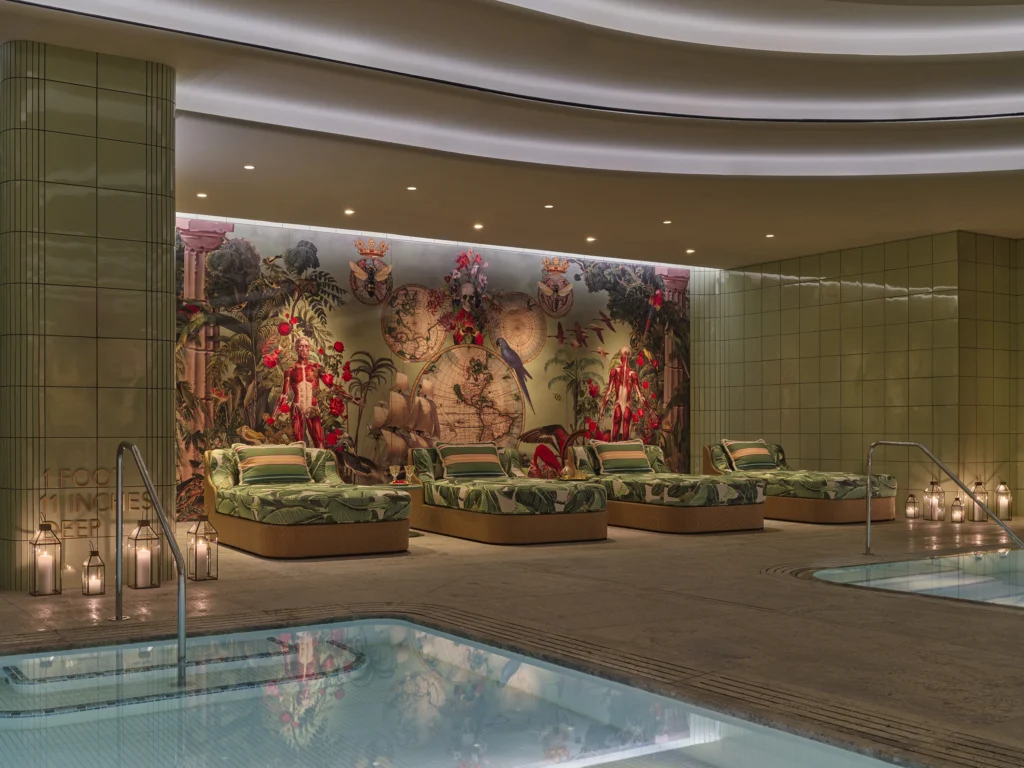
Photo:Nikolas Koenig
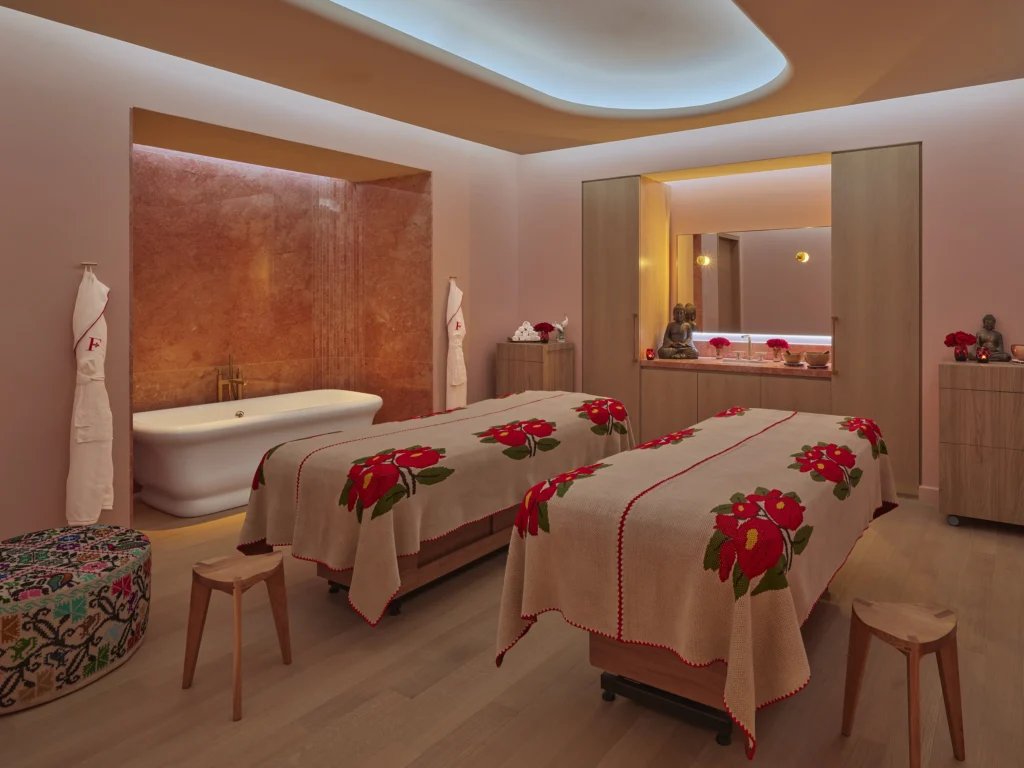
Photo:Nikolas Koenig
A menu of personalized treatments combines ancestral healing rituals from South America with cutting-edge techniques, from intravenous therapy to facials by Biologique Recherche.
Verdict
Faena New York shows that art can organize the experience of an entire hotel, from the facade to the last treatment room. The strategy rests on the diversity of Argentine, Colombian and Chilean artists, who fill each space with a language of its own, without diluting the identity of the house. Completing the ensemble is the Faena Theater, an intimate venue with circus cabarets, Grammy-winning musicians and tango shows.
Related reading: Serendipity 3 and the New York restaurant experience, and Aguirre Design on craftsmanship and sculpture in signature furniture made in New York.
Address: Faena New York, 500 West 18th Street, New York.