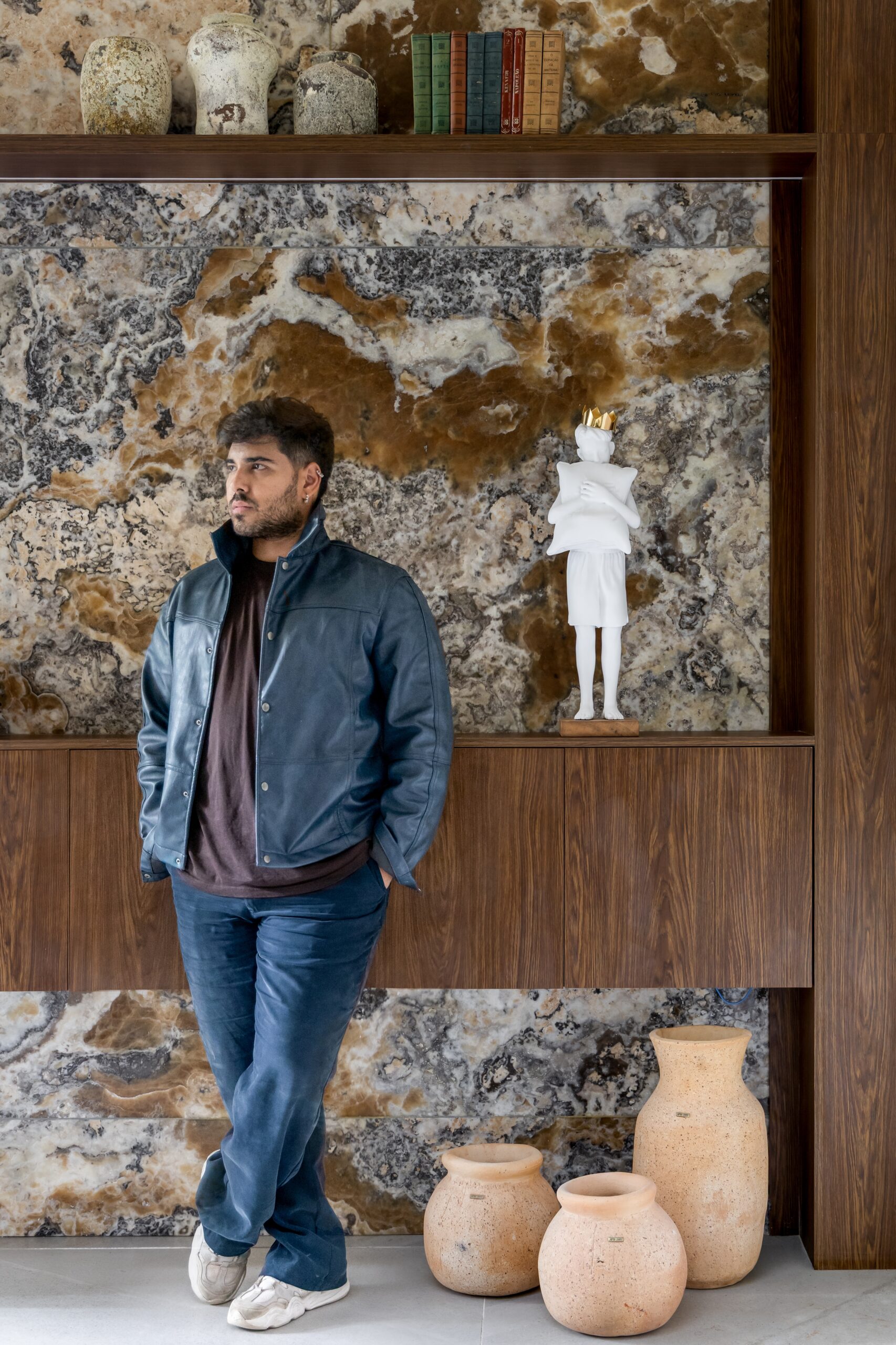
 Samuel Navarro Serpa

Photo: Fernanda Grings
Camilo Jr. Architect & Columnist BUSINESS OF LIVING
Slow curation and sentimental upcycling redefine what is expected of an interior and expand the architect’s role in the face of fast design
NEW YORK — Interiors are no longer judged only by their color palette or furniture brand, but also by the narratives they hold. I describe this shift as the geography of affection, a response to a market in which whole homes are ordered online, delivered in flat boxes and assembled in a few hours.
Such a model standardizes home life and delivers interchangeable results, almost always without a signature. In contrast, slow, intentional curation is gaining strength, a practice in which objects stop being mere occupants of the space and begin to speak for it. A vase found on a trip or a painting bought from a street artist breaks the coldness of a room and brings identity into the home.
Natural textures and raw materials gain value in projects: wood with visible grain, ceramics with irregular contours, leather marked by time. Wear and imperfection, once treated as flaws, now serve as proof of life.
Functionality is discussed often, but the value of a piece is not exhausted by practical use. I call “emotional ergonomics” the comfort that embraces through nostalgia and meaning, a notion that helps explain the appeal of surfaces with a past. For those who design, this shifts the question: from “what matches?” to “what would this person not accept losing?”
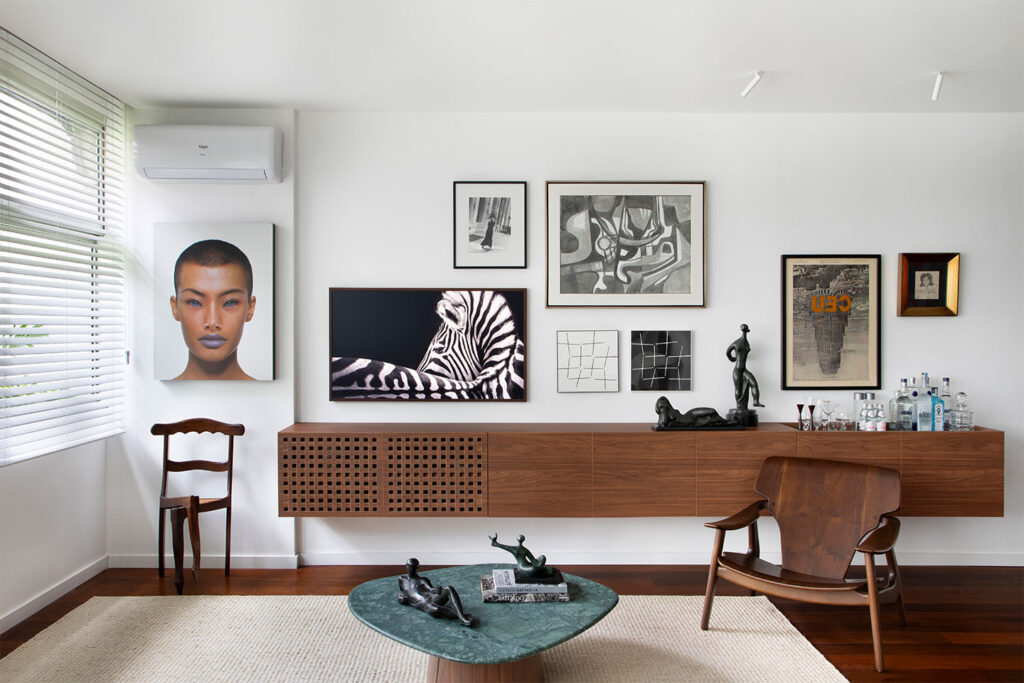
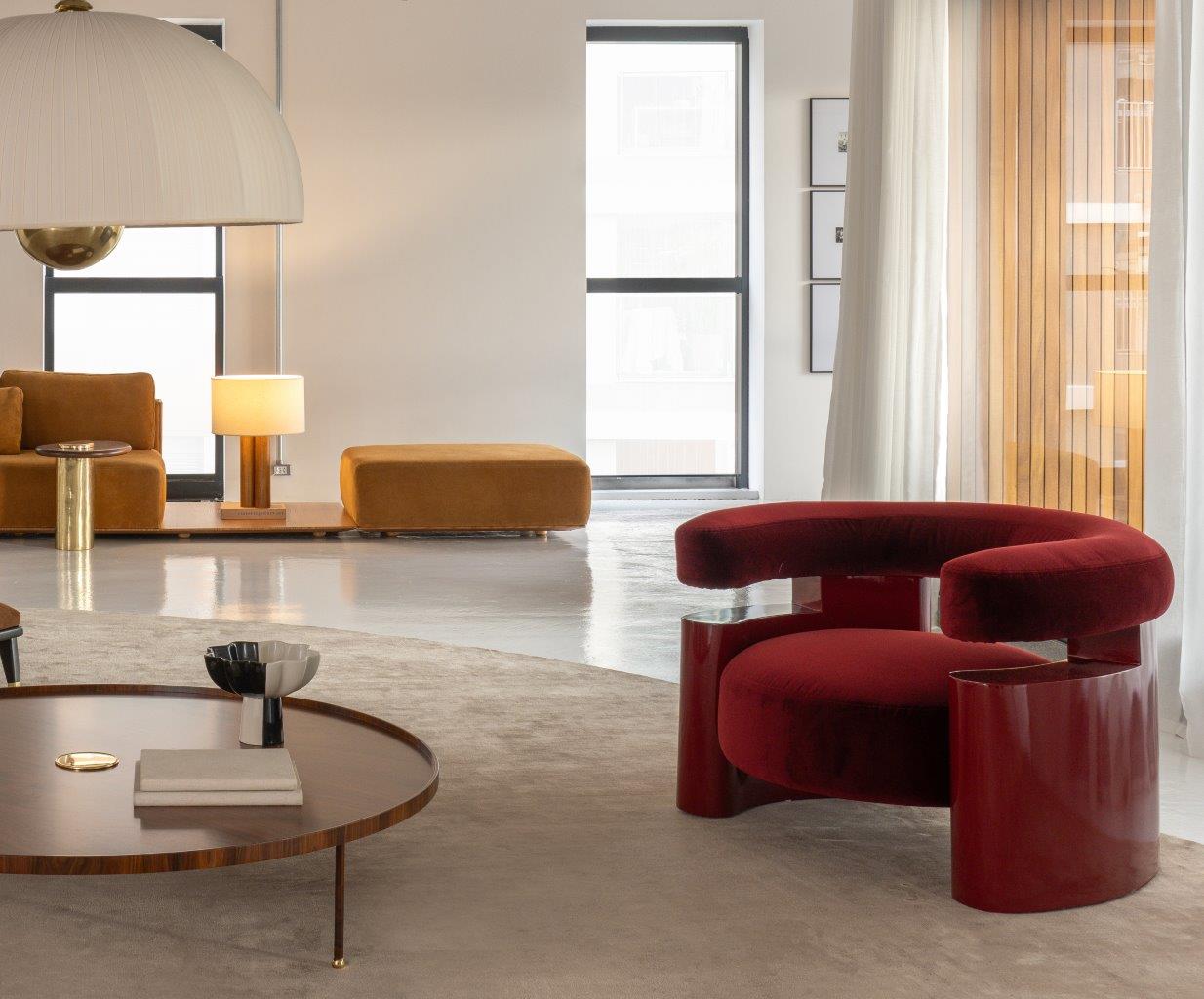
Apartamento Galeria, a project by Fabiano Prates Ravaglia of FPR Studio. Photo: MCA Estudio
Sentimental upcycling illustrates this thesis well. The term first appeared in print in 1994, in an article by Thornton Kay in SalvoNEWS, which cited Reiner Pilz, a German. The concept designates the creative transformation of waste and discarded materials into products of greater value and quality. In the home, the idea amounts to bringing a grandfather’s armchair into the present: upholstering it in technical fabric or in a vibrant color, or placing it beside an industrial coffee table of metal and glass to create contrast. The memory remains, and the piece gains a new context.
Secondhand furniture is already a market of real scale. Mordor Intelligence estimates the global value of used furniture at $49.5 billion in 2026, with average annual growth of 4.85% through 2031. Future Market Insights projects a market of $41.2 billion, growing 7.9% a year through 2036. The figures diverge, but they point in the same direction.
Architecture professionals expand the reach of their work by organizing the collections that clients already own, instead of specifying a closed set. The furniture industry and retailers, in turn, gain room to offer restoration, renovation and customization, in addition to selling new products. For residents, the result is a home that speaks to their own history, not to a catalog.
Limits exist, however. Treating memory as a method can turn the home into a museum of nostalgia. The proposal is different: to combine contemporary design with the past, without either canceling the other. It falls to the practitioner to distinguish affection from accumulation, since not every inherited object deserves a place in the living room.
Arranging furniture means mapping who we are, how we live and how we relate to the world. The interior becomes a logbook: the round table that ensures glances cross at dinner; the worn armchair, turned toward the window with the best afternoon light; the bookshelf that mixes, without shame, an original design piece and a framed concert ticket.
Judged less by the delivery photograph and more by use over the years, the interior tends to demand slow curation from the industry, projects open to the client’s collection and less dependence on ready-made solutions. A home guided by the geography of affection refuses to serve as a storefront set, accepts its imperfections and starts from a simple principle: before being decorated, it has to be lived in.
Sources: Mordor Intelligence; Future Market Insights; SalvoNEWS