 Serpa
Serpa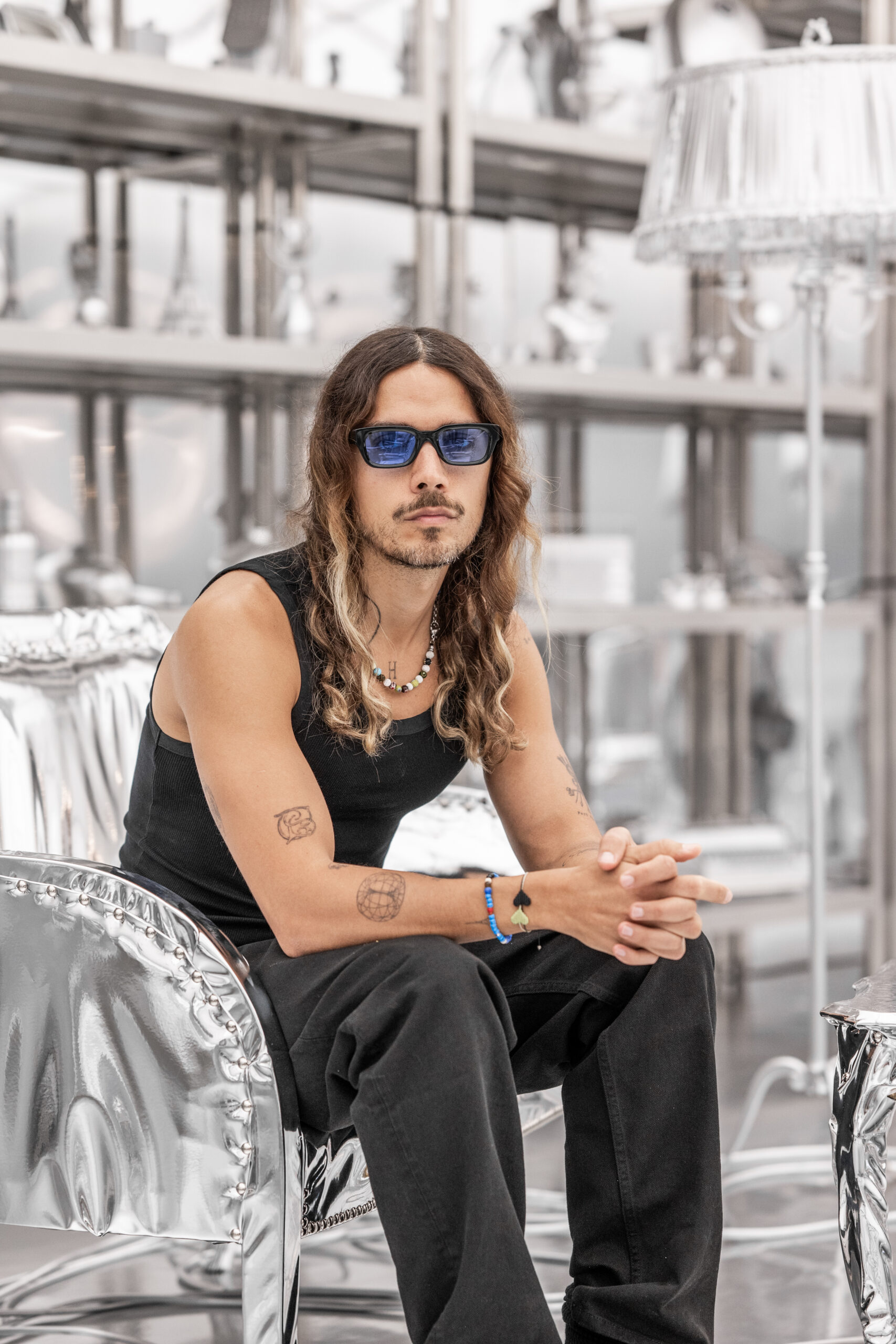
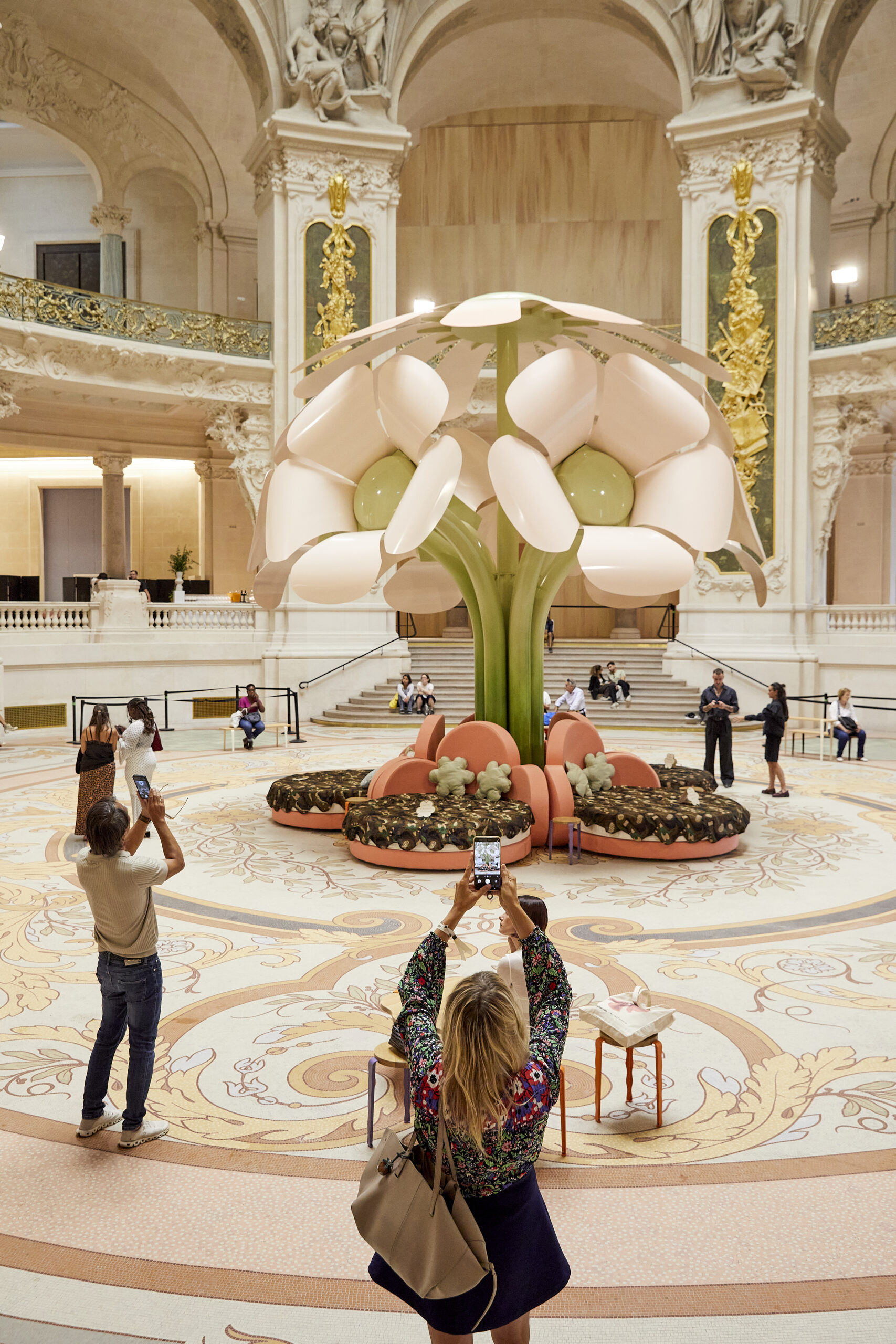
HARRY NURIEV_Maison&Objet Jan2026_©Anne-Emmanuelle Thion
Harry Nuriev advocates for creative reuse of objects in manifesto presented at Parisian design fair
NEW YORK – Harry Nuriev, chosen by Maison&Objet as Designer of the Year for January 2026, presented a manifesto at the Parisian fair proposing “transformism” as an alternative to throwaway culture. The approach involves giving new life to forgotten objects without disguising their original essence, materialized in an immersive installation that functions as a manifesto space.
“It’s not a time for regret. It’s a time for action,” Nuriev states in the text. For the designer, true innovation doesn’t lie in inventing new products, but in the ability to perceive the value of what already exists.
The Transformism installation, presented at the fair, frees objects from their traditional classifications. Past and future dissolve. Heritage, innovation and everyday forms are reframed through a single lens: perception. Nuriev invites visitors to disengage from notions of “old” or “new” and experience each object as something timeless, stripped of hierarchy and convention.

HARRY NURIEV_M&O_Jan2026_©Anne-Emmanuelle Thion
Blending art, interior design, fashion and spatial design, the installation explores how history can be revealed through a contemporary gaze. A space where discomfort becomes a catalyst, and where transformation happens not through addition, but through reinterpretation.
Maison&Objet, Europe’s leading design and decoration fair, held twice a year in Paris, brings together exhibitors from over 60 countries and attracts approximately 80,000 visitors per edition. The selection of a Designer of the Year is one of the event’s main curatorial initiatives, highlighting professionals who represent emerging trends and innovative visions for the sector.
Founded in 1995, Maison&Objet has established itself as a barometer of global trends in design, decoration and lifestyle. The fair occupies the pavilions of Parc des Expositions de Villepinte, in the northern region of Paris, and is divided into various thematic sectors covering everything from furniture and lighting to decorative accessories, textiles and tableware.

HARRY NURIEV_M&O_Jan2026_©Anne-Emmanuelle Thion
The event is organized by SAFI, a subsidiary of Ateliers d’Art de France and RX France, and has become an essential reference for architects, decorators, retailers and industry professionals seeking news and networking. In addition to the Parisian editions in January and September, the brand has expanded to other markets, with versions in Singapore and Miami, consolidating its global presence.
The Designer of the Year selection is announced months before each edition, and the chosen professional receives special prominence at the fair, with exclusive exhibition space and a program of lectures and debates. Names such as the Bouroullec brothers, Jaime Hayón, Nendo and India Mahdavi have received the distinction in previous editions.
Nuriev’s trajectory
Harry Nuriev was born in 1984 in Kazakhstan, then part of the Soviet Union, and grew up between disparate cultures and references. His family emigrated to the United States when he was still young, an experience that shaped his vision of identity, belonging and people’s relationship with objects and spaces.
Trained in design at Parsons School of Design in New York, Nuriev founded his studio Crosby Studios in 2015, which quickly gained international recognition for projects that blend interior design, architecture, set design and art installations. The studio is based in New York and Moscow, reflecting the designer’s multiple identities.
Among his best-known works are collaborations with brands such as Balenciaga, for whom he developed runway sets, and Burberry, in addition to residential and commercial projects that explore post-Soviet aesthetics, pop culture and internet references. Nuriev has also designed restaurants, hotels and retail spaces in various cities.
His work is marked by an aesthetic that some critics classify as “digital maximalist” – environments saturated with color, contrasting textures and references ranging from Soviet brutalism to the virtual world of video games. But it is in the re-signification of discarded objects that Nuriev has been building his most recognizable signature.
The concept of transformism
The manifesto presented at Maison&Objet systematizes a philosophy that Nuriev had already been applying in his projects. The concept of transformism is based on the idea that we live in a world oversaturated with objects, data and ideas, and that the solution is not to produce more, but to rethink what already exists.
“I enter a space, a context, a reality – and I choose,” explains the designer. “I gently choose what resonates with me, what moves me. I choose what seems beautiful. What seems strong. And I try to make it stronger.”

HALL 2_M&O_Jan2026_©Anne-Emmanuelle Thion
The method consists of identifying objects or spatial elements that have lost their place or been forgotten, and returning them to the scene with new weight, clarity and presence. It’s not about camouflaging the origin of these objects or transforming them radically, but revealing qualities that were latent.
In previous projects, Nuriev had already worked with furniture found on New York sidewalks, thrift store objects and demolition materials. One of his most emblematic works is the “Apartment of the Future,” where he reimagined an apartment using exclusively discarded objects, creating environments that question notions of luxury and newness.
“It’s about creating creative connections between what others have looked at and forgotten,” says the manifesto. “It’s about questioning what beauty means today – and discovering it in what has been ignored, rejected or transformed.”
A statement for the future
Maison&Objet’s organization defines Transformism as more than an installation – it’s a statement that resonates with those shaping tomorrow’s interiors, cultural spaces and hospitality experiences through narrative, reuse and radical simplicity.
Nuriev’s proposal finds resonance at a time when the design sector faces profound questions about its role in the face of climate and resource crises. The approach suggests that transformation doesn’t need to be dramatic or complex, but can happen through a simple shift in perspective.

HALL 2_M&O_Jan2026_©Anne-Emmanuelle Thion
Sustainability and social critique
The transformism proposed by Nuriev directly engages with growing concerns about sustainability in the design sector. The furniture and decoration industry faces criticism for increasingly rapid renewal cycles, stimulated by ephemeral trends and the so-called “throwaway culture.”
According to industry estimates, millions of tons of furniture and decorative objects are discarded annually in the United States and Europe alone, many of them still in usable condition. The phenomenon has worsened with the popularization of low-cost, short-durability furniture.
“In a world that no longer needs more things, transformism offers a gesture of care,” states the manifesto. Nuriev’s proposal presents itself as “a tool for reflection and an honest creative act. Radical but fun.”

HALL 2_M&O_Jan2026_©Anne-Emmanuelle Thion
Nuriev’s selection by Maison&Objet reflects the fair’s movement toward themes such as circular economy, upcycling and responsible design. In recent editions, the organization has created specific sectors for sustainable products and promoted debates about the industry’s future in the face of climate and resource crises.
Reception and perspectives
The presentation of the manifesto at the January 2026 edition generated intense debates among sector professionals. While some celebrate the proposal as a viable path toward more conscious design, others question whether the approach can be scaled beyond high-value authorial projects.
Critics point out that transformism, as practiced by Nuriev, depends on a sophisticated curatorial eye and resources to rework objects, which could limit it to luxury niches. Supporters argue that the method can inspire more accessible approaches and disseminate a culture of valuing what exists.
Nuriev, for his part, maintains that transformism is not just a technique, but a change in mindset. “It’s a way of seeing, feeling and acting,” says the designer. A philosophy that proposes seeing beauty and potential where others see only waste, and that materializes at Maison&Objet as an invitation to reflect on the role of design in the 21st century.
Instagram: https://www.instagram.com/harrynuriev/