 Serpa
Serpa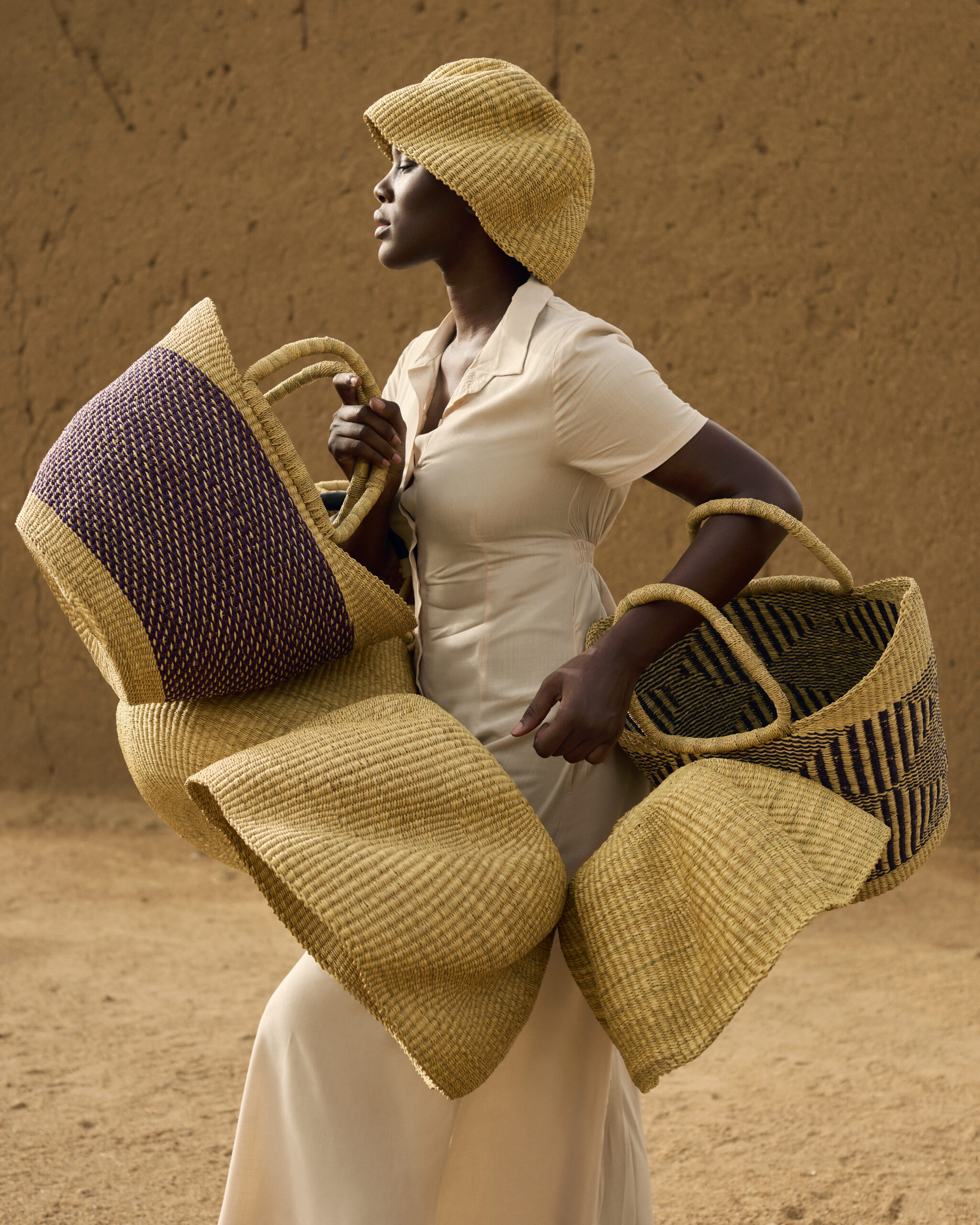
Zaarefolks maintains traditional weaving methods whilst employing more than 150 artisans in Bolgatanga
In the city of Bolgatanga, in northern Ghana, near the border with Burkina Faso, more than 150 artisans preserve an ancient tradition: crafting baskets made from elephant grass. What was once merely knowledge passed from mother to daughter has been transformed into a sustainable source of income for these women through the social enterprise Zaarefolks.

The organisation, which follows fair trade principles, connects traditional Zaare community craftsmanship to the international market. Each basket produced carries not only the object’s functionality but also centuries of cultural knowledge transmitted between generations.
Tradition beneath the Baba tree
The production process takes place in the shade of the Baba tree, a symbol of strength and peace in local villages. It is there that traditional weaving techniques are taught and perfected. Elephant grass, an abundant material in the African savannahs, is harvested sustainably and transformed into durable products.
Each piece reflects the unique artistry and signature of the weaver. The baskets vary in size and design, from small pieces for household organisation to larger models for storage.

Economic and social impact
Bolgatanga, capital of Ghana’s Upper East Region, has a population of approximately 65,500 inhabitants, according to 2010 data. The local economy is based on agriculture and artisanal production, with the city’s market recognised internationally for its colourful baskets.
Zaarefolks operates as a fair trade company, ensuring decent wages and adequate working conditions. The initiative focuses particularly on women’s empowerment, offering opportunities for financial independence to women in the region.
Beyond income generation, the company develops projects in education, health, and environmental conservation, benefiting the entire local community.

Sustainability and global market
Elephant grass is utilised as raw material due to its sustainable characteristics. It is a renewable resource with rapid growth and low environmental impact. The resulting baskets combine durability with aesthetic appeal, serving both functional and decorative purposes.
Zaarefolks maintains its own online shop and establishes partnerships with international brands, interior designers, art galleries, and hotel chains. The company offers bespoke products, adapting traditional designs to meet global market demands.

Cultural preservation
Bolgatanga basketry represents more than economic activity: it constitutes the region’s intangible cultural heritage. The weaving techniques, developed over centuries, risk disappearing without preservation initiatives.
Zaarefolks’ work contributes to keeping this tradition alive, ensuring that ancestral knowledge is transmitted to new generations. Each basket sold in the international market carries stories, techniques, and the cultural identity of the Zaare people.
The city of Bolgatanga also distinguishes itself in musical production, being the birthplace of “colog colog,” a style that utilises the koliv, an instrument similar to the lute. This cultural richness complements the region’s artisanal scene.

Challenges and prospects
Zaarefolks’ business model faces challenges typical of international artisanal product trade: the need for standardisation without loss of authenticity, complex logistics, and competition with industrialised products.

The company seeks to balance innovation and tradition, developing new patterns and techniques whilst preserving ancestral methods. Collaboration between the design team and master weavers aims to maintain product quality and authenticity.
The growing demand for sustainable and fair trade products in the global market represents an opportunity for business expansion, directly benefiting the artisans of Bolgatanga and their families.