 Samuel Navarro Serpa
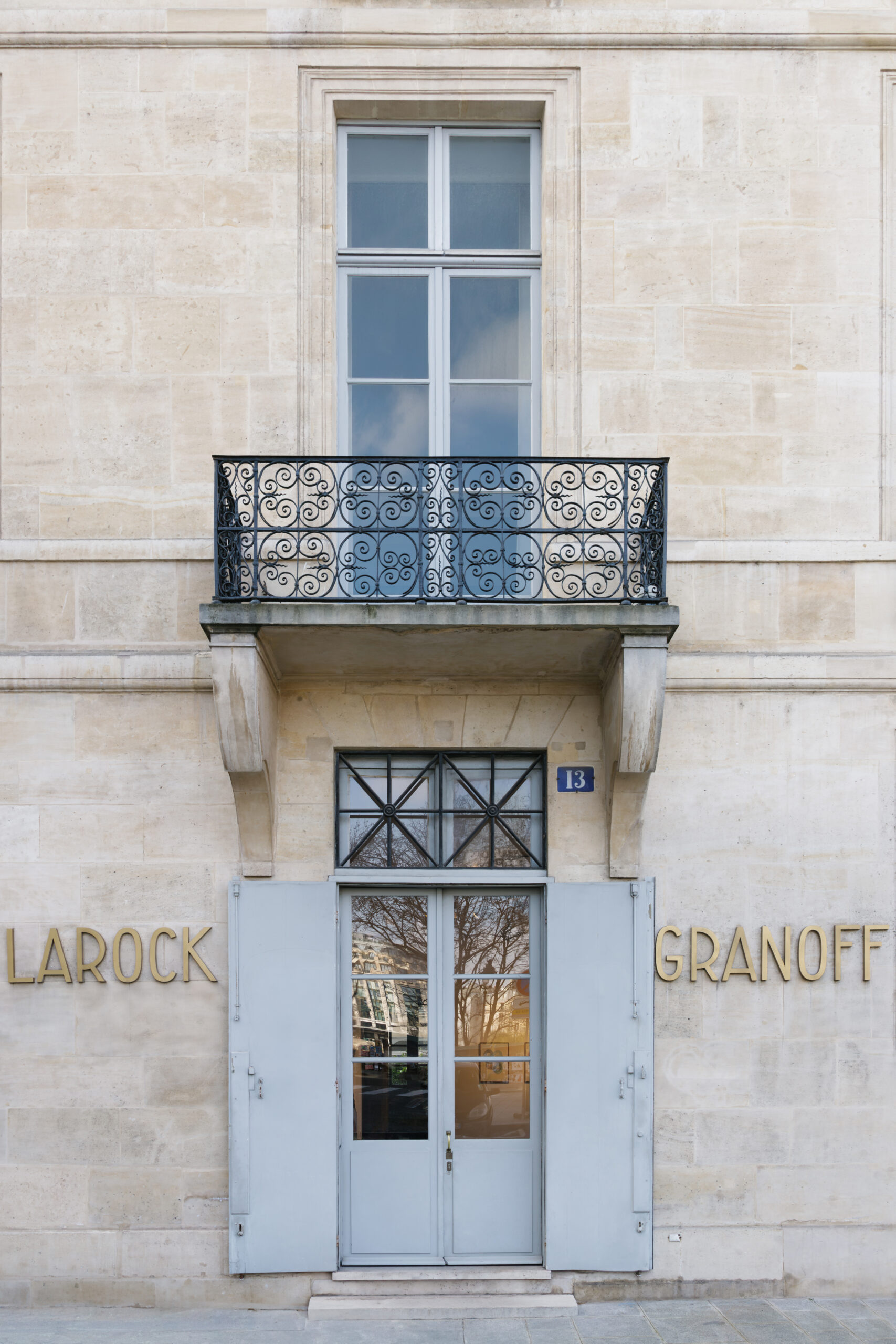
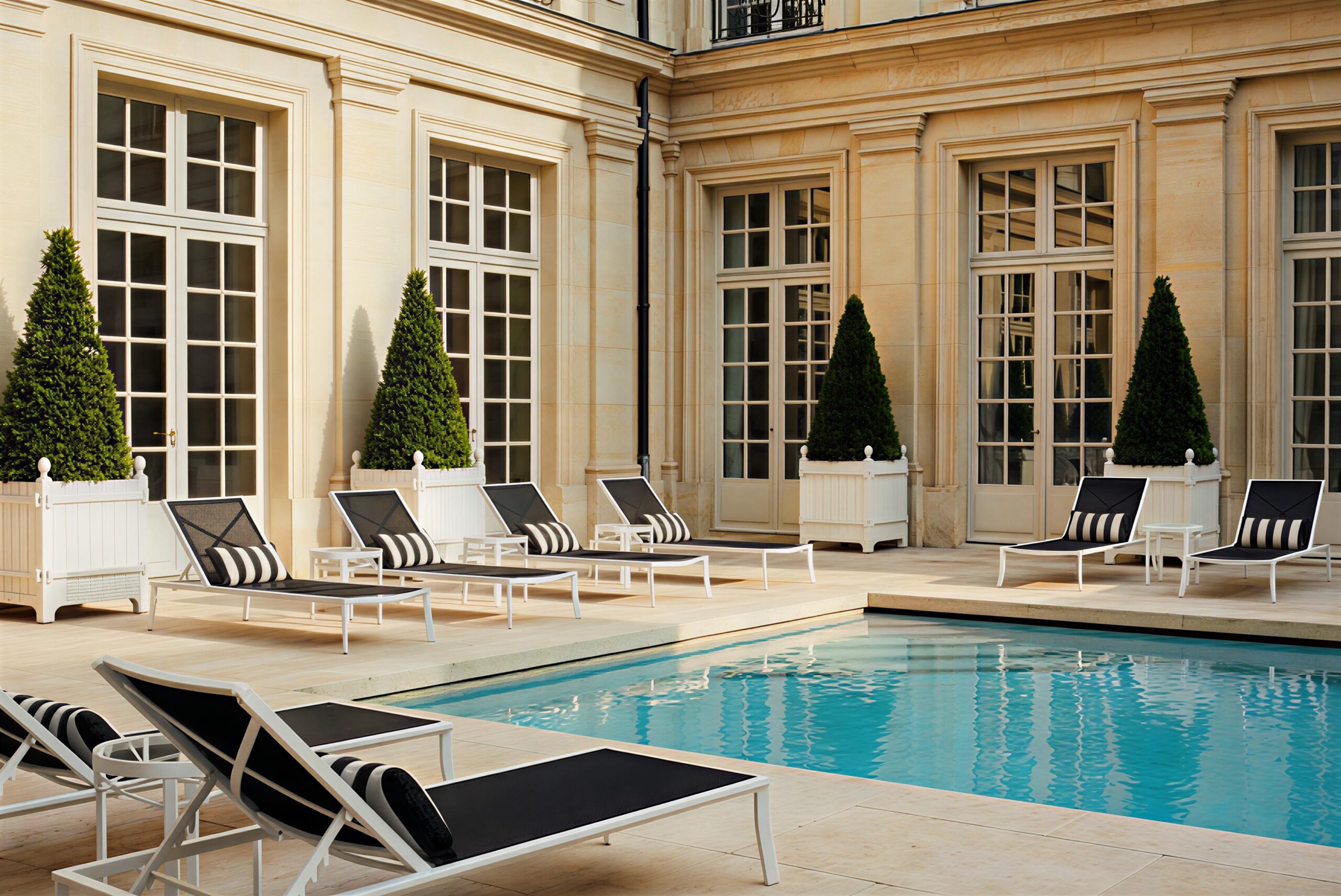
The facade of Galerie Larock-Granoff at 13 Quai de Conti, in Paris. Photo: Courtesy of S2H Communications
Selection of 4 artists summed up a century of the gallery’s history
By Samuel Navarro Serpa
PARIS — Larock-Granoff took part for the first time in Fine Arts Paris, a fair held at the Grand Palais from Sept. 19-23, 2026. Founded in 1924 by Katia Granoff, the gallery brought four artists to the event: Marc Chagall, Chana Orloff, Jean Messagier and Olivier Gourvil.
According to the gallery, Larock-Granoff is the oldest in Paris still in operation. It marked its centennial in 2024 and is now in the hands of the fourth generation of art dealers. Its debut at the fair coincided with the reopening of its programming.
On Quai de Conti in Paris sits the gallery’s headquarters, which brings together works from the 20th century and by young contemporary painters. Another space is in Honfleur, in Normandy.
Four artists, three eras
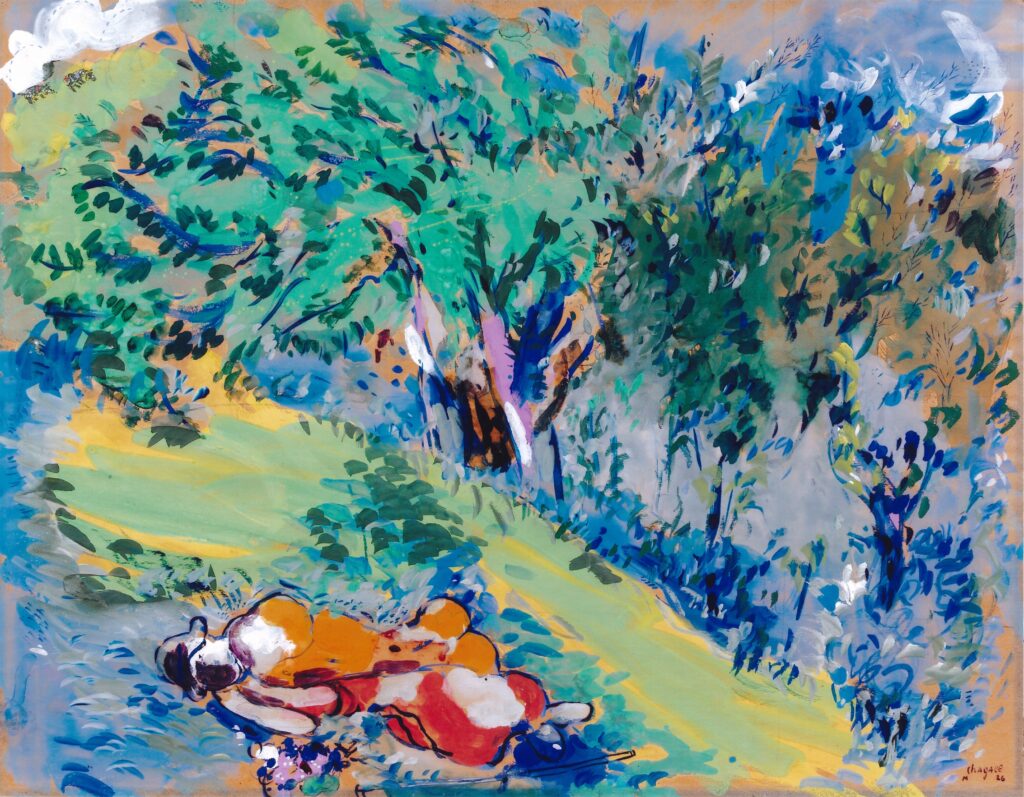
Four artists, three eras”: Marc Chagall, “La Sieste,” 1926. Gouache on brown colored paper, signed and dated lower right. Photo: Courtesy of S2H Communications
Chagall was the first artist championed by Granoff since the gallery opened. She met him at the Salon des Tuileries and began buying his canvases. When the painter was expelled from the Salon, she supported him and exhibited his work. Their relationship lasted decades.
Orloff, a sculptor, continued that tradition of loyalty between gallery owner and artist. She lived in exile and worked in an art world then dominated by men. Granoff always admired her sculptures, and the two women’s paths intertwined.
Messagier’s work has been shown at the gallery since 1991. With him, under the direction of Pierre Larock, abstraction entered programming until then devoted to figurative art. His painting was free and instinctive, the gallery says, with nature omnipresent but never literally depicted.
Gourvil turns his gaze to the present. His work, on the border between figuration and abstraction, leaves viewers free to find their own interpretations.
For the gallery, the four artists span three eras and express a desire to pass on knowledge and encourage dialogue between generations.
A secretary who became a gallery owner
Granoff was born on July 16, 1895, in Mykolaiv, Ukraine. She lived in her hometown with her parents and her sister, Rose, until she was 16, when she was orphaned. She then went to study in Switzerland, where she earned a degree in literature and social sciences.
Later, she moved to Berlin to work. War devastated the city, and she went on to Paris, where her sister, a newlywed, lived.
By 1924, she was in Paris with no money. A job ad caught her eye: the Salon was looking for a secretary.
With Paris establishing itself as an international center of painting, artists from many countries were moving there. Granoff began buying canvases and, because she had entered the market late, focused on painters not yet established.
Her next move, in 1926, was to 166 Boulevard Haussmann. After Chagall, she exhibited Pierre Laprade, Georges Bouche, Othon Friesz and others. She lost the gallery three times but persisted. Finally, she settled at the gallery’s current address.
War, looting and reopening
She became a French citizen in 1937. With the declaration of war, Granoff shut the gallery’s doors.
Accompanied by her sister and her nephew, Pierre, she fled to the unoccupied zone of France and took refuge at the Château de La Voulte, a castle she had bought. It was confiscated to house Belgian refugees. On June 9, 1941, railway workers were requisitioned and, on July 12, the building was occupied, a situation that lasted until July 1942.
Despite the risks, she organized an exhibition of Georges Kars at the Galerie des Jacobins in Lyon. She later left the city and abandoned the castle, which the German army destroyed.
Back in Paris, she found the space looted and decided to reopen it, in 1944, with the works she had managed to save. She was the first to do so, according to the gallery.
Monet and the ‘Water Lilies’
After meeting Michel Monet, son of painter Claude Monet, Granoff bought all of the “Water Lilies” and exhibited them. In the 1950s, no dealer wanted them. French museum curators also showed no particular interest.
To those curators, Monet’s descendants should already consider themselves fortunate that the Orangerie Museum was displaying those giant works. Some even dismissed them as “blind man’s painting.” Granoff’s decision was hailed internationally, according to the gallery.
Literary work and honors
Also a poet, Granoff became known for her works “Les Amants maudits” and “Anthologie de la poésie russe” and received the Georges Dupau Prize from the French Academy.
Simone Veil and Senate President Alain Poher presented Granoff with the National Order of Merit in 1979. She also received the Legion of Honor and the National Medal of Arts, Sciences and Letters. She died in 1989 at 93.
Collection spans the 20th century
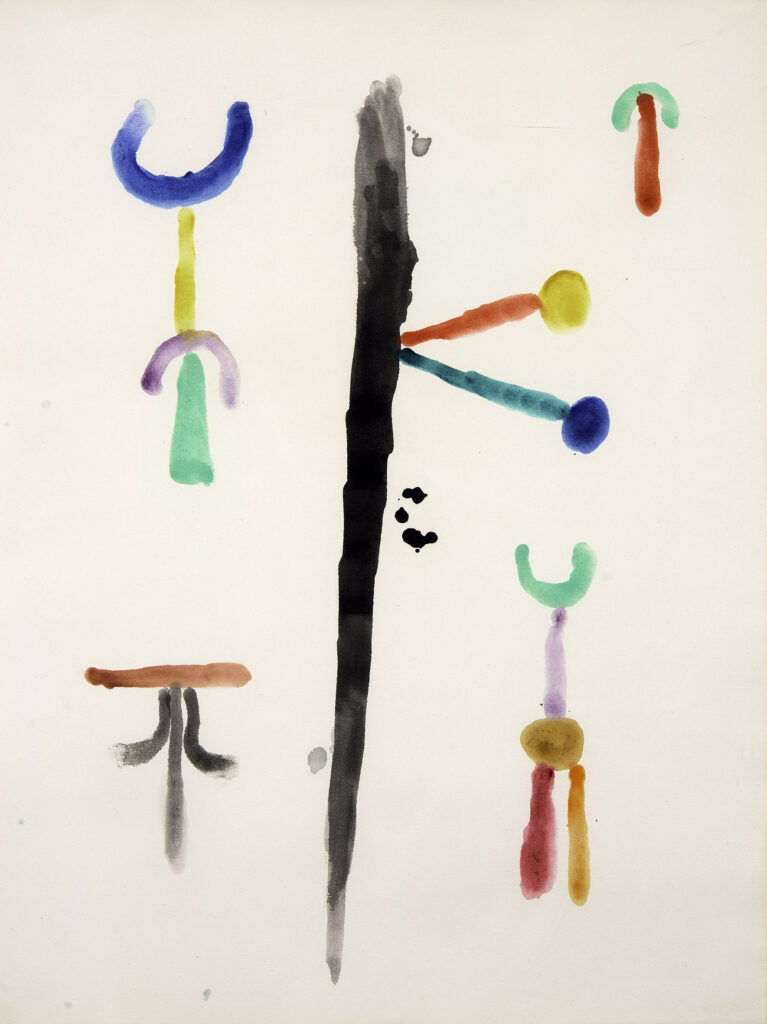
Collection spans the 20th century”: Joan Miró, “Sans titre,” 1949. Ink and watercolor on paper, 66 by 49.5 centimeters. Photo: Courtesy of S2H Communications
Dozens of artists make up the gallery’s roster, among them Monet, Chagall, Joan Miró, Chaïm Soutine and Georges Rouault, as well as Charles Lapicque and Fahrelnissa Zeid.
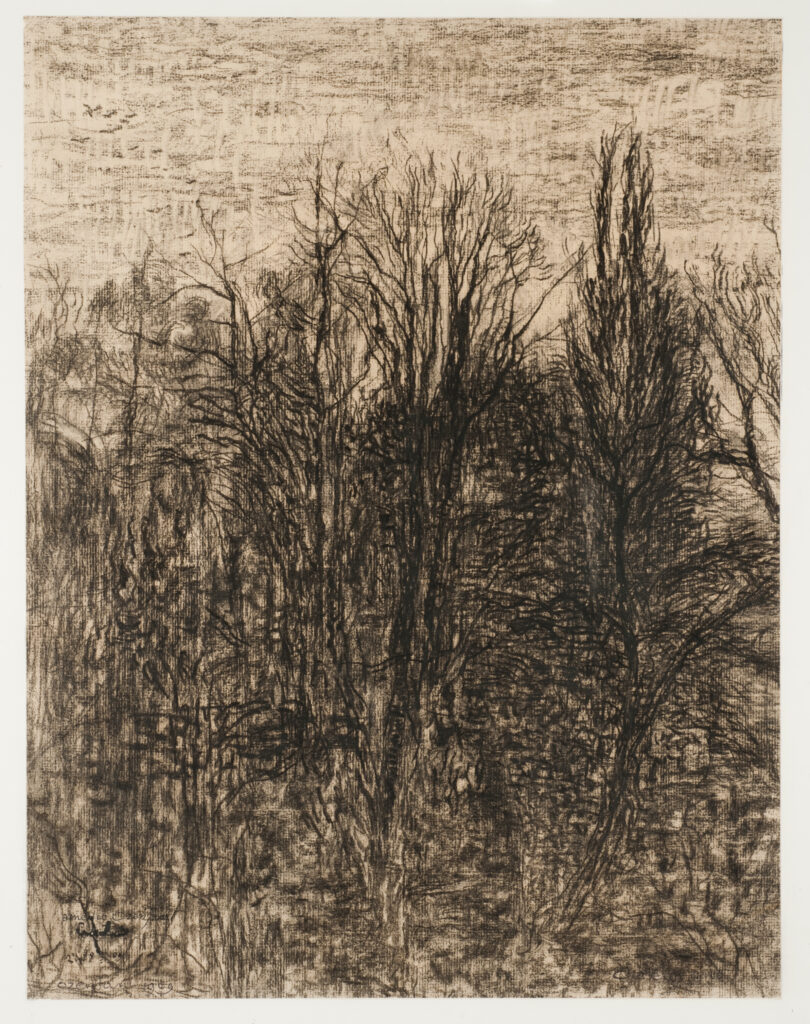
Among the names is Amédée Ozenfant”: Amédée Ozenfant, “Arbres en hiver” (“Trees in Winter”), 1909. The work comes from the artist’s pre-Purist phase, almost a decade before he founded Purism. Photo: Courtesy of S2H Communications
Among the names is Amédée Ozenfant, a painter who founded Purism alongside architect Le Corbusier. Purism advocated simple geometric forms.
Mané Katz, Jacqueline Marval, Pierre Tal-Coat, Jean Couty, Daniel Hourdé, Roland Toupet, Diane Victor, Charlotte Barrault, Gilles Bensimon, Alex Bloc, Marion Chesnais and Valentina Shapiro are also on the roster.
Favorites of Granoff’s included Laprade, Bouche, Friesz, Amédée de La Patellière and Rouault.
Presence in Normandy
Norman Impressionism and the Rouen School, a passion of Granoff’s in the 1950s, led the gallery to Honfleur. At the Old Basin, or Vieux Bassin, the space shows painters such as Friesz, Charles Angrand and Jacques Bouyssou.
Visitor information
Address: 13 Quai de Conti, 75006 Paris
Hours: Wednesday through Saturday, 10:30 a.m. to 7:30 p.m.
Email: contact@larock-granoff.fr
Phone: +33 1 46 33 77 90
Website: larock-granoff.fr