 Samuel Navarro Serpa
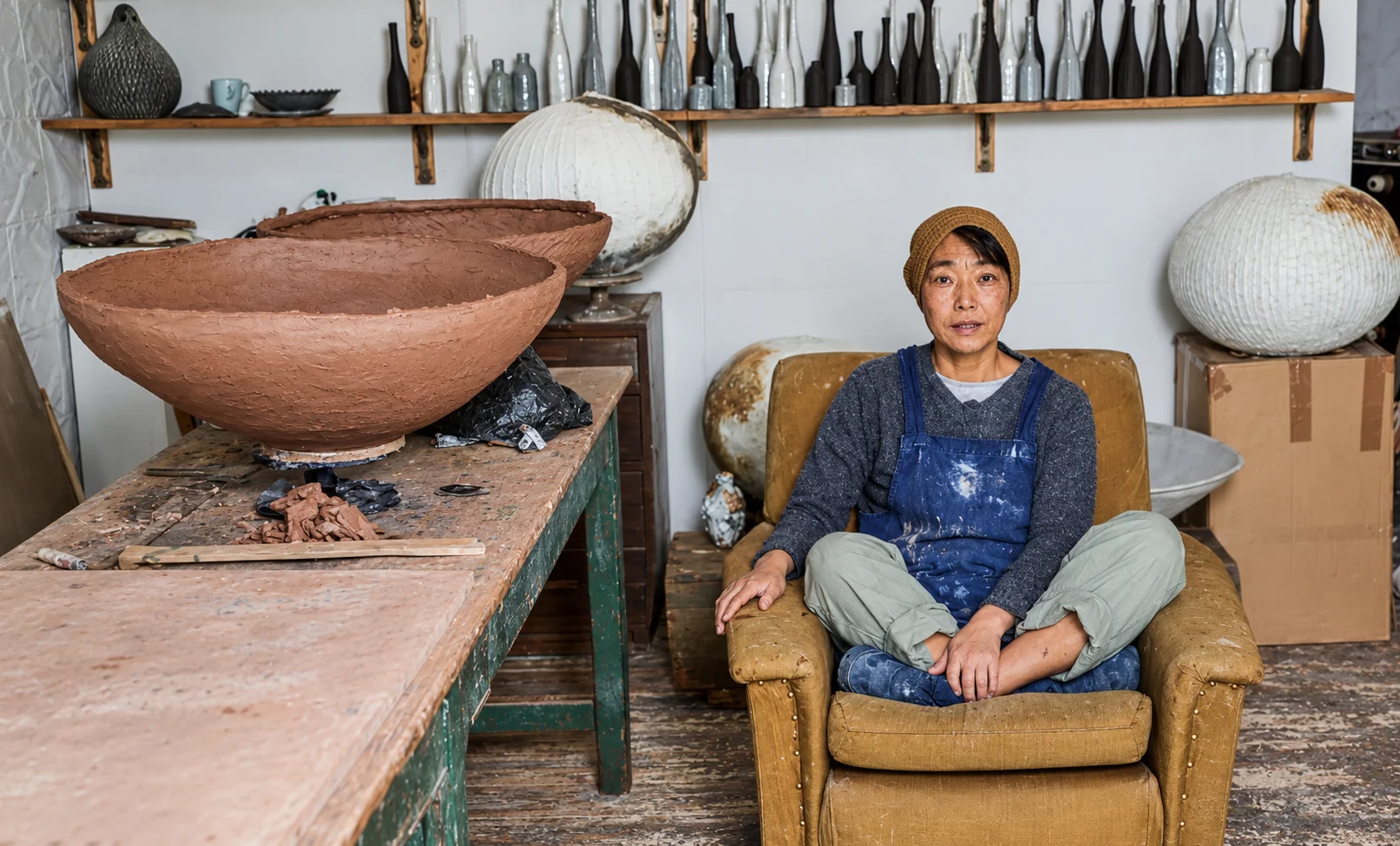
Akiko Hirai in her studio. Photo: Courtesy Contemporary Ceramics in London
On view through Nov. 7 at Contemporary Ceramics in London, the show gathers vases and jars by the Japanese ceramist trained in London, in which ash, fire and chance define form
By Samuel Navarro Serpa
Ceramist Akiko Hirai occupies Contemporary Ceramics in London with the exhibition “Akiko Hirai: Things that disappear when touched,” on view from Oct. 15 to Nov. 7, 2026. The title previews the argument: in her pieces, fragility is not a finish but a design principle, and each object exists at the limit of what an abrupt gesture could undo.
Getemono, the delicacy of the strange
Hirai approaches the body of work shown at Contemporary Ceramics in London as an investigation into balance. Her fragile, shifting forms occupy a state of delicate disequilibrium, as if gripping them too tightly could make something essential disappear. The ceramist rejects, however, the comfortable reading of imperfection.
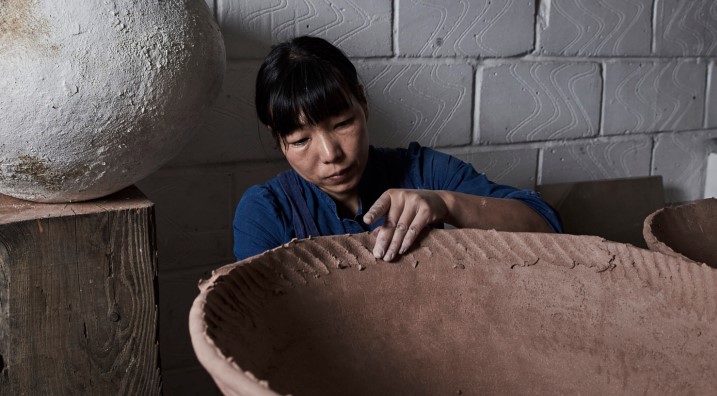
Akiko Hirai in her studio. Photo: Courtesy Contemporary Ceramics in London
“People often speak of the ‘beauty of imperfection,’ but not everything imperfect is beautiful. These works explore the delicacy of getemono (ゲテモノ): things seen as strange or grotesque, that escape conventional taste, held in a fragile balance that the slightest touch can disturb. One misstep and the piece simply becomes bad. It is not an obvious kind of beauty, but, surprisingly, it is very close to human instinct,” Hirai said.
In practice, everything begins with the medium. The Poppy Pod Vases on view at Contemporary Ceramics in London are thrown from her own blend of raku clay and, once dry, receive the touch of the fingers, which seeks the exact point between rough and refined. A layer of ash over porcelain forms the final, earthy surface, making each vase a unique object, historical and natural in its use of materials and technique.
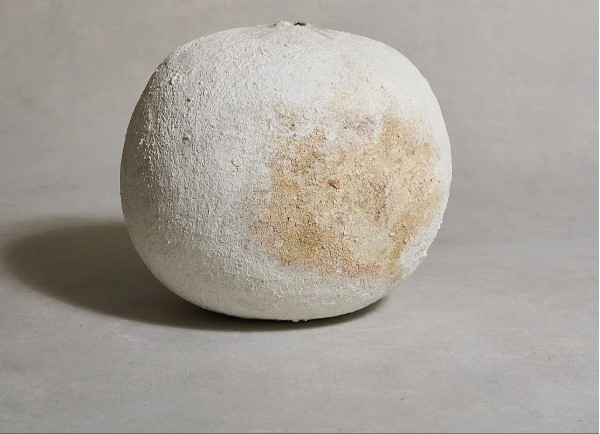
Poppy Pod Vases. Photo: Courtesy Contemporary Ceramics in London
Moon Jars at Contemporary Ceramics in London take the idea to the limit. Inspired by Korean jars that accumulate cracks, stains and chips with use, they deliberately reproduce that “history and experiences” through chemical reactions between glaze and ash. The technique has evolved since the first pieces, made in 2003, and pushes the boundary between finish and collapse: each imperfection becomes a record of the unstable nature of clay and fire.
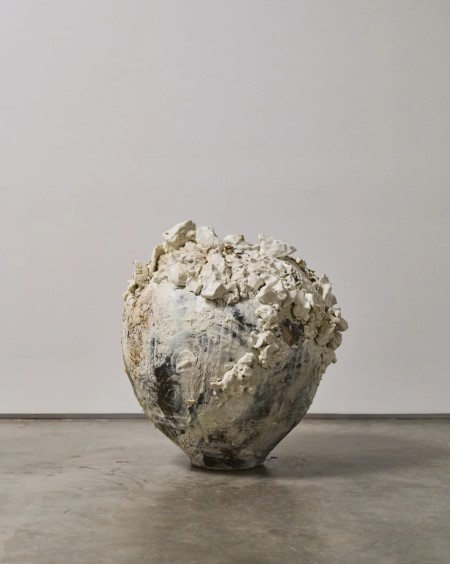
Moon Jars. Photo: Courtesy Contemporary Ceramics in London
Her method is also her own. In experiments with plants and earth, Hirai developed her processes of alkalinization, firing and glazing, and the acidity and minerals of each soil mark the surface of the finished vase.
Across both series, Hirai lets ash, fire and chance shape the final form. Poppy Pod Vases combine a layer of ash over porcelain with the touch of the fingers, while Moon Jars depend on chemical reactions between glaze and ash. In each case, the surface records the unstable nature of clay and fire. That tension between control and chance runs through the exhibition, and it explains why the title points to what a single touch could undo.
Born in Shizuoka in 1970, the artist studied cognitive psychology in Japan. After arriving in London, she worked at a shelter for people experiencing homelessness, which brought her closer to the therapeutic and expressive effects of the craft. She graduated in ceramics from the University of Westminster in 2001 and from Central Saint Martins in 2003.
Alongside the pieces at Contemporary Ceramics in London, works by Hirai are part of private collections and of institutional holdings such as the Victoria and Albert Museum in London; the Fitzwilliam Museum in Cambridge; the National Museum of Ireland in Dublin; the Everson Museum of Art in Syracuse, New York; the Hepworth Wakefield in the United Kingdom; and the Keramikmuseum Westerwald in Germany.
Details
Exhibition: “Akiko Hirai: Things that disappear when touched”
Artist: Akiko Hirai
Dates: Oct. 15 to Nov. 7, 2026
Location: Contemporary Ceramics in London, 63 Great Russell Street, Bloomsbury