 Samuel Navarro Serpa
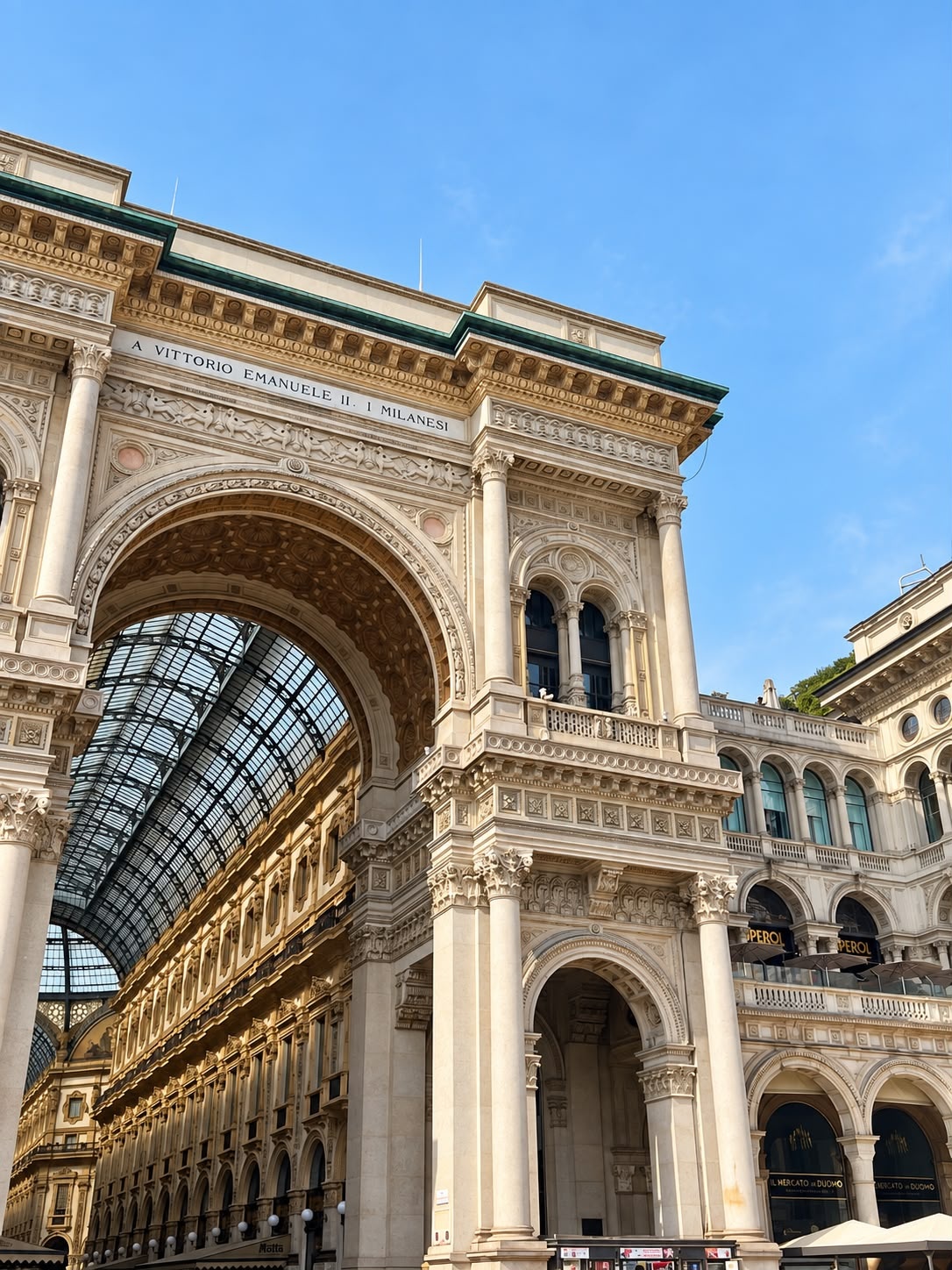
Galleria Vittorio Emanuele II
Lifestyle & Travel
By Fernanda Artibani
There are places that impress us for their history.
Others, for their beauty.
And there are those rare spaces that make us stop, raise our eyes and simply contemplate.
In Milan, that place goes by the name of Galleria Vittorio Emanuele II.
Millions of people walk through its corridors every year. Some arrive drawn by luxury brands, others by the architecture, the photography or the privileged location between the Duomo and the Teatro alla Scala. But sooner or later, everyone ends up making the same move: they look up.
Heart of Galleria Vittorio Emanuele II. Here, 19th-century engineering met the poetry of light. A monumental dome became a symbol of an era that believed architecture could bring humankind closer to the sky. Photo: Fernanda Artibani
An immense glass dome, suspended over the central octagon, dominates the space and captures the attention of passersby. For a few seconds, the city disappears. The noise fades. The gaze slows down.
Milanese people call it Il Salotto di Milano, the city’s living room.
And perhaps that is the most accurate definition there is.
There, luxury does not present itself as ostentation, but as part of the landscape. Among historic cafes, elegant storefronts and everyday encounters, life happens under one of Europe’s most emblematic coverings. The gallery is not just a tourist attraction. It is a lived-in space. A place where architecture is part of the routine.
But the true story of the Galleria Vittorio Emanuele II does not begin in Milan.
In fact, it begins long before.
It begins with one of humanity’s oldest ambitions: the attempt to get closer to light.
For centuries, that quest found its greatest expression in the great cathedrals. Colorful stained glass, rose windows and elevated naves were not just construction solutions. They were instruments for creating emotion. Light passed through the glass and turned stone into a spiritual experience.
Architecture served as a bridge between earth and sky.
Then came the 19th century.
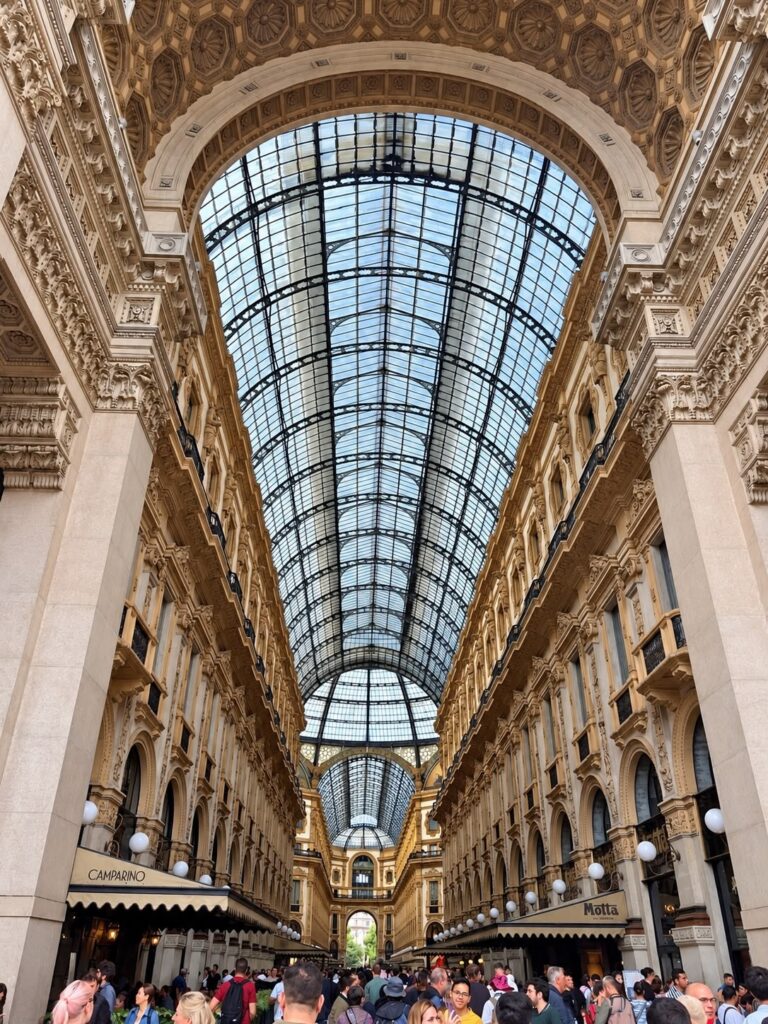
Under this iron-and-glass covering, Milanese life has gone on for more than 150 years. Known as Il Salotto di Milano, the gallery was conceived to be much more than a passage: a place of encounters, contemplation and everyday beauty.Photo: Fernanda Artibani
Profoundly, the Industrial Revolution changed the way cities were built. New materials made it possible to overcome limits that were previously unimaginable. Iron offered structural lightness. Glass gained scale. And, for the first time, architects and engineers realized they could create entirely protected spaces without giving up natural light.
It was a revolutionary idea.
For the first time, the sky could be incorporated into architecture.
It was in this context that Europe’s great covered galleries emerged.
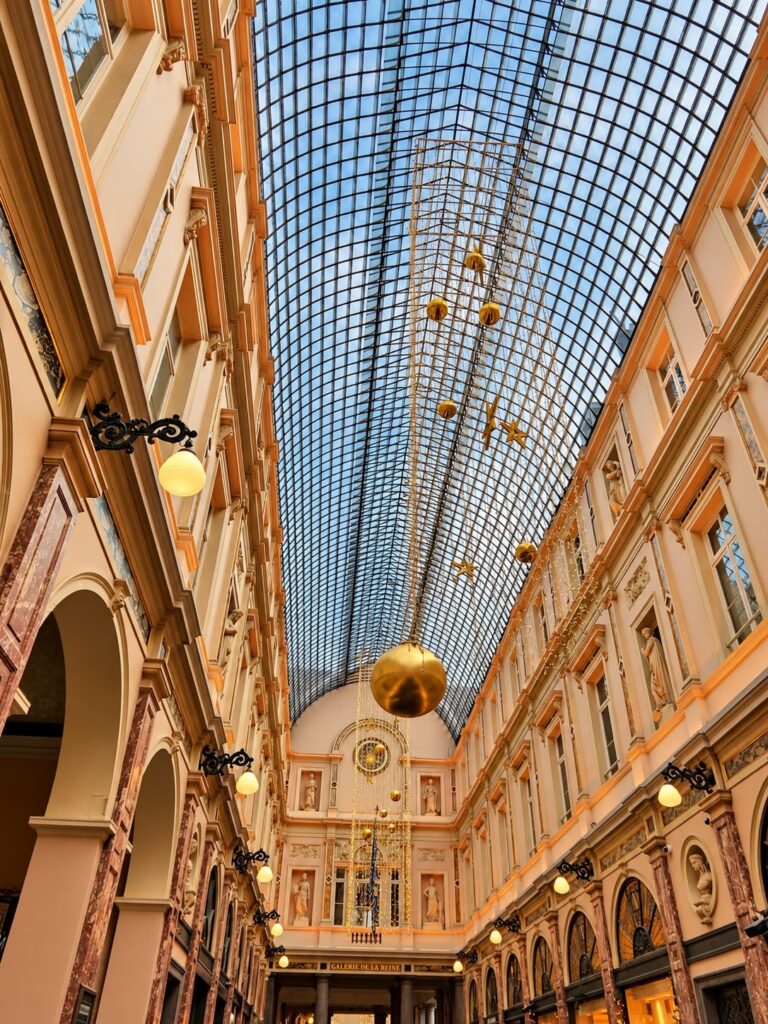
Galeries Royales Saint-Hubert, Brussels. Before Milan built its celebrated “living room,” it was here that Europe discovered that iron and glass could create something extraordinary: a space capable of bringing the city closer to the sky. Photo: Fernanda Artibani
Many believe Milan was the pioneer, but the first chapter of this story was written in Brussels, in 1847, with the opening of the Galeries Royales Saint-Hubert. There, the modern concept of a street covered by iron and glass was born, where commerce, culture and coexistence shared the same space.
But history has its ironies.
Not always does the pioneer become a symbol.
Sometimes, whoever remains in collective memory is the one who manages to turn a good idea into something extraordinary.
And that is exactly what happened in Milan.
When architect Giuseppe Mengoni designed the Galleria Vittorio Emanuele II, Italy was living through the years after its unification. The country needed landmarks capable of representing a new national identity. The gallery was not supposed to be just a commercial passage. It was supposed to be an architectural manifesto.
And it became exactly that.
What in Brussels was elegant, in Milan became monumental.
What was a covered passage became an urban stage.
What was functional became emotional.
Perhaps that is the reason why the Milanese gallery became one of Europe’s most recognizable images. It was not built just to serve the city. It was built to represent an ideal of a city.
A city that valued encounter.
A city that believed in beauty.
A city that understood architecture as experience.
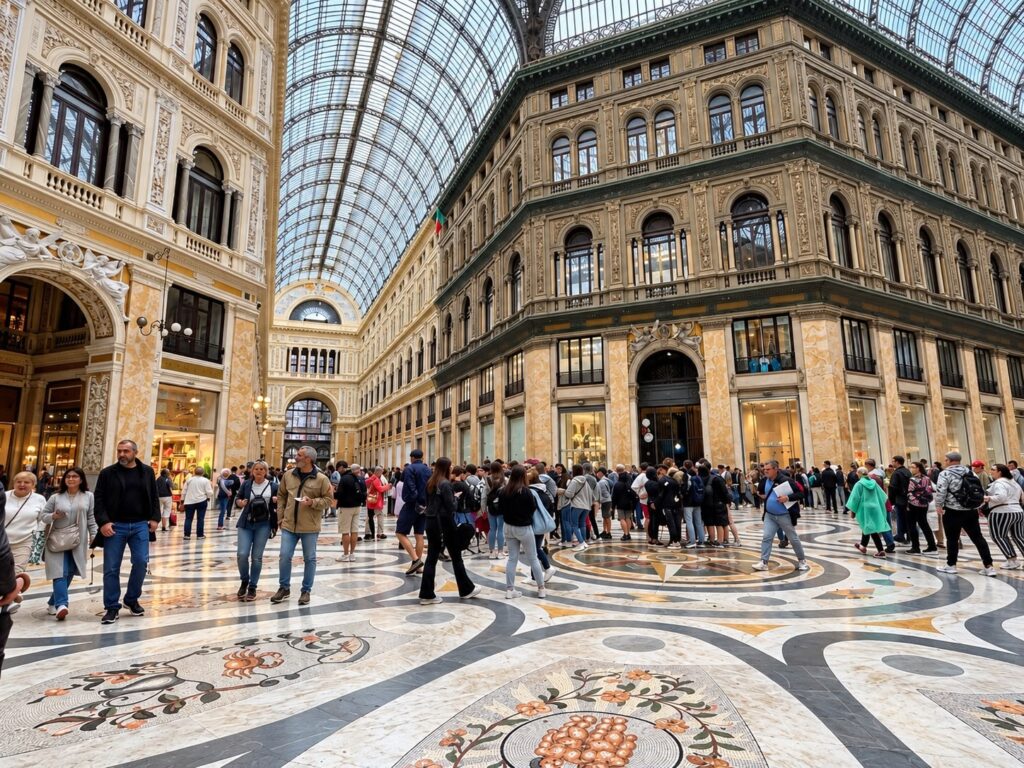
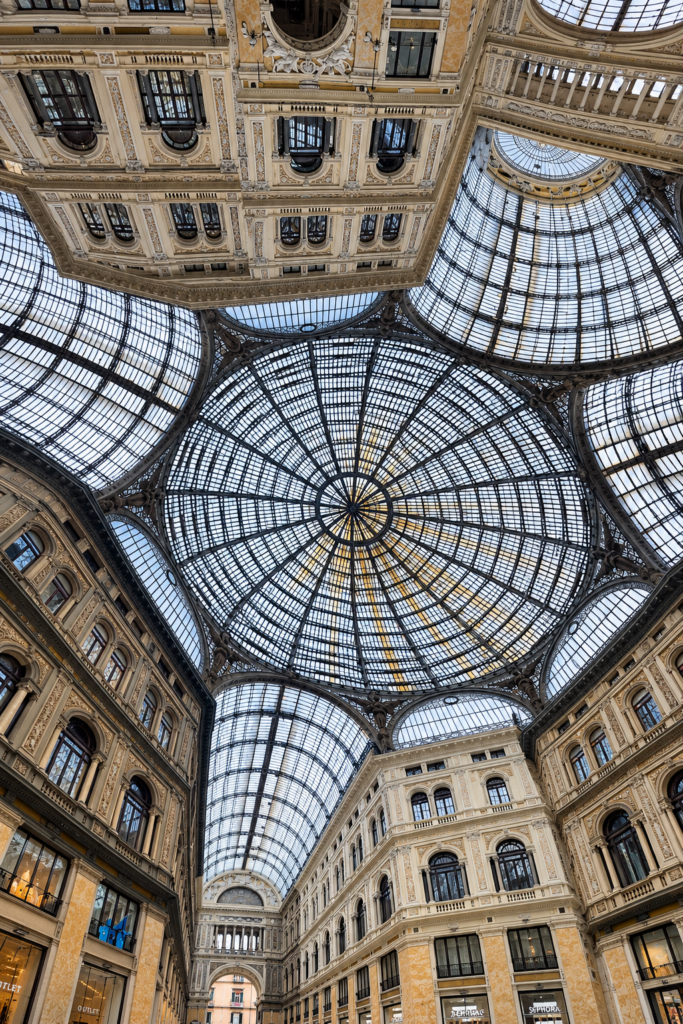
If Brussels wrote the first chapter and Milan turned the idea into a symbol, Naples continued the dream. Under this monumental glass dome, the city celebrates the same ambition of bringing everyday life closer to the sky. Photo: Fernanda Artibani
Its success was so great that the idea spread. A few years later, Naples would inaugurate its own interpretation of this urban dream: the magnificent Galleria Umberto I.
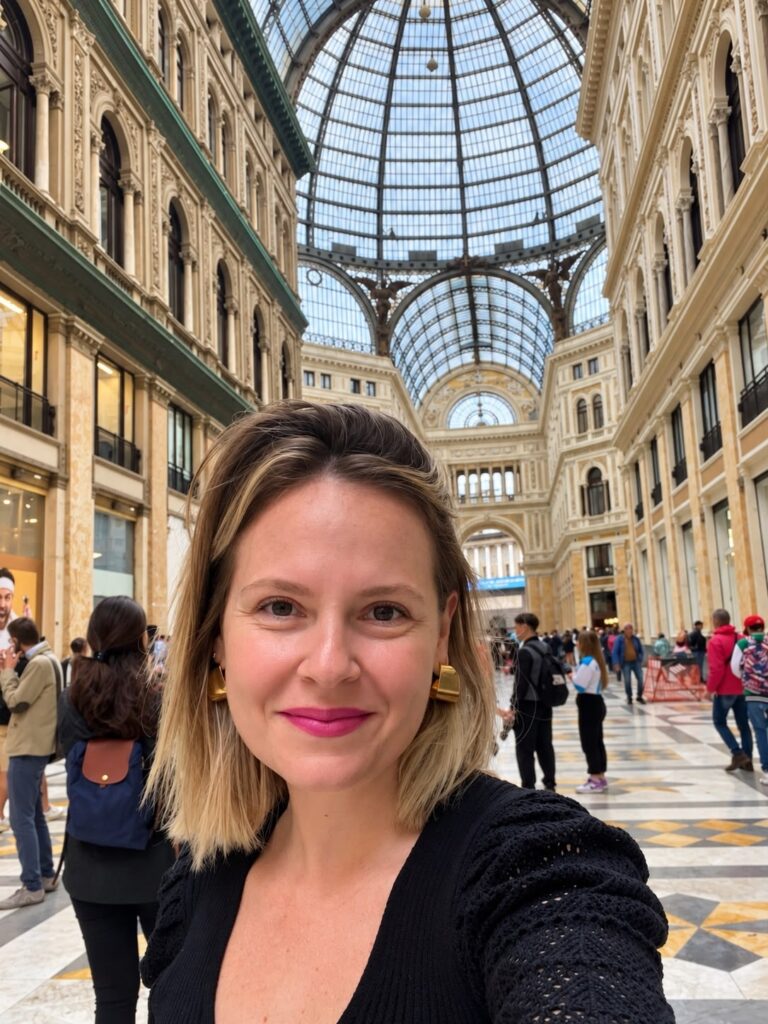
Galleria Umberto I, Naples. Heir to Milan’s iconic gallery, it represents an era in which architecture believed beauty should be part of everyday life, and that even a simple walk could take place under a glass sky. Photo: Fernanda Artibani
Anyone who has visited both immediately recognizes the kinship. The monumental central dome, the long corridors covered by glass, the feeling of walking outdoors without really being outside.
They are almost sisters.
More than that, they represent an era in which architecture genuinely believed it could improve people’s lives.
Today, we associate quality of life with sophisticated hotels, carefully designed restaurants or exclusive residences. At the end of the 19th century, however, there was an even bolder ambition: to make the city itself a space of enchantment.
Glass galleries were the perfect expression of this idea.
They offered protection without isolation.
Shelter without darkness.
Comfort without keeping people away from the light.
Because, despite all the speed of the contemporary world, we keep looking for the same things our ancestors sought in cathedrals: beauty, light and a sense of belonging to something greater than ourselves.
Perhaps that is the true reason why the great glass domes continue to move us.
They do not represent only a triumph of engineering; they represent an ancestral desire. The desire to remain connected to the sky, even in the heart of the city.
And perhaps no place tells this story with as much elegance as the Galleria Vittorio Emanuele II.
Because, in the end, its story is not about fashion, shopping or tourism.
It is about an ancient ambition of humanity.
To build places where light makes us look up.
And, for a few moments, to believe the sky is a little closer.

Fernanda Artibani
Lifestyle & Travel Columnist | Arch Gallery & Design Magazine