 Samuel Navarro Serpa
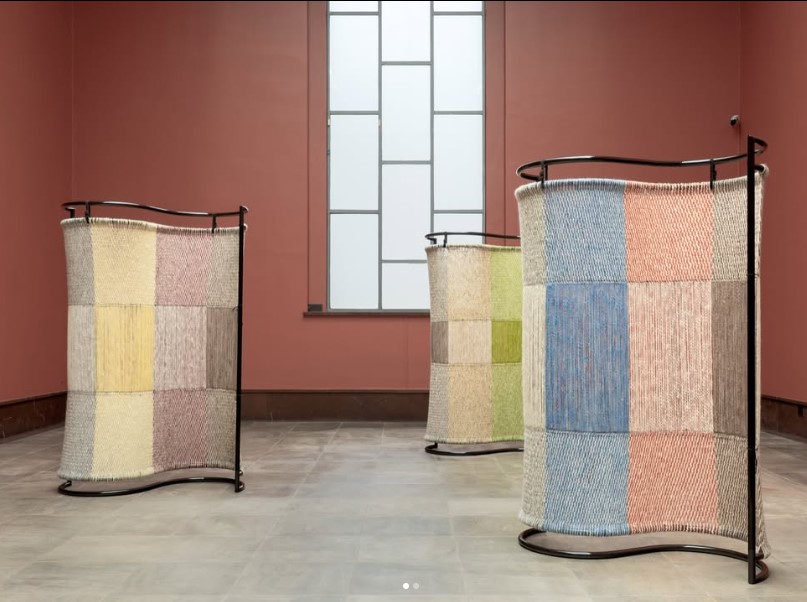
Liilian Saksi’s exhibition Sau, sprang, sorg at Vigeland Museum in Oslo. Photo: Courtesy of the museum
At Vigeland Museum in Oslo, Sau, sprang, sorg combines three S-shaped structures with sprang, an endangered technique, to tell of a first lambing in which half the lambs survived.
By Samuel Navarro Serpa
OSLO — Swedish textile artist Liilian Saksi takes over Vigeland Museum with Sau, sprang, sorg (Sheep, Sprang, Grief), a project of three works and a publication presented at Eckbos Legat Stipendutstilling, on view through April 4, 2027. Her starting point is a simple question: how can fabric behave like sculpture and carry care? She found the answer alongside her own flock.
Between life and loss at Vigeland Museum
Arising from Saksi’s first lambing, works on view at Vigeland Museum hold an experience of life and loss. Six lambs were born, and three survived. From that count came the project’s title.
Each sculpture joins an S-shaped metal structure to stretched threads of hand-spun wool. Recalling a balancing line between extremes such as life and death, the letter thus takes on an expanded meaning.
In Saksi’s hands, material also asks questions. We rarely know the origin of things or what labor transforms them, and she wants to provoke: where do they come from, and what care do we owe them?
An ancestral technique now considered an endangered craft tradition, sprang shapes textile surfaces. Warp threads are looped around one another and braided row by row from the center, so fabric grows toward both edges at once.
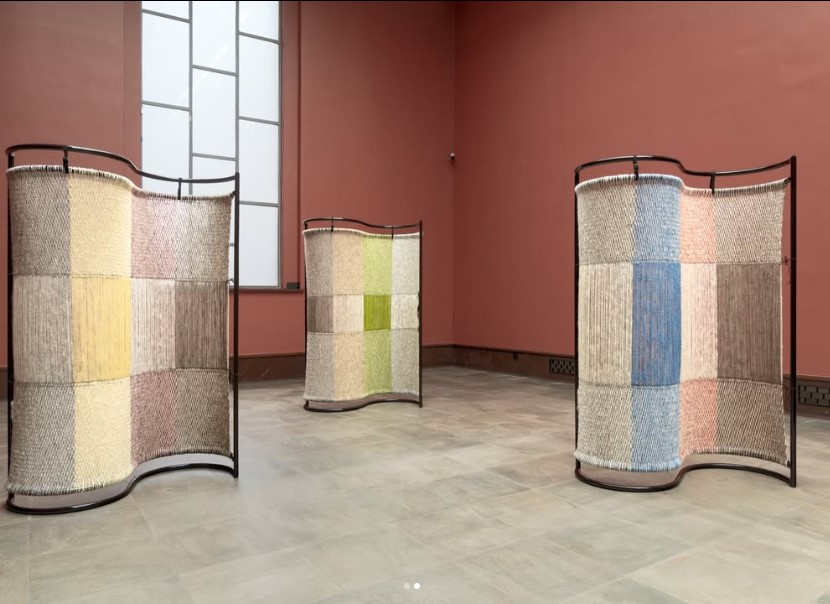
Liilian Saksi’s exhibition Sau, sprang, sorg at Vigeland Museum in Oslo. Photo: Courtesy of the museum
Subtle diagonal patterns and vertical bands of color emerge from that gesture, then stop midway and unravel into tensioned, unfinished threads. Cutting gives pieces openness and an air of incompleteness, and each sculpture shows two distinct textile faces.
Raw material and biography blur together. Wool comes from Alli, Majlis, Lea, Salme and Mauno, Saksi’s own sheep, plus dyed fiber from her parents’ farm in Sweden.
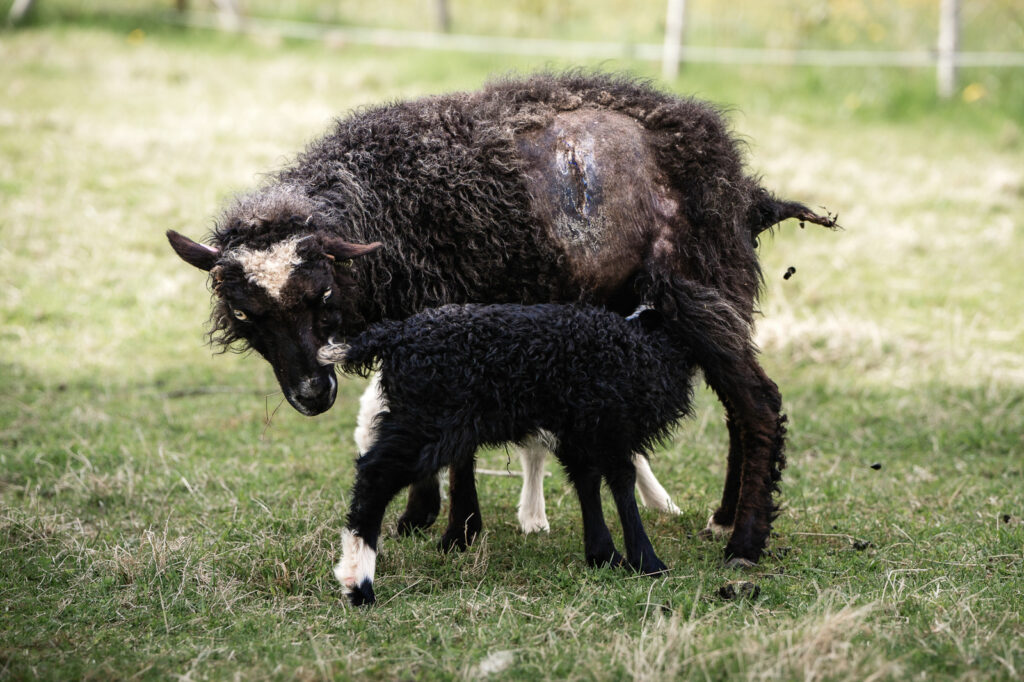
Photo: Courtesy of the museum
Natural animal pigments, such as Alli’s brown and Lea’s gray, echo colors in Room 7 of Vigeland Museum, which houses her works. Two central bands received synthetic dye, creating a contrast both visual and conceptual.
White wool from Majlis and Mauno, father of the lambs, meets every shade, while ribbon supporting each textile comes from Salme’s dark brown coat. Fiber length and density alter yarn thickness, and some tufts from young animals remain visible, exposing process and origin.
Named after Saksi’s relatives originally from Tornedalen, her sheep become guardians of family history and a reminder of an era when craft knowledge belonged to daily life.
Two new essays by biologist and writer Anna Blix and by art critic and author Line Ulekleiv appear in S, a publication launching at a conversation with Saksi on Thursday, Nov. 26.
Liilian Saksi’s exhibition Sau, sprang, sorg at Vigeland Museum in Oslo. Photo: Courtesy of the museum
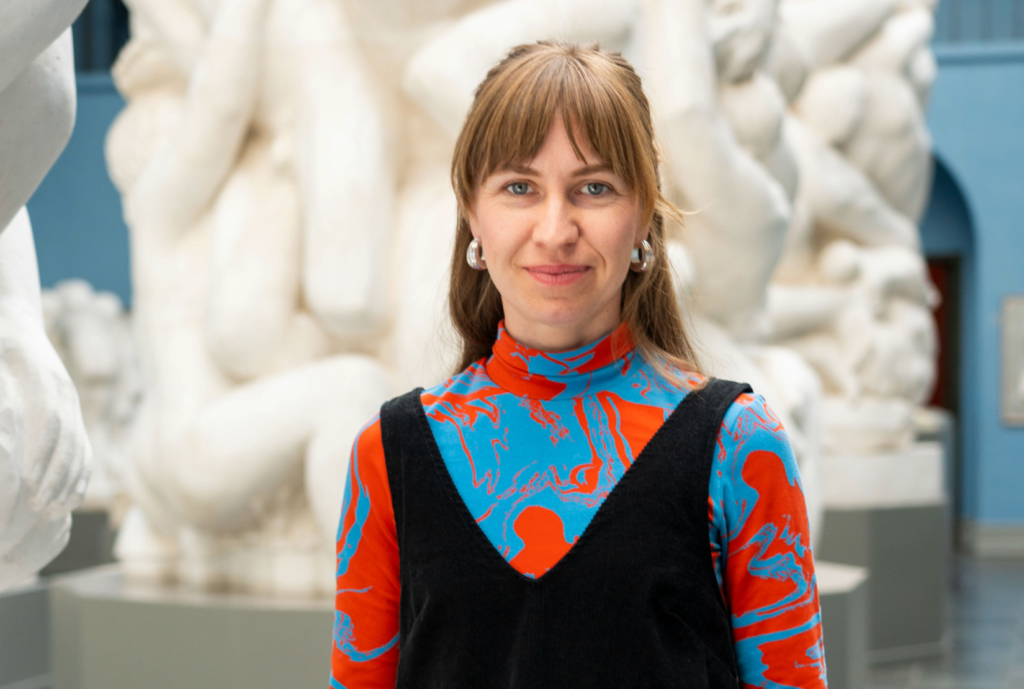
Saksi, born in 1989, lives in Skotterud, in Eidskog, where she keeps a studio and flock. She holds a master’s degree in textiles from Oslo National Academy of the Arts (2017). Hand spinning, dyeing and sprang underpin a practice that now reaches Vigeland Museum.
Recent solo shows include Kasuri at Oplandia Center for Contemporary Art in Lillehammer (2025), Ikat at Oslo Artists’ Association (2025) and Intervall at KRAFT Bergen (2023). Among group shows are Høstutstillingen (2026) and Contextile, a biennial in Portugal (2022).
Collections such as Oslo’s National Museum (2021), KODE Bergen (2025) and Equinor’s art program (2026) hold works by Saksi. In 2026, she received a State Artist Stipend, a 10-year grant for established artists.
Sau, sprang, sorg by Liilian Saksi is on view at Eckbos Legat Stipendutstilling, Vigeland Museum, Nobels gate 32, Oslo, from Oct. 16, 2026, to April 4, 2027. A conversation with the artist and the launch of publication S take place Nov. 26.