 Samuel Navarro Serpa
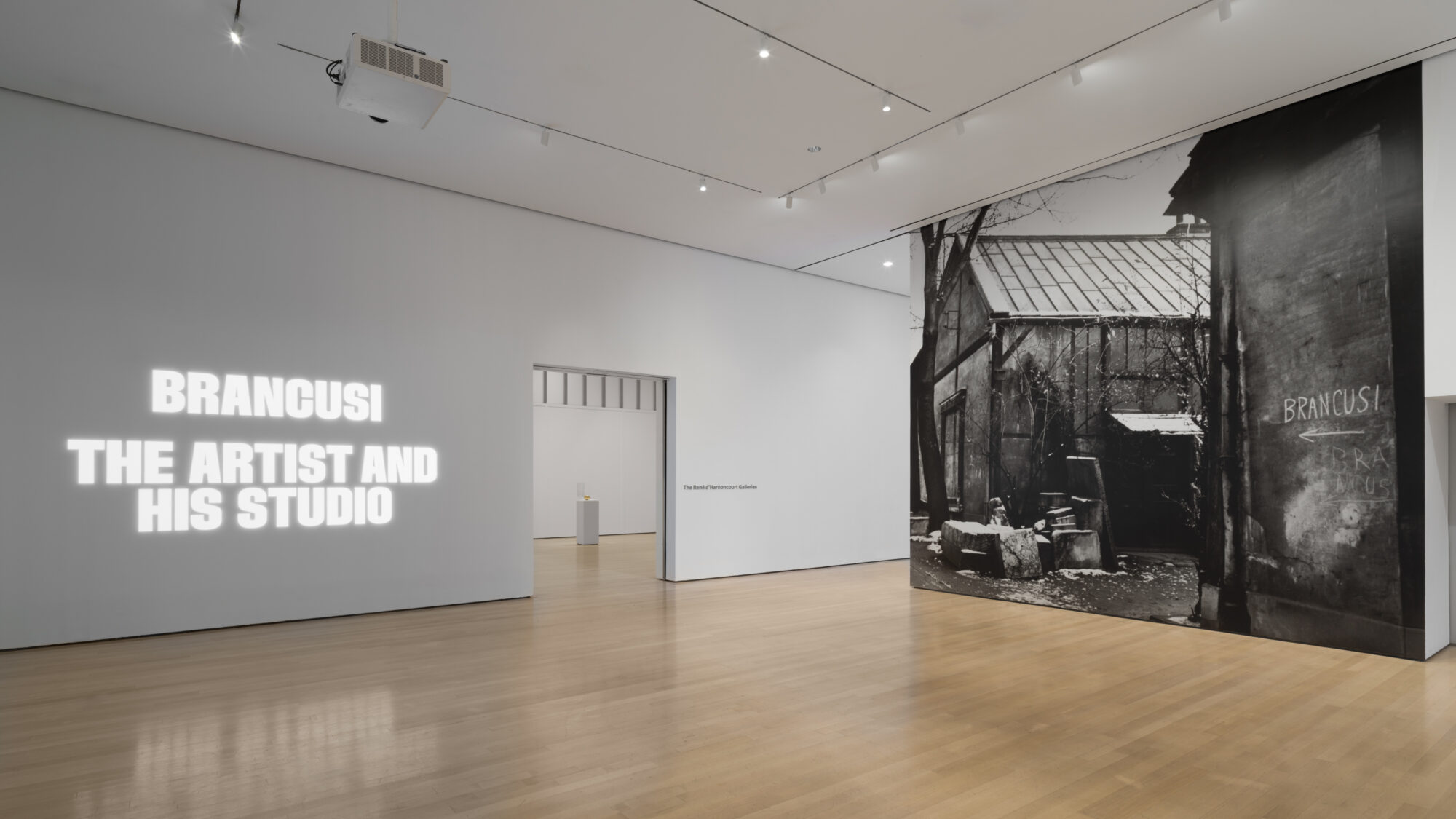
Installation view of the Brancusi exhibition at the Museum of Modern Art (MoMA). Photo: Jonathan Dorado
On view from Oct. 25 to Feb. 27, 2027 the MoMA show brings together sculptures, bases, films and photographs from the Atelier Brancusi, which is in the care of the Centre Pompidou
By Samuel Navarro Serpa
NEW YORK – New York hosts a Brancusi exhibition, Brancusi: The Artist and His Studio, from Oct. 25, 2026, to Feb. 27, 2027. Spread across the entire sixth floor of the Museum of Modern Art (MoMA), the show draws on the space at Impasse Ronsin in Paris, where Constantin Brancusi (1876-1957) lived, worked and exhibited for more than 40 years, from 1916 until his death.
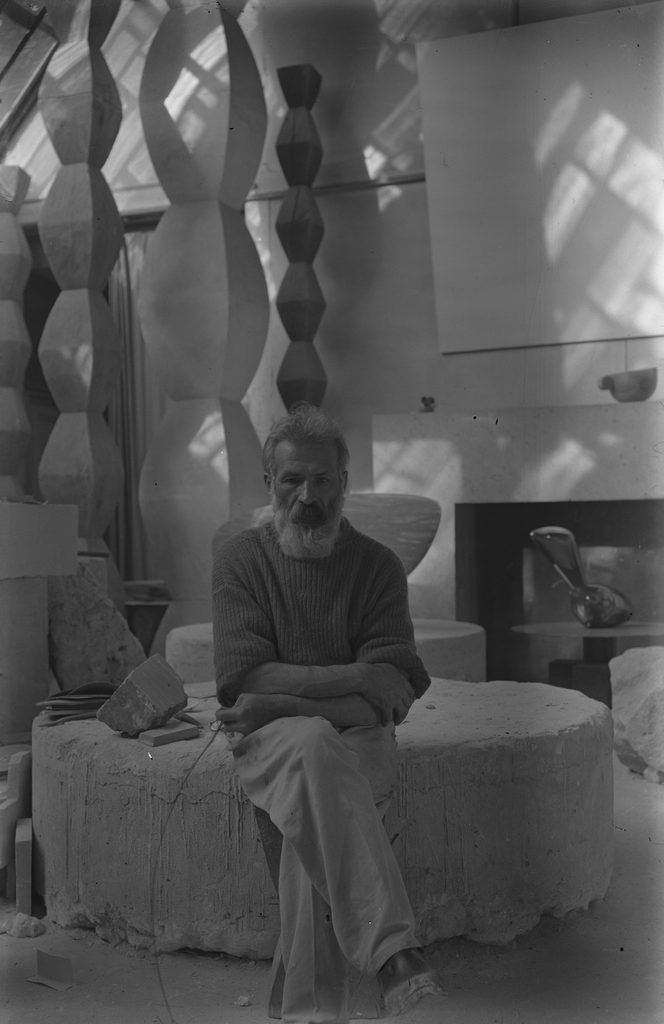
Constantin Brancusi. Self-portrait in the studio with Endless Columns I–IV, Fish (1930), Leda (1926). c. 1934. Centre Pompidou, Paris, Musée national d’art moderne-Centre de création industrielle, Constantin Brancusi Bequest, 1957. PH 854. Digital Image © CNAC/MNAM, Dist. RMN-Grand Palais / Art Resource, NY. © Succession Brancusi – All rights reserved (Adagp) 2026
Renovation of the Centre Pompidou’s Paris building, which permanently houses the Atelier Brancusi, prompts the works’ journey. Announced May 7, the initiative is part of a series made possible by the space’s temporary closure.
Brancusi exhibition at the Museum of Modern Art (MoMA), a place of work, play and display
Organized by Anne Umland, guest curator, and Mia Matthias, assistant curator in the Department of Painting and Sculpture, with Samantha Small, curatorial assistant, Brancusi: The Artist and His Studio follows a largely chronological order. The path covers four decades at Impasse Ronsin, a period in which the work gains scale and ambition.
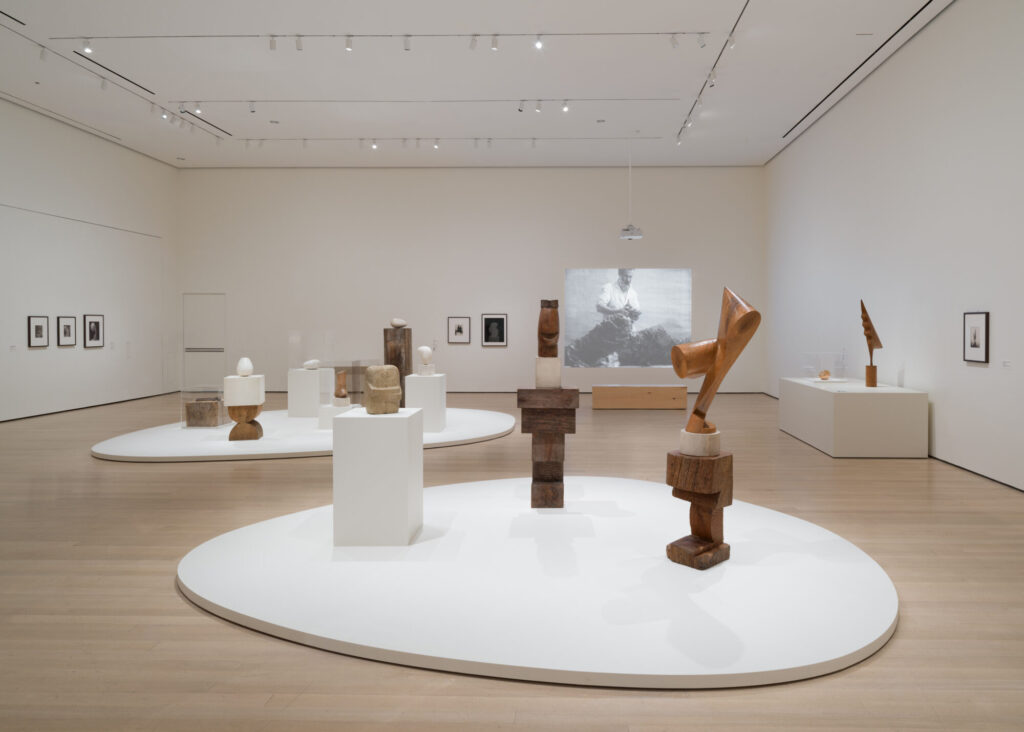
Photo: Jonathan Dorado
Ariane Coulondre and Valérie Loth, of the Centre Pompidou, who headed Brancusi: Art Is Just Beginning in 2024, also collaborate.
Tools, photographs and films evoke the physical effort of the craft and the artist’s care in arranging each piece.
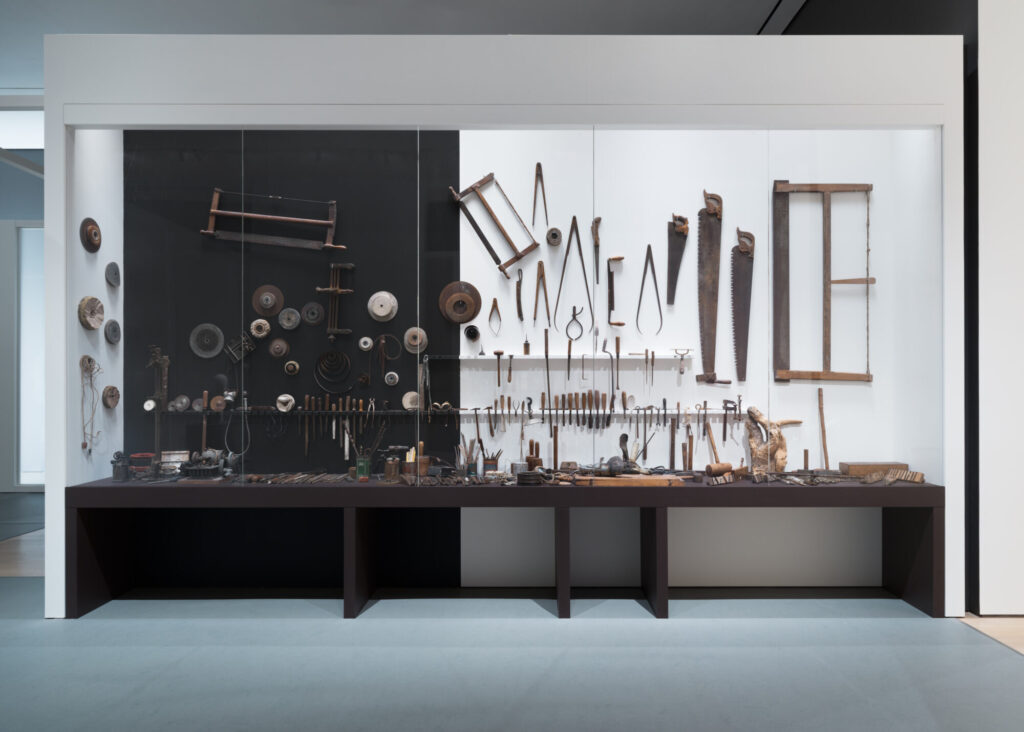
Photo by Jonathan Dorado
After 1920, Brancusi gradually withdrew from public presentations in France and began receiving visitors at the studio, where the works appeared as he wished.
Dissatisfied with the records made by others, he became the main photographer of his own output and documented the space as it changed. In this context, the boundaries between abstraction and representation, pedestal and object, work and surroundings are no longer clear.
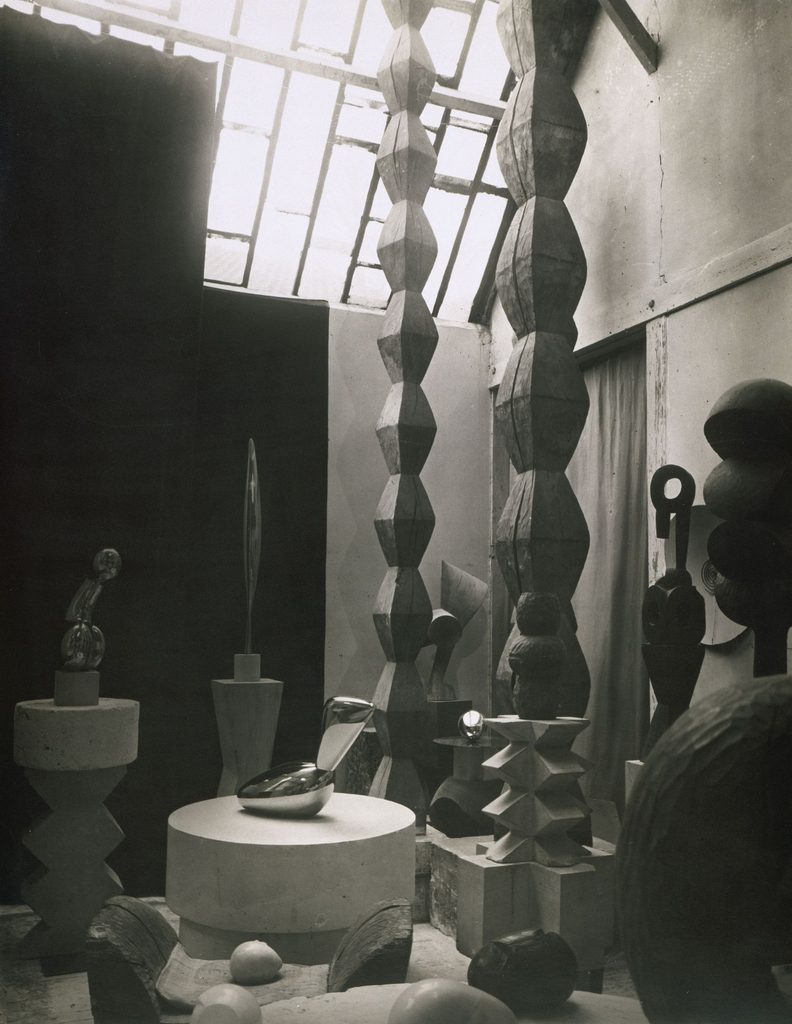
Constantin Brancusi. View of the studio: Princess X (1915–16), Bird in Space (1927, bronze), Leda (1926), Endless Columns I–III (1925, 1926, and c. 1928), Exotic Plant (1923–24). c. 1929.Centre Pompidou, Paris, Musée national d’art moderne-Centre de création industrielle, Constantin Brancusi Bequest, 1957. PH 79 A. Digital Image © CNAC/MNAM, Dist. RMN-Grand Palais / Art Resource, NY. © Succession Brancusi – All rights reserved (Adagp) 2026
Original wood and stone bases, hand-carved, receive the same formal attention as the pieces they support. Carved furniture illustrates the fluid relationship among sculpture, support and household object.
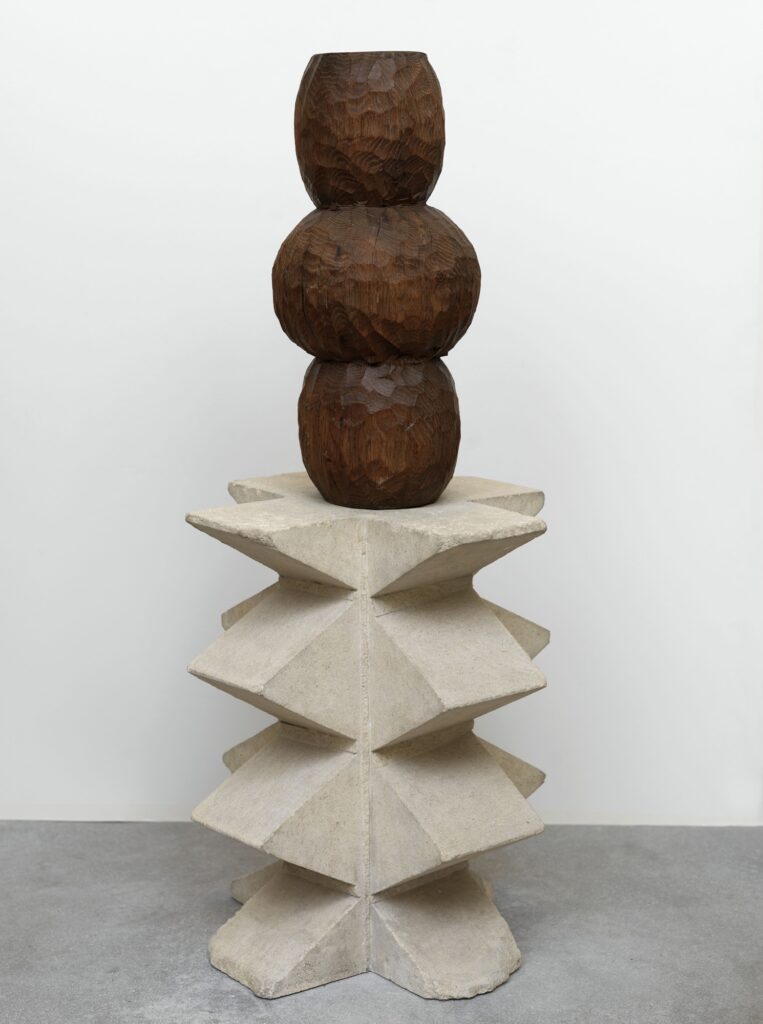
Photo: Georges Meguerditchian
Contrasts structure the reading: from rustic to polished, from handmade to mechanical, from organic irregularity to geometric precision. Born in rural Romania and later integrated into Paris’ cosmopolitan milieu, the artist negotiates between Old World traditions and modernist innovation.
Highlights include Leda (1926), Bird in Space (1928) and Fish (1930), in which forms are distilled to the essential. Versions of Mlle Pogany (1912-1913; 1913; 1933) and The Kiss (c. 1919; 1923-1925; c. 1940) reveal motifs that return in different materials and configurations.
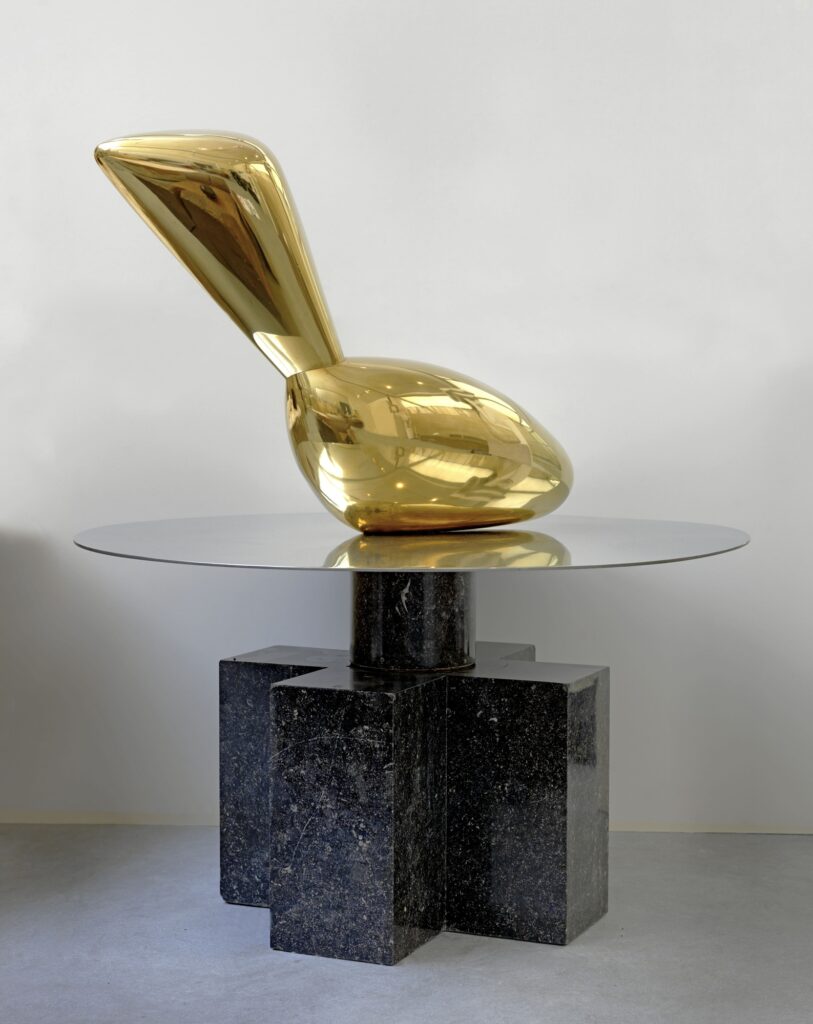
Photo: Bertrand Prévost.
“Brancusi often said he wanted his works experienced together, in relation to one another, and this exhibition gives New York audiences an exceptional opportunity to do exactly that,” Umland said.
“Combining MoMA’s collection and local loans with rarely lent sculptures and a variety of materials from the Atelier Brancusi illuminates the complexity of an artist the museum has championed since its early years,” she added.
To accompany the Brancusi exhibition, the Museum of Modern Art (MoMA) publishes a book with more than 130 photos taken by the artist himself, from individual studies to wide views of groupings. It has 160 pages and 136 illustrations, in hardcover, for $60 (ISBN 978-1-63345-197-1), and is sold at the MoMA Design Stores and at store.moma.org.
Drop-in Drawing, a drawing session for all ages, takes place at the Brancusi exhibition, on the sixth floor, from 5:30 to 7:30 p.m. on Fridays, Nov. 6, 13 and 20, and Dec. 4, 11 and 18. It is part of UNIQLO Friday Nights, when the institution stays open later and admission is free for New York state residents. Supplies and seating are provided.
Hyundai Card, a MoMA partner, sponsors the initiative. Leadership support comes from the Xin Zhang and Shiyi Pan Endowment Fund, the Eyal and Marilyn Ofer Family Foundation, Eva and Glenn Dubin, the Noel and Harriette Levine Endowment, the Kate W. Cassidy Foundation and Monique M. Schoen Warshaw. The Romanian Cultural Institute also provides funding.