 Serpa
Serpa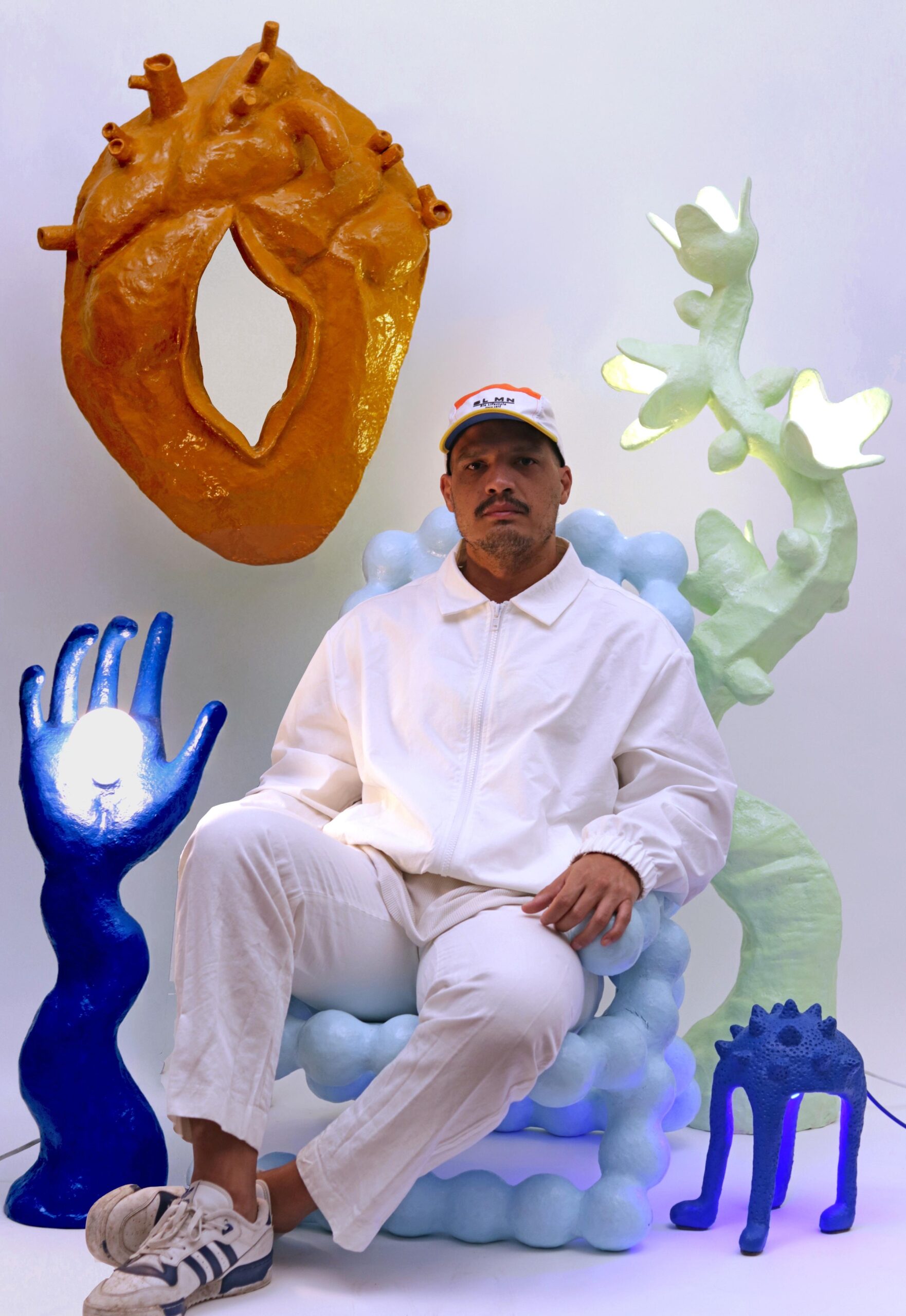
Sculptural lamps dialogue with surrealism, kitsch and sacred iconography in original and provocative works
Plastic artist Sandro Vieira, a Rio de Janeiro native based in São Paulo, has been making his mark on the contemporary scene by transforming papier-mâché into sculptures that dialogue with surrealism and kitsch aesthetics. With training in scenography and art direction, he has found in this ancient technique a means of expression that combines sustainability, aesthetic critique and visual narrative.
All pieces are handcrafted using reclaimed materials, proposing multiple layers of interpretation that move between humour and the sacred, the symbolic and the everyday. The work invites viewers to decipher familiar symbols from popular culture, opening new pathways for understanding collective imagination.
Papier-Mâché as Artistic Language
The choice of papier-mâché is not merely technical, but conceptual. The material, historically associated with folk craft and the production of toys, masks and decorative objects, has gained status as an artistic language in Vieira’s hands. The technique allows free modelling, organic textures and a finish that oscillates between rustic and refined.
In design and contemporary art, papier-mâché has been rediscovered for its versatility and low environmental impact. Artists and designers use the technique to create everything from large-scale sculptural pieces to functional objects, exploring its capacity for moulding, structural lightness and unlimited chromatic possibilities.
Trajectory and Influences
Vieira’s experience in scenography and art direction has broadened his understanding of form, space and the construction of visual narratives. This background is reflected in the sculptures, which function as three-dimensional settings where references to Freudian unconscious, religious iconography and the excesses of mass culture coexist.
The dialogue between surrealism and kitsch creates productive tension: whilst the former investigates deep layers of the psyche and the dreamlike, the latter celebrates the popular, the tacky and the exaggerated. This combination results in works that challenge aesthetic hierarchies and democratise access to the codes of art.
Fragmented and Illuminated Body
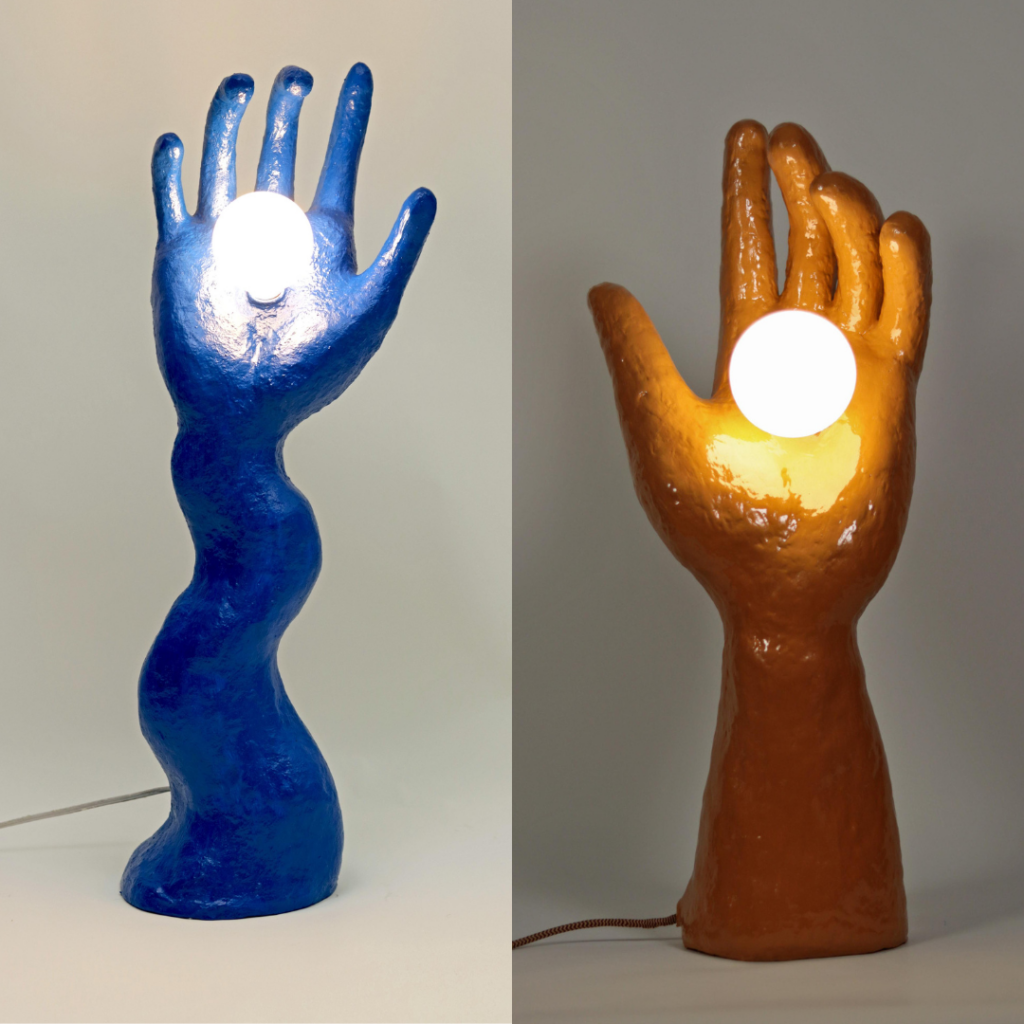
Vieira’s sculptures transform parts of the human body, organic forms and everyday elements into luminous pieces. The sculptural hands appear in chromatic variations ranging from Klein blue to burnt orange and flesh tones. One piece presents a brown hand with a luminous sphere in the palm, simultaneously evoking gestures of religious blessing and references to superhero pop culture.
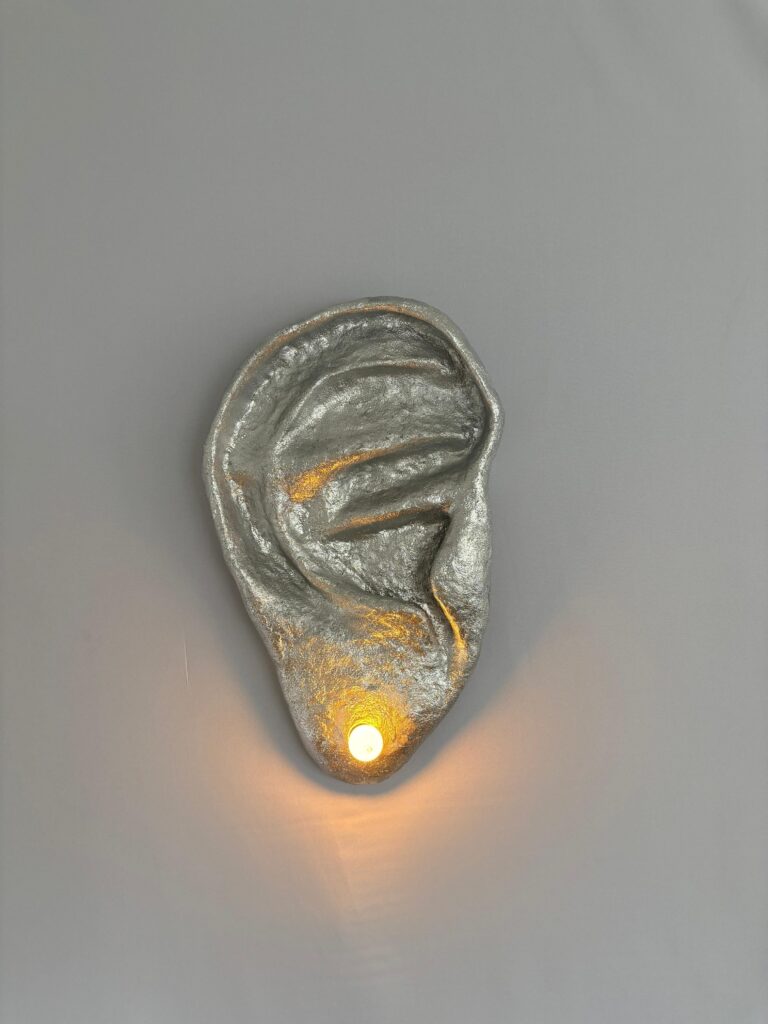
The irregular texture of papier-mâché, visible on the surfaces, reinforces the handcrafted character and gives the sculptures a tactile quality that contrasts with the shine of enamelled paints. Another notable work is a silver ear with illuminated golden details, mounted on the wall like a contemporary reliquary. The piece transforms an organ of perception into an object of contemplation, inverting the function of hearing into something to be seen and admired.
Pop Bestiary and Hybrid Forms
The work also explores fantastical creatures. A Klein blue sculpture presents a quadrupedal body with porous texture, indistinct head and tapered legs, like a mythological dog or digital culture totem. The chromatic saturation and exaggerated proportions dialogue directly with kitsch aesthetics, where formal exaggeration becomes an expressive strategy.
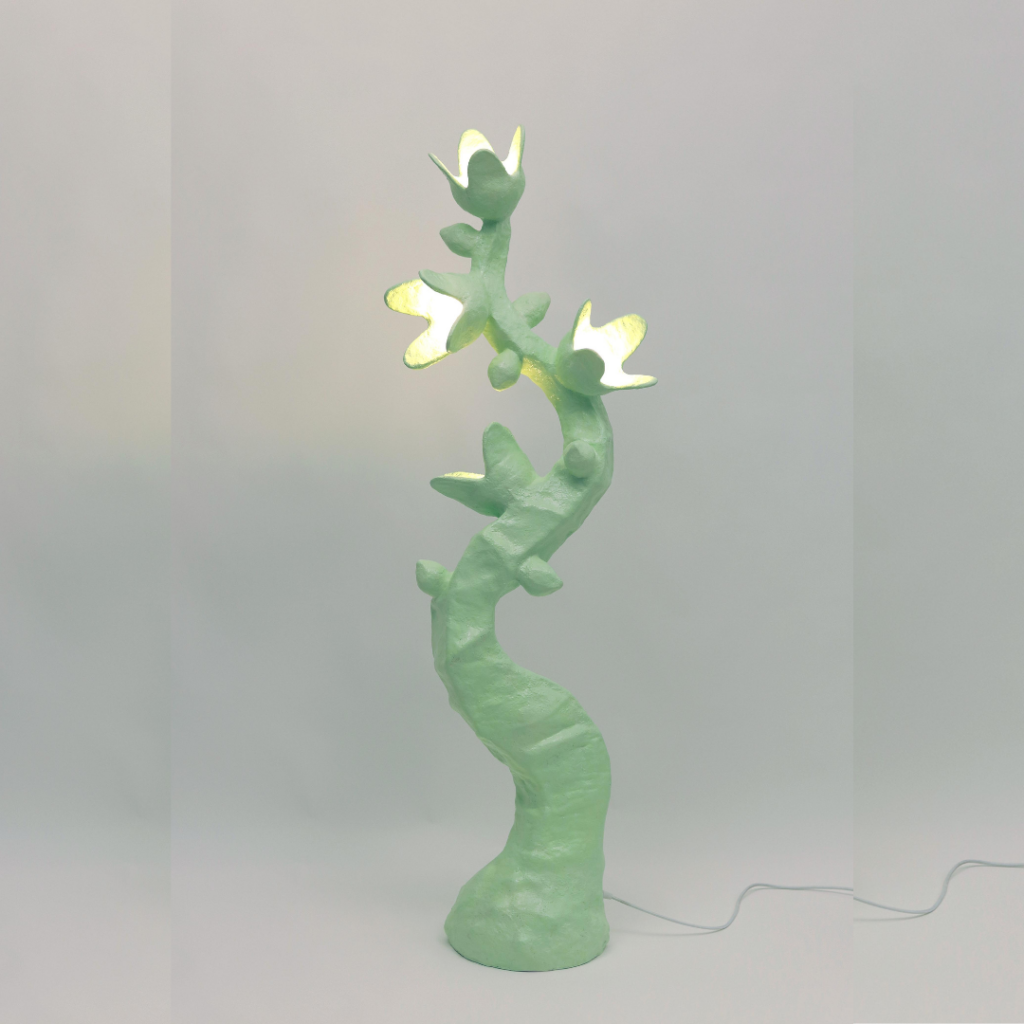
A spiralling green form with internal illumination evokes aquatic organisms or alien vegetation. The twisted structure and yellowish points of light create a dreamlike atmosphere, typical of surrealist investigations into transfigured biological forms.
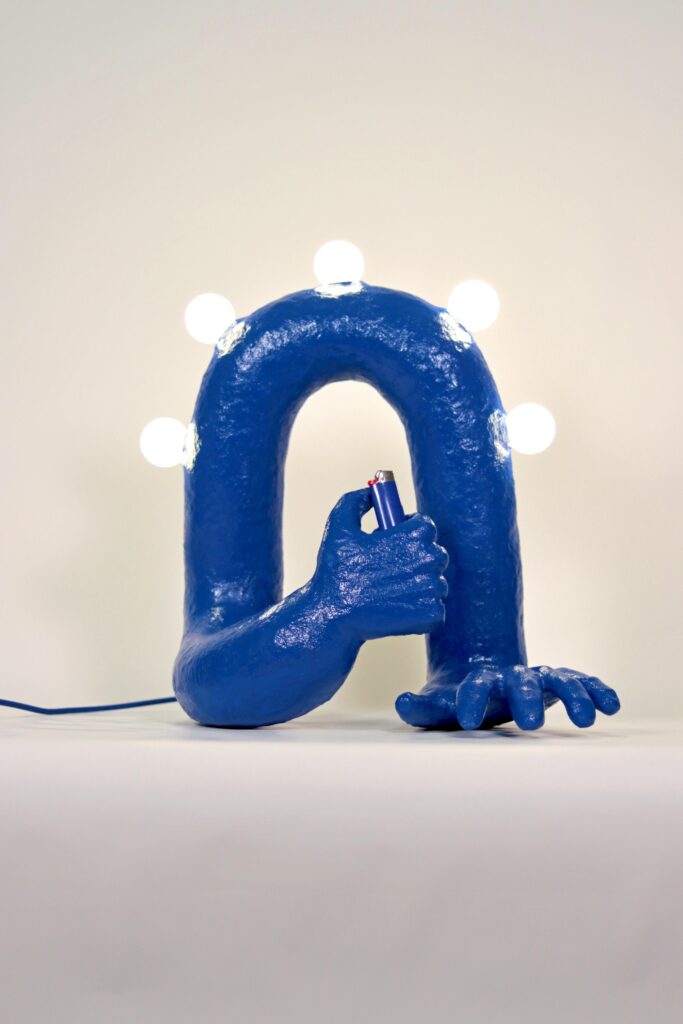
Amongst the most complex pieces is a blue sculpture that articulates arches, limbs and multiple light sources in an architectural composition. The work seems to merge anatomy with spatial construction, creating a structure that could be either a fantastical skeleton or a dimensional portal.
Anatomical Heart as Icon
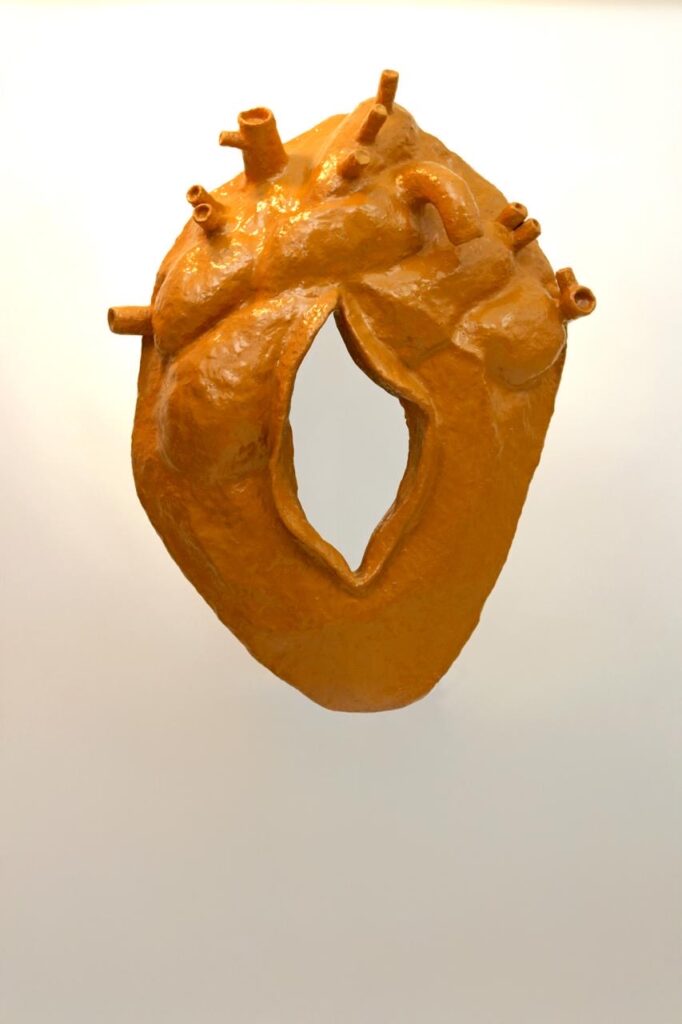
The representation of a human heart in intense orange, with veins and arteries modelled in relief, stands out for its anatomical literalness combined with sculptural treatment. Hung like an object of devotion or biological trophy, the organ gains a symbolic dimension that moves between science, religiosity and pop culture—a perfect synthesis of Vieira’s aesthetic proposal.
A mirror framed by bulbous forms in light blue, with an undulating surface that mimics bubbles or cells, transforms a functional object into sculpture. The piece questions the relationship between utility and art, a characteristic of contemporary design that Vieira masters through his training in scenography.
Materiality and Sustainability
The characteristic texture of papier-mâché remains visible in various works, even beneath layers of paint. This choice makes the handcrafted process explicit and reinforces the commitment to reclaimed materials. The irregular surfaces, overlapping marks and small imperfections confer authenticity to the pieces, distinguishing them from industrial production and establishing dialogue with Brazilian folk craft traditions.
Sandro Vieira’s sculptures operate on the frontier between utilitarian object, contemplative art and cultural commentary. By transforming body, light and colour into visual narratives that mix erudite and popular references, the artist consolidates his own language within contemporary papier-mâché production.