 Serpa
Serpa
Danny Cremers
Trained in fashion at Central Saint Martins, ceramicist participated in Ceramic Brussels and will undertake residency at center of excellence in the Netherlands
NEW YORK – Dutch ceramicist Danny Cremers was among ten laureates selected to participate in a curated group exhibition during Ceramic Brussels, one of Europe’s leading contemporary ceramics fairs. The show, which featured scenography developed in partnership with MAD Brussels and Action et Service, awarded participating artists during the opening, with highlights including a solo exhibition at the 2027 edition of the fair, as well as other shows and artist residencies yet to be announced.
Cremers works with hand-molded porcelain, exploring classical forms through visible imperfections and richly textured surfaces. His creative process, which he describes as intuitive, consists of building, stacking, cutting and reassembling parts, allowing the material itself to guide each decision. “For me, creating is like drawing in three dimensions: open, provisional and never completely fixed,” says the artist, who also produces small sculptures in addition to the vases for which he is known.

Photo: Courtesy of Sophie Carree
The ceramicist’s work carries a quiet tension between freedom and control, evidenced in the loosely constructed forms and subtle imbalances that characterize his pieces. Cremers says he is drawn to the energy of the first gesture, that moment when spontaneity and technique meet, resulting in forms that emerge through attentive handling rather than prior planning. “I suggest rather than dictate,” he summarizes.
From fashion to ceramics
Cremers’ trajectory includes training seemingly distant from ceramics: he studied fashion design at the prestigious Central Saint Martins in London. The institution, founded in 1989 from the merger of the Central School of Art and Design and the Saint Martins School of Art, is recognized worldwide as one of the most influential art and design schools.
Located in the heart of London, Central Saint Martins is part of the University of the Arts London (UAL) and has occupied the King’s Cross Granary building since 2011, a Victorian grain warehouse renovated specifically to house the institution’s programs. The 1.2 million square foot campus contains studios, classrooms, exhibition spaces and technical workshops equipped with cutting-edge technology.

Photo: Courtesy of Sophie Carree
The school is famous for having trained some of the most important names in contemporary fashion. Among its alumni are Alexander McQueen, Stella McCartney, John Galliano, Phoebe Philo, Riccardo Tisci and Christopher Kane. But the institution goes beyond fashion: artists such as Antony Gormley, Gilbert & George and industrial designer Jasper Morrison also studied there.
Central Saint Martins’ fashion design program is recognized for its emphasis on experimentation, questioning conventions and creative freedom. The school’s pedagogy encourages students to develop a strong authorial voice, privileging the creative process and individual research over pre-established commercial formulas. This approach, which values intuition and material exploration, seems to have left deep marks on Cremers’ current work with porcelain.
Exhibitions in prestigious spaces
Based in Amsterdam, the ceramicist maintains an intense calendar of activities. He exhibited work at Sister by Studio Ashby and at La Peau de L’Ours Art gallery, with the show closing on February 21, 2026.
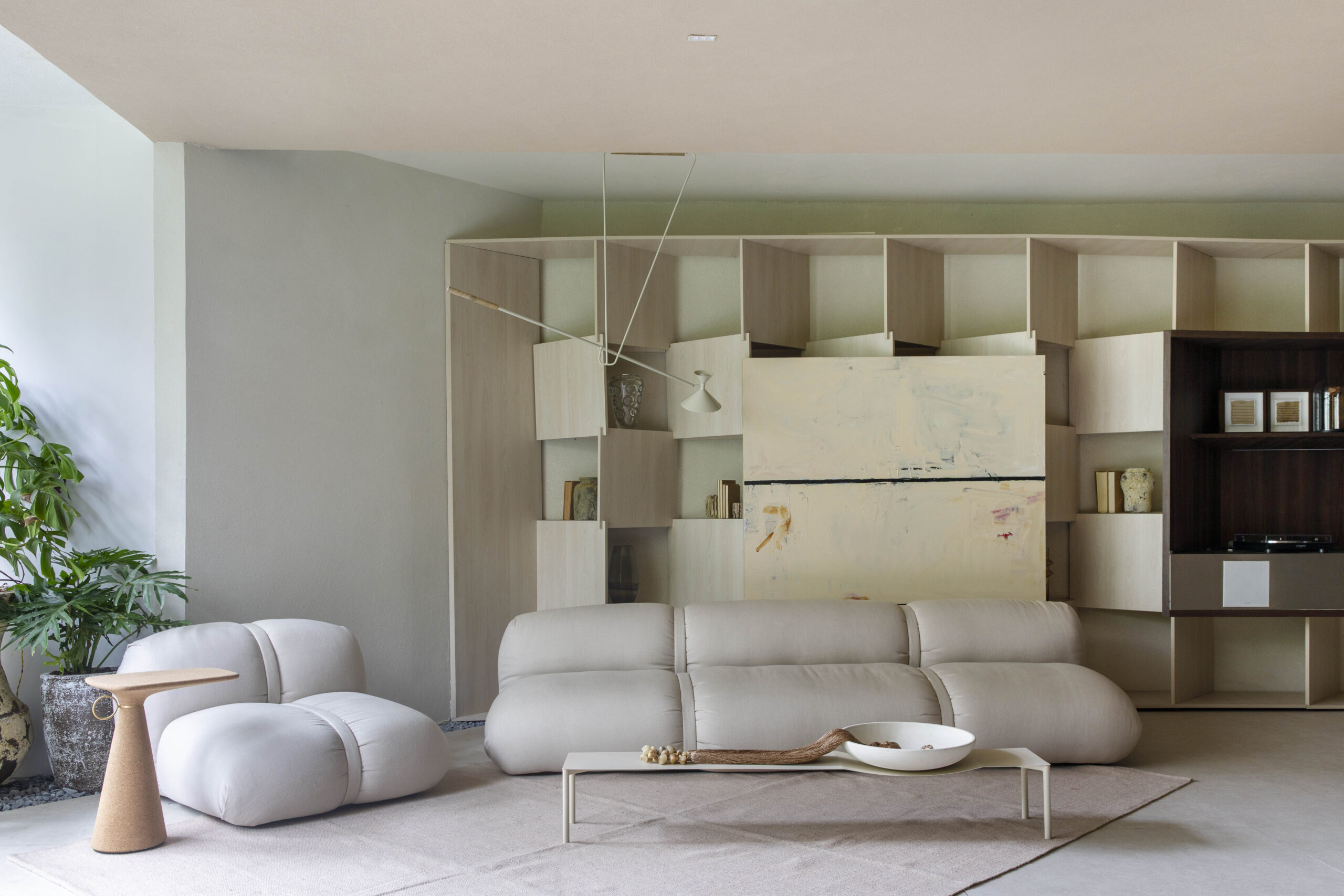
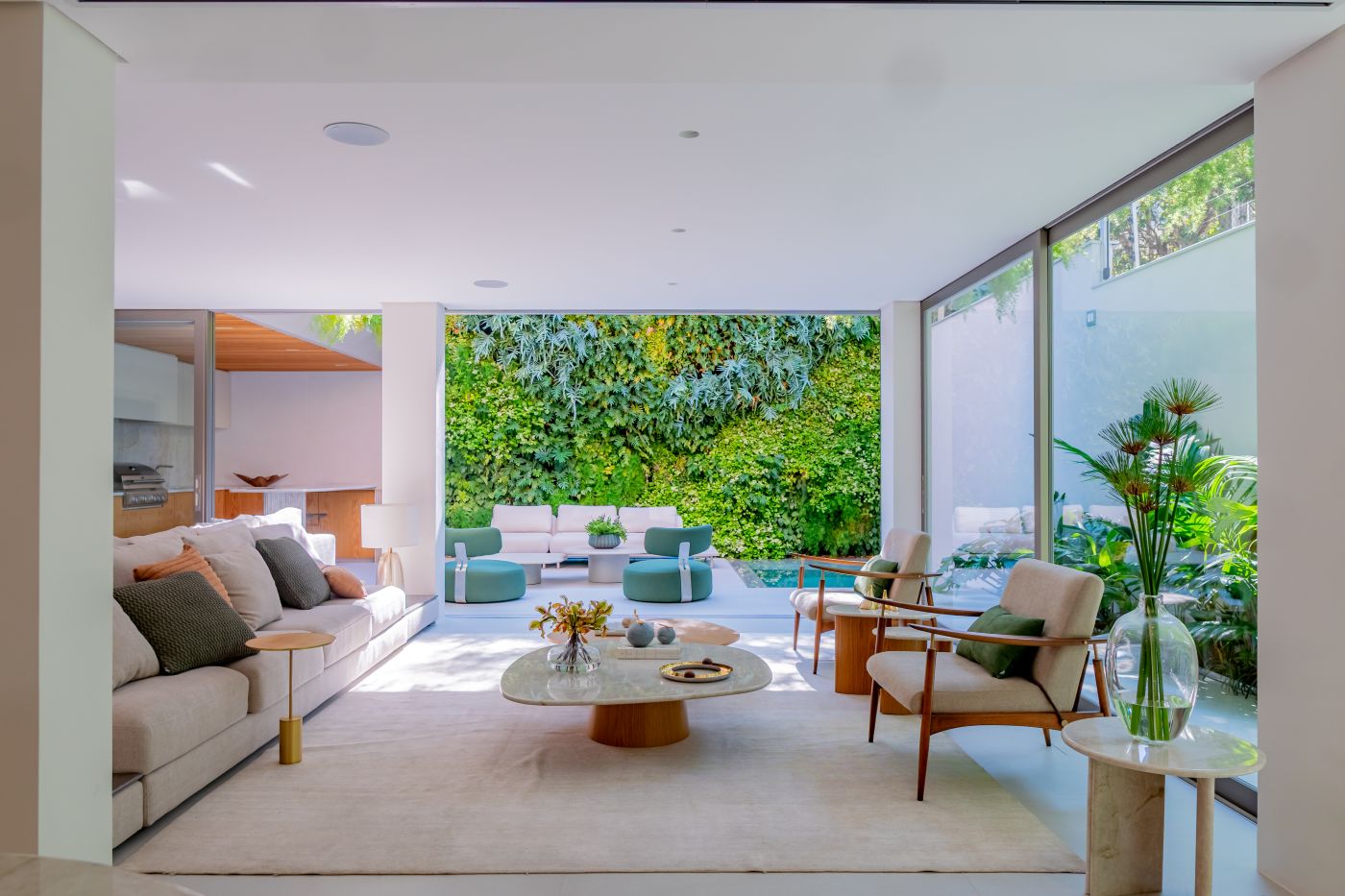
Sister is a multifunctional space created by British interior designer Sophie Ashby, founder of Studio Ashby, a London-based practice specializing in high-end residential and commercial projects. The concept was born from the desire to create an environment that would function simultaneously as a gallery, design store and gathering space, reflecting Studio Ashby’s characteristic aesthetic: sophisticated, welcoming and with a strong emphasis on natural materials and contemporary craftsmanship.

Photo: Courtesy of Sophie Carree
Sophie Ashby, trained in Art History at the University of Bristol and later in interior design, has developed a visual language that privileges neutral palettes, rich textures and the valorization of artisans and independent creators. Sister functions as a platform for discovery and curation, presenting works by ceramicists, textile artists and furniture designers whose work dialogues with the studio’s values. The space seeks to create a bridge between the world of interior design and applied arts, offering unique or limited-edition pieces.
Cremers’ presence at Sister indicated the alignment of his work with the refined yet relaxed aesthetic that characterizes the space. His porcelains, with intentional imperfections and textured surfaces, fit perfectly into the proposal of valuing handmade work and the uniqueness of each piece.
La Peau de L’Ours (The Bear’s Skin, in literal translation) carries in its name a significant historical reference. The name refers to the famous French collectors’ collective “La Peau de l’Ours,” founded in Paris in 1904, which became known as one of the first organized groups of modern art collectors, having acquired works by Picasso, Matisse and other masters when they were still unknown. The choice to exhibit Cremers’ work suggested that the gallery recognizes the collectible potential of his pieces and the growing interest in contemporary ceramics in the art market.
Residency at center of excellence
Between March and May 2026, Cremers will undertake an artist residency at EKWC (European Ceramic Work Centre) in Oisterwijk, the Netherlands. The center is one of the world’s most prestigious institutions dedicated to contemporary ceramics.
Founded in 1991, EKWC was born with the mission of offering visual artists, designers and architects the opportunity to explore the creative possibilities of ceramics in a professional environment equipped with cutting-edge technology and specialized technical support. The center functions primarily through artist residency programs that typically last between two and four months.

During this period, selected artists have unrestricted access to facilities that include various types of kilns (electric, gas, high-temperature, for raku), equipment for preparing ceramic bodies, individual studio space and, fundamentally, the knowledge of a highly qualified technical team.
One of the most distinctive aspects of EKWC is precisely this team of professional ceramic technicians who work side by side with resident artists. Many artists who arrive at the center come from other disciplines and do not possess in-depth technical knowledge of ceramics. EKWC technicians function as collaborators, translating artists’ ideas into the language of ceramics and helping them navigate the material’s technical challenges.
The center also maintains an impressive collection of works produced during residencies, with more than 3,000 pieces by international artists. Among the names that have passed through EKWC are Johan Creten, Piet Stockmans, Edmund de Waal and dozens of other internationally recognized ceramicists and visual artists.
EKWC’s facilities occupy a renovated industrial building that preserves the region’s characteristic architecture, but adapted for the specific needs of ceramic work. The studios are spacious and well-lit, allowing artists to work at scale and develop ambitious projects. The location in Oisterwijk, distant from major urban centers, provides an immersive and concentrated environment that favors intensive experimentation.
EKWC’s residency program is highly competitive. Interested artists submit project proposals that are evaluated by a curatorial committee. The selection considers both the artistic relevance of the proposal and the technical feasibility and potential for dialogue between the artist’s work and the possibilities offered by ceramics.
For Cremers, the residency represents a significant opportunity. Despite already working with porcelain consistently, access to the center’s infrastructure and technical knowledge may allow him to explore new directions in his work, experiment with different types of clay, firing temperatures, glazes and surface techniques.
The artist calls his production “Provisional Porcelain,” a term that synthesizes his approach to material and creative process. Each vase, he says, results from experimentation, which shapes the generosity of the work. The final pieces capture the immediacy of drawing — that open, intuitive quality unconcerned with finality — transposed into finished three-dimensional objects.
Website: https://www.dannycremers.com/
Instagram: https://www.instagram.com/nicevases/