 Fernanda Artibani
Lifestyle & Travel
By Fernanda Artibani
Forget for a moment the English capital’s most famous postcards. Among quiet canals, colorful houseboats and streets of picturesque houses, Little Venice reveals a surprising and still little-explored side of London.
When we think of London, a few images appear almost automatically: Big Ben, red double-decker buses, the changing of the guard at Buckingham Palace, traditional phone booths and, of course, the famous afternoon tea. All of it is part of the English capital’s charm and deserves to be seen. But one of the things I enjoy most about traveling is discovering places that do not necessarily appear on every tourist’s itinerary.
And London has plenty of these little nooks!
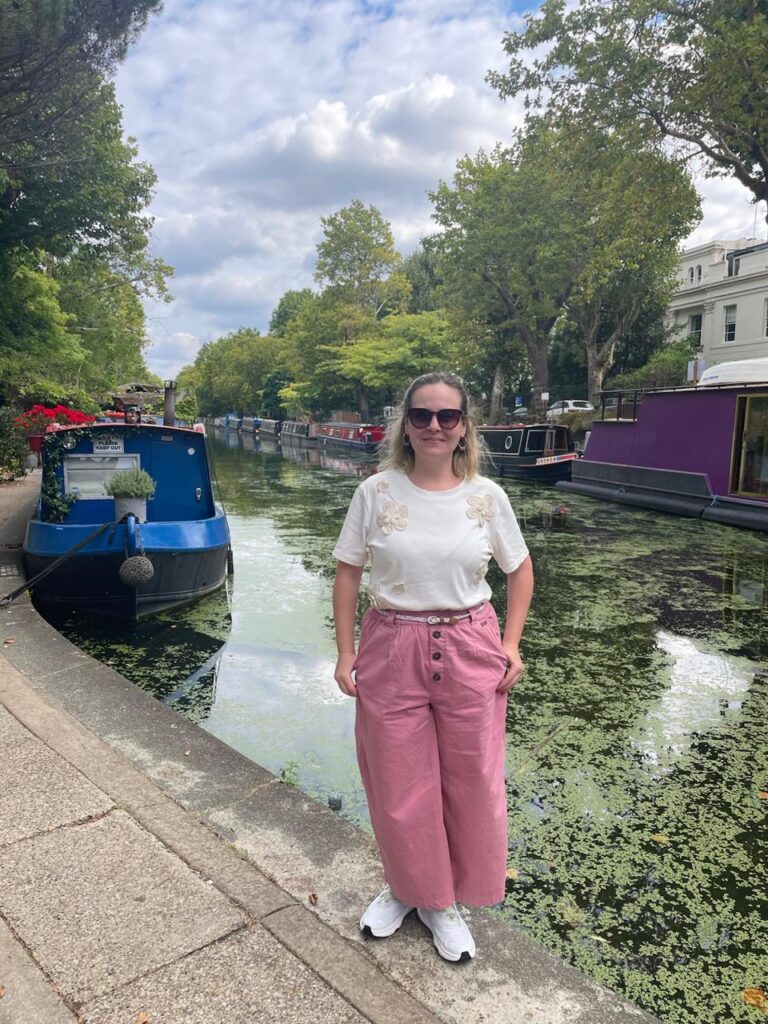
Photo: Fernanda Artibani
Among them is Little Venice, a charming area that has found its own way to slow the pace of one of the world’s busiest cities.
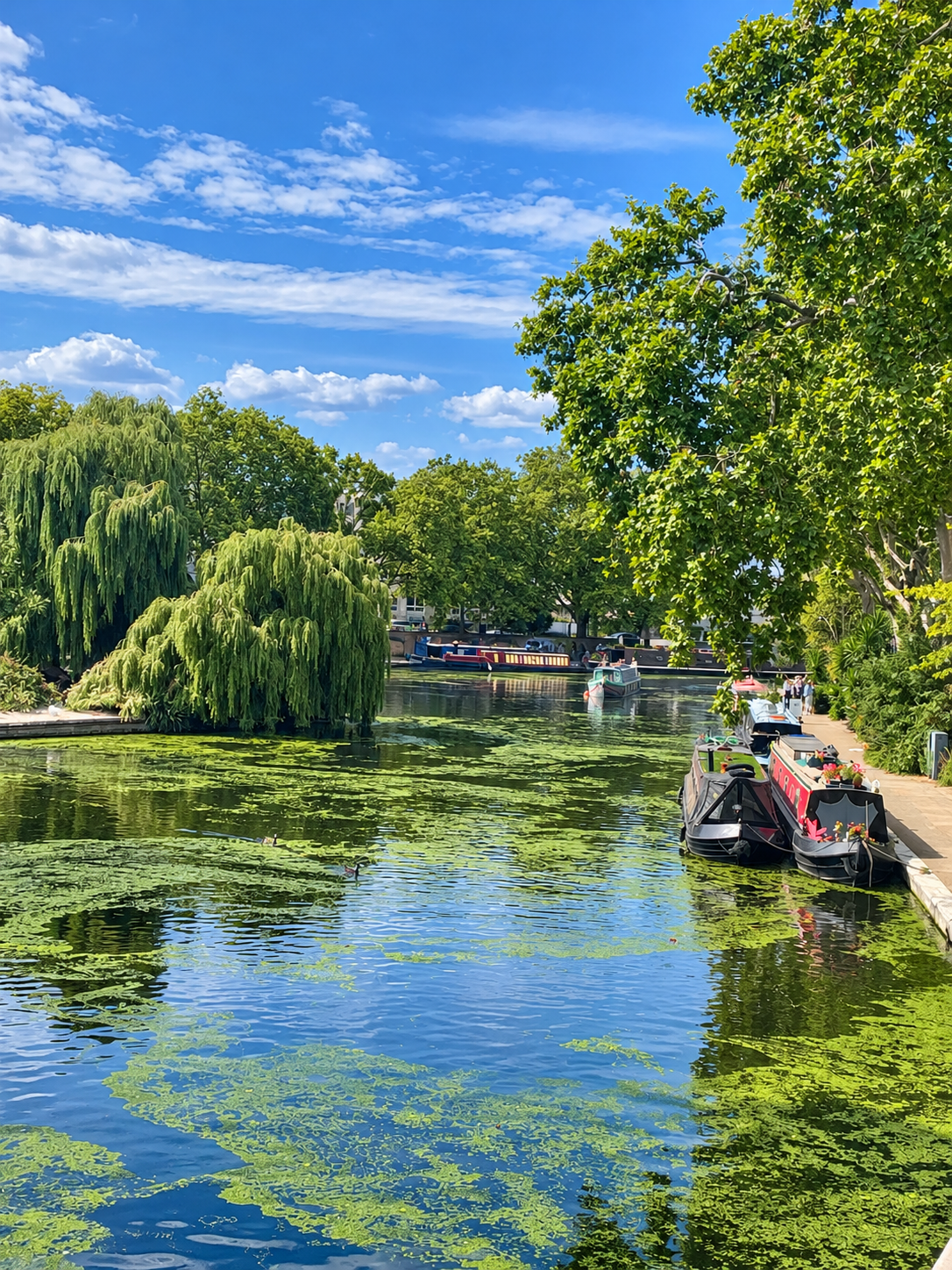
Located between Paddington and Maida Vale, Little Venice is known for its canals, colorful boats, bridges and trees that lean over the water. The scene is so delicate that, for a few moments, it is hard to believe we are only minutes from some of London’s most hectic areas.
But let me say this up front: do not make the mistake of seeing only the canal, taking a few photographs and moving on to the next attraction. Little Venice’s real appeal also lies in the surrounding streets, where residential architecture competes with the landscape for attention.
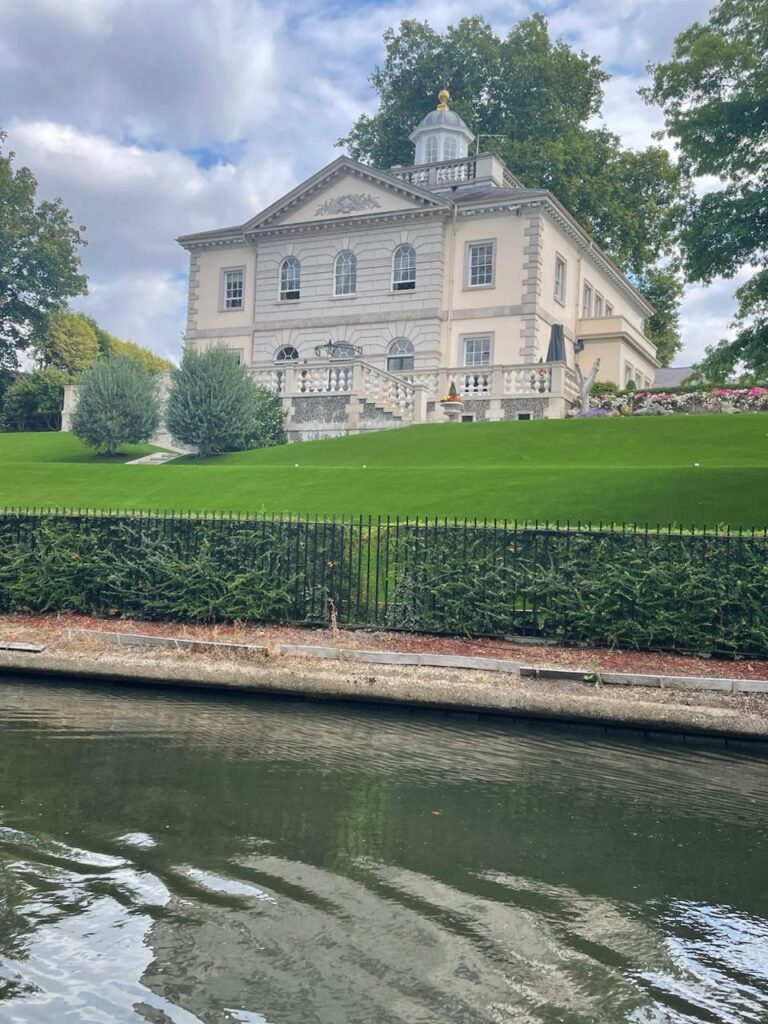
Photo: Fernanda Artibani
And what lovely houses!
Light-colored facades, colorful doors, elegant staircases, symmetrical windows, carefully tended small gardens and wrought-iron railings create a scene worthy of a British film.
This is the kind of neighborhood where you feel like walking aimlessly, noticing the details and imagining what it would be like to live in one of those houses.
Little Venice’s history began to take shape in the early 19th century, when the expansion of the canals helped transform London’s landscape. At the time, these waterways had a much more practical role than a tourist one: transporting goods and connecting different parts of the city.
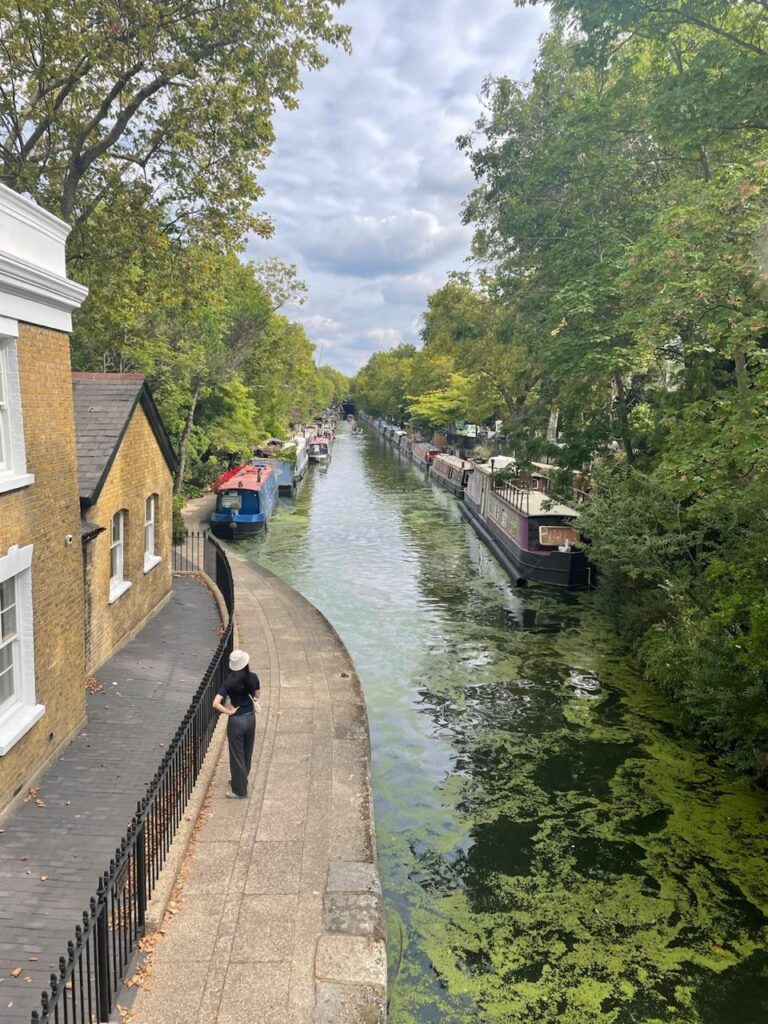
Photo: Fernanda Artibani
Today, where cargo and commercial vessels once traveled, we find residential boats, small floating cafés and visitors enjoying a landscape that seems frozen in time.
Here is a curious fact: the origin of the name Little Venice is not entirely settled. One of the best-known versions credits the expression to the poet Robert Browning, who lived in the area during the 19th century. Another suggests that Lord Byron may have made the comparison with the Italian city.
Regardless of who coined the name, the inspiration is easy to understand. The presence of water, boats and small bridges gives the place a romantic atmosphere that, somehow, recalls Venice, though with a very British personality, naturally.
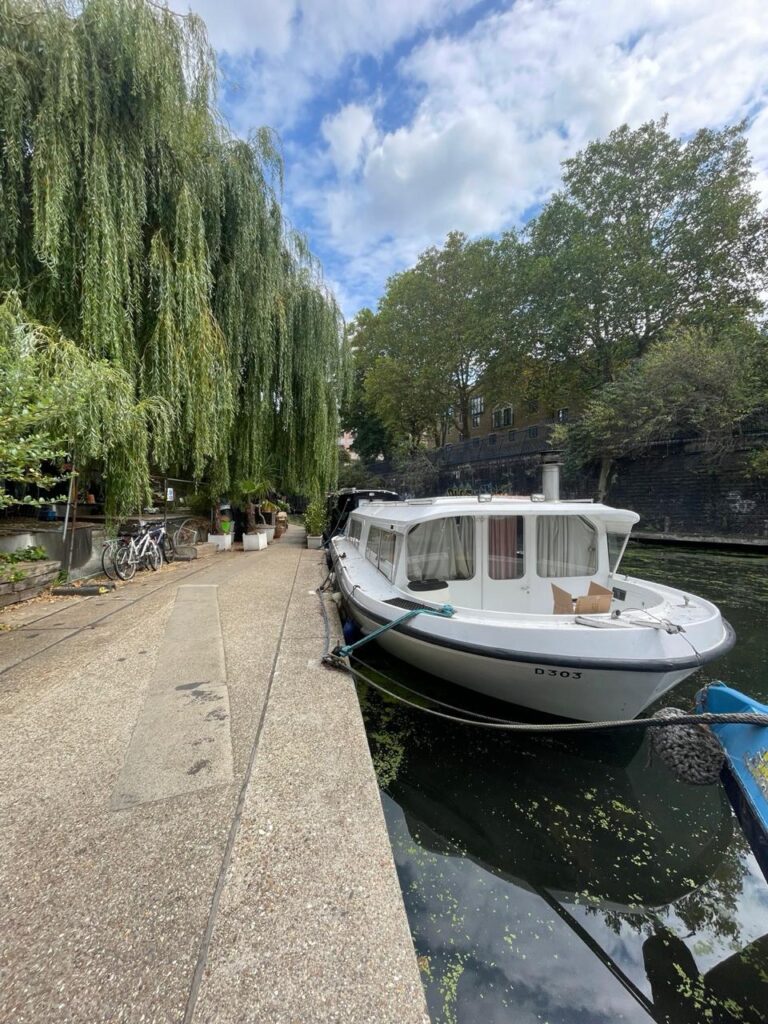
Photo: Fernanda Artibani
At the heart of the area, near where the Regent’s Canal meets the Grand Union Canal, is a spot known as Browning’s Pool. There, long, slender boats called narrowboats are moored along the banks.
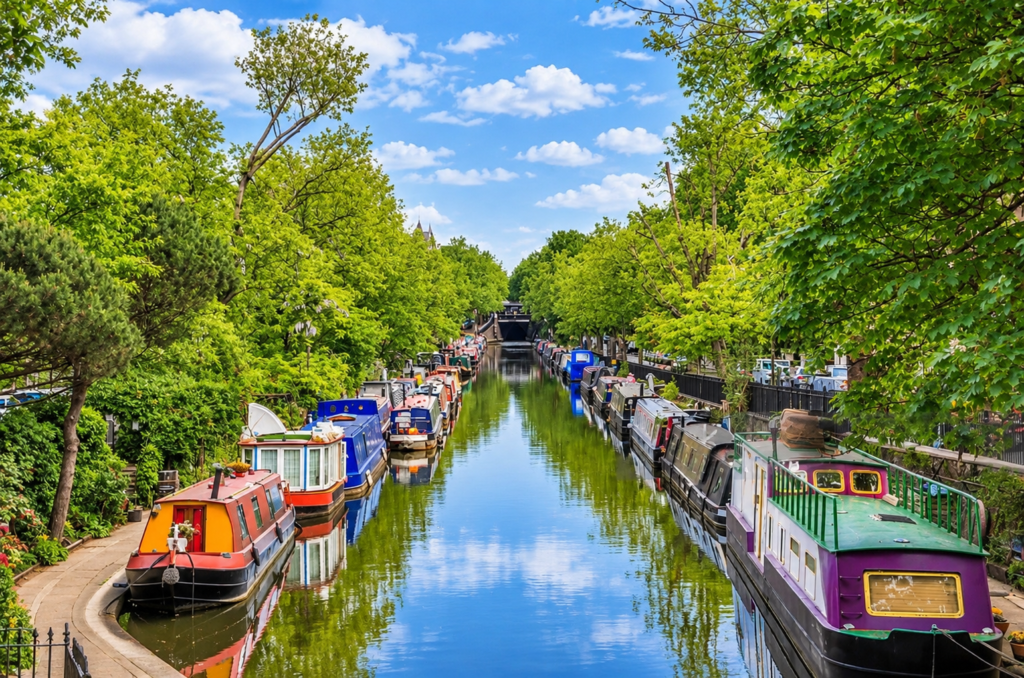
Some are true floating homes, with flowerpots, chairs and details that reveal their residents’ personalities. Living on a boat in London is a reality for many people, and watching these residences on the water is one of the most curious experiences of the walk.
The Clifton Road area is also worth exploring, with its small shops, cafés and neighborhood businesses. Along this stretch, we see that Little Venice is more than a pretty backdrop for photographs.
There is life going on.
People walking their dogs, residents going into bakeries, occupied café tables and that neighborhood atmosphere where things seem to happen at a quieter pace.
A good idea is to start at Warwick Avenue Underground station, head toward the canal and then explore the residential streets without rushing. If you feel like having coffee, even better: part of the experience is taking small breaks.
Visitors so inclined can also take a boat trip along the Regent’s Canal toward Camden, passing tree-lined stretches and scenery that offers another perspective on the city.
But I confess that, for me, walking remains the best way to get to know a place, because it lets us find what we had not planned: a different facade, a friendly flower shop, a colorful door or a street that sparks our curiosity.
And Little Venice seems to have been made for exactly that.
It is interesting to see how a city so well known for its grand monuments can surprise with something as simple as a residential neighborhood.
There is no need for major attractions, endless lines or elaborate experiences. The plan can simply be to stroll, observe and enjoy.
And perhaps that is one of the great changes in how we are learning to travel. Increasingly, interest no longer rests exclusively on famous tourist sights and now extends to the everyday life of cities. We want to discover small shops and markets and observe the architecture that is part of residents’ daily routines.
Little Venice brings all of this together with an unpretentious elegance.
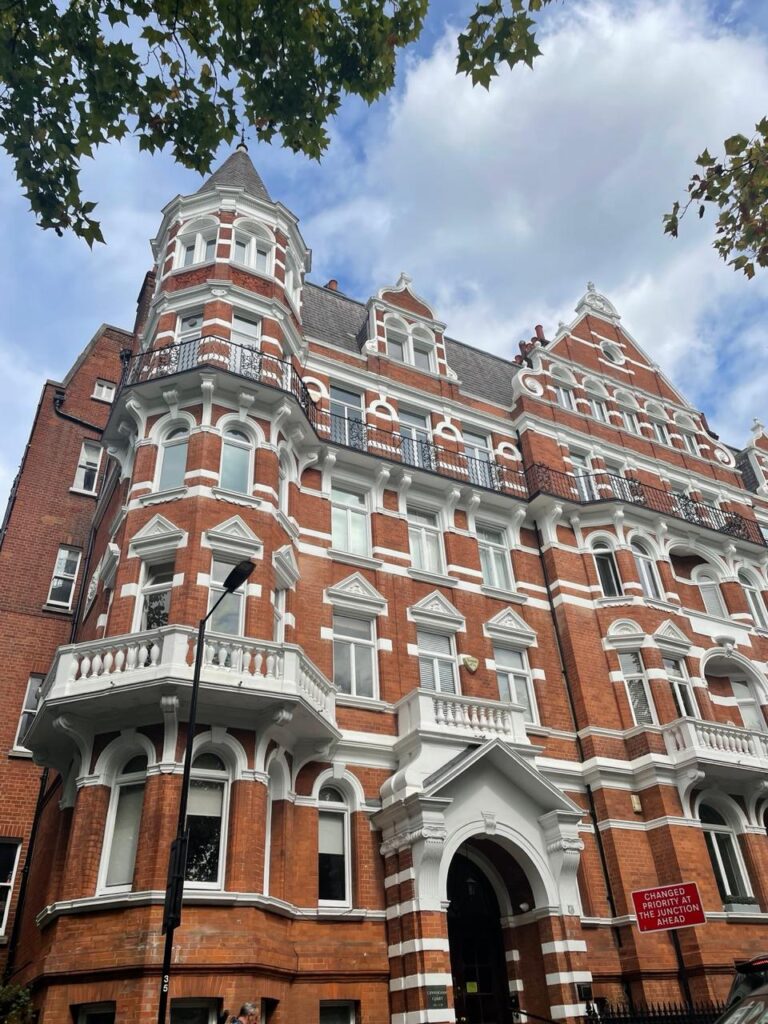
Photo: Fernanda Artibani
Of course, London will continue to be London, with its palaces, renowned museums, traditions and monuments known around the world.
Even so, the next time London makes your itinerary, set aside a few hours for Little Venice. See the canals and watch the boats, but also allow yourself to walk the neighborhood streets.
Because London is much more than Big Ben, red buses, phone booths and afternoon tea.
And some of its greatest delights lie precisely in the places that invite us to forget the clock

Fernanda Artibani
Lifestyle & Travel Columnist | Arch Gallery & Design Magazine
 Samuel Navarro Serpa