 Serpa
Serpa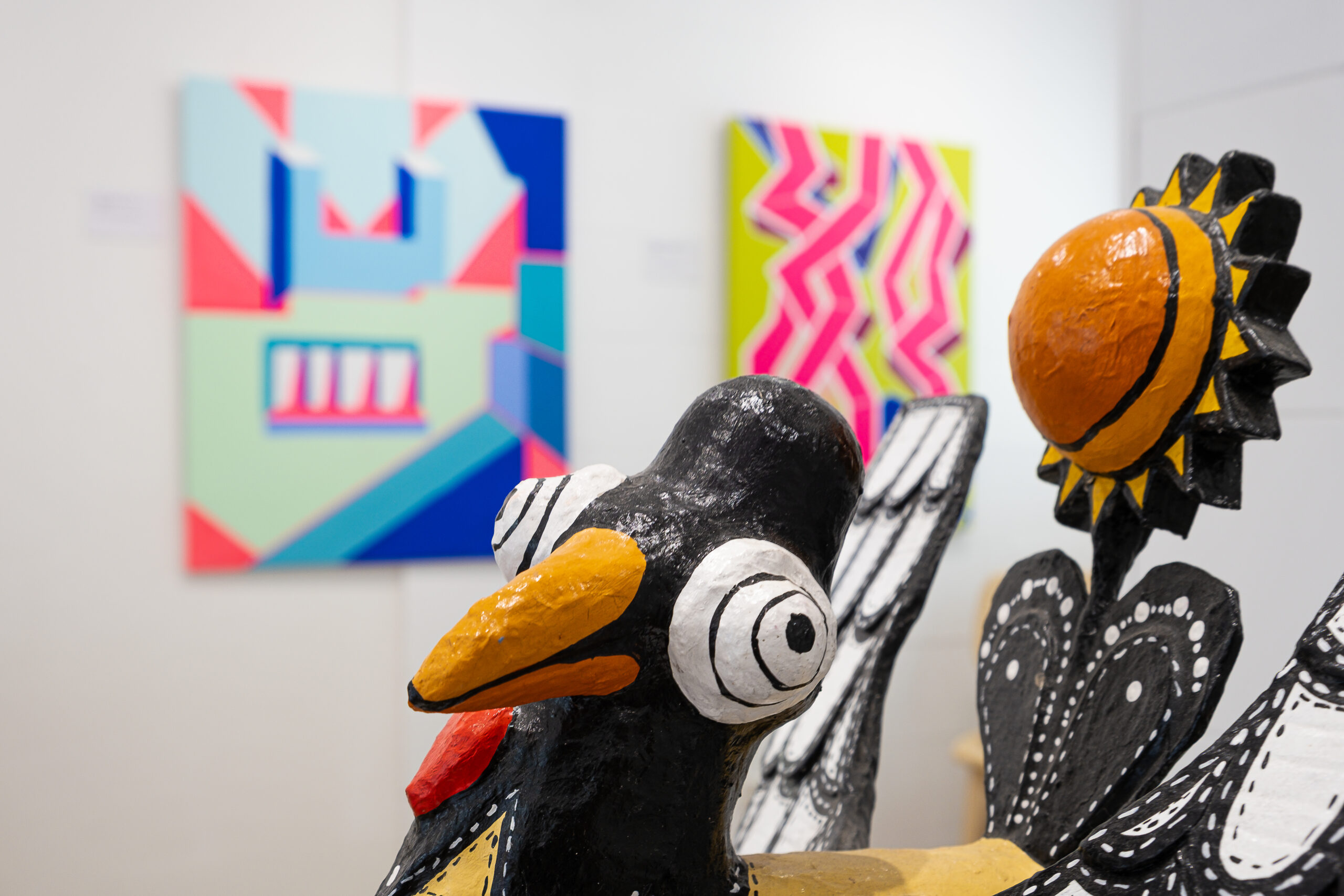
Photo: Disclosure / Casa Oxente
“A Nordeste do Nordeste” Brings Together Works that Propose a Shift in Perspective on Artistic Productions from the Region, Prioritizing Authorship and Worldviews Over Pre-established Geographic Categories
Casa da América Latina in Lisbon hosts the opening of the exhibition “A Nordeste do Nordeste” on January 27 at 6 p.m., proposing an inversion in how art from Northeast Brazil is typically presented and understood. Curated by Wilame Lima, a French-Brazilian artist and curator based in Lisbon, the show brings together works by nine artists — Ayla Guadalupe, Claudia Nên, Fábio Sampaio, Irinéia, Jasson, Leilane Lima, Nicinha Otília, and Véio — that prioritize the singularity of each authorship rather than readings based on previously established geographic or identity categories. The event is free and the exhibition runs through April 10.
The project stems from a critical premise: historically, Northeast Brazil and the notion of “popular art” have occupied a recurring place in Brazilian cultural imagination, frequently invoked as origin, foundation, or symbolic reserve. At different moments throughout the 20th century, the entry of popular productions into museum spaces was celebrated as an opening gesture, yet it brought with it recurring forms of framing. When these categories arrive before the encounter with the work, there is a risk of reducing the experience to a predetermined reading. The exhibition aims to invert this logic, proposing that the public see the work before the category.
The curatorial hypothesis maintains that the assembled works are not documents of the Northeast, but worlds. Each piece sustains a subjective vision that carries body, time, desire, and dream. The territory is not denied but understood as one layer among others that compose artistic production. Every work emerges from, or despite, a territory — through the choice of materials, the construction of forms, the invention of images, and the will to subvert them. When the geographic dimension becomes the primary key, authorship and the subjective forces that animate each work are lost from view.

The exhibition pathway was designed to privilege encounter and avoid the urgency to explain. Right at the entrance, a clay sculpture by Nicinha Otília inaugurates the show as a gesture of suspension: a creature that exists only in the artist’s dreams, outside the plane of classification yet real as image and presence. The dream functions as an inaugural gesture because it suspends immediate reading and opens space for other forms of attention. From this first suspension, paintings, sculptures, and photographs share the space as a field of relations, inviting visitors to remain long enough for the work to cease being illustration and become interlocutor.
The curation dialogues with important historical landmarks. In November 1963, at Solar do Unhão, Lina Bo Bardi inaugurated the Museum of Popular Art with the exhibition Nordeste — a project she herself would have preferred to title Civilização Nordeste (Northeast Civilization). Bringing together artifacts and contemporary productions side by side, this gesture expanded what could be recognized as art and opened a field of questions that remains productive: in what terms are these works seen, named, and placed in relation. Throughout subsequent decades, the coexistence of different production regimes fueled debates about status, interpretation, and visibility. “A Nordeste do Nordeste” takes these questions as a starting point to propose a shift in perspective.
The exhibition also dialogues with the show “À Nordeste,” held in 2019 at Sesc 24 de Maio in São Paulo, which shifted the debate from object to place of enunciation and questioned the very need to locate the Northeast as a fixed identity. “A Nordeste do Nordeste” emerges in dialogue with this inflection, proposing to revise the reference point. In Lisbon, some of the authorships present produce today in this territory, while others produce from Brazil, making visible that origin is a possible layer but not a definitive frame.
The show avoids didacticism and bets on the autonomy of vision. Instead of extensive texts or labels that anticipate interpretations, the exhibition trusts in the capacity of works to communicate their own formal and conceptual questions. This choice reflects the working approach of Casa Oxente, a contemporary art gallery based in Arroios, Lisbon, which promotes the show and whose mission is to insert Brazilian artistic production — with a focus on the Northeast — into dialogue with collectors, curators, and European institutions.
Inaugurated in 2025, Casa Oxente functions as an art gallery and meeting space, articulating exhibitions, exclusive editions, and artistic residencies. Its curatorial line connects the ancestral — linked to memory, territory, and collective practices — with contemporary languages that confront post-colonial questions, invisibilizations, and dissidences. Rather than explaining the Northeast, the gallery proposes to legitimize the artists themselves as critical and plural voices.
Wilame Lima, responsible for the curation, develops a practice that moves between artistic creation and curation. His research begins with photography and expands to hybrid and digital supports, articulating image, installation, and sound experimentation. As a curator, he privileges the creation of context through exhibition design, public programs, and conversations that bring together work, public, and research. This approach is evident in “A Nordeste do Nordeste,” where the installation seeks to establish non-hierarchical dialogues between works, allowing different temporalities, techniques, and references to coexist without subordination to a single discourse.

Wilame Lima Vallantin
Being an exhibition held in Lisbon, “A Nordeste do Nordeste” also assumes the condition of displacement: what happens to a work when it changes place? What questions emerge when a territory ceases to be a theme and becomes a starting point? If some artists seem to circulate with greater freedom of subject — speaking of formal, intimate, “mundane” themes — what possibilities open up when this same freedom is recognized for the authorships gathered here?
The exhibition does not seek to transform the room into a lesson about the region. What is offered is a minimal context to sustain the encounter and open layers of interpretation. The works are not presented as automatic bearers of a culture, but as singular constructions that ask to be seen in their complexity, before any predetermined naming.
The project highlights the role of independent spaces like Casa Oxente in creating alternative circuits of artistic circulation. By promoting exhibitions that question established categories and by working with rigor of information and transparency, the gallery contributes to expanding the debate about how Brazilian art is presented and understood outside Brazil.
“A Nordeste do Nordeste” is, finally, an exhibition about displacements: of works, of perspectives, of categories. Instead of presenting the Northeast as a fixed identity, it proposes a set of worldviews that form from it and invite a demanding exercise: to let the work operate before geolocating it.

Exhibition Details:
Opening: January 27, 2026, 6 p.m.
Dates: January 27 – April 10, 2026
Location: Casa da América Latina
Address: Avenida da Índia, 110, 1300-300 Lisbon
Curator: Wilame Lima
Admission: Free
Website: https://casaoxente.pt/
Instagram: https://www.instagram.com/casaoxente/