 Samuel Navarro Serpa
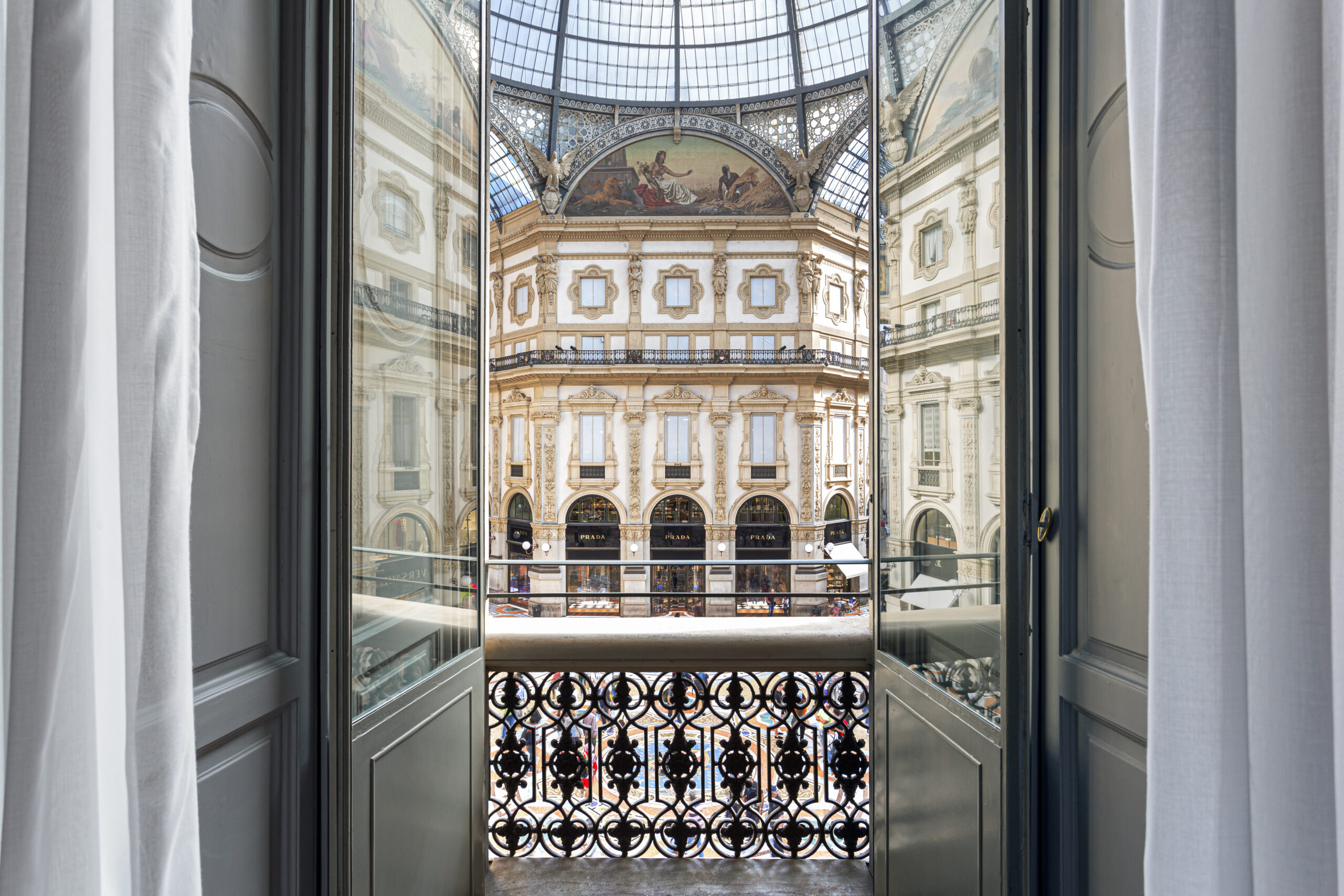
Open balcony doors frame the glass-and-iron dome of Galleria Vittorio Emanuele II in Milan, where the Galleria Vik Milano operates. Photo: Courtesy of the hotel
First European venture of Vik Retreats, the hotel preserves its 19th-century structure, filling it with contemporary art, hand-painted murals and furniture from different eras
By Samuel Navarro Serpa
MILAN — Opened in November 2019, Galleria Vik Milano occupies Galleria Vittorio Emanuele II, within Milan’s historic center. It is Vik Retreats’ first urban property and its European debut. Eighty-nine accommodations, including suites, carry works from over 100 artists, inside a 19th-century building restored by owners Alex and Carrie Vik.
Uruguayan architect Marcelo Daglio oversaw conversion of TownHouse Galleria, a hotel that occupied identical premises. In 2020, Vik’s property stood alone as lodging inside the arcade.
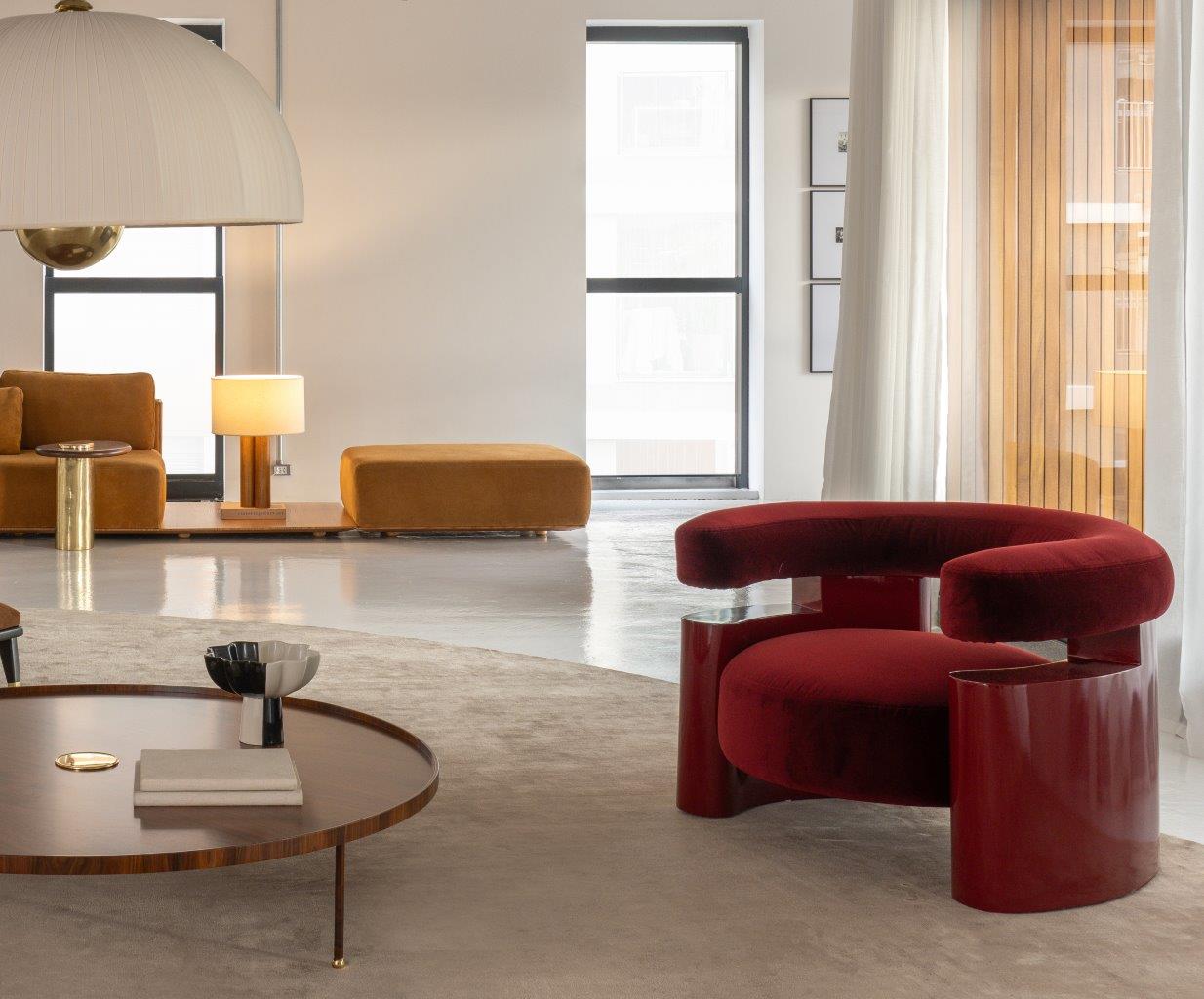
Design, along with architecture, plays a central role across Vik properties. Builders kept original structure, adding hand-painted murals, frescoes centered on Italian art. Other pieces come from Uruguayan artists as well as creators of varied nationalities; furnishings are contemporary, midcentury, vintage and antique.
Every level, a different setting
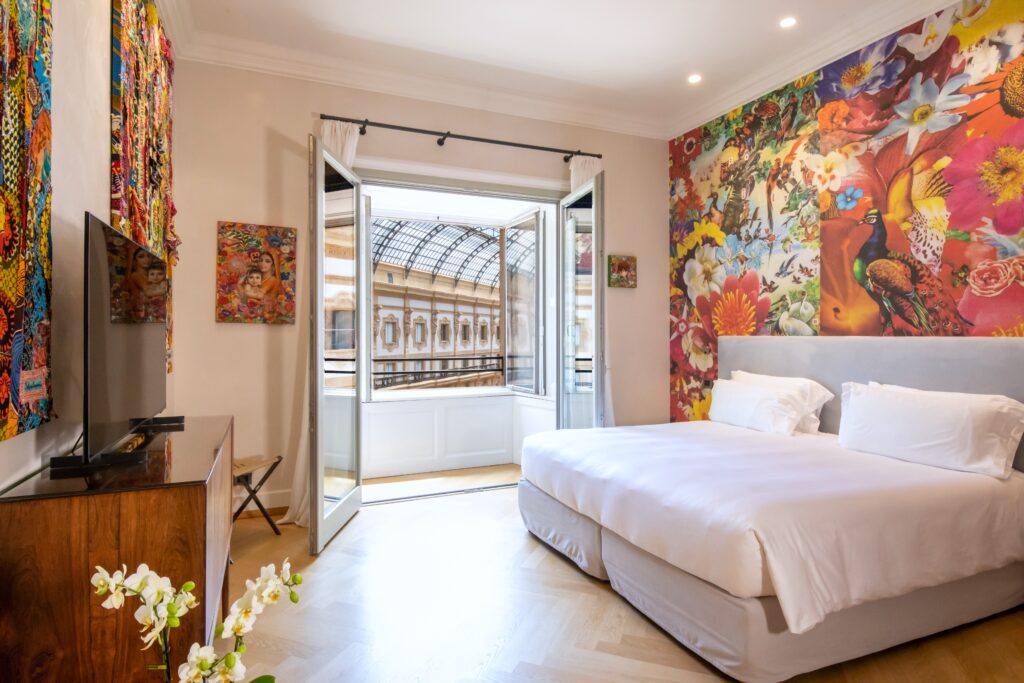
Works by Felipe Cardeña decorate a Grand Gallery Room, one of the hotel’s 89 rooms and suites. Photo: Courtesy of the hotel
Layouts vary by level. Second-floor spaces feature double-height ceilings, tall windows and a few lofts. Certain third-story bedrooms offer balconies. On the fifth, several rooms, suites included, open onto terraces above iron-and-glass roofing.
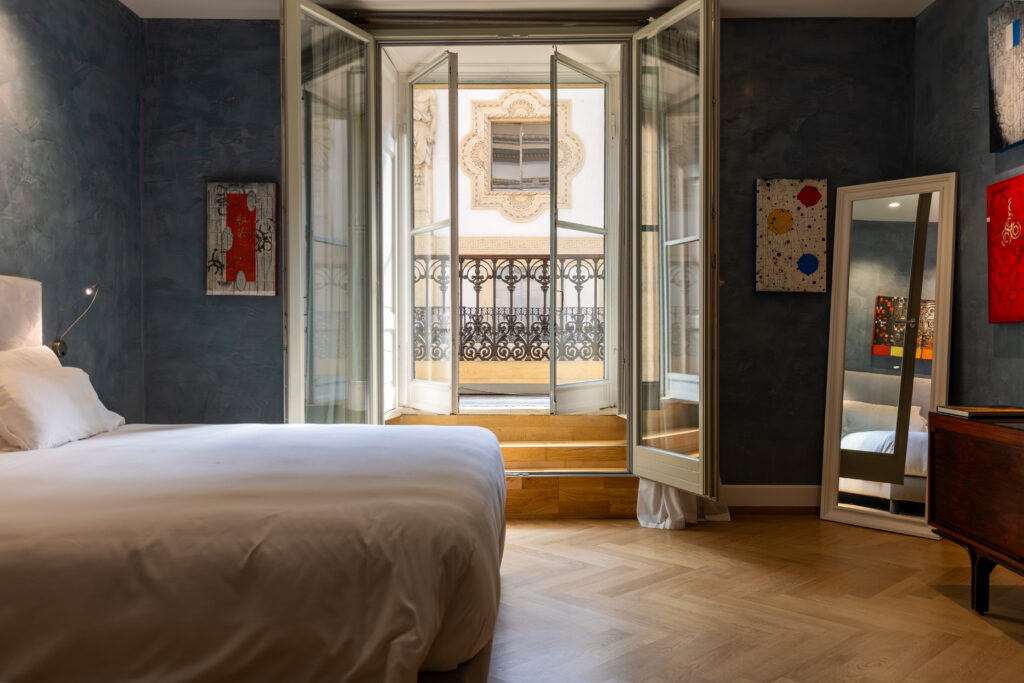
Art by Roberto Floreani hangs in a guest room with doors open to a balcony. Photo: Courtesy of the hotel
Views vary: many rooms face the galleria’s interior, some with a panorama reaching Piazza del Duomo, Milan’s cathedral square. Others look toward Piazza della Scala, Via Silvio Pellico or courtyards.
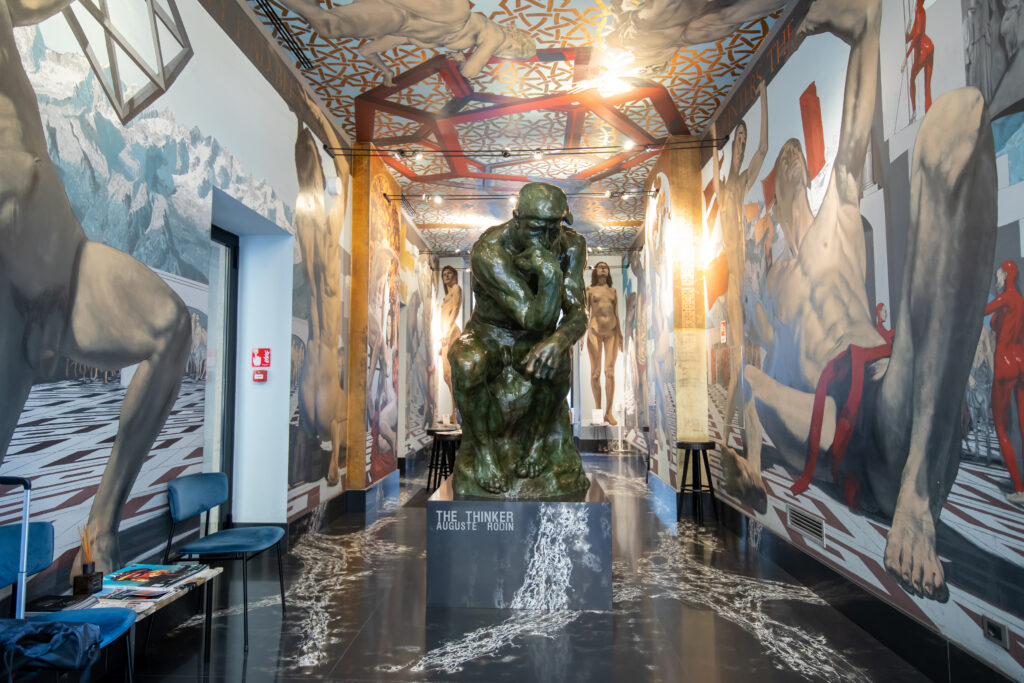
Bronze cast of “The Thinker” by French sculptor Auguste Rodin stands in the hotel lobby. Photo: Courtesy of the hotel
Interiors, fully redesigned at launch, include a lobby bronze cast of “The Thinker,” from French sculptor Auguste Rodin. Reception displayed Italian artist Alex Folla’s mural, featuring heroic male figures.
A gallery that runs from fresco to light box
Painters Aldo Damioli, Alessandro Papetti, Marco Petrus and Giovanni Frangi also joined the launch collection. Sculptors Pino Deodato and Adriano Pompa contributed, as did photographers Matteo Basilé and Antonio Guccione, alongside four more artists profiled below.
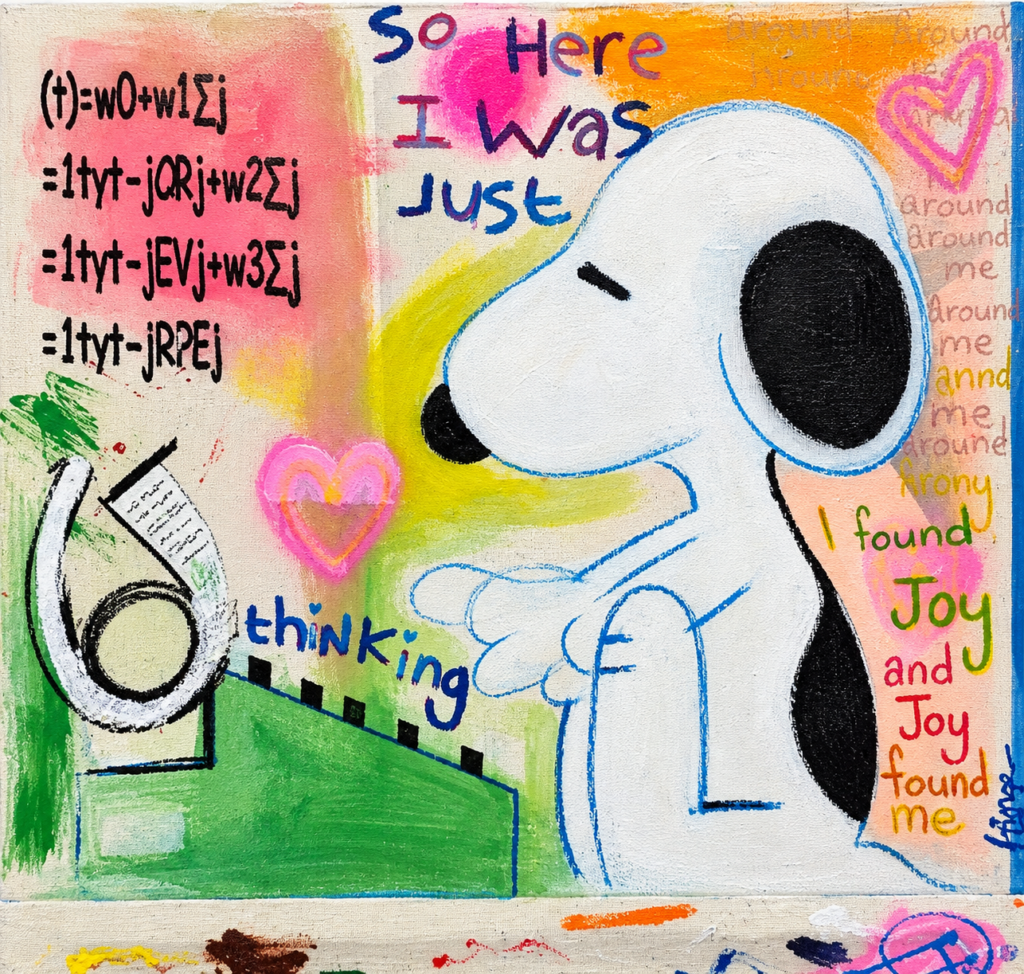
Fringe, born in 1970 in Johannesburg, signs “So Today I Was Just Thinking,” a neopop work. The artist keeps his identity private. Photo: Courtesy of the hotel
Johannesburg native Fringe, born in 1970, makes neo-pop, a contemporary offshoot of pop art. Internationally active yet anonymous, Fringe chose to stay beyond the mainstream circuit. That position lets him scrutinize and critique consumer society, along with today’s collective imagination. His output is multidisciplinary.
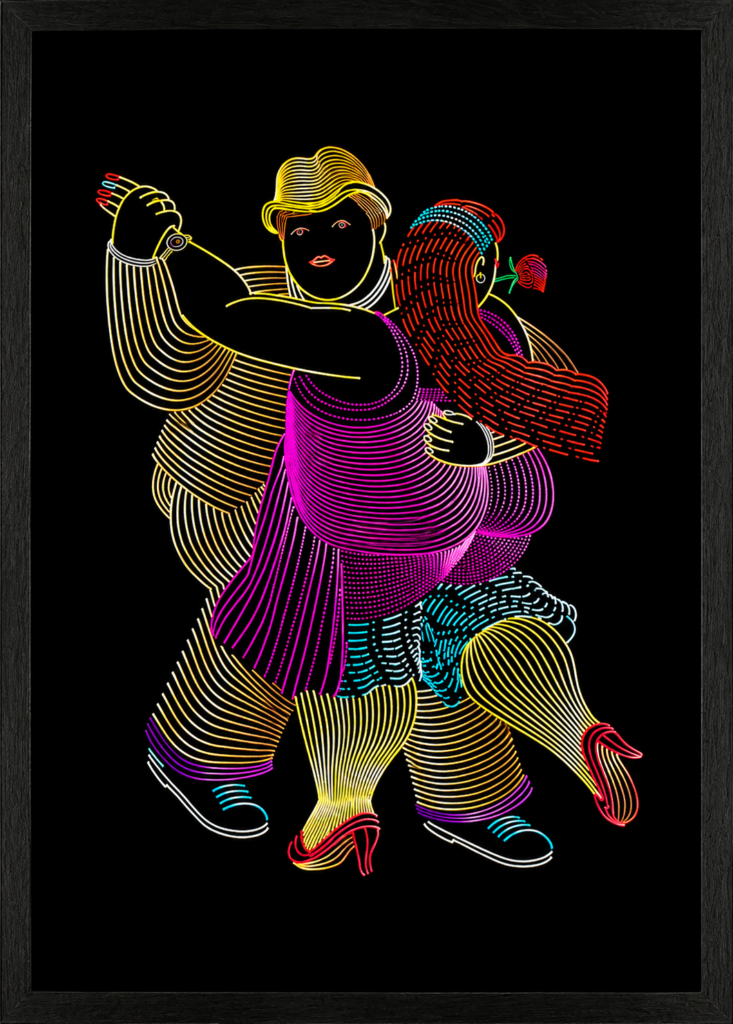
Stefano Banfi’s light box “BTF” uses vector lines and digital points that look three-dimensional because of the lighting. Photo: Courtesy of the hotel
Stefano Banfi reinterprets universal masterpieces through a language blending pop, kinetic art and international design. His light boxes merge advertising aesthetics, graphics and visual arts. Vector lines, trajectories and digital dots form images that seem alive, even three-dimensional, thanks to illumination.
Wry icons of everyday consumption
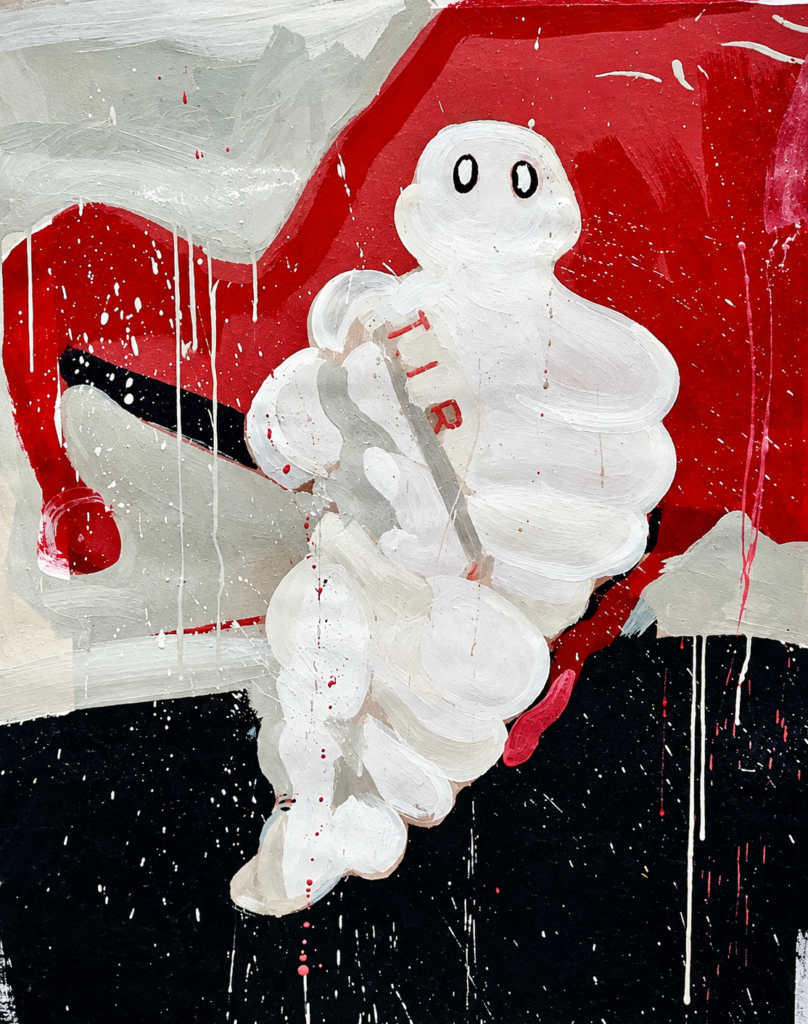
Sara Baxter, an English artist, turns consumer objects into pop art icons, as in “Michelin Man.” Photo: Courtesy of the hotel
English artist Sara Baxter turns consumer objects into icons evoking pop art in an ironic tone. She seeks to erase differences between highbrow tradition and popular culture, treating such items as luxury fetishes.
Baxter’s creations include a three-dimensional take on tomato cans popularized by American artist Andy Warhol. Superhero logos such as Superman, Batman and Wonder Woman adorn them, alongside images of comic-book plus cartoon characters. Newer pieces portray beverage bottles, food packaging, perfumes, labels and commercial brands, in pop style borrowing from advertising illustration.
Central to her practice is collectors’ and consumers’ difficulty separating a piece’s genuine value from price markup created by the art system. Retail works similarly: brands grew more valuable than products on supermarket shelves.
Monochrome gaze
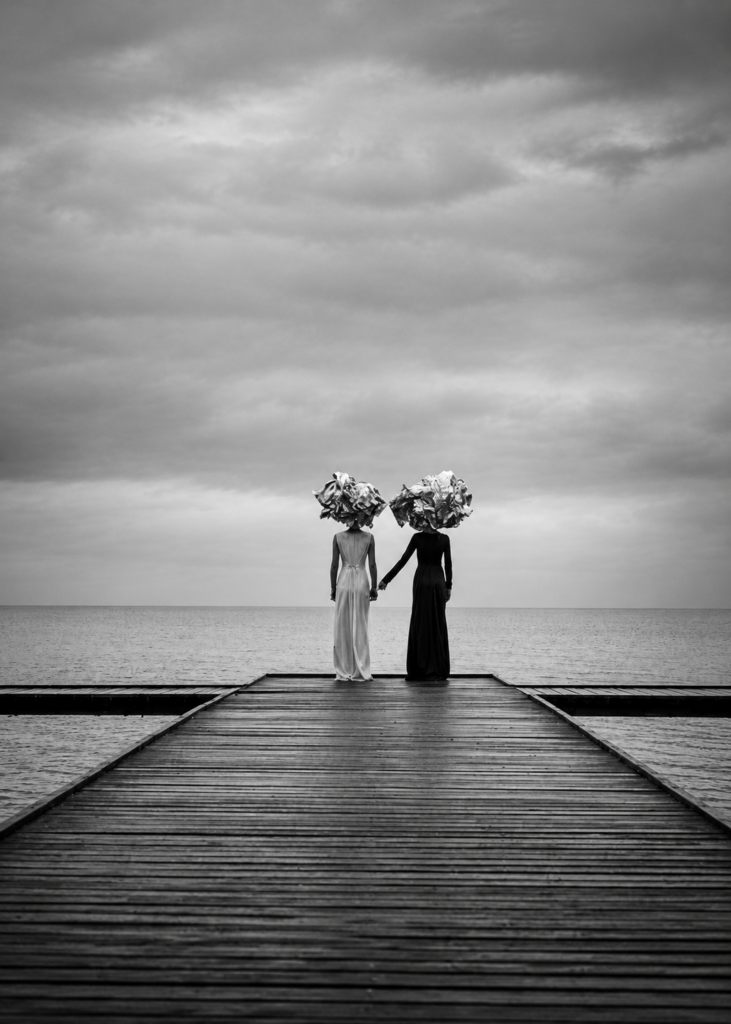
Photographer Szymon Brodziak, who calls himself a “visualteller,” works in black and white. Photo: Courtesy of the hotel
Photographer Szymon Brodziak calls himself a visualteller (loosely translated, visual storyteller), working in black and white. His maxim: “What you see is who you are.” Berlin’s Museum of Photography, home of Helmut Newton Foundation, featured him during 2015 as its youngest exhibitor.
During 2013’s Cannes Film Festival, Fashion TV Photographers Awards jurors named Brodziak best worldwide in black-and-white campaign photography. Six years later, he took first place at World’s Top 10 Black&White Photographers contest, curated by OneEyeland.
Landmark with a cruciform plan
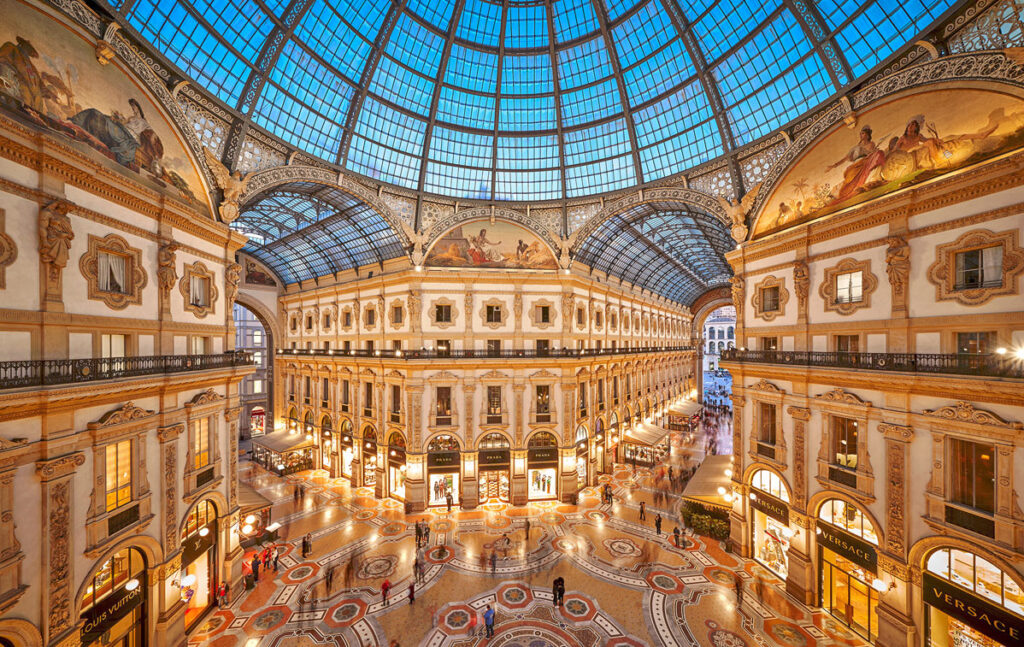
Galleria Vittorio Emanuele II, designed by Giuseppe Mengoni and built from 1865 to 1877, has a glass-and-iron dome 47 meters high. Photo: Courtesy of the hotel
Planned in 1861, then built from 1865 to 1877 by architect Giuseppe Mengoni, Galleria Vittorio Emanuele II is Italy’s oldest shopping arcade still operating. Beside Milan’s cathedral, the Duomo, it links Piazza del Duomo with Piazza della Scala. Mengoni died that final year, after a fall off scaffolding at his own project.
Nicknamed Salotto di Milano (Milan’s drawing room), the arcade follows a cross-shaped plan, crowned by an iron-and-glass dome where arms meet. Its name pays homage to Italy’s first monarch after unification.
Four floor mosaics reproduce coats of arms from former kingdom capitals: Rome’s she-wolf, Florence’s lily, Milan’s red cross and Turin’s bull. Ironwork totals about 350 metric tons, while its dome rises 47 meters.
Owned by Milan’s city government, Galleria Vittorio Emanuele II hosts several systems tied to the monument. For that reason, staff members ask guests for patience with an old building.
Fashion labels and gilded lettering
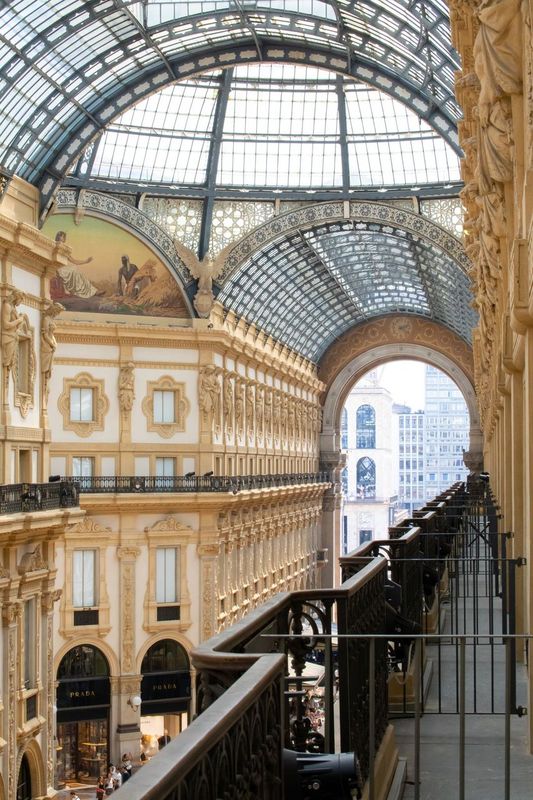
View from the hotel shows the iron-and-glass roof of Galleria Vittorio Emanuele II. Photo: Courtesy of the hotel
Every shop and café inside the passage obeys one visual-identity rule: gold lettering against black backdrops across signage.
Prada’s first store operates beneath the hotel. Gucci and Louis Vuitton also have spaces there, along with restaurants.
Via Monte Napoleone lies five minutes away on foot, Via Manzoni just one. Milan is a capital of fashion and design, hotel staff say.
Carrie Vik, co-founder of Vik Retreats, said in a 2019 interview that Milan already offered established five-star hotels, yet she and Alex wanted to introduce daring design. Vik described project concepts as experimental, the sort people would apply at home.
An acquaintance from hospitality circles pointed them to the space during a birthday party in southern France, about five years before opening.
Menus from seasonal to Neapolitan
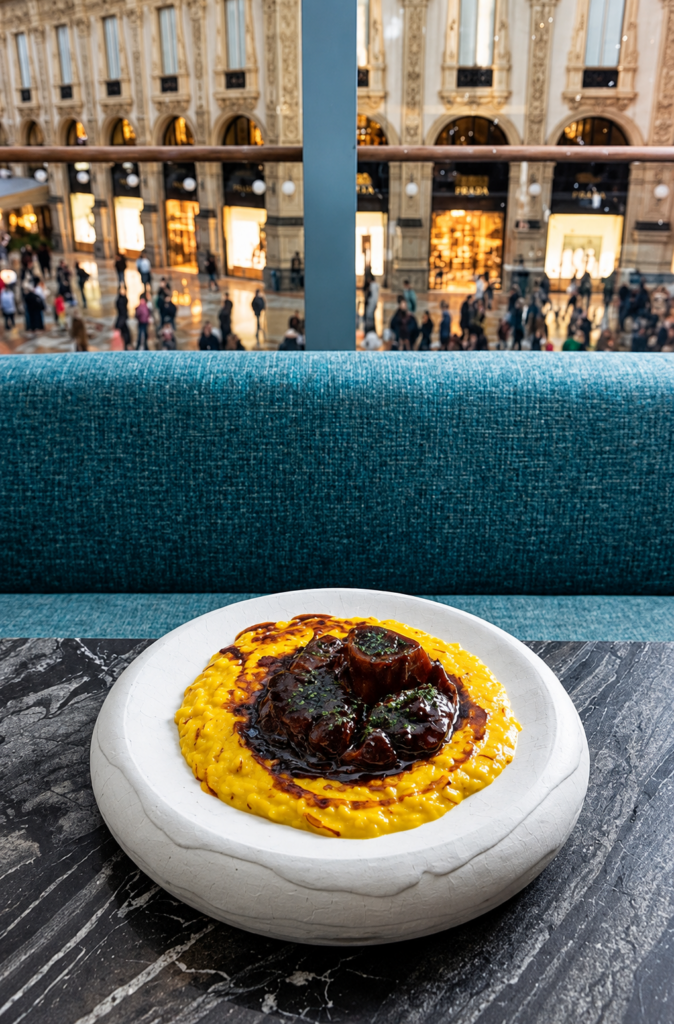
Dish served at a hotel restaurant, with the arcade’s windows in the background. Photo: Courtesy of the hotel
Main restaurant Vik Pellico Otto serves seasonal dishes along with Vik-label wines. Breakfast, lunch, aperitivo and dinner are all offered, with a dining room facing the galleria’s dome.
I Dodici Gatti, a Neapolitan pizzeria with an outdoor terrace plus city views, sits on level six, above the passage’s roof. Hotel staff call it beloved among Milanese. Its entrance is beside Museo Leonardo, in Piazza della Scala.
6 retreats, from Chile to Uruguay
Alex and Carrie Vik founded Vik Retreats during 2004, joined by South American hotelier Maximiliano Broquen. Its portfolio spans six properties: Vik Chile and Puro Vik, both Chilean; Playa Vik, Estancia Vik and Bahia Vik, all based in José Ignacio, Uruguay; and Galleria Vik Milano.
Estancia Vik, Spanish colonial in style, was designed by architect Daglio and displays only Uruguayan artists’ pieces. Playa Vik bears the signature of Carlos Ott, a compatriot.
Chile holds Vik’s vineyard estate, spanning roughly 4,500 hectares, drawn up by architect Smiljan Radic. Wine Enthusiast magazine crowned Vik Chile the world’s best winery experience during 2020.
Small Luxury Hotels of the World, an international association for upscale lodgings, counts Galleria Vik Milano among its members. During 2020, Italy’s COVID-19 lockdown temporarily shut it down.
Hospitality in the palm of your hand
Guests reach staff by WhatsApp or text message, from inside the building to anywhere in Milan; rooms therefore lack landline phones. Management considers that channel simplest for meeting their needs.
Before arrival, travelers receive an email enabling virtual check-in, transportation booking and a so-called Milan Experience reservation. Checkout likewise happens remotely.
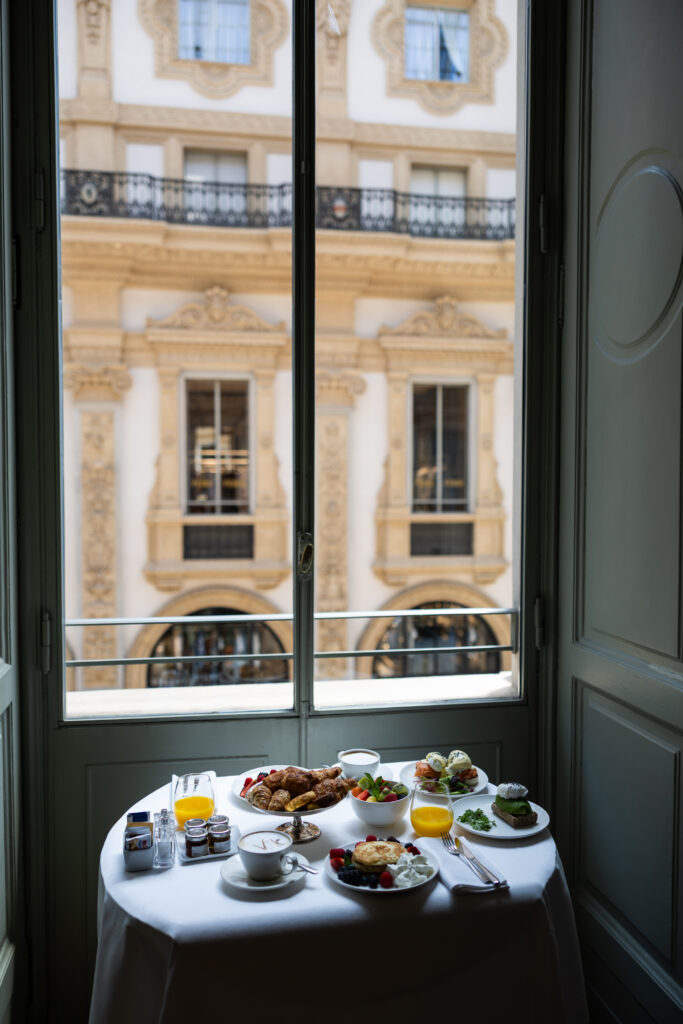
Breakfast, which the hotel includes, is set on a table beside a window facing the arcade’s facade. Photo: Courtesy of the hotel
Included: buffet breakfast, Wi-Fi, round-the-clock assistance and room service. Smoking is prohibited; valet parking exists. A gym meeting international standards sits nearby, while the hotel offers a private spa.
Staff members solicit suggestions for improving each stay, saying they treat visitors like friends. Management hopes travelers will fall for the address, adopting it as a second home in Milan.
If you go
Galleria Vik Milano
Where: Via Silvio Pellico, 8, inside Galleria Vittorio Emanuele II, Milan, Italy
Accommodations: 89 rooms, suites included
Restaurants: Vik Pellico Otto and I Dodici Gatti