 Serpa
Serpa
Igor Lima translates the forest into original furniture designs
Just days before COP30 takes place in Belém, occurring between 10 and 21 November 2025, Amazonian design gains relevance as an authentic expression of the region’s identity. Designer and carpenter Igor Lima, a native of the region based in São Paulo, builds a singular trajectory by translating the forest into bespoke furniture, representing this connection between local culture and international projection at a time when the capital of Pará receives an estimated flow of over 40,000 visitors during the main days of the Conference.

Banco Pedras
The choice of Belém as host for the planet’s most important climate conference reinforces the Amazon’s role in discussions about global sustainability. President Luiz Inácio Lula da Silva emphasised that “it’s one thing to discuss the Amazon in Egypt; another thing to discuss it in Berlin; another thing to discuss it in Paris. Not now. Now we’re going to discuss the importance of the Amazon within the Amazon itself”.
Design as cultural ambassador
From his atelier in São Paulo, Igor Lima keeps Amazonian memory and identity alive. His creations — which include the award-winning Tajapi shelving unit, the Tataui table inspired by Amazonian caterpillars, and the Pedras bench that evokes the rocks of the region’s rivers — function as ambassadors of forest culture on the national scene.
Tataui
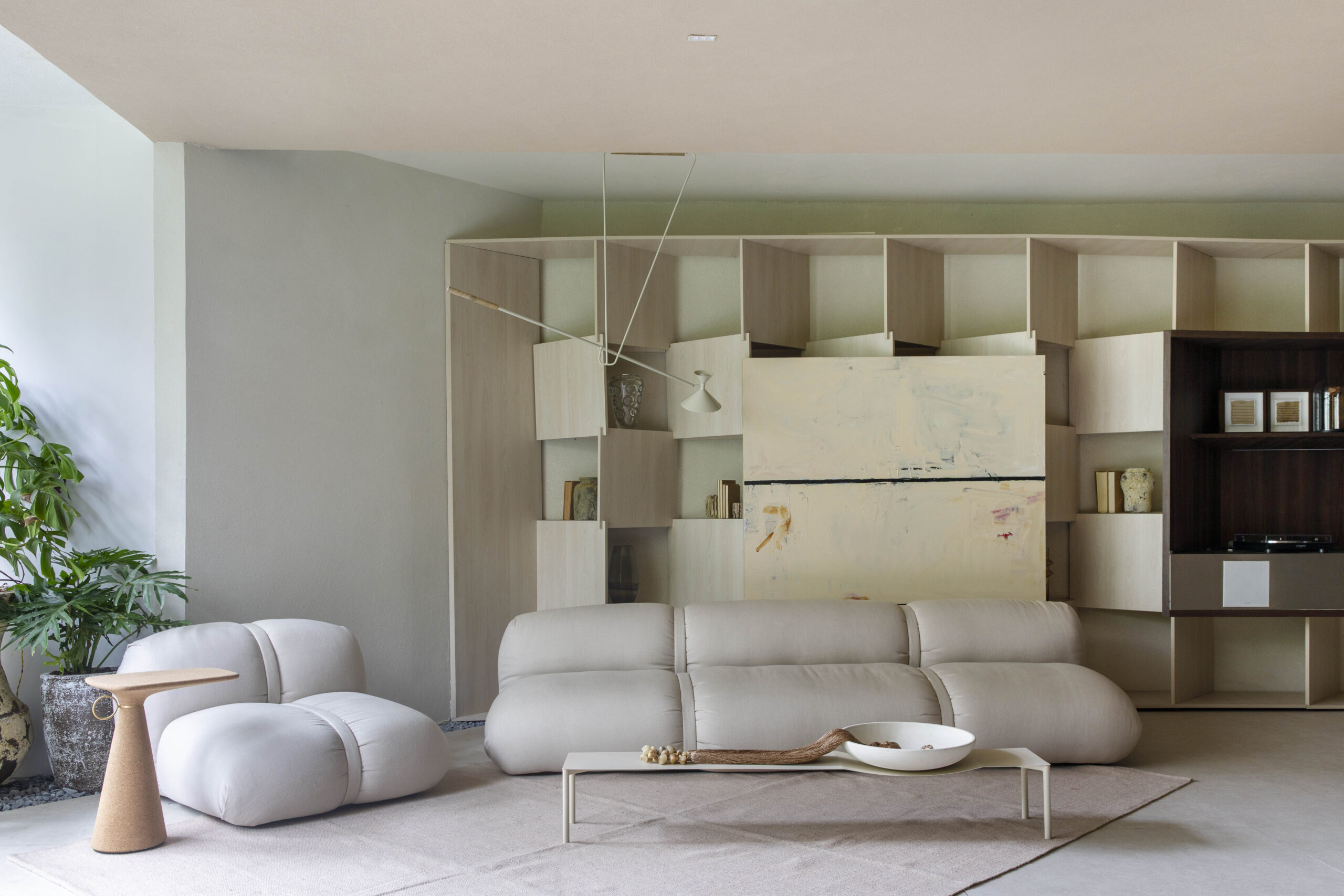
The Tajapi shelving unit, which won the IBEMEI Design Award, demonstrates how authorial design can project regional identity beyond geographical boundaries. With thin shelves in dark tones and supports in solid wood with a trapezoidal shape, the piece translates indigenous graphics into contemporary language.

Tajapi
“Each piece seeks to capture the essence of the forest, its movements, textures and graphics”, explains the designer, who expanded his creative repertoire in 2025 with launches such as the Sombras and Galhos rugs, which reinterpret the patterns of light and movement of the forest, and the Tajapi rack.
COP30 and the appreciation of local culture
Preparation works for COP30 represented investments of 4.5 billion reais in the city, with renovations to the Ver-o-Peso Complex, traditional markets and the creation of new cultural spaces. Governor Helder Barbalho considers that the international event will leave deep marks on Pará’s history, bringing forward by 30 years the infrastructure agenda that was planned.
Among the main works are the renovations of the Ver-o-Peso Complex, the São Brás Market and the construction of the São Joaquim Linear Park, carried out by the municipality and which, together, rely on resources in the order of 299 million reais. These traditional spaces, now modernised, keep local culture alive and offer international visitors an immersion in Amazonian identity.
Bioeconomy and sustainable design
COP30 also promotes initiatives that connect design, sustainability and the creative economy. At Porto Futuro II, five warehouses provided by Companhia Docas do Pará are being transformed into a leisure and gastronomy complex, with an innovative bioeconomy hub, which will be a new tourist attraction in the city.
Igor Lima’s work dialogues directly with these concepts. Even geographically distant, the designer maintains a strong bond with the Amazon by using hand-carved solid wood, favouring noble materials from the forest and artisanal processes that value traditional knowledge. The Tataui table, with organic forms that suggest metamorphosis, and the Pedras bench, with upholstered seats in shades of green on a carved base, demonstrate this commitment to local raw materials and techniques that respect natural cycles.
International projection
The COP30 presidency has released the official calendar of Thematic Days, with a programme covering over 30 interconnected themes and offering a clear entry point for global actors to contribute with real climate solutions. Among the themes, debates about forests, biodiversity, indigenous peoples and traditional communities stand out.
Amazonian design, represented by creators like Igor Lima, naturally fits into these discussions by demonstrating that it is possible to reconcile contemporary technique, respect for traditions and sustainable use of natural resources. From São Paulo, the designer proves that forest culture transcends geographical boundaries and can dialogue with the sophisticated market without losing authenticity.
With an atelier in the São Paulo capital and artisanal production, Igor Lima maintains carpentry as a central creative process. “Design needs to dialogue with origins, but also with the contemporary world”, he states.
As Belém prepares to receive the world in November, designers like Igor Lima consolidate themselves as a legitimate expression of Amazonian identity — a language that translates forest into form, tradition into contemporaneity, and local culture into global relevance, regardless of physical distance.
His creations can be discovered at www.estudioigorlima.com.br and on the Instagram profile @estudioigorlima.
Photos: Publicity