 Serpa
Serpa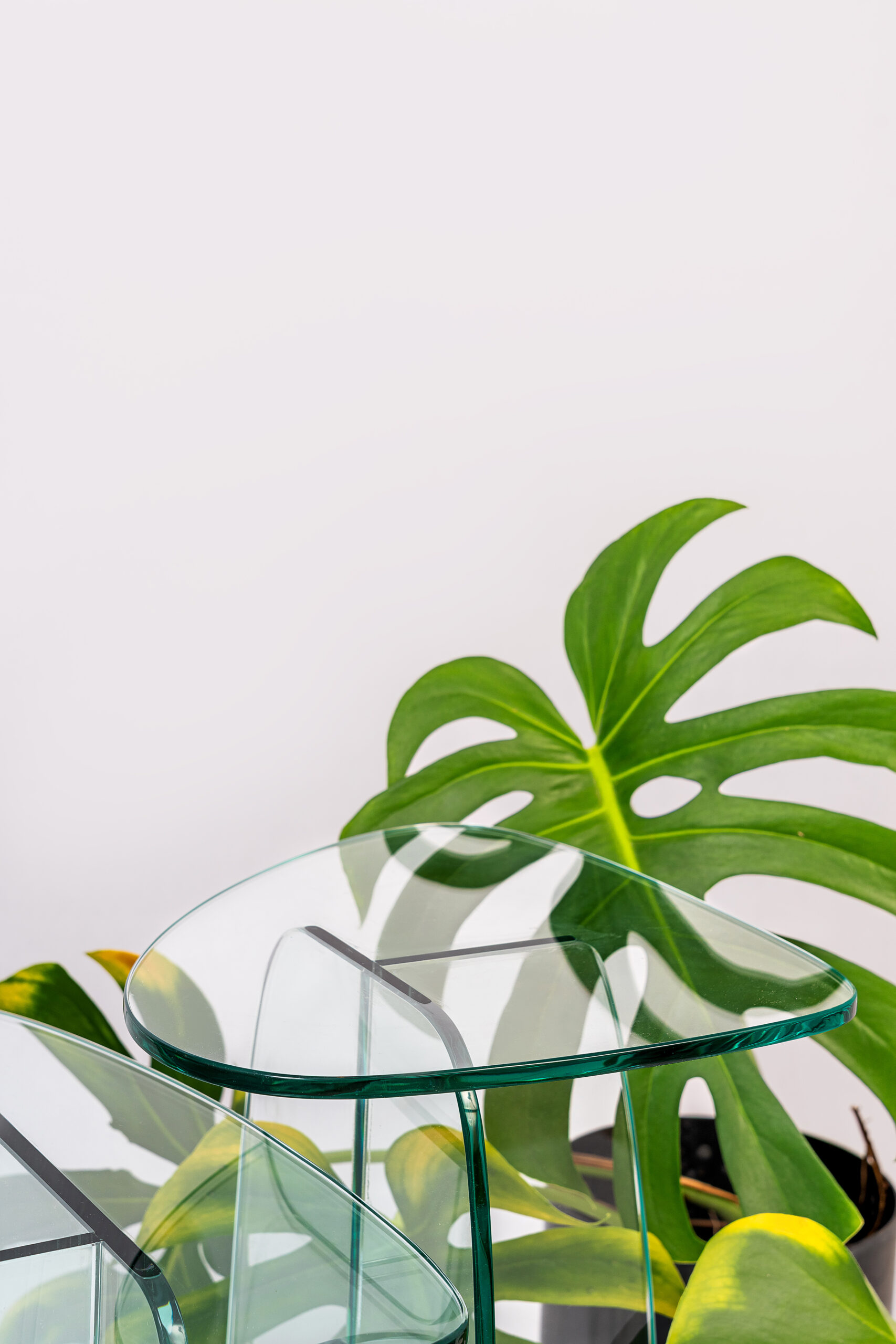
Designer presents the Degrau and Mesa Dois Irmãos lines, sustainably produced and inspired by the hills of Rio de Janeiro
Designer Pedro Braga presents two new furniture collections that translate elements of the Rio de Janeiro landscape into utilitarian pieces for the contemporary home. The Degrau line, consisting of mirrors and tables, and the Mesa Lateral Dois Irmãos, inspired by the iconic hills of Rio de Janeiro, mark the consolidation of a production method that transitions between industry and craftsmanship, with an emphasis on small scales and recyclable materials. The pieces are part of an exhibition that brings together the designer’s complete portfolio, with furniture and objects that dialogue between functionality, visual poetics and emotional design.
Degrau Line: architecture of surfaces
The Degrau Line explores the creation of volume from straight planes, resulting in compositions of two, three or four surfaces that form ascending or descending ‘stairs’. The pieces can be installed climbing up the walls or descending to the floor, creating visual effects of depth and movement based on the principles of Gestalt — a theory of psychology that studies how the human brain organises visual elements into patterns and shapes.

The mirrors
The mirrors in the line are available in silver and bronze versions, with a plural colour palette and the possibility of horizontal or vertical installation, including use as a full-length mirror. This versatility expands the possibilities for curatorial composition in environments. The tables are made of 12-millimetre crystal glass with lacquered paint applied to the underside, a technique that reinforces the three-dimensionality of the piece through the contrast between light, shadow and depth. Copper and black tones were selected for the current exhibition.
The collection also includes the Degraus Tables, intended for use as centre or side tables, which dialogue with different spatial scales and create effects of continuity and visual rupture in environments. The proposal is to transform utilitarian objects into three-dimensional graphic structures that give new internal perspectives to domestic spaces.

Dois Irmãos Table: topography as inspiration
The Dois Irmãos Side Table pays homage to the Morro Dois Irmãos mountains, a Rio de Janeiro landmark located between the Leblon and Vidigal neighbourhoods. The set consists of two tables of different heights which, when placed side by side, evoke the undulating silhouette between sky, rock and sea that characterises the urban landscape of Rio de Janeiro.

Dois Irmãos Table
Produced entirely in glass — a durable and recyclable material — the piece establishes a poetic connection with its inspiration by transforming silicon, a chemical element present in the rocky massifs, into an essential raw material. The glass, processed and moulded, is converted into a utilitarian sculpture that Braga defines as an object ‘for the Brazilian Home’.
The available finishes include colourless, bronze and smoked versions, with future development planned in textured fusing glass. The alternation between finishes reinforces the natural contrast between the mineral grey of the rock and the green of the vegetation that covers the hills of Rio de Janeiro — a visual duality that balances raw and sophisticated, tropical and universal elements. The piece represents a tribute to the encounter between the natural and the urban, between the landscape and the home.
Diversified portfolio
The exhibition presents Braga’s work divided into categories that highlight the breadth of his production. In the ‘Home Furniture’ section, in addition to the new Degrau Line and Mesa Dois Irmãos, there are established pieces in his catalogue, such as the Mesa Pão de Açúcar — another reference to Rio’s topography —, the Aparador Cruzada and the ABC Mirrors.
The segment also includes the Degraus Tables in different configurations, the Restalt Table set, the Não Espelho Mirror — a piece that subverts the traditional function of the object —, the Junina Table and the Sol Nascente Bookcase. Among the sideboards, the V Sideboard and the Sol Nascente Buffet stand out, exploring different geometries and materials.
In the ‘Home Objects’ category, the designer presents the Pão de Açúcar Tray, the Jardins Suspensos (Hanging Gardens) — structures that integrate vegetation into indoor environments —, the Amedblock Clock and the Pazzo Dispenser. The exhibition is completed by the Pão de Açúcar Vases, the ABC P Mirrors and the Arridor Pazzino.
Hybrid production method
Braga’s creative process combines digital technologies, such as CNC (computerised numerical control) equipment, with traditional analogue manufacturing techniques. This hybrid methodology allows for production flexibility and adaptation to specific demands, characteristic of the entrepreneurial designer model that the Rio de Janeiro native represents.
The choice of small-scale production allows for greater quality control and customisation of pieces, as well as reducing waste. The use of materials such as glass, which can be recycled indefinitely without loss of quality, is in line with contemporary concerns about sustainability in the design production chain.
Braga uses principles of emotional design to create provocative products, whether through the visual language applied to form or through functional attributes that stimulate interaction with the user. The goal is to establish emotional bonds that transform objects into ‘products for life,’ capable of transcending fads and remaining relevant over time.
Profile of the entrepreneurial designer
A graduate of PUC-Rio with a master’s degree in Design Management, Braga is part of a generation of Brazilian designers who structure their own businesses and establish networks of partnerships to make original products viable.
The work of these professionals has driven the growth of an emerging creative industry in Brazil, a sector characterised by the appreciation of authorship, material experimentation and the search for cultural identity in objects. They are creatives who invest in their own ideas, master the technical knowledge and production strategies necessary to realise them, and establish connections in a wide network of relationships that includes suppliers, manufacturers, gallery owners and customers.
This economic model of creative entrepreneurship represents an alternative to the traditional system of licensing projects to large industries, allowing designers to maintain control over their creations and build authorial brands with their own identity. Braga exemplifies this generation by maintaining a diversified portfolio, in-house production, and market presence through exhibitions and specialised points of sale.