 Serpa
Serpa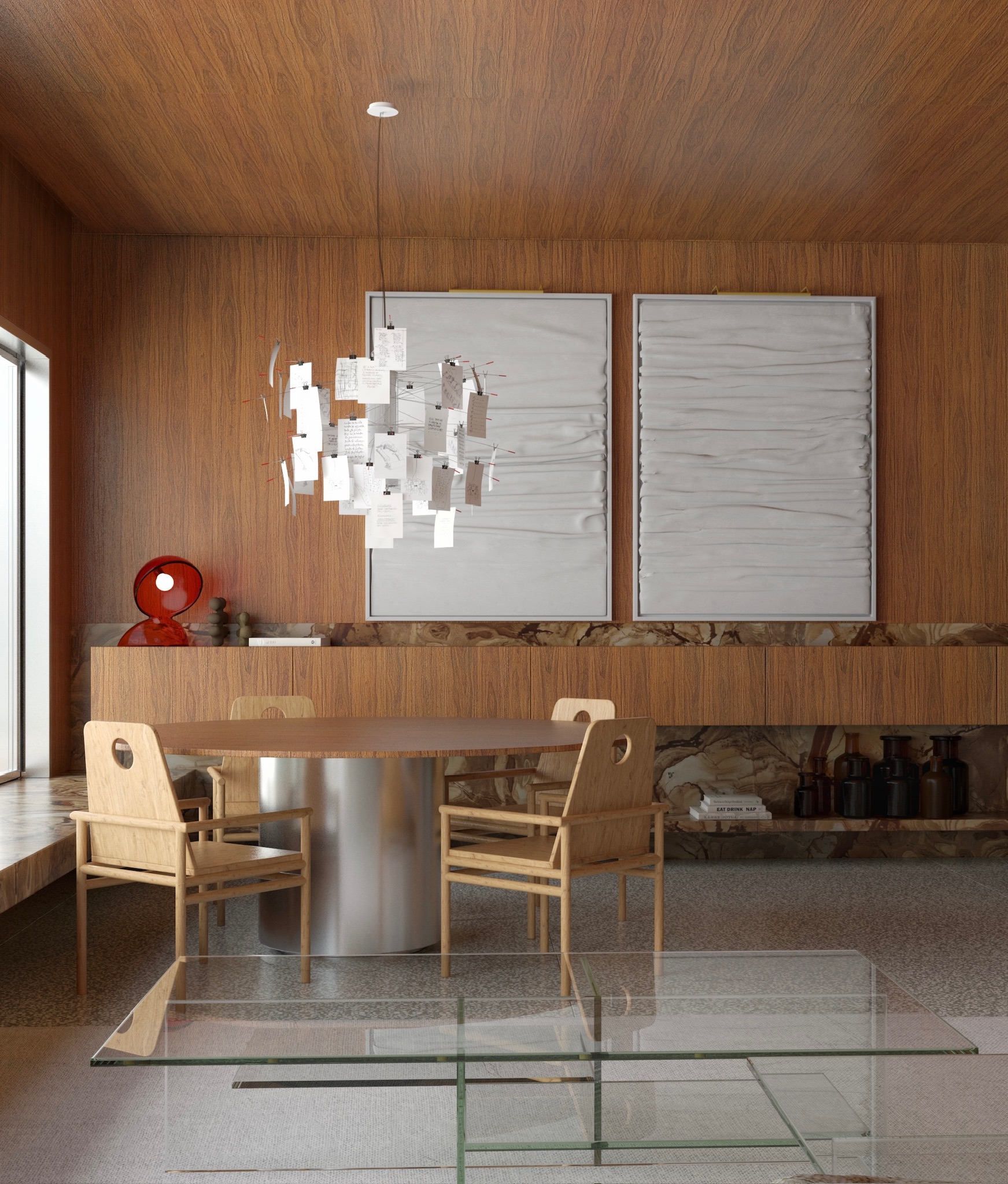
Estúdio Cara emphasizes social integration and “invisible” kitchen to create fluid living environment at the heart of the home
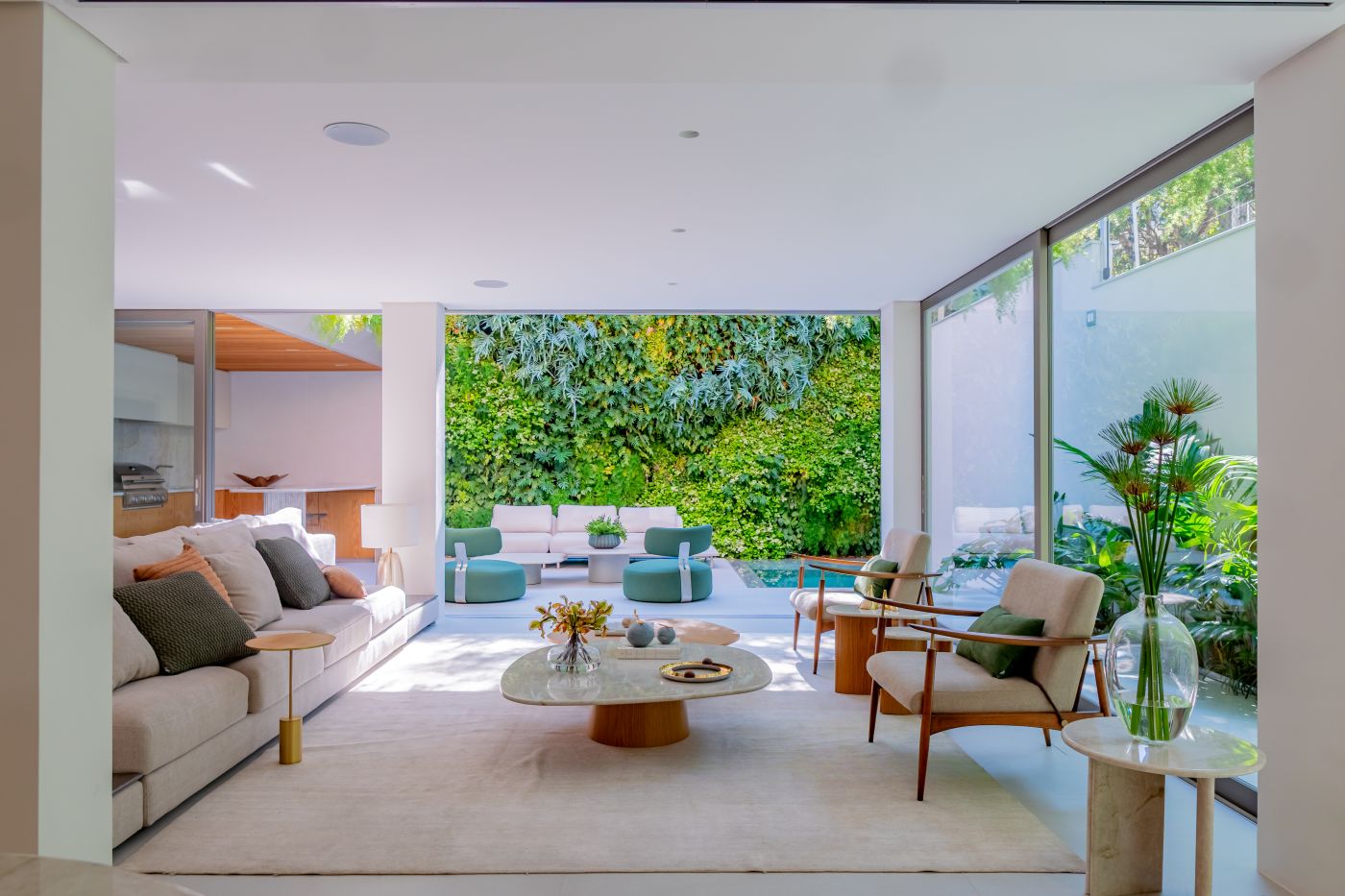
The Casa B+M apartment, designed by Estúdio Cara — architect Victor Tadeu and interior designer Edson Ricardo — features a striking contrast between white surfaces and continuous panels of natural Cumarú wood veneer as its main characteristic. In the 1,830-square-foot project, located in São Paulo, this composition organizes the space and defines the residence’s visual identity.
The integration between the dining room and kitchen configures the project’s main differentiator. The dining table extends into the kitchen area, transforming the environment into a gathering space rather than just a food preparation area. The choice reinforces the social use of the spaces and creates fluidity with the living room.

Shelving unit as integrating element
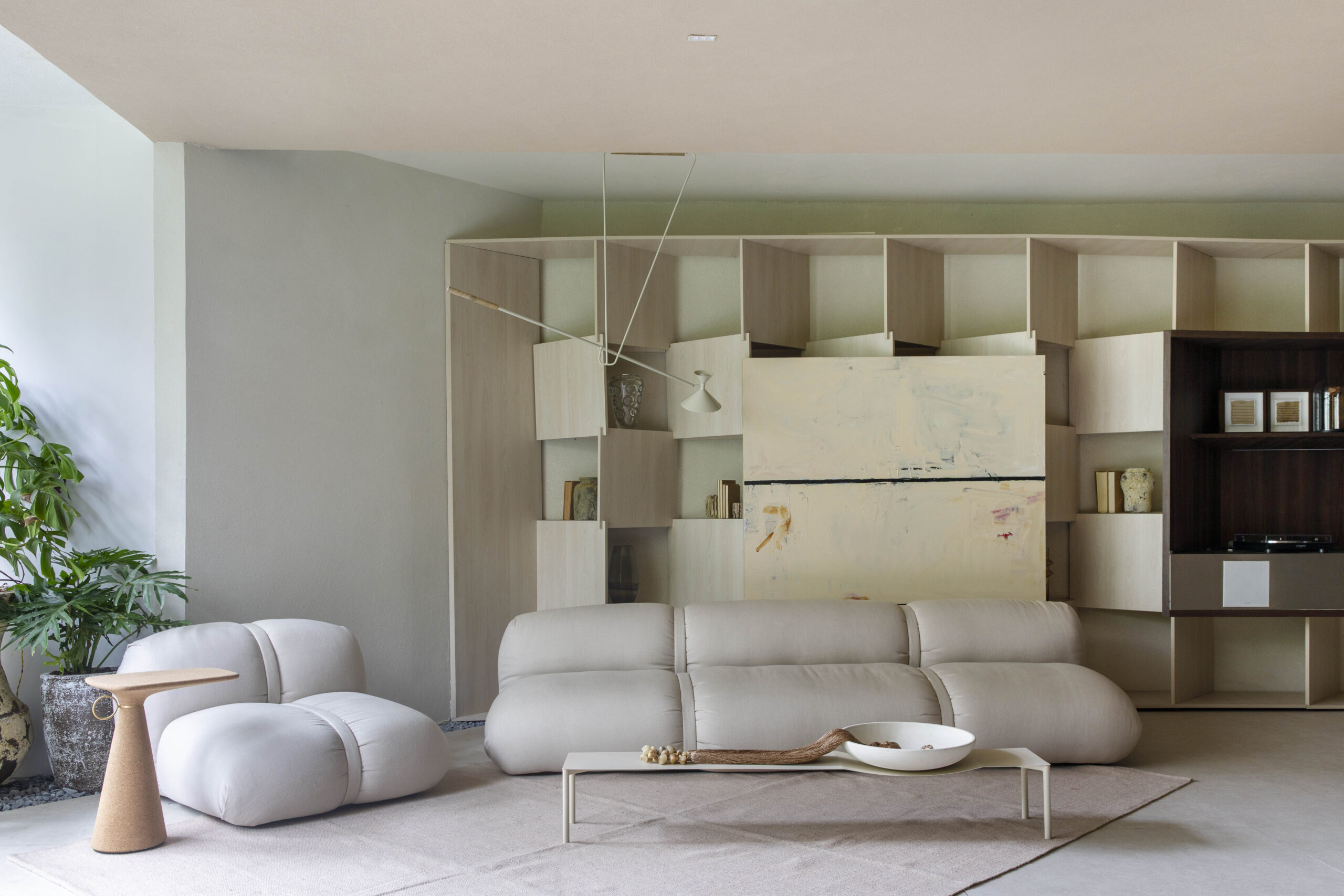
The central shelving unit plays a structural role in the project by connecting the kitchen, TV room, and dining room in a subtle way. The kitchen’s wet area and TV panel function as modules or niches within the piece. All niches receive individual lighting to showcase the homeowners’ collection.
The clients’ request was specific: they wanted the kitchen to “disappear” into the living area. To meet this demand, the professionals built nearly all appliances into the millwork. Instead of the conventional island — which would separate the environments — they opted for the dining table as a dividing element. The solution transformed the counter housing the cooktop into a sideboard or buffet.

Furniture with Brazilian identity
Estúdio Cara exclusively developed the quick meals table for the project, which dialogues with the main dining table. The furniture, mostly by Brazilian designers, brings geometry, texture, and materiality that reinforce Brazilian character — a key point of the studio’s identity.
The white Corian countertops in the kitchen contrast with the dark Cumarú veneer. The same material appears in frames and light fixtures. The project specified Brazilian brands such as Saccaro, Prototype, Studio Reyes, and OQ da Casa, as well as pieces by designers like André Grippi, Roque Frizzo, and Maurício Coelho.

Technology in the details
The project features technological solutions in the fixtures. The wet area faucet is a single-handle model that provides water from 37°F to 208°F and sparkling water instantly — all purified — enabling the preparation of teas, coffees, and drinks. The cooktop area faucet is articulated: it allows whoever is cooking to avoid changing counters when needing water and camouflages itself when not in use.
Gray terrazzo flooring runs through the social areas. The millwork was handled by SCA. Among the furniture highlights are the Serra Pelada dining table by Roque Frizzo for Saccaro; the Medalhão chairs by Studio Reyes; the Pliant armchairs by Prototype; and the Galileo sofa by Saccaro. Lighting features pieces such as the Robinson pendant by Carpyen and the Zettel’z 5 by Ingo Maurer.

Photos: Edson Ricardo