 Serpa
Serpa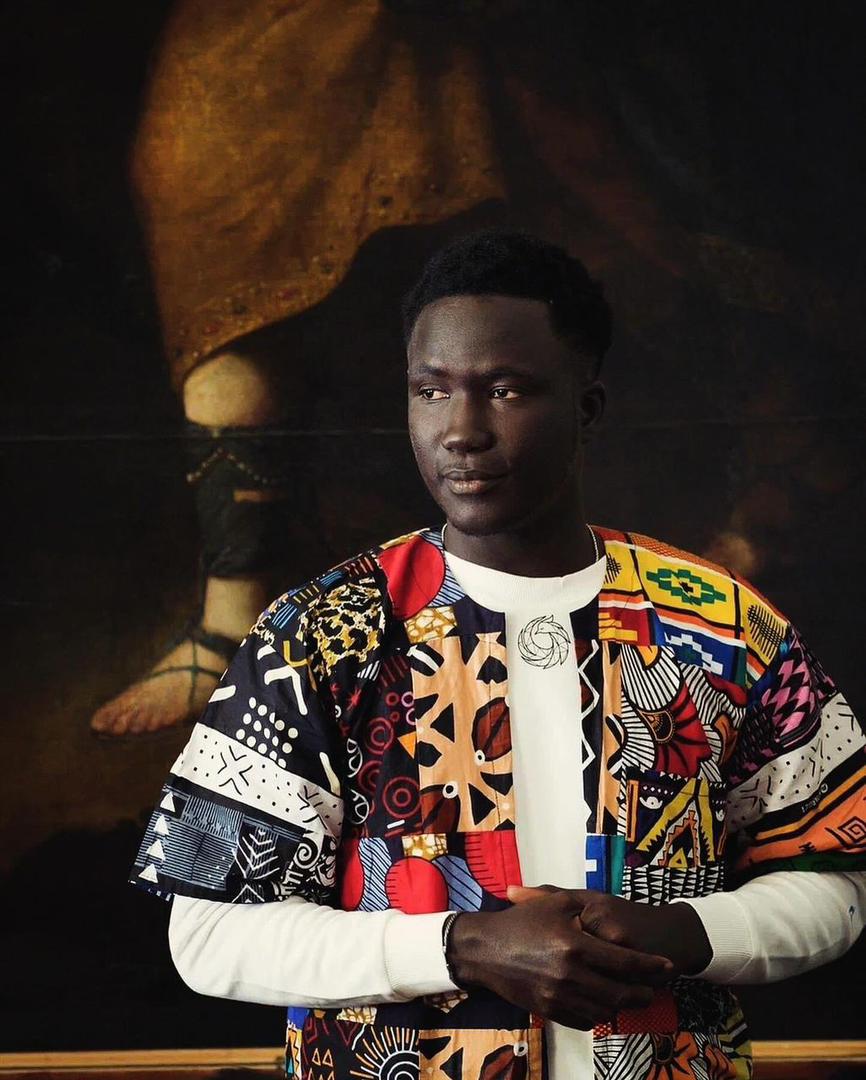
Kha Bamba
Winner of the 2025 Singulart Art Prize, Kha Bamba erases the faces of his figures to reveal something greater: the collective identity of a pan-African culture in motion
Named artist of the year at the 2025 Singulart Art Prize, Senegalese textile artist Kha Bamba won a French competition that drew nearly 2,900 entrants from around the world. Khadim Gueye, the artist’s legal name, creates works in which African prints replace the faces of his figures. The technique, combining acrylic painting, embroidery, and traditional fabric collage, has earned him international recognition and a place in permanent collections across seven countries.
The award caps a year of intense international activity. In July 2025, Kha Bamba took part in an artist residency and group exhibition in Leverkusen, Germany. In September, he joined the Colors of Africa festival in Ankara, Turkey. In 2024, he traveled to St. Petersburg, Russia, as a guest artist at the Innopraktika School Art Session, an international program hosted at the city’s Academy of Fine Arts that brings together artists from around the world and concludes with a group exhibition of works produced during the residency.
WEDDING
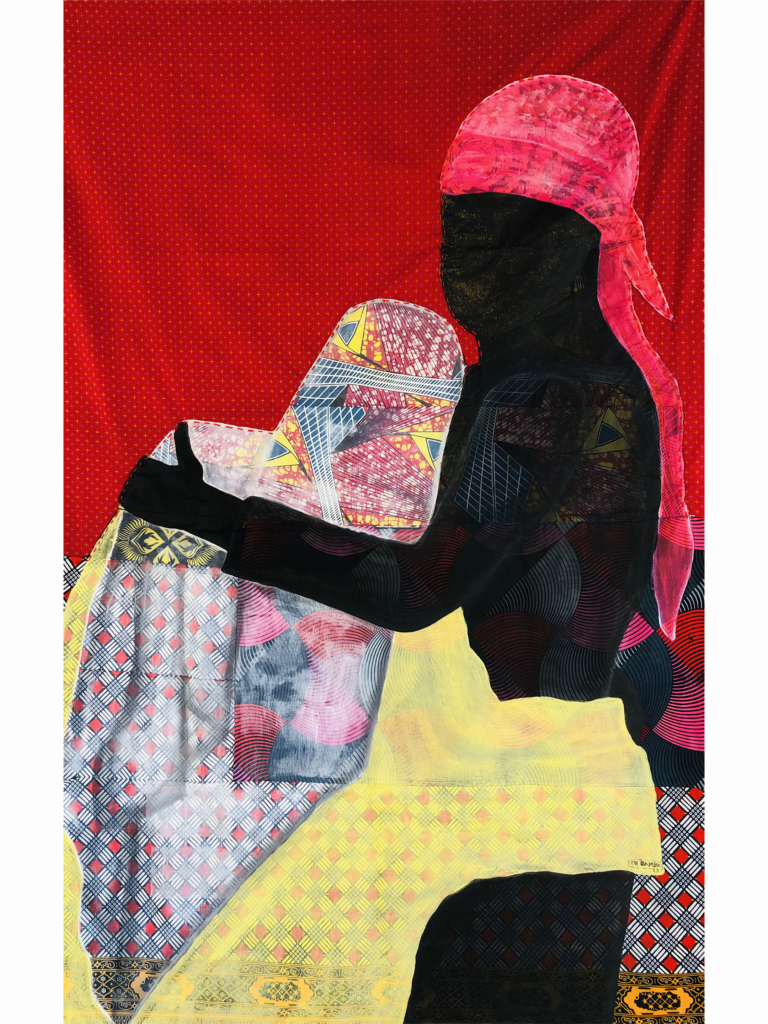
Fabric is both medium and subject in Kha Bamba’s work. The artist cuts, glues, weaves, and paints on wax print, bazin, velvet, and silk, materials common to everyday life in West Africa. His figures are always anonymous: faces disappear beneath layers of patterned textiles, and individual identity gives way to a collective one. Some works reach over six feet in height.
Among the artist’s best-known bodies of work is the Wedding series, which draws on African matrimonial rituals to examine the relationship between tradition and contemporary life. In Wedding 3 (2024-2025), two figures merge into a field of layered fabrics, red diamond-patterned wax, blue florals, and golden arabesques, until it becomes impossible to tell where the background ends and the person begins. The artist’s stated aim is to show that identity is not a fixed essence but a surface in permanent negotiation.
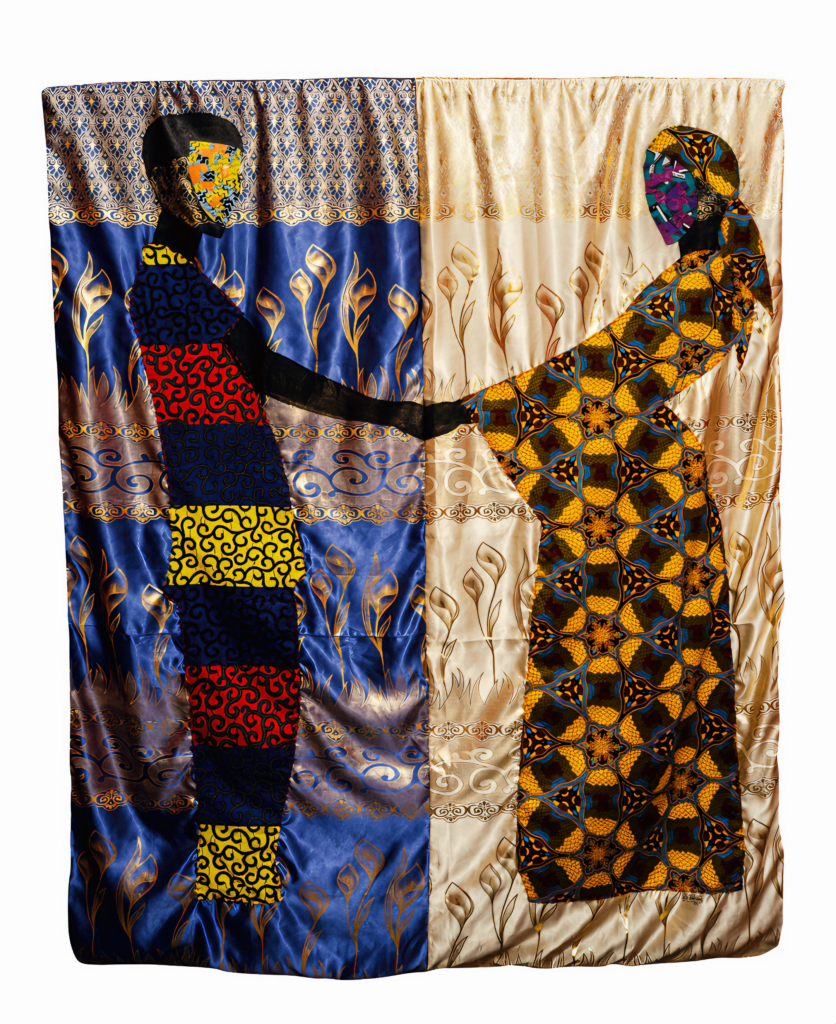
ADAMA AK AWA
Born in 1991 in Diourbel and raised in Guédiawaye, a suburb of Dakar, Gueye traces the roots of his artistic language to his family. His mother is a seamstress. His uncle, Papa Ibra Tall, is a textile artist and a pioneer of Senegalese visual arts. In 2013, after failing his university entrance exam, Gueye was admitted to the Senegalese National School of Arts (ENA) through a separate arts admission test. In 2017, he graduated with honors at the top of his class in visual communication and graphic design.
His works are held in permanent collections across seven countries. In Turkey, they are kept by IKASD, the Istanbul Intercultural Art Dialogs Association, an organization dedicated to cultural exchange between Turkey and other nations. In Spain, they are part of the Ankaria Foundation’s holdings, one of the country’s most significant private art collections, founded in 2009 to support artists and foster reflection on contemporary society. In the Netherlands, they are housed at Centre CBK Zuidoost, Amsterdam’s leading space for contemporary visual art from an intercultural perspective, with over 30 years of programming and free admission. His works are also held by the Frances Cobi Collection in Italy, the Jom Collection in Senegal, the Fondation Mousseum Assilah in Morocco, and the Innopraktika Collection in Russia.
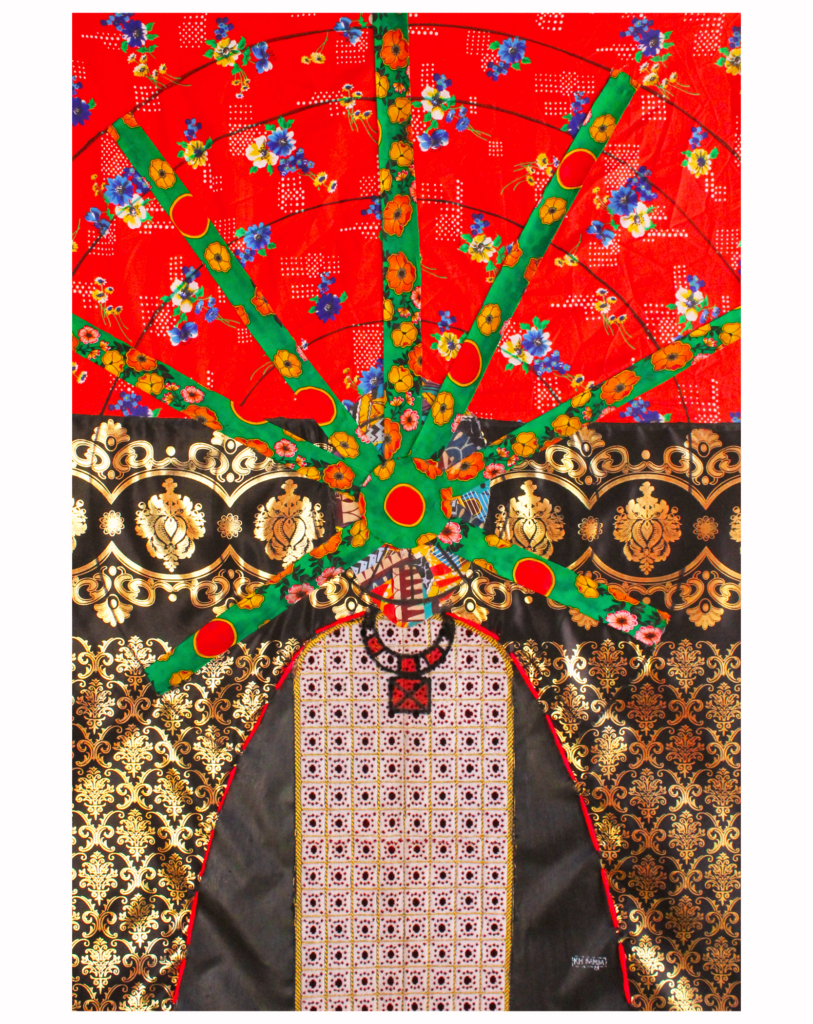
BASSARI MASK
In 2020, Kha Bamba was shortlisted for the Kuenyehia Art Prize in Accra, Ghana, ranking among the 12 best young African artists. Founded in 2014, the prize recognizes the most outstanding artists from West Africa between the ages of 25 and 40, with a focus on developing the international market for African art. Winners and finalists receive cash awards and resources to advance their practice. The following year, the artist reached the top five of the Ellipse Art Project in Paris.
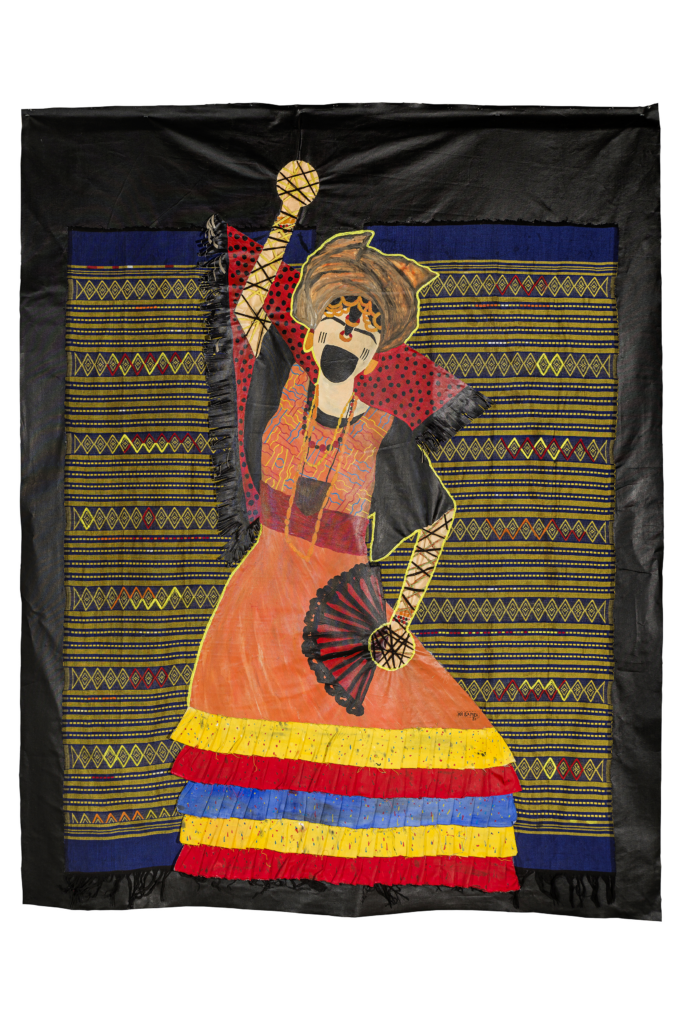
NDAWRAABINE
Kha Bamba’s rise comes at a time of growing international interest in contemporary African art. The artist stands out for his commitment to local references: ethnic groups, music, photography, and modes of dress from across West Africa coexist in his work alongside global influences, from Spanish flamenco to the kple kple of Benin. For Kha Bamba, fabric is the right material for that conversation. It is the stuff of daily life, of memory, and, in his hands, of African identity in the 21st century.
Instagram: https://www.instagram.com/khbamba/