 Serpa
Serpa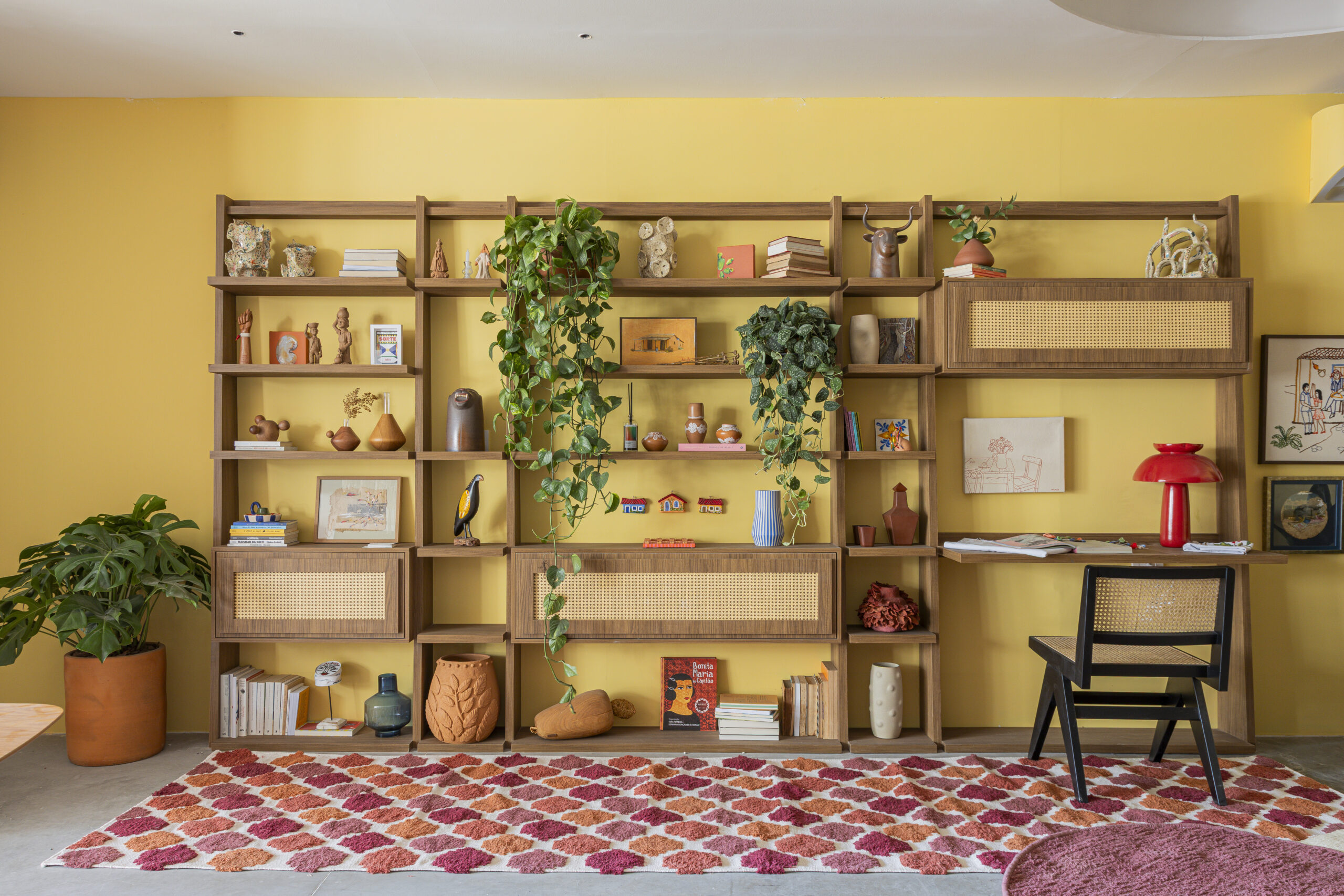
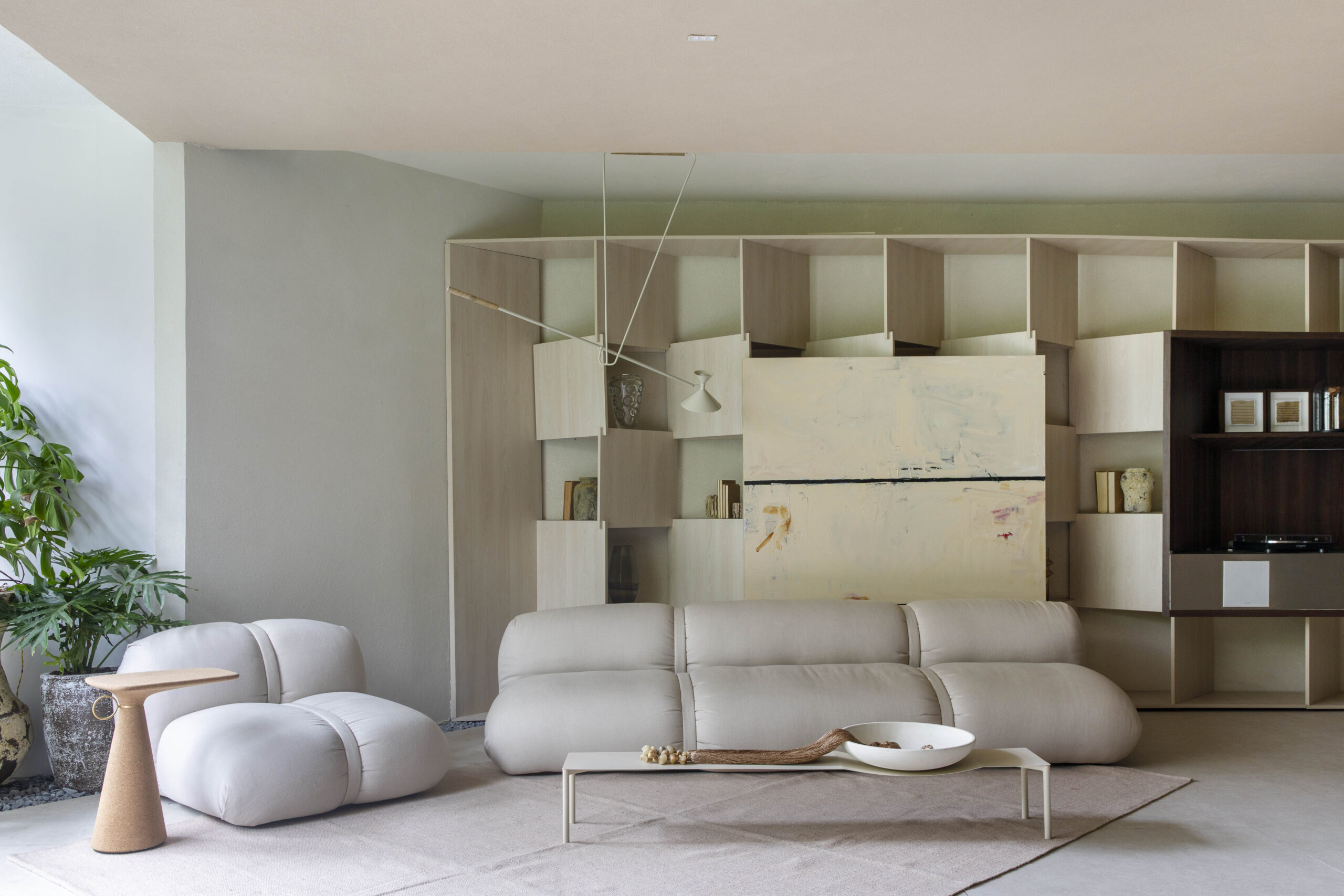
The living room bookshelf, lined with handcrafted objects, ceramics, and books, set against a warm yellow wall that anchors the entire space.
Mangaba Estúdio represents Sergipe at the BAB with the project ‘Relicário de Voinha,’ an exhibition that transforms emotional memory, local craftsmanship, and vernacular architecture into an immersive experience at Parque Ibirapuera
SÃO PAULO – A full house, with a generous backyard, the smell of guests arriving, and the invisible presence of a grandmother who organizes the time and space around everyone. That is the image at the heart of Sergipe’s most celebrated architectural project in recent years. Relicário de Voinha, conceived by Mangaba Estúdio, represents the Northeastern state at the first edition of the Brazilian Architecture Biennial (BAB), which opens at Parque Ibirapuera in São Paulo on March 25, 2026, with visits through April 30.
The Brazilian Architecture Biennial was founded with a clear purpose: to democratize access to architecture in the country and present it as a practical, cultural, and sensitive tool for transforming everyday life. Created in São Paulo and designed for all of Brazil, the BAB goes beyond a conventional exhibition. Rather than a standard showcase, it proposes an immersive and educational experience that brings together different voices, territories, and ways of living, with spaces that blend real environments, sensory activations, brand showcases, and the work of emerging talents in Brazilian architecture.
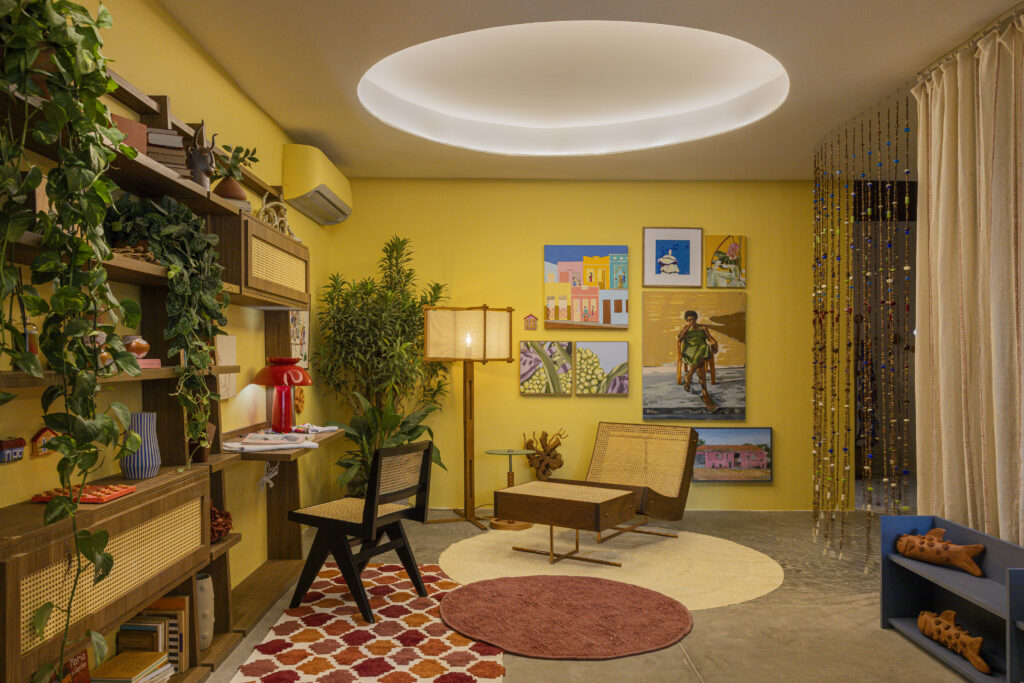
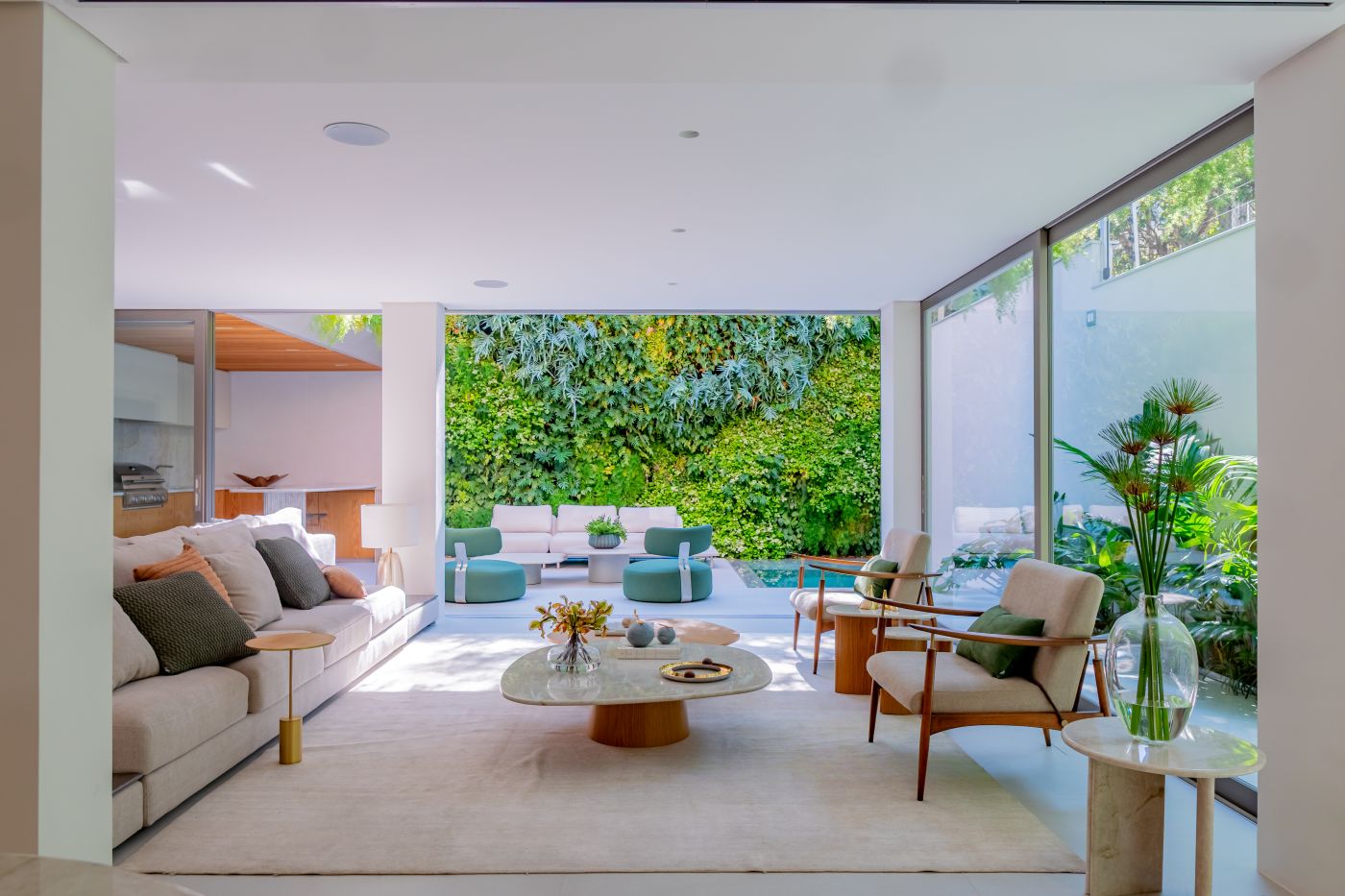
An oval skylight diffuses soft light over the living area, where local artworks, rattan furniture, and trailing plants compose the affective atmosphere of the grandmother’s home.
Built around four central pillars, the biennial holds that architecture should be accessible and present in daily life; that modern design unites need, aesthetics, and functionality; that Brazilian identity deserves celebration in every line, honoring the country’s aesthetic diversity and its many ways of inhabiting space; and that technology and new tools can democratize access to quality projects and creative solutions. Positioned as a space for culture and education, the BAB aims to spark curiosity and bring the general public closer to the world of architecture.
Within this plural and celebratory context, Mangaba Estúdio arrives with a proposition that stands apart for its depth and territorial rootedness. The Sergipe-based studio, which works across architecture, exhibition design, and interiors, is responsible for the winning project representing the state at the biennial’s inaugural edition. It also designed the scenography for the 14th Brazilian Design Biennial, held in December 2024 in Aracaju, the first edition of that event to be hosted in the Northeast.
Memory as architectural concept
Relicário de Voinha begins with a concept that may seem simple at first glance but reveals layers of poetic and technical complexity. Structured around the memory of a grandmother’s home, the project understands these female figures as agents of emotional, spatial, temporal, and personal organization. Its references are simultaneously personal and collective, incorporating historical marks of affection, everyday knowledge, and vernacular technologies as expressions of the way people have long inhabited the state of Sergipe.
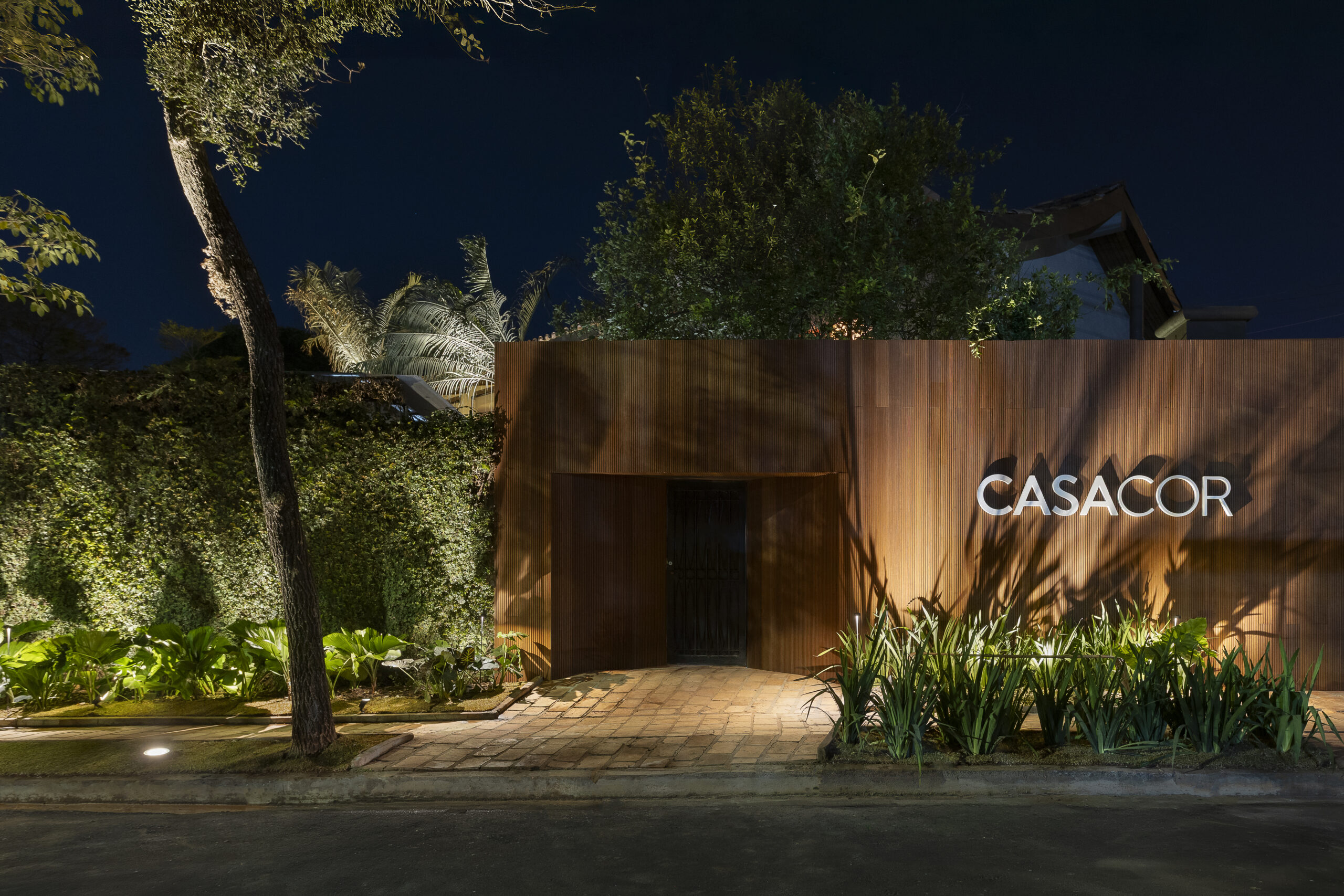
Drawing on the memory of a home that is always full, the spatial sequence of the project evokes a space that welcomes visitors, celebrates the passage of time, and values the presence of those who arrive. This affective logic shapes even the order in which spaces are encountered. Typically relegated to the back of Brazilian homes, the backyard is placed at the beginning of the visitor’s journey — a deliberate conceptual inversion that honors communal life and positions the outdoor space as a structuring element, one that opens the entire environment to permeability, filtered light, cross-ventilation, and a gradual transition between inside and outside.
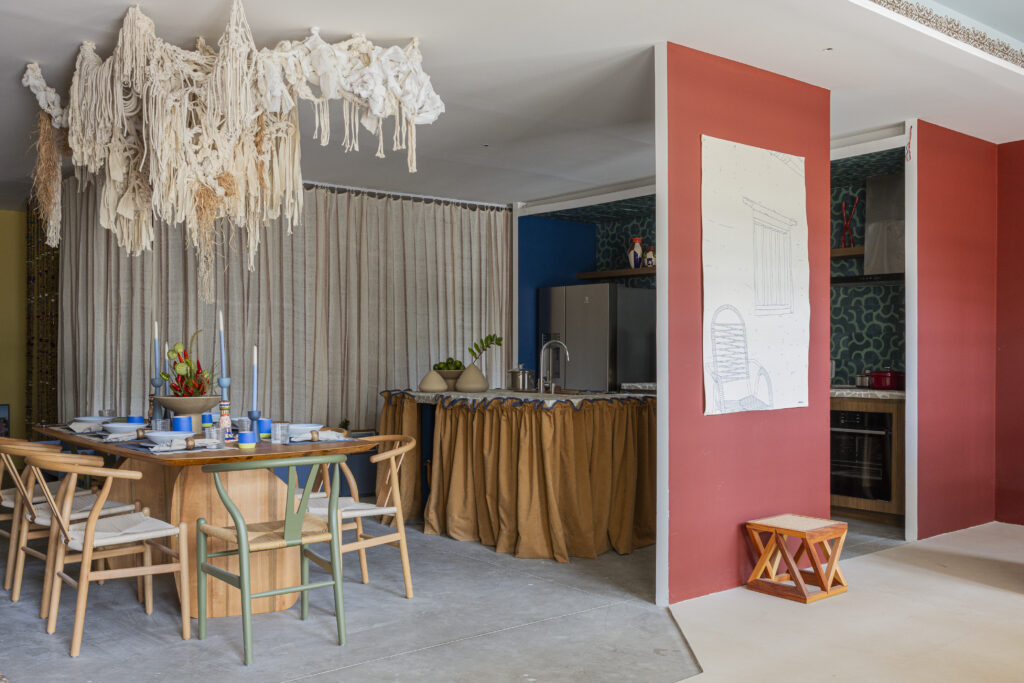
The dining area, framed by a textile chandelier made of woven fibers, opens toward the kitchen and the coral-toned wall that guides the visitor’s journey through the space
Climatic and environmental conditions of the Sergipe territory are also central to the architectural approach. Strategies for adapting to heat and harnessing sea breezes reveal historically built responses — solutions that generations of Northeastern inhabitants developed as a way of living intelligently under intense sun and persistent warmth. By incorporating them into a contemporary project of significant visibility, Mangaba Estúdio not only preserves these strategies but reaffirms them as legitimate and sophisticated knowledge.
Craftsmanship as language, not decoration
One of the most distinctive aspects of Relicário de Voinha is the way the studio incorporates local craftsmanship and popular materials. The design choices were shaped, from the very beginning of the process, by everyday rituals and elements that reinforce a Sergipe sense of place. Unlike many projects that resort to handicrafts as decorative accessories, here the work of local artists and artisans is integral to the very concept of the project, contributing to its narrative rather than merely adorning it.
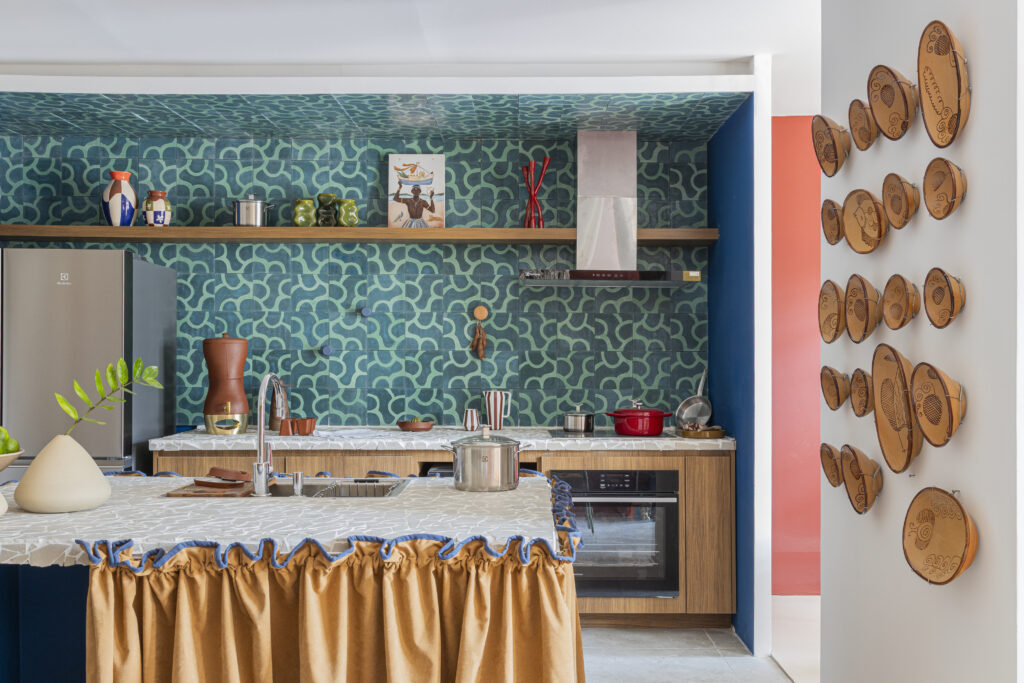
The kitchen features hydraulic tiles in deep teal covering every wall surface, alongside ceramic pieces and clay pottery that reference everyday Northeastern domestic life
Caquinho floor tiles, hydraulic tiles, Italian straw, lace, and the color palettes found throughout the spaces are all references that have traveled across generations within the Sergipe imagination. None of these elements were chosen out of nostalgia, but for their ability to activate collective memory and preserve a cultural heritage that risks being erased by the standardization of contemporary interiors. By incorporating them into the project, Mangaba Estúdio creates a dialogue between the time of grandmothers and the architecture of the present.
Artists and designers involved in the exhibition reveal the scope of this collaborative project. More than forty creators participated, with a strong presence of Sergipe-based names alongside artists from Bahia, Pernambuco, Rio de Janeiro, São Paulo, Ceará, Piauí, Santa Catarina, Paraná, and the Federal District. Among the participants are Asderen Renda Irlandesa, a collective of embroiderers from Sergipe that preserves the technique of lace-making; the Associação de Malhadinha, a weaving group from the state; and names such as Beto Pesão, Breno Loeser, Fael Rocha, Gil Apolinário, and Quirino, from Clube da Olaria, all rooted in Sergipe’s cultural production.
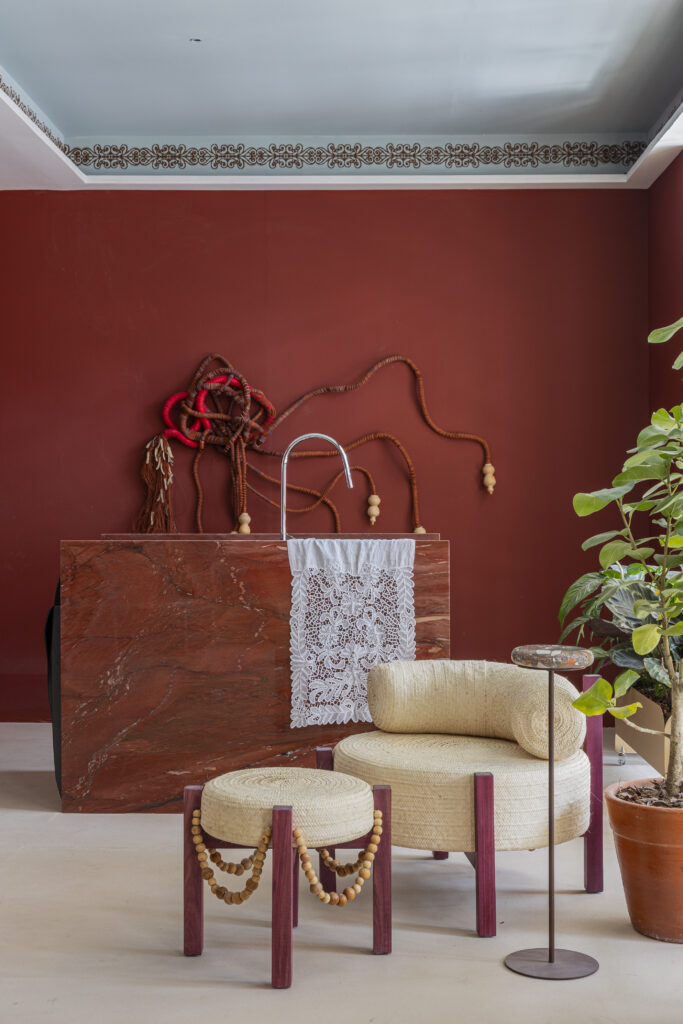
A lace piece by Renda hangs over a red marble slab, surrounded by braided rope installations — a composition that places artisanal craft at the center of the architectural narrative. Armchair and stool by Giovanna Arruda
An architecture built from memory
Mangaba Estúdio defines its language as sensitive and free of caricature, meaning that the celebration of local culture does not translate into folklore or exoticism. Its aim is different: to build an architecture that seeks familiarity, operates with sensitivity, and expresses what the studio calls the corporeality of a paraverbal and inventive language. In other words, an architecture that communicates first through the body and through experience, rather than through technical rationality or conceptual discourse.
This positioning resonates directly with the BAB’s stated goal of presenting architecture as a tool present in people’s everyday lives. Relicário de Voinha does not speak of an abstract or elite architecture — rather, it speaks of the backyard, the tile, the lace, the presence of the grandmother, of experiences that cut across social classes and regions because they are inscribed in Brazil’s collective memory. At the same time, the project demonstrates that these popular references are capable of sustaining architecture of high conceptual and formal sophistication.
Significant technical partnerships shaped the project’s execution. The construction team was formed by BAB and LarqHouse, with millwork by Fehu Arquitetura, lighting developed by Input in partnership with Klason, and curtains and rugs by Koord. Official suppliers include brands such as Electrolux, Suvinil, Westwing, and Zissou. Sponsorship from Universidade Tiradentes and the Sergipe State Secretariat for Labor, Employment, and Entrepreneurship further underscores the institutional standing and recognition the studio has earned in its home state.
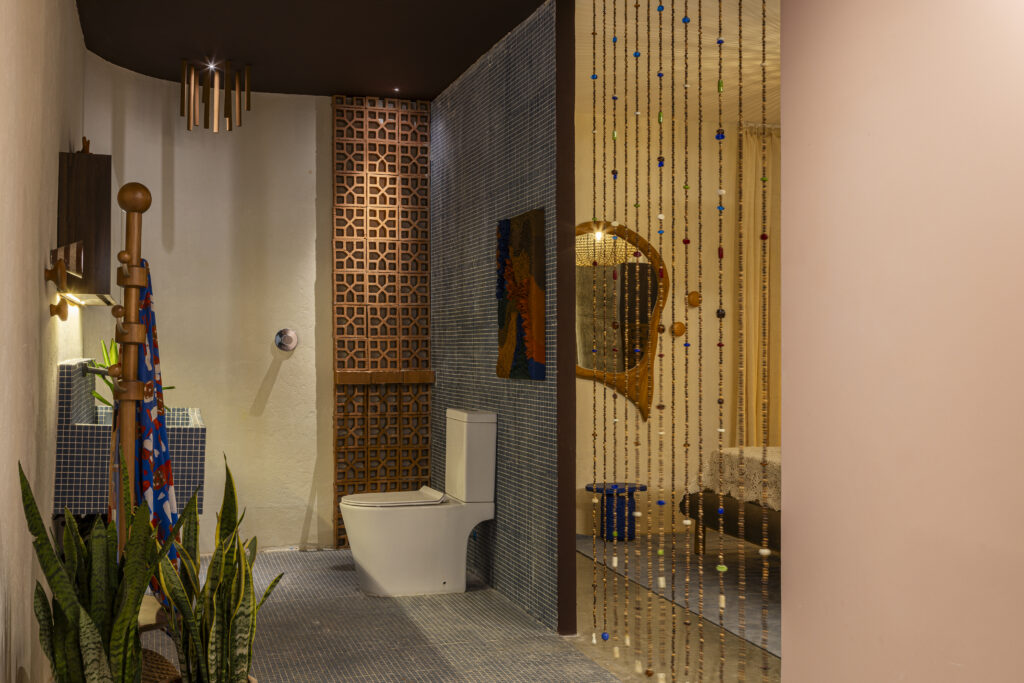
The bathroom brings together cobogó screens, mosaic tile, a beaded curtain, and a carved wooden coat rack — vernacular elements reimagined within a contemporary spatial language
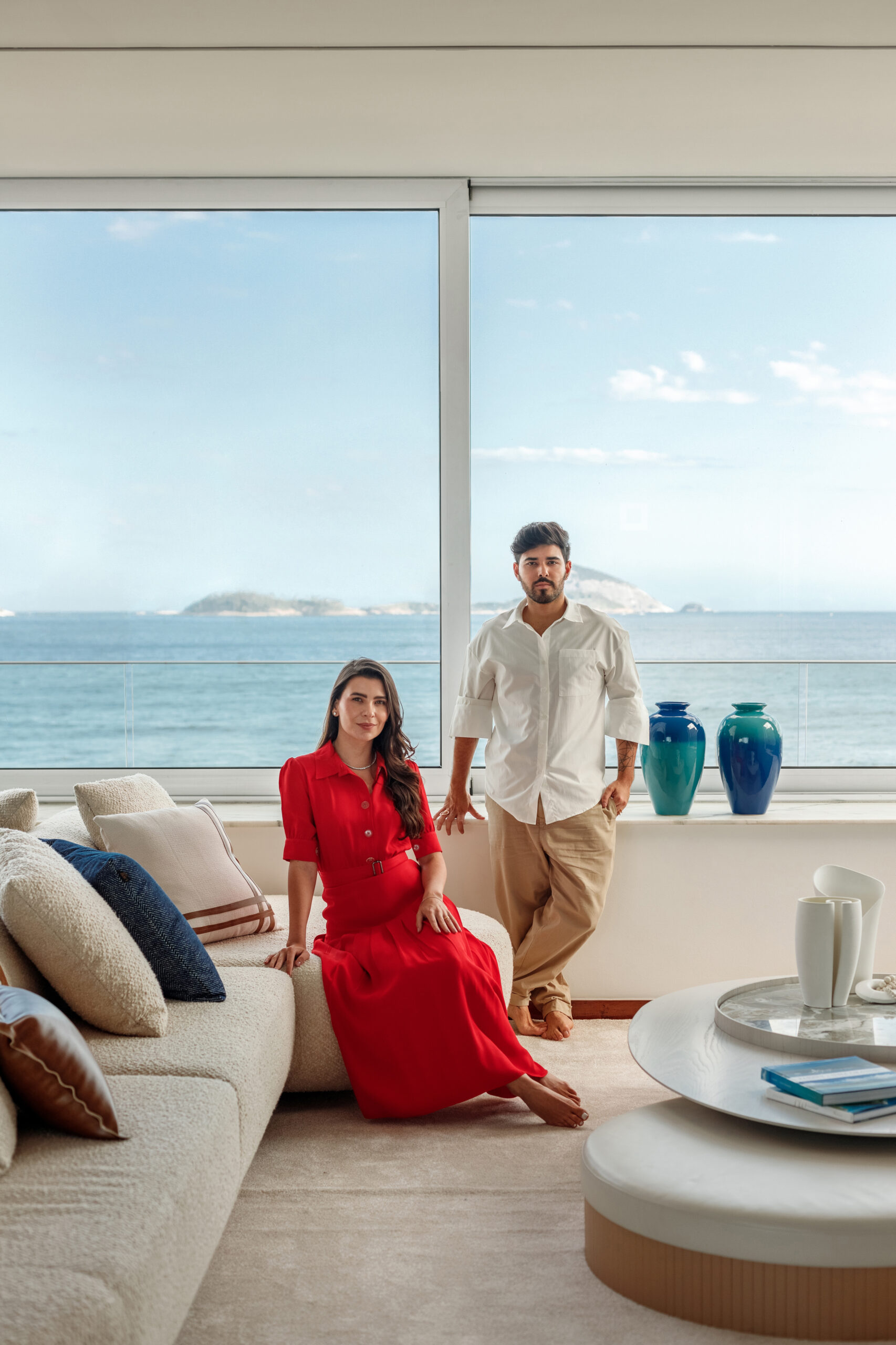
Ariel Menezes, Babi Monteiro, Cayo Alcantara, Cecília Sales, Dara Maria, Giovanna Arruda, and Ptrucio Argolo make up the project team — a young group that consolidates Mangaba Estúdio as one of the most expressive studios of the new generation of Brazilian architects.
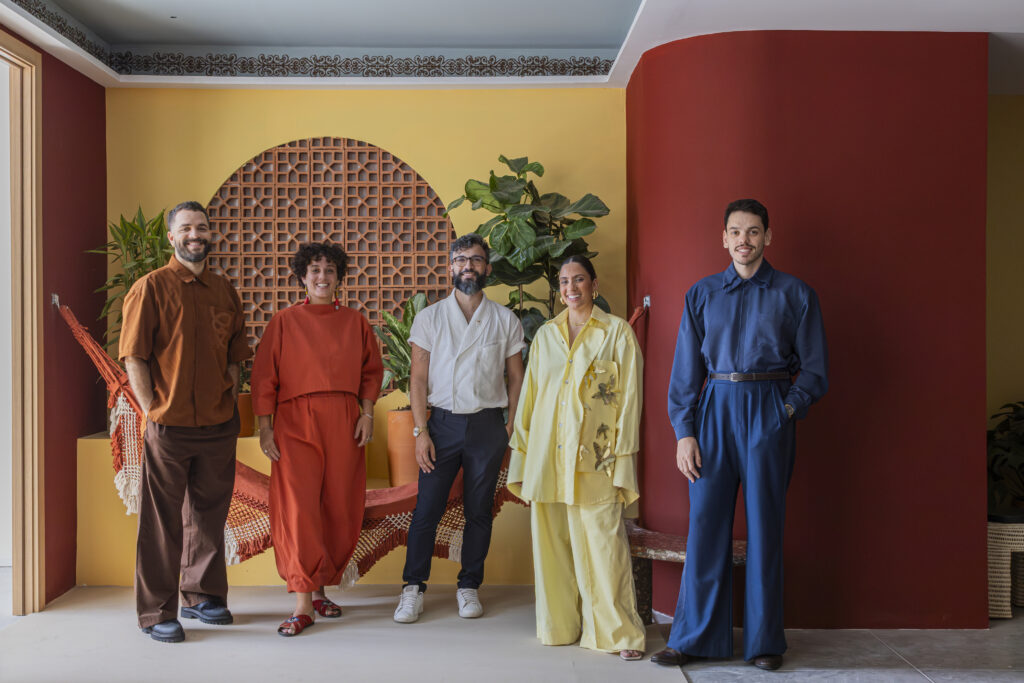
Some members of the team at the “Relicário de Voinha” exhibition in Ibirapuera Park, São Paulo.
Sergipe on the national stage
Mangaba Estúdio’s presence at the BAB is also a significant political and cultural fact. Sergipe is Brazil’s smallest state by land area and is frequently underrepresented in the country’s major architecture and design circuits. Selecting Relicário de Voinha to represent the state at the first national architecture biennial signals a shift in that landscape, bringing into focus a body of work that does not imitate hegemonic centers but builds its own language from what it has that is most specific.
As a biennial that defines itself as made for all of Brazil, the BAB finds in the Sergipe project one of its most compelling arguments. If the event aims to show that Brazilian architecture is diverse, plural, and rooted in multiple territories, Relicário de Voinha is a practical demonstration of exactly that — a project that originates in the Northeast, that speaks of grandmothers and backyards, that uses lace and hydraulic tiles as architectural language, and that arrives in São Paulo without having to relinquish any of those singularities in order to be recognized as high-level architecture.
Relicário de Voinha can be visited at Parque Ibirapuera in São Paulo, Brazil.
VISITOR INFORMATION
Exhibition: Relicário de Voinha
Project: Mangaba Studio
Event: Brazilian Architecture Biennial (BAB)
Dates: March 25 through April 30, 2026
Hours: Noon to 7 p.m.
Location: Ibirapuera Park, Pacubra Pavilion, São Paulo, Brazil
Instagram: @mangaba.estudio