 Serpa
Serpa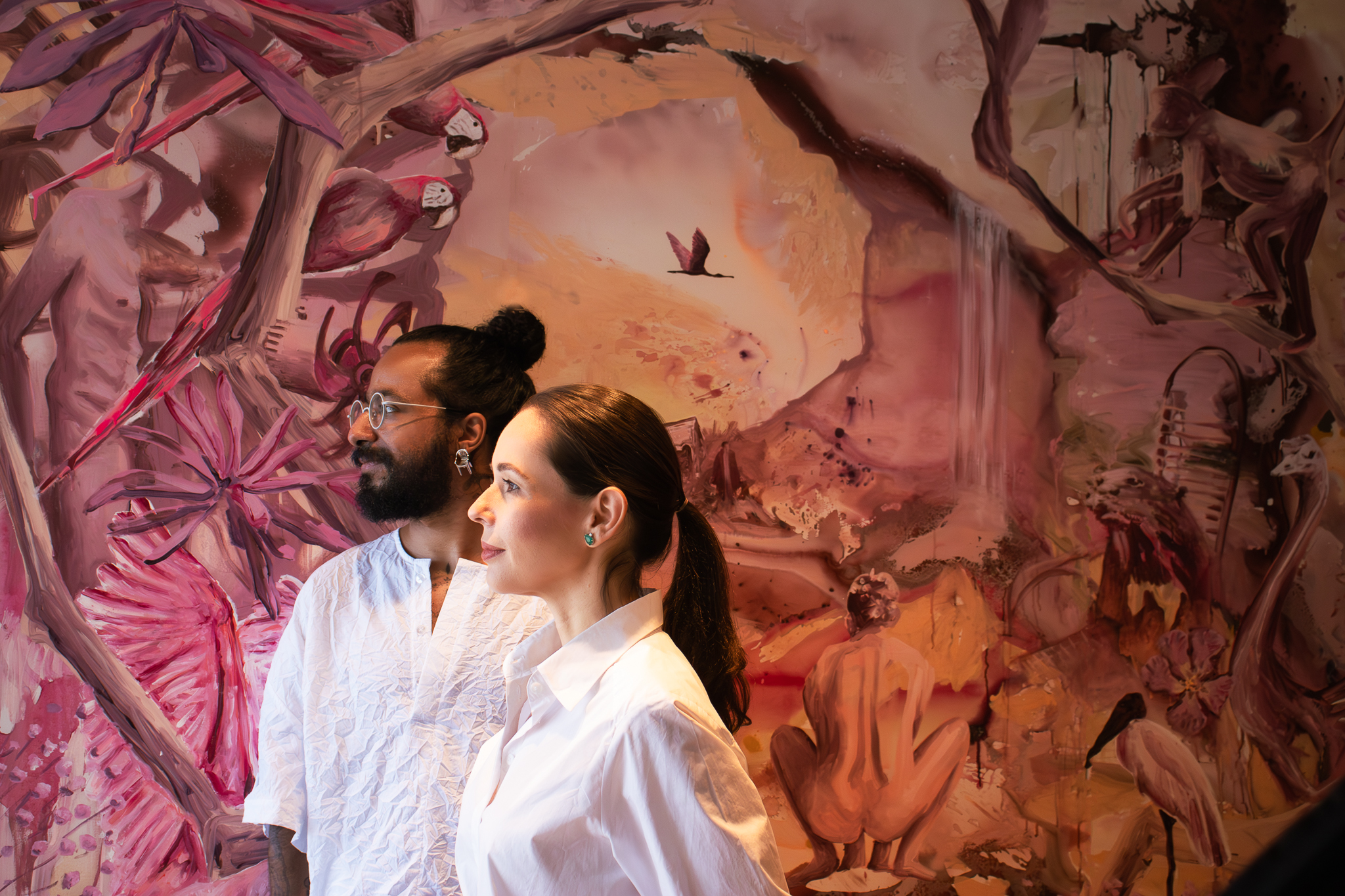
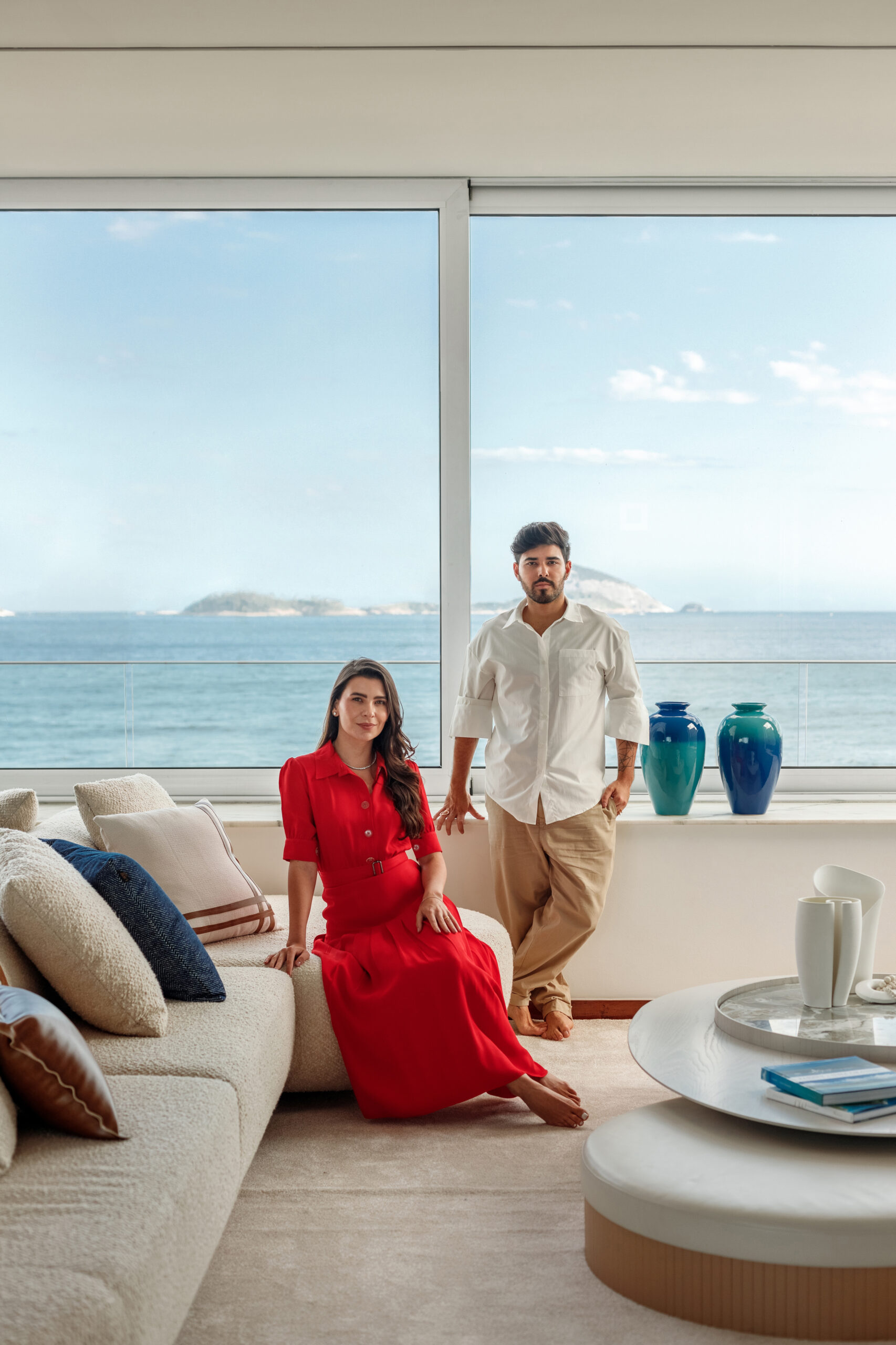
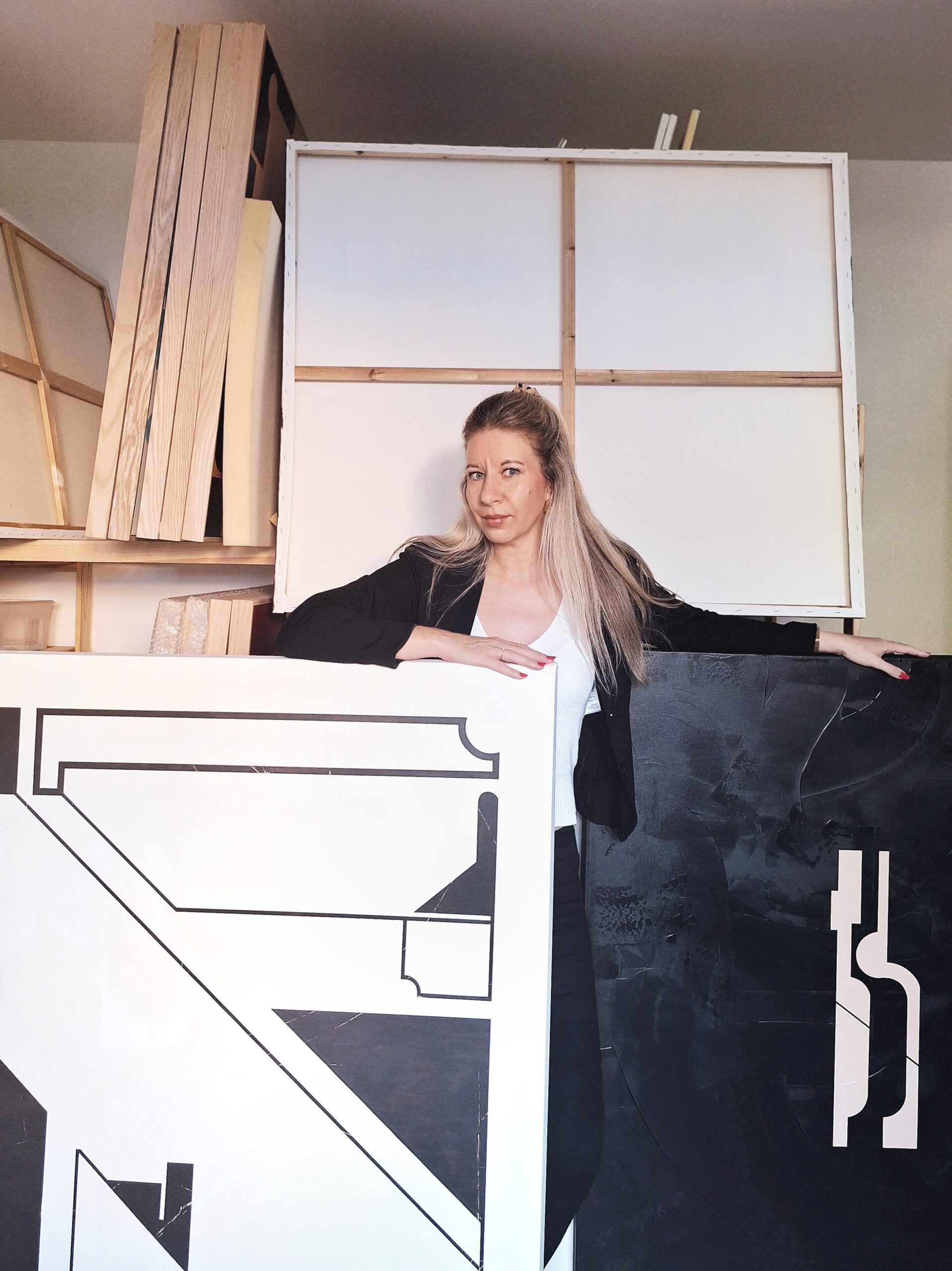
Belchior Almeida and Paula Martins in front of the large-scale painting that anchors the private quarters of Casa Corcovado. Photo Larissa Noé
Project by architect Paula Martins represents Rio de Janeiro at the Pavilhão das Culturas Brasileiras, in Parque Ibirapuera, on display through April 30
SAO PAULO | April 1, 2026 | Updated at 08 a.m.
Architect Paula Martins is the author of Casa Corcovado, the project representing the state of Rio de Janeiro at the first Brazilian Architecture Biennial (BAB), held at the Pavilhão das Culturas Brasileiras in Parque Ibirapuera, Sao Paulo. Open through April 30, the space is part of the Atlantic Forest pavilion and stands among the 27 projects representing each Brazilian state at the event. The proposal translates the bossa carioca — the effortless sophistication of Rio’s culture — into an apartment installed in the Sao Paulo venue, drawing on lightness, refinement and informality as defining traits of Rio’s way of living.
Founded with the goal of democratizing access to architecture across the country, the Brazilian Architecture Biennial frames it as a practical, cultural and sensory tool for transforming everyday life. More than an exhibition, the BAB sets out to be an immersive and educational experience, bringing together different voices, territories and ways of inhabiting space. Among the projects that most directly embody that purpose is Casa Corcovado: an environment designed to be lived in, not merely observed.
An Apartment as the Narrative of a City
Starting from everyday experience, the project builds a portrait of Rio de Janeiro that deliberately steers away from literal or folkloric representations. Rather than reproducing postcards, Paula Martins chose to translate feelings, rhythms and ways of living. The home embraces ordinary routines — hosting, cooking, slowing down, resting — organizing these functions in an integrated and fluid way.
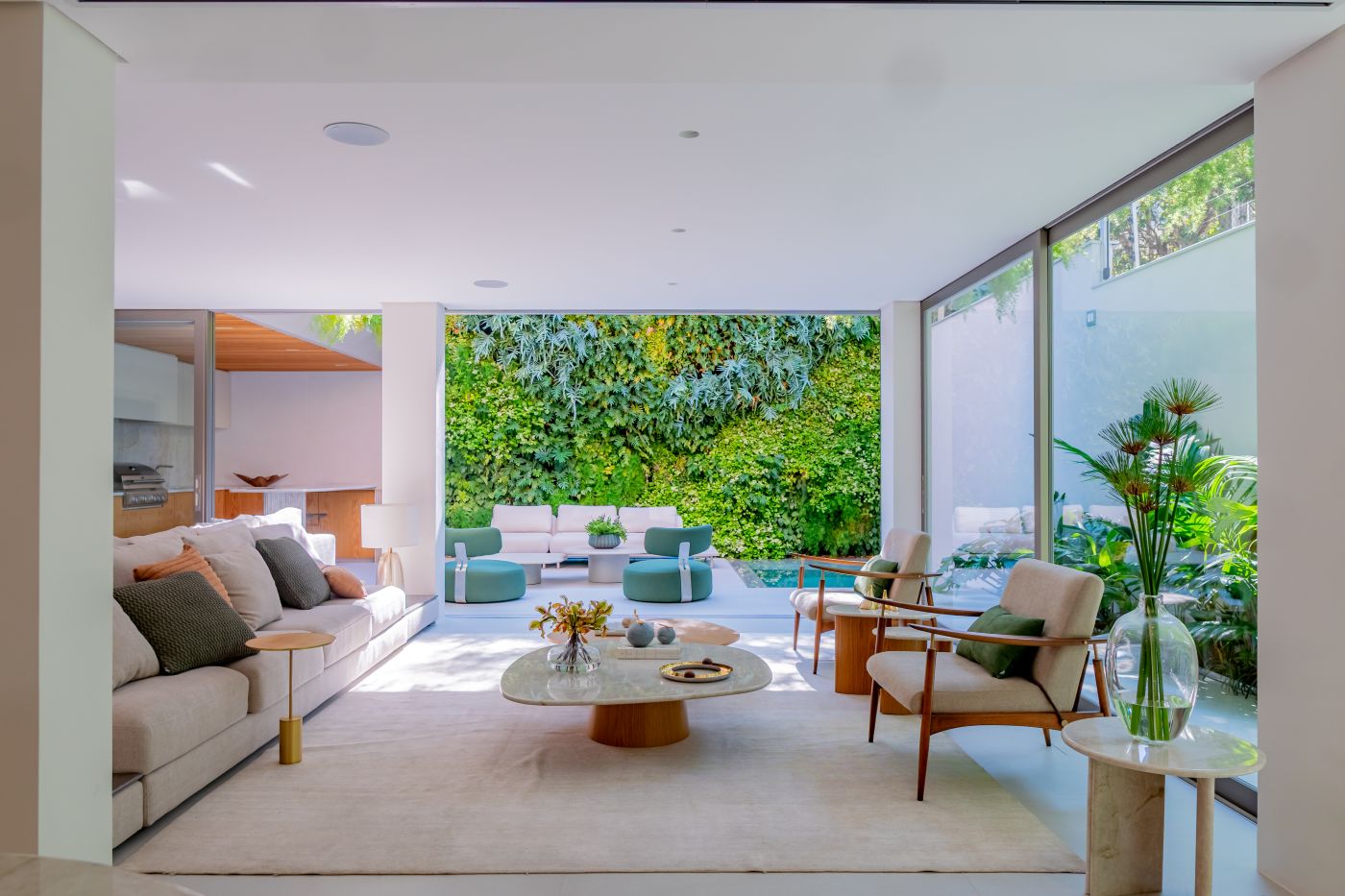
Two distinct symbolic axes organize the architecture of the space. In the social area, shades of green and blue paired with natural materials evoke the sea and the forest, encouraging togetherness and flow. In the private quarters, warm tones create an atmosphere of warmth and shelter. That division is not merely aesthetic: it reflects a precise understanding of how Rio residents inhabit and relate to domestic space.
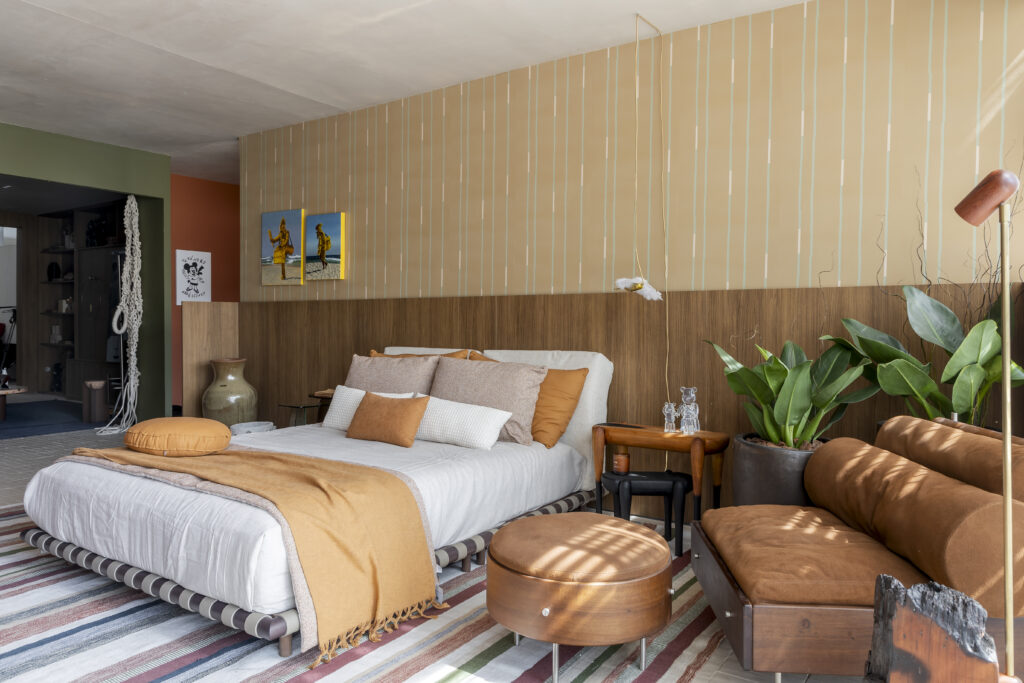
The bedroom’s warm palette — ochre, caramel leather, and striped woven rugs — translates Rio’s domestic ease into material form.Photo Rafael Renzo
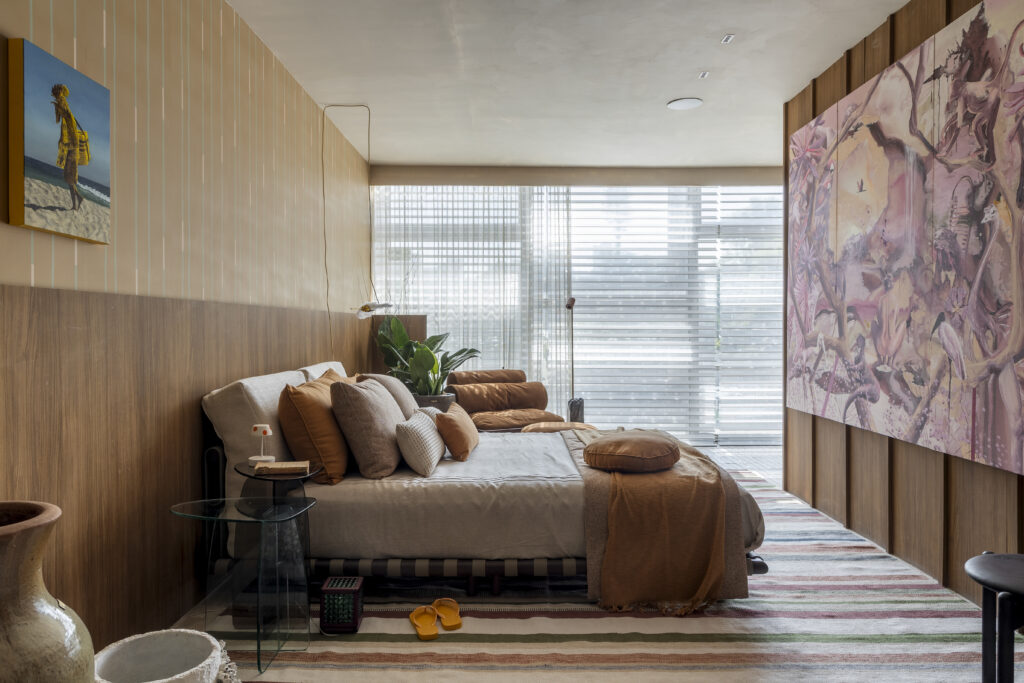
A large-scale painting anchors the far end of the bedroom, adding chromatic depth alongside the full-height glazed facade.Photo Rafael Renzo
“The house was designed around the pleasure of being present and the way people from Rio inhabit space, with ease, connection, and authenticity.” Paula Martins, architect
A Personal Archive as Starting Point
Originally from Campos dos Goytacazes, in the northern state of Rio de Janeiro, Paula Martins built the project around a personal archive. She brought into Casa Corcovado pieces by designers, craftspeople and emotional references tied to her hometown, lending the space a dimension of memory and personal history. Central among these elements is a table by Areka’a, a brand she represents, reinforcing the direct link between her curatorial choices and the construction of the environment.
This set of references establishes a conceptual and sensory foundation that shapes every decision in the project, from the material palette to the curation of art and objects.
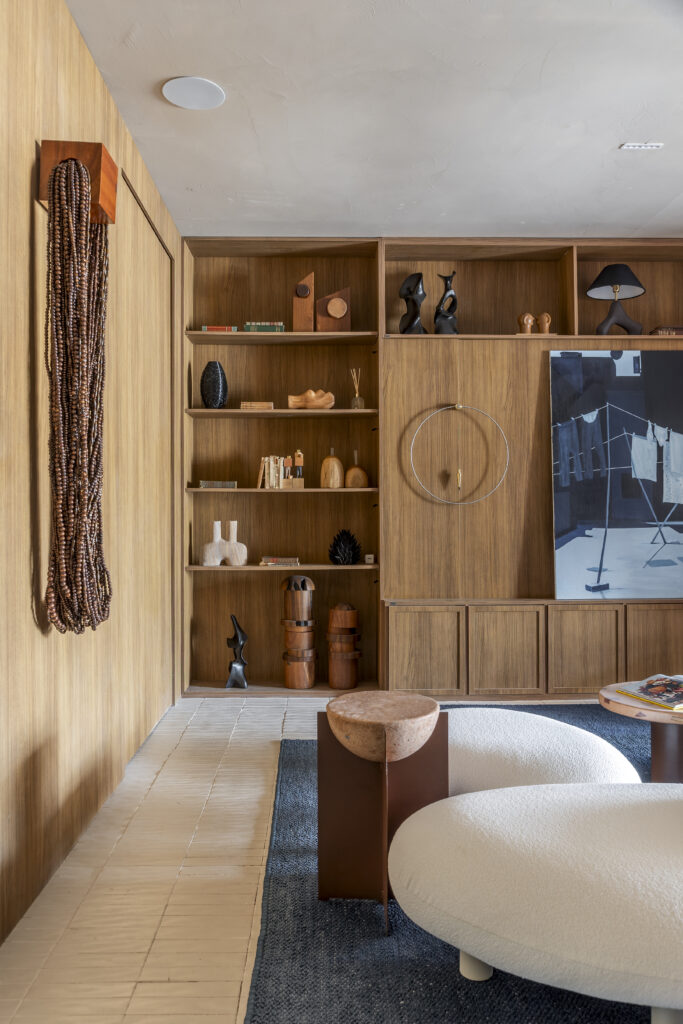
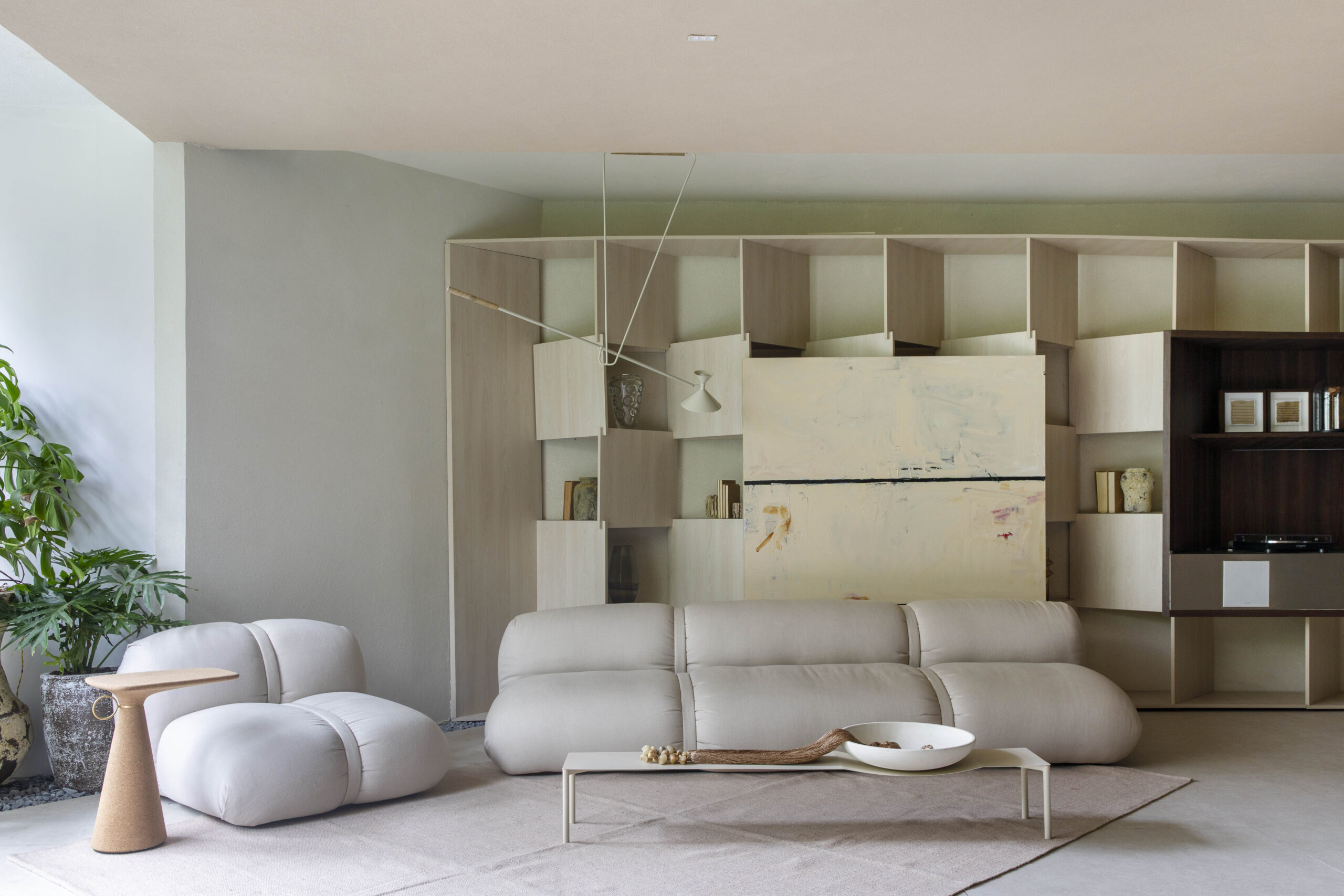
The shelving unit curates sculpture, ceramics, and objects that layer memory, faith, and cultural reference into the spatial composition.Photo Rafael Renzo
Curation as an Extension of Architecture
Working alongside Belchior Almeida, an interior and experience designer, content creator and curator who researches sensoriality and affect in design and decor, the curation of furniture, art, and objects was developed as an extension of the architecture itself. That collaborative work connects different visual languages through a guiding thread that bridges contrasts and brings opposites together without erasing their differences.
For Belchior Almeida, design goes far beyond aesthetic composition: it is gesture, listening, and intention. In his view, the environments that surround people are backdrops for each person’s story, an extension of skin, time, and lived experience. He works as much with the invisible as with the visible, as much with affect as with aesthetics, beginning from the detail that is not immediately seen but is inevitably felt.
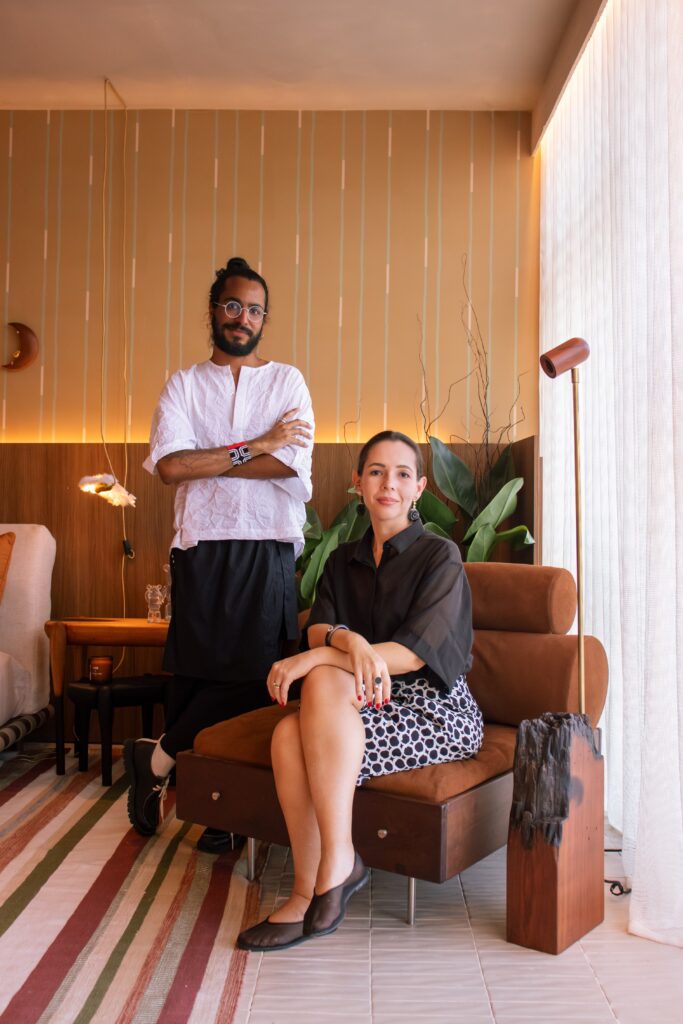
Belchior Almeida and Paula Martins photographed inside the bedroom of Casa Corcovado at the Pavilhão das Culturas Brasileiras.Photo Larissa Noé
“Home is about establishing a bond with a place. And to do that, you have to translate sensations and create atmospheres. Through the house, I speak of life. Through the object, I speak of connection. Through space, I propose a different way of inhabiting the world.” Belchior Almeida, designer and curator
Pieces from diverse origins coexist in Casa Corcovado deliberately, reflecting an identity in permanent construction. Art plays a structural role in the composition: prints and textures introduce movement, while objects and collections activate layers of memory, faith, and cultural depth. The result is an environment that does not exhaust itself on first reading, revealing new layers with every visit.
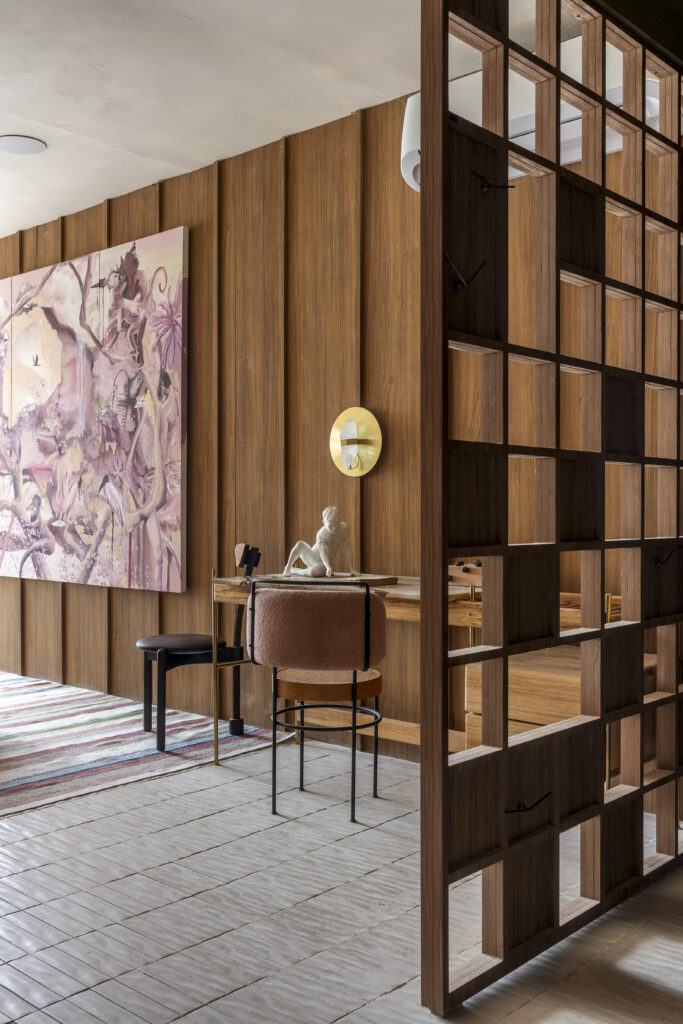
A writing desk and grid-like wooden partition mediate the transition between the bedroom and the social areas of the apartment.Photo Rafael Renzo
Atlantic Forest Landscaping
Signed by Albite Coutinho, the landscaping features native Atlantic Forest species to demonstrate the deep connection between daily routine and natural landscape that defines life in Rio de Janeiro. The choice of species is not decorative: it reinforces the ecological and cultural belonging the project seeks to express, bringing São Paulo visitors closer to a botanical experience native to the fluminense biome.
Not by coincidence, Casa Corcovado is part of the pavilion dedicated to the Atlantic Forest. That placement reinforces the project’s conceptual coherence, weaving architecture, nature, and cultural identity into a single spatial narrative.
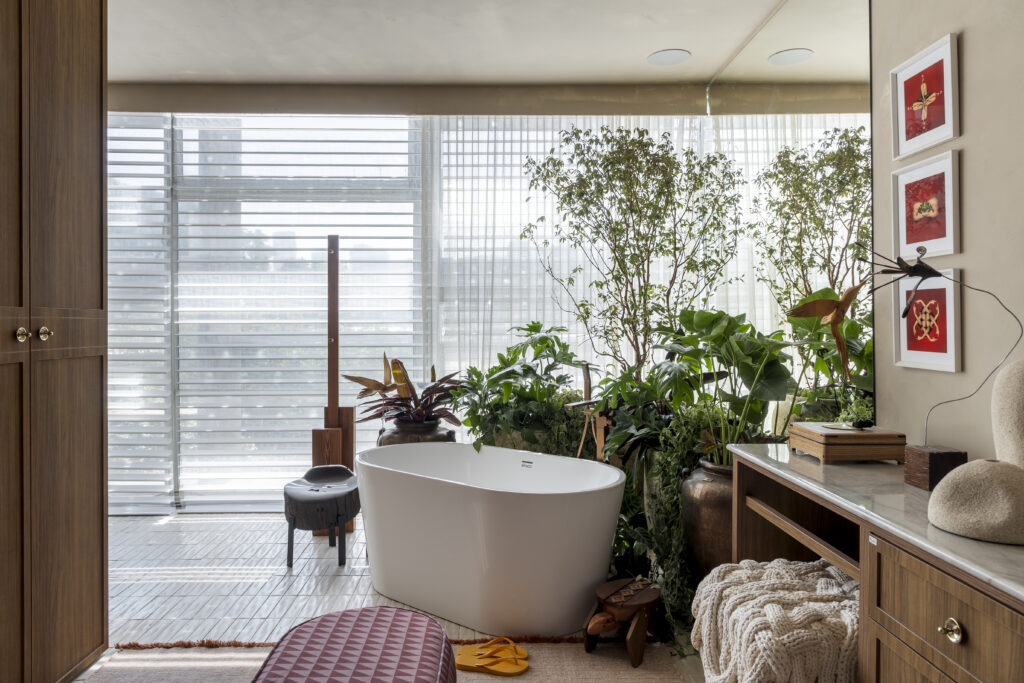
A freestanding tub surrounded by Atlantic Forest species dissolves the boundary between interior and landscape in the bathing area.Photo Rafael Renzo
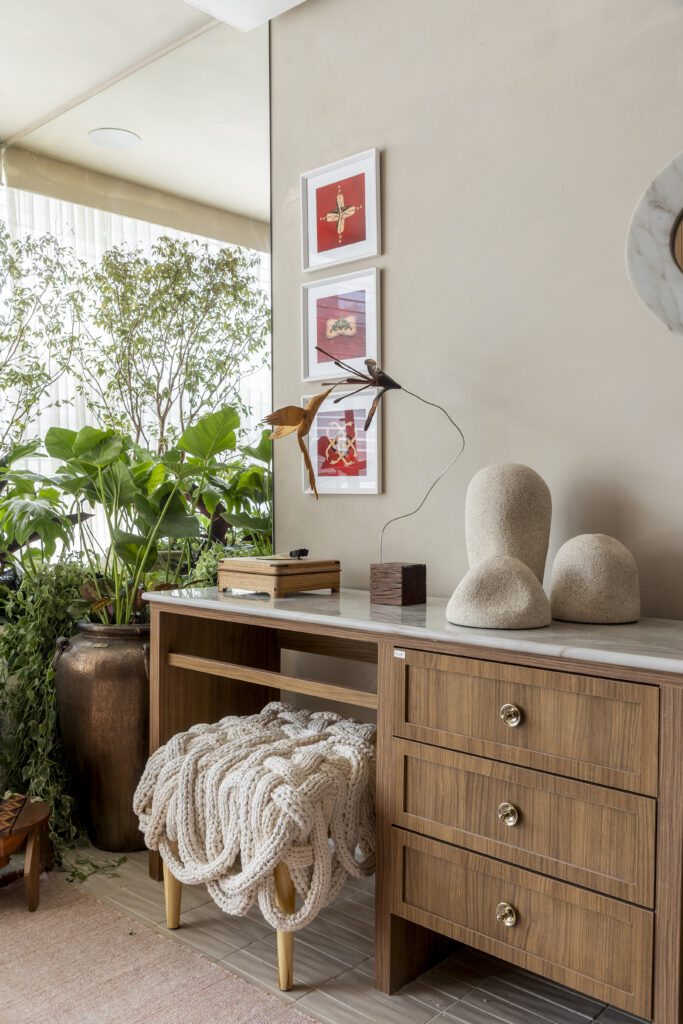
The dressing counter: red-framed prints, a sculptural stone piece, and a lush garden visible through the full-height glass.Photo Rafael Renzo
A Tribute to Rio Natives Living Away from Home
Conceived also as a tribute to those from Rio living away from the city, Casa Corcovado asserts architecture as a tool for belonging. Installed at Parque Ibirapuera, the project shortens symbolic distances and serves, for those who carry Rio as part of their identity, as a place of reconnection with a way of life that is not bound to a specific geography.
That emotional dimension is central to Paula Martins’ proposal. Architecture here serves not only function or aesthetics: it serves recognition, memory, and identity.
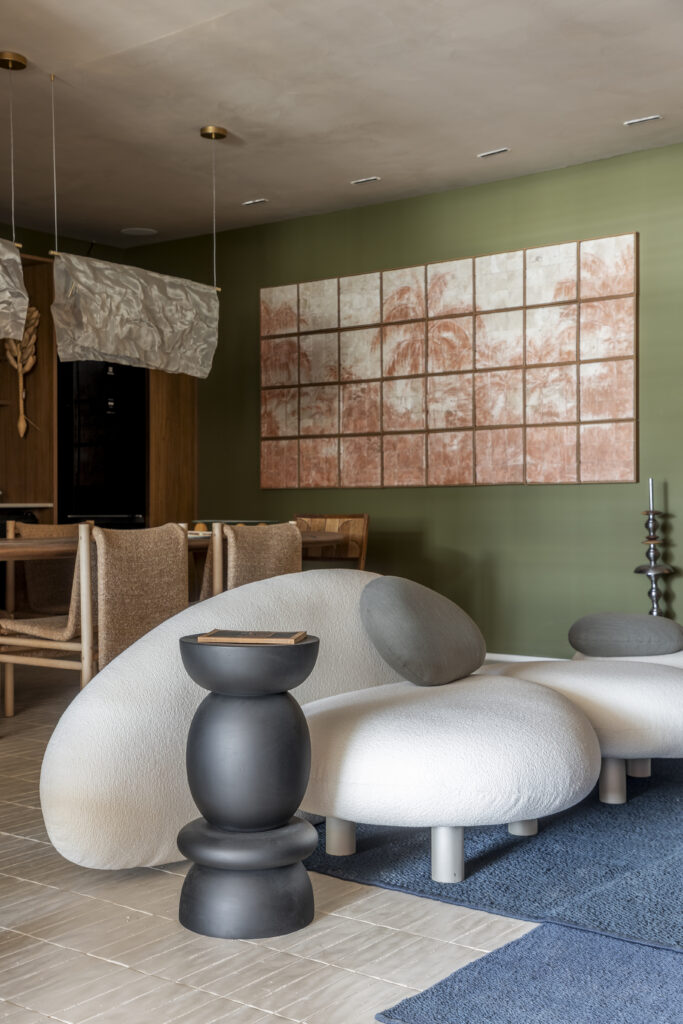
The social area’s organic bouclé sofa and dark sculptural side tables against the olive-green wall with a panel of terracotta tiles.Photo Rafael Renzo
The social area’s organic bouclé sofa and dark sculptural side tables against the olive-green wall with a panel of terracotta tiles. Photo Rafael Renzo
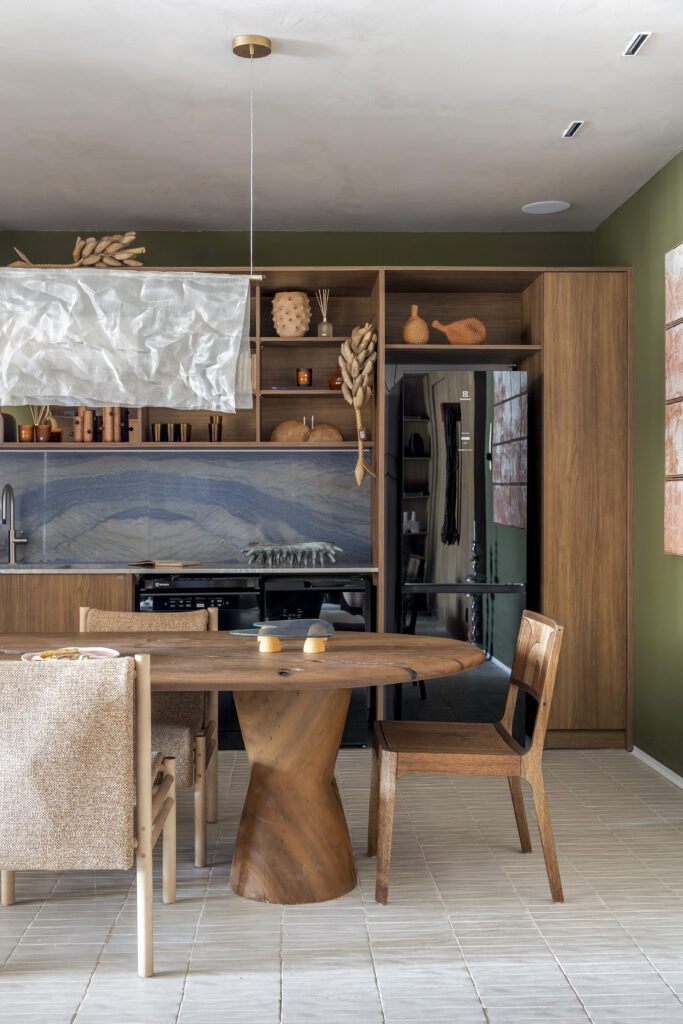
The kitchen centers on a solid wood round table by Areka’a, alongside custom cabinetry and a blue-toned stone backsplash. Photo Rafael Renzo
Rio’s Design Scene in the Spotlight
Bringing together work by Gustavo Bittencourt, Mariana Monnerat, Arthur Grangeia, Martha Mignot and dozens of other names tied to Rio’s and Brazil’s design and art scenes, Casa Corcovado demonstrates the creative power of a productive ecosystem that often remains on the margins of the national spotlight.
Championing that universe of independent and regional production is also a statement of principles. Rather than drawing on established international design brands, the project bets on local output as an element of distinction and identity.
About the Brazilian Architecture Biennial
Based in São Paulo and conceived for the whole of Brazil, the BAB celebrates the country’s aesthetic diversity by connecting architecture, colors, materials and ways of living. The event gathers different voices and territories in spaces that blend real-life settings, sensory activations, brand showcases and emerging talent. Its mission is to bring architecture closer to everyday life, making it accessible to a broad and diverse audience.
Open through April 30, the first edition of the Biennial takes place at the Pavilhão das Culturas Brasileiras, in Parque Ibirapuera.
INFORMATION
Casa Corcovado First Brazilian Architecture Biennial Pavilhão das Culturas Brasileiras, Parque Ibirapuera, São Paulo Dates: March 24 to April 30, 2026