 Serpa
Serpa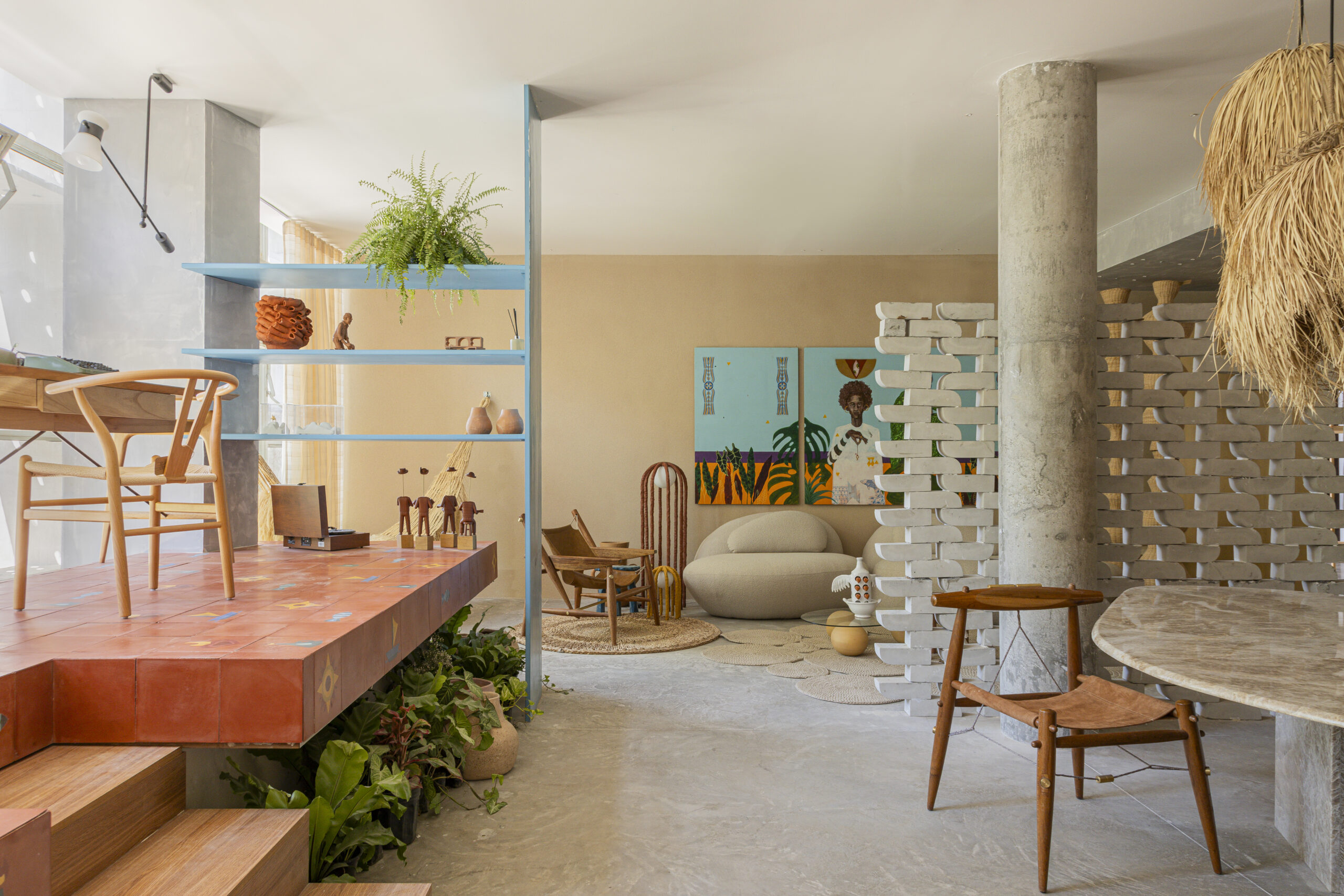
A panoramic view of the installation reveals the elevated terracotta platform, the rounded bouclé sofa in the living area, and the interlocking ceramic brick partition wall. / Studioark Design . Set design: Hugo Gomes | Photo Felipe Petrovsky
Spanning 1,076 sq ft at the Pavilhão das Culturas Brasileiras in São Paulo, the installation “É o Mar” (It Is the Sea) recreates real rooms from a home in Ceará and weaves together art, design, natural materials, and the local creative economy
SÃO PAULO | April 1, 2026 | Updated at 11 a.m.
The 2026 Brazilian Architecture Biennial (BAB), opened to the public last Friday (27th) at the Pavilhão das Culturas Brasileiras in Parque Ibirapuera, São Paulo, brought together 28 state pavilions that propose rethinking the way people live through the lens of culture, territory, and climate. Among the installations, the Ceará pavilion stands out for its ability to translate sensory references from the northeastern coastline into habitable, poetic, and functional spaces. Designed by architect Larissa Lima of the firm ARK Arquitetura & Interiores, the project “É o Mar” (It Is the Sea) spans 1,076 square feet and recreates a complete home — complete with a porch, living room, dining room, kitchen, office, bedroom with en suite, and a utility area — inviting visitors to move through the rooms as if they were inside an actual house.
Part of BAB 2026’s programming, the show’s central purpose is to democratize access to architecture in Brazil, presenting it as a practical, cultural, and sensory tool capable of transforming everyday life. Each participating state received approximately 1,076 square feet to create spaces that represent the ways of living in their territories. What results is an immersive experience that gathers different voices and forms of inhabiting, blending real-life settings, sensory activations, and displays that celebrate emerging talent in Brazilian architecture.
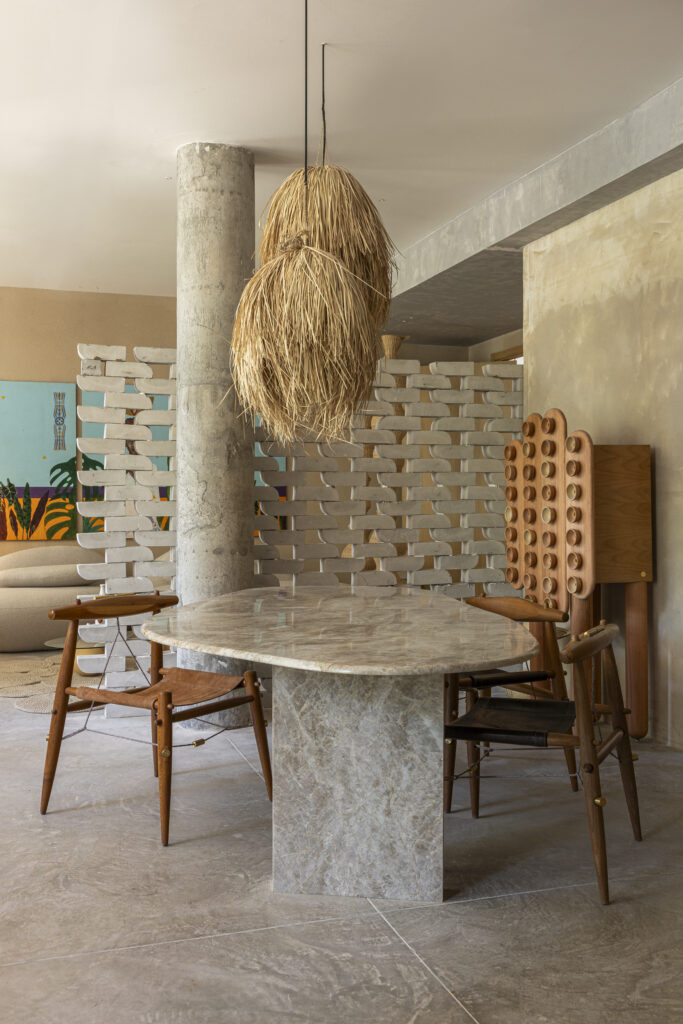
The dining area: a stone-top table on a sculptural base, surrounded by wooden chairs with woven leather seats, beneath a pendant light of dried natural fiber. / Studioark Design . Set design: Hugo Gomes | Photo Felipe Petrovsky
A Home Born from the Land
Conceived by Larissa Lima, the project starts from a principle that guides its entire vision: architecture must make sense in daily life. “I thought about bright, welcoming spaces. If I had to choose a home to live in, it would be one that felt right in everyday life, that brought comfort on an ordinary day. I wanted to bring a little of the sea — that simplicity and sense of order that architecture can offer,” she explained.
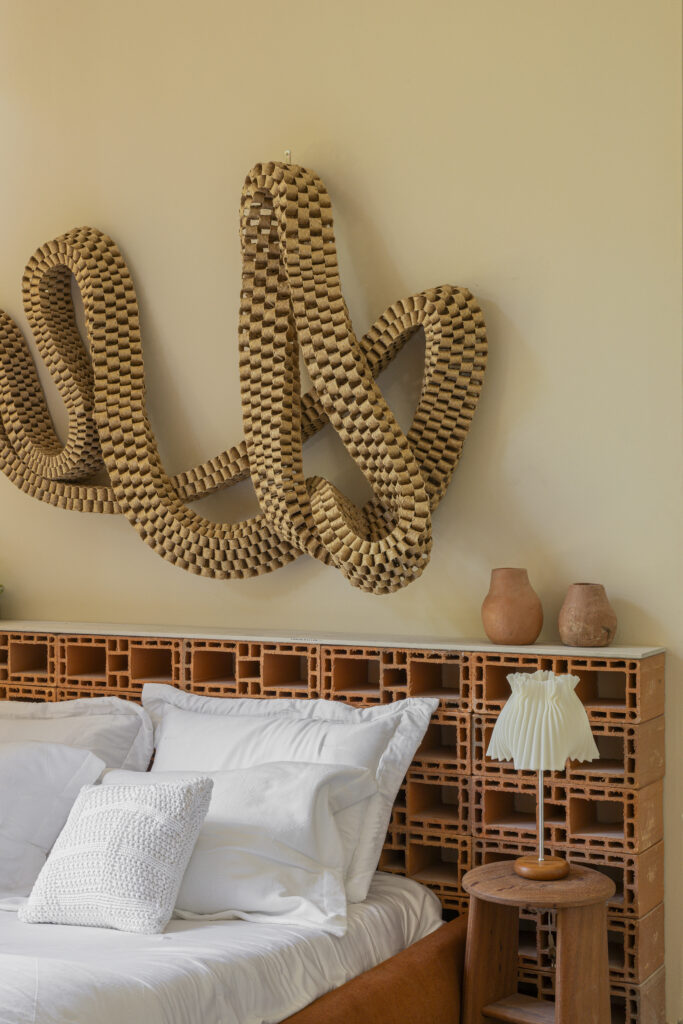
The bedroom: a woven-fiber sculptural wall piece in cactus form above a terracotta brick headboard. / Studioark Design .Set design: Hugo Gomes | Photo Felipe Petrovsky

A woven straw hat mounted on the wall and a cactus-shaped sculpture beside a wooden stool mark a corner of the living area, framed by the ceramic brick partition wall. / Studioark Design . Set design: Hugo Gomes | Photo Felipe Petrovsky
References to the Ceará landscape run through every detail of the installation. The hammock woven from natural fiber speaks to the region’s deep connection with handcraft, a central element of local culture. The jangada — the traditional wooden raft of the northeastern coast — inspires the design of an elevated office that seems to float between wind and horizon. In this space, five motifs compose the visual narrative: the sun, the fish, the oil lamp, the jangada, and the heart — symbols that convey the warmth and hospitality of the people of Ceará.

The living area: a rounded bouclé sofa, a leather safari chair, and an arched floor lamp compose the seating arrangement around an organic sisal rug, framed by the ceramic brick partition wall and a colorful artwork. / Studioark Design . Set design: Hugo Gomes | Photo Felipe Petrovsky
Built around light, texture, and open passages that allow air to circulate freely, the home is designed as a complete sensory experience. Its palette evokes the sea breeze, the soft coastal light, and the lightness of a place where time slows down. For Lima, inhabiting a space is no longer just about occupying it — it becomes a physical and emotional experience, anchored in the memory of a place.
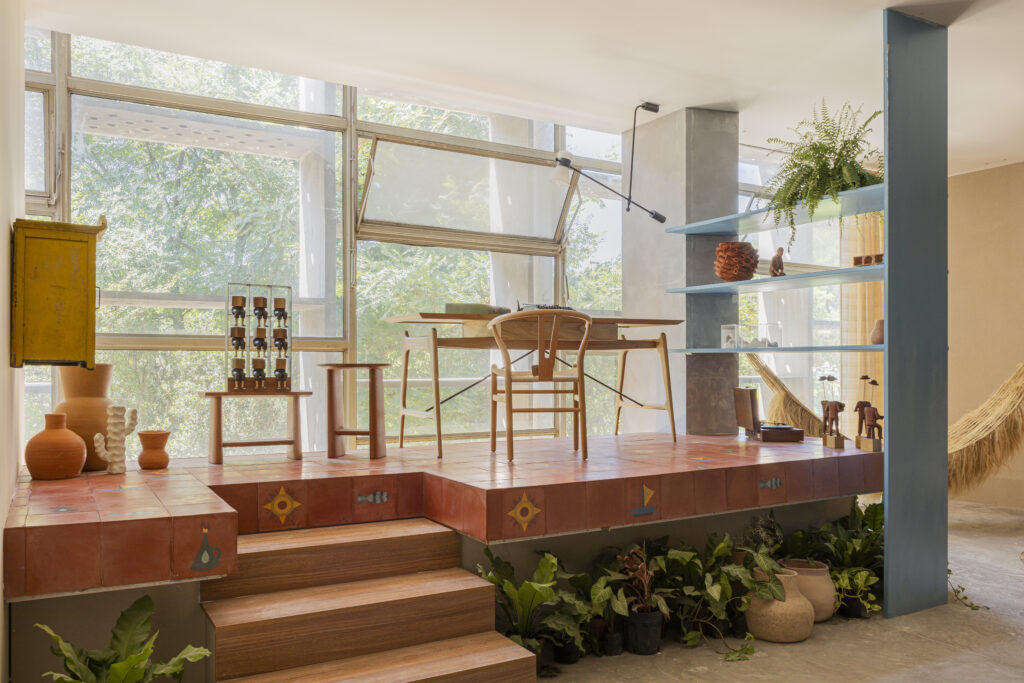
The elevated office, inspired by the jangada raft, floats above the terracotta platform and opens directly onto a wall of windows facing the tree canopy outside. / Studioark Design . Set design: Hugo Gomes | Photo Felipe Petrovsky
Materiality, Art, and the Creative Economy
Handcrafted ceramics take center stage in a material palette curated with consistency — Lepri tiles are applied to the bathroom walls, while wood, natural fibers, and low-impact materials celebrate local production from Ceará and speak to the sustainability ethos running throughout the installation. Cross-ventilation, strategic shading, and the use of natural materials create cooler, more fluid spaces well suited to the region’s hot and humid climate.
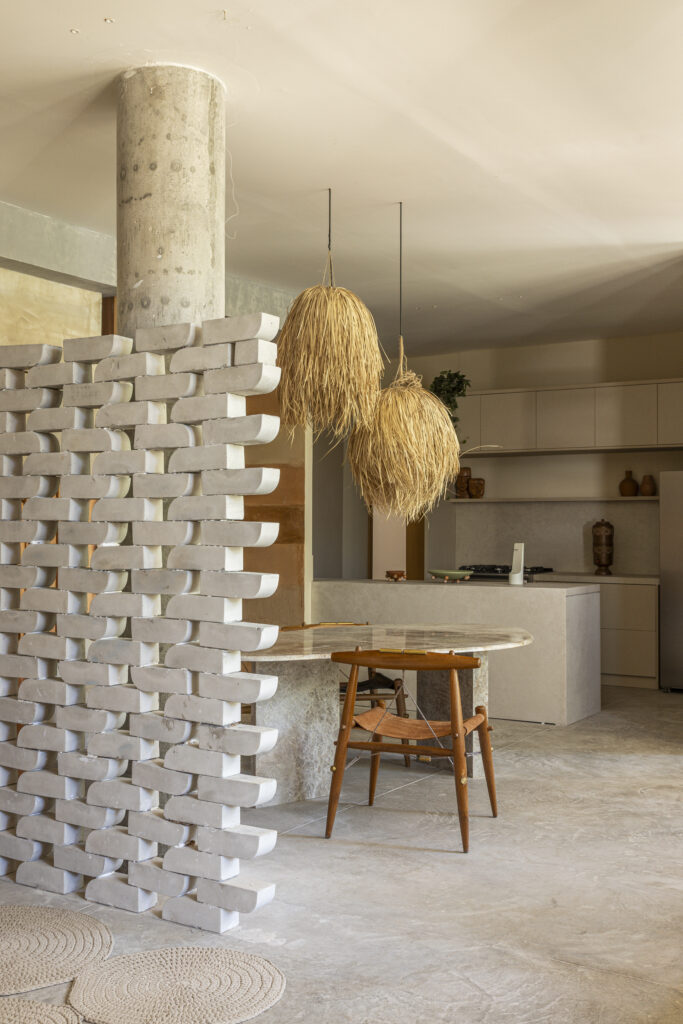
The ceramic brick partition wall and twin natural-fiber pendants mark the boundary between the living area and the kitchen beyond. / Studioark Design . Set design: Hugo Gomes | Photo Felipe Petrovsky
Artist Henrique Viudez, designers Léo Ferreiro and Érico Gondim, studio Desconexo Design, and Galeria Leonardo Leal are among the collaborators spanning generations and disciplines whose work fills the pavilion. Textile art, basketry, and bespoke furniture help build an atmosphere that evokes the Ceará coastline in a sensitive and contemporary way, without resorting to superficial or folkloric references.
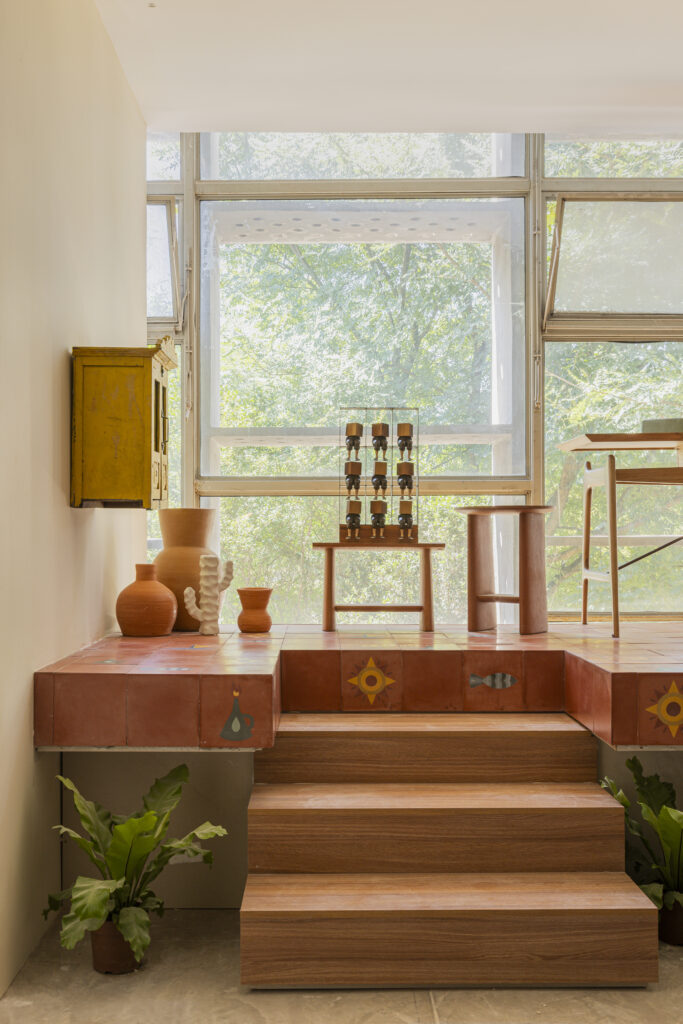
The elevated terracotta platform, inspired by the jangada raft, seen from the entry: the weathered yellow cabinet and handmade ceramic vessels mark the threshold between the porch and the workspace above. / Studioark Design . Set design: Hugo Gomes | Photo Felipe Petrovsky
More than an exhibition installation, Casa de Maria is rooted in local creative economy networks, many of them led by women. The name of the installation carries this gesture: it represents the women of Ceará, guardians of daily life, of care, and of the knowledge that builds a home. The choice is no coincidence. In an event that proposes to democratize access to architecture, the Ceará pavilion expands the meaning of the project beyond built matter, recognizing that a home is also made of relationships, affection, and invisible labor.

Architect Larissa Lima at the entrance to the installation, seated on the terracotta stepped platform in the Ceará pavilion. / Studioark Design . Set design: Hugo Gomes | Photo Felipe Petrovsky
BAB and the Debate on Architecture in Brazil
Founded in São Paulo and conceived for the entire country, the Brazilian Architecture Biennial was created with the stated purpose of bringing architecture closer to real life. BAB does not present itself as a technical show restricted to specialist circles. Its vocation is educational and cultural: to spark curiosity in a broad audience, to demonstrate that architectural design is essential in any process of spatial transformation, and to show that every space gains value when planned by a qualified professional.
A plural view of Brazilian architecture runs through the event as well, acknowledging the country’s aesthetic diversity by connecting different territories, biomes, materials, and ways of living. All 28 state pavilions express this diversity through distinct solutions: there are environments with sand on the floor inspired by the coast, alongside structures built with bamboo, clay, and wood connected to inland biomes. Such breadth places BAB 2026 among the most comprehensive efforts ever undertaken to bring architectural debate to a wider public in Brazil.
Ceará’s participation in this context is representative of a broader movement: asserting that architecture produced outside the major economic centers has its own voice, creative solutions, and the capacity to engage with the most contemporary questions in the field — from sustainability to cultural identity, from the celebration of artisanal production to the recognition of women’s work as a cornerstone of domestic life.
Architecture as a Life Experience
Larissa Lima’s project “É o Mar” captures the very essence of what BAB 2026 sets out to prove: that architecture is not a privilege of the few, but a tool capable of transforming the quality of life of anyone, anywhere in Brazil. By reconstructing a complete home — with all its functional spaces — inside an exhibition venue, the project invites visitors to experience what it means to live in a well-designed space, one that attends to thermal comfort, natural light, air circulation, and the beauty of materials.
What the project offers goes far beyond visual contemplation. Visitors move through the rooms, feel the texture of the materials, observe how light enters through the openings, and understand — intuitively — the design decisions that made that space more pleasant and human. It is at this point that architecture ceases to be abstract and becomes something felt, and it is precisely here that the strength of the Ceará pavilion at the Biennial resides.
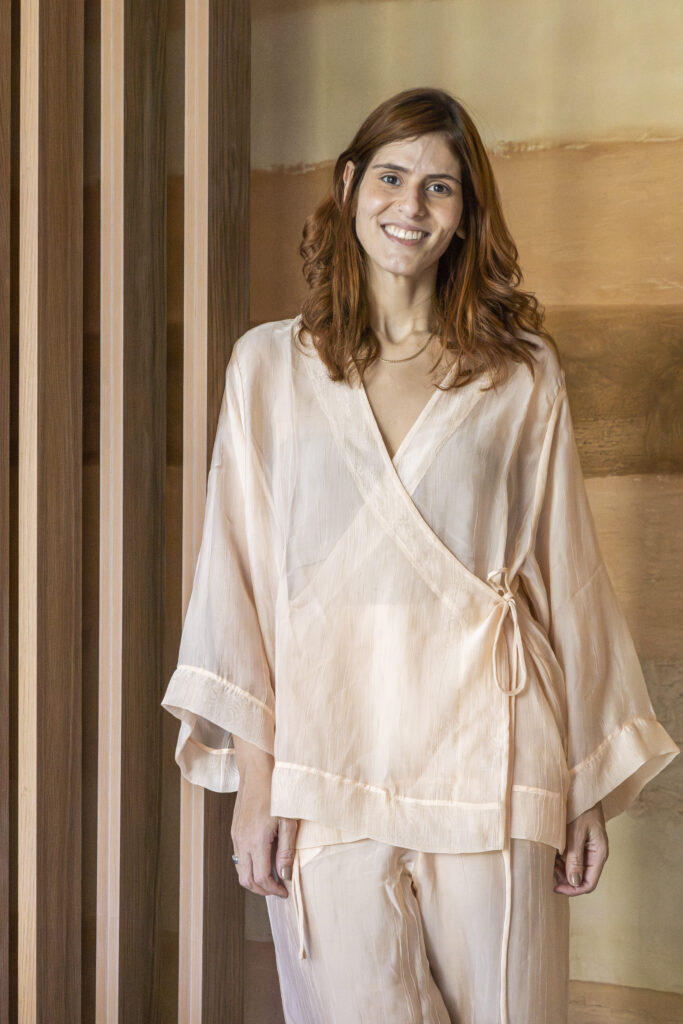
Architect Larissa Lima, photographed inside the “É o Mar” installation. / Studioark Design . Set design: Hugo Gomes | Photo Felipe Petrovsky

The bathroom: handcrafted ceramic wall tiles, a vessel sink on a stone vanity, and a geometric blue-and-white patterned floor open onto a glass shower with a garden view. / Studioark Design . Set design: Hugo Gomes | Photo Felipe Petrovsky
In representing Ceará at BAB 2026, Larissa Lima brings to the Biennial an architecture rooted in the climatic, social, and cultural context of her territory — one that translates into a simpler, more sensitive way of living, deeply connected to the identity of a place. In “É o Mar,” inhabiting a space is no longer merely occupying it; it becomes, in every sense, an experience.
EVENT INFO
Brazilian Architecture Biennial – BAB 2026 Venue: Pavilhão das Culturas Brasileiras (PACUBRA), Parque Ibirapuera, São Paulo (SP), Gate 10 Dates: March 25 – April 30, 2026, noon–9 p.m. Project: É o Mar | Architecture: Larissa Lima, ARK Arquitetura & Interiores