 Serpa
Serpa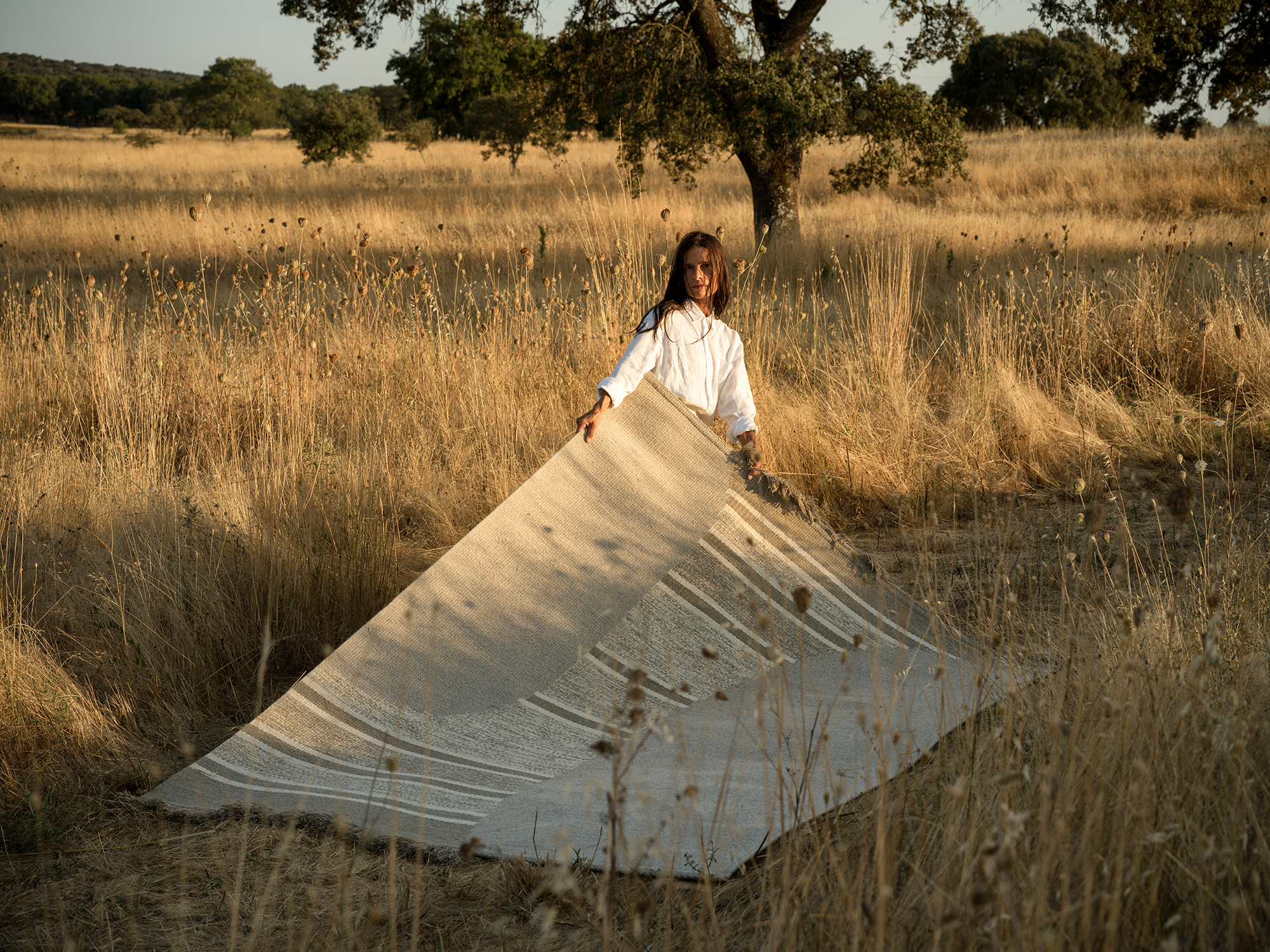
Beyond the Tagus Collection: TALHA · Ferreira de Sá · Alentejo, Portugal
Founded in 1946 in Espinho, Ferreira de Sá preserves four artisanal techniques, uses certified sustainable materials and exports to residential and commercial projects worldwide
Portugal – Nearly 80 years of uninterrupted production separate the founding of Ferreira de Sá, in 1946, from the position the Portuguese manufacturer holds today in the international high-end interiors market. Based in Silvalde, in the municipality of Espinho, in northern Portugal, the company has reached 2025 without abandoning two principles it defines as central: preserving traditional Portuguese artisanal techniques and continuously incorporating new materials, technologies and design languages.
Beyond the Tagus Collection SOLO· Ferreira de Sá · Alentejo, Portugal
All production takes place on Portuguese soil, at the company’s own facilities in Silvalde. Among handmade rug manufacturers worldwide, few can present a comparable production record. For Ferreira de Sá, that continuity is not merely a historical footnote; it is a competitive advantage.
The hand knot as a foundation
Of the four techniques that define the manufacturer’s portfolio, namely hand knotting, hand weaving, flatweave and tufting, hand knotting is described by the company itself as the fullest expression of its craft knowledge. It is also the most labor-intensive process in the entire production chain.
Executed by hand and individually, each knot is the work of artisans whose skills have been passed down across generations within the factory. This method ensures complete control over pile density, surface texture and pattern precision, resulting in rugs with firm structure, visible detailing and durability that extends over decades.
Specialists in what is known as the Portuguese Knot, a technique that distinguishes Portuguese production in the world of hand-knotted textiles, the company maintains that this heritage does not translate into mere repetition. Over time, artisans continuously refine the technique to meet contemporary project demands without abandoning the essence of the craft.
Carried out on traditional looms operated with wooden shuttles, hand weaving is the second technique in the portfolio. Entirely handmade, it requires technical mastery and sharp visual sensibility, producing a flat, pile-free surface with a defined structure and high-precision graphic patterns. The result is rugs that are light, stable and suited to both contemporary interiors and high-traffic areas.
Tufting and flatweave for demanding projects
Available in both manual and robotic versions, tufting offers Ferreira de Sá the greatest creative freedom in its portfolio. With it, the company can explore volume, create visual rhythms and compose surfaces with variable pile heights, multiple textures and complex color combinations.
Projects that call for expressive customization and strong graphic presence find a direct solution in this technique. For the company, a tufting-produced rug functions as an extension of the space itself.
Manufactured with high-precision weaving machines, flatweave ensures uniformity throughout the entire piece. Without pile and with a firm structure, these rugs are particularly suited to modern interiors and high-footfall spaces. Their light weight and ease of maintenance broaden their range of applications, from residential environments to large-scale commercial projects.
Materials: from certified wool to regenerated nylon
Technical performance and environmental responsibility guide Ferreira de Sá’s selection of raw materials. Sourced according to the criteria of the Responsible Wool Standard, the New Zealand wool the company uses guarantees that animals are raised with respect for their welfare and on land managed consciously.
Highly durable, resistant to soiling and with a matte finish, this material suits both residential and commercial projects. Rugs that last decades require no premature replacement, a principle the manufacturer treats as a design value, not merely a technical attribute.
Certified as a premium organic fiber, Merino wool adds softness, antibacterial properties, temperature-regulating capacity and natural resistance to moisture and odors. As a natural fiber, it can be returned to the soil at the end of its useful life, decomposing without leaving residue.
Extracted from wood pulp sourced from sustainably managed forests, Botanical Silk is an ecological, biodegradable plant-based yarn. Granted the European Union’s Ecolabel certification, an endorsement reserved exclusively for products with significantly reduced environmental impact across their full life cycle, it combines a silky texture, a velvety finish and good light reflection, lending the material a sense of luxury. A contract version with greater resistance to heavy traffic is also part of the portfolio.
Developed from waste such as discarded fishing nets, fabric scraps and industrial plastic, ECONYL regenerated nylon rounds out the high-performance materials lineup. Its regeneration process is described as infinitely repeatable, making it a low-environmental-impact alternative that sacrifices neither durability, stain resistance nor resistance to pilling.
Processed in a melange yarn using an exclusive multiple-spinning technique developed in-house, bamboo acquires singular resistance and sheen. A naturally renewable fiber, it delivers a distinctive final appearance that sets the product apart in its segment.
Designed for both indoor and outdoor rugs, polypropylene closes out the materials portfolio. Produced using the company’s proprietary braiding technique, it is available in 14 exclusive color combinations that create refined chromatic transitions, an example of how Ferreira de Sá seeks to technically elevate even its most accessible raw materials.
Sustainability integrated into production
Verifiable practices, not generic discourse, underpin the company’s environmental approach. To treat all water used in the production process, Ferreira de Sá operates its own Industrial Wastewater Treatment Plant, a system that functions in a closed loop, enabling water reuse and preventing discharge into the environment.
In rug finishing, water-based adhesive replaces glues containing volatile organic compounds, reducing pollutant emissions and improving air quality in both work environments and the spaces where the products are installed.
Leftover yarns are reused in production. Domestic suppliers of raw materials and components ensure that the entire production chain remains within Portugal, reducing transportation impact and strengthening the local industrial ecosystem. Rugs designed to last decades exert less pressure on consumption cycles and natural resources than any isolated certification.
“Além Tejo”: design born from the land
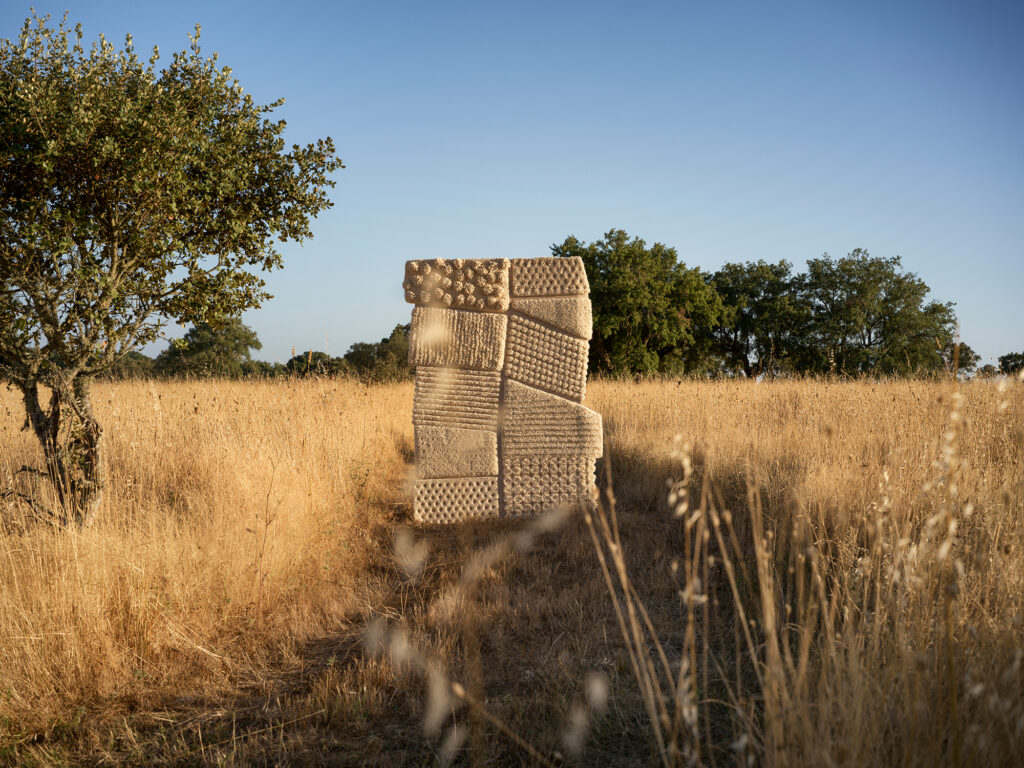
Beyond the Tagus Collection PLANURA· Ferreira de Sá · Alentejo, Portugal
Thirteen rugs make up the “Além Tejo” collection, which synthesizes Ferreira de Sá’s design method and represents, perhaps, the most complete expression of its identity. This is not a thematic collection in the conventional sense. There are no illustrations of the Alentejo, no literal references to the landscape; what exists is something more subtle and more demanding: the translation of a territory into matter, texture and silence.
Drawing on concrete references from the Alentejo, a region in southern Portugal known for its sweeping plains, vernacular architecture and a particular pace of life, each piece was born from a gesture, a texture or a structure observed in the territory, not from a predetermined decorative concept. The starting point was the place itself, with all its austerity, generosity and slowness.
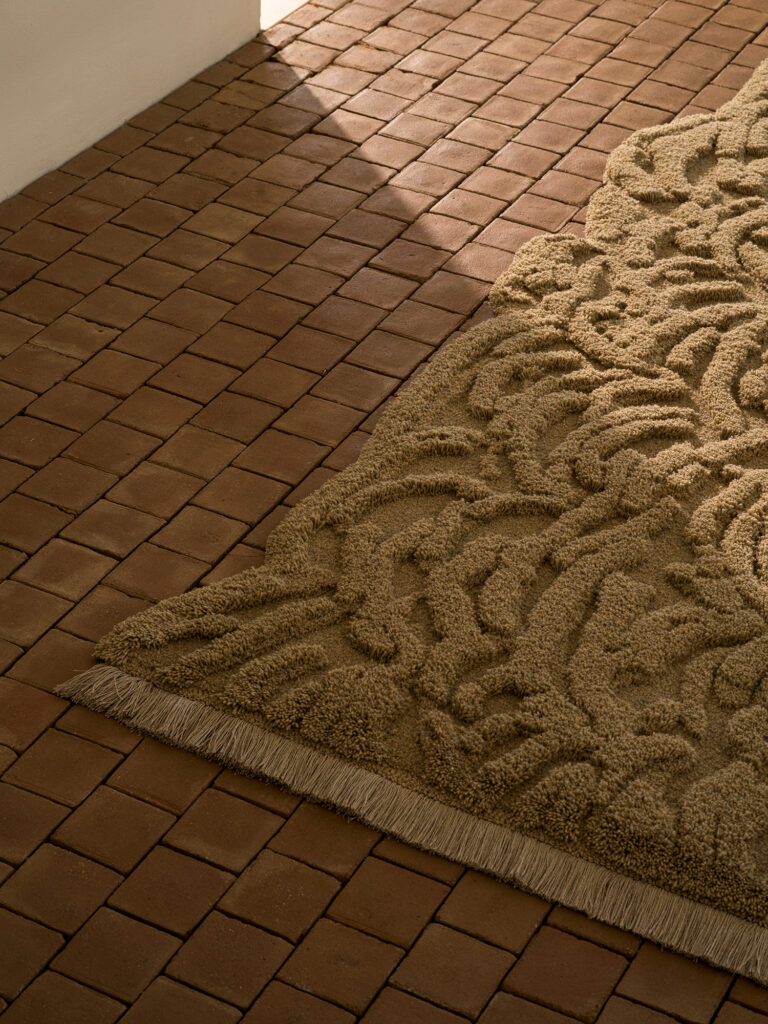
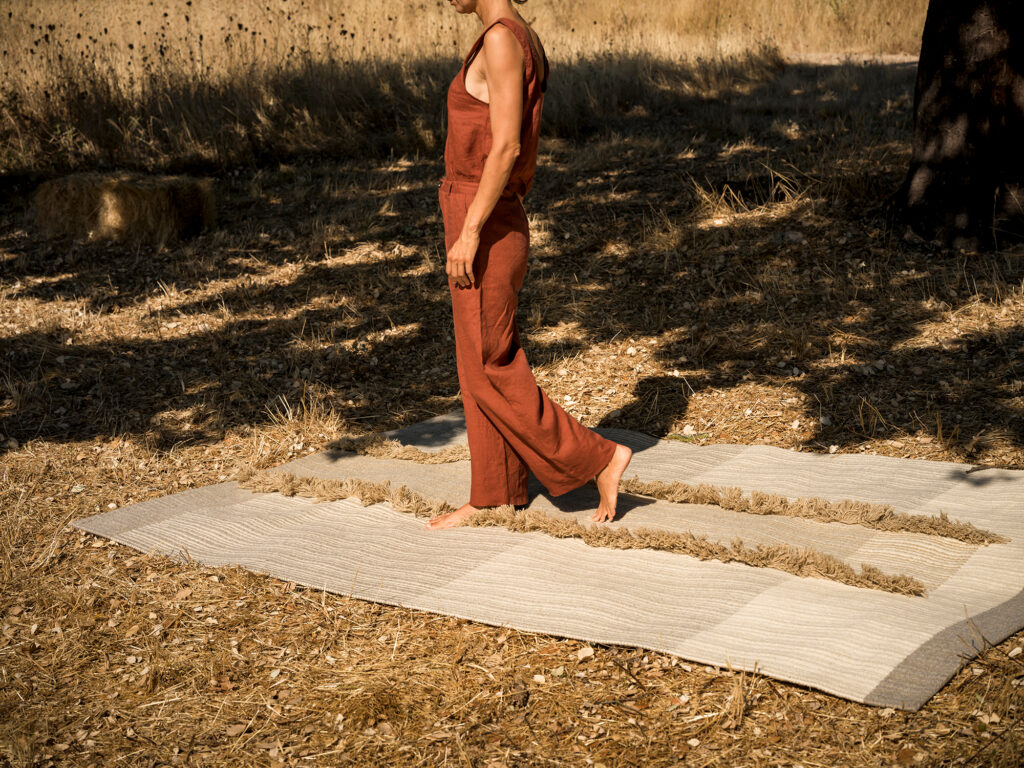
Beyond the Tagus Collection SOBREO Ferreira de Sá · Alentejo, Portugal
Untreated and unprocessed, raw natural wool is the collection’s central raw material. Pure whites, irregular beiges and soft grays compose the palette, not through a designer’s deliberate choice, but through the material’s own revelation. Color was not applied; it was discovered. This refusal of dyeing is, in itself, a declaration about what the collection intends to be.
In some pieces, smaller proportions of jute or linen enrich the surface with a dry touch and firm structure, without competing with the wool for prominence. These plant fibers appear as counterpoint, not ornament. Together, wool and jute or linen evoke the texture of whitewashed walls, dry fields and the long shadows of southern Portugal.
Each of the 13 rugs offers a distinct reading of the same territory. Some are dense, almost heavy in their presence, like the clay soil of the Alentejo in winter. Others are light, almost ethereal, like the brightness that crosses the flat horizon on summer afternoons. Certain pieces map relief through subtle surface textures; others explore the weave as one might traverse a field on foot, step by step, unhurried.
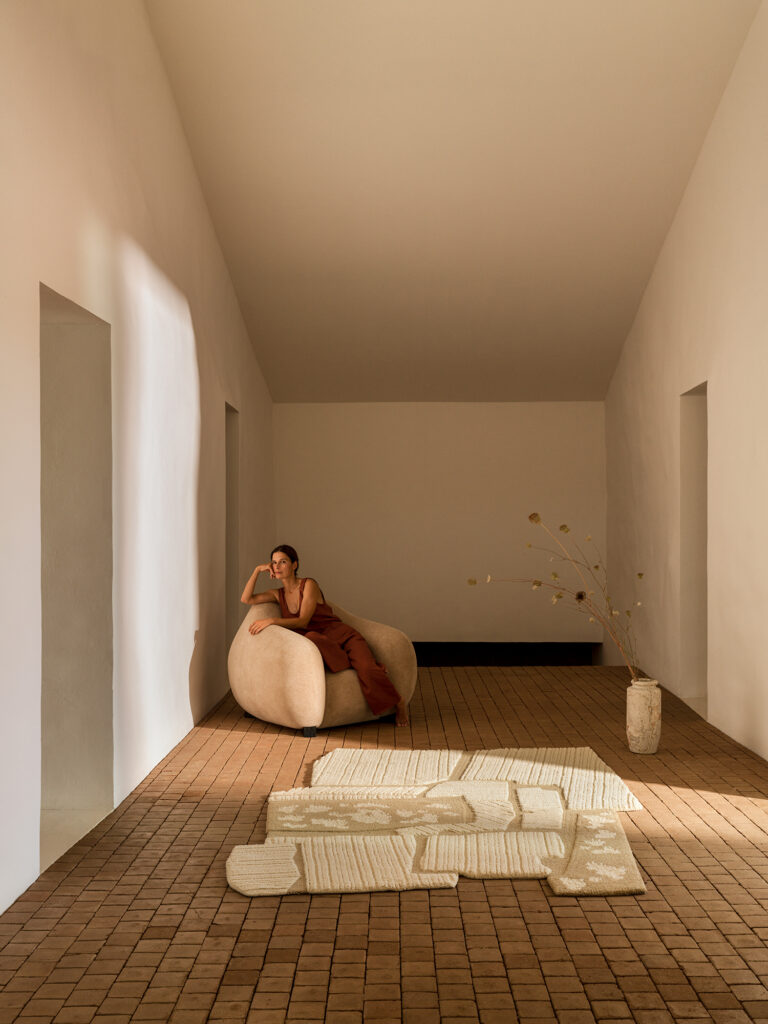
Conceived also as a statement about scale, the project reveals a dual logic: each rug was designed to exist alone, with its own presence and silence, but the 13 pieces together function as an emotional map of a region. Those who know the Alentejo will recognize something in these surfaces. Those who do not will still feel it.
Wholly Portuguese, from the origin of its suppliers to the final stage of production, the collection’s supply chain reinforces the company’s broader commitment to reducing the environmental impact of transportation. All materials travel short distances before becoming a rug. The coherence between geographic origin, raw material and theme is not coincidental. It is method.
Ultimately, the “Além Tejo” collection asserts that tradition is not reproduction. It is the consequence of a careful gaze upon a place, and of a manufacturer willing to let the territory set the rules of design.
Nearly 80 years as strategy
Few handmade rug manufacturers in the world reach 2025 with an uninterrupted production record dating to 1946. For Ferreira de Sá, however, that continuity is not simply heritage; it is structure.
Generation after generation, technical knowledge is passed down among the artisans of Silvalde. The portfolio of materials and techniques evolves without breaking with its origins. Architects and designers seeking manufacturing partners capable of responding with precision, consistency and authentic cultural identity to high-end projects find in the Portuguese manufacturer one of the most solid references in the contemporary European textile industry.
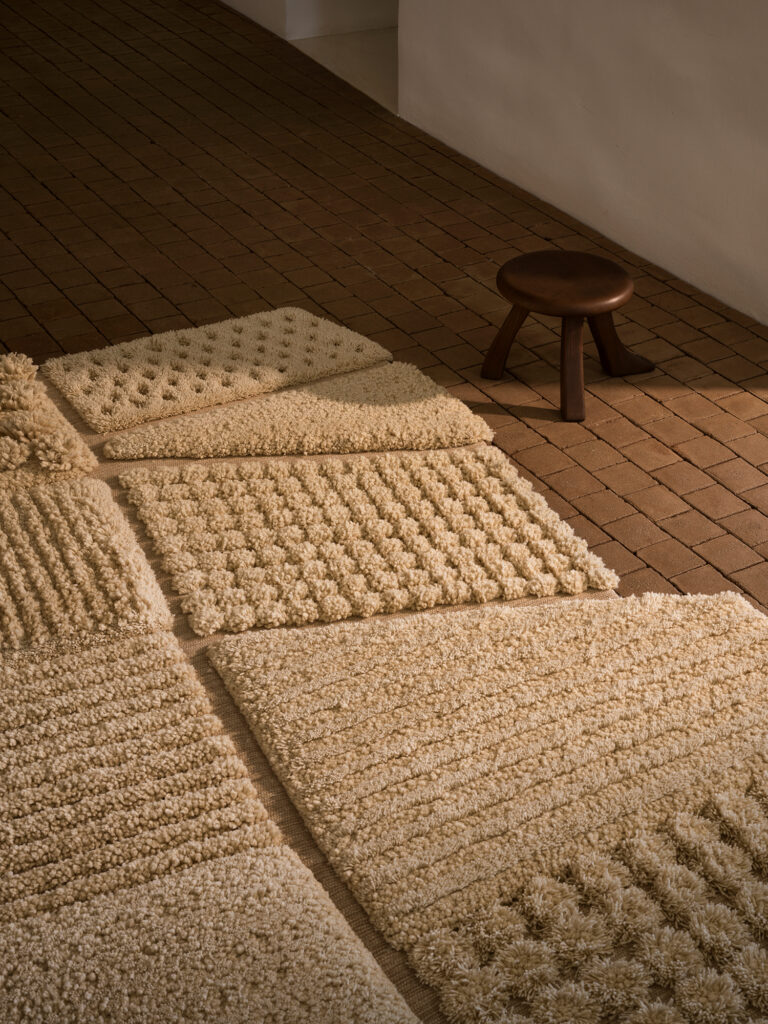
Its accumulated craft knowledge, built over nearly 80 years, is not a marketing argument. Woven knot by knot, generation by generation, it is a living archive.
Arch Gallery & Design Magazine
archgallerydesign.art.br · ISSN 3086-4267