 Serpa
Serpa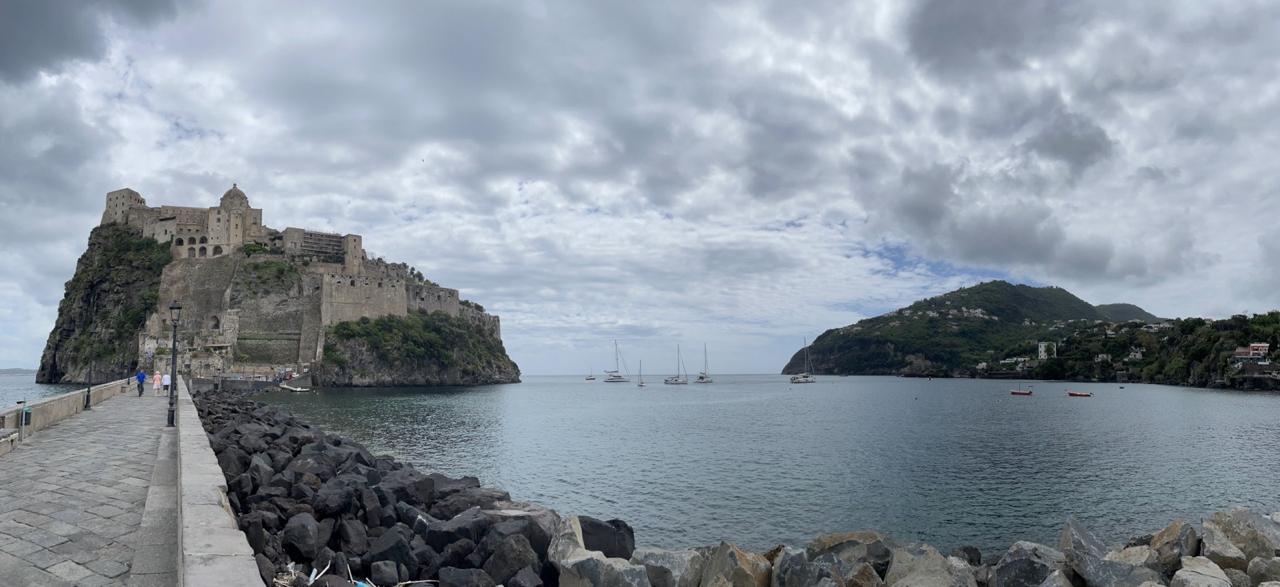
A stone bridge more than 220 meters long connects the Castello Aragonese to the island of Ischia, in the Campania region of Italy. (Photo: Fernanda Artibani)
By Fernanda Artibani
Lifestyle Travel
Between ancient fortresses, dormant volcanoes and thermal waters, Italy’s island secret remains one of the most fascinating spots in the Mediterranean.
ISCHIA, Italy. Tired of seeing the same destinations pop up again and again on everyone’s feed, I set out to find somewhere that still held a surprise. So I arrived in Ischia, the largest island in the Gulf of Naples, in Italy’s Campania region.
With about 62,000 residents, the town lives quietly in the shadow of Capri and the Amalfi Coast, destinations that draw thousands of visitors every year while preserving an authenticity rare in modern tourism.
Its anonymity stirs a mixed feeling in me. Part of me thinks: good, I’m glad. Glad that its cobblestone streets, quiet beaches and centuries-old traditions stay protected from mass tourism. Still, I can’t help wondering how that’s possible.
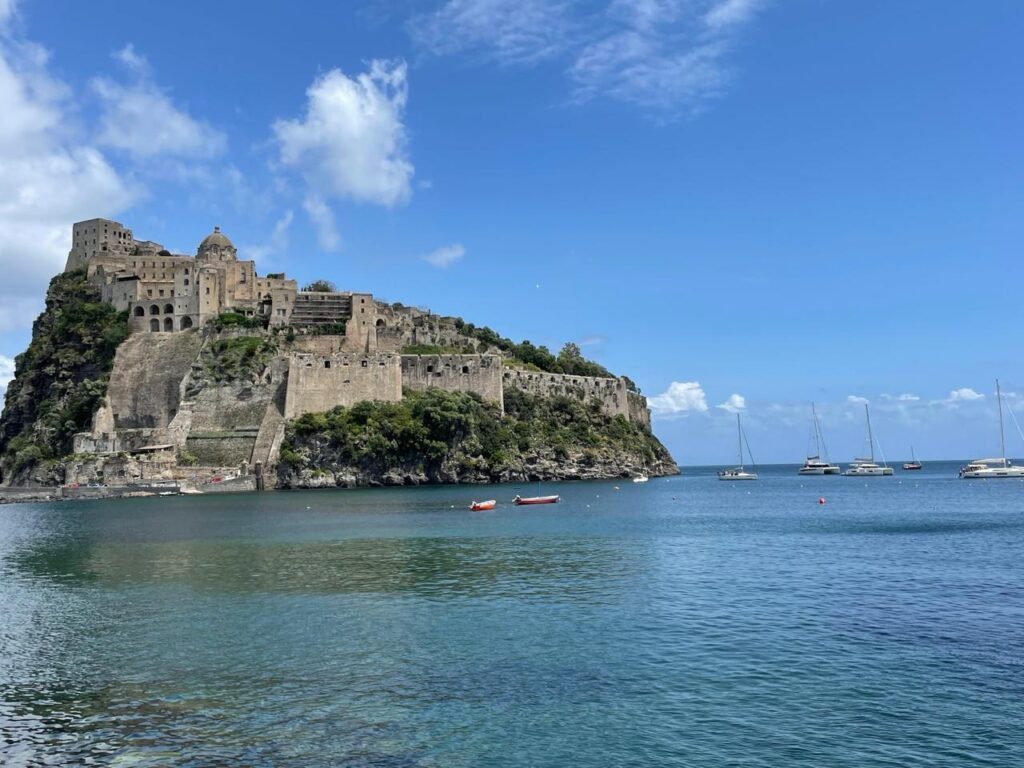
Castello Aragonese, built on a volcanic islet in 474 B.C., once housed about 2,000 families within its walls. (Photo: Fernanda Artibani)
As the ferry draws near, even before reaching the island, an image rises on the horizon that looks pulled from a medieval novel: the imposing Castello Aragonese. Built atop a small volcanic islet and linked to town by a narrow stone bridge, it dominates the landscape with an almost cinematic presence.
Its beauty, however, is only part of the story.
Erected originally in 474 B.C., the fortress amounted to far more than a castle. For centuries, it housed roughly 2,000 families, functioning as a small walled city. Within its walls stood churches, convents, an abbey, vineyards and everything needed to survive. Its structure served as a refuge against pirate invasions and also as protection against an even more unpredictable enemy: nature’s own force.
Because Ischia is, above all, a volcanic island.
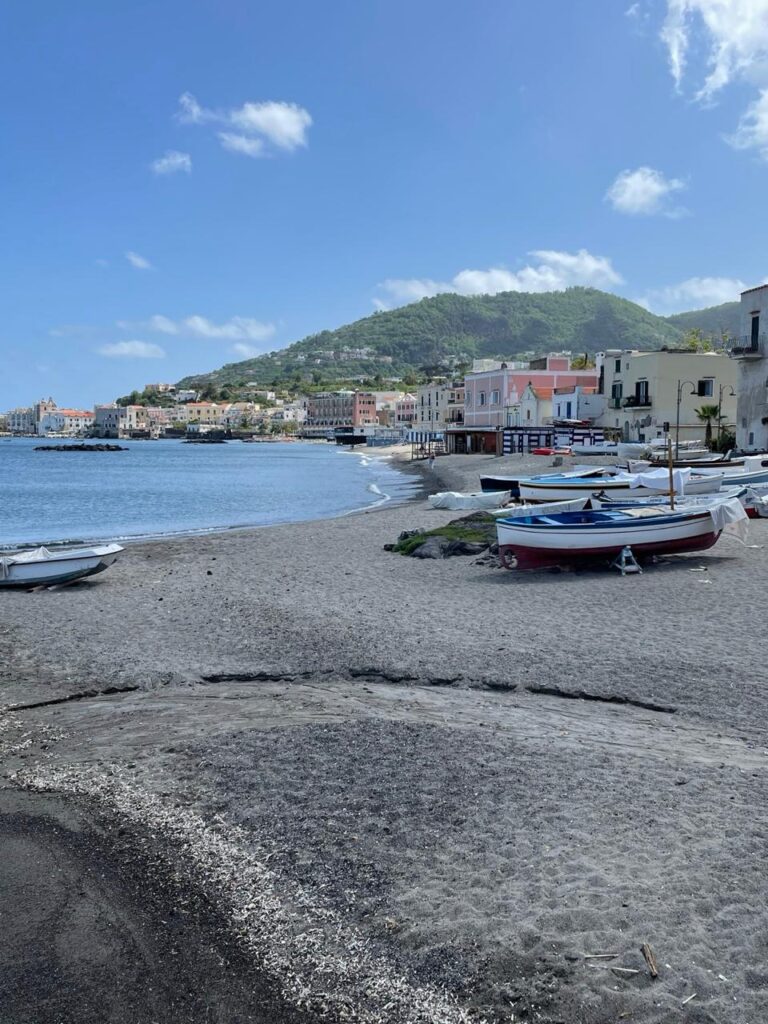
Fishing boats rest on the sand at Spiaggia dei Pescatori in Ischia. (Photo: Fernanda Artibani)
Its entire formation grew out of submarine eruptions that took place more than 150,000 years ago. Although the local volcano is considered dormant, with no eruptive activity since 1302, its energy still pulses beneath the feet of residents and visitors alike.
Right there, Ischia reveals one of Europe’s most fascinating curiosities.
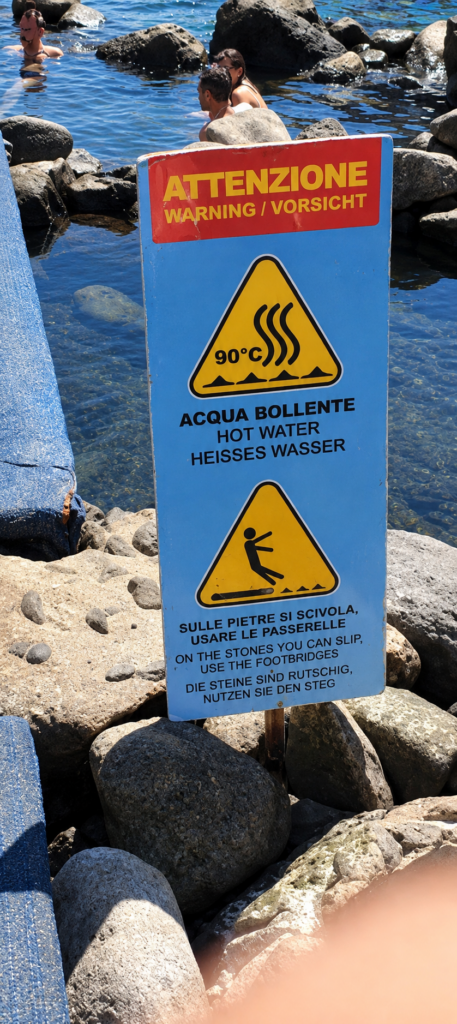
A board alerts swimmers to the temperature of the hot springs in Sorgeto Bay, where volcanic springs mix with the sea. (Photo: Fernanda Artibani)
In some areas of the island, underground heat runs so intense that sand can reach temperatures close to 212 degrees Fahrenheit. For generations, residents and chefs have kept up a tradition that seems to defy modern logic: burying food in hot sand for a slow, natural cooking process. It becomes an oven built by the earth itself.
As if that weren’t enough, Ischia also holds one of the most striking natural phenomena in the Mediterranean.
Sorgeto Bay’s thermal springs rise straight from the seafloor. Hot volcanic water mixing with salty sea currents creates natural pools whose temperature shifts throughout the day, turning the cove into an open-air hot tub, free and open all year long.
Perhaps, though, what captivated me most about Ischia wasn’t the castle, the dormant volcanoes or the thermal waters.
It’s the atmosphere.
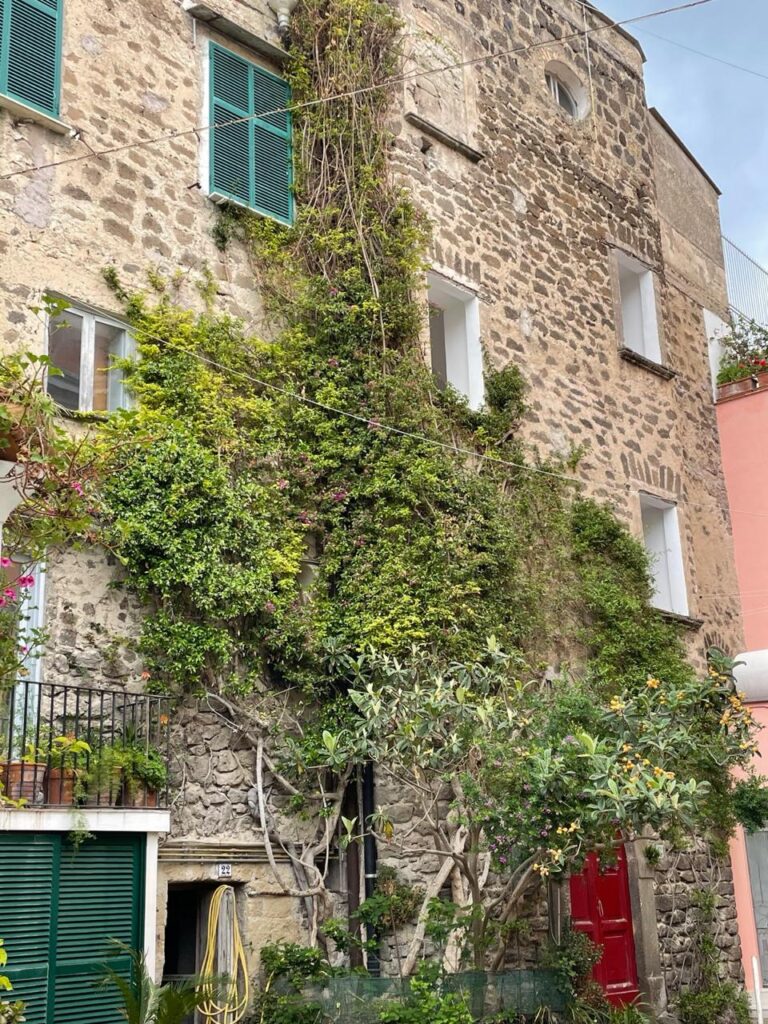
Stone facades covered in climbing plants line the streets of Porto d’Ischia. (Photo: Fernanda Artibani)
Weathered facades draped in climbing vines, colorful boats resting on small beaches, Vespas parked in front of centuries-old homes and soft light turning every corner into a postcard scene. Ischia carries an unpretentious beauty, a spontaneous elegance never built to impress visitors, yet it impresses precisely because of that.
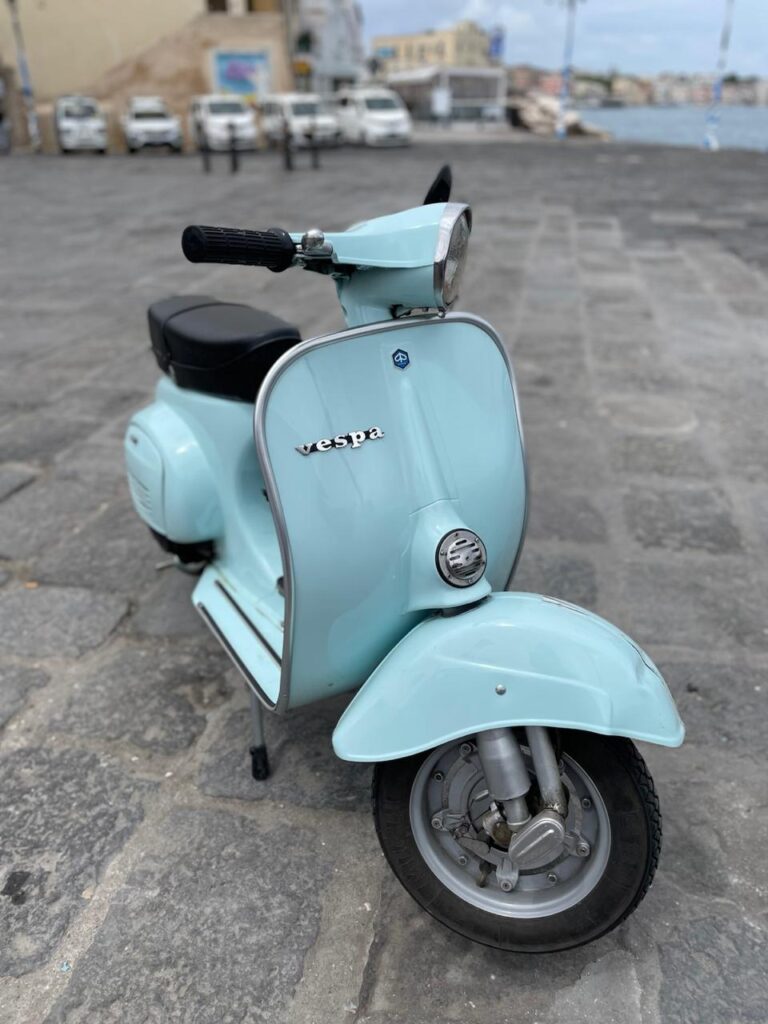
A light blue Vespa parked in Porto d’Ischia; the model, created in Italy in 1946, remains a cultural symbol of the country. (Photo: Fernanda Artibani)
Modern life reshapes so many destinations for social media, yet Ischia remains itself.
Perhaps that’s its greatest luxury.
A place where history, nature, tradition and simplicity coexist in perfect harmony, a destination that still holds the privilege of being discovered rather than merely visited.
While the world keeps chasing Italy’s most famous spots, Ischia stays right where it is, serenely set between the blue of the Mediterranean and the warmth of a dormant volcano.
I keep thinking some secrets deserve to be shared, even if part of us wants to keep them forever. Anyone heading there should arrive with time to spare, since Ischia deserves to be explored without rush.

Lifestyle and Travel by Fernanda Artibani
Sept. 18, 2026