 Serpa
Serpa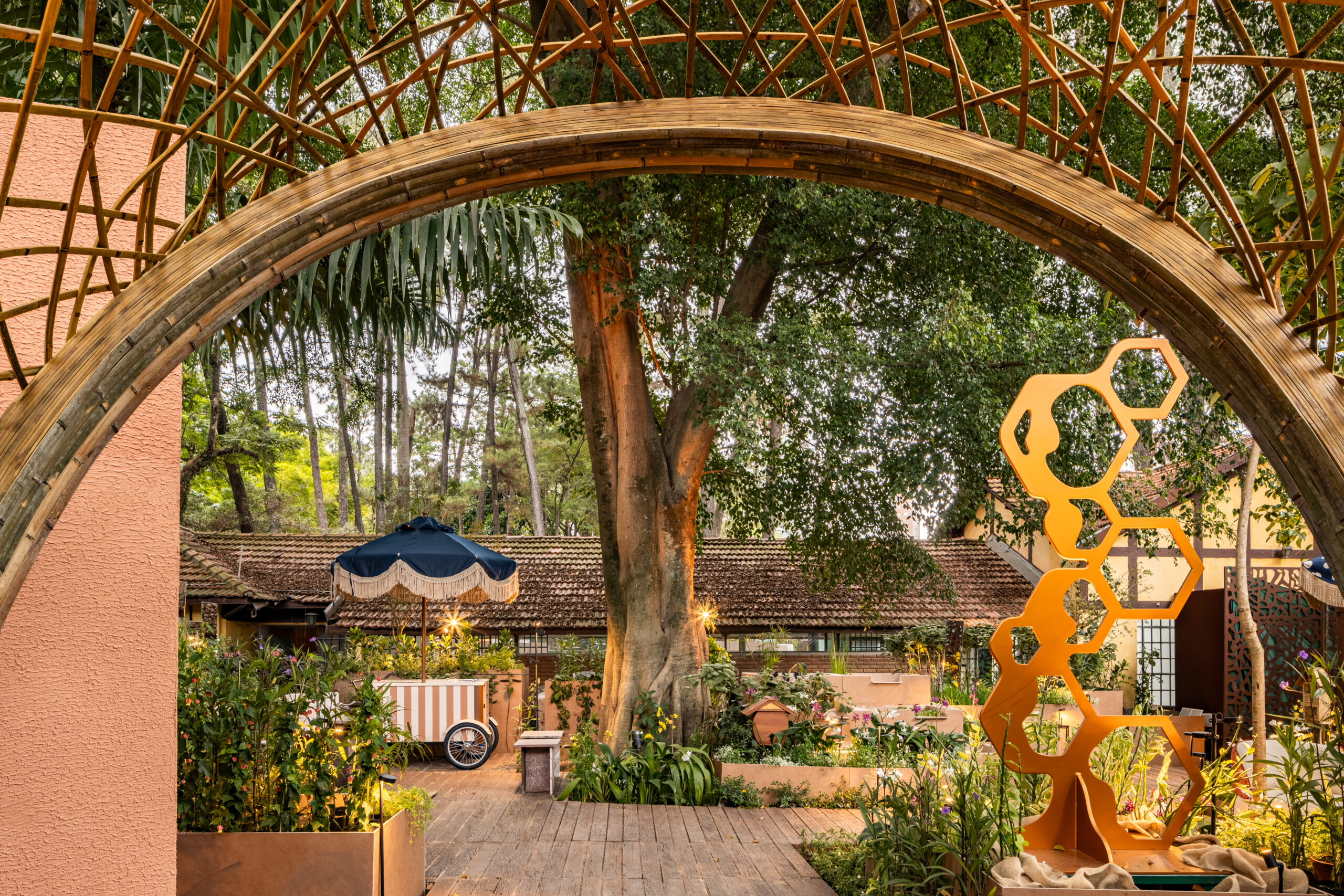
Jardim Respiro occupies 3,230 square feet at Parque da Água Branca, welcoming visitors with native species from four Brazilian biomes, organic decks and a bamboo geodesic dome. Photo: Courtesy CASACOR São Paulo 2026.
The 3,230-square-foot space designed by landscape architects Ana Lui and Karen Marini offers an immersive experience with species from the Atlantic Forest, Cerrado, Amazon and Caatinga and challenges imported aesthetic standards in Brazilian landscape design
SÃO PAULO — A 3,230-square-foot garden featuring native species from four Brazilian biomes, an integrated meliponary for honey tasting, and audiovisual projections on memory and the climate crisis marks the entrance of CASACOR São Paulo 2026. Designed by landscape architects Ana Lui and Karen Marini, “Jardim Respiro” opens the show at Parque da Água Branca on June 2 and runs through Aug. 9. Among the 65 projects in this year’s edition, themed “Mind and Heart,” the space is the first visitors encounter.
Founded in 1987 in Brazil, CASACOR is the largest and longest-running architecture, interior design and landscape show in the Americas. Present in more than 40 Brazilian cities and in other Latin American countries, the event brings together professionals from different creative fields annually in environments that reflect trends, behavior, innovation and new ways of living. The São Paulo edition is considered the most representative in the circuit, gathering leading names in national and international design and architecture.
Positioned as a transitional space between the fast pace of the city and the show’s more contemplative atmosphere, the garden leads visitors through different sensory stimuli before they reach any other space in the exhibition. A reflecting pool winds through the area at varying levels. Plant volumes at different heights create movement and depth. Amber-spectrum lighting establishes a welcoming atmosphere and reduces the impact on local birdlife.
“The garden was designed to be felt before it is understood. We wanted to create an emotional experience capable of awakening a sense of belonging, memory and genuine connection with nature,” said Ana Lui.
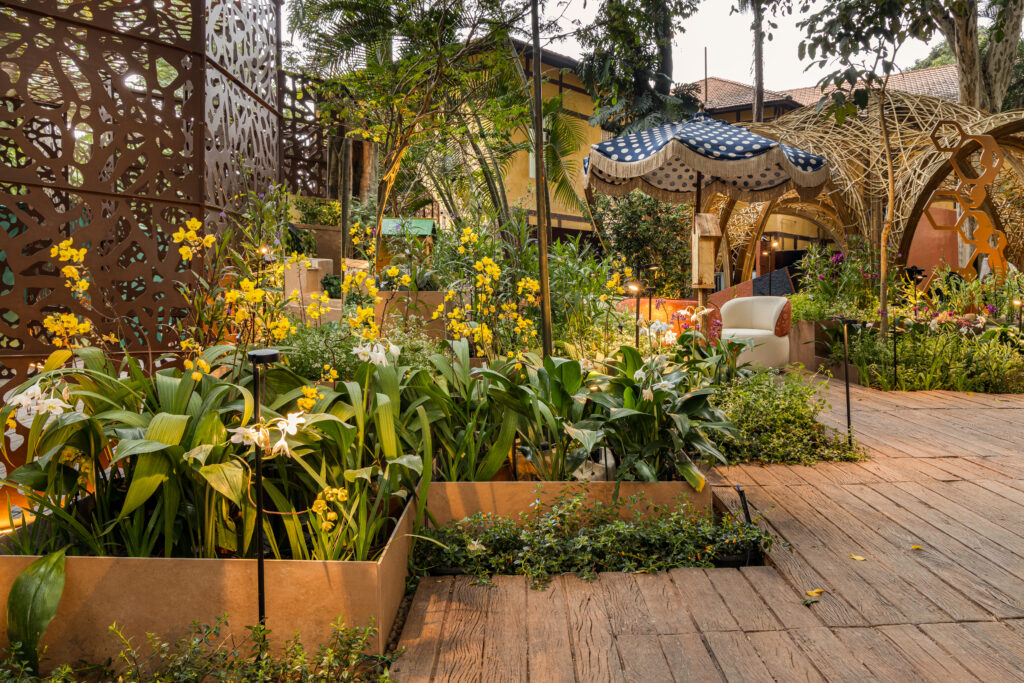
Raised Cor-Ten steel planters frame flowering native species including orchids and Ruelias, while a fringed parasol marks the central seating area on the organic wooden deck. Photo: Courtesy CASACOR São Paulo 2026.
Going against the common use of ornamental species of European or Mediterranean origin in Brazilian landscape design, the project relies exclusively on native plants that have little presence in the decorative market. Among them, a tree with silver-toned foliage stands out — visually similar to an olive tree, but of genuinely Brazilian origin. The choice quietly and effectively challenges the imported aesthetic standard that guides a significant portion of ornamental landscape design in the country.
Also part of the botanical composition, the Orelha de Onça contributes velvety-textured leaves with strong tactile appeal. With a sculptural presence defined by its canopy shape and trunk structure, the Tataré creates volumes of great visual impact. The exuberant Lírio do Amazonas occupies a prominent position in the space. The delicate Justicia carnea balances the overall composition. Ruelias in shades of pink and purple, alongside the flowering Tríalis, ensure a chromatic palette throughout the year.
Native to distinct biomes — the Atlantic Forest, Cerrado, Amazon and Caatinga — the selected species make an ecological and identity-driven argument about the richness of Brazil’s native flora and its capacity to compose sophisticated environments without sacrificing regional roots.
“The contemporary naturalism we proposed does not reject sophistication. It expands the concept of sophistication by including what is ours, what comes from here,” said Karen Marini.
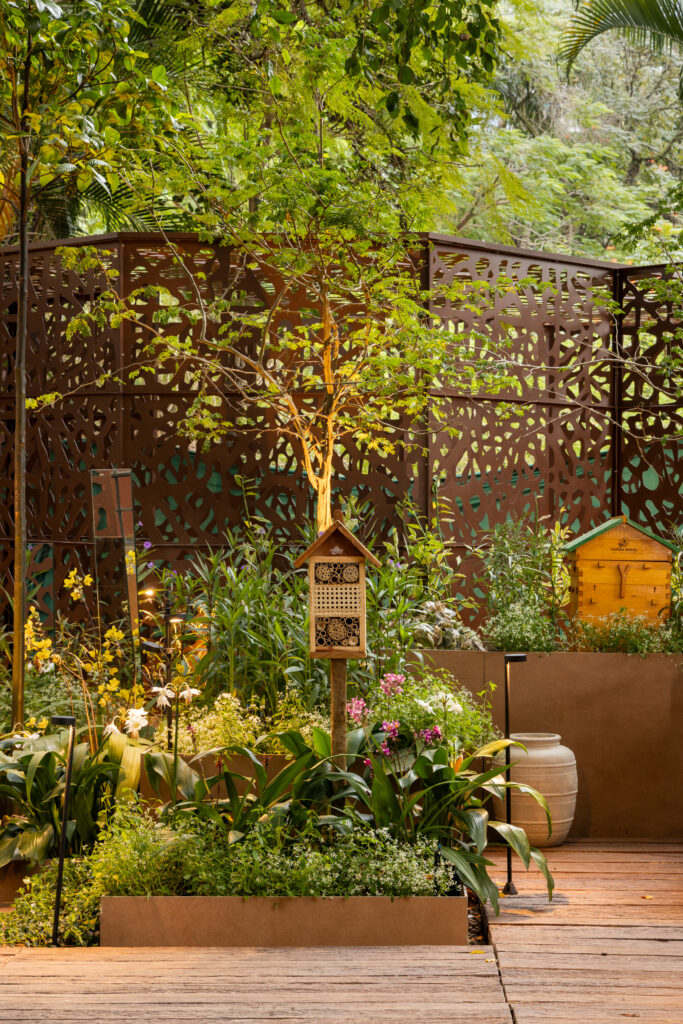
The integrated meliponary houses native stingless bees and allows visitors to taste honey, translating ecology into sensory and educational experience. Photo: Courtesy CASACOR São Paulo 2026.
Integrated into the garden, the meliponary houses native stingless bees and gives visitors the opportunity to taste honey, turning an ecological practice into a sensory and educational experience. Beyond fulfilling a pollination function, the space works as a narrative resource that brings the public closer to themes such as collectivity, collective intelligence and environmental regeneration in a concrete and accessible way.
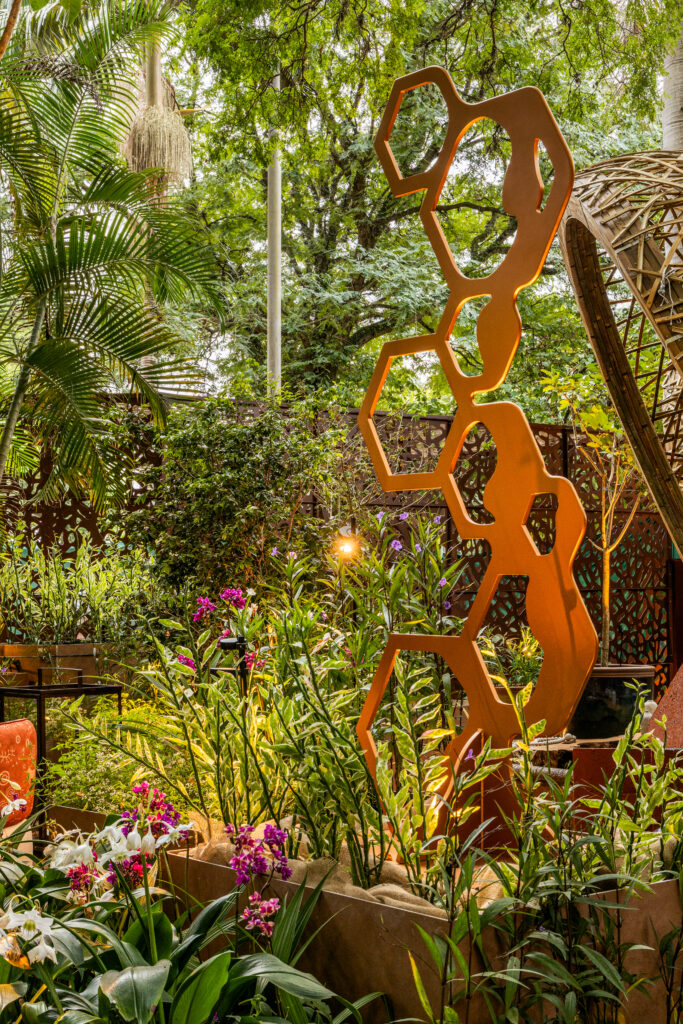
Sculptures inspired by honeycomb geometry fabricated in Cor-Ten steel punctuate the garden alongside orchids and tropical foliage. Photo: Courtesy CASACOR São Paulo 2026.
“Bees represent collective intelligence, balance and the continuity of life. Incorporating the meliponary into the project was a way of translating, in a sensitive manner, the relationship between nature, care and the future,” said Marini.
Organic decks structure the pathway and guide visitors without imposing rigid limits on the space. The furniture, developed exclusively for the environment, does not draw from catalog pieces. Sculptures inspired by the geometry of honeycombs are distributed throughout the garden. Strategically placed mirrors expand the perception of the landscape and create visual depth where physical space meets its limits.
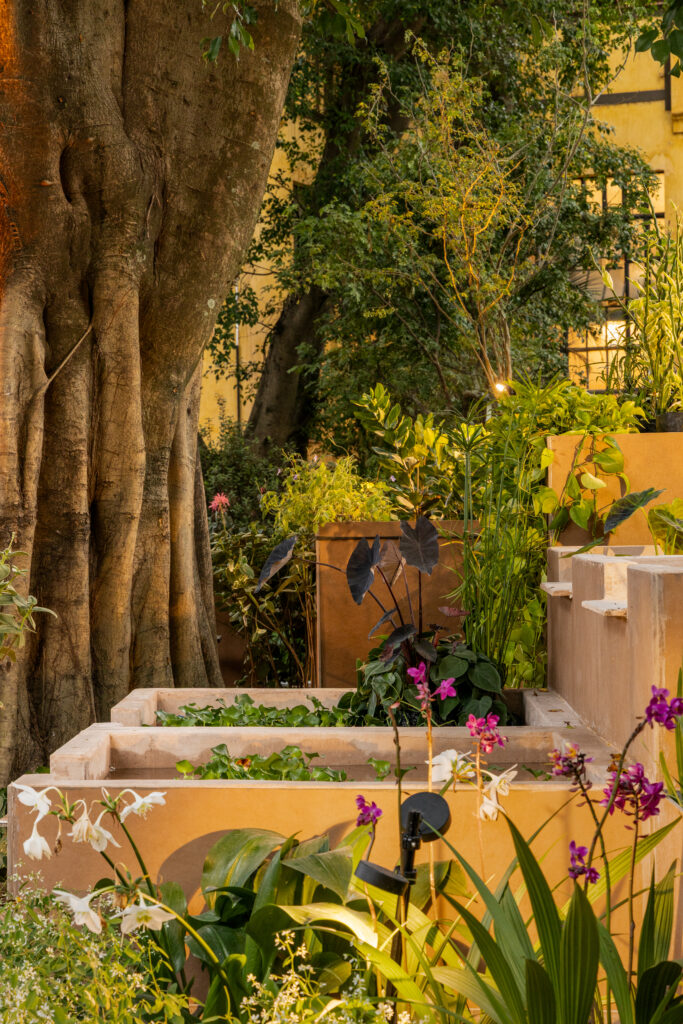
Warm amber-spectrum lighting, chosen to reduce impact on local birdlife, bathes the tiered planted beds at dusk — com bining Cor-Ten steel planters with a centuries-old tree at Parque da Água Branca. Photo: Courtesy CASACOR São Paulo 2026
Moving between memory, nature and climate urgency, the audiovisual projections were not incorporated as a decorative addition but as a narrative layer that expands the garden’s conceptual reach. The combination of living natural elements and audiovisual content about climate change establishes a productive tension: what exists today and what is at risk.
Sustainability and technology are integrated throughout the adopted solutions. A smart irrigation system operates with soil moisture monitoring to prevent waste. All lighting consists of energy-efficient LEDs. Recyclable materials were prioritized in the selection of construction components. The project also preserves the existing natural drainage at Parque da Água Branca and favors species that support pollinators, reinforcing the ecological chain of the surrounding area.
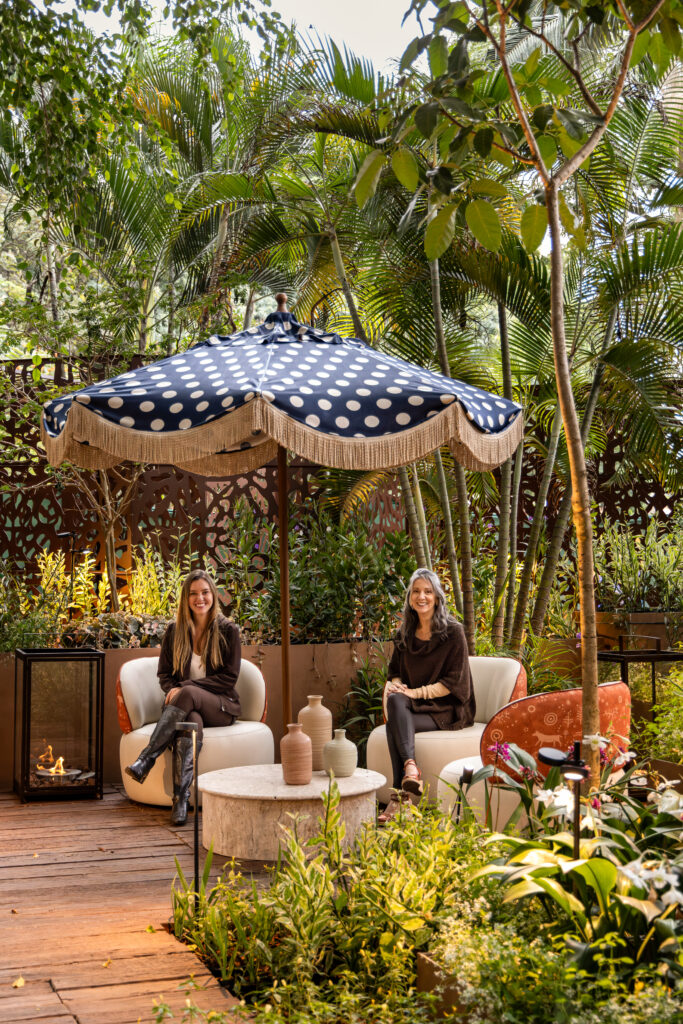
Karen Marini (left) a Ana Lui at Jardim Respiro, Parque da Água Branca, São Paulo. Their partner ship combines technical botanical expertise with a relational approach centered on well-being and sustainability. Photo: Courtesy CASACOR São Paulo 2026.
Behind the project, two distinct professional trajectories converge around a shared vision of nature’s role in inhabited spaces. Lui built her background at the intersection of engineering, interior design and landscape architecture — fields she integrates under the concept of “botanical landscaping for living and feeling.” The phrase encapsulates a practice that rejects the separation between technical rigor and subjective experience, between the project and the emotional, between what is calculated and what is felt.
A graduate in public relations and landscape design, Marini is a founding partner of Leve Paisagismo, a São Paulo studio working on residential, commercial and exhibition projects. Her approach is guided by the triad of aesthetics, functionality and sustainability, with a preference for lower-environmental-impact resources and consistent attention to client well-being. For Marini, landscape design is, above all, an instrument of quality of life and reconnection with the natural environment.
In “Jardim Respiro,” the partnership between the two professionals combines complementary perspectives with precision. Lui’s technical and scientific foundation meets Marini’s relational sensibility, providing the support needed to make the project both structurally sound and humanly meaningful. Neither vector overshadows the other: the result is an environment that is neither limited to decorative function nor exhausted by technical demonstration.
A direct expression of the “Mind and Heart” theme proposed for the 2026 edition, the garden responds to the show’s premise that reconnecting with oneself opens pathways to reconnecting with the world and to its regeneration. Before visiting any interior space, before making any choice of route, visitors pass through an environment designed to slow down, awaken and instill a sense of belonging.
Open to the general public, CASACOR São Paulo 2026 takes place at Parque da Água Branca, in the western zone of the state capital, from June 2 through Aug. 9. In addition to “Jardim Respiro,” the show brings together more than 65 spaces including architectural and cultural projects, art installations, shops and restaurants, offering a complete immersive experience in the worlds of architecture, art and sustainability.
CASACOR São Paulo 2026 · Parque da Água Branca · June 2 – Aug. 9, 2026