 Serpa
Serpa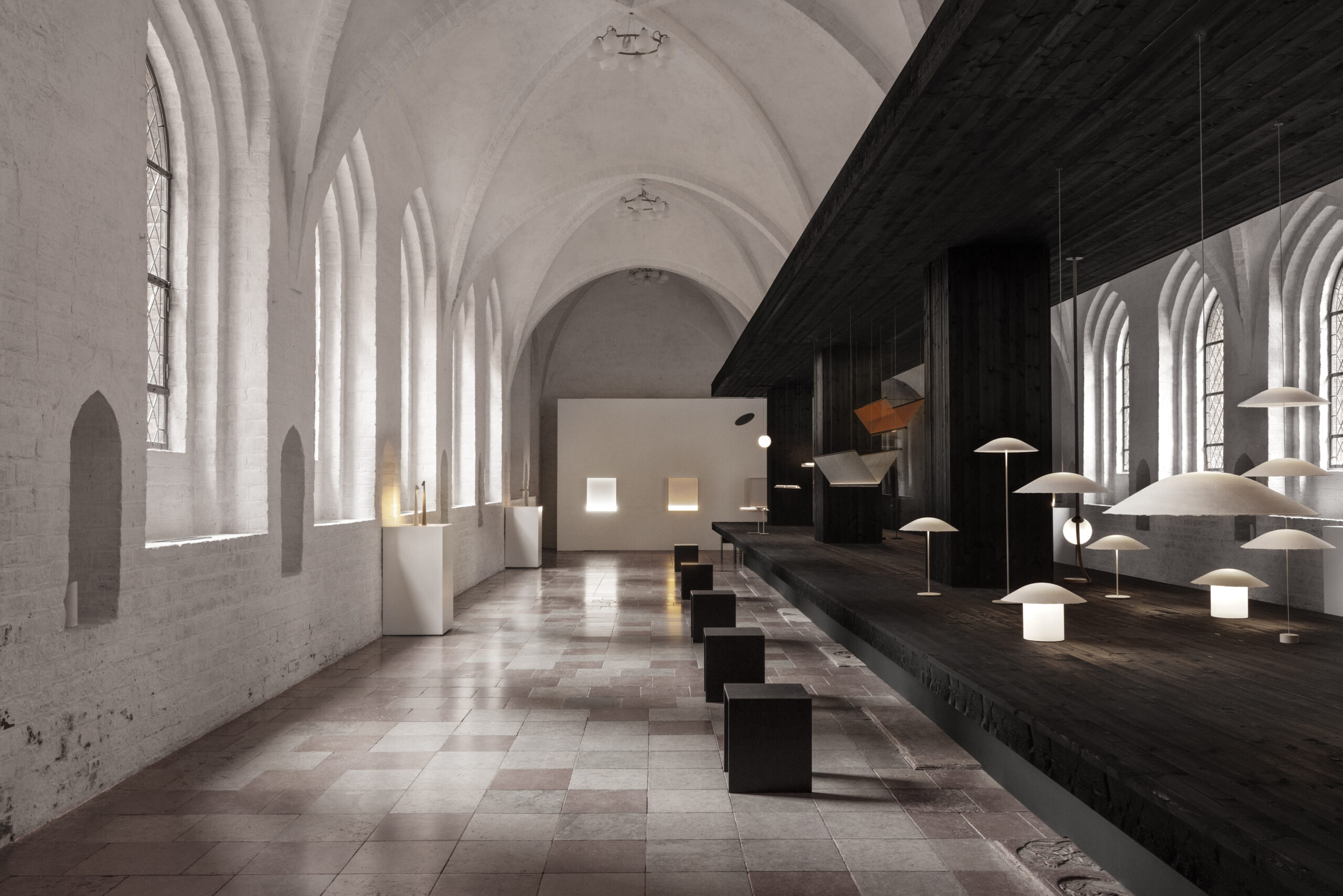
Copenhagen United Sound, Light and Historic Architecture at 3daysofdesign 2026 : Photo: Courtesy
Architect Gabi Almeida attended the June edition in the Danish capital and shared with Arch Gallery & Design the exhibitions that defined the event, from installations in industrial warehouses to interventions in museums and medieval buildings
3daysofdesign, one of Europe’s leading design events, brought together brands, designers and independent studios across different parts of Copenhagen in June 2026. Architect Gabi Almeida, who specializes in set production, photography styling and trend analysis, visited the Danish capital for the fifth time and shared with Arch Gallery & Design an overview of the exhibitions that defined this year’s edition.
What Was 3daysofdesign 2026
Regarded as Denmark’s official design festival, 3daysofdesign serves as a platform to showcase and celebrate the creativity of emerging and established talent, both Danish and international, presenting brands, launches and collections to a design-loving audience from around the world. This year’s edition ran from June 10 to 12, with programming spread across showrooms, galleries and studios throughout the city, open to the public with free admission to all exhibitions.
Spanning eight design districts, the festival adopted the theme “Make This Moment Matter,” bringing together brands, cultural institutions, studios and professionals around contemporary questions about design and the built environment. According to the event’s executive director, Signe Byrdal Terenziani, 3daysofdesign’s strength lies in its growing international presence, which has established the festival as one of the key fixtures on the global design calendar.
Figures released by the organization show the scale of the event: Copenhagen welcomed roughly 120,000 visitors over the three days, with presentations extending across waterfront districts from Christianshavn to Islands Brygge. Room was also made for emerging names on the international scene, including the “White Label Project” group, which brought together 14 female artists from countries such as Mexico, Peru, South Africa, Morocco, India and Thailand.
Danish prominence in this field is nothing new. Built on names such as Arne Jacobsen, Hans Wegner, Finn Juhl and Poul Henningsen, the movement known as Danish Modern established, from the mid-20th century onward, a distinctive language of simplicity, functionality and craftsmanship that went on to influence design worldwide and still guides the country’s contemporary production. Century-old brands such as Fritz Hansen, Fredericia, Carl Hansen & Søn and Kvadrat helped turn Denmark into a global design destination between the late 19th century and the 1960s. Today, Denmark’s creative industries generate billions of euros, most of it tied directly to design-related activities. Copenhagen reinforces this standing through architecture as well: the city was named World Capital of Architecture by the International Union of Architects for 2023-25, a title awarded for its human-centered and sustainable approach to urban planning.
Against a backdrop of economic instability and global conflict, the theme chosen for 2026 sought to spark reflection and invite the design community to create with intention and attentiveness to the present moment. It was within this context that Gabi Almeida’s coverage for Arch Gallery & Design took shape, highlighting exhibitions in Papirøen, at the Thorvaldsens Museum and at historic sites throughout the Danish capital.
Papirøen Hosts DEORON’s Debut
Set up on Papirøen, Copenhagen’s Paper Island, in the Holmen district, DEORON made its debut in the city with an exhibition in a 600-square-meter industrial warehouse with seven-meter ceilings. More than 50 brands, designers and independent studios devoted to furniture, lighting, home goods, technology and lifestyle occupied the space.
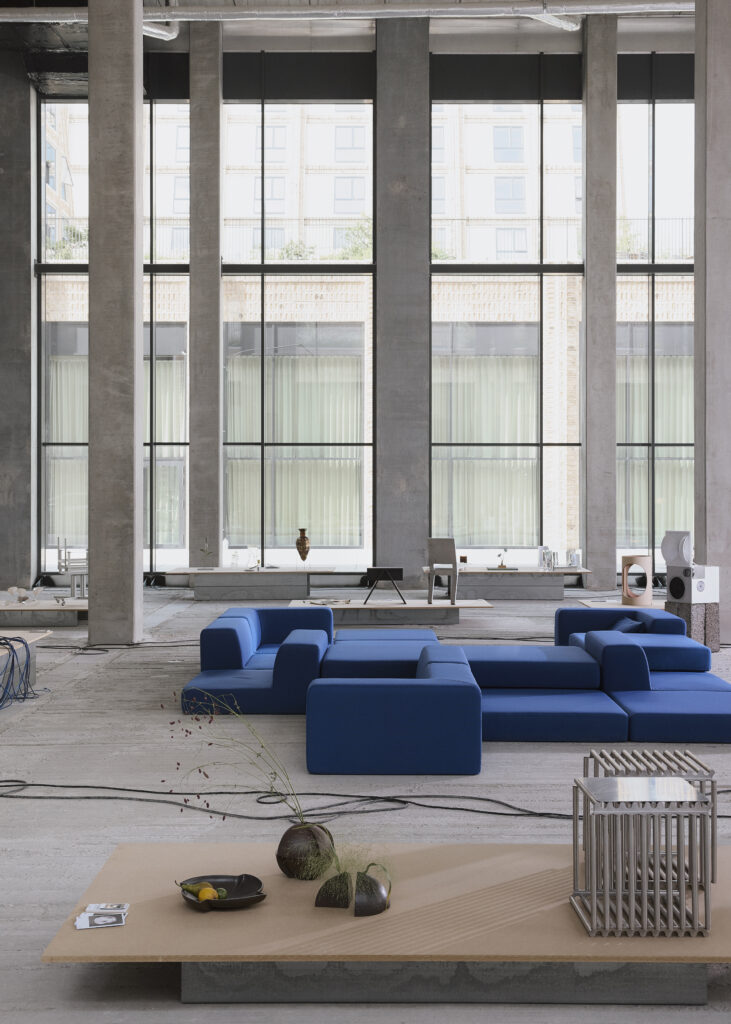
The industrial warehouse in Papirøen was filled with upholstery modules and pieces from international brands for DEORON’s debut in Copenhagen. Photo:Claus Troelsgaard
International and local creators exhibited side by side, some appearing in Copenhagen for the first time, others returning after taking part in the Salone del Mobile in Milan in April 2026. “Sound plays a central role in the experience,” Gabi Almeida said. A sculptural sound system ran throughout the day, with listening sessions, live performances and informal gatherings.
With its own curatorial approach, DEORON avoided distinctions by scale or market segment, bringing together different origins, aesthetics and perspectives in a setting built around dialogue between visitors and exhibitors. Papirøen, a former paper warehouse in the port of Copenhagen, has become in recent years one of the city’s most dynamic destinations for architecture, design, gastronomy and contemporary culture.
During the event, the area welcomed brands such as FLOS, BOLIA, Ferm Living, Louis Poulsen, HEM, Marazzi, Dornbracht and Cane-line, cementing the island’s status as one of the highlights of the program.
Dialogue Between Historic and Contemporary Design
Distinct in its approach, the House of Finn Juhl exhibition offered a contemporary reading of the Danish designer’s universe, engaging in dialogue with works of art and in collaboration with Sea New York. The partnership resulted in textile interventions applied directly to furniture pieces signed by Finn Juhl, one of the foundational names of 20th-century Scandinavian design.
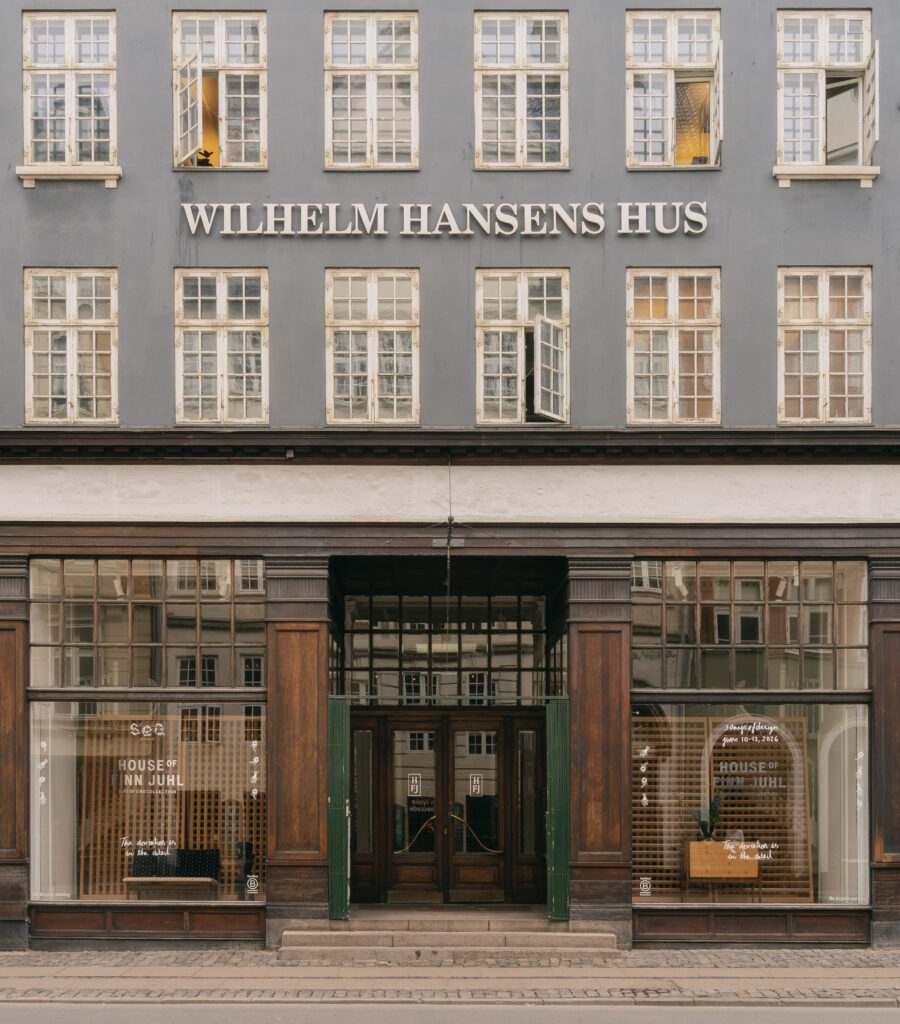
The facade of Wilhelm Hansens Hus, the headquarters of the House of Finn Juhl in Copenhagen, displayed the 3daysofdesign 2026 program in its windows. Photo:House of Finn Juhl
Elsewhere in the city, Vibia occupied a historic medieval building with an installation that used light to build immersive atmospheres. The intervention explored the contrast between the building’s ancient architecture and the contemporary language of the Spanish brand’s light fixtures.
Materials and Sensations at “Composed Matter”
“Composed Matter,” an exhibition by the Danish firm Norm Architects, brought together three brands with distinct profiles, Søuld, Sumum and Motarasu, in a sensory exploration of materials, light and space. Curated with a spatial design by the firm, the exhibition was organized as a quiet journey in which eelgrass, light and worked surfaces were presented not merely as functional elements but as carriers of atmosphere, texture and meaning.
Installations along the route gradually revealed the properties of each material through touch, rhythm, reflection and absorption. Rather than standing as isolated objects, each piece was treated as part of a broader spatial composition in which light and shadow acted as active elements of the experience.
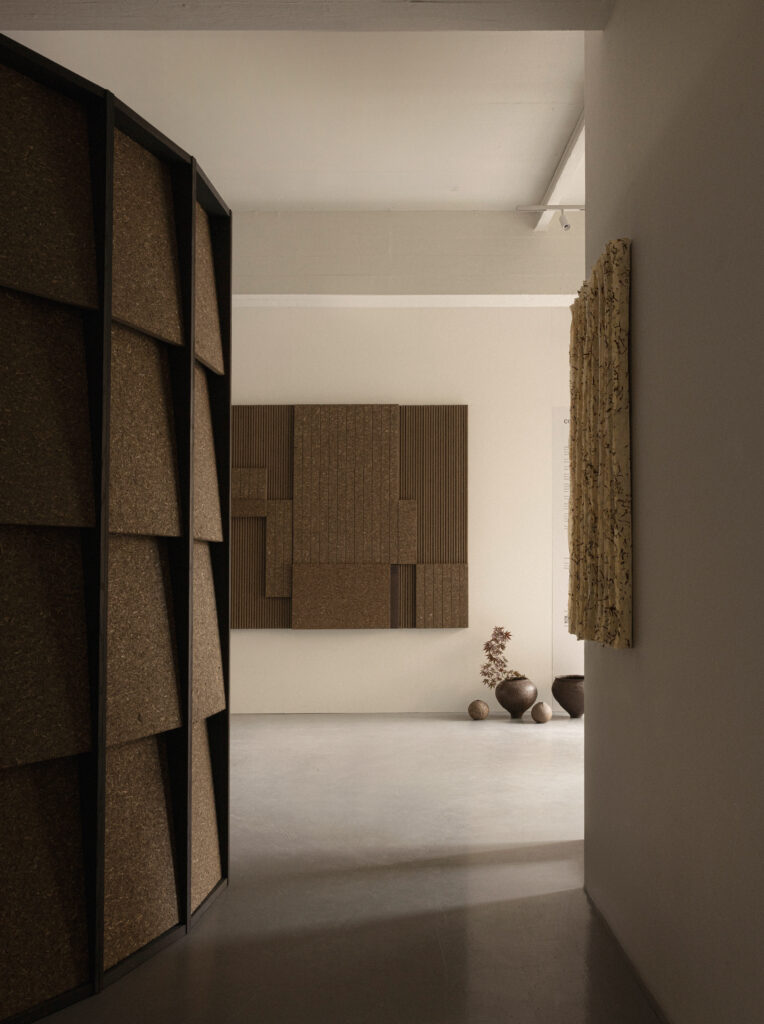
Seagrass panels by Søuld formed part of the silent walkway designed by Norm Architects for the “Composed Matter” exhibition. Photo: Jonas Bjerre-Pedersen and Karl Tranberg
Founded in 2010, Søuld is a Danish manufacturer of acoustic materials made from eelgrass, with carbon dioxide (CO2) storage properties and recycling potential. The company develops functional, aesthetically refined alternatives to traditional building materials, with an emphasis on human well-being as well.
Soft geometries guided visitors’ movement through the space, while moments of spatial compression and openness shifted the exhibition’s emotional tone, according to the description the architect gave to this publication.
From Drawing to Ritual: “The Drawing Room” and “Bread and Butter”
Stories about the creative process were at the heart of “The Drawing Room” exhibition, presented in a partnership between TABLEAU and Secolo. The installation turned drawing into an immersive experience, with furniture, objects and interactive settings arranged to highlight the stages of creation behind the pieces on display.
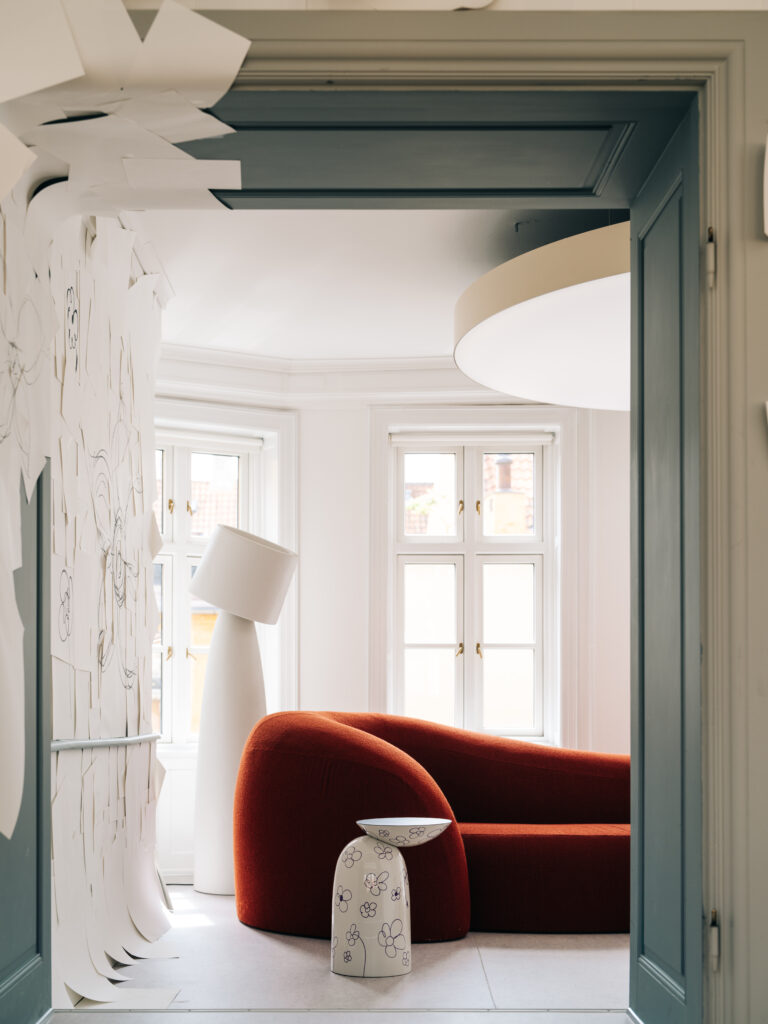
A Pelle Vittoria armchair and a bronze sculpture shared the space with a panel of wooden slats in the exhibition The Drawing Room, curated by TABLEAU and Secolo. Photo: Adam Katz Sinding
Looser ideas shaped Fatboy’s presence, with a selection of furniture, lighting and accessories set up aboard a boat in the port of Copenhagen. The choice of venue reinforced the light, informal reading the brand proposed for contemporary design in this year’s edition.
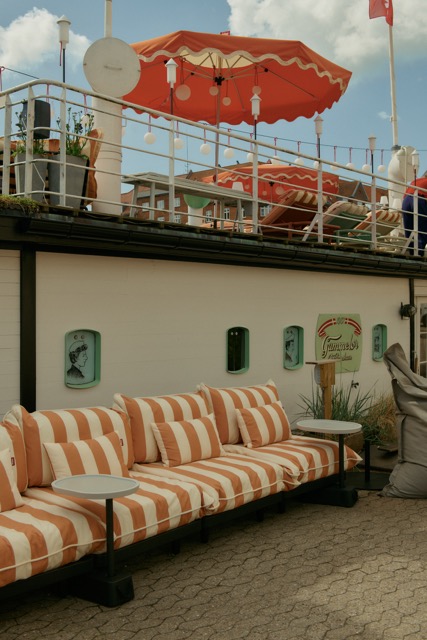
A striped sofa took center stage on the deck of a boat anchored in the port of Copenhagen, the setting chosen by Fatboy for its exhibition at this year’s event. Photo: Stefania Zanetti
Self-care rituals, meanwhile, were the theme of the exhibition “Bread and Butter: Perfect Pair in Bathing,” which took over one of the city’s public bathing areas. Photographed by Peter William Vinther and curated by Ae Office and Pyeori Jung, the exhibition belongs to a series that examines everyday rituals through pairs of objects, turning spaces such as bookstores, salons, restaurants and saunas into stages for collaboration among designers of different generations and cultural backgrounds.
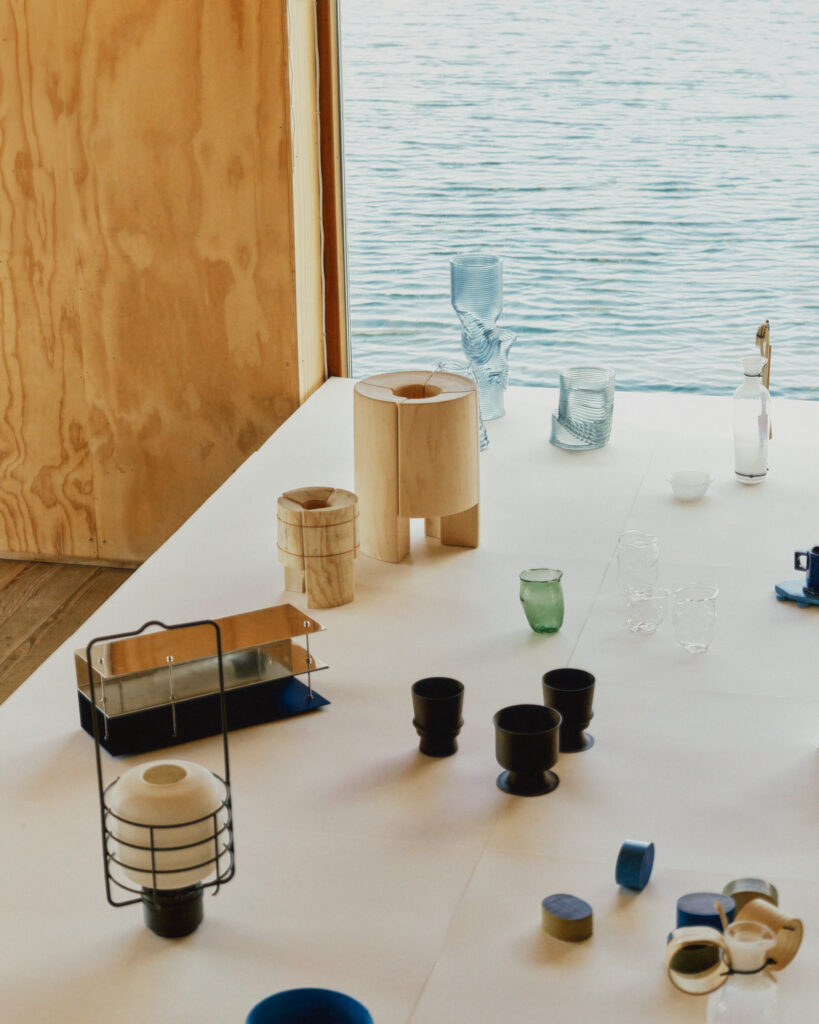
Glasses, goblets, and glass and metal utensils were arranged on a table by the water in the exhibition “Bread and Butter: Perfect Pair in Bathing.” Photo: Peter William Vinther
When two objects are placed side by side, the curatorial concept holds, they reveal relationships that a single piece could not show on its own. The series’ first edition, “Perfect Pair in Dining,” was presented at 3daysofdesign in 2025, focusing on the ritual of the meal. Its second installment, centered on bathing, continued the investigation this past June, and a third edition, focused on another everyday ritual, is planned for November 2026 in Seoul.
Future Cutlery and Historic Collections
Cutlery of the future was the theme of the exhibition “Knife, Fork, Spoon 3.0,” presented by Marta and Dung Ngo. The show brought together 12 designers in an investigation of 3D printing applied to cutlery design, with photography by Johanna Hvidtved.
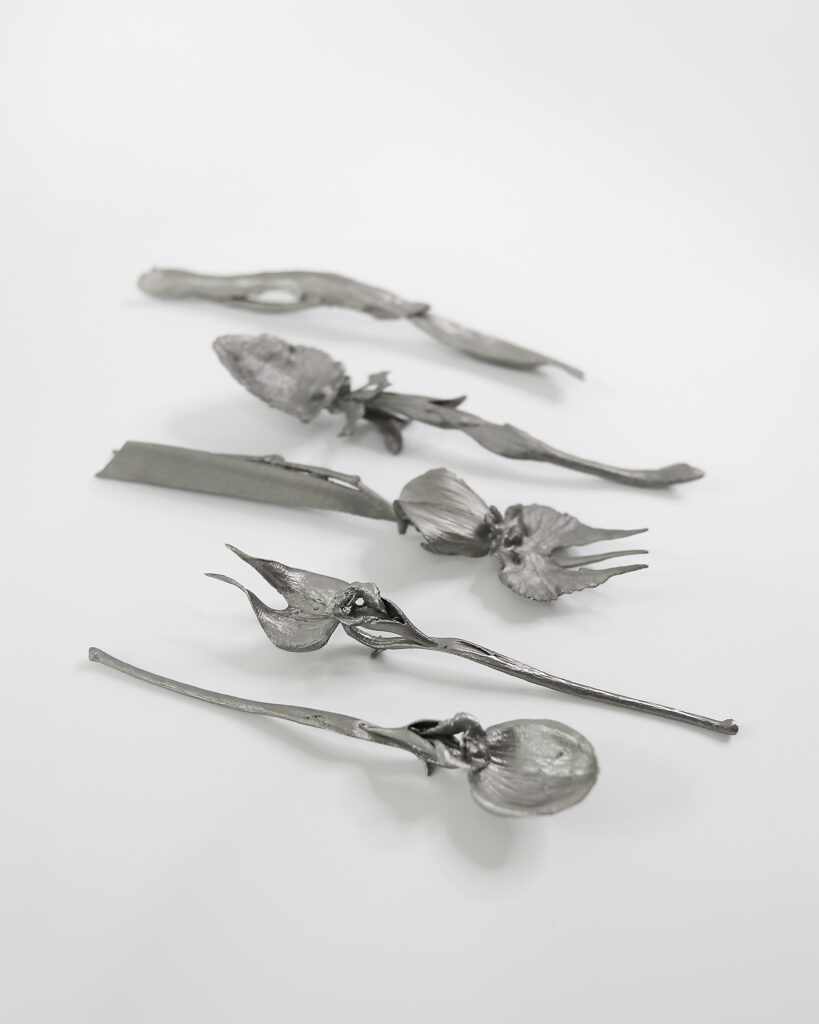
Sculptural metal pieces, created using 3D printing, were part of the research on the future of cutlery at the “Knife, Fork, Spoon 3.0” exhibition. Photo: Johanna Hvidtved
Historic museums also made it onto the itinerary. At the Thorvaldsens Museum, the exhibition “Objects of Desire” presented contemporary design work with an emphasis on materials, technique and production processes, standing in direct contrast to the institution’s permanent neoclassical collection.
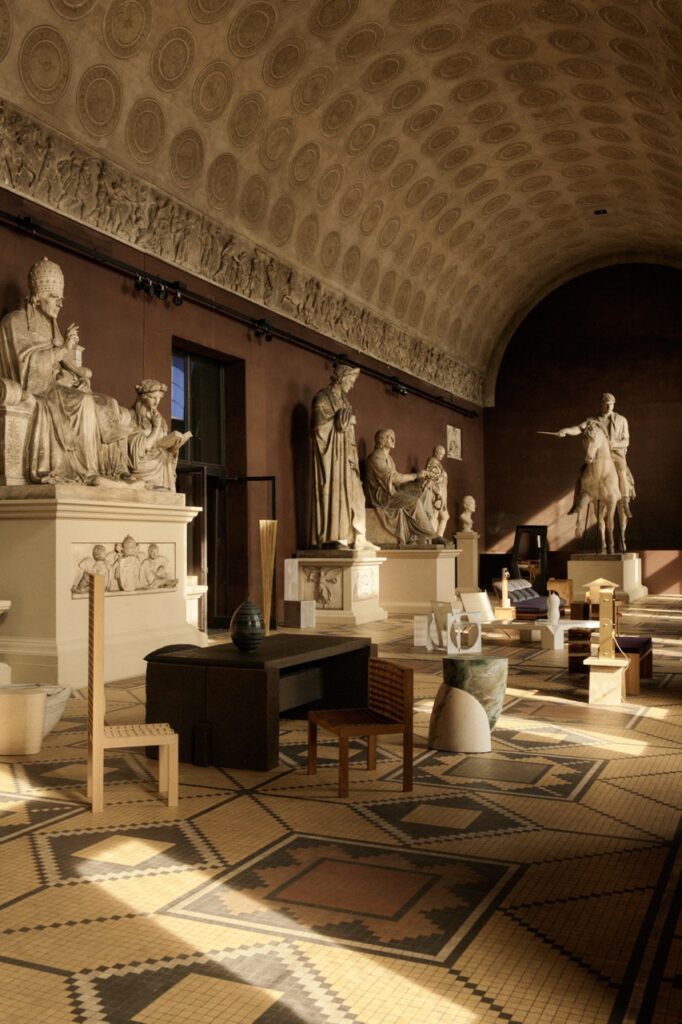
Contemporary design pieces shared the Thorvaldsens Museum’s exhibition hall with the institution’s neoclassical sculpture collection. Photo: Stefania Zanetti
New releases from the Danish brand Audo closed out the architect’s account. Named “Quiet Grandeur,” the exhibition showcased recent launches, a vinyl bar with cocktails, film screenings and installations that expanded the design experience throughout the brand’s concept house in Copenhagen.
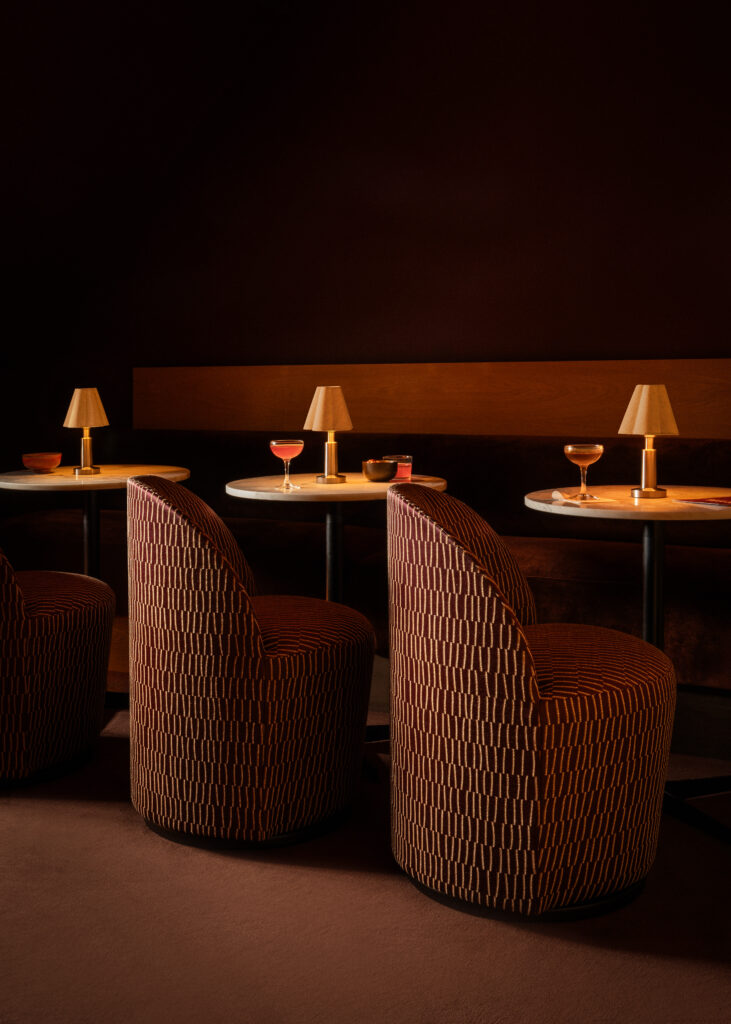
Upholstered armchairs and portable lamps set the mood at the vinyl bar set up by Audo for the “Quiet Grandeur” exhibition. Photo: Courtesy
Gabi Almeida’s Professional Path
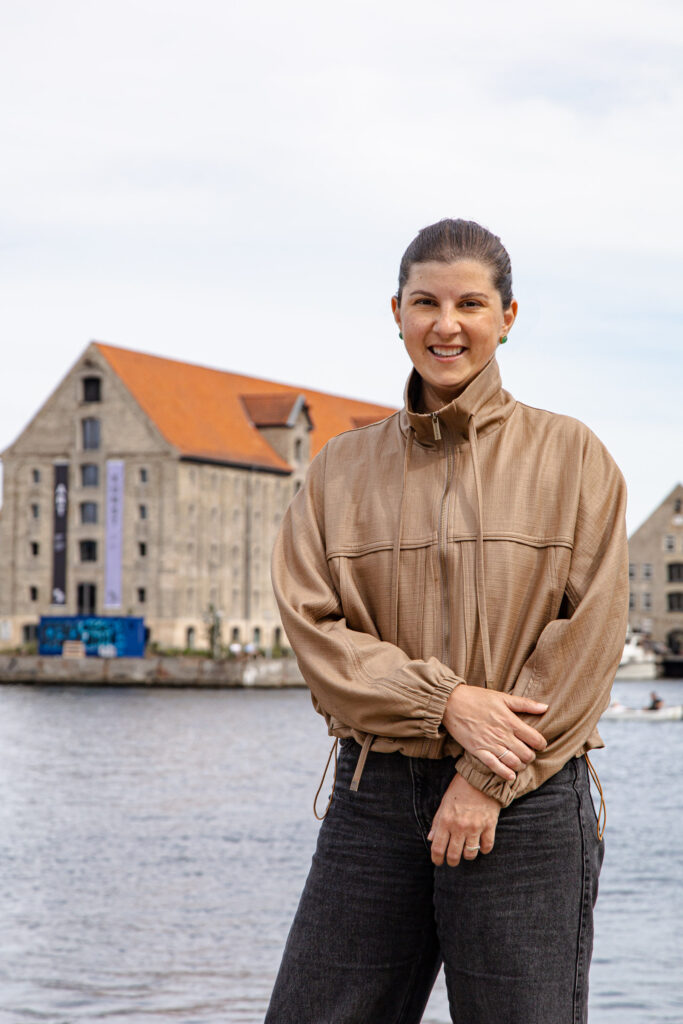
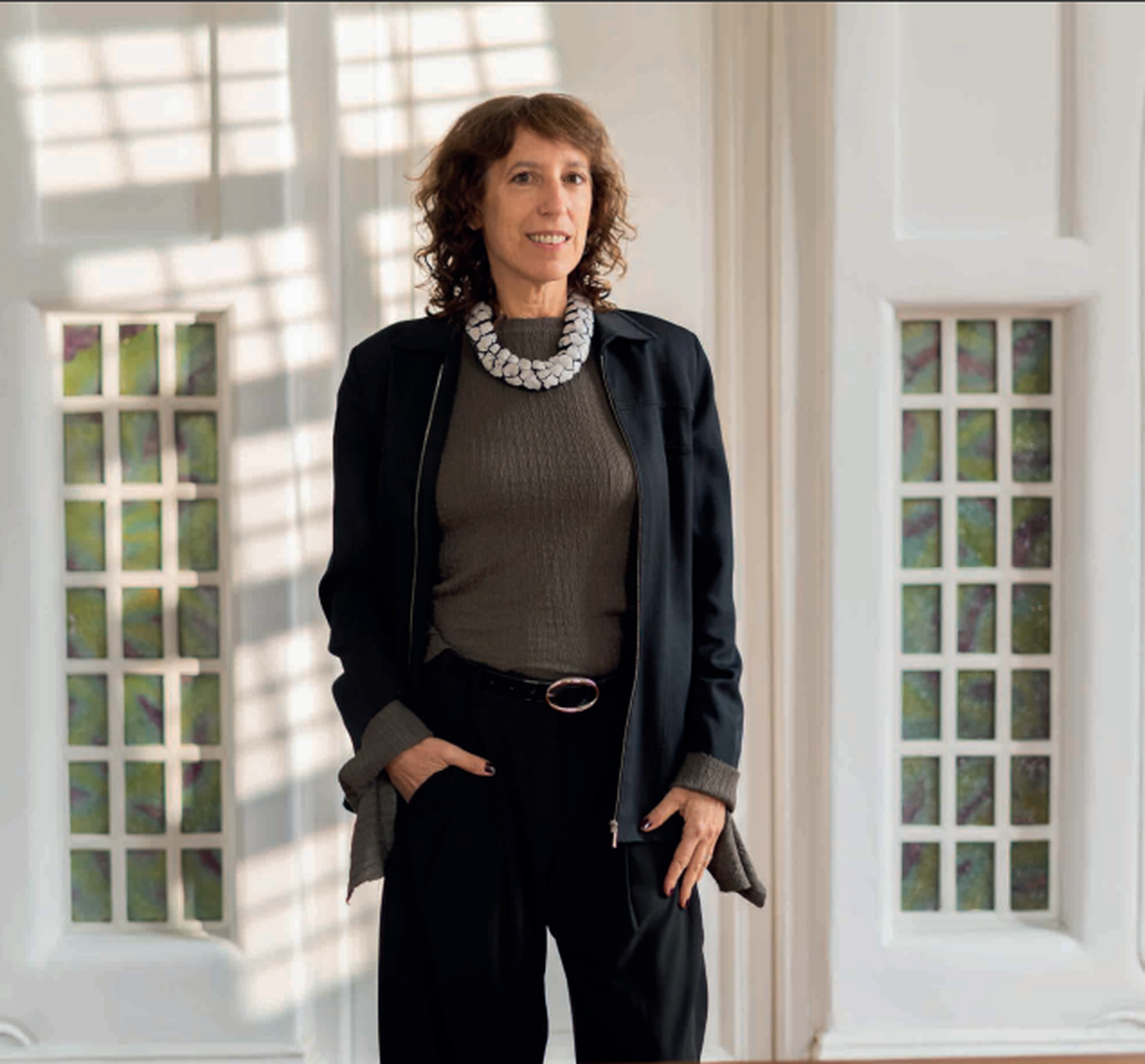
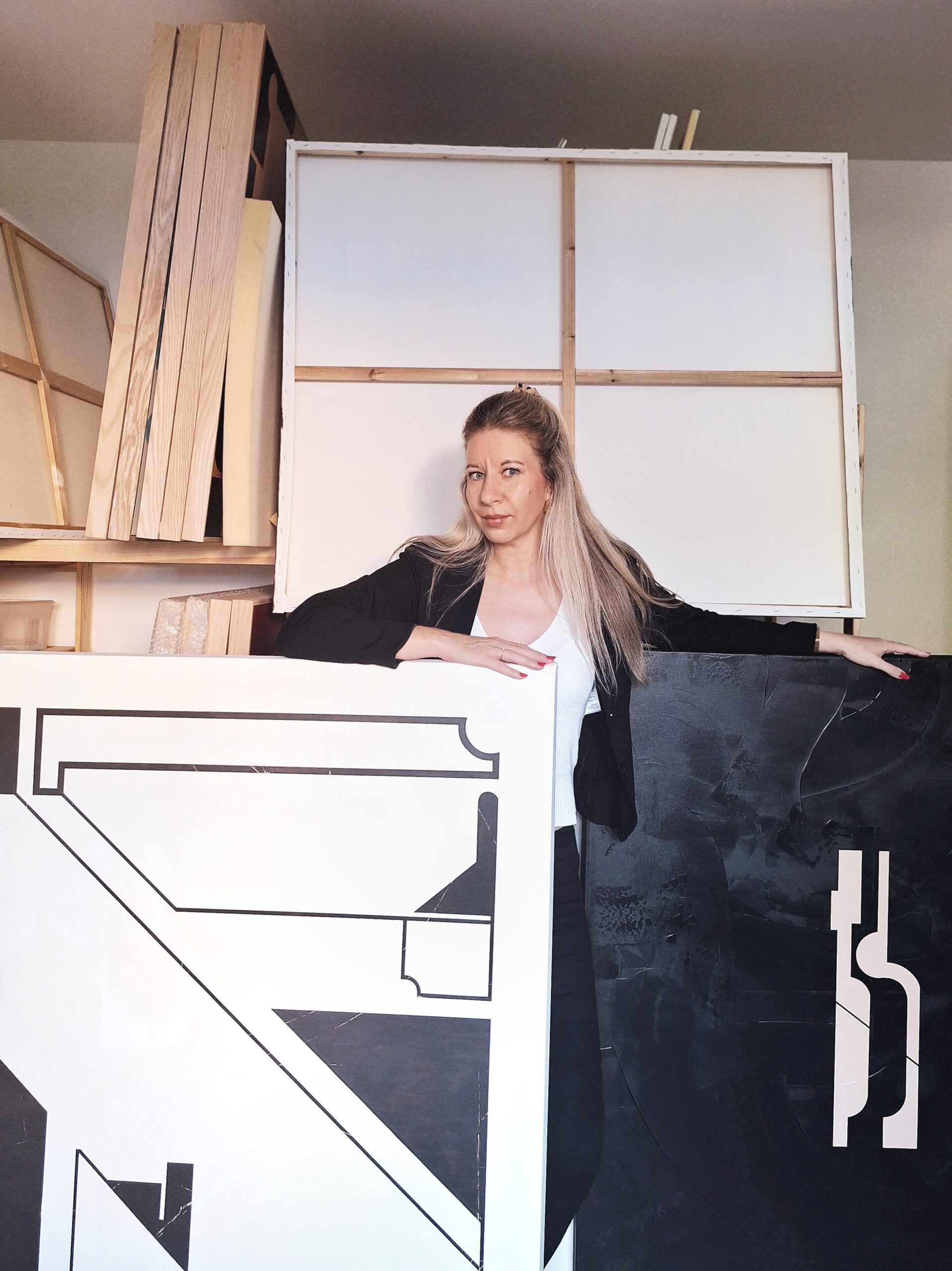
Gabi Almeida : Photo Lucas Reitz
Recognized for her work in set production and styling, Gabi Almeida has worked as a set designer for TV Globo, where she created sets for soap operas produced at Projac, in addition to running her own architecture practice. She has also taken part in advertising campaigns, trend research, set design and productions for companies such as Farm Rio, Portobello, DW! SP, Estudiobola and Live!.
A regular presence at international design events, the architect has covered 3daysofdesign, the Prague Quadrennial, the Salone del Mobile in Italy and The Salon in the United States, along with editions of the Expo in Dubai and Milan. Copenhagen, she said, held a particular place on that itinerary for bringing together historic architecture, contemporary production and a sound-driven atmosphere that ran through nearly every exhibition in June.
Instagram: https://www.instagram.com/gabiialmeida/