 Serpa
Serpa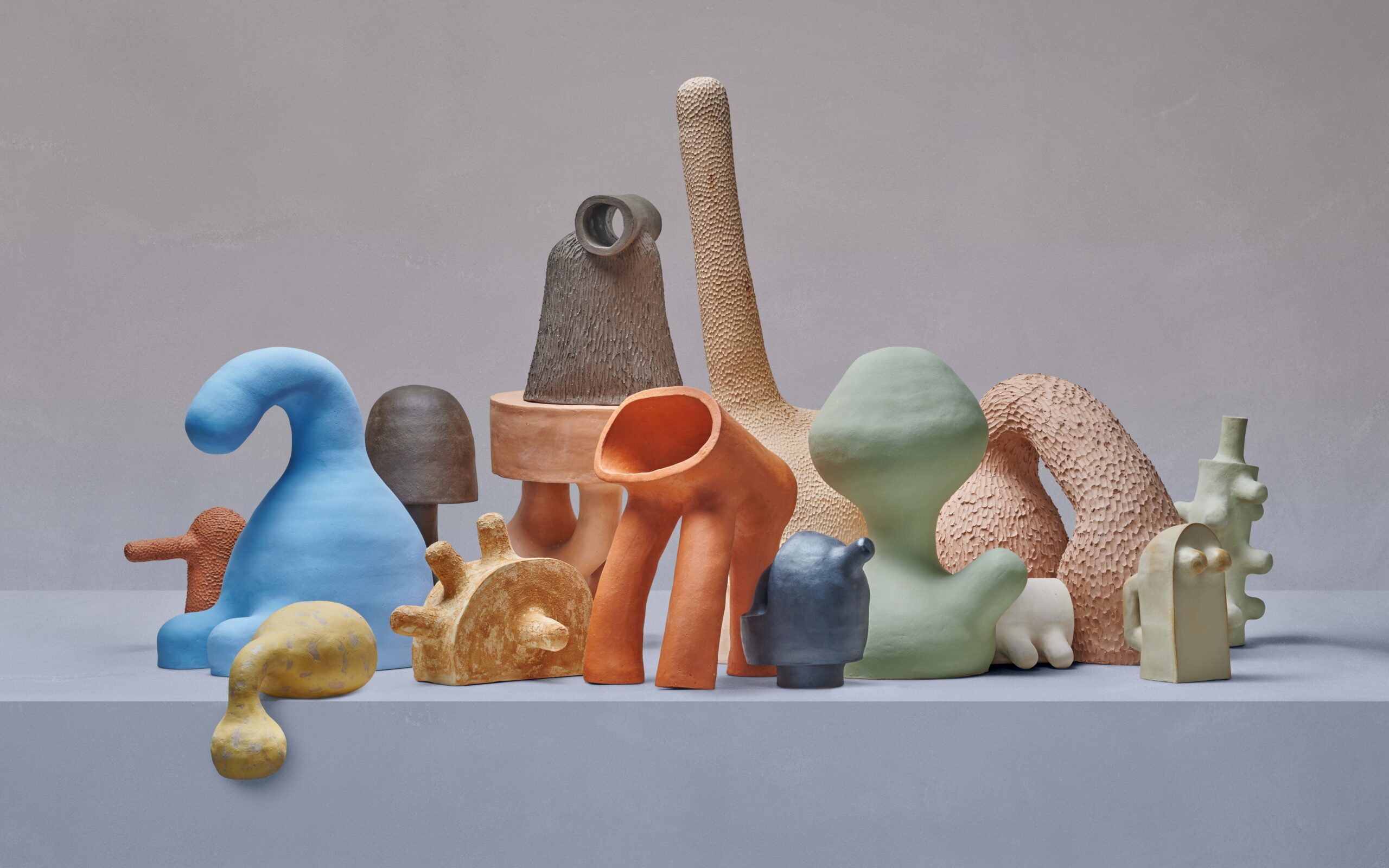
Ceramic beings – Photo Pim Top
Quin Scholten creates ceramic sculptures that refuse the status of object and propose a new mode of encounter between humans and things
Dutch artist Quin Scholten does not make objects. At least, that is what he himself argues. Forms that emerge from his hands, shaped in clay, sketched in pencil, fired in a kiln, or displayed in Oslo galleries, want to be called beings. They have curiosity. They have presence. And, according to Scholten, they also have something to say about the world around them.
Born in 1998 in the Netherlands, Scholten completed his master’s degree in ceramics at the National Academy of the Arts in Oslo, KHiO, in 2025, following an undergraduate degree in product design. His unusual trajectory, from industrial design to fine arts, is not accidental. It is, rather, the axis around which all of his research revolves.
“My background in design gave me a critical stance toward mass production and consumer culture,” the artist explains, working out of his studio in the Romsås neighborhood of Oslo. “Objectification of things, landscapes, humans, and other forms of life is a dominant force in that system. My work tries to propose something else.”
From design to clay: a critique in sculptural form
Moving from design to ceramics was also a conceptual shift. Working with clay, Scholten found a material that resists standardization, that carries the marks of process, and that holds the memory of touch. Rather than replicating forms, he negotiates them with the wheel, with tools, and with chance.
At the center of this negotiation sits “Tornado Vessels” (2025), an ongoing research project that the artist himself describes as “a conversation between the clay, the potter’s wheel, the tools, me, and other creatures around me during the process.” Already in the title, the intention is clear: there is no sovereign artist molding a passive material. There is an encounter between agents.
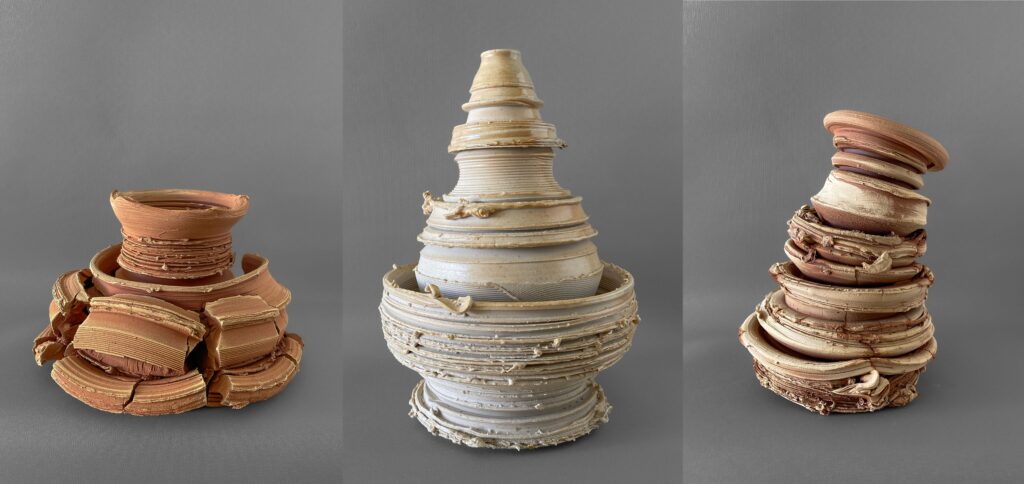
“Tornado Vessels” – Photo Quin Scholten
This idea of encounter runs through all of his work. In “Where We Meet” (2025), a series of beings presents and embodies acts of squeezing, pouring, flowing, channeling, polluting, fertilizing, transporting and containing. Forms do not illustrate these verbs, they embody them. They are bodies that do things, that exist in relation, that exist in time.
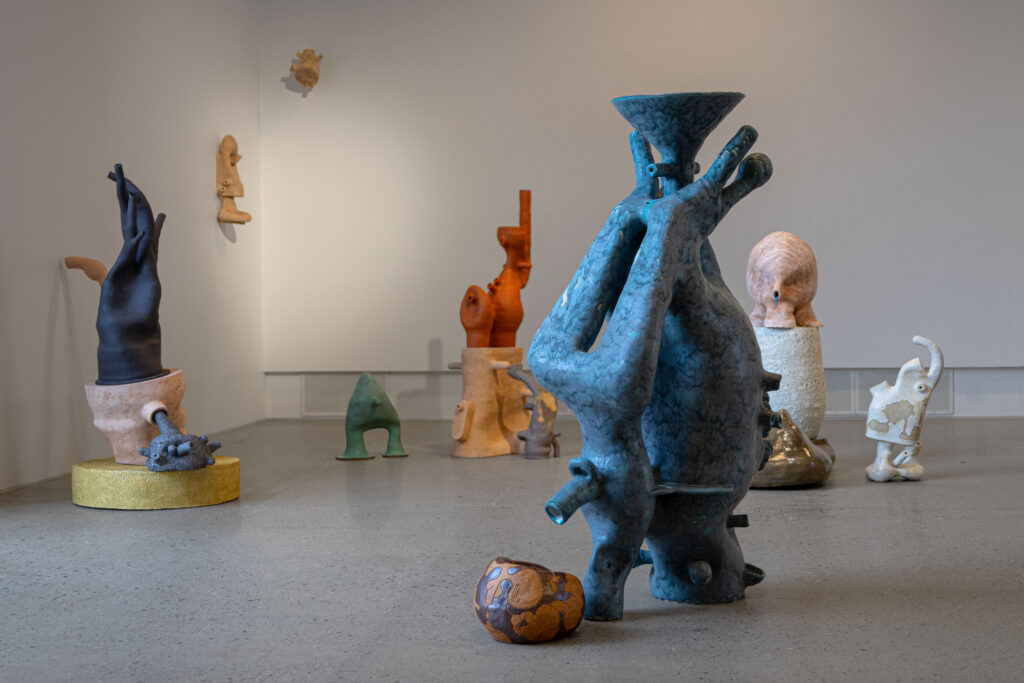
“Where We Meet” – Photo Quin Scholten
Beings that no longer want to be called objects
Perhaps the series that most clearly articulates Scholten’s project is “Once We Were Objects” (2023). Made up of ceramic sculptures accompanied by an illustrated booklet, the work departs from an almost manifesto-like premise: the figures present there no longer want to be called objects. They prefer to be called beings.
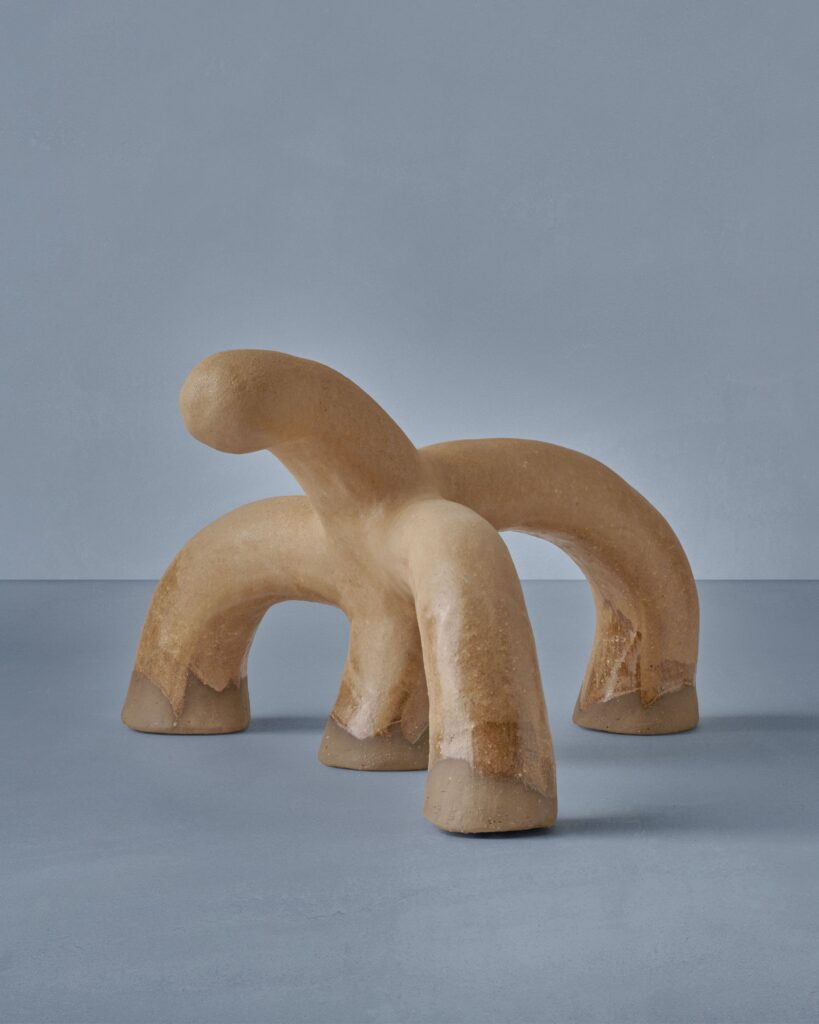
“Once We Were Objects” – Photo Pim Top
Such a declaration may sound provocative or naive, but it points to a serious philosophical question that runs through contemporary debates on animism, ontology, and the limits of humanism. When we reduce the world to manipulable objects, Scholten argues through his sculptures, we lose the ability to relate to it in any genuine way. Objectification is not only an ethical problem: it is an impoverishment of experience.
In “Trolls” (2024), this critique takes on ecological contours. Depicted are trolls trying to survive on mountains that are crumbling, sinking, being hollowed out, and squeezed. At once mythic and urgent, these are creatures that inhabit the natural landscape being destroyed alongside it. Humor implicit in the choice of trolls, figures from Scandinavian folklore, does nothing to soften the gravity of the situation they portray.
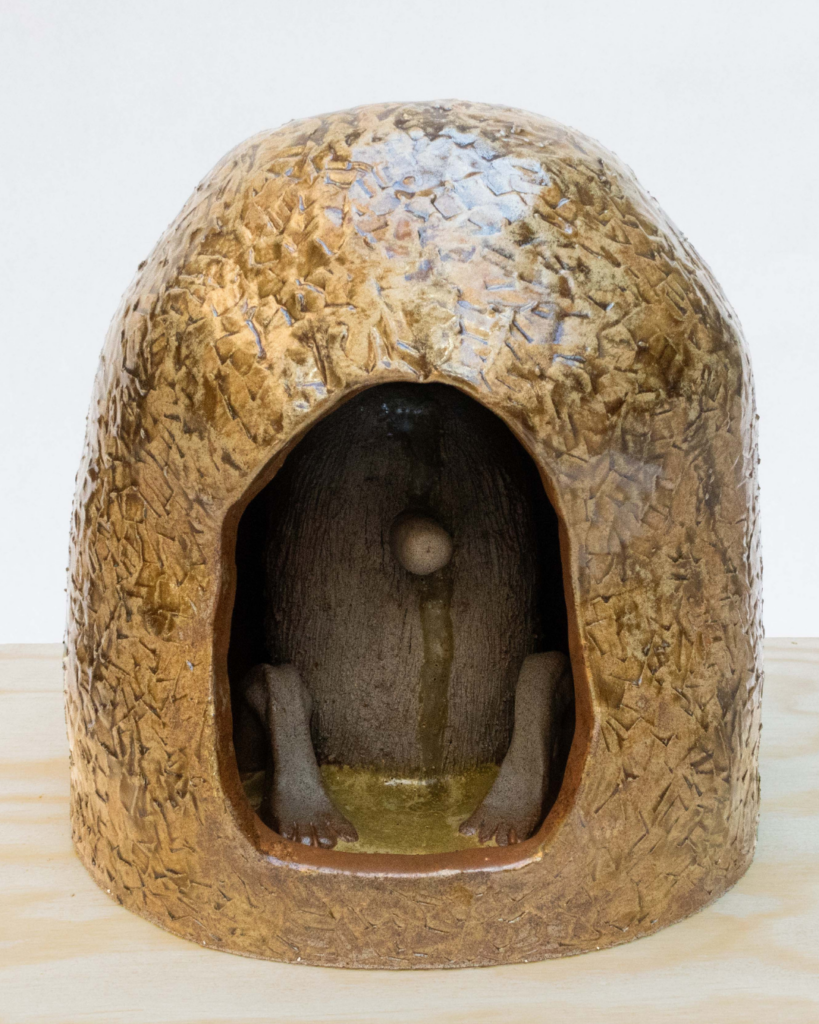
“Trolls” – Photo Tio2 project
A presence in Oslo’s galleries
Throughout his career, Scholten has shown his work in significant spaces within the Norwegian art scene. In 2025, two large-scale sculptures were part of the group exhibition “In The Corner Of My Eye” at RAM Galleri, one of Oslo’s most respected galleries. He has also exhibited at Velferden Scene for Samtidskunst and Galleri Seildukken.
Composed of glazed sculptures finished with Titanium Rivulet glaze, “Pitchers” (2024) demonstrates another dimension of his research: an attention to the surface qualities of ceramics, to the way glaze runs, settles, and transforms the final form. Here, accident is not an enemy; it is a collaborator.
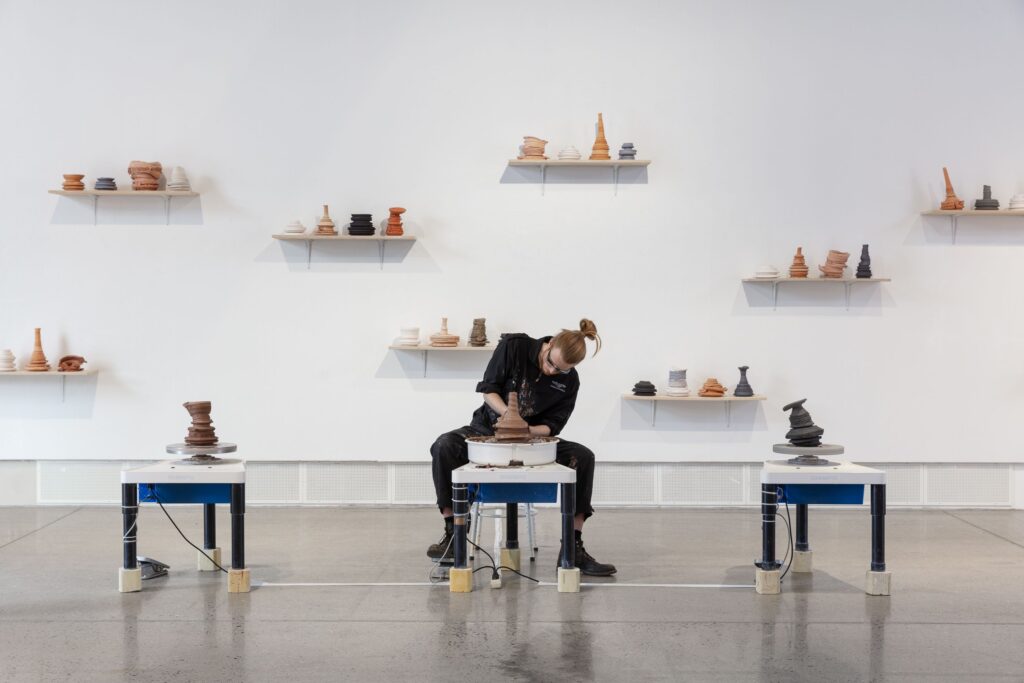
Becoming “Tornado Vessels” – Photo Tor S Ulstein
Between the studio and public space
Looking ahead, Scholten envisions an expansion of his work in multiple directions. His stated interest lies in creating new creatures for public space, an ambition that would take his sculptures out of galleries and into the everyday life of cities. He also plans to publish his drawings, which make up a significant part of his output, as well as teach art and participate in national and international exhibitions.
Bringing his work into public space is entirely consistent with the central proposition of his research. If the problem is the objectification of the world, a solution cannot remain confined to a white cube. It needs to go into the streets, into the plazas, into the places where people pass by without paying attention to the surrounding things.
Quin Scholten is 27 years old and still at the beginning of what promises to be a long career. Already clear, however, is what he wants: not to make objects, but beings. And to ensure that we, upon encountering them, become a little more capable of care, curiosity, and consideration toward things, toward the landscape, and toward one another.
Instagram: https://www.instagram.com/quinscholten/