 Serpa
Serpa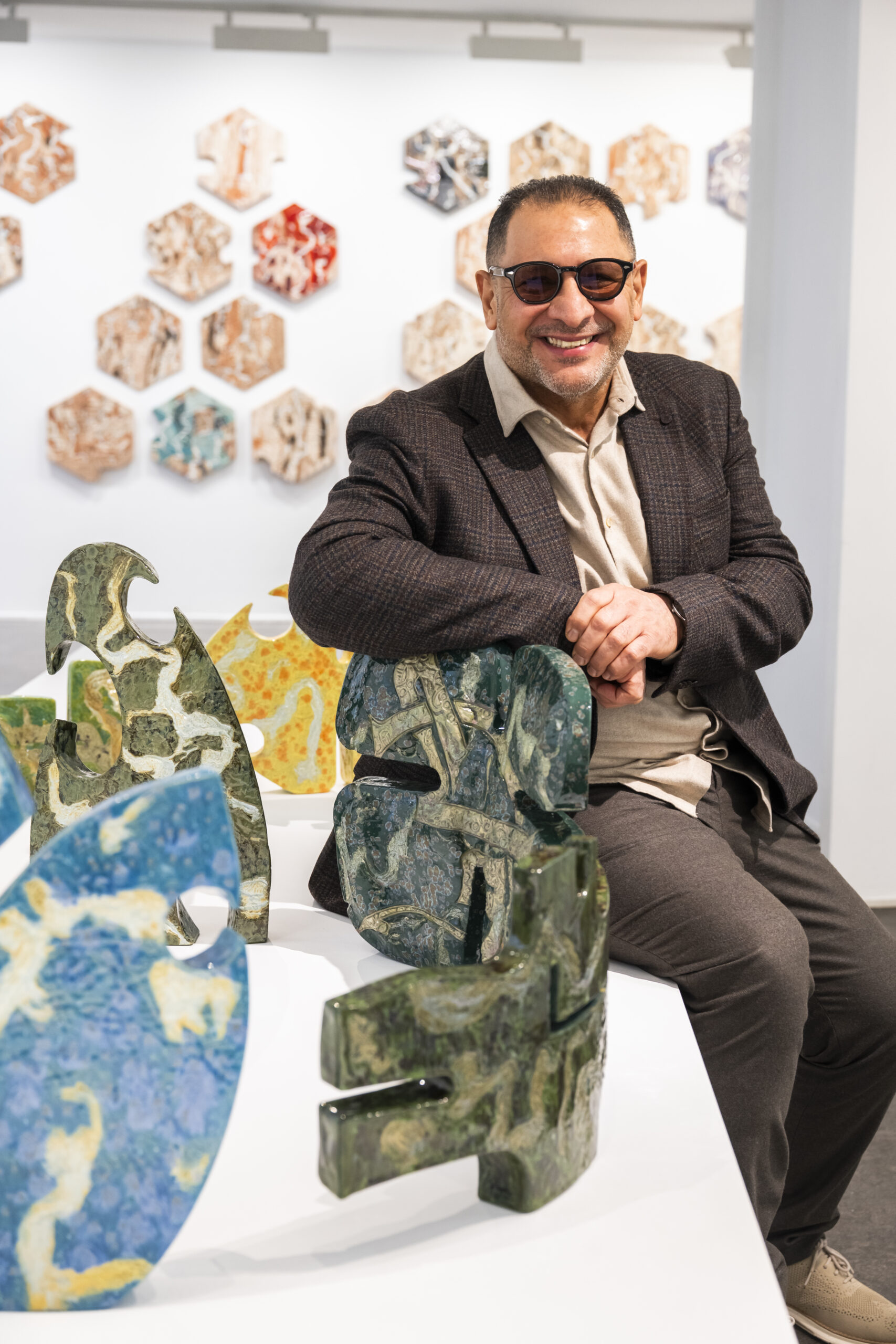
The Iraqi artist based in Norway presents Frozen Light at Kunstnerforbundet in Oslo, an exhibition that brings together Mesopotamian memory and the geometry of nature in high-fired ceramic sculptures
Dozens of hexagonal modules in high-fired stoneware, each unique in texture, height, and chromatic vibration: this is the first image greeting visitors to Frozen Light, a solo exhibition by Iraqi-Norwegian artist Wisam Al-Samad, which opened on February 26 at Kunstnerforbundet in Oslo and runs through April 12, 2026.
The centerpiece of the show, titled Snowflake (2026), spans over 5.5 meters and was built from a deceptively simple premise: no two snowflakes are identical, yet all follow the same geometric laws. Al-Samad translated this duality of nature into sculptural language, exploring repetition and deviation, order and freedom, and system and singularity.
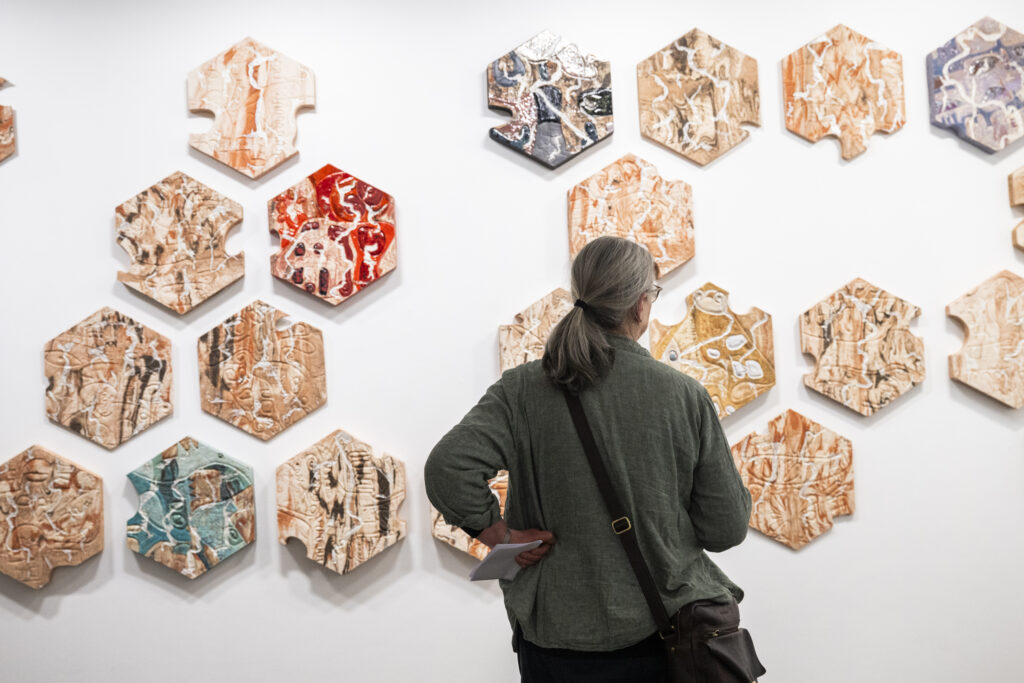
A visitor contemplates the Snowflake (2026) panel, a modular stoneware installation that covers the entire gallery wall. Photo: press
“Snow does not only mean coldness,” says Al-Samad. “It is a space for reflection. In the meeting between the structure of the snow and the warmth of the clay, an image of human experience emerges: we are shaped by the same fundamental structures, yet each of us carries our own unique difference.”
Al-Samad was born in Baghdad and studied at the College of Fine Arts at the University of Baghdad and the Academy of Fine Arts in the Iraqi capital. Forced into exile, he has lived in Norway since 2009. The experience of moving between cultures, from millennia-old Mesopotamia to contemporary Scandinavia, forms the foundation of his entire body of work.
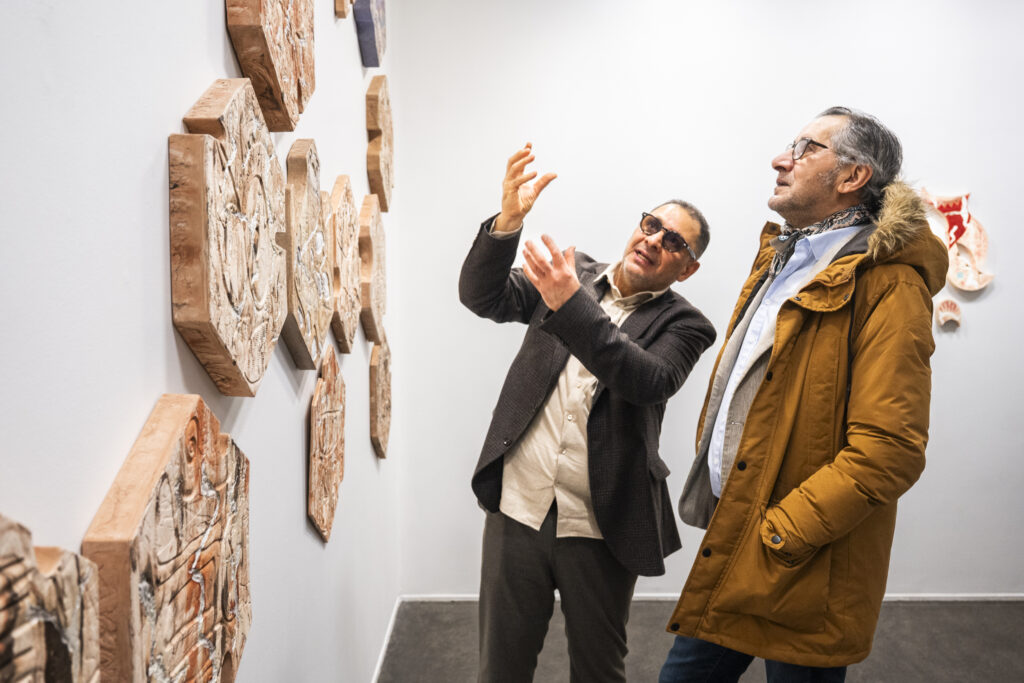
The artist presents to visitors the unglazed stoneware reliefs from the Snowflake mural series, highlighting Arabic calligraphic references embedded in the pieces. Photo: press
His artistic practice is rooted in the Mesopotamian ceramic tradition, one of the oldest in the world, featuring polyphonic decorations on both glazed and unglazed pieces for utilitarian and decorative purposes. Over the years, Al-Samad has developed a visual language that integrates Arabic calligraphy, geometric principles, and modernist compositions. Scandinavian petroglyphs and Nordic landscapes also quietly inhabit his reliefs, creating a cultural palimpsest of rare density.
Beyond the mural panel, Frozen Light presents an expressive body of freestanding ceramic sculptures, each one split in two: divided down the middle like a broken body or an interrupted word. The surfaces are covered in luster glazes ranging from midnight blue with golden veins to blood red with black specks, moss green, amber yellow, and volcanic black with ember-like streaks. The technique, mastered by the artist over decades of work with high-fired stoneware, produces textures that evoke territories, maps, and skin.
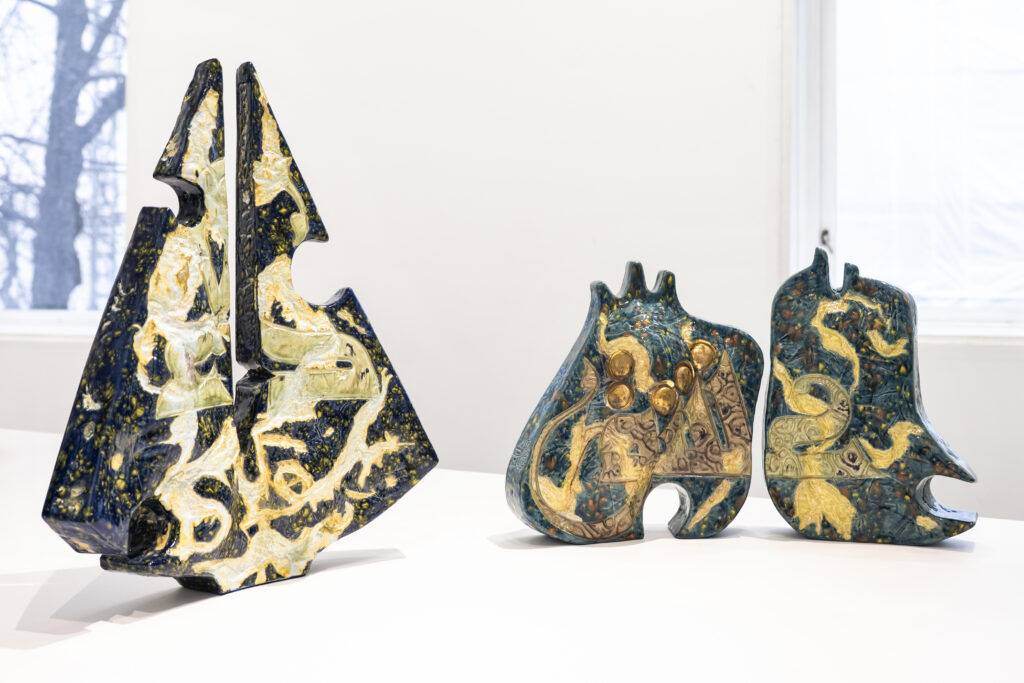
Photo: press
The choice of splitting is not merely formal. In many of the pieces, the two halves face each other like mirrors that refuse symmetry, suggesting interrupted dialogue, fragmented identity, and divided belonging. These are works that speak of exile without ever using the word.
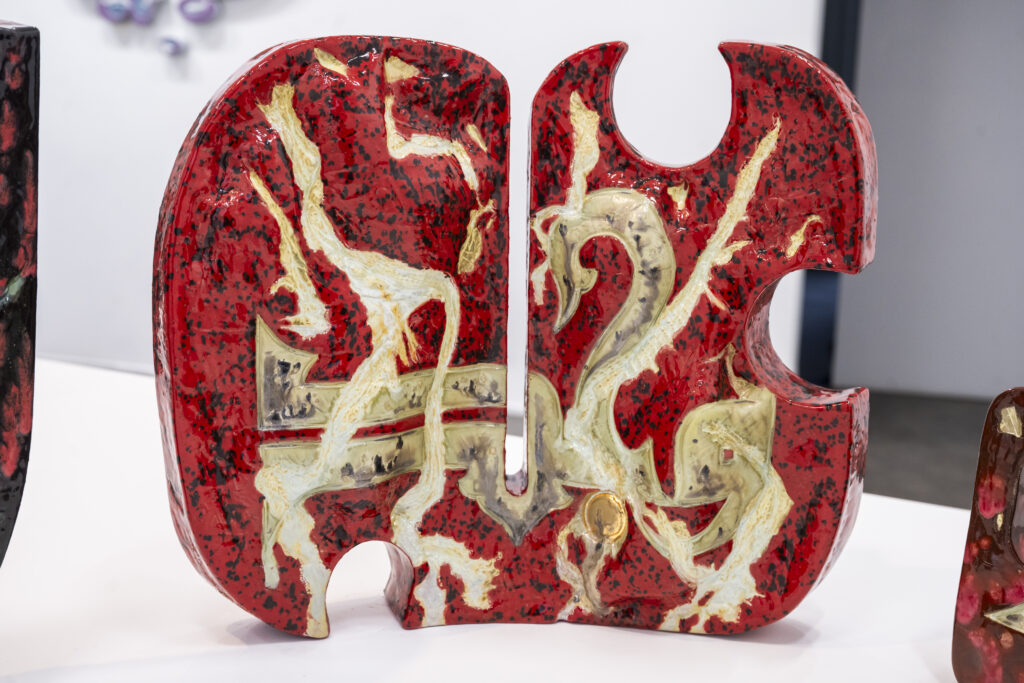
Photo: press
In several of the hexagonal units, signs and forms drawn from the artist’s cultural background flow into the geometric structure without overpowering it. Calligraphy that does not aim to be read as text but felt as rhythm. A space in which personal memory and universal order coexist, as the exhibition notes describe it.
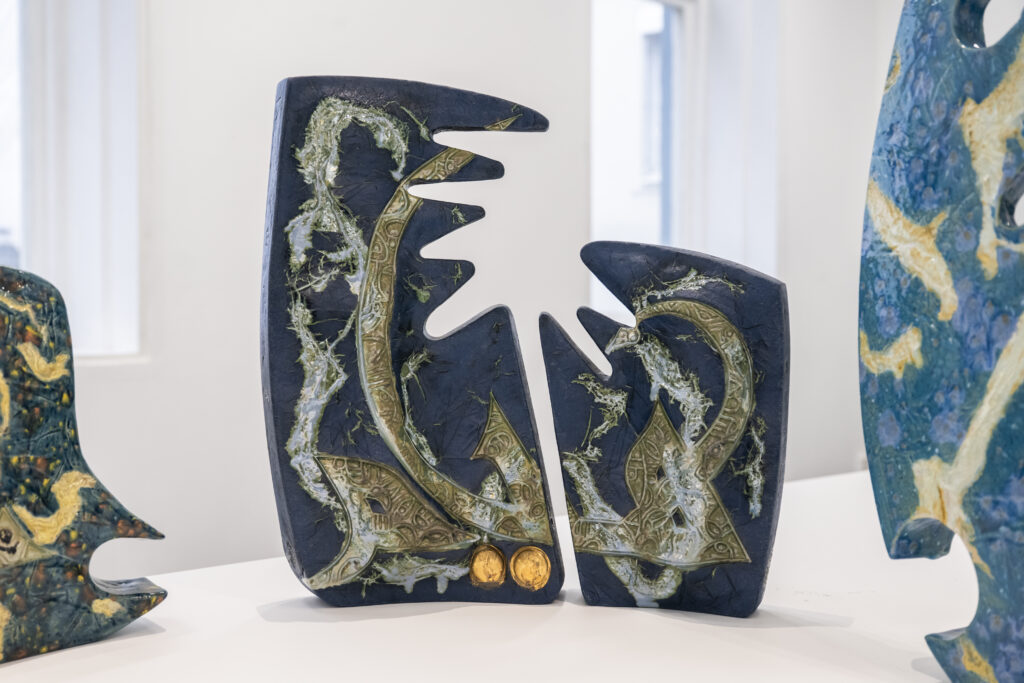
Photo: press
Al-Samad is a member of the International Academy of Ceramics, based in Switzerland, and has works in both public and private collections. He has participated in international biennials and festivals, including the Aveiro International Biennale of Artistic Ceramics in Portugal (2025), the International Ceramics Festival Mino in Japan (2024), and Ceramic Art Andenne in Belgium (2015). In 2025, he exhibited at RAM Galleri in Oslo and Telemark Kunstsenter. In 2024, he was part of the program at KRAFT in Bergen.
Frozen Light received support from the Arts Council Norway, the City of Oslo, and the Arts Centers of Norway. The exhibition remains on view through April 12, 2026. Kunstnerforbundet is located at Kjeld Stubs gate 3, in central Oslo. Hours: Tuesday through Friday, 11 a.m. to 5 p.m.; Saturday and Sunday, noon to 4 p.m. Closed on Mondays. For information, call +47 23 31 02 40 or email info@kunstnerforbundet.no.
© Kunstnerforbundet | kunstnerforbundet.no