 Serpa
Serpa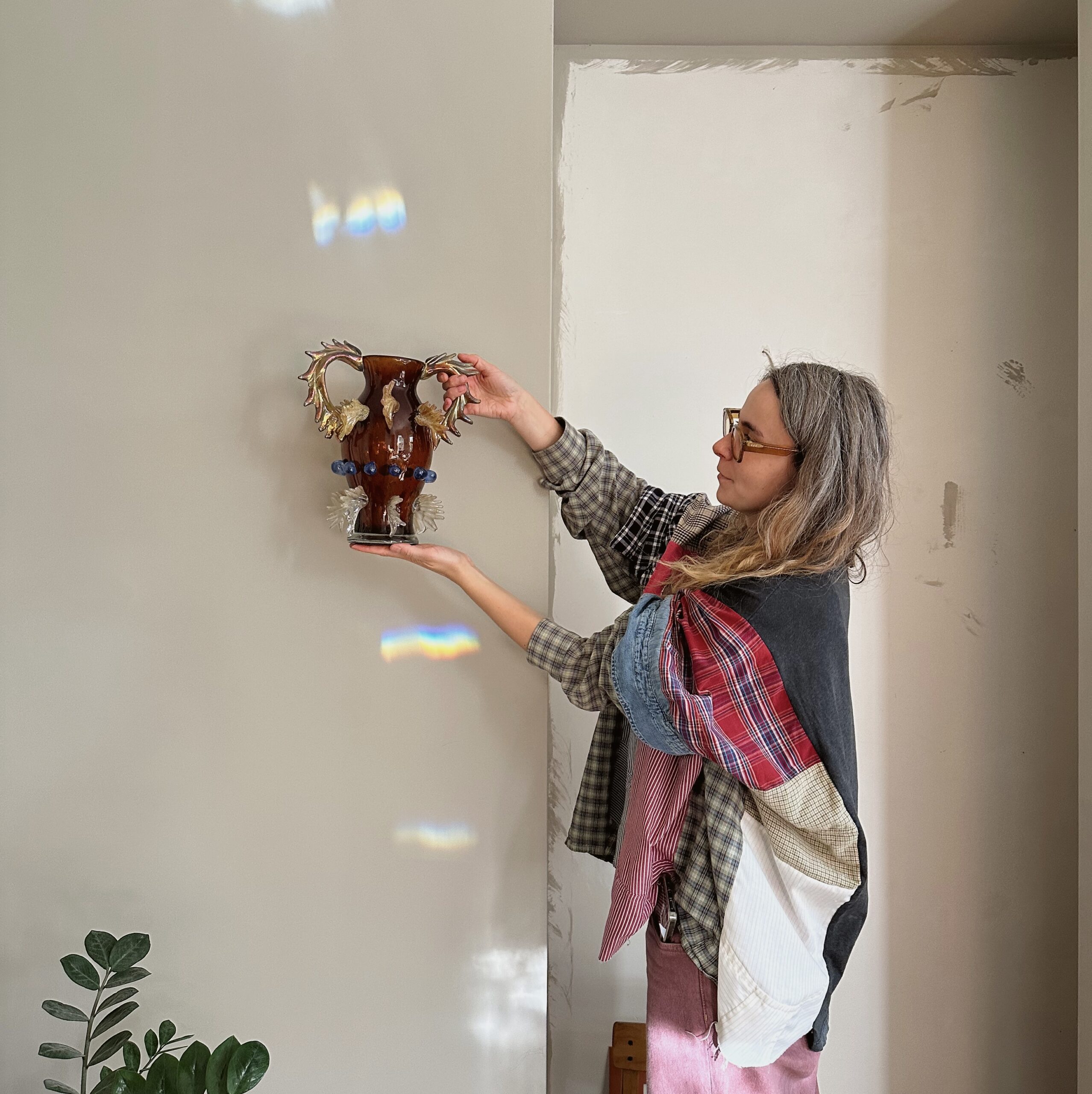
Roksolana Hudoba-Haluzka
Ukrainian artist Roksolana Hudoba-Haluzka presents unique pieces that combine 17th-century technique with contemporary design
The exhibition “Ukrainian Neo-Folklore: From Archaic Roots Through Modernism to Boho-Funk” brings together 45 new works by 25 Ukrainian designers and artists at Maison&Objet in Paris. The project presents Ukrainian neo-folklore not as decorative styling, but as a contemporary design language and a manifesto of cultural resistance in times of war.
Among the highlights is the work of artist Roksolana Hudoba-Haluzka from the Haluzka Glass studio in Lviv, who creates surrealist hand-blown glass vases. Coming from a region with a glassblowing tradition dating back to the 17th century, she presents unique pieces from the Botanique Beast collection (2024-2025), inspired by nature and the animal world.

The Centuries-Old Tradition of Ukrainian Glassblowing
The Ukrainian glassblowing tradition has deep roots dating back to Kyivan Rus’, between the 10th and 13th centuries, when polychrome and gilded enamels, decorated religious objects, colored window panes, and vessels were produced. Glassblowing was mastered by the turn of the 10th century, establishing a technical foundation that would span the centuries.
Glass production in Ukraine was long concentrated in small family glassblowing workshops, known as “forest workshops” due to their need for proximity to forests, as wood was essential for fueling the furnaces. Larger workshops were owned by landowners, Cossacks, and monasteries.

Excavations of a forest glass workshop near the Univ Monastery in the Lviv region revealed the sophistication of this production. This workshop produced glass in various colors: cobalt, blue, white, green, brown, and purple. White glass was especially valued as it imitated Chinese porcelain, which was extremely expensive at the time.
Artistic glass manufacturing reached its highest level of development in the 18th and early 19th centuries. New, well-equipped glassworks were built, and new working and decoration methods were adopted, including enameling, cutting, engraving, and gilding.

A distinct Ukrainian style developed, characterized by a close connection between the object’s form and its decoration. A unique characteristic was figural products: bottles and cylindrical vessels molded as animals, birds, or grotesque figures from folk tales and proverbs. The Lviv region, especially Zhovkva, specialized in glass chandeliers, while Volhynia was known for its basket-bowls made of fine applied glass and candelabras with filigree ornamentation.
In the 20th century, most achievements in the field of artistic glass in Ukraine belonged to glass artists from the original Lviv arts and crafts school, which was formed on the rich traditions of popular art from this region. Lviv maintains a glass museum to this day, the only one in the country, with an exhibition of pieces created during the International Glassblowing Symposia held in the city.
Roksolana Hudoba-Haluzka’s Contemporary Work
It is upon this centuries-old tradition that Roksolana Hudoba-Haluzka builds her contemporary work. The artist works in a studio that remains unchanged, using a traditional furnace and taking the classic vase form as a base. “Nature and the animal world are the main drivers of imagination, fantasy, and creativity. My admiration for the perfection of nature never diminishes,” says Roksolana.
Her creative process involves constant experimentation with details, observing the possibilities of glass while the material is still malleable. “While working in our studio, I experimented with details, observing what the glass in my hands was capable of. The unexpected combination of seemingly incompatible colors, together with the skill and fluidity of the technique, seemed to allow the glass to follow nature’s call—freezing in the curves of each vase, reminding us of itself, of its grandeur,” she explains.

The vibrant artistic style and virtuoso mastery of technique are reflected in the collections of surrealist vases, which unite centuries-old tradition with contemporary vision. Each piece is unique and signed by the artist.
In addition to hand-blown glass art pieces, Roksolana develops sustainable work with recycling and reusing glass from bottles and windows. From recycled material, she creates jewelry frequently inspired by botanical motifs, as well as geometric and floral mirrors, using fusion and stained glass techniques.
Neo-Folklore as Cultural Resistance
According to curator Sana Moreau, Ukrainian neo-folklore emerges from millennial roots, from pre-Christian times, and can be interpreted through the presence of four natural elements: earth, fire, wind, and water. “Each object interprets their timeless power—through material, form, or idea,” she explains.
The exhibition contextualizes neo-folklore within Ukrainian modernism of the first half of the 20th century, a movement that united archaic sources with the language of modernity. It was modernism that established thinking through structure, rhythm, and material, rather than decorative narrative—a logic that continues to shape current Ukrainian design.

“The realities of war and the constant threat of cultural colonization have only intensified the search for freedom of thought, form, and expression—defining principles of contemporary Ukrainian design,” states the curator.
Each object results from internal reflection, where historical traditions dialogue with contemporary technologies and deep artisanal knowledge combines with a modernist approach to form and material. Ukrainian designers do not reproduce forms from the past but reinterpret their internal principles—clarity, structure, and creative freedom.

The exhibition is organized by Galerie Sana Moreau, with long-term support from Salon Maison&Objet, under the patronage of the Embassy of Ukraine in France. Green & White Gallery is the project’s main partner.
Website: www.shchos-tsikave.ua
Instagram: https://www.instagram.com/haluzka_glass/