 Serpa
Serpa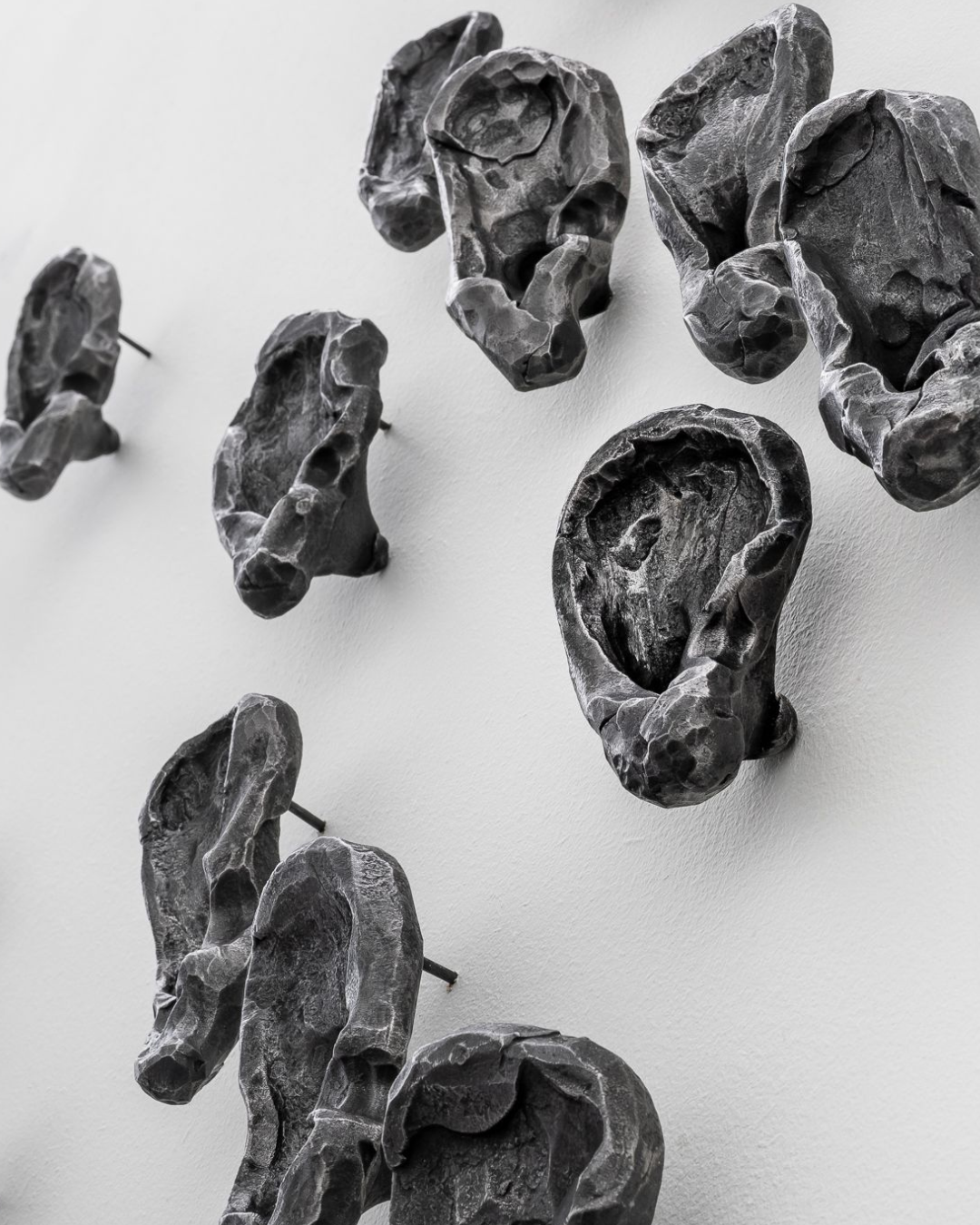
Agder workshop perpetuates knowledge transmitted through generations since the Viking Age to the present day
KjellmanChapin Smeder, founded in 2017 in the village of Nes Verk in the Agder region of southern Norway, represents more than a contemporary metalwork studio. The space commanded by Monica and Benjamin Kjellman-Chapin belongs to a millennial lineage that traverses Norwegian history, connecting the Scandinavian metalworking tradition—dating back to the Viking Age—to the creative possibilities of the 21st century.
In Nordic culture, mastery of iron has always carried an almost mythical dimension. Ancient Viking blacksmiths were considered figures of power, capable of transforming raw stone into blades that decided battles and tools that ensured survival through harsh winters.

Somatism Nr. 2: Navel Gazing
Metal as Cultural Identity
Benjamin, a master blacksmith with academic training in the arts, has developed over two decades a singular philosophy about the craft that directly engages with this ancestry. For him, metal possesses unlimited potential for transformation, and the possibilities for adding meaning are equally infinite. “Narrative is the driving force of my work, and material and process act as ‘twin narrators,’ both equally important in conveying what I wish to express,” he explains.
This vision of metal as “narrator” directly echoes the Nordic tradition. Viking swords were not mere weapons—they received proper names, were decorated with complex patterns, and their stories were sung in verses. The process of forging a blade involved rituals, secrets guarded between master and apprentice, and knowledge passed from generation to generation as sacred heritage.
Fundamental to Benjamin’s practice is the idea that the material itself has something to say about its formation. He sees his work as a collaboration with the metal, where narrative emerges from their joint efforts. “Metal can be a powerful speaker if we are willing to listen to it,” he affirms—a principle that ancient Scandinavian masters knew intuitively.

Somatism Nr. 1: The Walls Have Ears
Training Between Two Continents
The couple’s experience results from solid training and an international trajectory that eventually led them back to the Scandinavian roots of the craft. Benjamin holds a master’s degree in metal arts from the University of Gothenburg in Sweden, a bachelor’s degree in sculpture from Atlanta College of Art in the United States, plus professional certification as a blacksmith.
He worked for years in American workshops, including the renowned Weimann Metalcraft in Tulsa, Oklahoma, before returning to Scandinavia. In Norway, he taught for five years at the Hjerleid Craft School in Dovre, a traditional institution in the training of Scandinavian craftsmen where ancestral techniques are transmitted with the same rigor as centuries ago.
In 2017, he decided to establish himself permanently in Nes Verk to found his own workshop. The choice was not casual—the Agder region has a long tradition in metallurgy and craftsmanship. For centuries, this area of Norway was known for its iron mines and the quality of its blacksmiths. Forges dotted the landscape like small temples where ancestral knowledge was preserved and renewed with each generation.

MORF (Tala)
Roots Spanning Millennia
Metallurgy in Norway predates even the Viking Age. Already in the Scandinavian Iron Age, between 500 BC and 800 AD, Nordic peoples developed sophisticated techniques for extracting and manipulating metal. Archaeological discoveries reveal that ancient Norwegians produced bog iron—extracted from natural deposits in wetland areas—and mastered complex forging processes.
With the Viking Age (793-1066 AD), Norwegian metallurgy reached levels of excellence recognized throughout Europe. The technique of “pattern welding,” which created blades with characteristic undulating designs, became the trademark of Scandinavian blacksmiths. These swords were not merely functional—they were works of art that communicated status, power, and connection to ancestral lineages.
The tradition persisted through the centuries. Even after the Christianization of Norway and the end of the Viking Age, the blacksmith’s craft maintained social prestige and economic importance. Villages like Nes Verk developed around forges, and metallurgical knowledge continued to be transmitted in an apprenticeship system that has changed little since time immemorial.

From Theory to the Ancestral Anvil
Monica followed an equally singular path. With a doctorate in art history from Boston University and experience as a university professor in the United States, she abandoned her academic career to dedicate herself entirely to blacksmithing in 2017. Four years later, she obtained professional certification as a blacksmith.
Her training in art history provided a unique perspective on the cultural significance of metalwork. Monica understands that each piece forged in Nes Verk does not exist in isolation but dialogues with millennia of tradition—from the first bronze hammers found in Norwegian archaeological sites to the elaborate Viking jewelry that now inhabits museums.
The transition from theory to practice did not diminish her intellectual output. Monica regularly participates in artist residencies and exhibitions, both in Norway and internationally, developing metalwork that simultaneously engages with her academic background and the Scandinavian tradition of technical excellence.
Tradition Renewed
KjellmanChapin Smeder serves public and private clients on projects of any scale, maintaining the commitment to quality that characterizes Norwegian artisanal tradition. The workshop offers complete design and consulting services, working in close collaboration with clients to ensure that needs and desires are fully met.
Everything the workshop produces is custom-made, designed to simultaneously meet functional and aesthetic requirements. The personalized approach ensures that each piece is unique—a principle that dates back to ancient Scandinavian blacksmiths. Each Viking sword was unique; each agricultural tool carried its creator’s mark. Mass production was a nonexistent concept; what mattered was the intimate relationship between blacksmith, material, and purpose.
The couple’s vast experience and high technical competence guarantee professionalism and excellent results. The company delivers and installs throughout Norwegian territory, carrying not only functional objects but pieces that bear the symbolic weight of millennial tradition.
Living Memory of the Craft
KjellmanChapin Smeder’s business model represents a growing trend in Scandinavia: highly qualified craftsmen who combine academic training in the arts with technical mastery of traditional crafts. This movement represents, in a sense, a return to pre-industrial values. Before mass production, there was no rigid separation between craftsman and artist—the Viking blacksmith who produced axes also created ornamental brooches, and both received the same care and dedication.
The workshop’s philosophy reflects Scandinavian design values—functionality, durability, and clean aesthetics—values that have traversed centuries. Viking objects found in archaeological excavations reveal this same synthesis: a belt buckle, even as a utilitarian item, received elaborate decoration; an iron pot, though functional, displayed harmoniously balanced proportions.
In Norse mythology, dwarves—considered the greatest blacksmiths of the cosmos—forged the most powerful objects of the gods: Thor’s hammer Mjölnir, Odin’s spear Gungnir, and the ring Draupnir. These narratives reflect the profound cultural respect for the craft of metallurgy, seen not as mere manual labor but as a form of magic, of fundamental transformation of reality.
Over recent years, KjellmanChapin has executed varied projects, consolidating its reputation in the Scandinavian market for artisanal metalwork. Each piece that emerges from the Nes Verk forge carries not only the creative vision of its creators but also echoes of knowledge transmitted through generations—from the Viking Age, when metallurgy was considered an almost magical craft, to the present day.
At KjellmanChapin Smeder’s forge, the ancestral flame remains lit. Monica and Benjamin position themselves as contemporary guardians of a tradition that helped shape Norwegian identity. The fire that heats the metal in Nes Verk is the same fire—metaphorically and literally—that heated Viking forges over a thousand years ago. Techniques have evolved, tools have modernized, but the essence remains: the sacred dialogue between blacksmith and metal, the alchemical transformation of raw matter into an object with soul and purpose.
Honoring the past and embracing the future are not contradictory movements in Kjellman-Chapin’s work—they are complementary, as they have always been in the Scandinavian tradition, where innovation never meant abandoning roots, but their constant renewal.
Website: https://www.kjellmanchapin.no
Instagram: https://www.instagram.com/benjamin.kjellman.chapin