 Serpa
Serpa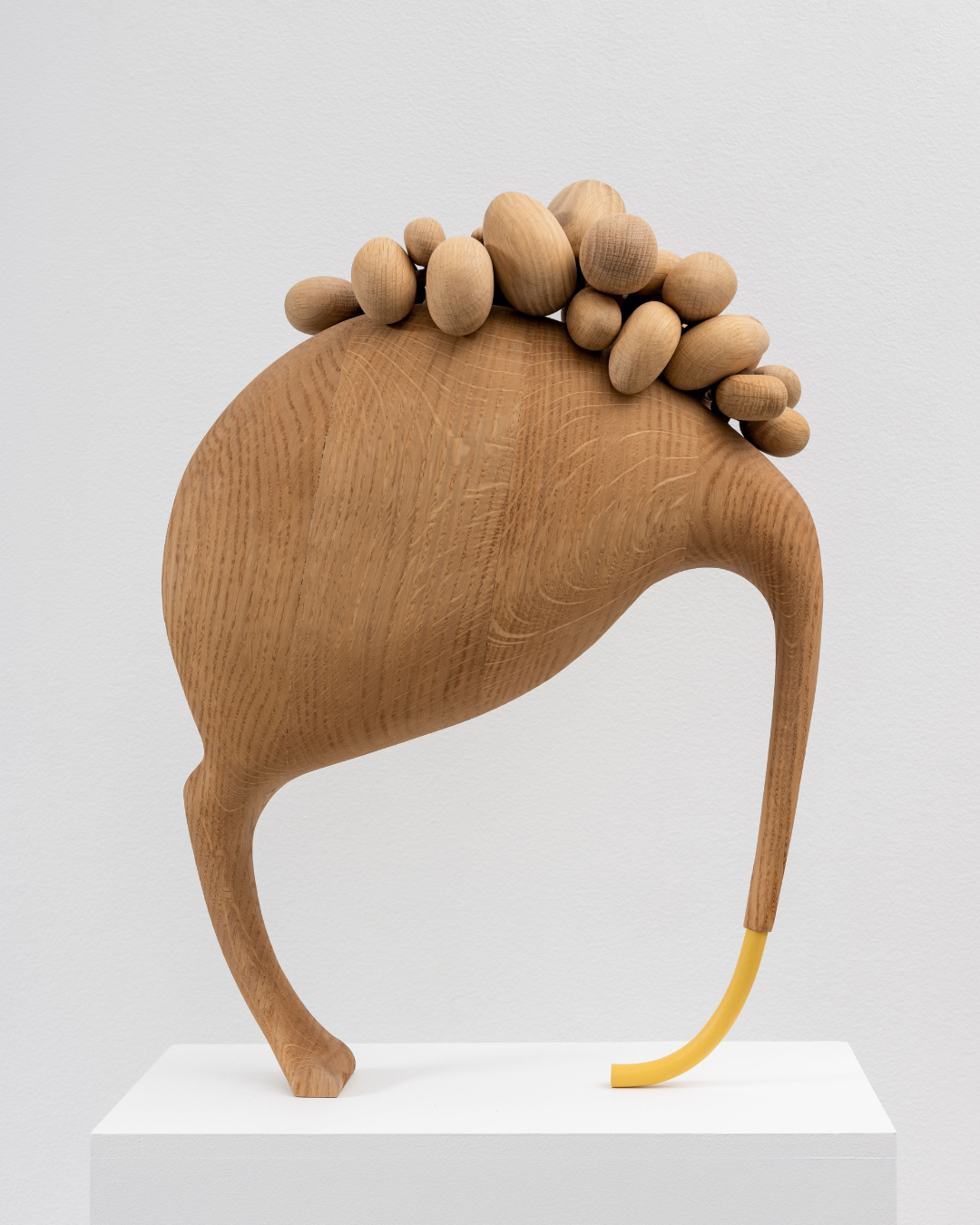
Norwegian Ingeborg Elieson Has Works in the National Museum and Critically Engages with Tradition of Valuing Raw Materials
Ingeborg Elieson transforms what most people discard into art objects. The Norwegian artist creates sculptures from small fragments of materials rejected by various human activities, giving new life and meaning to what would be trash. Her works are part of the permanent collection of the National Museum of Norway.

Perennial P
The National Museum, inaugurated in 2022 in Oslo after the merger of four important Norwegian cultural institutions, is the largest art museum in the Nordic region. With a collection of more than 400,000 objects ranging from ancient to contemporary art, design, architecture, and decorative arts, the institution houses fundamental works of Norwegian and international art history, including “The Scream” by Edvard Munch. Being part of this collection means that Elieson’s work is considered relevant to understanding contemporary Norwegian art and will be preserved for future generations.
The acquisition of her works by the National Museum occurred in 2024, through the NK acquisition fund, a mechanism created to systematically enrich the national collection with works by contemporary artists. This same fund had already acquired Elieson’s works in 2013, when it still belonged to the former Museum of Decorative Arts in Oslo, one of the institutions that merged to form the current National Museum.
Based in Fredrikstad, a port city in southern Norway, Elieson has been exhibiting regularly since 2012, when she completed her master’s degree at the National Academy of the Arts in Oslo. Her work has traveled through important European artistic circuits, with presentations in group exhibitions at the Vigeland Museum, the Collect London fair, Milan Design Week, Norwegian Presence during the Oslo Design Fair, and the prestigious Talente fair, held during the Handwerksmesse in Munich, Germany.

Følg etter oss – Telemark Kunstnersenter
The artist explores the physical and aesthetic limits of discarded materials, allowing the color, pattern, and original form of the fragments to serve as starting points for her transformative narratives. She lets the material itself guide the creative process, revealing unexpected possibilities in waste. Her work dialogues with the Norwegian tradition of valuing wood and craftsmanship but subverts it by working with already discarded materials.
Norway has a long tradition of carpentry and woodworking dating back to the Viking Age, between the 8th and 11th centuries. Viking shipbuilders developed sophisticated techniques of wood fitting and bending that enabled the construction of the famous drakkars, vessels that sailed throughout the North Atlantic. Medieval wooden churches, known as stavkirker, built between the 12th and 14th centuries, are testaments to this ancestral mastery. About 28 of these structures still exist in the country, with their intricate carvings and construction systems that require no nails.
This historical reverence for wood and natural materials permeates Norwegian culture to this day. Woodcraft, known as trearbeid, was essential for survival in rural regions, where artisans created everything from household utensils to furniture decorated with carving techniques such as rosemaling (decorative painting) and acanthus (ornamental foliage). The Nordic philosophy of total utilization of natural resources, born from necessity in a harsh climate, finds contemporary echo in Elieson’s work.

Fra ulike utstillinger
The artist’s work, however, inverts the traditional logic. While ancestral carpentry valued virgin raw materials and transformed them into durable objects, Elieson starts from what has already been discarded, from the refuse of consumer society, to create pieces that question production and disposal cycles. She participated in thematic exhibitions about wood, such as “What Wood Would” and “Norwegian Wood Art,” both in 2015, establishing a critical dialogue between tradition and contemporaneity.
Beyond the National Museum, her works are part of the collection of KODE Kunstmuseer at Bergen, Norway’s second-largest museum complex, which acquired her works during 2014 and 2021, also through the NK fund. The Norwegian Ministry of Foreign Affairs purchased works during 2021 to integrate them into its diplomatic collection, and the municipality of Fredrikstad acquired pieces during 2015. Private collectors also invested during the Collect London fair held during 2013.
Institutional recognition is reflected through an extensive schedule of solo exhibitions. During 2014, she presented a solo show at Kunstnerforbundet (Artists’ Association) located in Oslo, one of the country’s most important institutions. During 2015, she exhibited simultaneously across two cities: at the ØKS space located at Fredrikstad and at KRAFT gallery situated at Bergen. Throughout subsequent years, she held solo exhibitions at Soli Brug located at Greåker (2018), Galleri Format at Oslo (2021), and Telemark Kunstsenter (2024).

Fra ulike utstillinger
Elieson’s trajectory began with goldsmithing. Between 2004 and 2006, she trained at Plus-skolen located at Fredrikstad, obtaining professional certification as a goldsmith. Her experience with precious metals and refined artisanal techniques influenced her sensitivity to materials and forms. Between 2006 and 2009, she completed her undergraduate degree, focusing on arts, at the National Academy of the Arts located in Oslo, the institution where she also completed her master’s degree between 2010 and 2012.
Her talent earned consistent institutional support. During 2013, she received a three-year working grant for young artists. The Norwegian government granted her an artist’s grant during 2016. The Norwegian Craftsmen’s Fund financed her research with two annual study grants during 2017 and 2019, followed by a three-year working grant starting during 2022.
During 2020, Elieson created her first permanent public art installation, MotLys, designed for the Randaberg health center. During 2022, she was commissioned to design the award for the FAF-Festivalen. For the coming years, she has a confirmed schedule with a duo exhibition at RAM Galleri during 2026 and a solo show at Soli Brug during 2027.

MotLys, designed for the Randaberg health center
Website: http://www.ingeborgelieson.com/
Instagram: https://www.instagram.com/ingeborgeliesonsculpture/