 Serpa
Serpa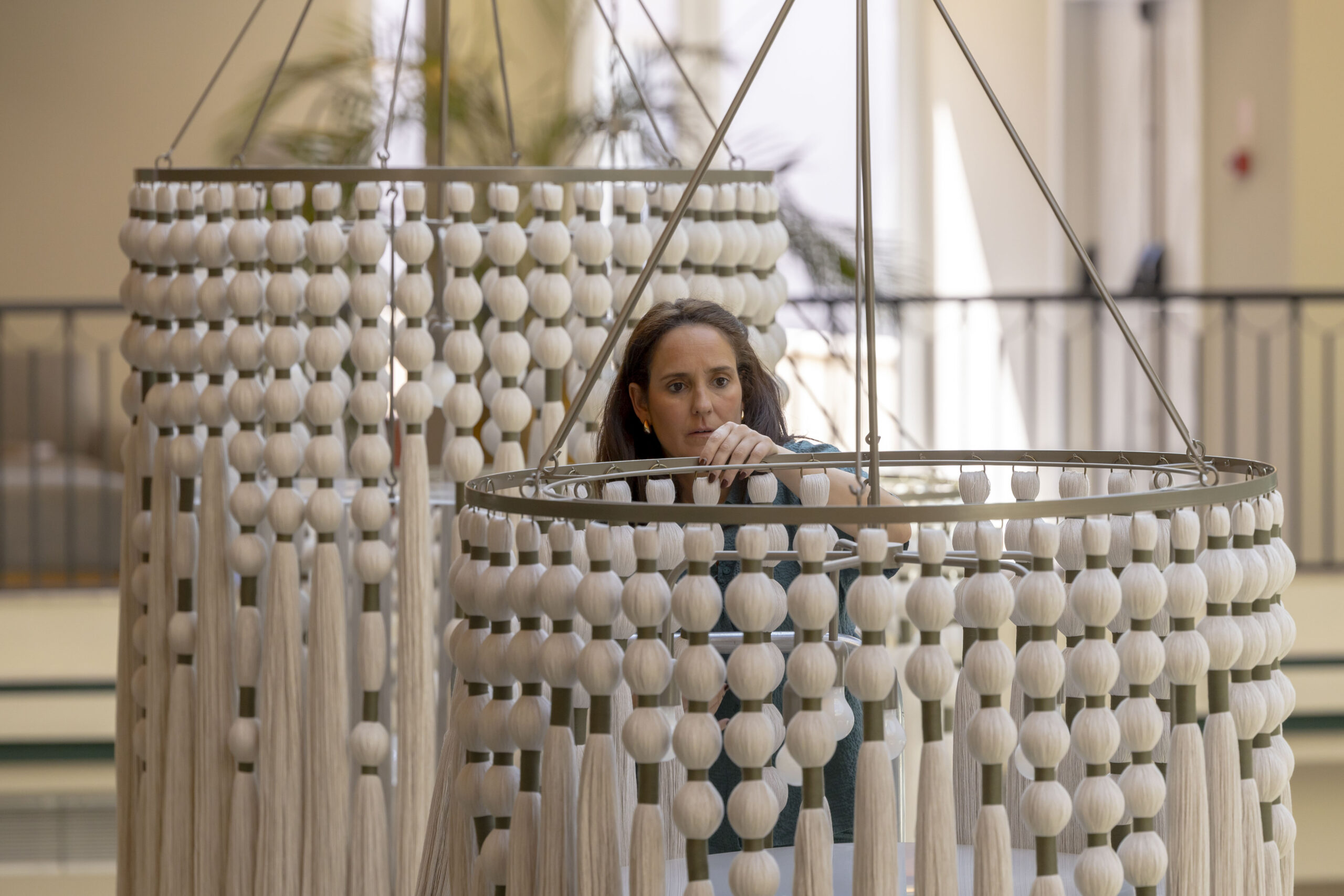
Marta Ramada Leite installing one of the seven chandeliers, part of the technical process. Photo : Bruno Barbosa
Portuguese artist Marta Ramada Leite’s work joins Kimpton Quinta da Marinha, in partnership with Goddard Littlefair and TPC Lighting Studio
CASCAIS, Portugal — Kimpton Quinta da Marinha unveiled a permanent textile art installation in the hotel lobby on July 1, 2026. Portuguese artist Marta Ramada Leite, founder of the Craft Gardens studio, created the piece, named “Mediterranean Garden of Light.”
According to Craft Gardens, the piece ranks among the largest contemporary textile art interventions ever produced in Portugal for a luxury hotel property.
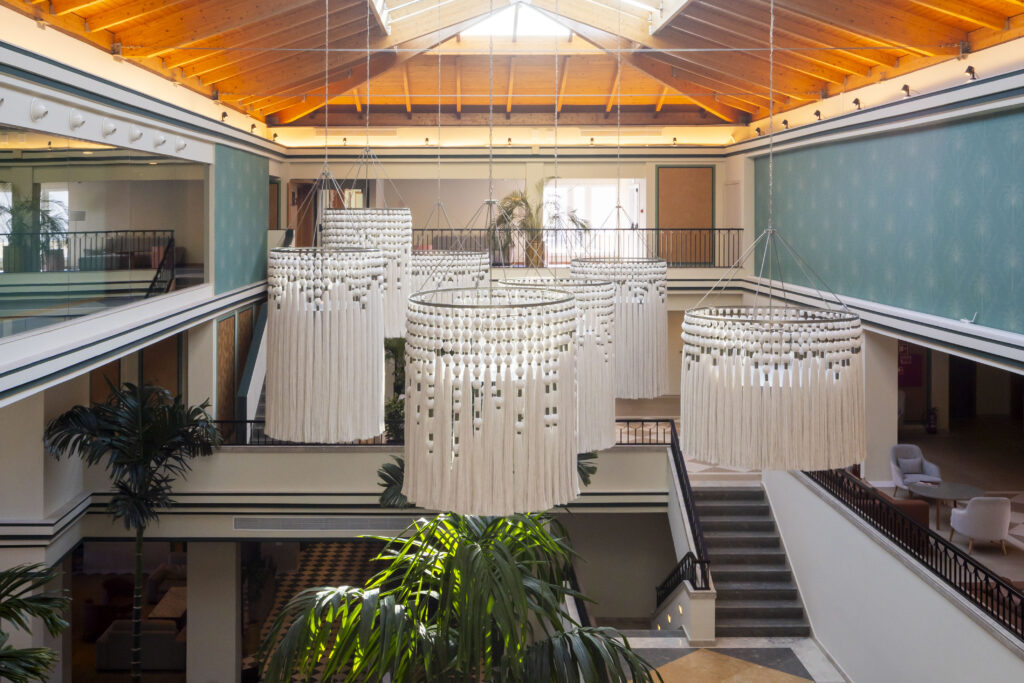
Seven monumental textile chandeliers hang above the lobby of Kimpton Quinta da Marinha, transforming the reception area into an immersive art installation. Photo : Bruno Barbosa
Partnering with design firms Goddard Littlefair and TPC Lighting Studio, Craft Gardens developed the work, which occupies the hotel’s reception area and brings together seven monumental chandeliers and a textile structure suspended above the space.
Craftsmanship behind the installation
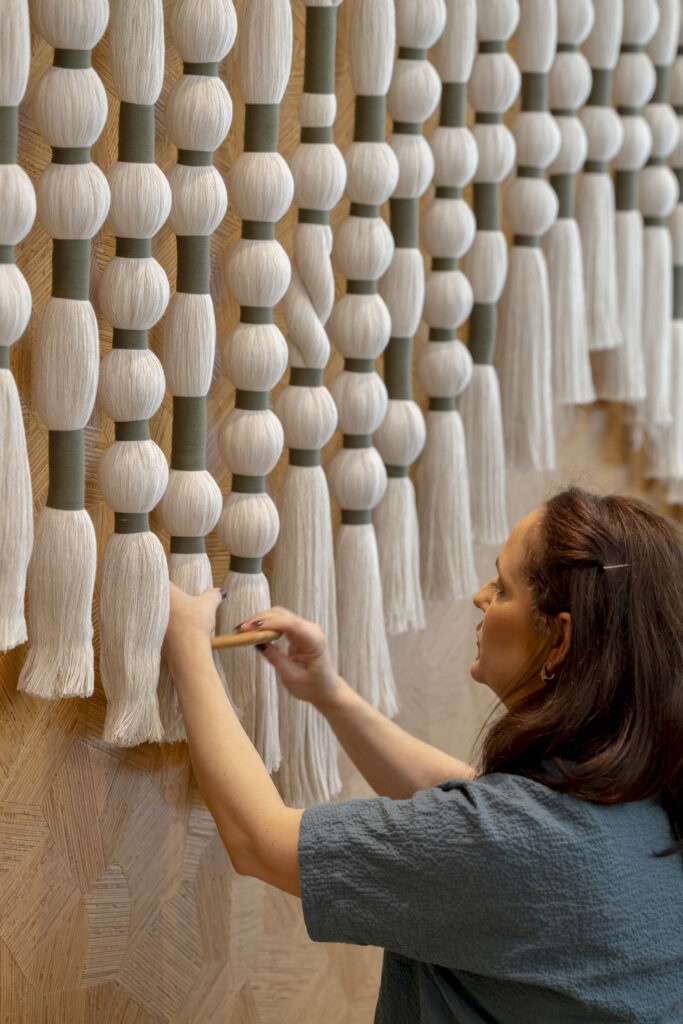
Marta trims the fringes by hand, part of the slow and meticulous process behind each of the 389 tassels that make up the installation. Photo : Bruno Barbosa
Artisans at the Craft Gardens workshop in Porto handcrafted the 389 tassels that make up the installation. Each piece went through a process the studio describes as slow and rigorous, capable of preserving, according to the brand, the authenticity of manual work even in a large-scale project with international reach.
Throughout the day, the piece responds to shifts in natural light and takes on new visual configurations at night. Leite says the concept shifts textile art from a purely decorative role to a structural position within the space’s architectural experience.
Words from the artist
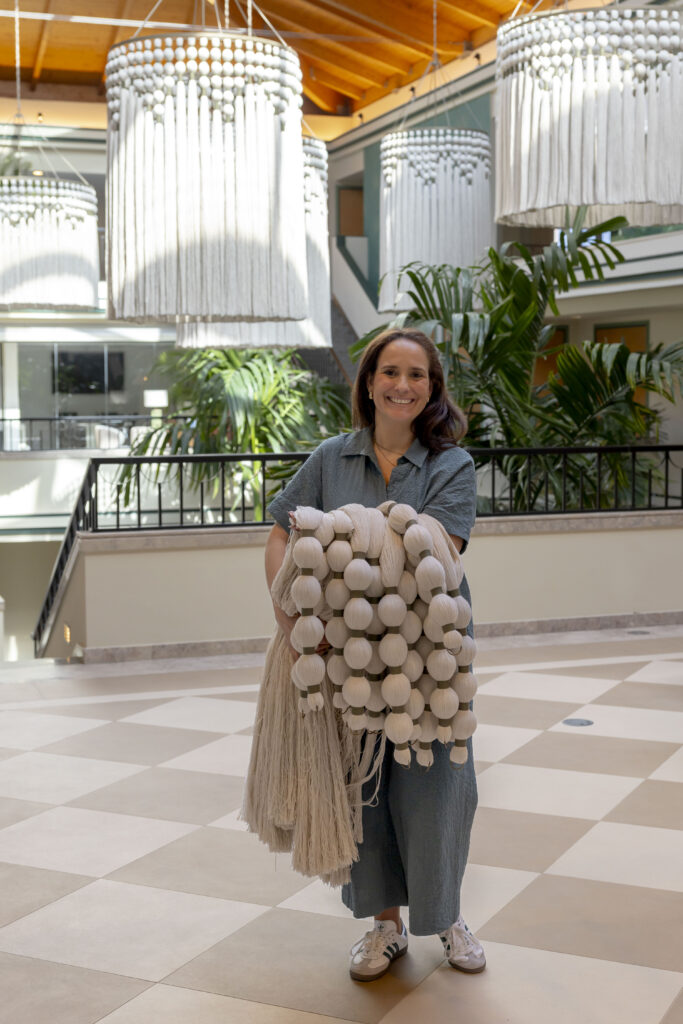
Marta Ramada Leite, founder of Craft Gardens, holds a section of the handcrafted textile piece at Kimpton Quinta da Marinha. Photo : Bruno Barbosa
For Leite, the hospitality sector holds appeal because it deals directly with the relationship between space and human experience. “An artistic installation isn’t just a decorative element; it becomes part of a place’s narrative and the memory of those who experience it,” the artist says.
Pajaki technique and its reinterpretation
Leite founded Craft Gardens, a studio dedicated to suspended textile sculptures, art installations and lighting pieces, all handmade. Her work draws on pajaki, a traditional Polish craft of peasant origin, historically linked to agricultural and religious celebrations, particularly during the Easter season.
Women from rural regions of Poland originally made these branching, symmetrical mobiles using straw, colored paper and, in some cases, feathers, hanging them from the ceilings of homes and churches as a ritual meant to protect the household, according to accounts of the pajaki tradition compiled by Craft Gardens.
Designers and artists from various countries have reinterpreted the technique in recent decades, applying it to materials such as textile threads, metals and lighting elements.
At Craft Gardens, the pajaki’s constructive foundation combines with weaving techniques associated with Portuguese textile craftsmanship, resulting in large-scale pieces geared toward architecture and interior design projects. Merging a Central European tradition with a Portuguese artisanal repertoire, the studio says, forms a distinctive mark of its work.
Technical demands of luxury hospitality
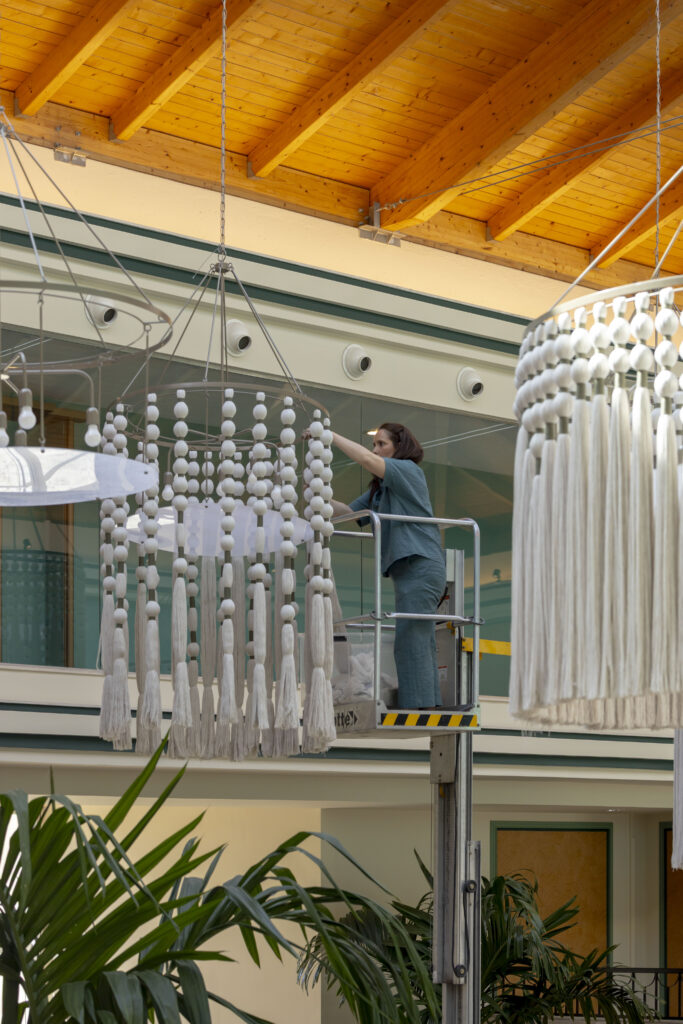
The designer adjusts one of the seven chandeliers from a lifting platform, as part of the technical process required to meet the hotel’s safety standards. Photo : Bruno Barbosa
Teams led by Leite, Goddard Littlefair and TPC Lighting Studio worked together to bring the installation in line with safety standards required at large-scale hotel properties.
During that process, Craft Gardens produced every piece using a high-performance technical thread certified as fire retardant, meaning resistant to the spread of flame. According to the studio, the material choice sought to balance safety and durability without compromising the aesthetic delicacy of the brand’s textile language.
Large hotel chains tend to adopt strict certification criteria for suspended decorative elements in high-traffic areas such as lobbies and reception spaces. Craft Gardens considers this regulatory requirement one of the main challenges textile artists face when moving from exhibition projects to permanent interventions in commercial spaces.
Market context: Textile art in international hotels
International hotel companies have invested in exclusive pieces signed by specific artists or studios as a differentiation strategy in a competitive market, according to Craft Gardens.
Textile art occupies a specific niche within this movement, allowing large-volume visual interventions without the structural weight associated with sculptures made from other materials, while also enabling finishes that echo organic textures often sought in hotel projects located in coastal regions.
Studios such as Goddard Littlefair, active in hotel projects worldwide, have expanded partnerships with independent artists and workshops to create exclusive pieces. Such collaborations have helped bring Portuguese artisans into international luxury hospitality circuits.
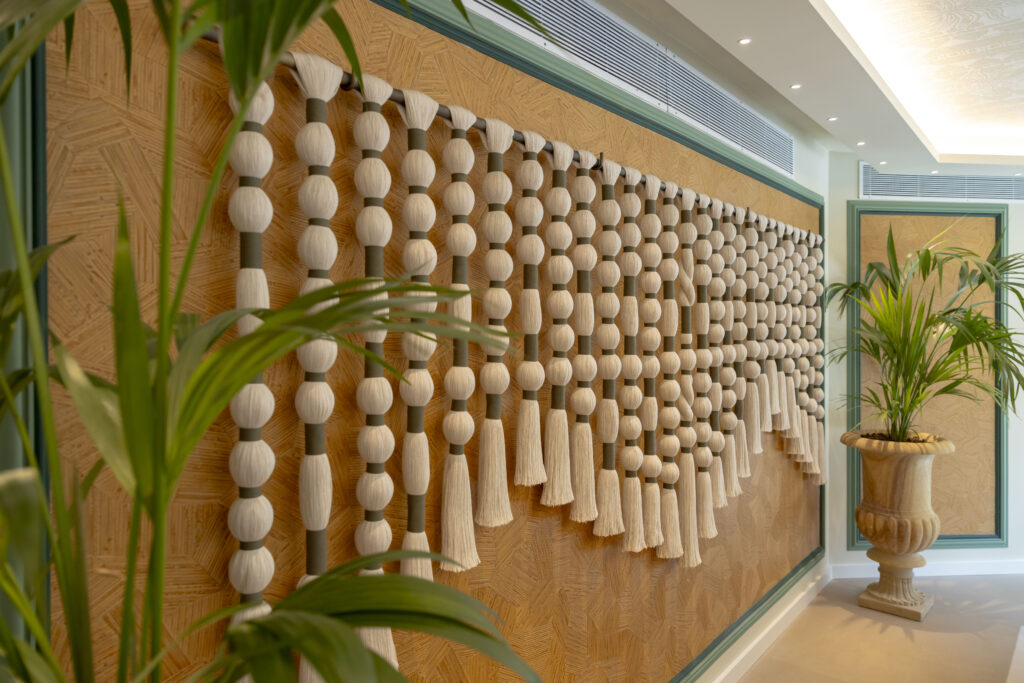
Rows of hand-wound tassels line a wall near the lobby, echoing the rhythm of the suspended chandeliers above. Photo : Bruno Barbosa
Positioning in the Portuguese market
Headquartered in Porto, Craft Gardens belongs to a group of independent studios that have gained visibility on Portugal’s contemporary design scene in recent years. Porto and Lisbon account for a significant share of the country’s artisanal textile production, traditionally associated with sectors such as tapestry and lacework.
As founder of the studio, Leite combined traditional craft techniques with a contemporary visual language geared toward architecture and interior design projects. Craft Gardens’ output ranges from smaller lighting pieces to monumental custom interventions, such as the installation at Kimpton Quinta da Marinha.
Such commissions, from the studio’s perspective, aimed at the international luxury hospitality market, open an expansion path for small and mid-sized Portuguese workshops, which are now competing alongside studios based in hubs such as Milan, London and New York.
IHG and Kimpton in Portugal
Owned by British hotel group IHG (InterContinental Hotels Group), Kimpton operates as an international luxury-segment brand that links each property to specific characteristics of its destination, including design choices, dining and cultural programming.
In Cascais, the Quinta da Marinha property reinforces IHG’s expansion in the Portuguese market, which has grown in recent years across the country’s upscale tourist regions. Resorts, golf courses and equestrian facilities cluster in the area, along with proximity to nature reserves along the Atlantic coast.
Landscape and lobby atmosphere as inspiration
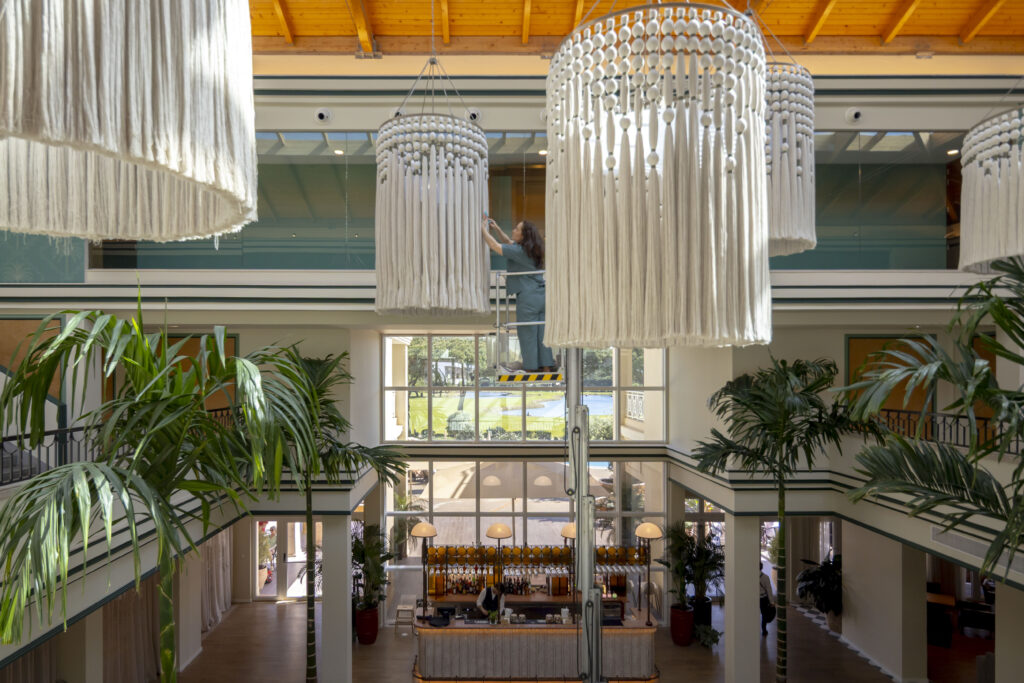
Golf greens and the Atlantic light beyond the lobby windows informed the installation, according to CraftGardens. Photo : Bruno Barbosa
Craft Gardens says the Quinta da Marinha landscape and the distinctive light of Portugal’s Atlantic coast inspired the installation. Its creators say the composition explores sensations of lightness, rhythm and movement through a suspended structure that appears to float above the lobby.
Landscape-based references like this have become common in art projects applied to hospitality, especially at properties located in regions with strong natural identity, where interior designers seek sensory continuity between outdoor surroundings and a hotel’s indoor spaces, Craft Gardens notes.
Impact on Craft Gardens’ trajectory
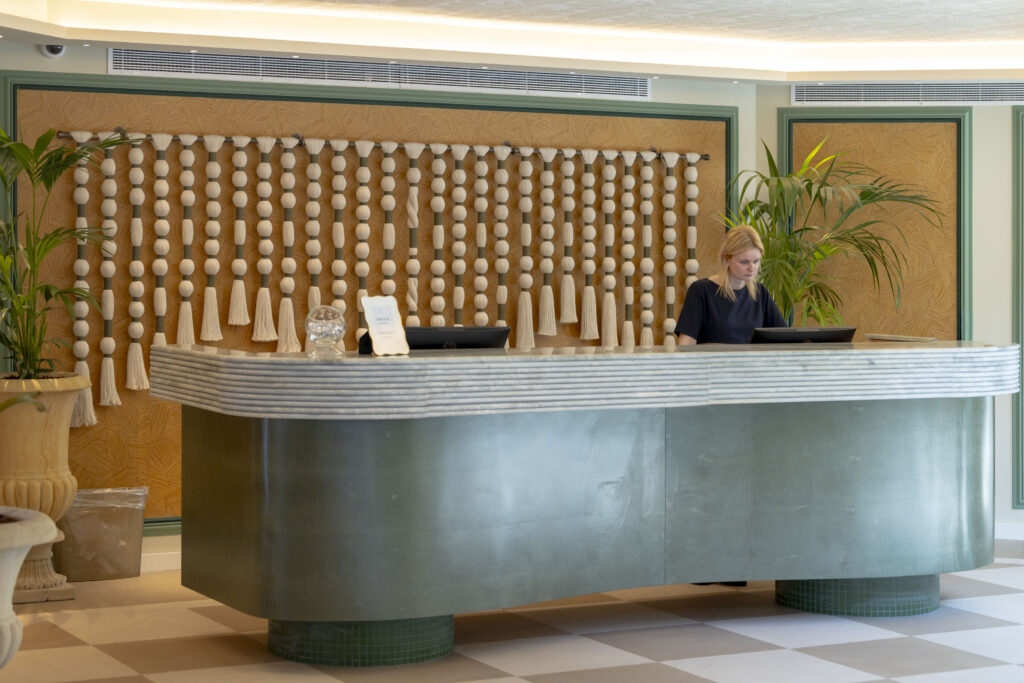
A textile wall piece extends the installation’s language to the hotel’s check-in desk. Photo : Bruno Barbosa
From Craft Gardens’ perspective, the project marks a new milestone in its trajectory, consolidating the studio’s presence in architecture and luxury hospitality initiatives. Craft Gardens links the partnership to a broader movement bringing contemporary art and Portuguese craftsmanship together in high-visibility international contexts.
Initiatives like Leite’s fit, according to Craft Gardens, into a wider trend within the luxury hospitality sector, which has increasingly valued permanent art installations as a differentiator in guest experience, replacing mass-produced decorative elements.
Fact sheet
Marta Ramada Leite, head of Craft Gardens, signed the “Mediterranean Garden of Light” installation at Kimpton Quinta da Marinha in Cascais.
Goddard Littlefair handled interior design, while TPC Lighting Studio led lighting design. Seven monumental chandeliers and a suspended textile panel make up the composition, featuring 389 entirely handmade tassels.
Regarding materials, Craft Gardens used a high-performance technical thread certified fire retardant, developed specifically for hospitality-sector applications. Photographer Bruno Barbosa shot the installation.
About Craft Gardens
Founded by Marta Ramada Leite, Craft Gardens focuses on suspended textile sculptures, art installations and lighting pieces, all handcrafted.
Combining art, design, architecture and craftsmanship aims to transform how people experience and feel spaces, according to Leite — a purpose that guided development of the Kimpton Quinta da Marinha project.
Instagram: @craft_gardens
Website: craftgardens.pt