 Serpa
Serpa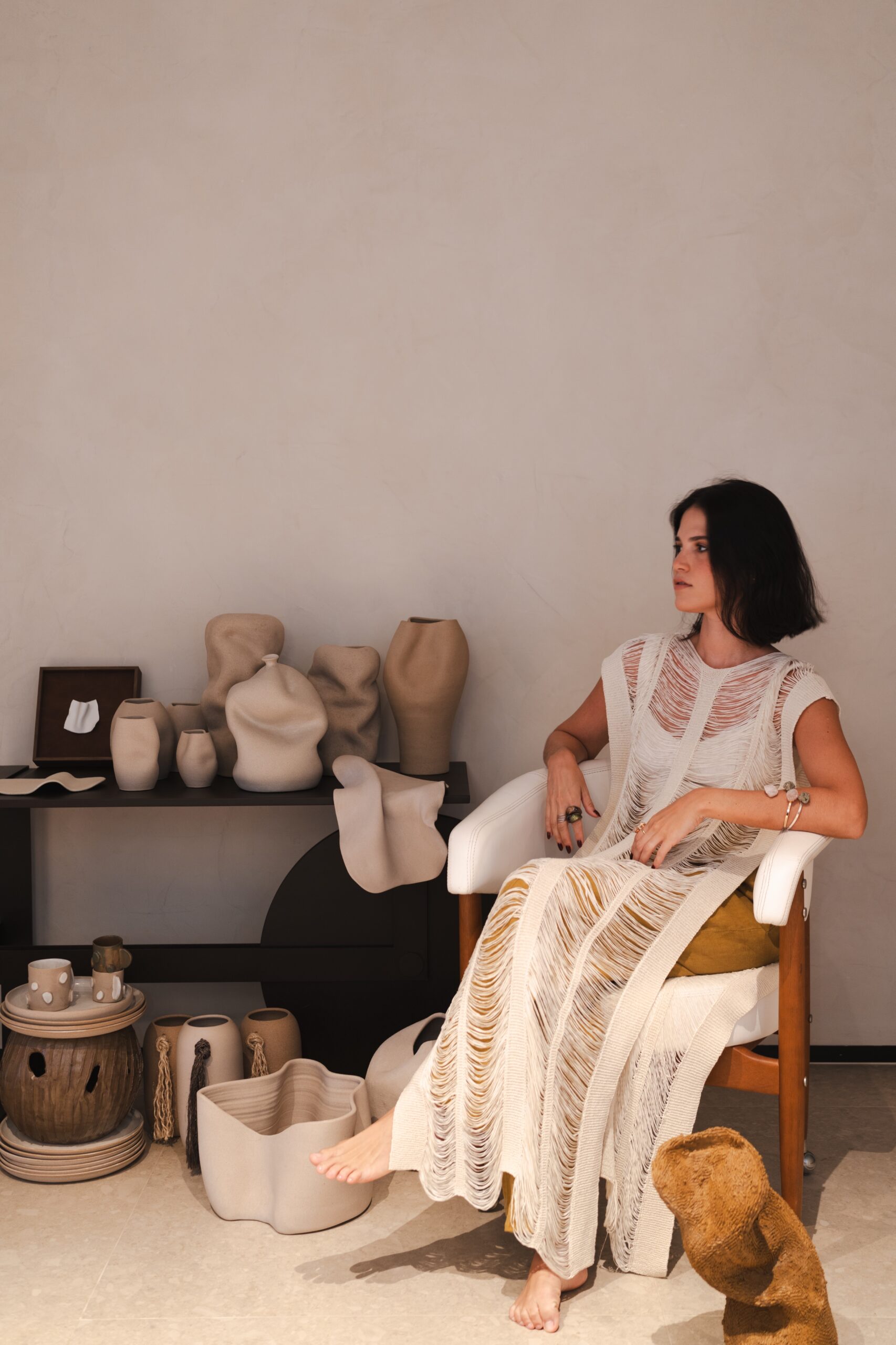
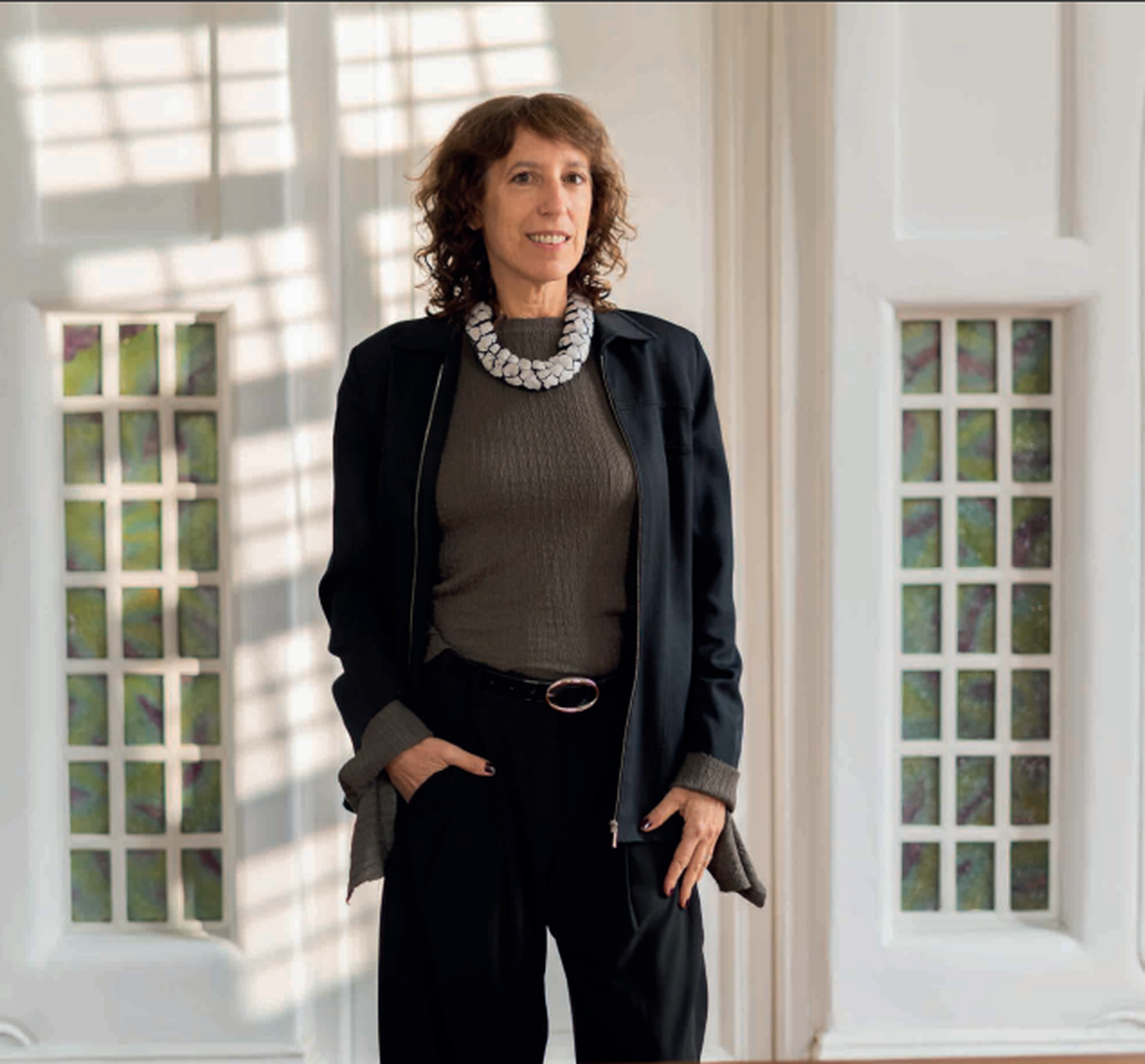
Portrait of Luana Barros — Creative director and founder of AVOÁ, Luana Barros poses in her studio, surrounded by the brand’s ceramic pieces. Photo: Courtesy
From Nature Observation to Everyday Home Life: How Designer Luana Barros Builds AVOÁ’s Collections, a Brand Born in Salvador During the Pandemic
Salvador serves as the starting point for AVOÁ, a brand of decorative objects and tableware pieces created by designer Luana Barros, who was born and raised in the city. A 2019 law graduate, she began devoting herself to object design after the pandemic, when isolation and close daily life with her husband’s family rekindled an interest in aesthetics and materials she describes as present since childhood. Among the brand’s collections are Mural Círculos, Rochas Esmaltadas, Série Esferas, Série Rasgos and Série Discos. Each collection emerges from a process that begins with observing nature and ends in pieces that, according to the designer, “welcome rather than compete” with the environments where they are placed.
Creative director and author of the brand’s designs, Luana traces AVOÁ’s origin to a decisive personal moment in her career. “I wanted the name to represent the moment I was living when the brand was born, a moment of great freedom of expression and creation,” she says. The term comes from “avoar,” a regional variation of the Portuguese verb for “to fly,” and sums up the sense of fluidity that has guided her work from the first sketch to the finished piece.
A Reunion With an Old Way of Seeing
Raised within Salvador’s traditions, Luana ties her path directly to the city where she was born and grew up. “I was born and raised here in Salvador, so Bahia is naturally woven into how I see and perceive things,” she says. She points to the strength of ceramics in Bahian culture, highlighting the traditional pottery hub of Maragogipinho in the Recôncavo region, along with influences from artists such as Carybé and Mário Cravo Jr., who build their own visual language from elements of the territory.
Growing up without easy access to clothes or the ability to simply buy whatever she wanted, Luana describes a long-standing relationship with aesthetic sensibility and materials, built during childhood out of necessity rather than leisure. “I didn’t grow up with access to many clothes or the ability to just buy whatever I wanted,” she recalls. It was in that context, she notes, that she began researching fabrics, mixing materials and creating accessories, an exercise she now recognizes as an early form of design. Law and design, she stresses, are not opposing careers: “I don’t think it was exactly a break from law, but rather a reunion with a part of myself that had always been there,” she explains. Married to an architect and close to a family connected to a furniture store in Salvador, she adds that everyday conversations about architecture, materials and proportions helped shape her interest in the world of objects, a perspective that took concrete form during the pandemic’s isolation.
Origin and Destination in Salvador
Natural materials, textures and organic forms have defined the pieces from the very beginning, reflecting that influence. “Natural materials, fabrics, textures, more organic shapes and a beauty that didn’t need to be excessively ornamental,” the designer says, describing what she was looking for and could not find in the market before creating her own brand. According to her, Bahia’s presence in her work is neither literal nor deliberate: “I think Bahia shows up in AVOÁ without my needing to try to represent it literally,” she states. For her, Salvador’s culture of hosting and sharing meals resonates with the brand’s approach of treating objects as part of everyday life rather than merely decorative pieces.
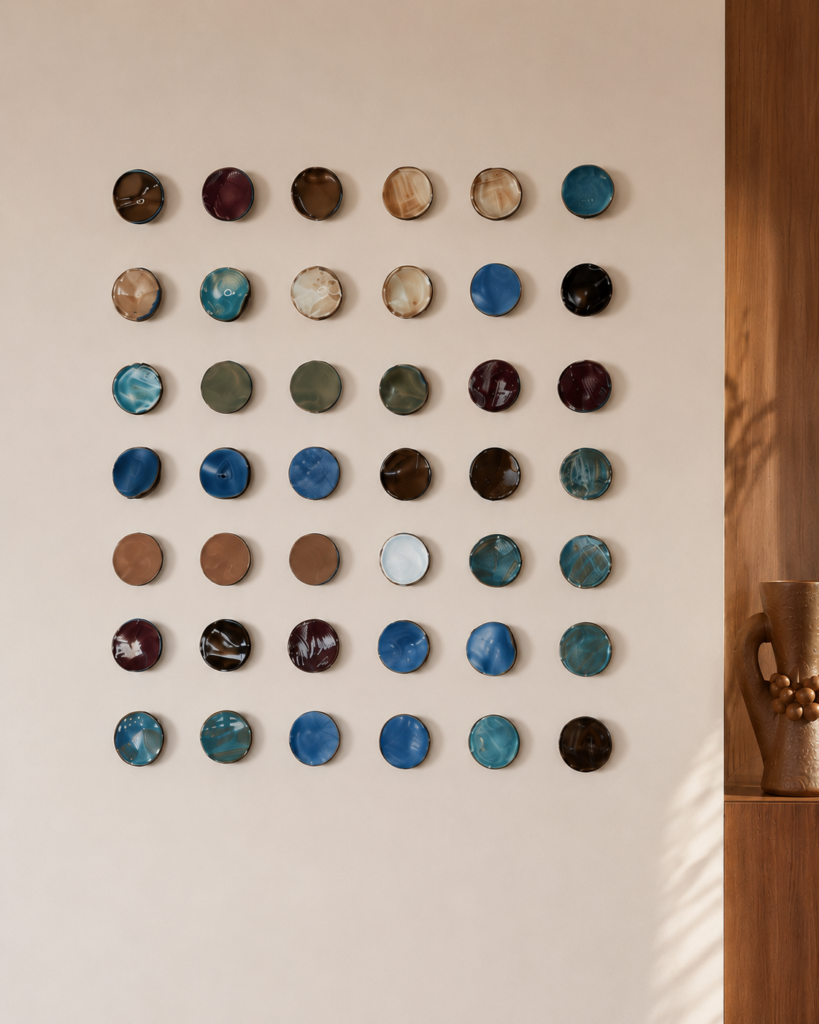
“Circles” Mural — A modular composition in ceramic relief, the piece covers the wall in an organic rhythm inspired by the cycles of nature. Photo: Courtesy
From memory to drawing, from drawing to material
Faithful to that approach, the brand’s collections show how Luana translates observations of nature into objects. In her account, everything starts from an impulse far removed from any immediate commercial demand: “My creative process begins much more from observation than from an immediate need to create a product,” she affirms. Spontaneous forms found in nature, such as textures in stone, leaves, shadows and movements observed in daily life, stay in the designer’s memory before turning into research and, later, into drawing. “Often a texture, a stone, a leaf, a shadow or a particular shape stay in my head, and from there research begins,” she adds.
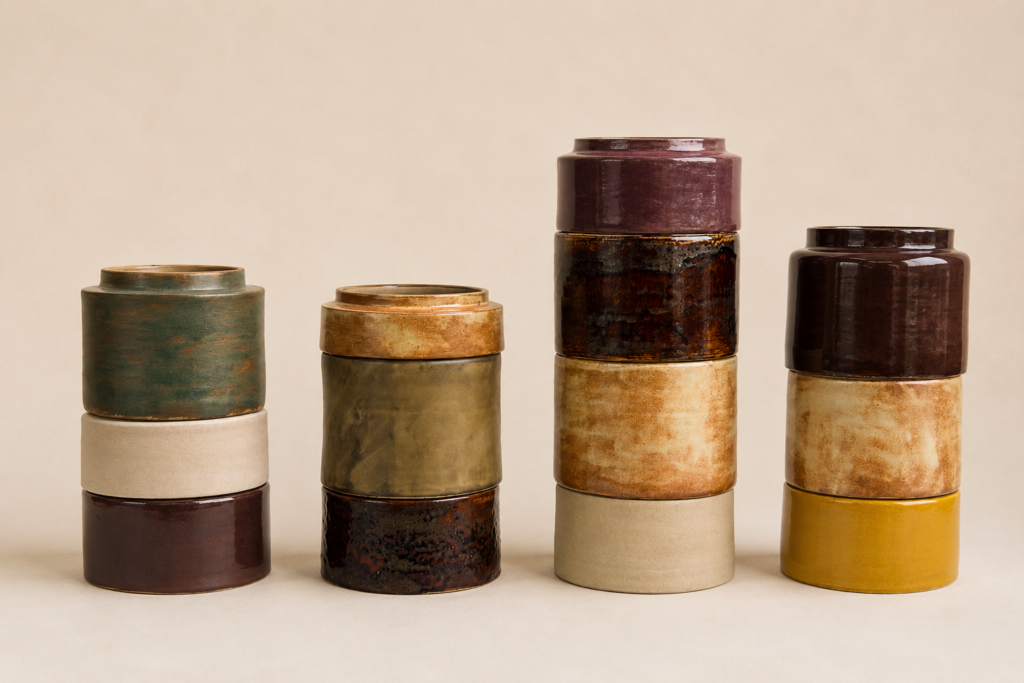
Glazed Rocks — Cylindrical vases with overlapping layers of glaze; the collection replicates the stratification found in rock formations. Photo: Courtesy
Guided by hand-drawn sketches, that first stage favors freedom over any practical concern, allowing the idea to evolve on its own terms. Only afterward do proportion, scale, functionality and material choice come into play, when the creation begins to interact directly with matter. Materials such as ceramic, wood, linen, leather and stone play a central role in AVOÁ’s production, each carrying texture, temperature and small variations that enrich the design rather than merely support it. “I like precisely that possibility of the material taking part in the design, instead of being just a support for it,” she explains.
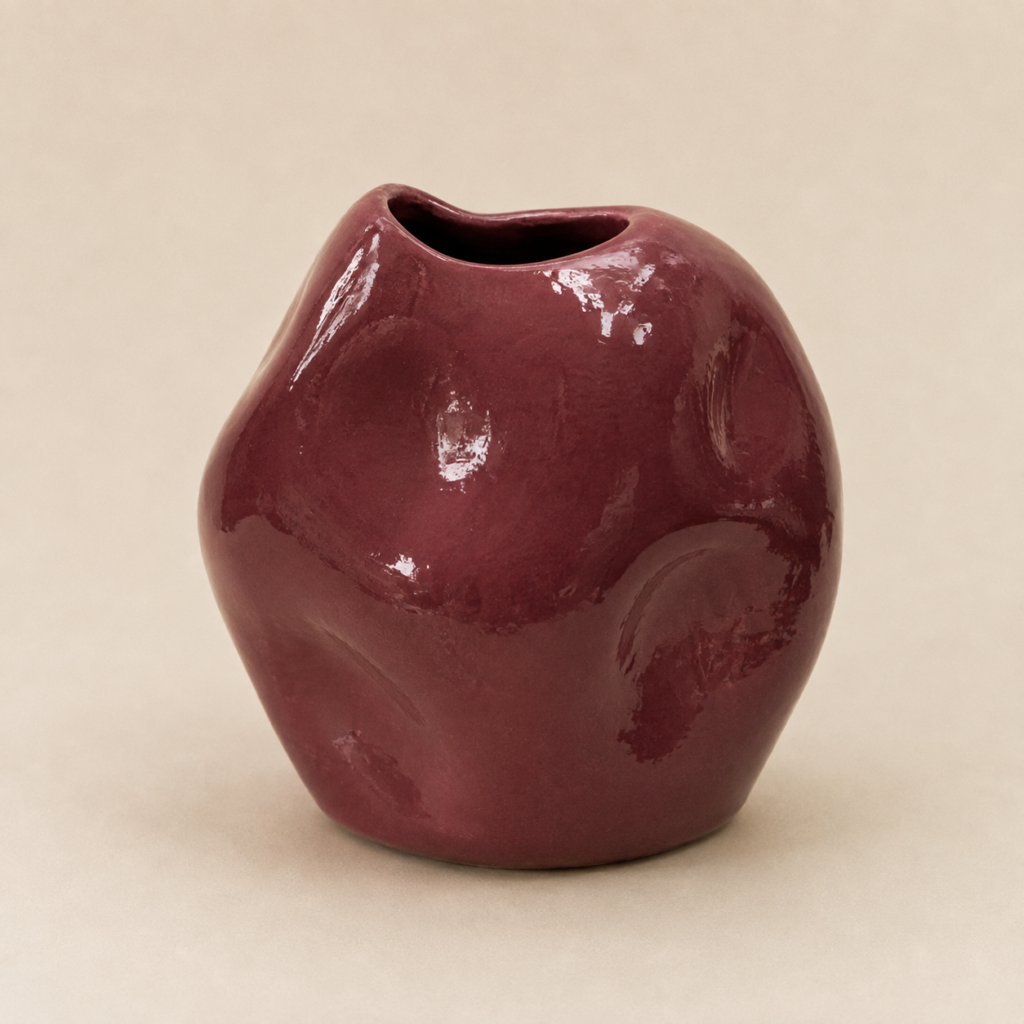
Spheres Series — With rounded contours and a glossy finish, the piece evokes organic forms observed in everyday life. Photo: Courtesy
Testing and adjustment make up a stage Luana considers decisive before each piece takes its final form. She notes that the physical result often reveals aspects that weren’t anticipated in the initial drawing, requiring another look at proportion, texture or finish until balance is reached. Only then is the piece released for production. Reaching the customer’s hands marks, for the designer, the true end of the creative work: “The process ends, for me, when the piece reaches the customer and becomes part of a home, a table, a daily life,” she says. From that point on, she adds, each object begins to build a story of its own, independent of its creator.
Reducing Without Erasing the Essential
None of that translates, for Luana, into visual simplicity or a lack of ornamentation. “Minimalism, in this process, doesn’t simply mean making objects with few lines or a clean look,” she notes. For her, minimalism is above all about reduction, proportion, material and space.
Among her references, the designer cites German designer Dieter Rams, for whom good design should be useful, honest, long-lasting and discreet, seeking the least possible presence — not as absence, but as a way of focusing attention on what truly matters. British designer John Pawson also figures among them, whose reading of simplicity encompasses light, proportion, volume, surface, repetition, matter and even the ritual of occupying spaces, an understanding close to the one guiding Luana’s work.
Discs Series — Arranged in a grid on the wall, this set of ceramic discs in various shades explores repetition and proportion as principles of composition. Photo: Courtesy
Pieces That Welcome Rather Than Compete
Each piece seeks a personality and presence that engage with other elements around it, without imposing itself on them. “I don’t want to create objects that need to compete for attention with a home,” Luana says. Excess and emotion stand out as central terms in her personal definition of minimalism: “It’s not about having less for the sake of less. It’s about understanding what’s essential and giving it room to hold meaning. It’s about removing excess without removing emotion,” she affirms.
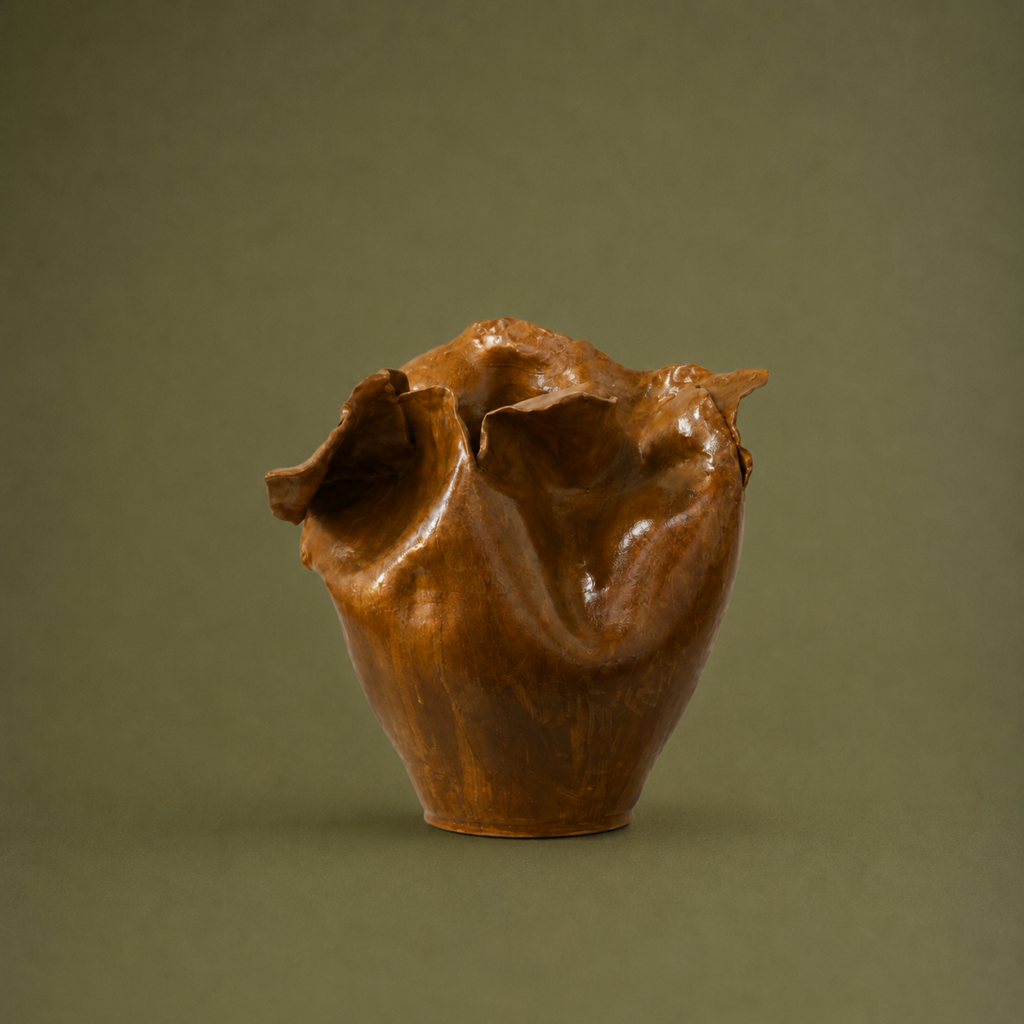
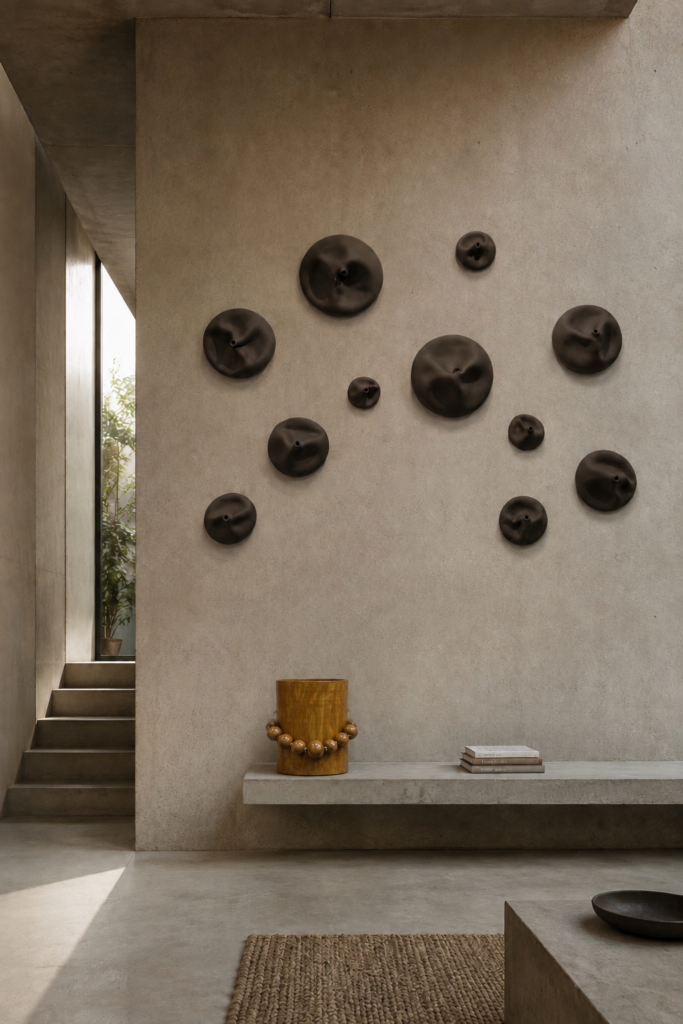
Rasgos Series — Irregular edges and a rustic texture define this collection, which transforms the material’s imperfections into aesthetic elements. Photo: Courtesy
Following that logic, the intent is for each object to be perceived, touched, used and lived with, regardless of how bold its design may be. Even with striking features, the goal is for it never to stop belonging to the environment and to the people who live alongside it. Imperfections in the material stand out there, treated by Luana as part of the pieces’ beauty rather than as flaws to be corrected: “Bahia taught me to see beauty not only in what is perfect or finished, but also in matter, gesture, time and small imperfections,” she says.
Tied to that culture of togetherness and hospitality so present in Salvador, Luana treats AVOÁ’s objects as part of people’s daily lives, not as pieces isolated on a shelf. Personal trajectory and creative process meet at exactly that point: from practicing law to designing pieces inspired by Bahia’s nature, the path she describes was less about leaving one field behind and more about integrating what had always been part of how she sees the world.
Instagram : https://www.instagram.com/avoa.atelier/