 Serpa
Serpa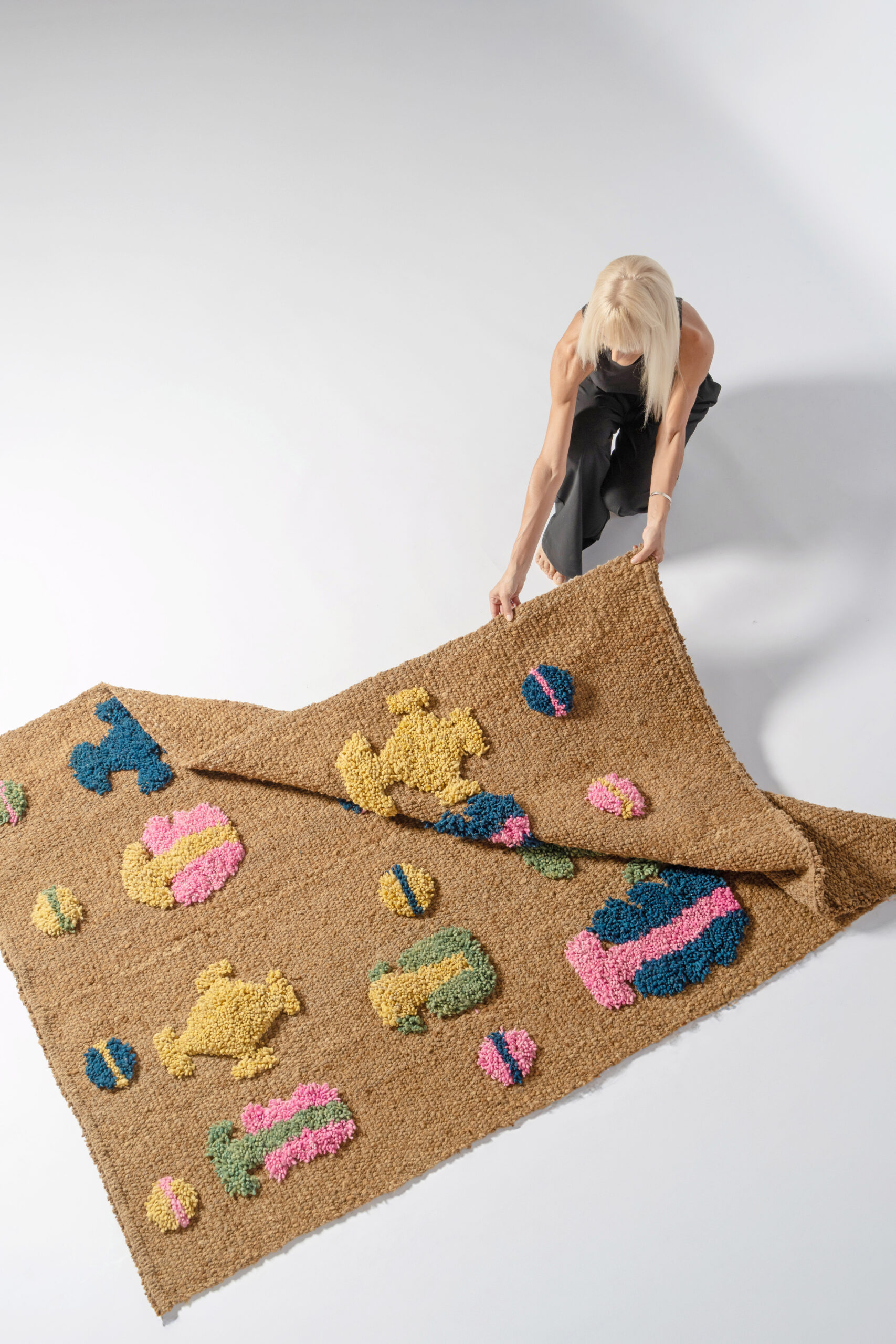
Carolina Pavetto
Carolina Pavetto unites five Argentine provinces in a project that preserves indigenous iconography and solves the sheep wool crisis
Entrepreneur Carolina Pavetto developed with Mantara a business model that combines contemporary art, indigenous people’s design, and social impact. The premium rug brand employs 120 weavers from Santiago del Estero, Salta, Catamarca, La Rioja, and Jujuy and achieved B Corporation certification — recertified this year — recognition that attests to its commitment to sustainability and triple impact.
Each province contributes specific knowledge and techniques. In Santiago del Estero, weaving is the most traditional craft, especially in the north, along the banks of the Salado River. The artisans specialize in “baetón,” a pure wool blanket with designs included in the weave, and work with techniques such as urdimbre flotante, incorporating iconography from cultures like sunchituyoc and avería. The region has no electricity, gas, or running water.
In Salta, the craft is heir to Andean and colonial traditions, with textile work featuring sheep, vicuña, and alpaca wool standing out. The weavers produce rugs, blankets, shawls, and ponchos, maintaining customs transferred from parents to children for generations. Jujuy reveals techniques practiced traditionally for centuries, with products made entirely by hand on looms, including Andean designs with strong influence from Pachamama culture.
Catamarca and La Rioja share with the other provinces of northwestern Argentina the tradition of loom weaving, heritage of indigenous peoples, with textile manufactures in wool, cotton, and hemp fibers.

Carolina Pavetto
Mantara produces rugs that enter the luxury market bringing the traditional knowledge of indigenous peoples crossed with contemporary art. The result is a profitable product that allows new generations to learn the craft of their mothers and grandmothers.
The entrepreneur organizes the weavers into groups led by older women who form teams with daughters and granddaughters to ensure the transmission of knowledge across generations.

Solution to a Waste Product
Mantara also acts on solving a serious environmental and economic problem of Argentine sheep production. The company annually donates 25,000 kilos of wool purchased from sheep producers in Santa Fe, Córdoba, Buenos Aires, and Entre Ríos.
This wool, which was previously burned or improperly discarded due to lack of commercial destination, found a noble use in Mantara. In Argentina, architecture studios report that sheep wool is frequently incinerated for having no commercial interest. The problem is widespread: producers discard organic fiber incorrectly — burning or burying it — while importing synthetic fibers that generate microplastics and contaminate water.
For many sheep producers, the cost of shearing exceeds the value of wool in the market, turning the raw material into a loss. There are reports of shepherds forced to burn wool whose value doesn’t even cover the cost of shearing the animals. By purchasing this surplus wool and distributing it to the weavers, Mantara creates a virtuous cycle: it prevents environmental waste, generates income for rural producers, and provides raw material for artisans to maintain their ancestral traditions.
The rugs have high market value due to intensive manual work and complex logistics. Additionally, they are conceived as works of art. As Pavetto said in a 2023 interview, she “doesn’t sell rugs, but rather sells a story.”

International Positioning
Holder of the Good Design Seal from the Ministry of Productive Development, Pavetto exhibited at the London Embassy, the consulates of New York and Milan, the Hamptons fair (United States), and Paris Design Week 2025. Although she doesn’t register direct sales at these events, she builds brand positioning that opens pathways to new markets. Abroad, she mainly sells in Uruguay, London, Italy, and Spain.
Export, however, faces difficulties. Shipping costs increase the final budget. “It’s not so easy to take products abroad, sometimes a rug sits in a warehouse for months due to the amount of documents required,” she explains. She believes 2026 could be “spectacular” if there are improvements in public export policies.

Future and Legacy
The entrepreneur plans to give new momentum to the goal of improving the living conditions of the weavers. “There are those who don’t have water or electricity. We’ve made wells, but it’s not enough,” she says. Now she seeks collaboration from renewable energy companies to help the communities.
Mantara already counts on the second generation in the business: Pavetto’s three sons — Ricky, Juanse, and Bautista. With them, she bets that the brand will also cross generation after generation.

Website: https://mantara.com.ar/
Instagram: https://www.instagram.com/mantara.textil/