 Serpa
Serpa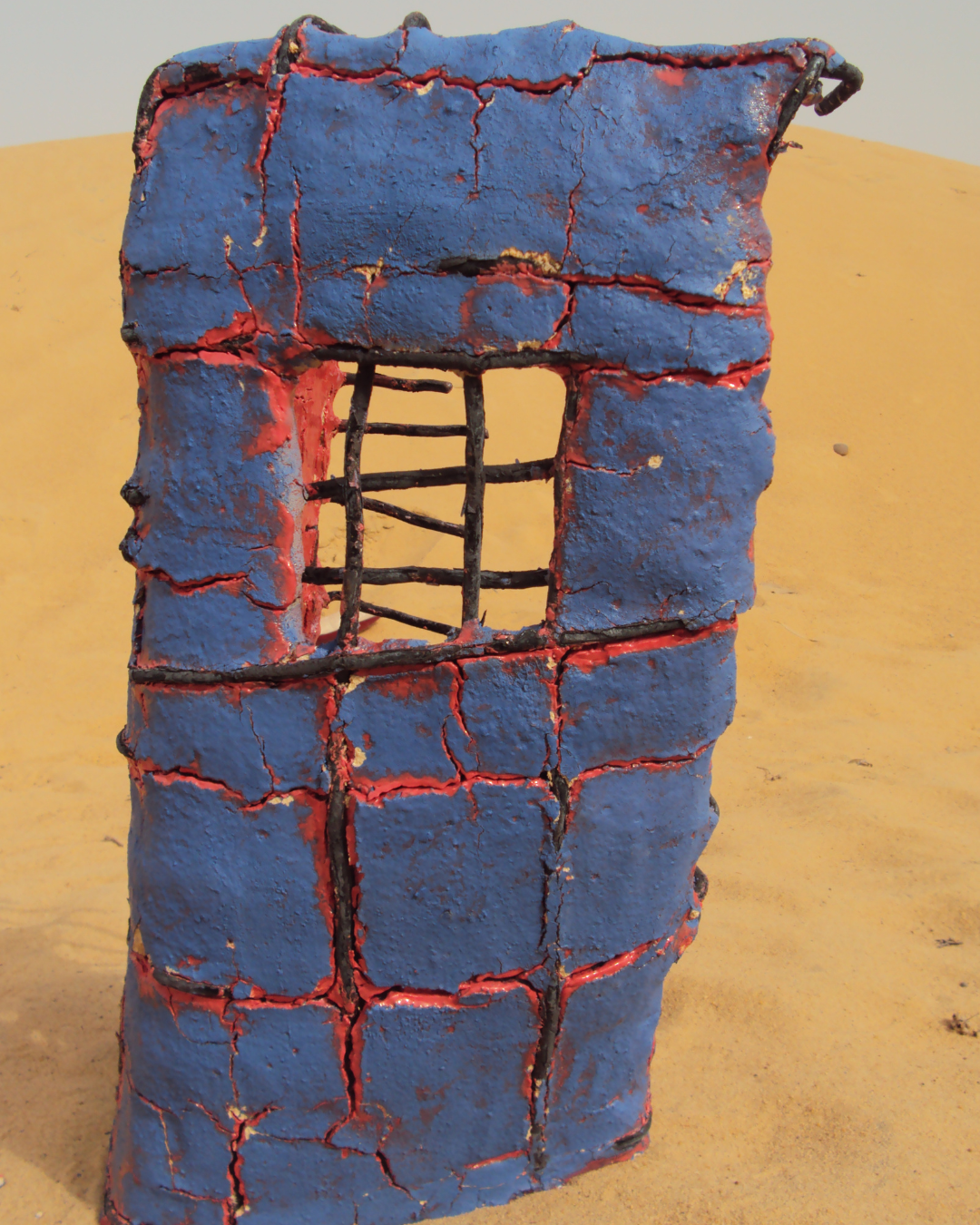
Mohammed Soudy
Recognized with a Multicultural Fellowship in the USA, Mohammed Soudy Creates Pieces that Combine Technical Innovation in Glazes and Social Criticism in a 25-Year Career
Egyptian ceramist Mohammed Soudy, has established himself as one of the most innovative voices in contemporary ceramics by developing a unique technique of crawling glazes using gypsum as a main component. With 25 years of experience in the artistic and ceramic engineering fields, the artist combines technical rigor and aesthetic sensitivity to create works that explore the suffering of the female soul and the complexities of home as a space of social and cultural tensions.
Graduated from the Faculty of Applied Arts, Ceramics Department at Helwan University in Cairo in 2003 with a bachelor’s degree in ceramic art design, Soudy has accumulated international recognition by receiving in 2023 the prestigious Multicultural Fellowship from the National Council on Education for the Ceramic Arts (NCECA) of the United States, one of the most important distinctions in the field. Previously, he had won the Egyptian Incentive Award, the Fourth Medal of Egypt, in 2020, in addition to awards at the 23rd Youth Salon (2013) and the Fine Arts Award at Helwan University (2003).
The artist’s trajectory is marked by intense participation in international exhibitions and symposia spanning four continents. He held two solo exhibitions in Egypt—the first at Etijah Hall of the Palace of Arts at the Egyptian Opera House in 2017, where he presented a comprehensive collection of his ceramic production, and the second, titled “Soul Integration,” at Ragheb Ayyad Hall of the Al Jazeera Arts Center in 2020, an exhibition that synthesized his research on human interiority and psychological suffering expressed through ceramic forms.

Obtaining the State Incentive Award “The Fourth Medal in Egypt” About work “Egyptian House”
His presence in group exhibitions exceeds two dozen participations in countries such as Spain, Turkey, Croatia, Belgium, Italy, Ukraine, Serbia, and Poland. Among the most relevant events are the 17th International Biennial of Ceramics in Asplujas, Barcelona (2014), where artists from dozens of countries presented their works; the 13th and 14th Golden Pot International Ceramic Competitions in Izmir, Turkey (2014 and 2016); the Zagreb Clay Fest 2015 in Croatia; and the International Ceramic Biennial Kunststichting Perspektief vzw 2017 in Belgium.
In 2018, he participated in SERES18, the 4th Old & New Ceramic and Glass Exhibition in Eskisehir, Turkey, a city historically known for its ceramic tradition. That same year, he joined the 23rd International Ceramic Symposium in Zlacusa, Serbia, an event that brings together ceramists from various nationalities for technical and experiential exchange. In 2019, he presented works at the Dish Exhibition at the Gezira Arts Center in Cairo and at the “RoadMap to the Renaissance” exhibition at the Darb 1718 cultural center, also in the Egyptian capital.

4th Ceramic and Glass Exhibition Old & New Eskisehir / Turkey
His participation in the Vasyl Krychevsky Art Ceramics Biennial at the National Pottery Museum of Ukraine in Opishne (2020) also stands out, where he presented the work “Egyptian House,” a piece that explores the contradictions between architectural tradition and contemporary social reality in Egypt. In subsequent years, he participated in the 41st and 42nd editions of the General Exhibition of Egypt (2021 and 2022), the first Ceramic Salon (2022), and the 16th edition of the Agenda Exhibition (2023), events that consolidated his presence in the Egyptian art circuit.
At international symposia, Soudy distinguished himself not only as a participant but as an organizer of workshops on ancient Egyptian ceramics. In 2018, during the 23rd International Ceramic Symposium in Zlacusa, Serbia, he coordinated three artistic workshops at the National City Museum of Paradin, the Cultural Center of Jagodina City, and the Museum of African Art in Belgrade. In these workshops, he shared knowledge about ancient Egyptian techniques, including modeling methods, clay preparation, and firing processes used since the pharaonic period, establishing dialogues between ancient traditions and contemporary practices with European artists and researchers.
He also participated in the 15th International Ceramic Symposium in Dahab, Egypt (2015), a coastal city in Sinai that has become a meeting point for ceramists; the 4th International Ceramic Art Symposium “Ceramic Laboratory” in Daugavpils, Latvia (2016), an event focused on experimentation and development of new ceramic languages; and the 53rd International Ceramic and Sculpture Symposium in Bolesławiec, Poland (2017), one of the most traditional ceramist gatherings in Central Europe, held annually since 1965 in a region historically known for decorative ceramic production.
The research that sustains his artistic production focuses primarily on the innovative use of gypsum in ceramic glazes. The artist developed his own method to create crawling glazes, a visual effect characterized by controlled cracks, separations, and shrinkage on the glazed surface during the high-temperature firing process. This phenomenon, normally considered a technical defect in utilitarian ceramics, is transformed by Soudy into a deliberate expressive resource.

Art work No.8
The technique consists of adding specific proportions of gypsum to the glaze composition, altering its thermal contraction rate and its adhesion to the ceramic piece’s surface. During firing, which can reach temperatures between 1,832 and 2,336 degrees Fahrenheit, the glaze retracts irregularly, creating organic patterns of fissures and exposures of the underlying clay. Precise control of variables—gypsum proportion, glaze layer thickness, kiln temperature and atmosphere, and piece moisture before glazing—requires deep technical mastery and systematic experimentation.
This research work, conducted over years of testing and adjustments, earned Soudy participation in the first edition of the “Ceramic and Colors Award” – Crawling Glaze in Italy, an international competition dedicated specifically to this glazing technique. The distinction positioned the Egyptian ceramist among the world’s leading researchers of this approach, recognizing his technical and aesthetic contribution to the field.
Parallel to experimentation with glazes, Soudy explores the integration of metal structures as support and compositional elements of his ceramic forms. This hybrid approach, which combines the fragility and organicity of ceramics with the rigidity and resistance of metal, allows the artist to create pieces of greater scale and structural complexity. The metal structures function simultaneously as internal framework, support element, and visual component that dialogues with the ceramic surfaces.
The fusion between metal and ceramics requires careful planning of the thermal expansion and contraction rates of both materials during firing cycles. Soudy develops fitting and fixing systems that accommodate the different thermal responses of the materials, avoiding cracks or ruptures. In some works, the metal structure pierces or wraps the ceramic forms, creating visual tensions that reinforce the conceptual contents of confinement, fragility, and resistance that permeate his work.
This approach has become a distinctive characteristic of his recent production, evidencing his interest in breaking established technical boundaries and expanding the formal possibilities traditionally limited by the nature of ceramic material. The resulting pieces combine the tactile and chromatic delicacy of glazed ceramics with the linearity and structural strength of metal, creating objects that inhabit border territories between sculpture, design, and traditional ceramic art.

Art work No.26
The conceptual dimension of his work centers on themes of women and home, approached not as romanticized celebration but as fields of investigation about suffering, oppression, and sociocultural tensions. The artist uses ceramics as a language to express what he calls “suffering of the soul,” exploring psychological and emotional layers of the female condition in domestic and social contexts particularly marked by patriarchal structures still present in Egyptian society and Middle Eastern cultures.
His works function as visual narratives about intimate conflicts and power structures that permeate domestic space. The house, a recurring theme in his iconographic repertoire, is presented simultaneously as shelter and prison, a space of protection and confinement. The fragmented architectural forms, the cracked surfaces of crawling glazes, and the metal structures that wrap or pierce the ceramic pieces function as visual metaphors for the female condition divided between social expectations, individual desires, and limitations imposed by cultural norms.
The choice of ceramics as an expressive medium is not accidental. Material historically associated with the domestic universe and female work in various cultures, ceramics carries within itself the contradictions that Soudy seeks to explore. By transforming this utilitarian material into a support for reflections on psychological suffering and social oppression, the artist subverts its traditional function and expands its semantic potential. The purposeful cracks in the glazes become metaphors for emotional ruptures, the metal structures represent invisible bars of social control, and the fragility inherent to ceramic material mirrors the vulnerability imposed on women in patriarchal societies.
In his artist statement, Soudy affirms that he believes in the vast potential for innovation in the field of ceramics and commits to using his art to express the human condition, seeking to reach broad audiences through the universality of the themes he addresses. The artist expresses gratitude for the opportunity to share his work internationally and demonstrates enthusiasm in continuing his journey of research and technical development allied with conceptual reflection.
Soudy’s solid technical training as a ceramic engineer underlies his capacity for artistic innovation. Between 2004 and 2017, he worked at important companies in the Egyptian ceramic sector, accumulating knowledge about industrial processes, material properties, and production management. He began his career at the Egyptian Company for the Manufacture of Electrical Insulators, where he remained for four years (October 2004 to August 2008), developing ceramic components for electrical applications that require high thermal and dielectric resistance.

Art work No.14
He subsequently transferred to Ideal Standard for the manufacture of sanitary ware, a multinational company of Belgian origin, where he worked for two years (September 2008 to September 2010) in the production of porcelain sanitary pieces. Furthermore, he then moved to Duravit Egypt, a subsidiary of the renowned German high-end sanitary ware company, remaining for one year and ten months (August 2010 to May 2012). In this position, he deepened his knowledge about ceramic body formulation, glaze development, and quality control in large-scale productions.
The pinnacle of his industrial career was the position of department head and ceramic engineer at Vitro Egypt for sanitary ware production, where he remained for five years and four months (June 2012 to September 2017). In this role, he coordinated production teams, conducted market research to identify trends and analyze competitors, selected appropriate materials for developing new collections within determined budgets, supervised production processes at all stages—from ceramic body preparation to final firing—and maintained client relations, interpreting briefs and translating commercial demands into viable technical solutions.
This industrial experience provided the artist with a deep understanding of the properties of different types of clay, glaze behavior at different firing temperatures (low temperature, medium temperature, and high temperature), drying and shrinkage cycles of pieces, structural resistance of complex forms, chemical interactions between glaze components and ceramic surfaces, and large-scale manufacturing processes. More importantly, he developed a rigorous methodology for experimentation, documentation, and technical problem-solving that he creatively transfers to his experimental artistic production.
The intersection between technical expertise and aesthetic sensitivity defines the unique character of his work, situated at the frontier between art and materials science. While many artistic ceramists have predominantly artistic training and develop technical knowledge empirically, Soudy walks the opposite path: he starts from a deep scientific understanding of materials and processes to then explore their expressive possibilities. This approach allows him to propose technically grounded innovations and overcome limitations that frequently intimidate artists without materials engineering training.

Art work No 02
The knowledge acquired in industry about quality control, process standardization, and result optimization is applied by Soudy creatively in his studio. While industrial production seeks to eliminate variations and defects, the artist uses the same technical knowledge to provoke and control intentional “defects,” transforming imperfections into expressive resources. Scientific precision becomes a tool to create controlled unpredictability, a paradox that defines much of his current production.
Soudy maintains a studio in the El Obour district, in the third area of the satellite city located about 19 miles northeast of Cairo, from where he conducts his research and produces works that circulate internationally. The space houses kilns, equipment for preparing bodies and glazes, a modeling area, and materials storage, configuring a laboratory where artistic experimentation and scientific rigor complement each other. The address—number 19, block 28031, third district of El Obour City—has become a reference point for ceramists and researchers visiting Egypt interested in learning about his techniques.
His constant participation in international events has consolidated a network of collaboration with ceramists from different cultural traditions, allowing exchange of techniques, materials, and conceptual approaches. Contact with European, Asian, African, and Latin American artists has broadened his formal and conceptual repertoire while positioning the Egyptian ceramic tradition—one of the oldest in the world, with records dating back to the pre-dynastic period, about 5,000 years before Christ—in dialogue with contemporary issues.

Art work No 07
The workshops he teaches on ancient Egyptian ceramics represent an effort to preserve and update millennia-old knowledge. Soudy researches techniques documented in archaeological sites and historical records, adapting them for contemporary applications without losing their essence. This work of mediation between past and present, tradition and innovation, characterizes his stance as an artist-researcher who recognizes the importance of cultural heritage while seeking original paths of expression.
The NCECA Multicultural Fellowship, received in 2023, represents international recognition of his technical and conceptual contributions to the field of ceramics. The National Council on Education for the Ceramic Arts of the United States is one of the most respected organizations in the area, bringing together artists, educators, researchers, and professionals from the ceramic industry. The fellowship, intended for artists from diverse cultural contexts who demonstrate excellence and innovation, provided Soudy with financial resources, international visibility, and integration into a global network of contemporary ceramists.
The artist demonstrates conviction that the field of contemporary ceramics offers vast potential for technical and expressive innovation, territory still little explored compared to other artistic languages. He manifests commitment to using ceramic art as a vehicle to express the human condition, particularly the dimensions of suffering, confinement, and search for liberation that traverse individual and collective experiences. He believes that his works, by addressing universal themes through a specific material language, have the capacity to reach diverse audiences, regardless of particular cultural contexts.
The universality he seeks does not imply, however, neutralization of cultural specificities. His works carry evident marks of his Egyptian origin, references to traditional architecture, Islamic decorative patterns, and forms that evoke pharaonic ceramics. This cultural identity does not function as exoticism or folklorization but as a starting point for reflections that transcend geographical boundaries. Female oppression, the central theme of his work, manifests in particular forms in Egyptian society but resonates with women’s experiences in different cultures and contexts.
With consistent production, growing international recognition evidenced by the NCECA fellowship and multiple participations in biennials and symposia, and systematic dedication to research on new technical procedures, Muhammad Soudy positions himself as a relevant figure in world contemporary ceramics. He represents the millennia-old Egyptian tradition in dialogue with urgent issues of current art, demonstrating that ceramics, frequently marginalized in the contemporary art circuit in favor of digital media and conceptual installations, remains a vital and transforming language.
His work demonstrates that experimentation with traditional materials, when grounded in technical rigor and conceptual awareness, produces works capable of critically intervening in contemporary aesthetic and social debates. Ceramics, in his hands, ceases to be nostalgic craft or decorative production to become an instrument of reflection on power, gender, identity, and the contradictions of modernity in societies that constantly negotiate between tradition and transformation. The cracks in his glazes are not merely technical innovations but metaphors for the social fractures that his art seeks to make visible.
Instagram: https://www.instagram.com/soudy.mohamad/