 Serpa
Serpa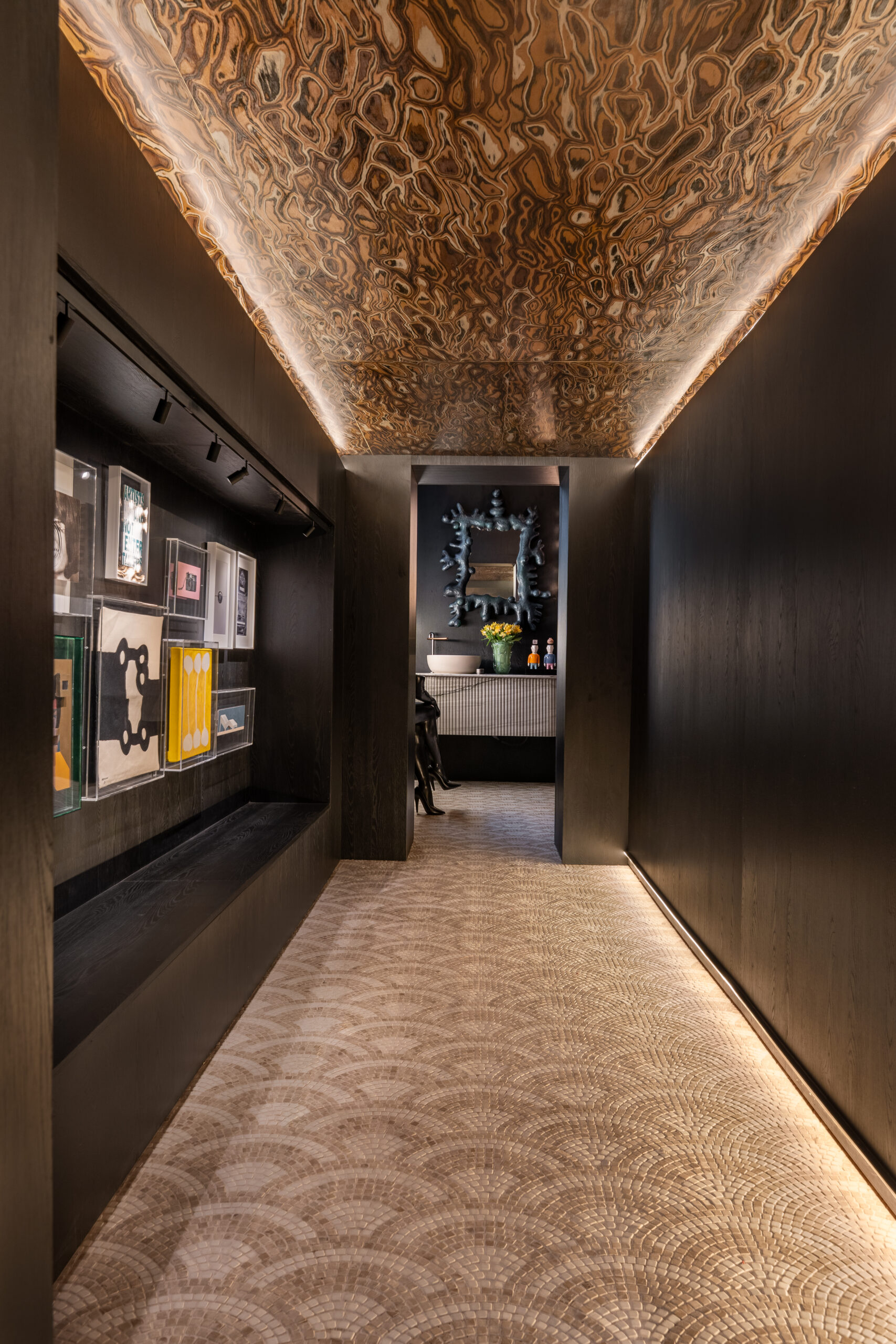
View of the entrance corridor leading into the Bathroom/Art Gallery environment. Photo: Adriana Barbosa.
In 129 square feet (12 square meters), the São Paulo-based architect transforms an intimate space into an immersive experience featuring a Picasso-inspired installation, an exclusive olfactory signature and a curated selection of contemporary art
SÃO PAULO — Architect Carlos Navero is presenting a bathroom conceived as a contemporary art gallery at CASACOR São Paulo 2026. Spread across 129 square feet, the space brings together original design pieces, works by contemporary artists, curated vintage objects and an exclusive olfactory signature in a proposal that merges sensory experience with cultural provocation. The exhibition, which opened June 2, runs through Aug. 9 at Parque da Água Branca in the western zone of São Paulo.
Known for integrating art and architecture across his residential and commercial projects, Navero uses the CASACOR platform to confront visitors with a straightforward but unsettling question: Why should a bathroom be any less worthy of aesthetic attention than any other room in a home? Across 129 square feet, he answers with curation, installation and a precisely constructed visual narrative.
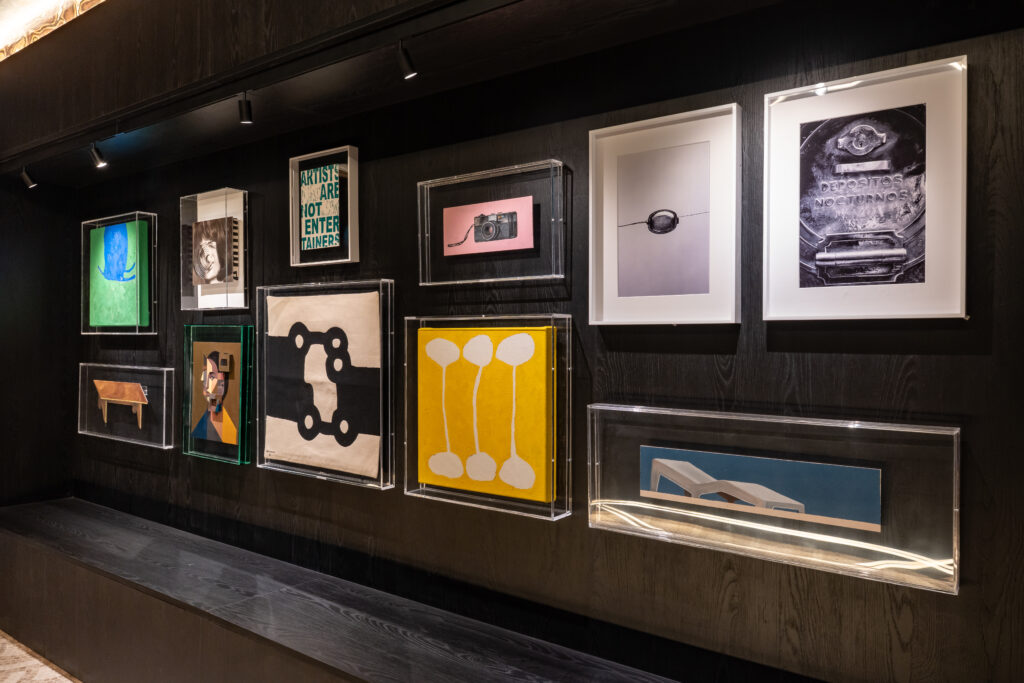
The curated gallery wall, featuring works by contemporary artists displayed in acrylic cases against dark wood paneling. Photo:Adriana Barbosa.
At the center of the project is an installation inspired by a cultural action carried out in Spain to mark the 50th anniversary of Pablo Picasso’s death. Inside the bathroom’s most private enclosure, visitors encounter a poster bearing the artist’s image alongside the word “desaparecido” — missing. Originally distributed across Spanish museums as a provocation about the permanence and legacy of the painter, the piece serves here as a narrative trigger and an invitation to reflection.
Designed to unsettle whoever encounters it, the intervention anchors the conceptual framework of the space, which plays with provocative phrases such as “Wanted: Picasso” and “Where Is Picasso Hiding?” Navero intends for visitors to engage actively with the experience and, upon leaving, share their discovery on social media. The strategy responds to one of the most pressing challenges facing architecture and design exhibitions today: creating visually striking spaces that are also capable of generating genuine emotional connection.
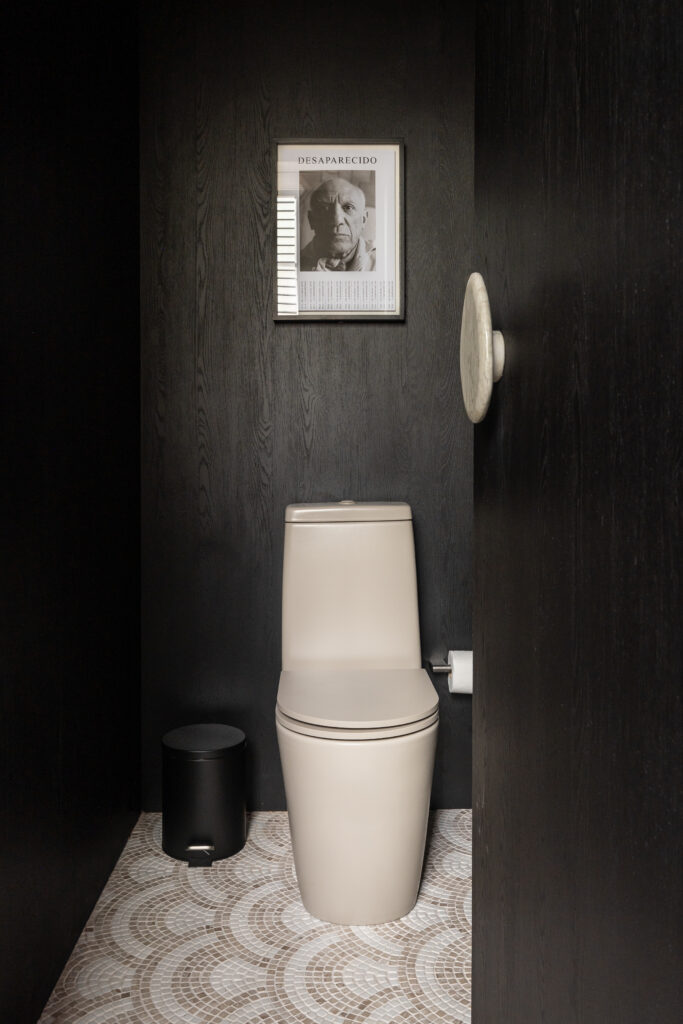
The “Desaparecido” poster — bearing Picasso’s image and the word “missing” — installed inside the bathroom’s most private enclosure. Photo: Adriana Barbosa.
Picasso’s presence as the central reference carries multiple layers of meaning. Regarded as one of the defining symbols of the rupture between form and function in 20th-century art, the Spanish master is simultaneously canonical and subversive. By placing the “missing” poster inside the most private corner of the bathroom, Navero engineers a reversal: the most intimate territory of a home becomes the stage for a philosophical and public question. Where is art permitted to exist? Who authorizes its presence? What is the value of a space no one photographs?
None of those questions receive direct answers inside the room. They are left open, suspended between the Picasso poster and the exit, waiting for each visitor to resolve them on their own terms.
A Sensory Experience Beyond the Visual
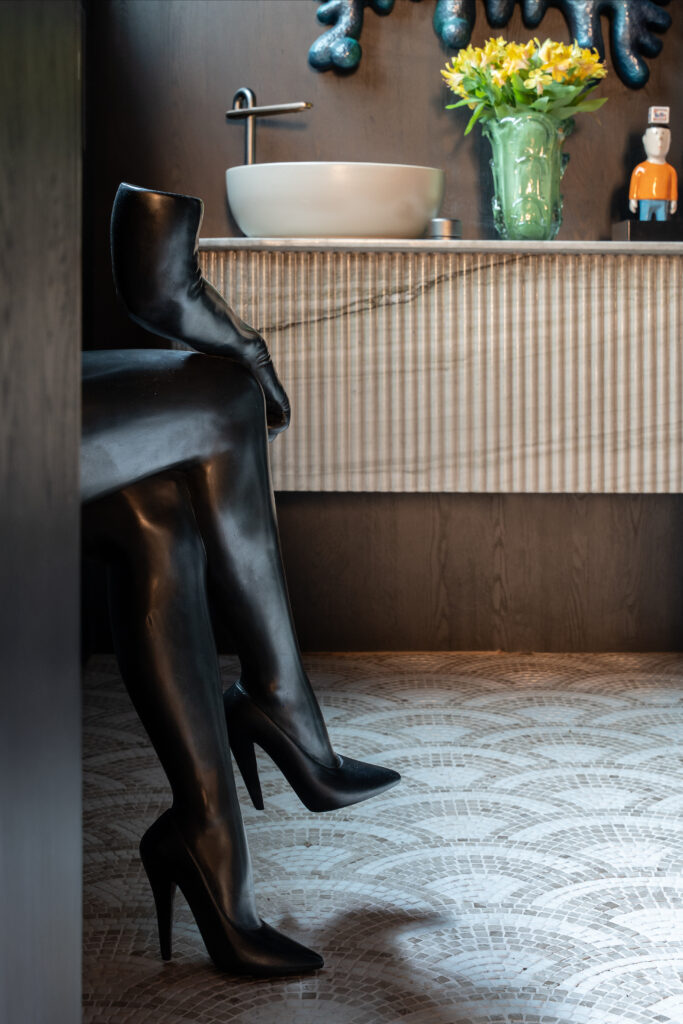
The lavatory area, with sculptural mirror, mosaic floor and the inscription “silêncio também fala” on the wall. Photo: Adriana Barbosa.
Running parallel to the visual provocation, the olfactory dimension of the project functions as a second layer of immersion. An olfactory signature developed exclusively for the space was incorporated with the goal of reinforcing the visitor’s affective memory of the visit. More than a decorative resource, the scent was conceived as an extension of the project’s concept, connecting perception, memory and emotion in an experience that extends well beyond the visual field.
Decades of neuroscience research have established that smell is the sense most capable of activating emotional memory. By incorporating this dimension into the project, Navero engages the visitor at a level that photography and video cannot capture or transmit. Those who enter the space will have an experience that cannot be replicated or shared secondhand — and that appears to be precisely what the architect is after.
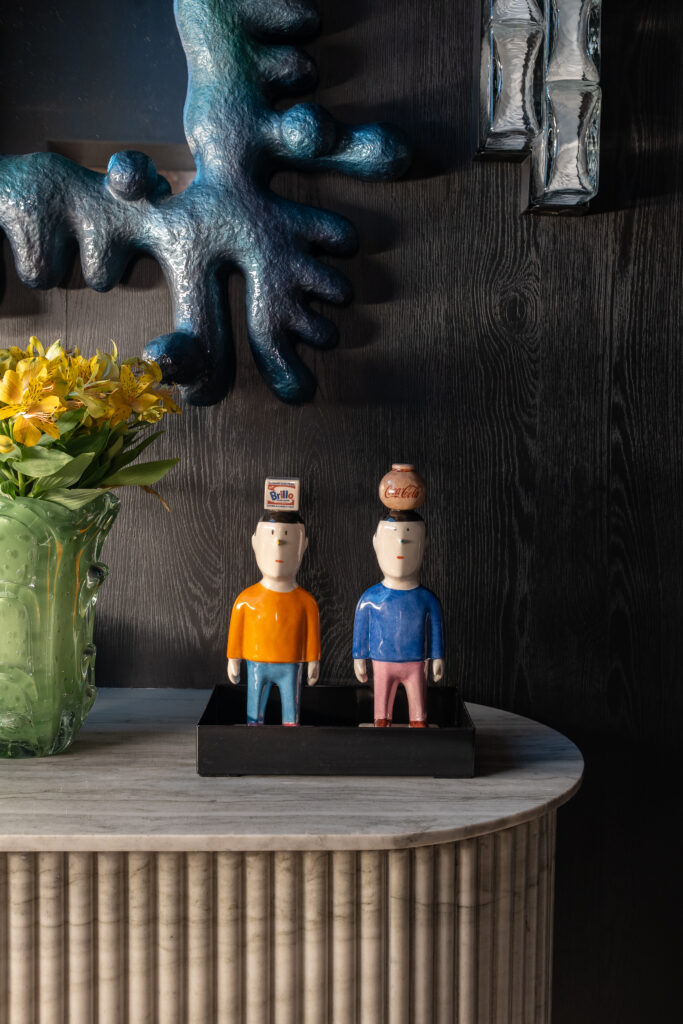
Ceramic figures referencing Andy Warhol’s Brillo Box and Coca-Cola iconography, displayed atop the marble vanity. Photo: Adriana
Barbosa.
Rounding out the environment are original lighting fixtures, design pieces and works by contemporary artists arranged to create a cohesive visual narrative, one that encourages visitors to slow down and examine each detail along the way. No element was chosen arbitrarily. Every object carries a history, a provenance, a reason to be there.
“The bathroom is one of the most intimate spaces in a home. I wanted to turn it into a place of contemplation, surprise and art, without sacrificing functionality. I believe architecture should provoke emotions and create memorable experiences,” Navero said.
Art as Method, Not Decoration
Appearing at CASACOR São Paulo for the fourth time, following editions in 2022, 2023 and 2025, Navero makes his most explicit statement yet about the relationship between art and architecture. For him, a space is not defined solely by its materials, finishes and furniture. It is completed by the experience it offers to those who inhabit it — and that experience begins long before any technical decision is made.
This approach has been gaining traction in contemporary interior design discourse. Increasingly, architects and designers are moving away from the idea that art is an accessory element, applied at the end of a project to dress up surfaces already decided upon. Instead, art is becoming a foundational force, one that informs the concept of a space from the outset and determines not only what is seen, but what is felt, remembered and questioned.
Navero represents this shift with consistency. His working method is rooted in hunting, curating and storytelling. Before drafting a single line, he collects references, objects, artworks and histories. He then selects what enters each project with the discernment of someone organizing an exhibition, not assembling a catalog.
A Career Shaped by Galleries
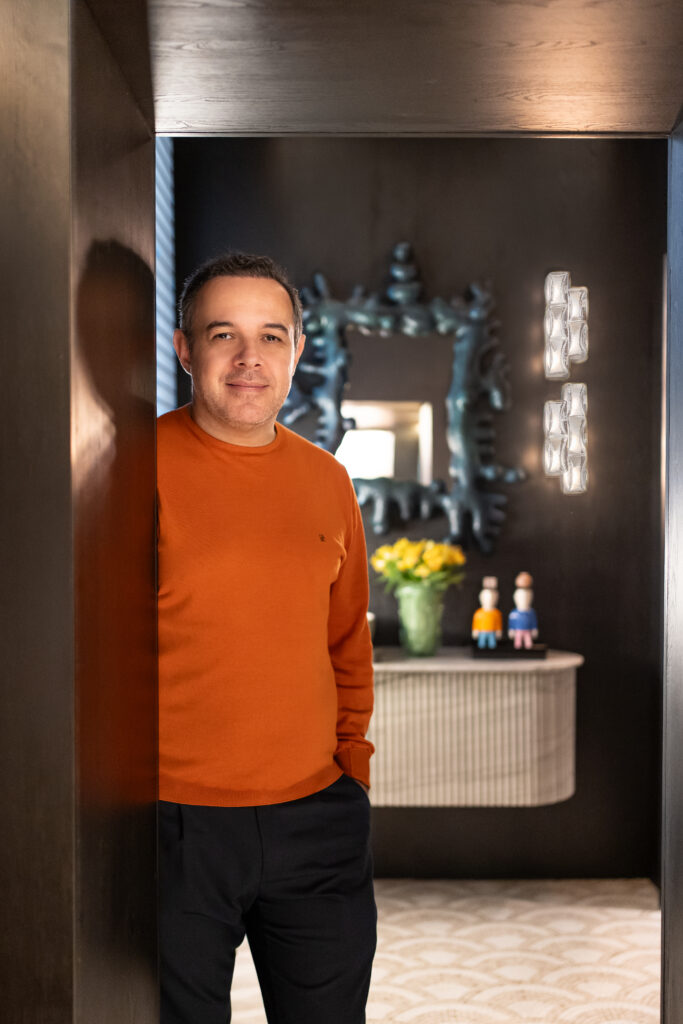
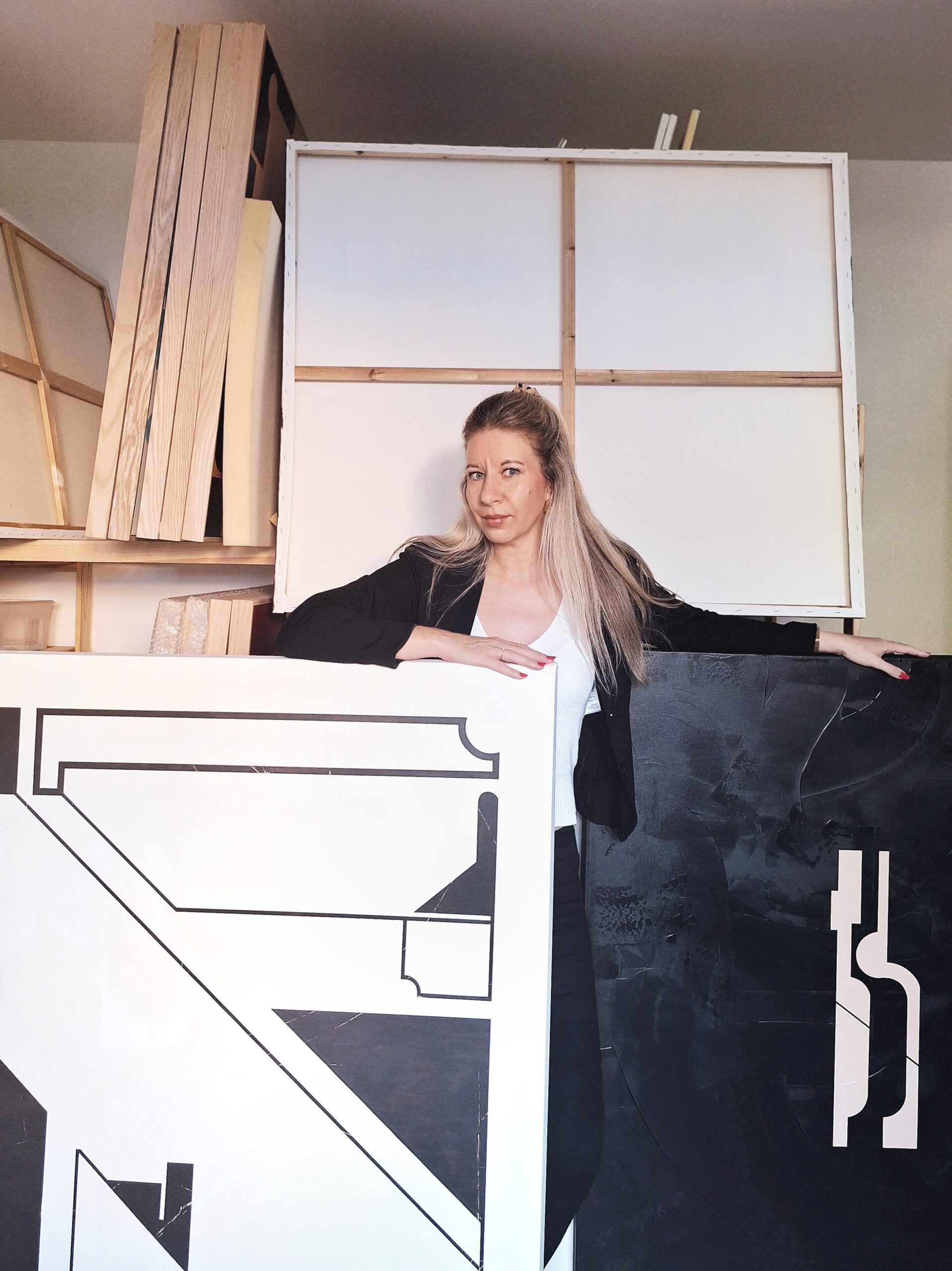
Architect Carlos Navero at CASACOR São Paulo 2026. Photo: Adriana Barbosa.
His interest in art did not begin in architecture school. Before completing his degree in architecture at Centro Universitário Belas Artes in São Paulo, Navero worked in the commercial departments of two art galleries — one in Curitiba, one in São Paulo. That immersion taught him to identify pieces with aesthetic and narrative potential, to understand how works relate to one another and to the spaces they occupy, and to develop an eye trained to notice what often goes unseen.
Since then, exhibitions, auctions and antique fairs have become fixtures of his professional routine. That accumulated knowledge was gradually absorbed into his design practice and now defines the way he conceives every environment. Specializations in interior design and furniture design, both completed at Senac, broadened his technical vocabulary and expanded the tools available to him.
With a studio in São Paulo and a practice that extends to Madrid, Navero moves between two markets that share an appreciation for material quality and the history of objects, yet differ profoundly in rhythm, scale and aesthetic sensibility. That dual presence feeds his work and surfaces subtly in the choices he makes, both in residential projects and in exhibition environments.
Four Editions, One Language
For architects and designers, CASACOR São Paulo is more than a showcase. It is a proving ground where conceptual proposals are built at full scale, tested before a broad public and placed in direct dialogue with the market. Returning for a fourth time, as Navero does, signals a sustained relationship with that arena and a commitment to renewing his ideas with each edition.
In previous participations, the architect had already demonstrated a consistent interest in environments that combine functionality with visual narrative. With the 2026 bathroom-gallery, he moves into more radical territory: experience as an end in itself. This is not simply a well-resolved space. It is a space that provokes, surprises, carries a specific scent and leaves a question suspended in the air long after the visitor has gone.
More than an exhibition environment, the project invites visitors to reflect on presence, perception and silence. Those themes run through every design decision and reveal themselves in layers throughout the course of the visit, from the first visual impact to the moment a visitor steps out of the enclosure with Picasso’s image fixed in memory.
CASACOR São Paulo 2026
CASACOR São Paulo 2026 is held at Parque da Água Branca, at 455 Avenida Francisco Matarazzo in the Água Branca neighborhood in western São Paulo. The exhibition brings together spaces designed by architects, designers and landscape architects from across Brazil and runs through Aug. 9. The Bathroom/Art Gallery environment is designed by Carlos Navero Studio. Photo credit: Adriana Barbosa.