 Serpa
Serpa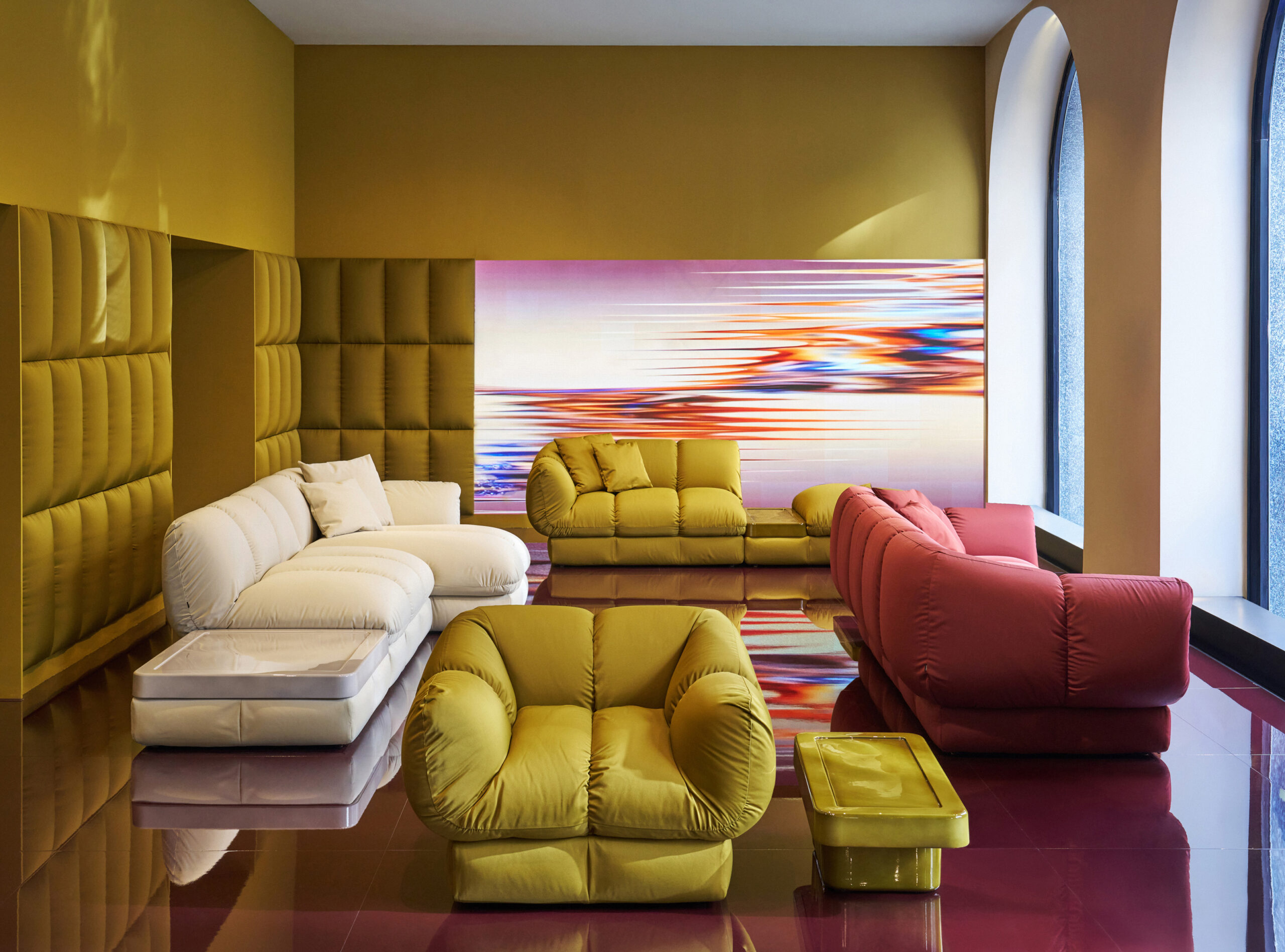
Patricia Urquiola designed the Assise Ardys chair, featured in “The Cassina Perspective 2026” alongside pieces from the Karakter x Cassina collection by Aldo Bakker, Gianfranco Frattini, Verner Panton and Nicos Zographos. Photo: S2H Communications
Event organized by Maison&Objet runs Sept. 10-19 across four Paris districts, with new curators, an international guest and fresh venues
France’s capital will host the new edition of Paris Design Week from Sept. 10 to 19, 2026, an event organizers describe as one of the leading international gatherings dedicated to interior design, furniture, craftsmanship and collectible design. Organized by Maison&Objet, the festival spreads across four central districts of the city, including Le Marais, Saint-Germain-des-Prés, Opéra and Bastille, bringing together galleries, showrooms, schools and heritage sites activated specifically for the occasion.
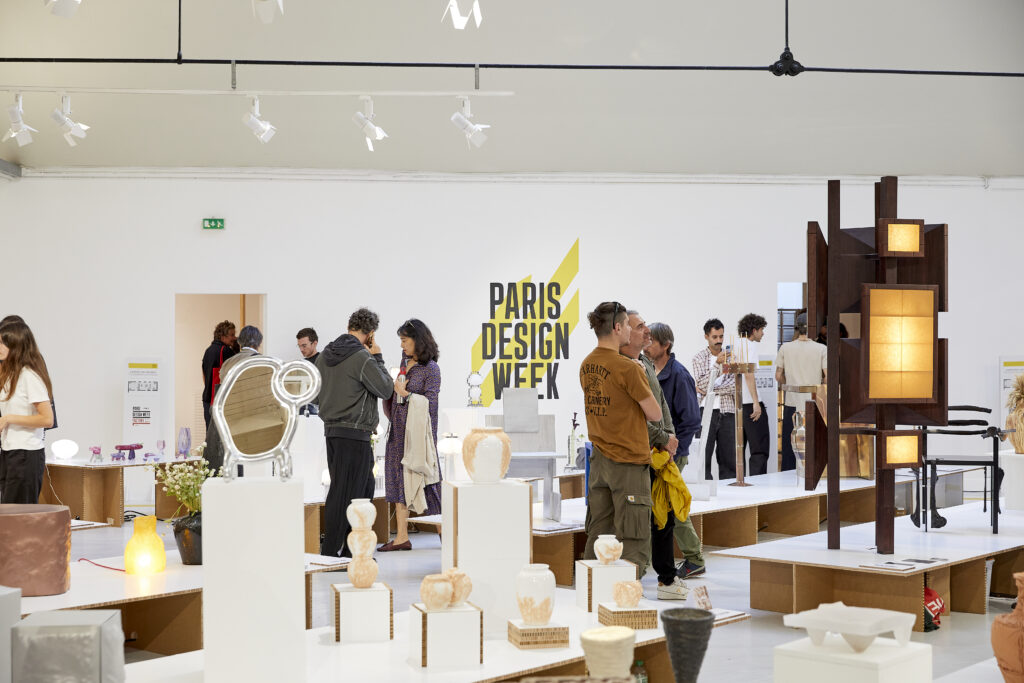
Guests wander through the Espace Commines gallery during a previous edition of the Paris Design Week Factory tour, led this year by Jean-Baptiste Durand and Simon Geringer. Photo: GregSeva
According to promotional material sent by organizers, the 2026 edition carries the title “Design in Motion, a Powerful Edition” and expands the event’s heritage footprint, adding iconic addresses that reshape the capital’s creative map. Multiple rhythms define the concept, plural by nature, uniting established and emerging scenes around the same creative dynamic.
International participation also grew, with new guest countries, emerging creative scenes and new venues expanding the show’s reach, organizers said. Contributing to that growth is the increasing maturity of the Factory circuit, dedicated to emerging creation and collectible design, along with the arrival of new venues.
Last year’s edition offers figures worth noting for perspective. In 2025, Paris Design Week featured 10 days of programming, 360 participating venues, 543 designers and creators, 12 exhibitions and installations, 23 countries represented, four main districts and five thematic routes.
Factory Circuit Brings New Curators to Four Marais Galleries
Four addresses in the heart of the Marais form the route known as Paris Design Week Factory, described by organizers as a laboratory for emerging creation and collectible design. A new curatorial duo, Jean-Baptiste Durand and Simon Geringer, leads this year’s selection.
At Espace Commines, about 40 exhibitors present works designed to escape labels such as design, art or craft, according to the official description. Curators created a dedicated scenography for the venue, traditionally one of the circuit’s highlights.
Durand and Geringer also curated the address at 116 rue de Turenne, which hosts pieces by emerging creators arranged in dialogue with one another, abandoning the traditional trade fair format for a unified scenography. Meanwhile, 16 rue des Minimes brings together designers and publishers already established in the contemporary scene, with pieces spanning different stages of production, from prototype to finished object.
Closing the quartet is 10 rue de Turenne, occupied by the China Creative Pavilion with the exhibition “Bon Goût! Good Taste!” It explores relationships between sensory taste and aesthetics across cultures, bringing together design, materials and gastronomy professionals in a panorama of contemporary Chinese creation.
Manufacture des Gobelins Schools Add Parallel Shows
Affiliated with the Manufacture des Gobelins, design schools and collectives make up a parallel program alongside the Factory circuit. Gathered under the banner “Vivement Demain,” the Campus Mode Métiers d’Art et Design organizes three shows from Sept. 9 to 13 at the Mobilier National, including a selection from recent graduates of the campus schools and an exhibition of the 14 finalists of the Prix Jeune Création Mobilier National 2026, alongside historic pieces from the institution’s collection. Rounding out the avant-garde program are the Café Parisien, designed by the PP Designers collective at the BHVP headquarters, and a collaboration between the ECAL school and the Helinox brand at the Hôtel de la Monnaie, set to be presented from Sept. 16 to 20.
Joseph Walsh Named Guest of Honor, Takes Over Hôtel de Sully
Known for his work in wood, Irish designer Joseph Walsh is this year’s guest name at Paris Design Week 2026. He takes over the orangery, gardens and main courtyard of the Hôtel de Sully with an installation of ash-wood sculptures that defy gravity through organic forms.
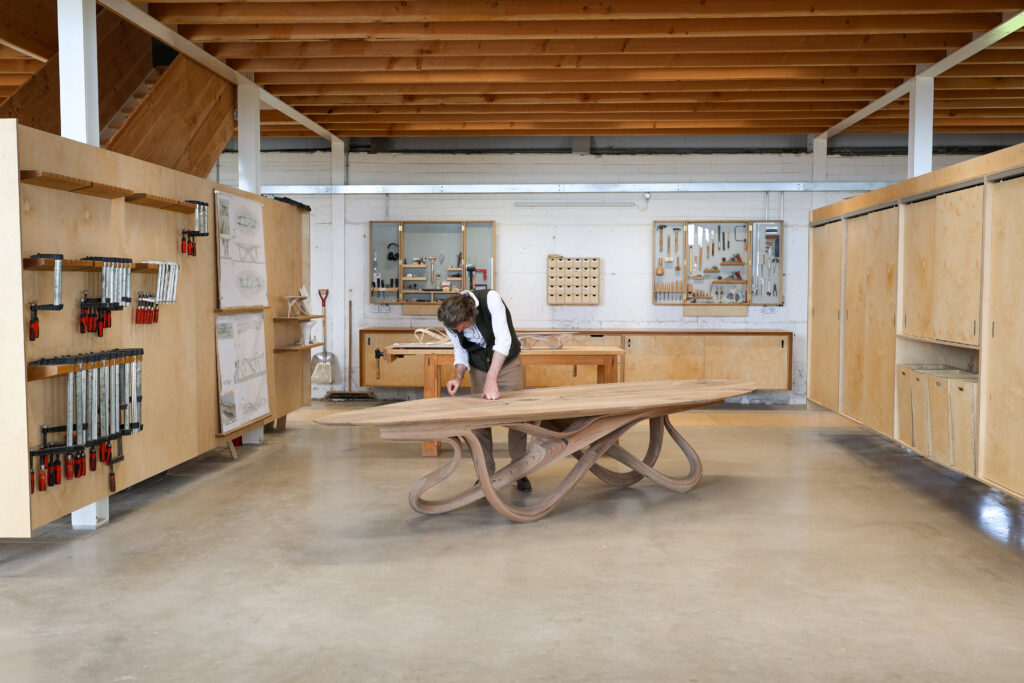
Working from his studio in County Cork, Ireland, the artist developed pieces such as the Enignum Table IV in collaboration with the Makers community of artisans before their installation at the Hôtel de Sully. Photo: S2H Communications
Pieces were developed at the artist’s workshop in County Cork, Ireland, with the collaboration of his community of craftspeople known as Makers. Included in the collection are works from the Gestures and Enignum series, which define Walsh’s work through a combination of technical mastery and handcrafted treatment of wood.
“I wanted to confront free movement with the perfect geometry of the Hôtel de Sully,” Walsh said, according to a statement released by event organizers.
“Design sur Cour” Revives the Capital’s Heritage Sites
Named “Design sur Cour,” one of the program’s central pillars aims to reveal heritage spaces from a new perspective through interventions, installations and events. It takes over major institutions across the city through new collaborations.
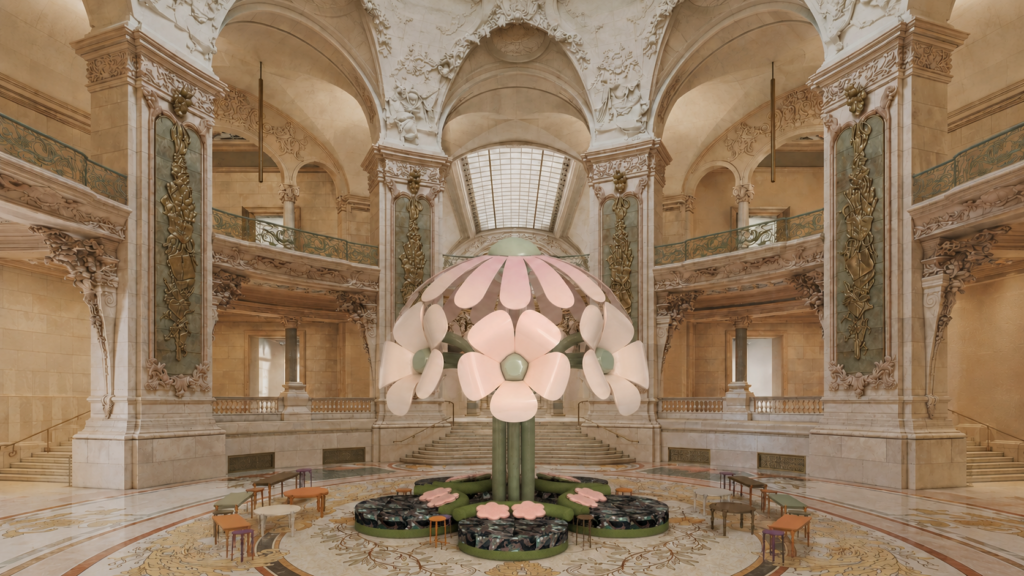
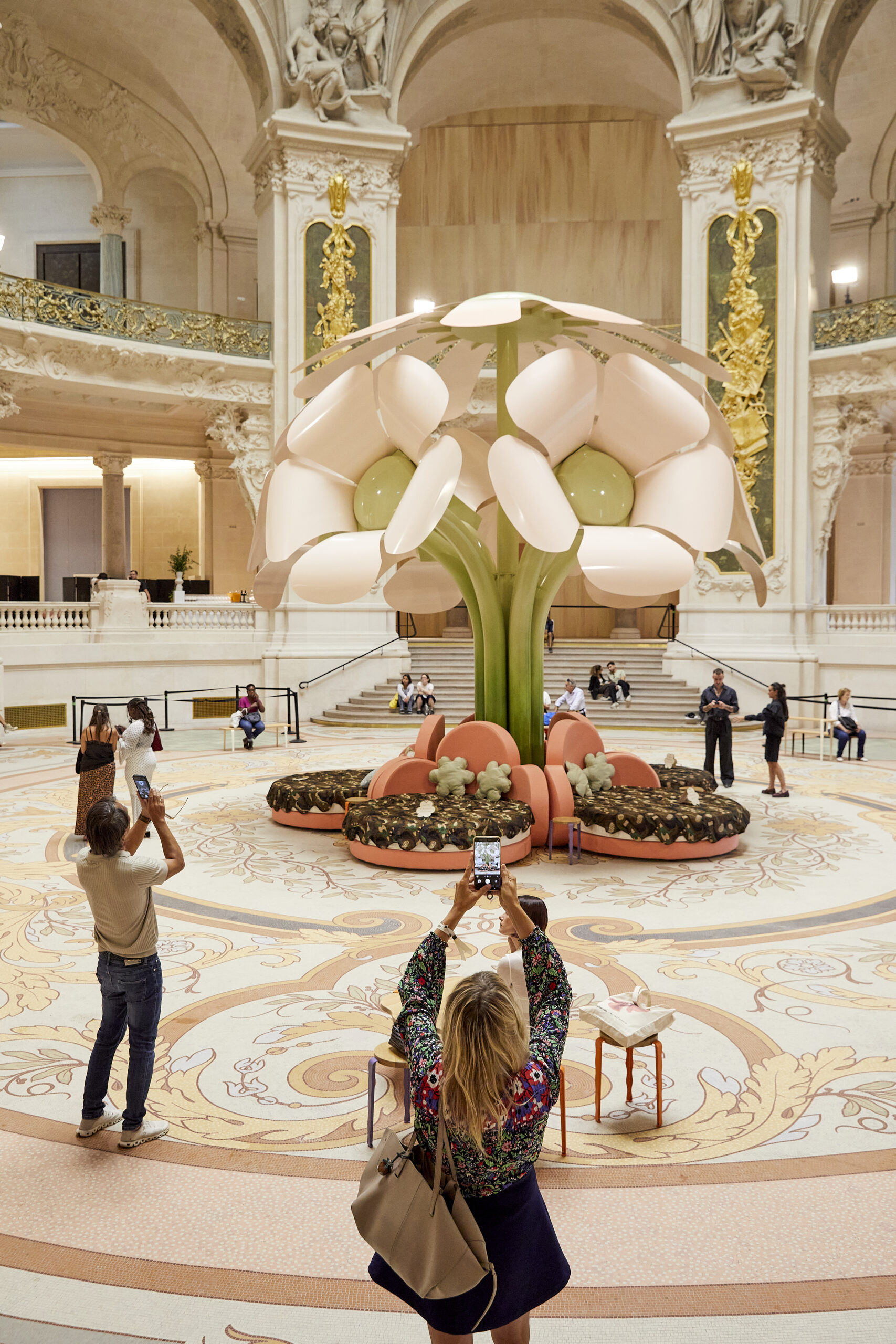
Floral motifs and the venue’s historic decor inspired Julien Sebban’s installation “Le Grand Bouquet,” hosted inside the Rotonde d’Antin at the Grand Palais. Photo: S2H Communications
One of the line’s highlights is an intervention by Julien Sebban, head of the Uchronia studio, at the Rotonde d’Antin inside the Grand Palais. Titled “Le Grand Bouquet,” the installation draws on floral motifs and the venue’s historic decor, blending architecture, design and immersive scenography. Organizers said the piece was developed in partnership with several French craft houses and celebrates the joy and imagination of contemporary creation. A selection of objects inspired by the installation’s universe is also arriving at the Grand Palais’ own Boutique Design et Métiers d’Art.
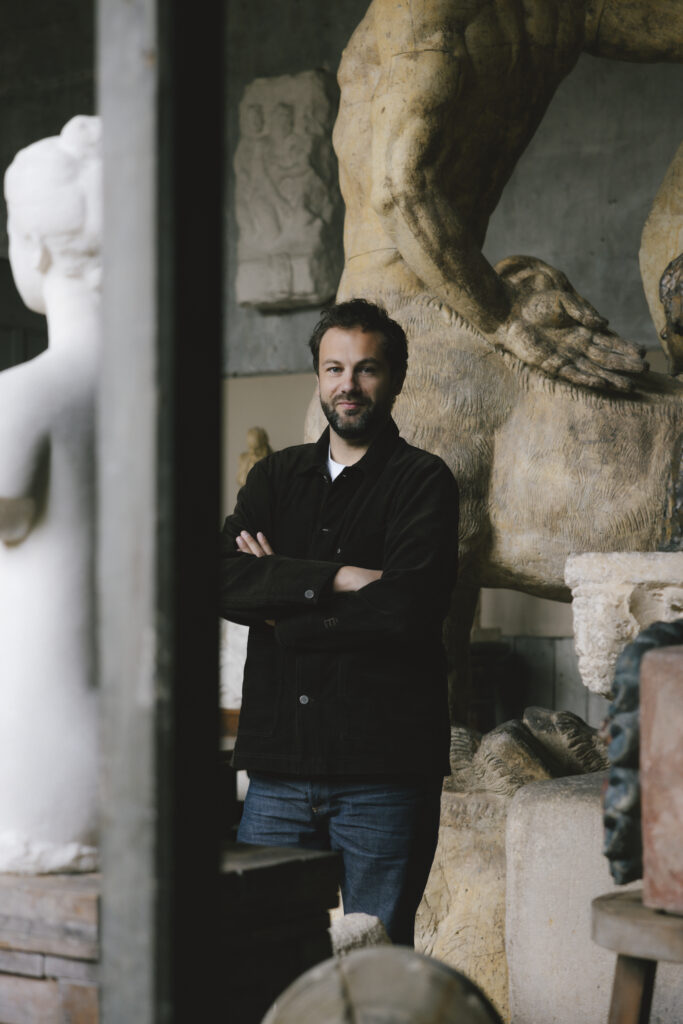
Musée Bourdelle hosts a portrait of the designer, who presents “Contrepoint,” an exhibition conceived to resonate with the sculptures of Antoine Bourdelle. Photo: Alexandre Onimus
From Sept. 9 to 27 at the Musée Bourdelle, designer Anthony Guerrée presents “Contrepoint,” a route conceived in resonance with Antoine Bourdelle’s sculptures and his so-called “free forms.” Wood, glass, textiles and mixed clays make up the path, the product of collaborations with craftspeople and publishers. For the “Forms of Light” series, Guerrée worked with the Toporkoff and Monier workshops; the “Woven Forms” pieces include a chaise longue published by La Chance and reupholstered by Atelier Tissages de Charlieu, while the “Mixed Forms” explore ceramics with Italian manufacturer Fornace Brioni, extending into outdoor installations in the museum’s garden.
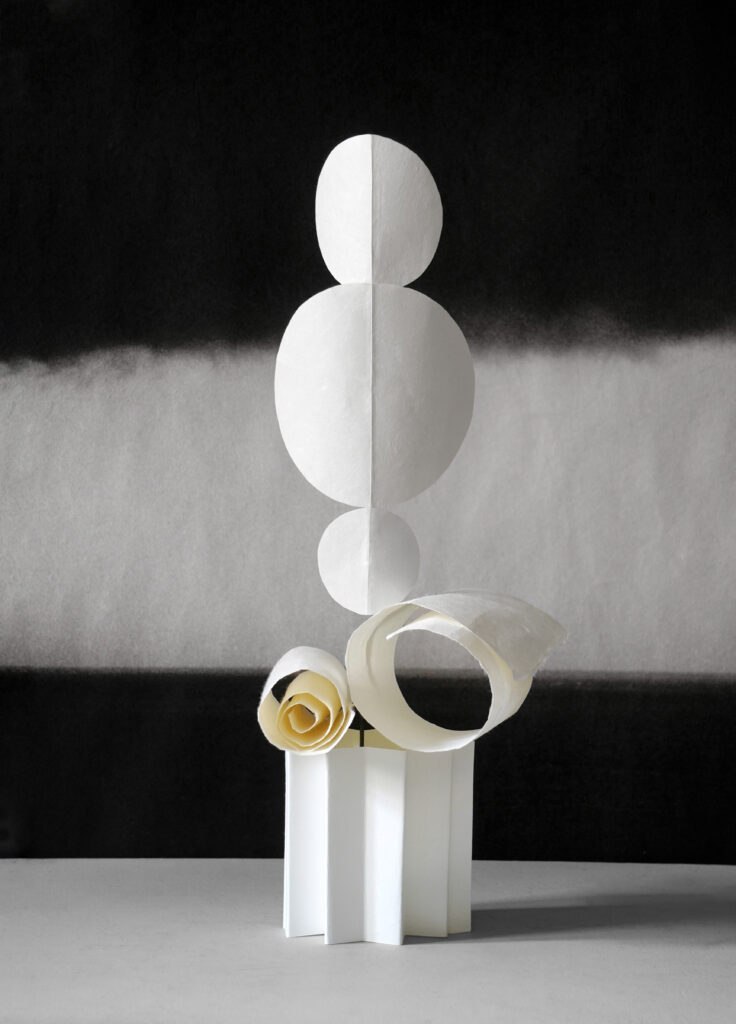
A hanji paper sculpture appears in the exhibition curated by Catherine Lurault and An Kang-eun, held in the ceremonial halls of the Hôtel de la Marine to mark 140 years of diplomatic relations between France and South Korea. Photo: CHANGKI CHUNG
Worth noting too is “Hanjimania,” staged in the ceremonial halls of the Hôtel de la Marine and dedicated to traditional Korean hanji paper, an ancestral material now nominated for UNESCO’s Intangible Cultural Heritage list. Conceived by Catherine Lurault and An KangEun, the exhibition gathers names such as Studio KO, Pierre Yovanovitch, Constance Guisset, Aline Asmar d’Amman, Jérémy Pradier-Jeauneau and Harry Nuriev, working with Korean craftspeople within a scenography reminiscent of a contemporary cabinet of curiosities, marking 140 years of diplomatic relations between France and South Korea.
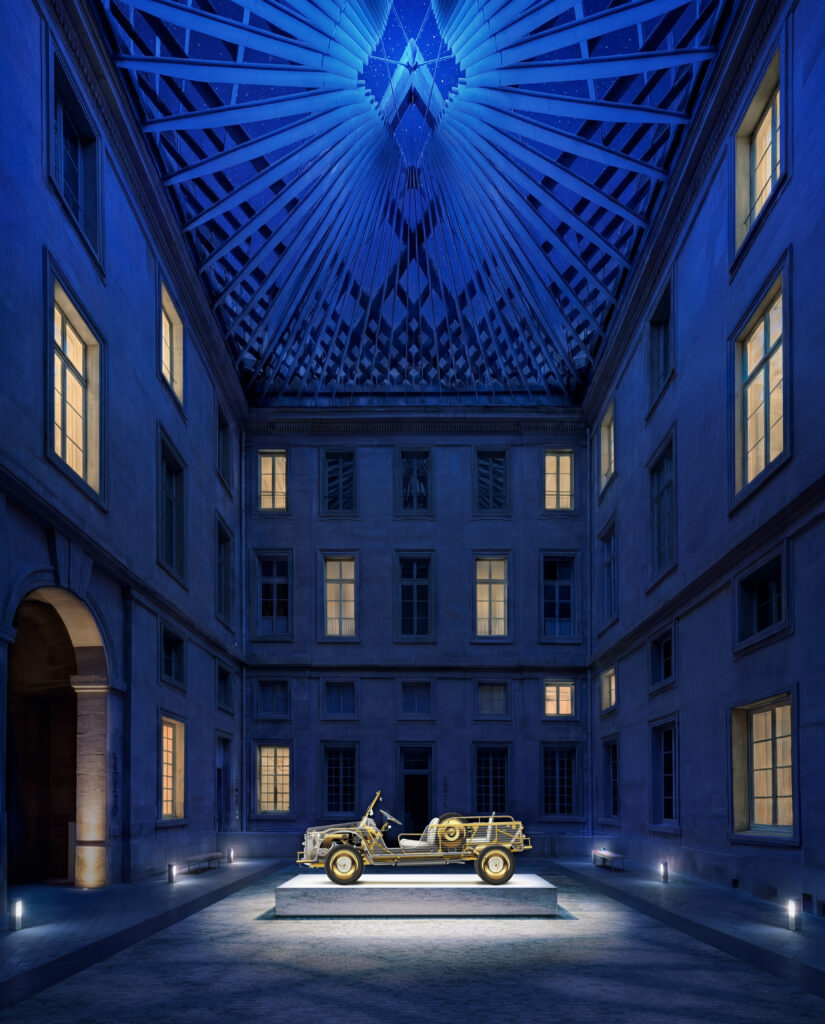
Cour de l’Intendant at the Hôtel de la Marine displays a car turned exhibit, part of Antoine Tauvel’s installation “Astre Mobile.” Photo: LACME
Still at the Hôtel de la Marine, in the Cour de l’Intendant, Antoine Tauvel, artistic director of Maison Lacmé, unveils “Astre Mobile” from Sept. 9 to 27. It reinterprets the spirit of so-called Art Cars, turning an automobile into an exhibition piece through interventions by master craftspeople working in materials ranging from leather to porcelain, onyx and lacquer.
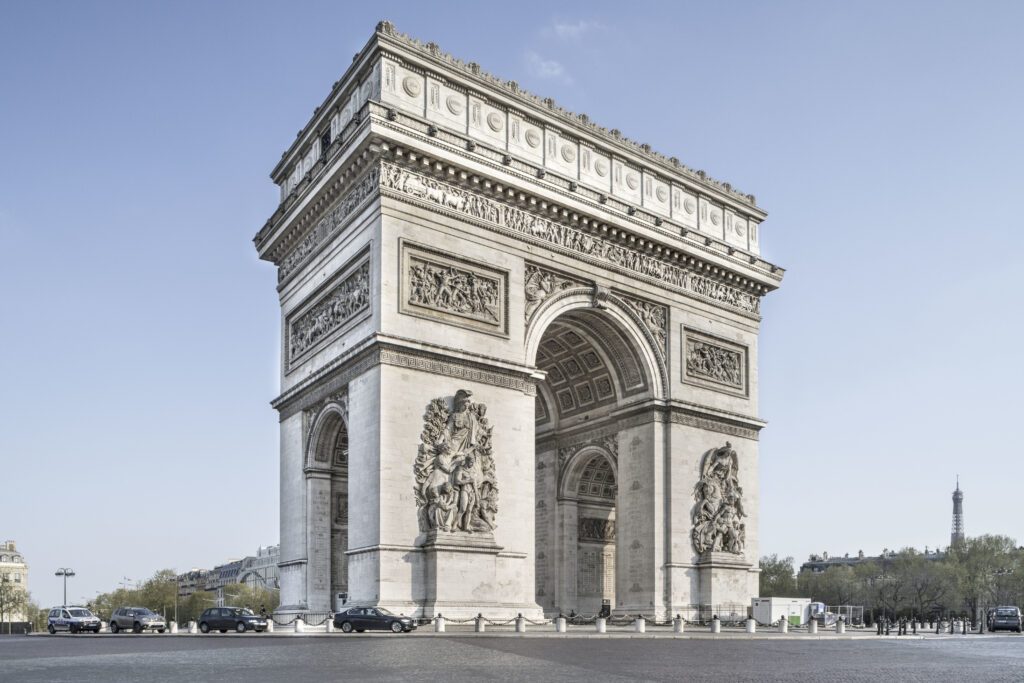
Jeremy Pradier-Jeauneau conceived “La Tempête” as a sensory journey from the base to the top of the arch, pictured here in an exterior view of the monument. Photo: Jean-Christophe Ballot / Centre des monuments nationaux
Continuing at the Arc de Triomphe is the exhibition “La Tempête,” conceived by Jeremy Pradier-Jeauneau, which reinterprets the monument’s history and architecture. From base to top, visitors move through a succession of works that turn the climb up the arch into a sensory journey through the structure.
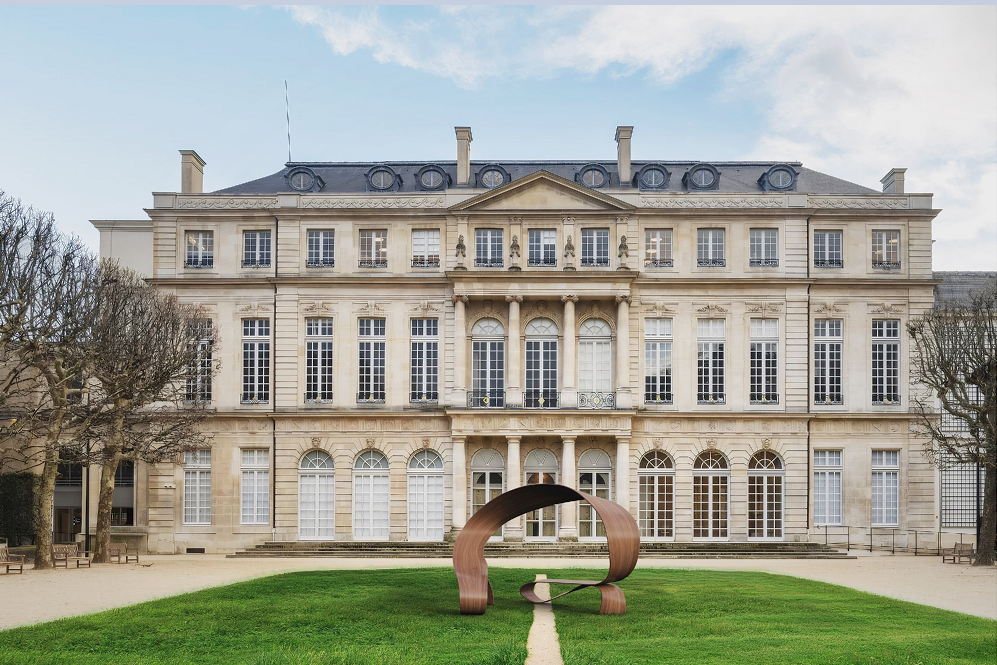
Hôtel de Rohan’s façade features “Arabesque,” a site-specific installation by designer Pierre Renart that translates the garden’s ornamental design into street furniture. Photo: Pierre Renart
Two interventions also occupy the gardens of historic National Archives buildings. At the Hôtel de Rohan, designer Pierre Renart debuts “Arabesque,” an in-situ installation that translates the garden’s ornamental design into urban furniture, creating a dialogue between contemporary creation and rediscovered heritage.
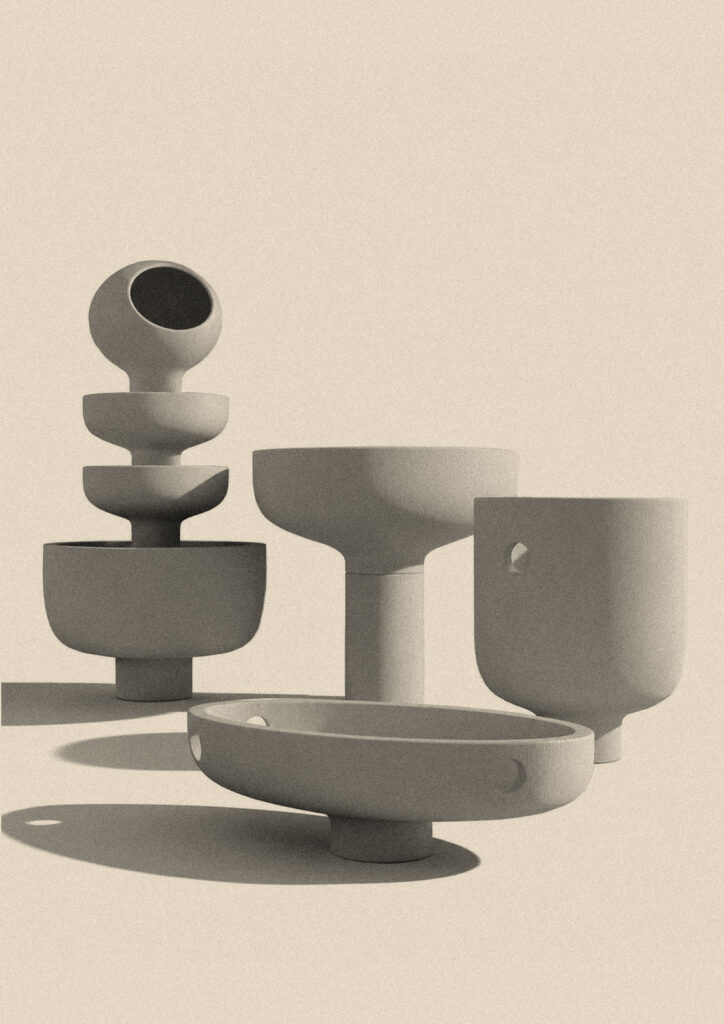
Renderings show sculptural planters made of white stoneware from “Sculpture/Landscape: New Figures of the French Garden,” to be placed throughout the classical garden of the Hôtel de Soubise. Photo: Johanna de Clisson
Meanwhile, at the Hôtel de Soubise, Johanna de Clisson showcases “Sculpture/Landscape: New Figures of the French Garden,” featuring about a dozen sculptural white sandstone planters placed along the classical garden’s sightlines, proposing a contemporary reading that blends geometric rigor with organic forms.
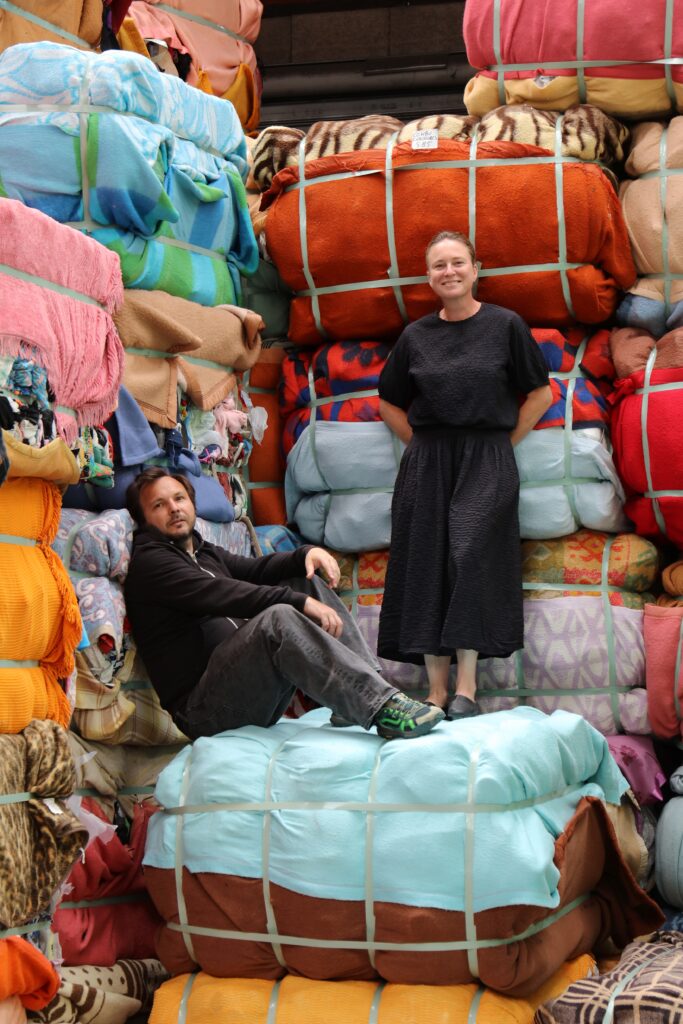
Bales of used clothing gathered for “La Re-prise de la Bastille” surround Claire Renard and Jean-Sébastien Blanc at the installation set up around the July Column in partnership with ReFashion. Photo: Studio 5.5 / ReFashion
Completing the program is “La Re-prise de la Bastille,” an installation by Studio 5.5 in partnership with the Festival du Monde and Refashion. Claire Renard and Jean-Sébastien Blanc built a large-scale piece around the July Column using secondhand clothing collected through Refashion’s recycling system, questioning the memory of a site symbolizing liberty and revolution while advocating for more sustainable fashion.
Featured too on the schedule is the exhibition “Multiples, Thinking the Object in Series,” presented by the city of Paris under the curation of Lucien Icard and Kevin Lebouvier in the courtyard of the Hôtel d’Albret, including the installation “Picnic” by Studio Cluzel Pluchon built around a large curved table. For the first time, Paris Design Week’s conferences will take place in the auditorium of the Musée de la Chasse et de la Nature on Sept. 16.
Foreign Cultural Institutes Expand the Circuit
Every edition, Paris Design Week turns the French capital into an international design crossroads, bringing together cultural centers, themed shows and guest institutions in a program built around outside perspectives. Several countries have dedicated space within the 2026 circuit.
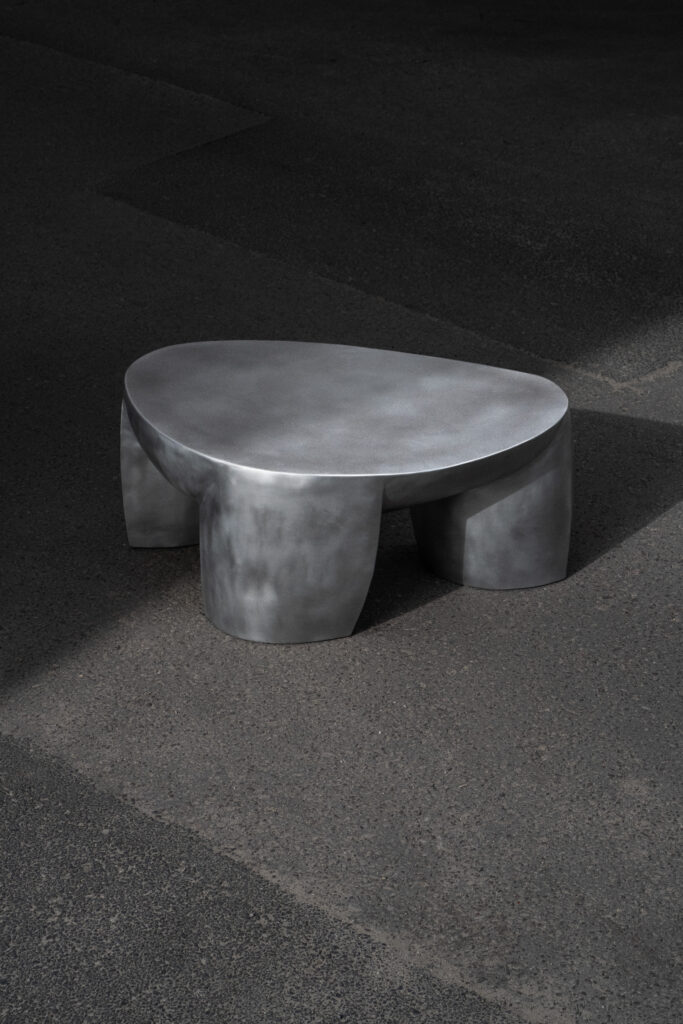
Coming from Poland, the project “A Matéria da Terra” (“The Matter of Earth”), by Eleonora Bojanowska and Bartosz Brylewski for the Visteria Foundation, arrives in Paris with support from the country’s cultural institute. It extends to the French capital a research project begun in Warsaw in 2024, uniting creators for whom material serves as the starting point of gesture, spanning experimentation, knowledge transmission and formal exploration. Divided into three spaces, the exhibition combines works, processes and an immersive installation featuring earth-based materials, previously unseen pieces and artist films.
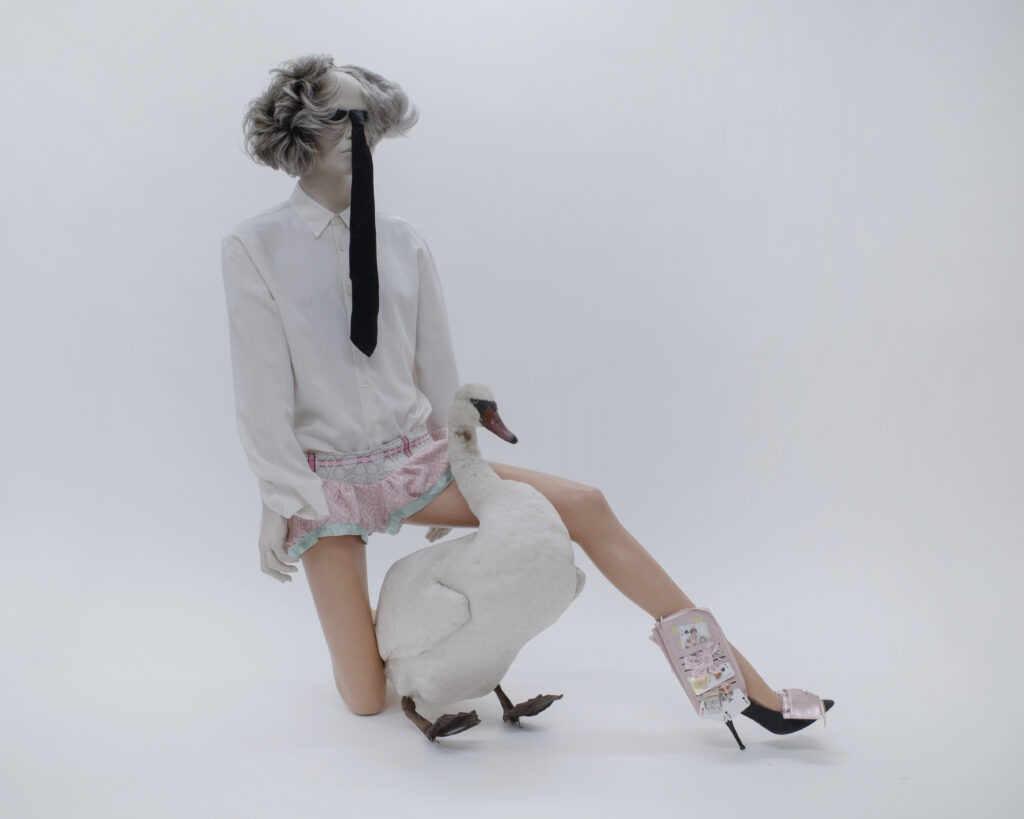
Nicole Walker curated “Tout est en ordre,” an exhibition blending fashion and art around the Swedish sense of order and restraint. Photo: Erik Pousette
Sweden, meanwhile, is represented through the exhibition “Tout est en ordre” at the Institut Suédois, conceived by Nicole Walker. Blending art and fashion, the work explores one of the foundations of Swedish culture that the curator describes as a shared sense of order, restraint and good taste, mixing silhouettes, sculptures and installations around the strangeness of everyday life.
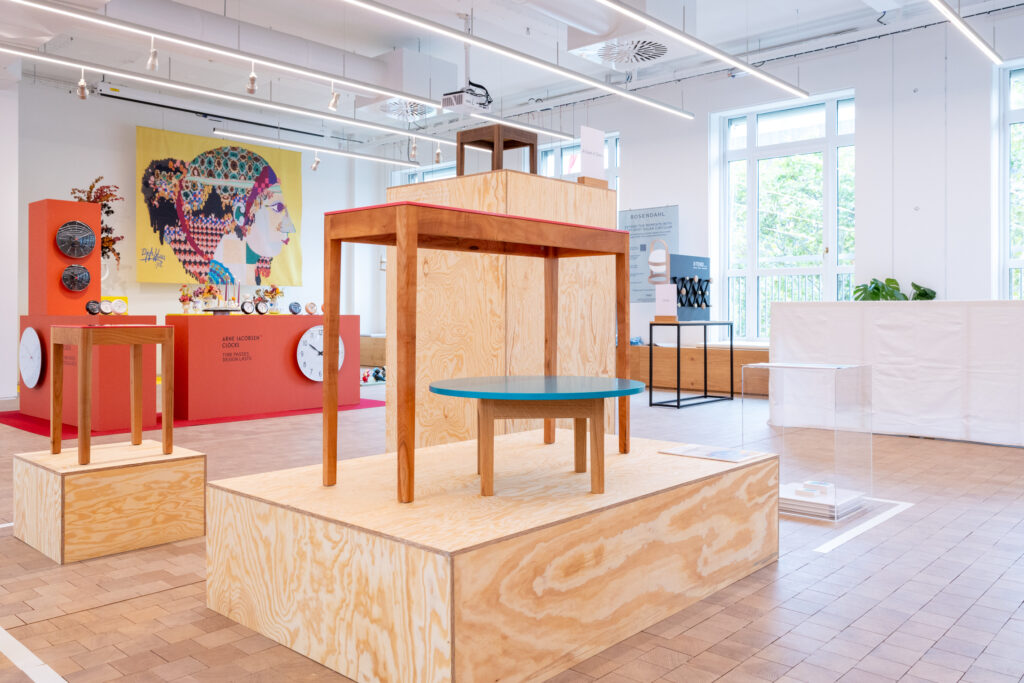
Seven Danish brands, including Kodanska, Tom Rossau and Architectmade’s Birds line, come together in an exhibition opening on the Champs-Élysées. Photo: ©smilzz France Arthur / Maison du Danemark
Along the Champs-Élysées, the Maison du Danemark brings together seven Danish brands spanning established names and emerging labels, including handcrafted glassware by Kodanska, paper lampshades by Tom Rossau and the Birds line by Architectmade, created by Kristian Vedel. Its pieces stand out for understated finishes and sustainable production, hallmarks of Scandinavian design.
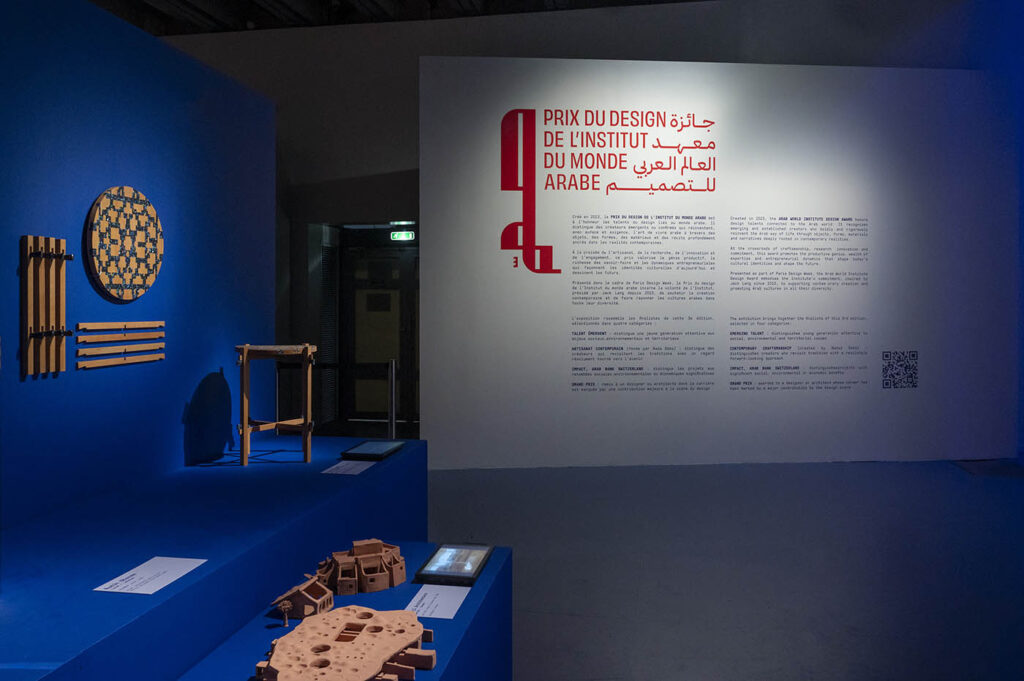
IMA Design Prize exhibits mark the fourth edition of the partnership between the institute and Paris Design Week, featuring categories such as Emerging Talent, Contemporary Crafts, Impact Award and Grand Prize. Photo: S2H Communications
Focused on the Arab world, the Institut du Monde Arabe, in partnership with Paris Design Week, honors a new generation of creators from Arab League countries through the IMA Design Prize. Now in its fourth edition, the prize covers four categories, including Emerging Talent, Contemporary Craftsmanship, Impact Award and Grand Prize, with winners announced Sept. 9 and finalists on view from Sept. 3 to 13.
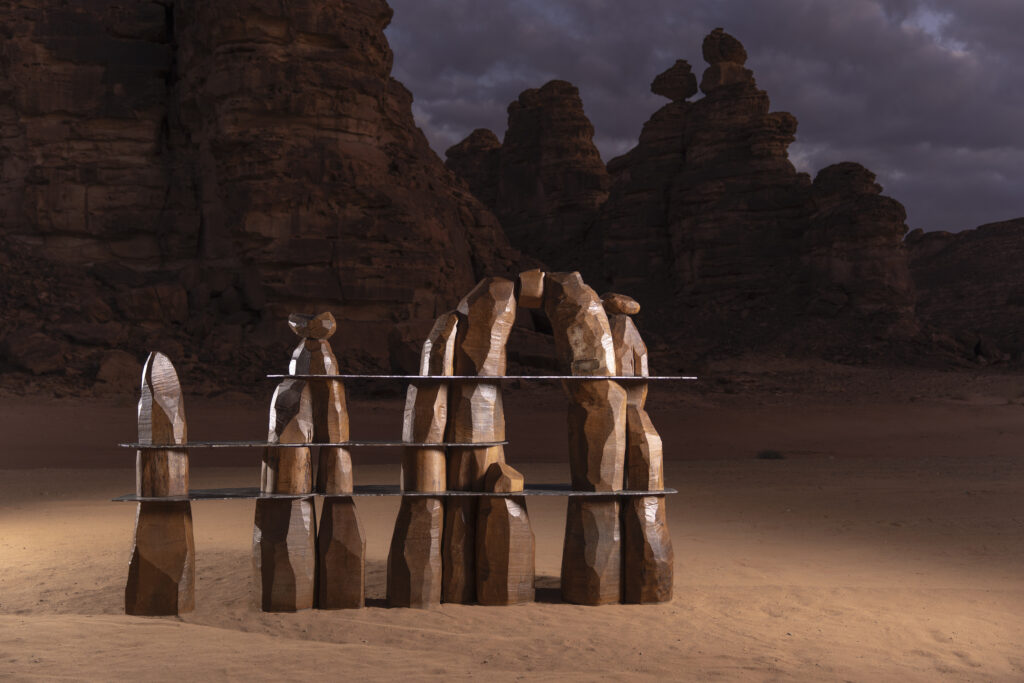
Linking institutions from the AlUla region in Saudi Arabia, “The Life of Forms” pairs the Fondation Lafayette Anticipations with Altin Studio’s installation “ADR25.” Photo: S2H Communications
Devoted to the Saudi region of AlUla, the exhibition “The Life of Forms” grows out of a dialogue between Fondation Lafayette Anticipations, Arts AlUla, Design Space AlUla and AFALULA, with support from Villa Hegra. Bridging AlUla’s mineral landscapes and the Paris design circuit, works produced during Saudi design residencies are displayed alongside pieces from the French foundation’s own collection.
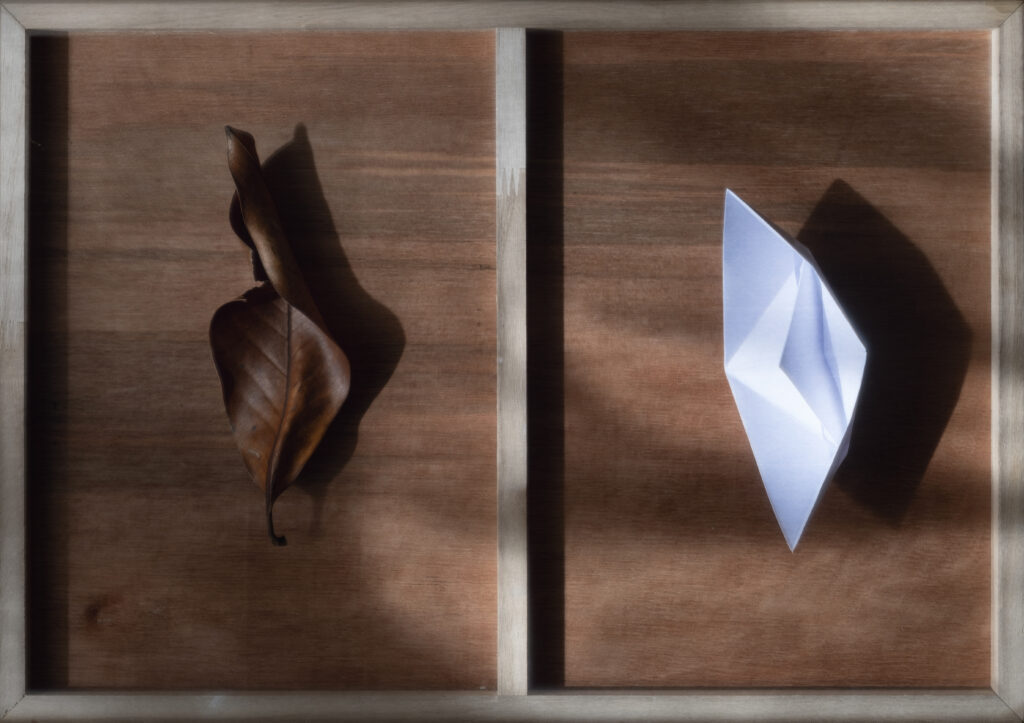
Designers across generations drew inspiration from Japan, the focus of the fall exhibition “The Call of the Archipelago.” Photo: Sana Perrey / S2H Communications
Wrapping up the international lineup is the Bon Marché Rive Gauche’s autumn show, titled “The Call of the Archipelago,” celebrating Japan as a source of inspiration for generations of designers. Alongside the Japanese archipelago, the show includes the Mobilier National, École Duperré, Frama, Nordic Knots, photographer Michael Kenna and studios including Bernal & Semerciyan, Sausset Leou, Zbeul Studio, Benjamin Dosgheas and Debeaulieu, among other names. Creators from the Czech Republic, Finland, Mexico, Guatemala, Uzbekistan and Kazakhstan also appear in this year’s edition.
New Addresses Boost the Show’s Draw in 2026
Built up over the years, the Paris Design Week brand continues to grow on the international design scene, and 2026 marks a significant shift in that direction. Several new addresses, described by organizers as cutting-edge, join the program.
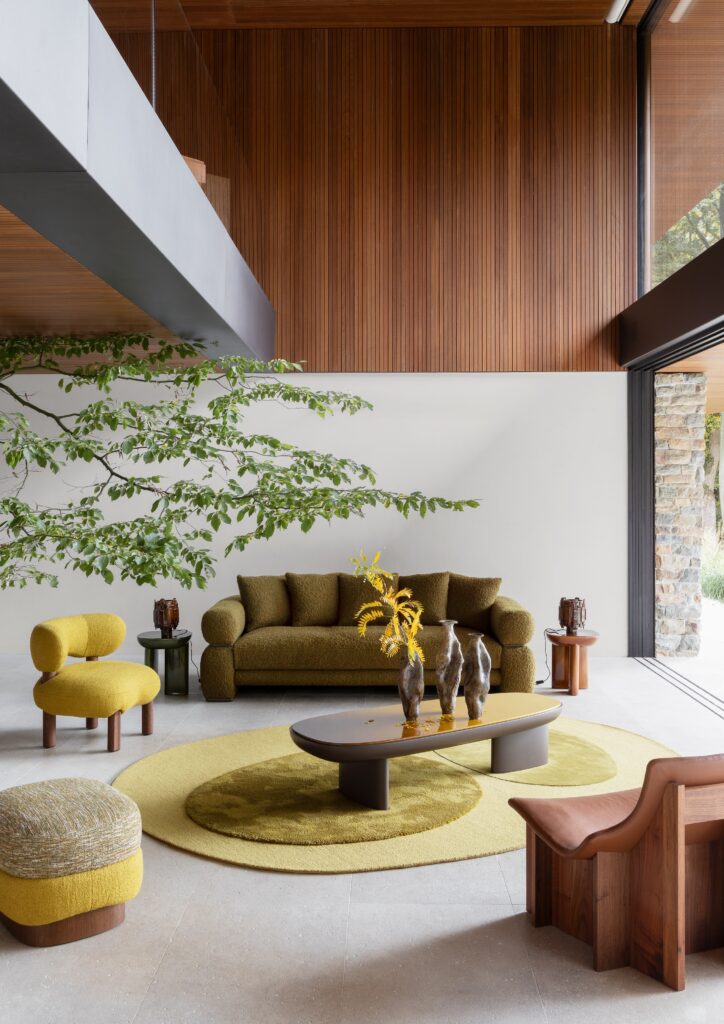
Architect Sandrine Sarah Faivre designed the new 500-square-meter “Point Neuf” space on rue du Mail. Photo: S2H Communications
Reserved exclusively for furniture, a new 500-square-meter space opens at Pierre Frey, 14 rue du Mail. Designed by architect Sandrine Sarah Faivre, it complements the house’s historic showroom and presents recent collections by Garnier & Linker, Studioparisien, Christian Haas and Elisabetta Freda, along with a materials library focused on the world of furniture and the brand’s savoir-faire.
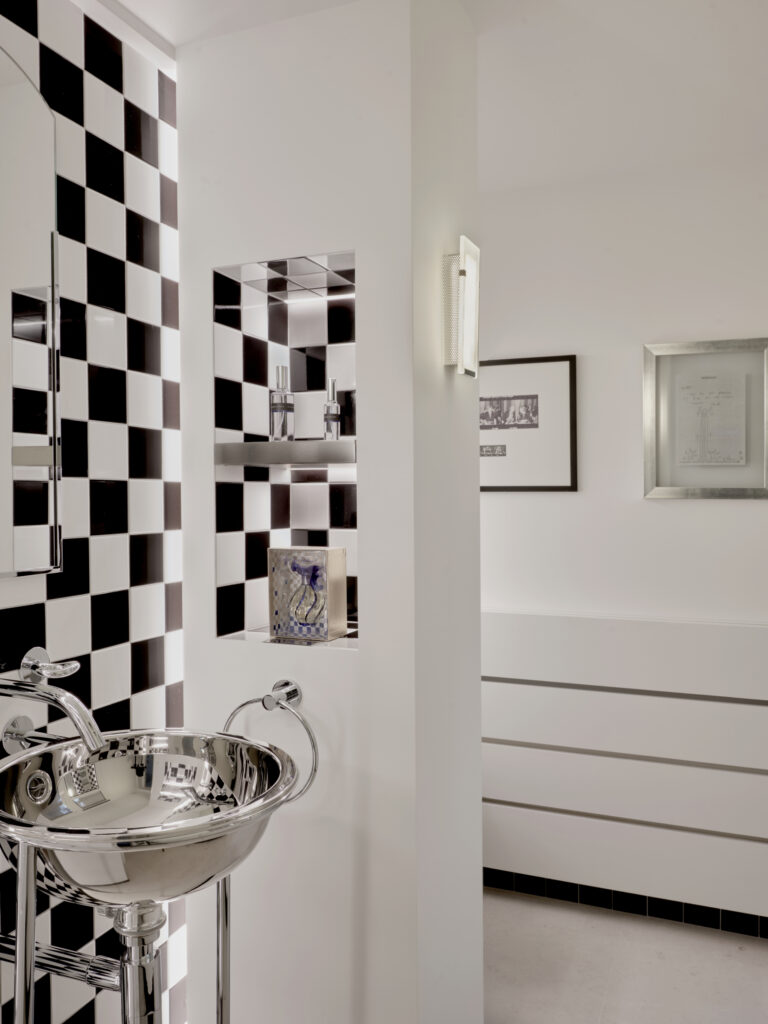
Reissues and recent creations, including collaborations with Christofle, Lalique and Gien, fill the new Parisian gallery in the 7th arrondissement. Photo: S2H Communications ©VERONES
Housed in the seventh arrondissement, in a former school building with an interior garden, Studio Andrée Putman opens its Paris gallery. It brings together reissues, archival pieces and recent creations, including the “Éléphant” bench and collaborations with Christofle, Lalique and Gien, revisiting the house’s legacy through pieces that span decades without losing relevance.
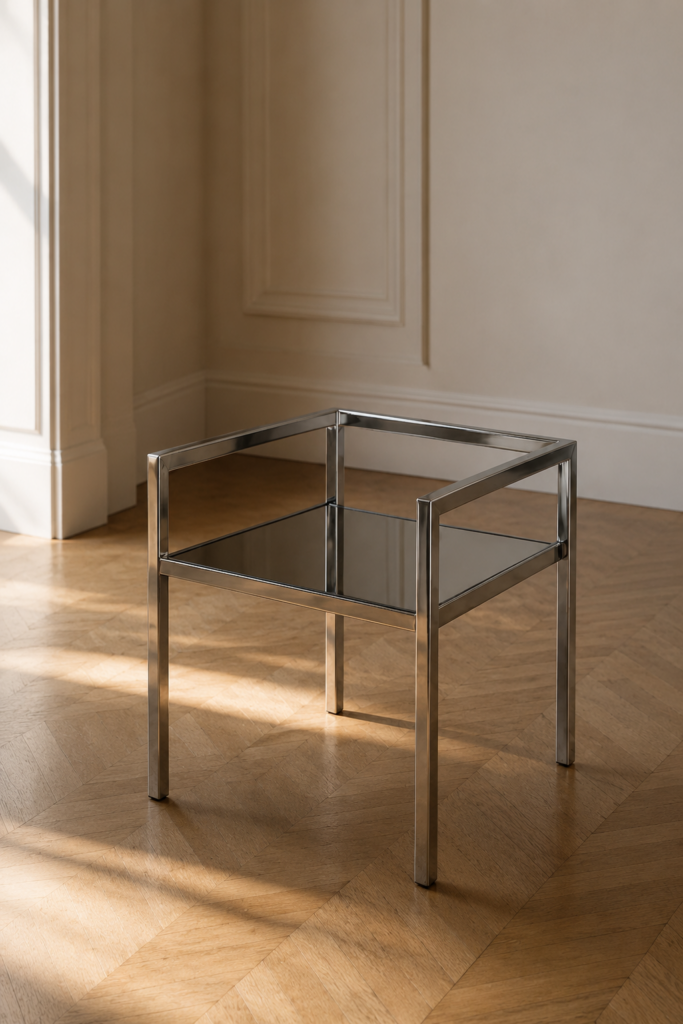
Years of research in the decorative arts shaped “The Lions Are Unleashed,” the designer’s first personal collection of furniture and lighting. Photo: S2H Communications
Under the title “The Lions Are Unleashed,” designer Aurélien Jeauneau introduces his first personal collection of furniture and lighting, the result of years of observation and research in the decorative arts. Born of a free-form approach, the collection favors presence over effect in the design of its pieces.
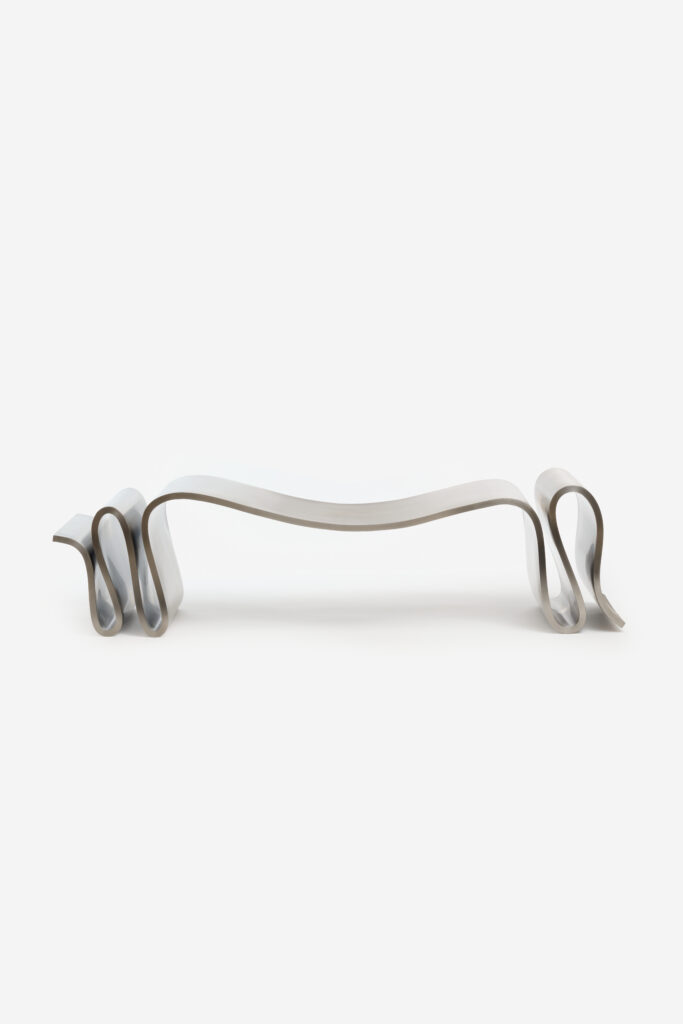
Stainless steel takes organic, reflective form in a bench from the “Ribbon” collection, a work of art signed by the gallery’s founder herself. Photo: S2H Communications
Art and collectible design meet, in the same neighborhood, at Galerie Emma Donnersberg, where visitors can view the founder’s own sculptural creations up close alongside a curated selection of international works. Its “Ribbon” collection, spanning a bench, chaise, side table and console, is crafted in stainless steel with organic, reflective lines that turn the object into a work of art.
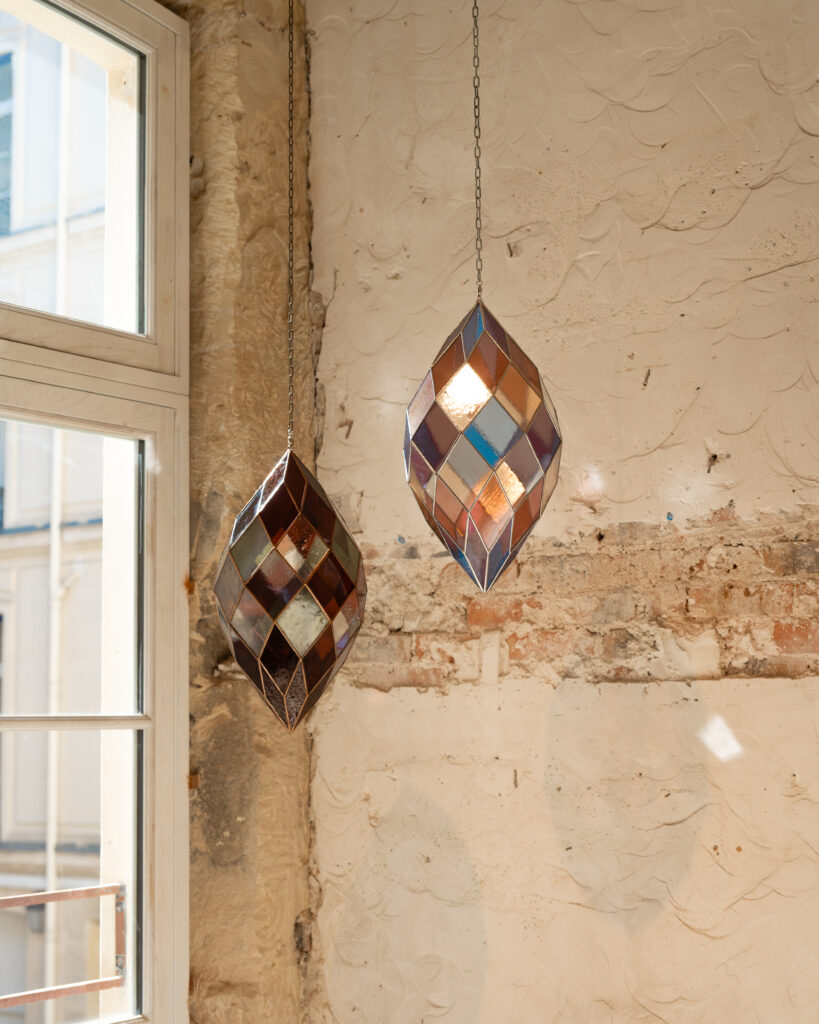
Marie-Cassandre Bultheel founded the showroom on Boulevard Raspail, where a pendant was displayed at the grand opening, with a focus on sculptural textiles and olfactory curation. Photo: S2H Communications
Located at 29 boulevard Raspail, House of Cassandre opens its first showroom in the seventh arrondissement. Centered on sculptural textiles, natural pigments, objects and olfactory curation, the venue was founded by Marie-Cassandre Bultheel to celebrate artisanal savoir-faire in service of more intuitive interiors.
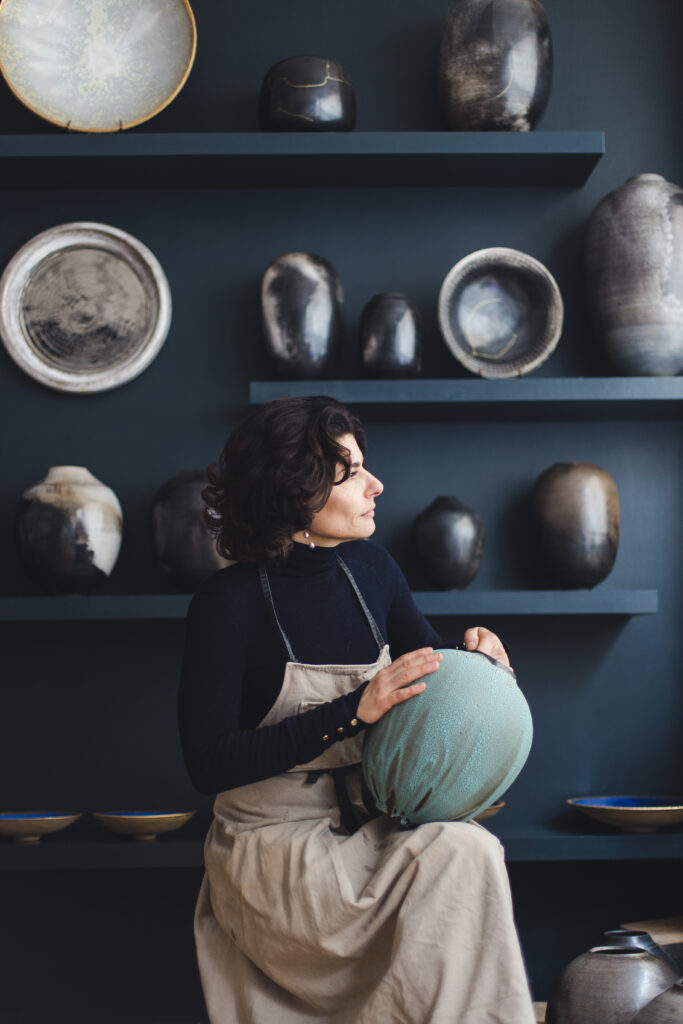
Cracks and organic forms serve as a field of exploration for the ceramic artist, who took over her new space on Rue Monsieur-le-Prince, opened in 2025, with porcelain pieces. Photo: S2H Communications
Near the Luxembourg Gardens, ceramicist Karen Swami takes over her new address at 32 rue Monsieur-le-Prince, opened in 2025 as an extension of her studio and ceramic practice. She presents porcelain pieces in which cracks, accidents and organic forms become a field of exploration. Newcomers to the circuit include the first L’Atelier du Vin store, on rue Bonaparte, dedicated to wine culture and the French art of living, along with the openings of Panac Edition and Accent Rouge on the traditional rue du Mail and Carl Hansen & Søn’s new apartment-showroom on rue des Deux Gares.
Collectible Design Takes Center Stage in Capital Galleries
Standing as one of Paris Design Week’s most consistent threads, the taste for exclusive objects, whether one-off pieces or limited editions, defines this part of the program, positioned at the border between design and art. A route through discreet addresses and leading galleries of the capital rounds out this side of the event.
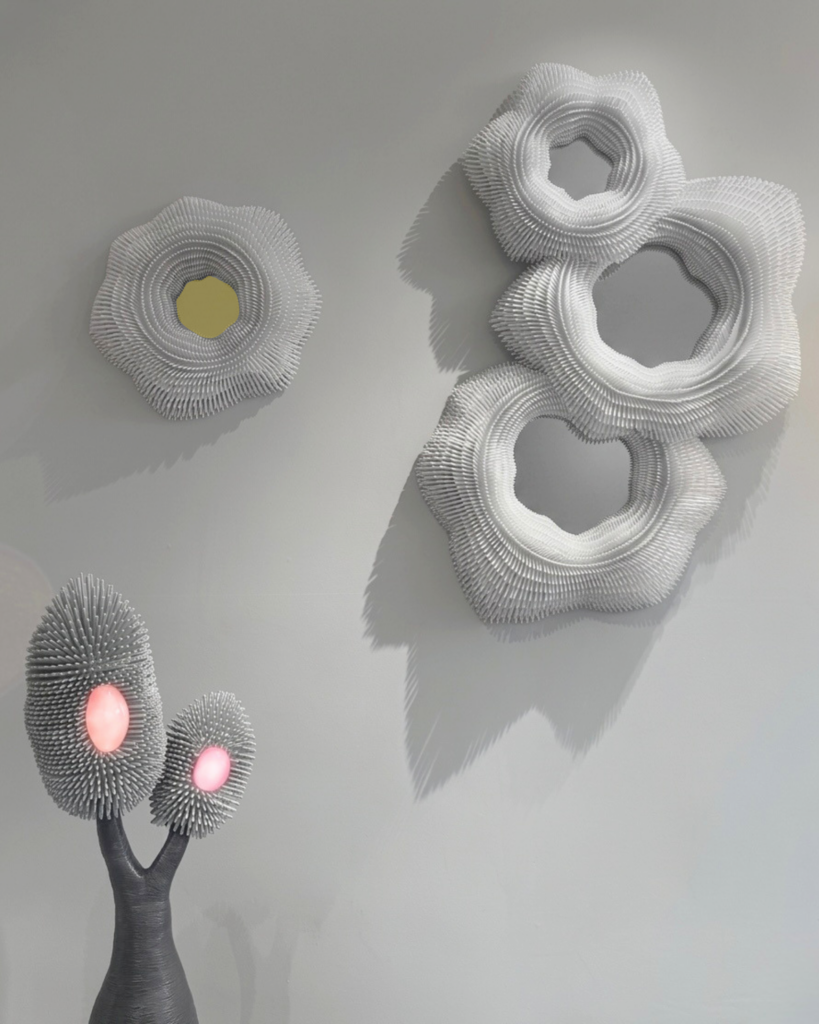
“Organic Frequencies” pairs Pia Maria Raeder’s “Sea Anemone” series with chairs from Zbeul Studio’s “Archeologia” collection in dialogue. Photo: S2H Communications
Galerie BSL presents, under the title “Organic Frequencies,” a dialogue between the biomorphic creations of Pia Maria Raeder’s Sea Anemone series and the seating of Zbeul Studio’s Archeologia collection, reflecting on memory and the ongoing transformation of matter.
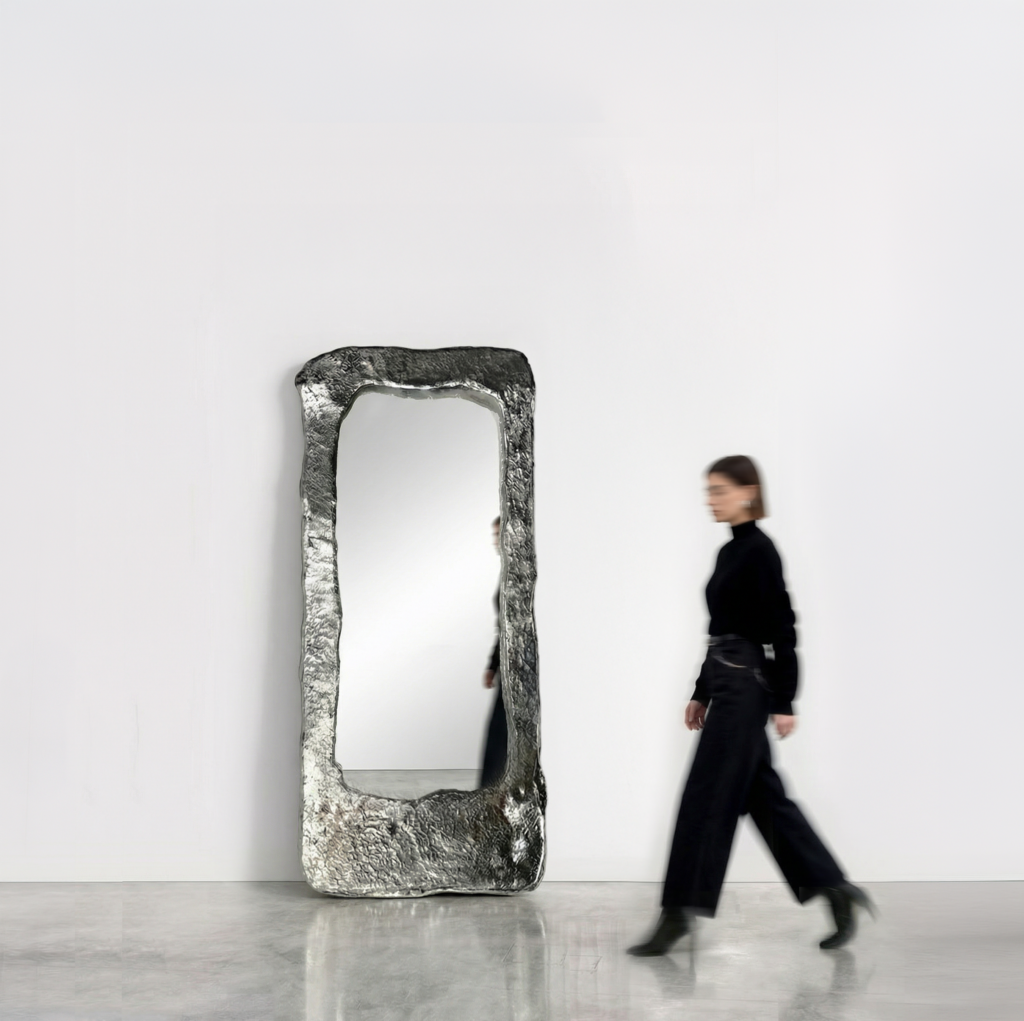
“Grand Miroir Brillant,” by Vincent Dubourg, marks part of the gallery’s 10th-anniversary celebration dedicated to collectible design and ceramics. Photo: S2H Communications
Marking 10 years devoted to collectible design and ceramics, gallery Scène Ouverte chose to celebrate the anniversary with a forward-looking vision rather than a retrospective. For the occasion, it presents new works by its artists, including aluminum mirror-sculptures by Vincent Dubourg, embroidered tapestries by studio KRJST, a coffee table inspired by Villanovan culture created by Silver Sentimenti, plus proposals by Caroline Desile and Studio Biskt exploring the border between sculpture and architecture.
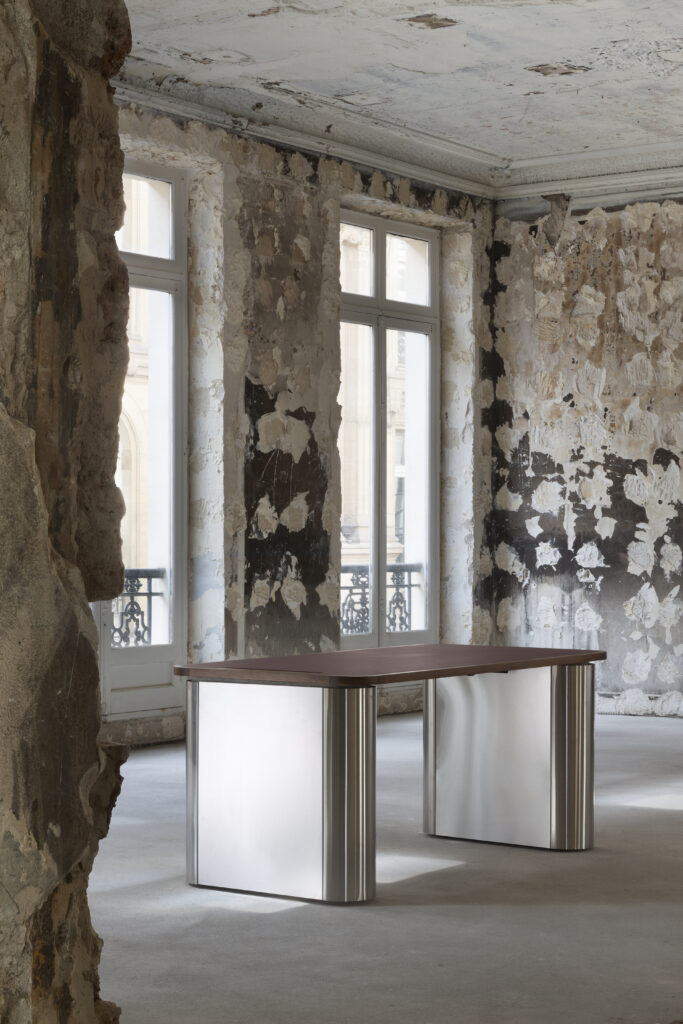
Gustave Desk, by Mattéo Lécuru and Vincent Eschalier, combines recycled aluminum and local wood in a piece developed with French artisans as part of an initiative tied to the circular economy. Photo: S2H Communications
Founded by Mattéo Lécuru and Vincent Eschalier, studio MVE showcases a selection of pieces in which reuse becomes a source of creation. Recycled aluminum, local wood and materials salvaged from construction sites give rise to furniture with distinct finishes, developed alongside French craftspeople within an approach that unites architecture, design and the circular economy.
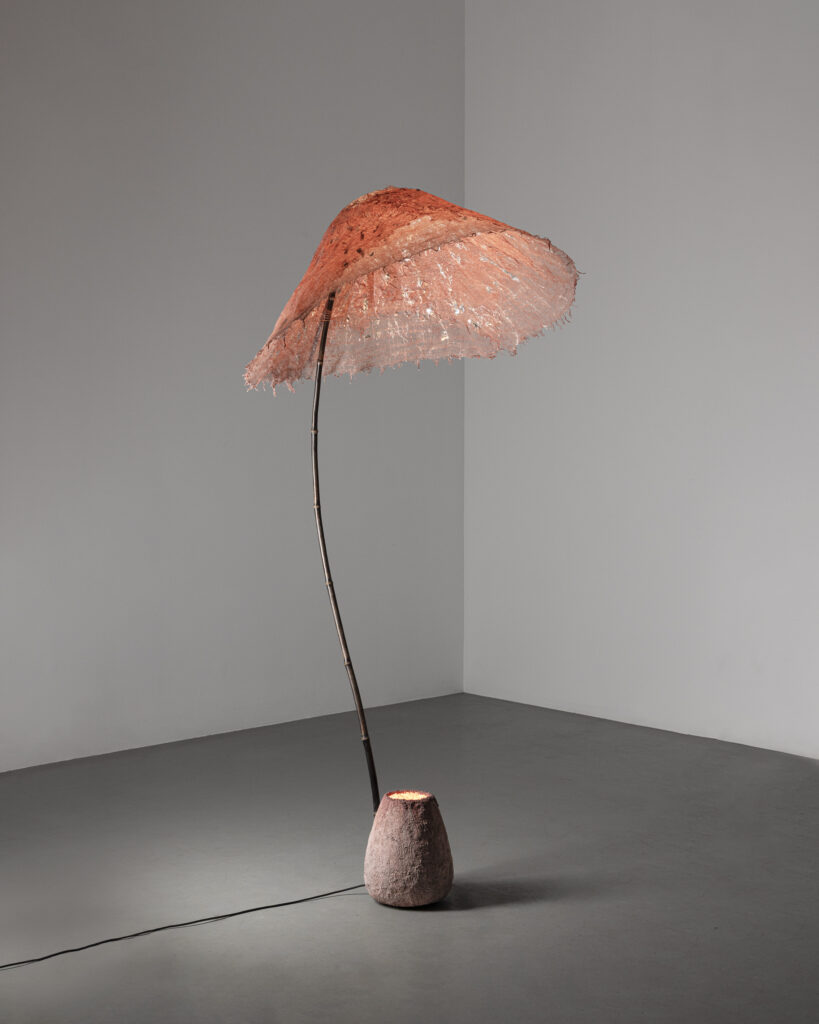
Benjamin Baccarani’s piece appears in the exhibition featuring creators working at the intersection of art, design and craft, with a focus on experimentation and limited production. Photo: S2H Communications
An international reference in collectible design and functional art, Carpenters Workshop Gallery brings together a selection of pieces by creators who blur the lines between art, design and craftsmanship, with a focus on experimentation, technical mastery and limited-edition production.
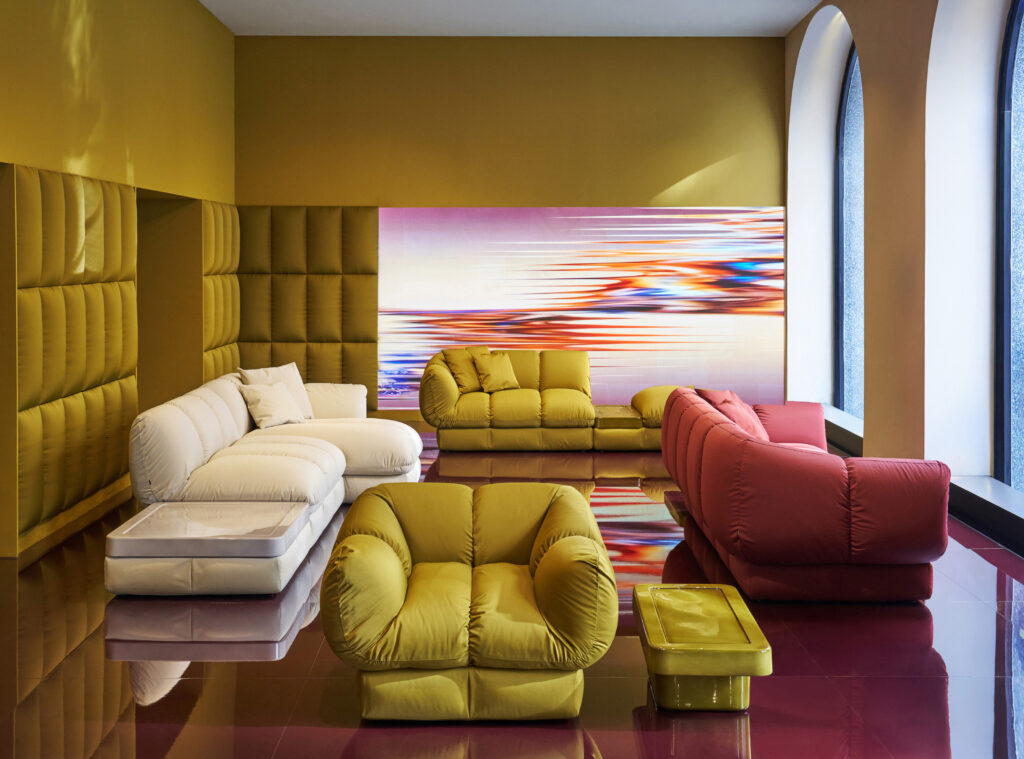
Ardys chair, designed by Patricia Urquiola for Cassina. Photo: S2H Communications
Cassina, meanwhile, unveils “The Cassina Perspective 2026,” highlighted by the Ardys sofa system by Patricia Urquiola, marked by soft upholstery and generous proportions, along with pieces from the Karakter x Cassina line by Aldo Bakker, Gianfranco Frattini, Verner Panton and Nicos Zographos.
Institutional Partners Reinforce the Event’s Framework
Major French institutions underpin the official structure of Paris Design Week 2026. On behalf of the city of Paris, the Office of Design, Fashion and Crafts coordinates municipal policy supporting creative professions and maintains a longstanding partnership with the festival, including the joint launch of the “Design sur Cour” route, which mobilizes city spaces such as libraries and municipal museums.
Historically tied to the capital’s visual identity, public transit operator RATP is also among the official partners, reaffirming a commitment to culture spanning more than 75 years of art installations, photography, poetry and music integrated into the Paris metro network.
Among the associate partners is the Centre des Monuments Nationaux, which oversees France’s largest network of historic sites and monuments, with an annual program of more than 450 events and more than 11 million visitors each year. Born from the merger of the Mobilier National and the Cité de la Céramique de Sèvres et Limoges on Jan. 1, 2025, the Manufactures Nationales join the list, combining more than 53 traditional crafts spread across nine manufactures and creation workshops, including Sèvres, Gobelins, Beauvais and Savonnerie.
Design school ESDAC, century-old department store Galeries Lafayette Paris Haussmann and Grand Palais RMN, with its Boutique Design et Métiers d’Art, also figure among the associate partners. On the institutional side, Arts AlUla, Design Space AlUla, AFALULA and Villa Hegra take part in the event, along with France Design Week, a national festival organized by APCI running from Sept. 18 to 30, 2026, across France. Festival du Monde rounds out the list of supporters, holding its 12th edition from Sept. 17 to 20 with programming centered on women, including talks, performances and a special event called “Our Voices for All” in partnership with Fondation des Femmes.
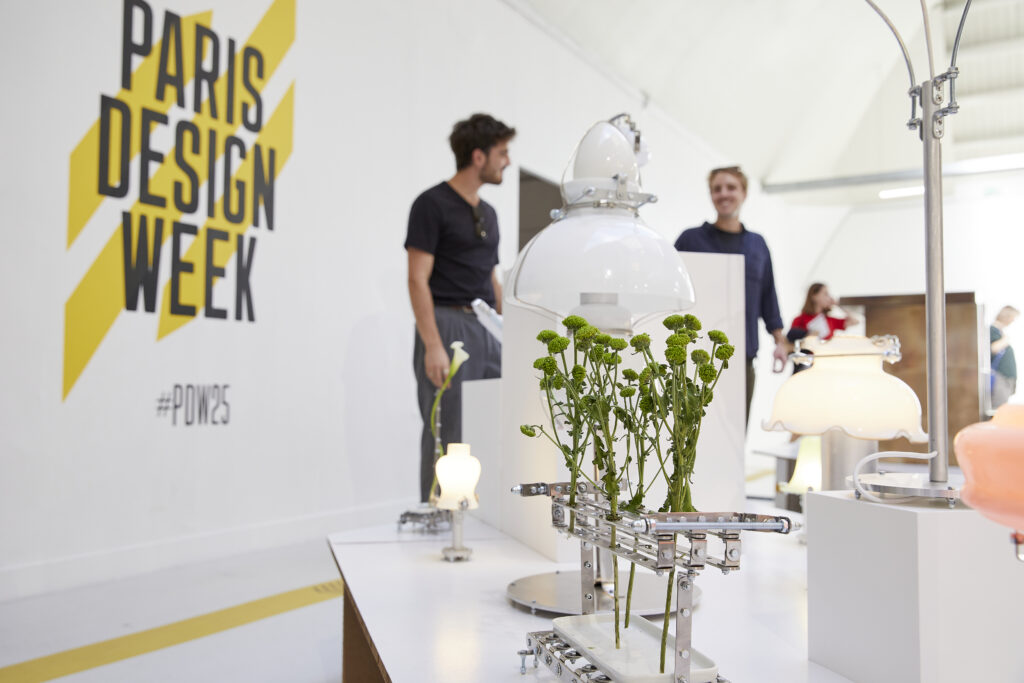
Factory Commines tour for PDW2025, led by Alexandre Veillon. Photo: GregSevaz
Created by SAFI, a subsidiary of Ateliers d’Art de France and RX France, Maison&Objet itself has served as an international reference in decor, design and lifestyle since 1994. Beyond its two annual trade shows and the September edition of Paris Design Week, the organization runs the digital platform MOM, or Maison&Objet and More, launched in 2016 and turned into a marketplace starting in 2023, now serving a community of nearly 2 million professionals active on social media.
Website : https://www.maison-objet.com/
Instagram : https://www.instagram.com/maisonetobjet/
Instagram : https://www.instagram.com/parisdesignweek/