 Serpa
Serpa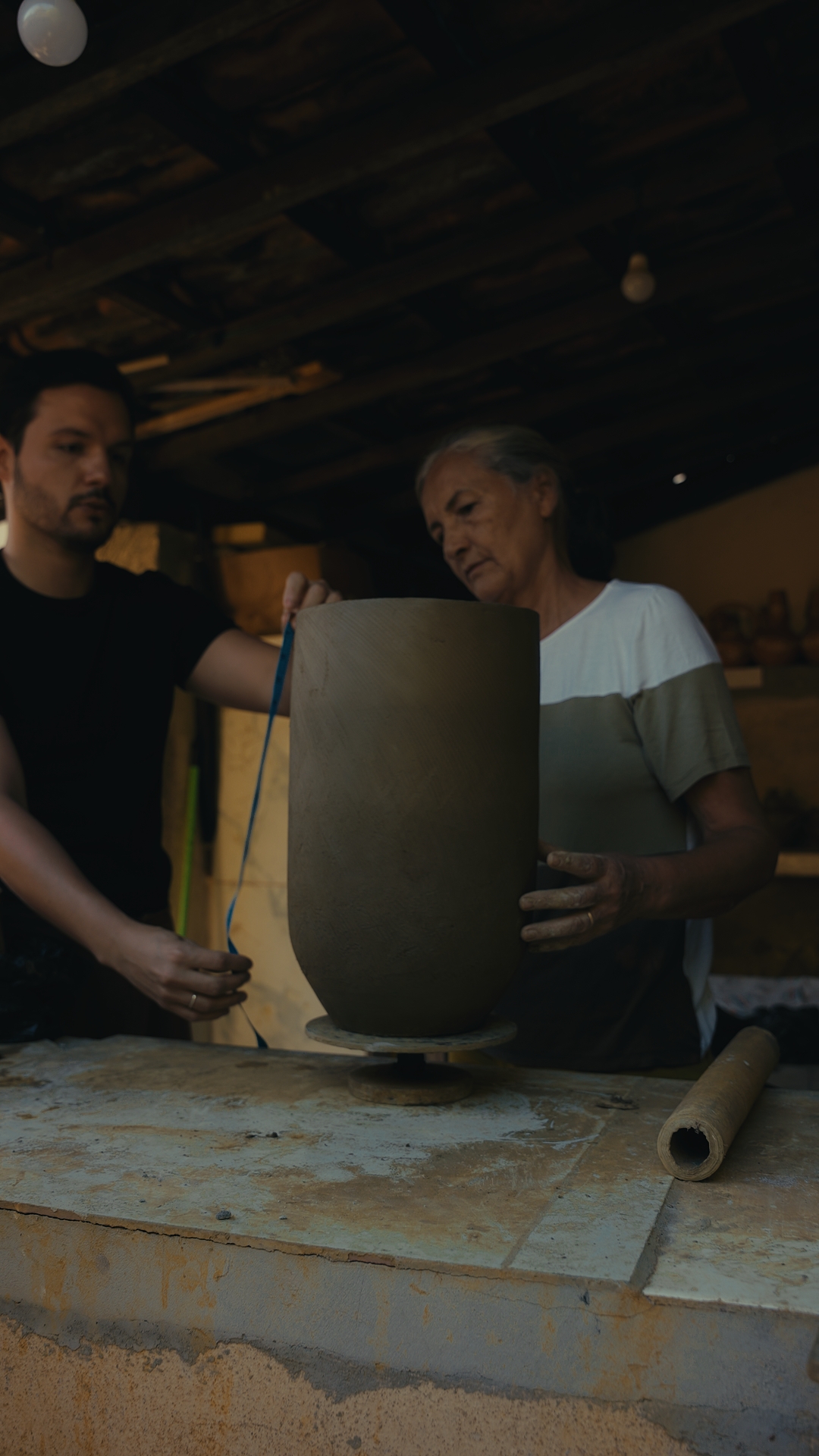
In Goiás, a Brazilian city, artisan Luiza Pessoa, alongside the team from Estúdio Marcus Camargo, checks the measurements of the ceramic base before it dries. Photo: Mariana Balbinotti.
Ceramic heritage from Goiás and marble waste from Paraná give rise to the Nascente Collection, presented during Maison & Objet
Vernacular Legacy Becomes a Paris Showcase
Serving as a showcase for practices that blend legacy and novelty, the Brazilian pavilion at Maison & Objet highlights how folk craft traditions can spark new directions. Minith’s undertaking fits squarely into that mission, adding a fresh layer of institutional collaboration to its participation in Paris.
Nascente marks the first time apexBrasil’s presence has included a direct partnership with Sebrae through the Jornada do Artesanato program, which brings together artisans and associations working to preserve ancestral techniques nationwide. Pairing industrial technology with handmade production under a single effort, the company aims to demonstrate the social and economic strength of the country’s design scene to the international audience gathered at the world’s largest home decor fair.
Discarded Materials Reveal New Possibilities
Born from research that flips the usual method on its head, the project amounts to far more than a furniture series. Estúdio Marcus Camargo began with a guiding question instead of a sketch: what future remains for raw inputs that seemed to have exhausted their productive life? Addressing it shaped every stage that followed, right up to the finished objects.
Stone and Clay Change Hands
Spanning roughly 1,240 miles between Paraná and Goiás, the journey begins at Marmoraria Granisul in Pato Branco, a city in southwestern Paraná known for rock extraction and processing. Extremely fine waste generated when the material gets cut, typically thrown away, is collected there and turned into powder, the substance behind everything that follows.
Powder then travels on to Cidade de Goiás, a historic municipality known for its ceramic tradition. Bringing together a pair of very different areas, one rooted in the mineral industry and the other in the traditional culture of clay, gives the effort its broader significance, linking production chains that normally run on separate tracks.
Arriving in the nation’s Center-West, the powder reaches the hands of artisan Luiza Pessoa, heir to a craft passed down through generations. Mixing it with clay native to the region, she oversees the firing, producing ceramics that carry not just a repurposed industrial byproduct but also decades of accumulated knowledge.
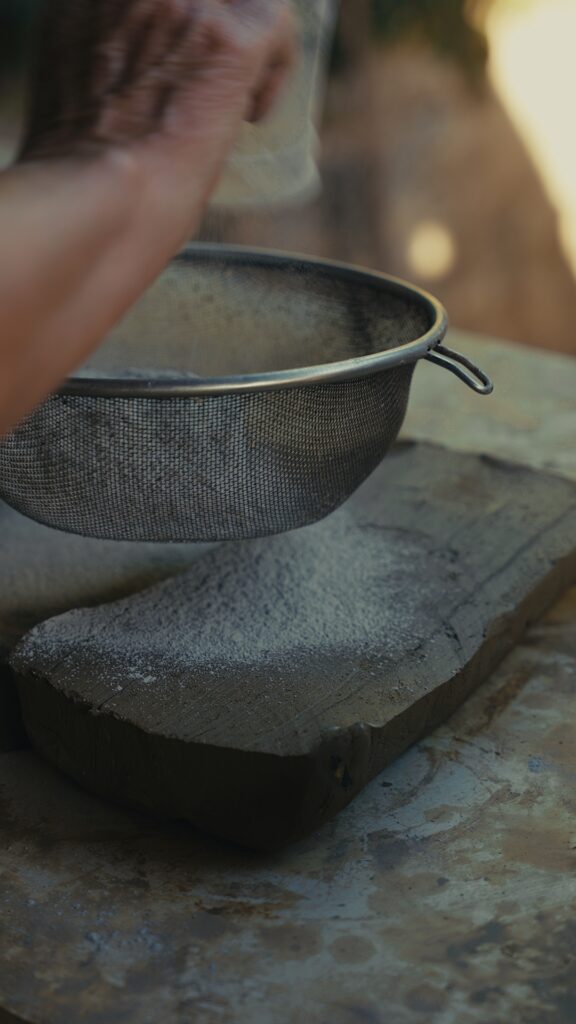
Mineral powder pulled from marble waste is sifted onto a clay base, the step that starts the fusion of the two materials. Photo: Mariana Balbinotti
Item by item, each base gets shaped, fired and sent back to Pato Branco, where it reunites with the rock it came from as it joins the tabletops that complete the furniture, including the Root Brown, Verde and Vermelho variations. Fragments of the same material that produced the powder used in the clay return, in this way, as both a structural and aesthetic element of the final piece.
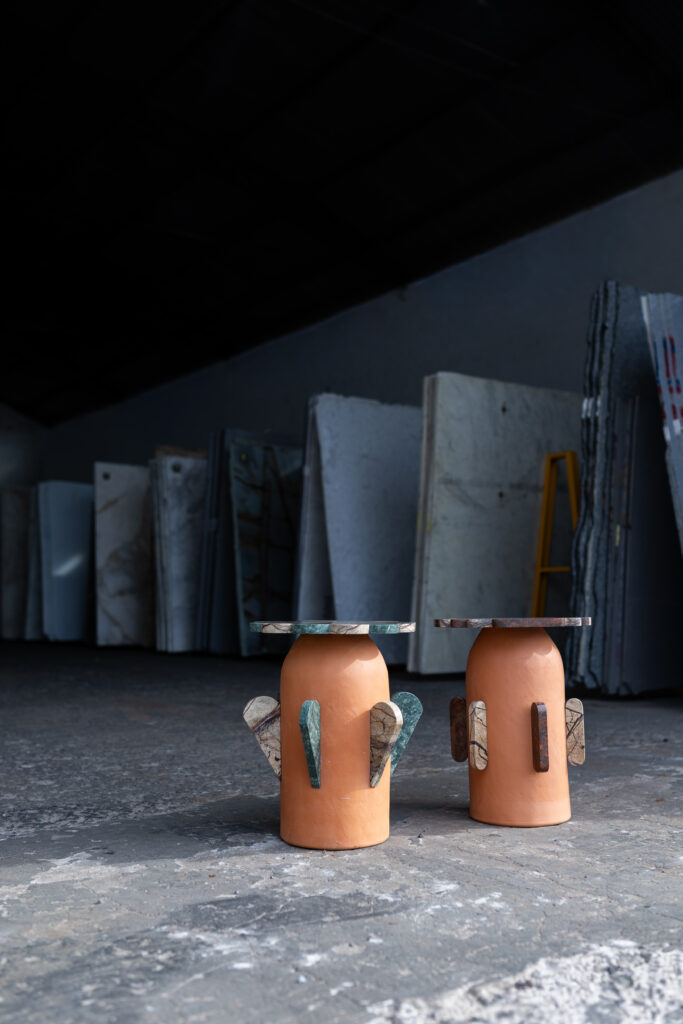
Ceramic bases return to Pato Branco, Paraná, Brazil, where workers fit marble tops onto them at the Granisul Marble Workshop, surrounded by slabs of raw stone. Photo: Mariana Balbinotti
Innovation Means Listening to What Already Exists
Under the logic guiding the range, research, beauty and function stop being treated as separate qualities and become a single expression of one idea. Durability, in this case, comes not just from the strength of its components but from the staying power of the language built through the work.
Genuine progress here means learning to listen closely to established practices rather than breaking with them. According to those behind the endeavor, the most meaningful act is uncovering potential where none seemed to exist before, as with the residue discarded by the quarrying industry.
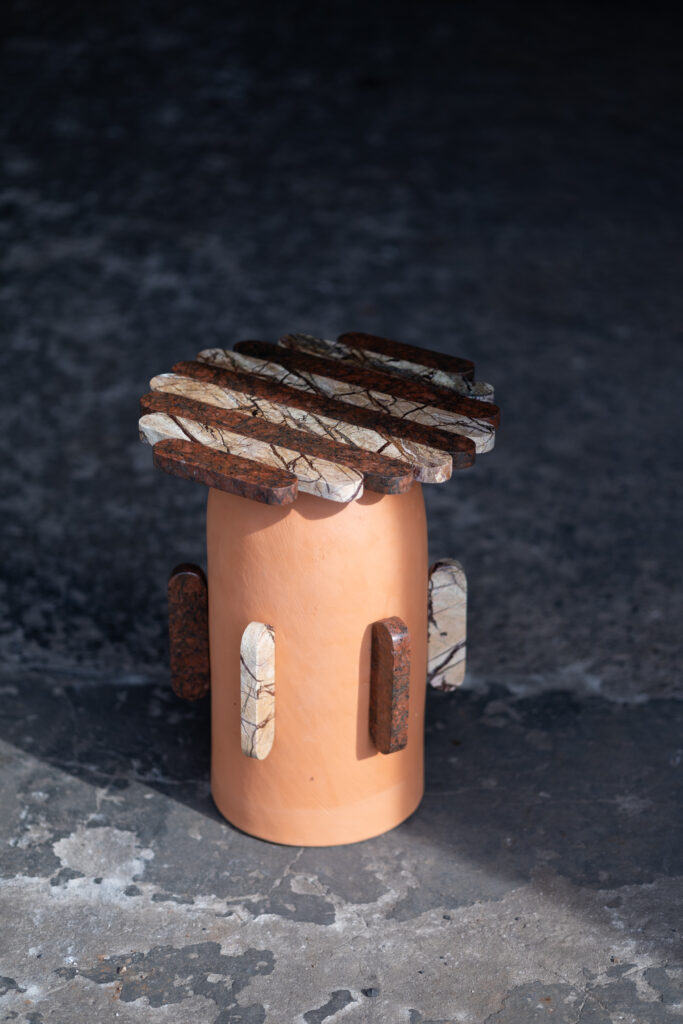
Terracotta forms the base of this Nascente Collection piece, paired with a tabletop cut from Red marble slabs. Photo: Mariana Balbinotti
Trajectory Built on Purpose
Founded by Adriana and Rafael Gugelmin, the company grew out of a two-decade dream centered on ornamental stonework. Now parents of two, the couple has turned that experience into a brand guided by eco-social responsibility. Its name combines “mineral” and “litho,” the Greek word for stone, a synthesis reflected in present-day pieces built to connect utility and elegance.
Each line carries the signature of professionals connected to real stories and sustainable methods, with items meant to become part of customers’ everyday lives. Global presence to date includes appearances at Milan Design Week and successive launches in Paris, along with multiple editions of CasaCor in Paraná, São Paulo, Rio de Janeiro and Goiás.
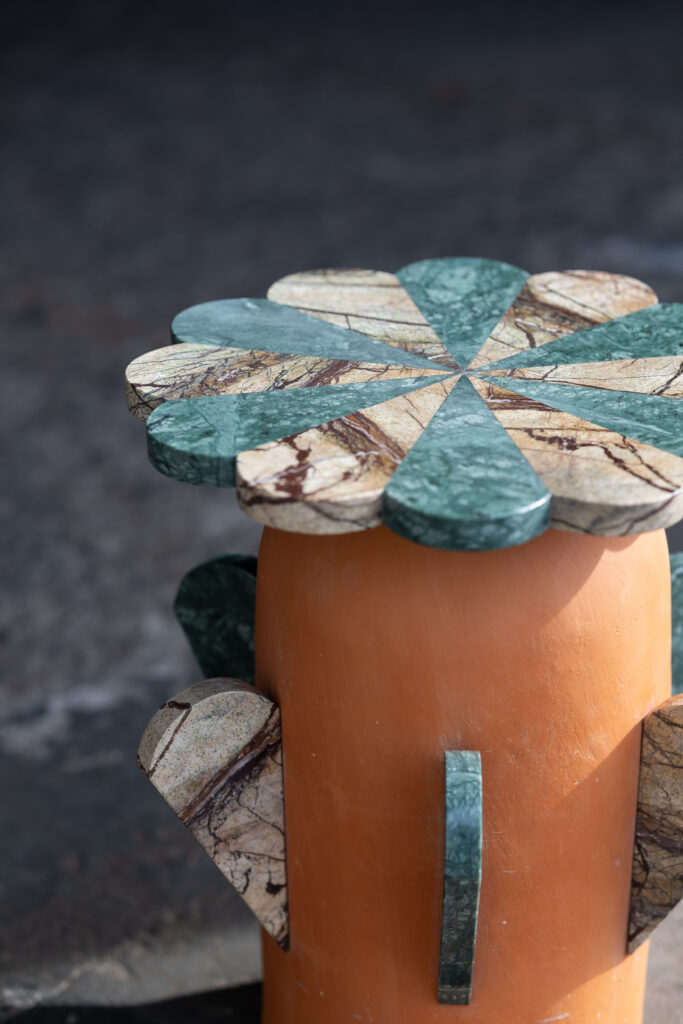
Green and beige marble petals form the tabletop in this close-up from the Verde collection, set atop a ceramic base. Photo: Mariana Balbinotti
Craftsmanship Meets Contemporary Vision
Positioned as a creative hub, the studio works at the intersection of handmade tradition, modern approaches and environmental stewardship. Every project from the group explores new avenues for raw resources, linking territories, expertise and popular memory to forward-looking design.
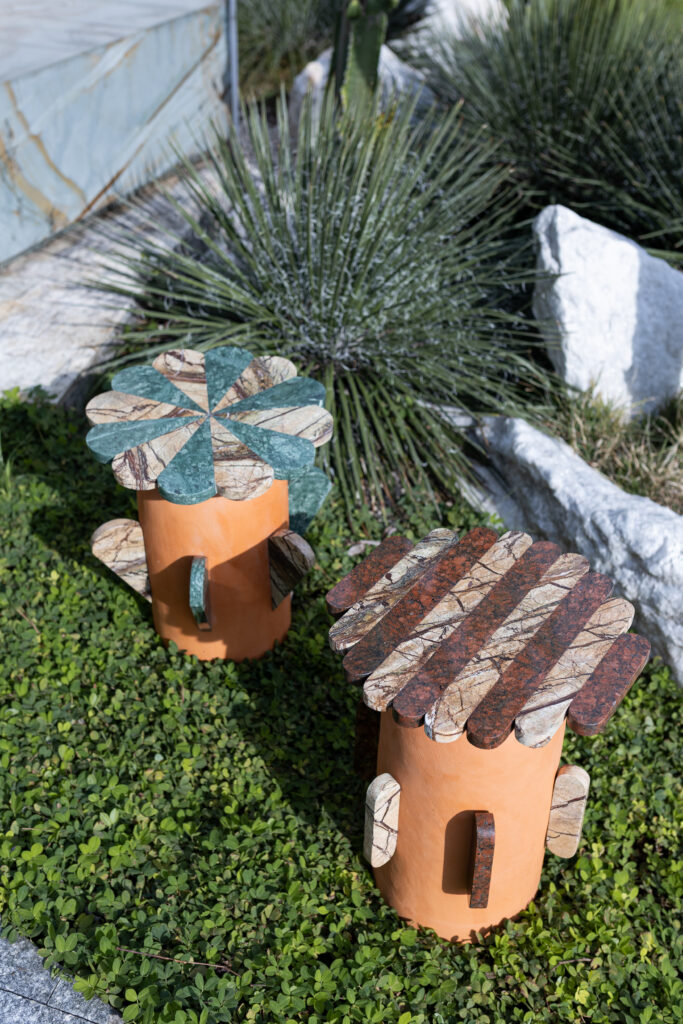
Outdoor light frames the Green and Red versions of the Nascente Collection, set among surrounding vegetation. Photo: Mariana Balbinotti
Maison & Objet, Held During Paris Design Week
Nascente Collection, Minith Design em Rochas.
When: Sept. 10-14, 2026.
Where: apexBrasil Brazilian Pavilion, Paris.
Curator: Bruno Simões.
Designers: Estúdio Marcus Camargo.
Brand: Minith Design em Rochas.
Artisan: Luiza Pessoa.
Raw material supplier: Marmoraria Granisul (Pato Branco, Paraná)
Instagram : https://www.instagram.com/camargomarcus/