 Serpa
Serpa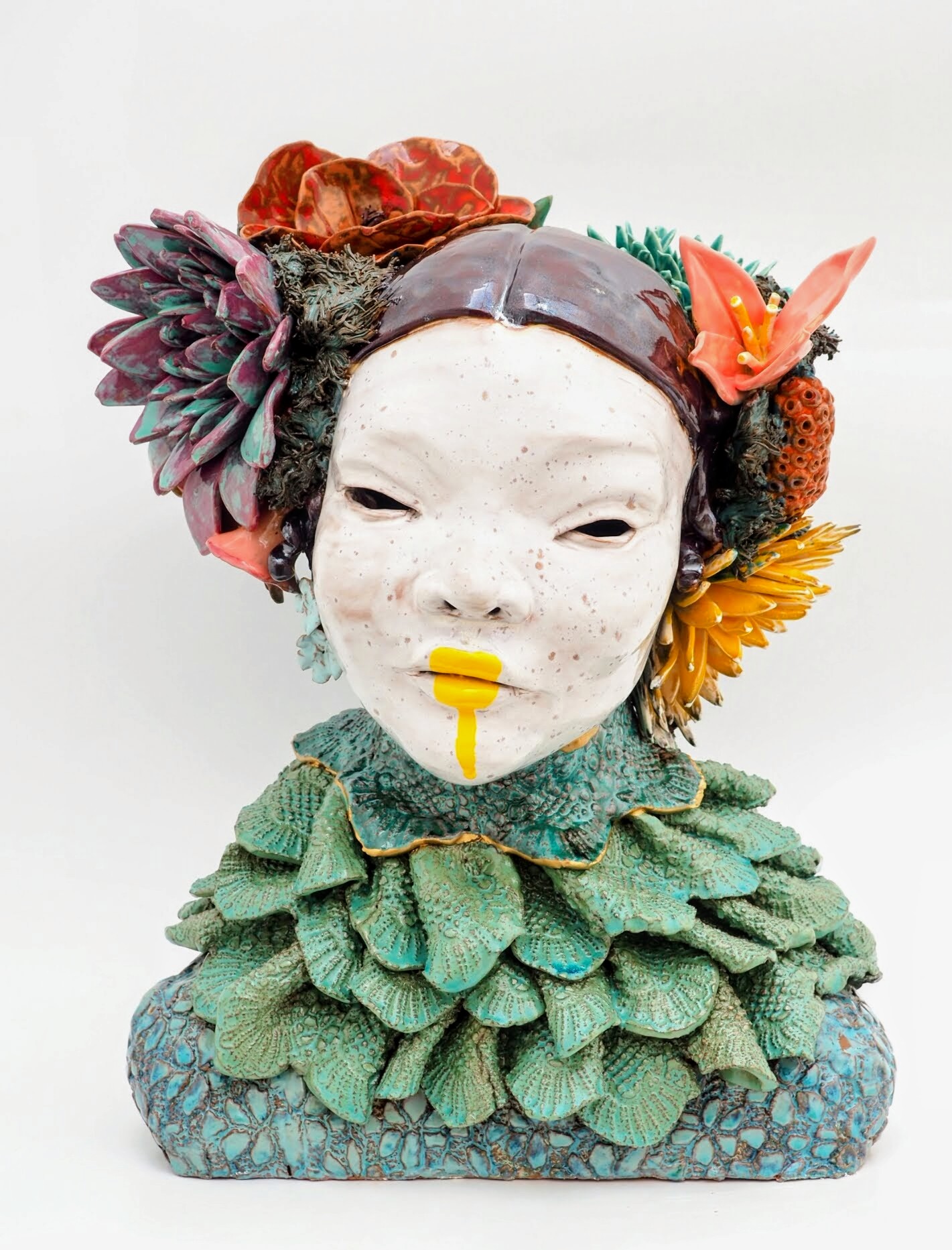
UMI (Natural red clay modeled without molds, single piece, double fired at 1050°C, glazed)
Inspired by the work of British photographer Jimmy Nelson and educated at the University UOC, the Catalan sculptor creates her own language where Modernism, Surrealism, and folklore converge.
Born in Badalona, in the metropolitan area of Barcelona, in 1980, the Catalan sculptor has built over more than two decades a singular artistic language that weaves together sculptural ceramics, visual anthropology, and references from Pop Surrealism. Her works, busts of different ethnicities surrounded by dreamlike vegetation, flowers, and ornaments inspired by the traditional costumes of peoples from around the world, have already drawn attention for their technical rigor and conceptual depth that only a multifaceted education can forge.
The artist’s trajectory began formally in 2003, when she completed her degree in sculpture. The decisive turning point, however, would come nearly a decade later. In 2011, she enrolled in the humanities program at the Universitat Oberta de Catalunya (UOC), a pioneering institution in distance higher education. Founded in Barcelona in 1995, the UOC was the first university in the world to operate exclusively in an online format, recognized by the Parliament of Catalonia in April of that same year. The institution was born with the mission of offering lifelong learning and broadening access to higher education for all those who wished to develop their abilities. Today, more than 120,000 people from over 150 countries have graduated from the university, which is home to more than 500 researchers across 50 research groups.
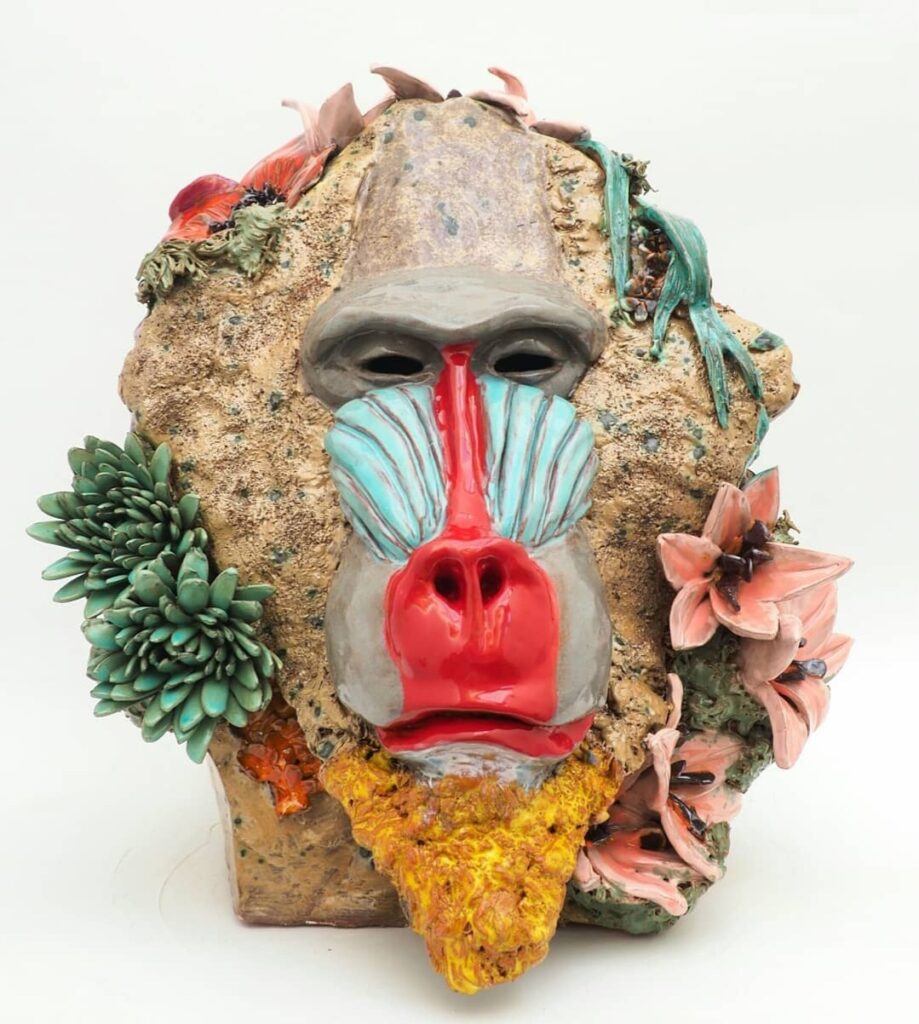
MANDREL (Natural red clay modeled without molds, single piece, double fired at 1050°C, glazed)
It was in the interdisciplinary environment of the UOC, where technology and the humanities converge, that the sculptor found the theoretical foundations her practice had been missing. Her studies in anthropology, taken within the humanities program, opened her eyes to the symbolic richness of the garments, rituals, and ornaments of different peoples. At the same time, she devoted an entire year to the study of ceramics, a technique that would become her primary means of expression. The result of this combination was the beginning of a series of busts representing different ethnicities, executed with faithfulness to the folklore and embroidery of each culture.
Her research led the artist to discover the work of Jimmy Nelson, a British photographer born in 1967 in Sevenoaks, Kent, who would become her greatest visual reference. Nelson traveled the world for three years, photographing more than 35 indigenous tribes across Europe, Asia, Africa, South America, and the South Pacific, using a 50-year-old large-format analog camera. The project resulted in the book Before They Pass Away, published in 2013, and in Homage to Humanity, released in 2018, featuring more than 400 photographs of 30 indigenous cultures, including interviews with tribal members and 360° video content. Nelson is recognized for his use of vibrant colors, elaborate compositions, and the intimacy he establishes with his subjects, at times living weeks or months alongside the communities he photographs. In 2016, he founded the Jimmy Nelson Foundation, a nonprofit organization dedicated to the preservation of cultural diversity through photography and education.
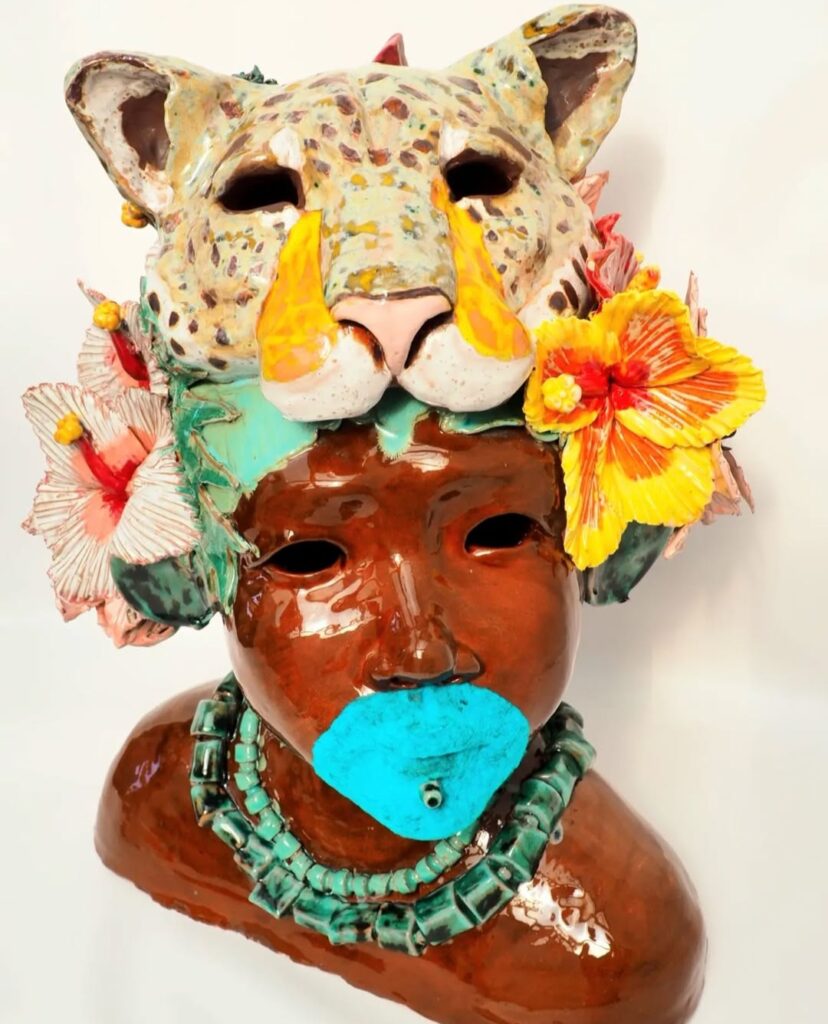
HYO (Natural red clay, molded without molds, single piece, double fired at 1050°C, glazed, with blue flocafo detail on the mouth)
For Sara, Nelson’s images function as a kind of living archive. Every detail of clothing, every chromatic nuance of the ornaments, and every posture captured by the British photographer’s large-format camera becomes a starting point for the creation of the elaborate headdresses that crown her busts. Drawing from these adornments, which reproduce regional costumes and cultural celebrations with near-ethnographic precision, the artist guides the viewer into a universe of fantastical vegetation, with flowers blooming from heads, vines wrapping around faces, and foliage emerging as extensions of thought.
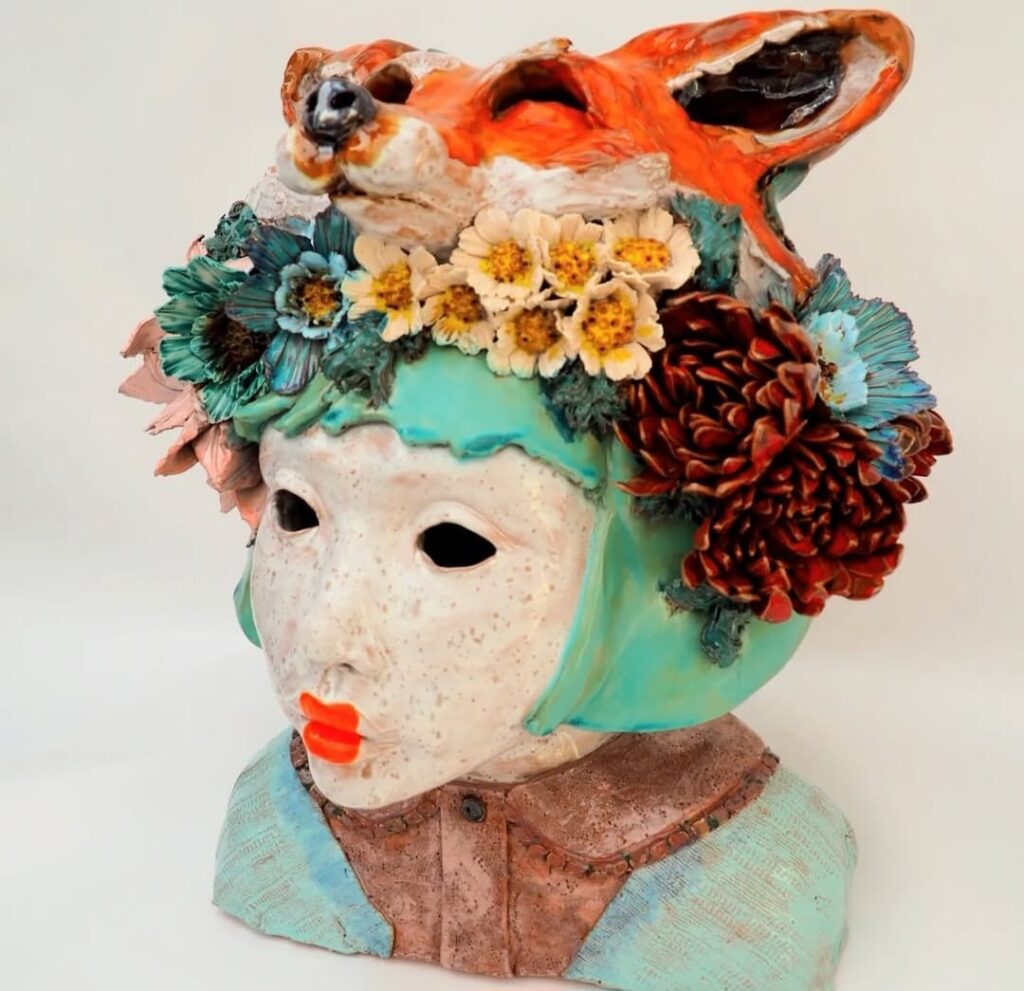
KITSUNE (Natural red clay modeled without molds, single piece, double fired at 1050°C, glazed)
Technique has kept pace with poetic ambition. Over the years, Sara has developed new glazes and incorporated fabric powder into the clay to create surfaces that mimic velvet, as well as making use of rat-tail cord, widely employed in Asian cultures to craft ornaments whose colors and shapes indicate the geographic origin of the wearer. Each element is conceived to compose a microcosm, a work that is at once a cultural document and an oneiric manifesto.
The result is a language that the artist herself defines as the fusion of Surrealism, where anything is possible within fantasy, and the Modernist style, never abandoning the figurative modeling that defines her. A body of work that began in the clay of Badalona and found in the world its most essential raw material.
Instagram: https://www.instagram.com/saraleon.art/