 Serpa
Serpa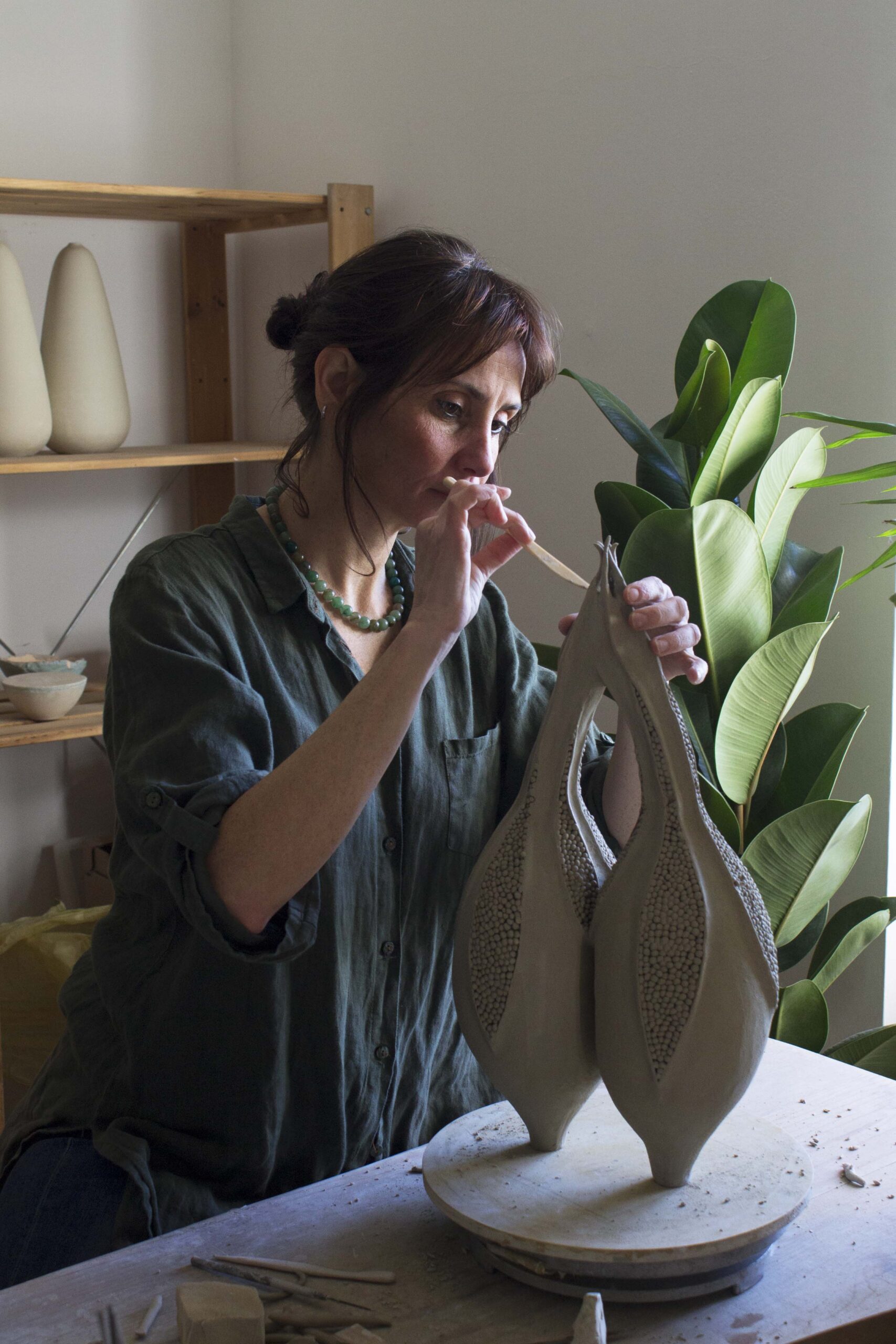
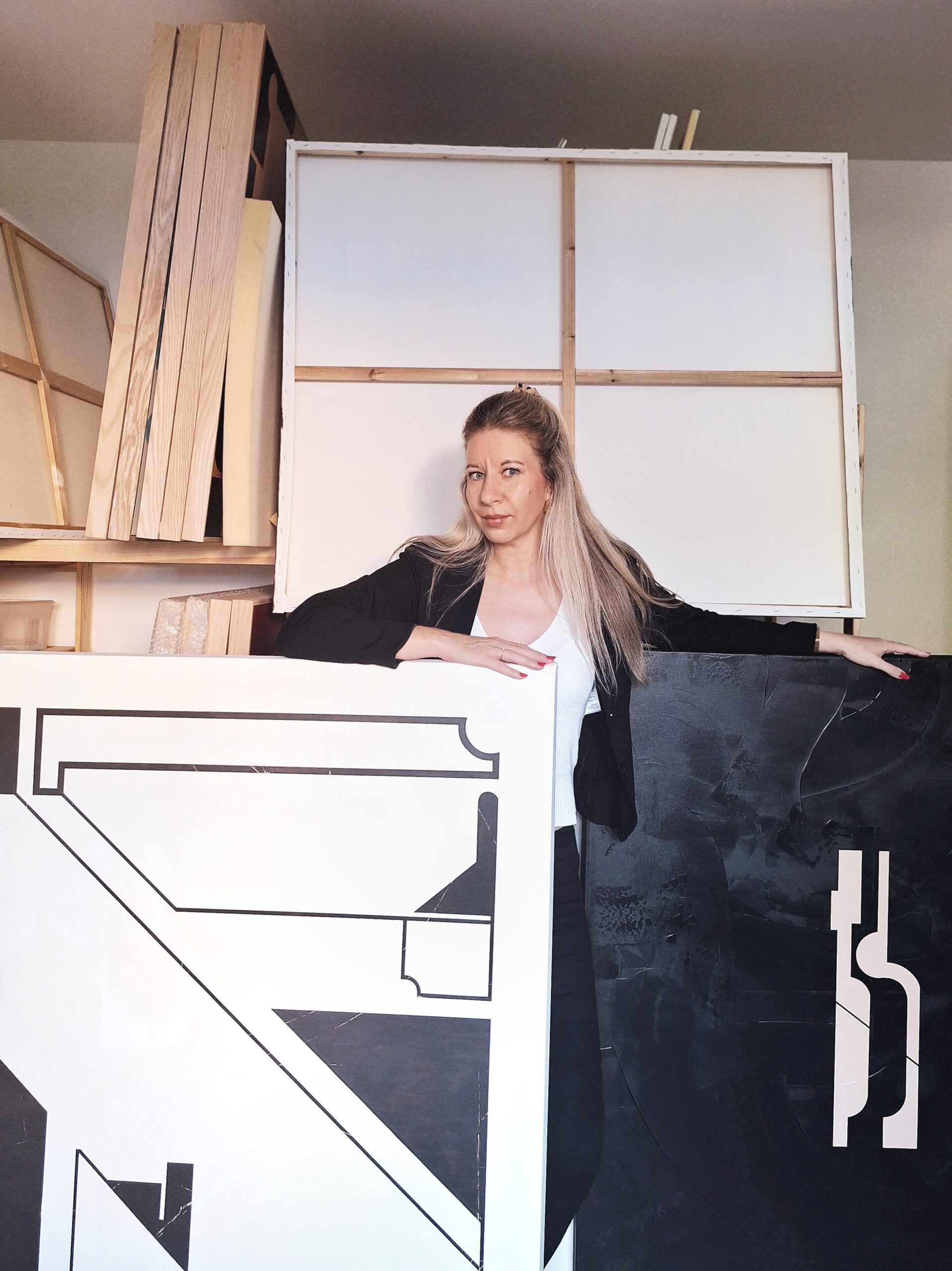
Maria Diletta Rondoni in her studio. Photo: courtesy of the artist
Maria Diletta Rondoni exhibits internationally and, in 2026, heads to Jingdezhen, the historic world capital of porcelain, in China
From the Editors
Maria Diletta Rondoni builds her pieces by hand, blends pigments directly into porcelain clay, and conceives each work as a living form, silent and charged with tension. The Italian ceramist, initially trained in painting at the Pietro Vannucci Academy of Fine Arts in Perugia and later specialized in ceramics and porcelain in the cities of Deruta and Faenza, has spent years developing a distinctive language rooted in intimate observation of nature. Through it, she creates presences that do not reproduce the natural world but internalize and reconfigure it. Her work has been steadily drawing attention from international art circles.
Rondoni’s work has been shown at major cultural venues around the world. In London, her pieces were featured at Collect Art Fair, held at Somerset House and presented by Cynthia Corbett Gallery, one of the world’s leading fairs for art objects and jewelry. In the United States, she exhibited at The Object Space in Atlanta. In Italy, her work was on view at the Museo della Ceramica di Grottaglie, one of the country’s most important spaces dedicated to ceramic art. She was also awarded Third Prize at the International Exhibition for Ceramic Artists at Museo Muda in Albissola Marina, an Italian city with deep historical ties to the twentieth-century avant-garde.
In Denmark, Rondoni worked at the Guldagergaard International Ceramic Center, one of Europe’s most respected ceramic research institutions, where she was first an artist-in-residence and later took on the roles of Studio Manager and Technician, actively contributing to an internationally renowned research environment. Her works are held in private collections across several countries and have been commissioned by European collectors.
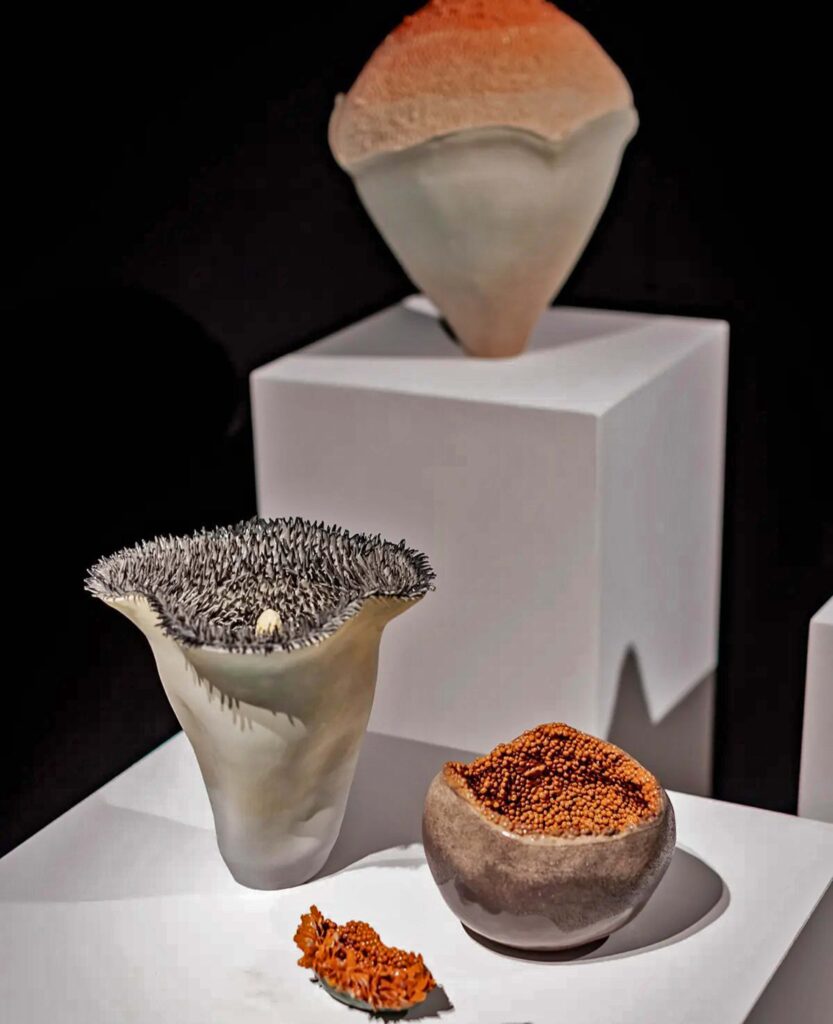
Works by Rondoni on view at exhibition. Photo: courtesy of the artist
China as the next horizon
In the summer of 2026, Rondoni will travel to Jingdezhen, China, the city regarded as the historic world capital of porcelain, where the art of working with this material has been cultivated for over a thousand years. There, at the Taoxichuan Ceramic Art Center, she will continue her current research into the chromatic potential of pigmented porcelain, in direct dialogue with one of humanity’s most profound and influential ceramic traditions. The residency marks a significant step in her career: the consolidation of an artistic investigation that increasingly points toward larger-scale forms and a more intense sensory and emotional engagement with the viewer.
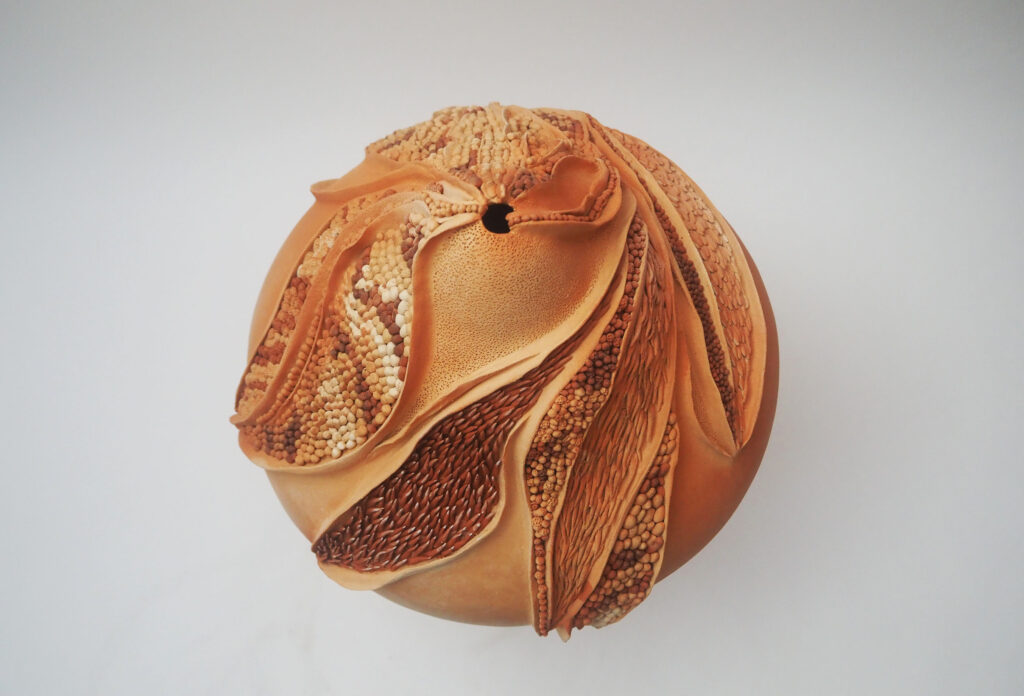
Red Seed — pigmented porcelain. Photo: courtesy of the artist
Her current research points toward what she describes as an expanded spatial dimension — works in which form, light, and presence come together to create immersive and contemplative experiences. The goal is not to produce decorative objects but to generate presences that shift the perception of the surrounding space, demanding from the viewer a pause, a silence, and a heightened attentiveness to time.
Color that comes from within
One of the most distinctive aspects of Rondoni’s work is her relationship with color. Unlike traditional ceramics, where glaze or pigment is applied to the surface of an already-formed piece, Rondoni integrates pigment directly into the porcelain body, blending different clays to achieve singular results. The outcome is a materiality in which color is not a coating but a substance: it exists inside the piece, permeated by light and responsive to its environment. Depending on how light strikes the surface, the forms reveal delicate tonal vibrations, making each work visually variable according to the space and time of day.
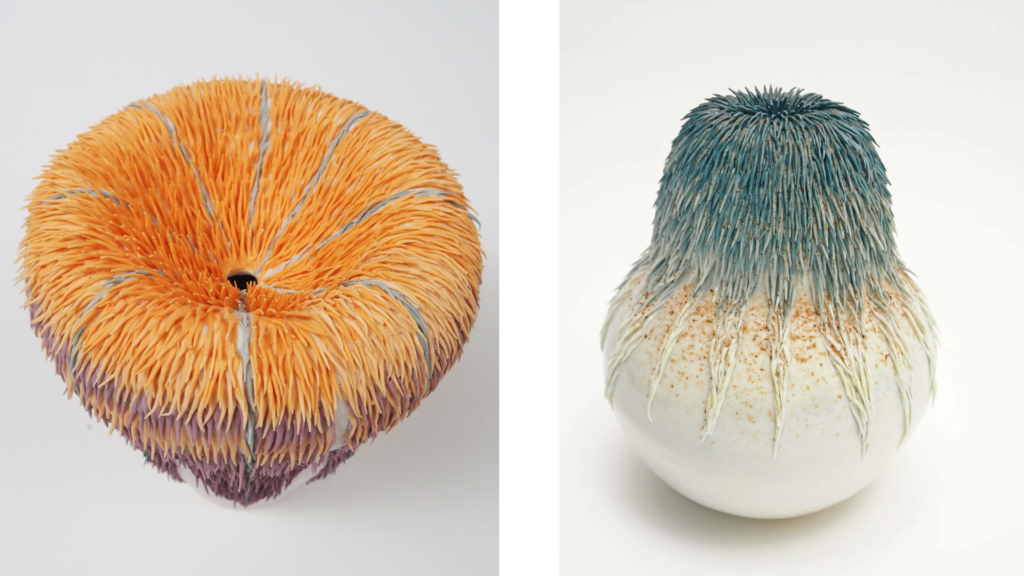
Starfish series — orange and blue pigmented porcelain. Photos: courtesy of the artist
The construction of her forms is equally distinctive. Rondoni works by hand at a slow and repetitive rhythm, which she conceives as a reflection of a simultaneous physical and emotional process. Each piece develops gradually through attentive, almost meditative touch. This temporal dimension, deliberately at odds with the accelerated pace of contemporary life, connects her practice to traditional female crafts such as weaving and embroidery, in which time, touch, and pattern together build a space for contemplation. For the artist, the repetitive gesture is not mechanical: it is a form of presence.
From painting to porcelain: a formation between traditions
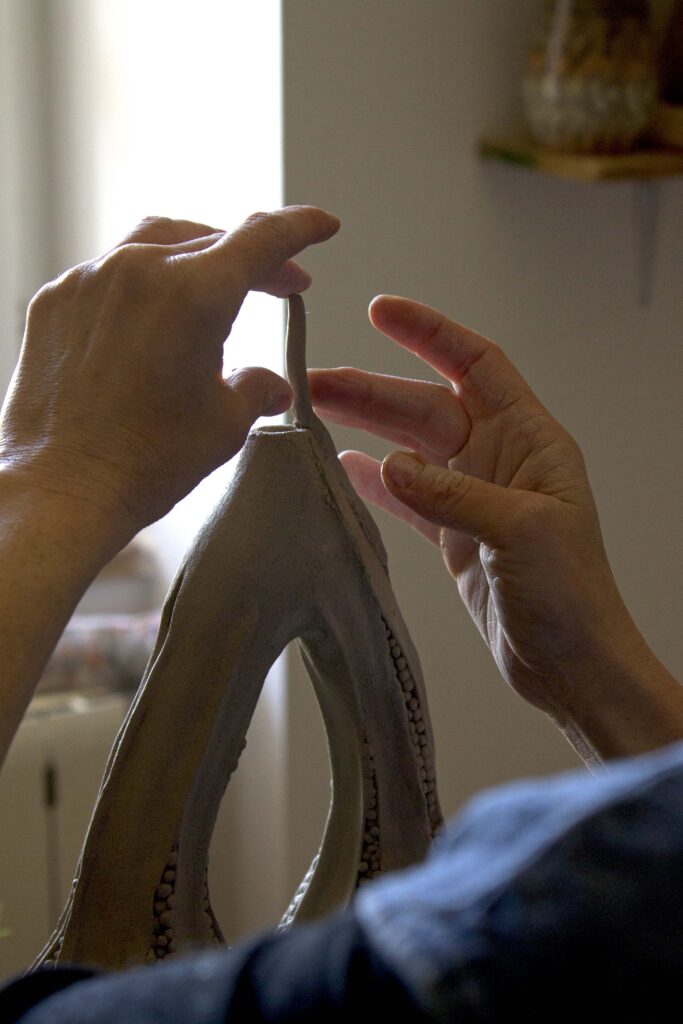
Hands shaping clay in the studio. Photo: courtesy of the artist
Rondoni’s path is defined by a passage between artistic languages that continues to prove generative. Before specializing in ceramics, she trained as a painter, and that legacy remains alive in her work today. The use of color as a vehicle for emotional intensity, the sensitivity to planes and surfaces, the attention to tonal gradation — all of it traces back to painterly thinking. Porcelain, however, introduced a new dimension, three-dimensional and tactile, that painting could not accommodate. Her decision to deepen her studies in Deruta, an Umbrian city with centuries of majolica tradition, and in Faenza, which gave its name to the faience technique itself, reveals an artist who chose to train at the living center of the very traditions she sought to master.
Nature is the permanent starting point of her research, though not as a model to be copied. What interests Rondoni are moments of transition: when growth is still contained, when fragility and strength coexist without one canceling the other. That is the tension she seeks to capture in each piece — the latent promise of what is yet to unfold, the energy of a form that has not yet found its definitive shape. Her sculptures are not portraits of nature; they are states of nature.
Collections and the international market
Rondoni’s international recognition is also reflected in the presence of her works in private collections across multiple countries. Commissions from European collectors confirm the interest of an audience that seeks, in contemporary ceramics, something beyond functionality or decorative craft: an art that questions the boundaries between object and sculpture, between the utilitarian and the contemplative. The fact that her pieces are acquired by private collectors, and not merely exhibited in museums, points to real and growing demand for her work in the art market.
In her creative process statement, Rondoni describes each piece as a living, quiet, self-contained presence that holds the tension of transformation. That framing is not merely poetic: it is programmatic. It defines the kind of experience the artist intends to offer anyone who stands before her work. This is not an art that shouts or startles through immediate visual impact. It is an art that asks for time, rewards lingering, and reveals its layers only to those who choose to stay.
In the broader landscape of international contemporary ceramics, Rondoni’s work occupies a precise position: a practice that surrenders neither technical rigor nor conceptual depth, one that knows where it came from and where it is going. The residency in Jingdezhen in 2026 will be one more chapter in the trajectory of an artist who has built, piece by piece, a singular voice in the visual arts.
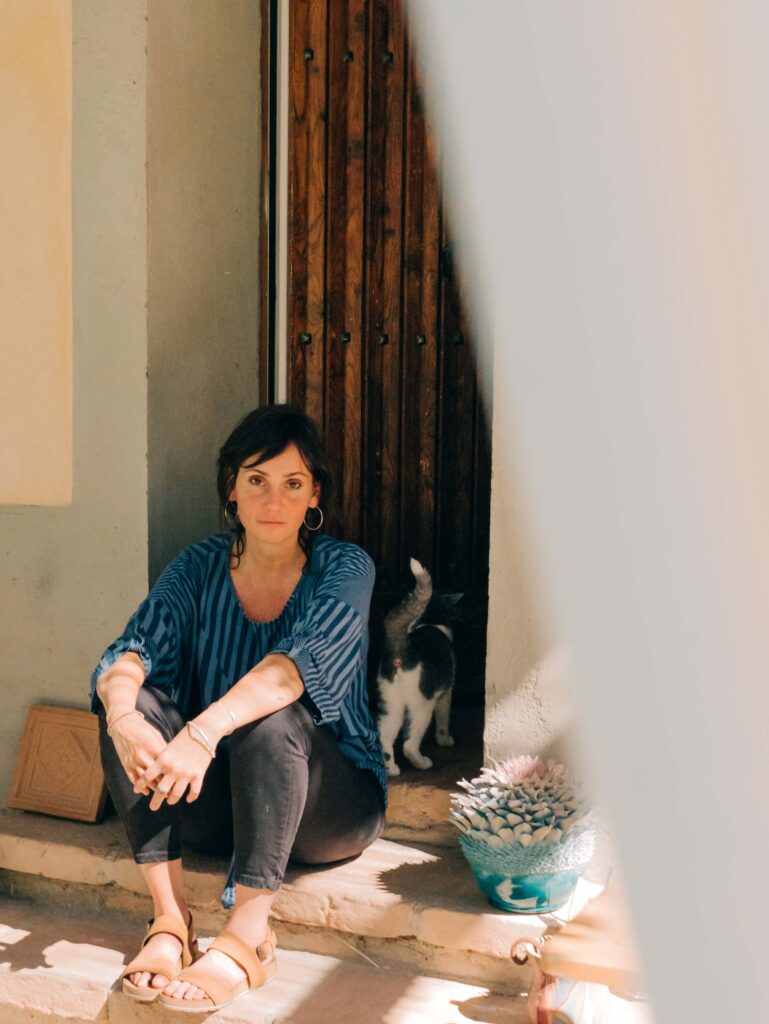
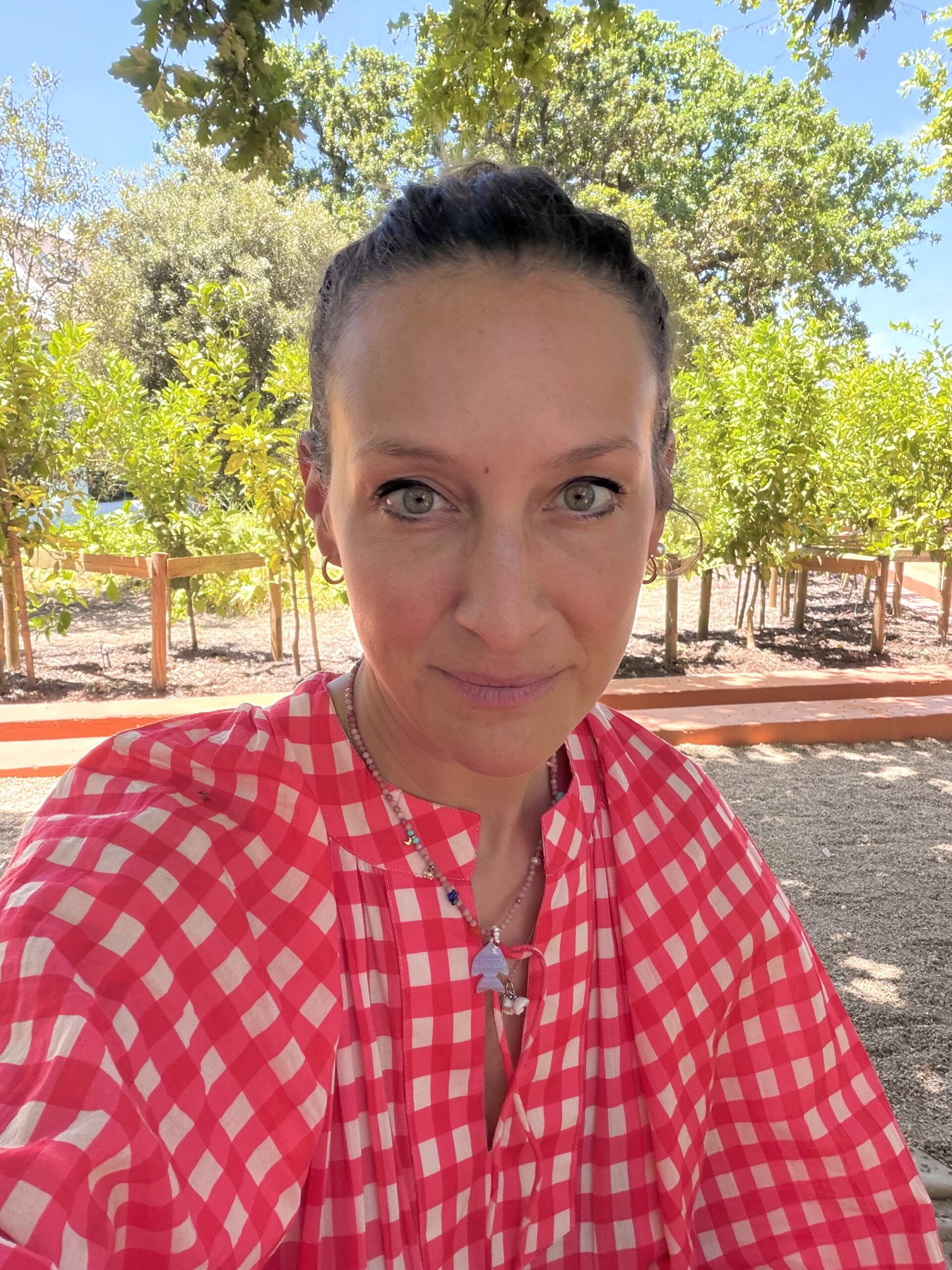
Maria Diletta Rondoni. Photo: courtesy of the artist
www.mariadilettarondoni.com | @mdilettarondoni