 Serpa
Serpa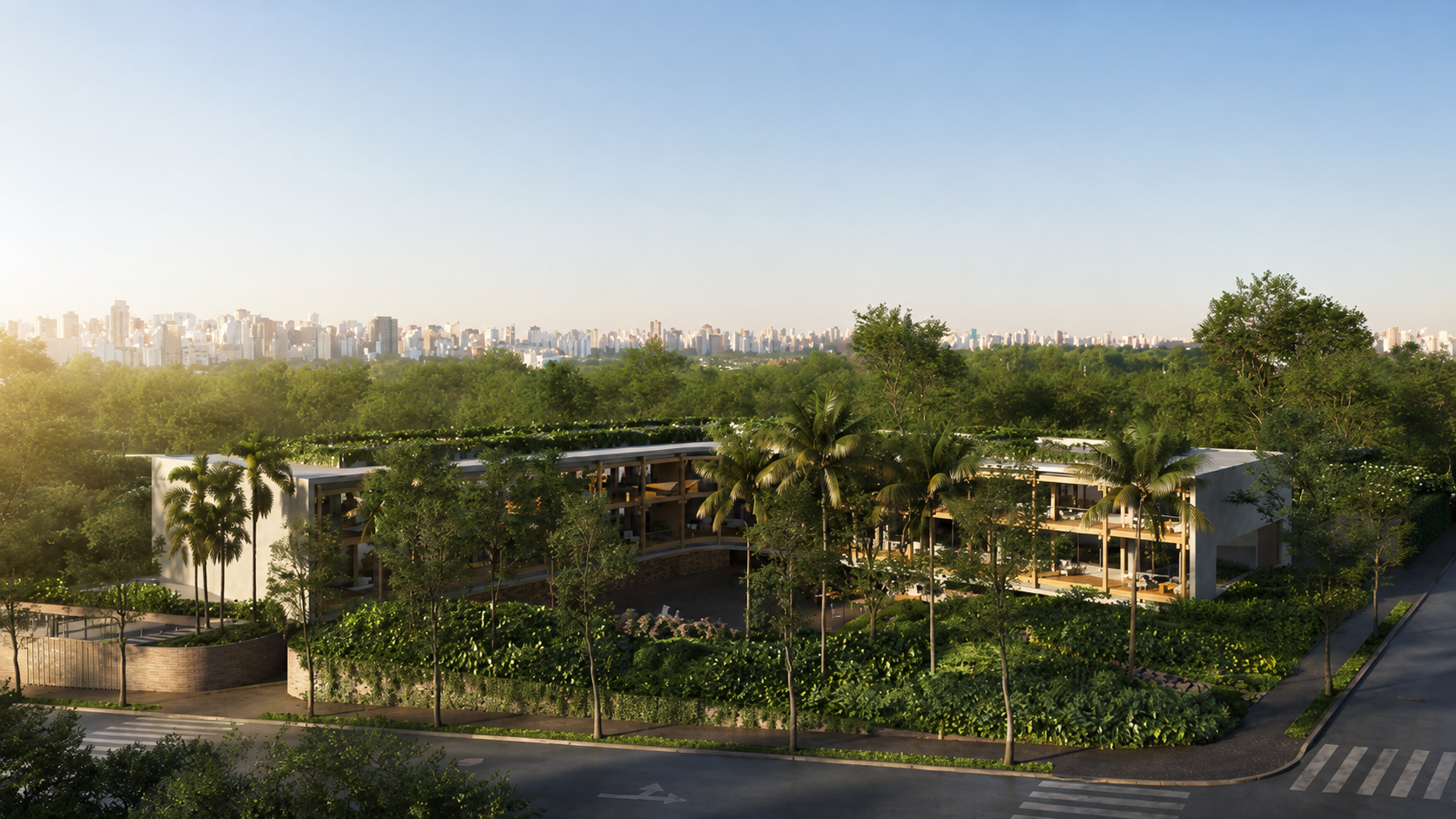
An aerial view of GABRIEL 1825, situated on Alameda Gabriel Monteiro da Silva. Architect Isay Weinfeld’s design strategy masterfully arranges the building’s three stories to carve out a 16,000-square-foot central plaza, seamlessly woven into the pedestrian flow. The project stands out for its sustainable, biodiversity-driven landscaping and a low-slung, horizontal silhouette that honors the surrounding residential scale while creating a fluid, harmonious transition.
An 86,000-square-foot development in Jardim Europa combines architecture, ecological restoration and a 16,000-square-foot public plaza in the heart of São Paulo.
SÃO PAULO, June 10, 2025 — Along Alameda Gabriel Monteiro da Silva, where the residential calm of Jardim Europa begins to intersect with the economic influence of the Faria Lima corridor, a new development proposes an alternative vision for contemporary workplace architecture.
Conceived by Idea!Zarvos, GABRIEL 1825 combines architecture by Isay Weinfeld with landscape design by Ricardo Cardim in a project that places public space and ecological restoration at the center of its strategy. Rather than positioning landscape as a secondary element, the development organizes its entire composition around a 16,000-square-foot public plaza and an internal woodland planted with native Atlantic Forest species.
Situated on a prominent corner site at the intersection of Alameda Gabriel Monteiro da Silva, Rua Mariana Corrêa and Rua Grécia, the project benefits from immediate proximity to one of Latin America’s most influential business districts while remaining embedded within a neighborhood known for its tree-lined streets, generous lots and distinctly residential character.
Balancing metropolitan intensity with neighborhood scale became one of the project’s defining design drivers. Instead of maximizing lot coverage, as is common in speculative office developments, the scheme dedicates a substantial portion of its footprint to open space, pedestrian circulation and landscape.
Surrounding this central void are seven office suites, three retail spaces and a sequence of terraces designed to extend workplace activity beyond enclosed interiors. Workplace environments range from 3,660 to 14,780 square feet, allowing the development to accommodate organizations with different operational structures and spatial requirements.
Generous outdoor areas, natural ventilation and flexible floor plates reflect broader transformations in workplace culture that have accelerated over the past decade. Increasingly, companies seek environments capable of supporting collaboration, well-being and organizational identity rather than merely providing efficient square footage.
Among the organizations previously attracted to Idea!Zarvos developments are Airbnb, Nubank, QuintoAndar, Le Cordon Bleu and Wieden+Kennedy, illustrating the profile of tenants that view architecture as a strategic business asset.
Weinfeld’s Urban Gesture
At the heart of the proposal lies a deceptively simple architectural move: positioning the building away from the busiest corner of the site.
Through an L-shaped massing strategy, Weinfeld creates a generous internal void that becomes the project’s defining public space. This gesture reverses the conventional logic of commercial development, where buildings typically extend toward property boundaries in pursuit of maximum floor area.
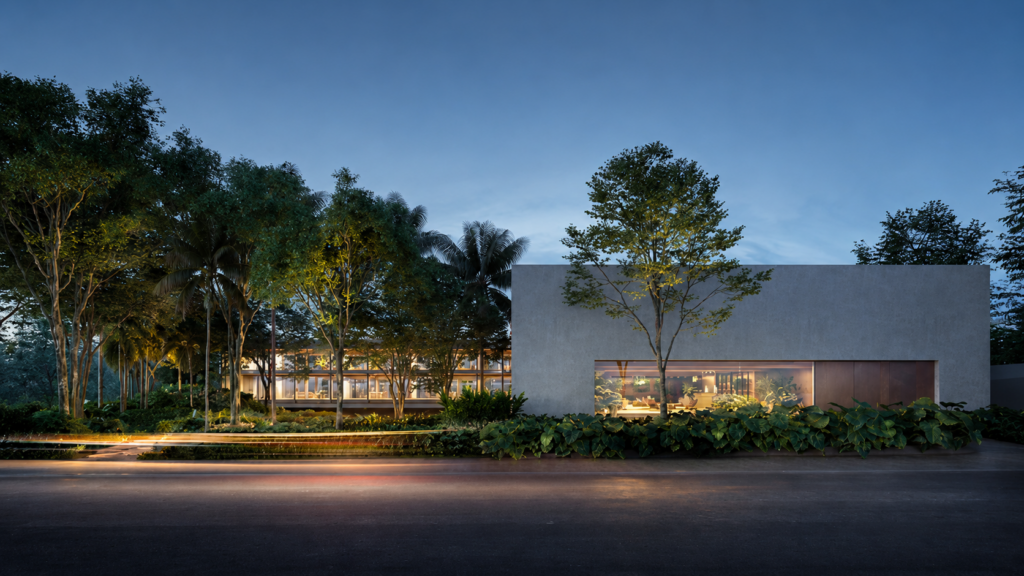
Where architecture meets ecology. The newest development by Idea!Zarvos integrates a pocket forest conceived by botanist Ricardo Cardim, introducing native Atlantic Forest species into the urban fabric. The result is a verdant sanctuary that enhances biodiversity, improves thermal comfort and redefines the relationship between city living and nature.
“The project is placed on the site in a way that preserves and enhances the exuberant existing vegetation, organizing its massing in an L-shape, away from the busiest corner. This strategy creates an expansive void that becomes a plaza open to the city, elevating the relationship between the building and the urban fabric,” said Weinfeld.
What results is less a conventional office complex than an urban framework structured around movement, landscape and civic presence. Pedestrian circulation flows naturally through the plaza, establishing visual and physical connections between the development and the surrounding neighborhood.
Forming the base of the composition, a brick-clad volume houses entrances and shared circulation areas while creating a tactile dialogue with the public realm. Above, two veranda-like levels project outward, reinforcing the sense of openness that defines the project.
Careful consideration of the site’s natural topography allows the design to incorporate multiple access points while preserving continuity along the sidewalk. One retail space benefits directly from the grade change, gaining an independent street presence without disrupting the overall composition.
Rarely employed at this scale within São Paulo’s office market, the engineered timber terraces wrapping portions of the upper floors introduce warmth and texture while referencing the legacy of Brazilian modern architecture. Combined with exposed brick and generous structural spans, the palette achieves a balance between sophistication and restraint.
Far from competing with its surroundings, the building seeks to strengthen them. Its architectural presence derives from spatial quality and urban generosity rather than visual spectacle.
Four Decades of Architectural Refinement
Over more than four decades of practice, Isay Weinfeld has built a body of work distinguished by precision, elegance and an unusual sensitivity to atmosphere.
Born in São Paulo in 1952 and educated at Mackenzie Presbyterian University, the architect has developed an international practice spanning residential, hospitality, cultural and commercial commissions. His projects frequently resist monumentality, relying instead on carefully calibrated proportions, material richness and subtle spatial sequencing.
Beyond architecture itself, Weinfeld’s background as a filmmaker has profoundly influenced his work. That experience informs an architectural approach in which movement becomes a design tool and spaces unfold gradually rather than revealing themselves all at once.
Throughout his body of work, boundaries between interior and exterior environments are intentionally blurred. Courtyards, gardens and expansive openings function not merely as aesthetic devices but as mediators between architecture and landscape.
Materiality also occupies a central role. Concrete, stone, timber and leather are deployed not for visual effect alone but for their capacity to create atmosphere and sensory depth.
Within GABRIEL 1825, those longstanding concerns are translated into a workplace environment that prioritizes comfort, permeability and human experience without sacrificing architectural rigor.
“I don’t want to stand out. I want to make something silent,” Weinfeld once remarked when describing his design philosophy.
Quietly integrated into its surroundings, the building demonstrates how architecture can enrich the city without overwhelming it — its identity derived from what it offers rather than what it demands.
Reintroducing the Atlantic Forest
While architecture establishes the project’s spatial framework, landscape gives it ecological meaning.
Guiding that effort is Ricardo Cardim, a landscape architect, researcher and advocate whose work has become closely associated with the reintroduction of native Brazilian ecosystems into urban environments.
Holding a master’s degree in botany from the University of São Paulo, Cardim has long argued that landscape architecture should operate as environmental infrastructure rather than decorative accompaniment. His projects seek to restore biodiversity, improve urban microclimates and reconnect cities with their original ecological conditions.
Here, that philosophy takes tangible form through the extensive use of Atlantic Forest species — vegetation native to the biome that once covered the region before centuries of urbanization transformed the landscape.
Extending across the development, the public plaza and internal woodland serve as the primary vehicles for this strategy. Together, they create an immersive experience of native vegetation rarely encountered in contemporary commercial developments.
“The landscaping at GABRIEL 1825 celebrates Brazilian biodiversity, with native Atlantic Forest species that, beyond representing Brazilian identity, contribute to climate resilience and urban ecological restoration,” said Cardim.
Recognized internationally for developing the concept of “pocket forests,” Cardim has spent years demonstrating how compact yet densely planted ecosystems can improve environmental performance within cities. In this project, that concept evolves into a larger intervention that functions simultaneously as habitat, cooling infrastructure and public amenity.
Extensive botanical research supports the design, focusing on identifying the species that historically occupied the region before deforestation. This resulting landscape is therefore not merely symbolic — it is grounded in ecological reconstruction.
With more than 400 completed projects and a substantial body of published research, Cardim has established himself as one of the leading voices in biodiversity-driven urbanism in Brazil. His participation lends the development an environmental rigor that extends far beyond contemporary sustainability rhetoric.
A Different Development Model
Supporting the project is a developer whose trajectory has consistently challenged prevailing conventions within Brazil’s real-estate market.
Established by Otavio Zarvos and today led alongside partner Luiz Felipe Carvalho, Idea!Zarvos has spent more than two decades commissioning original architectural works rather than relying on standardized development formulas. During that period, the company has completed forty residential and commercial buildings while maintaining another twenty-five projects in various stages of development.
Since its inception, design quality has been treated not as a marketing tool but as a central component of long-term value creation.
“From the beginning, we sought a project without walls, one that would open this landscape to the city. Together with Ricardo Cardim, we created a garden with native Atlantic Forest species capable of contributing to urban biodiversity and bringing people closer to nature,” said Zarvos.
Consistent with that philosophy, the developer’s portfolio has attracted a diverse mix of creative firms, technology companies, cultural institutions, educational organizations and entrepreneurial ventures seeking environments that offer more than conventional office space.
Three recurring themes underpin GABRIEL 1825 and reflect principles found throughout the company’s body of work: architectural quality, urban responsibility and respect for context. Each is expressed through concrete decisions rather than symbolic gestures.
Acting simultaneously as architectural elements, environmental infrastructure and public contributions to the neighborhood, the plaza, woodland and engineered timber structure embody those ambitions in built form.
Architecture for Contemporary Work
Arriving at a moment when organizations worldwide are reconsidering the purpose of the office, GABRIEL 1825 reflects a broader transformation in workplace culture.
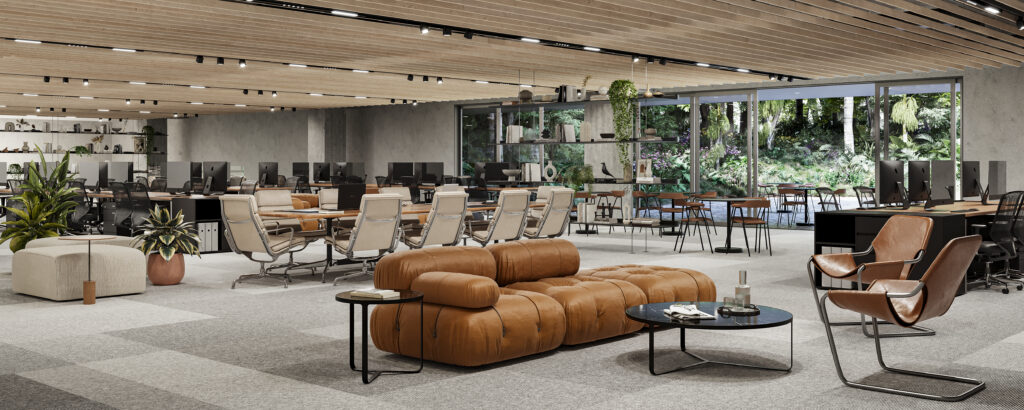
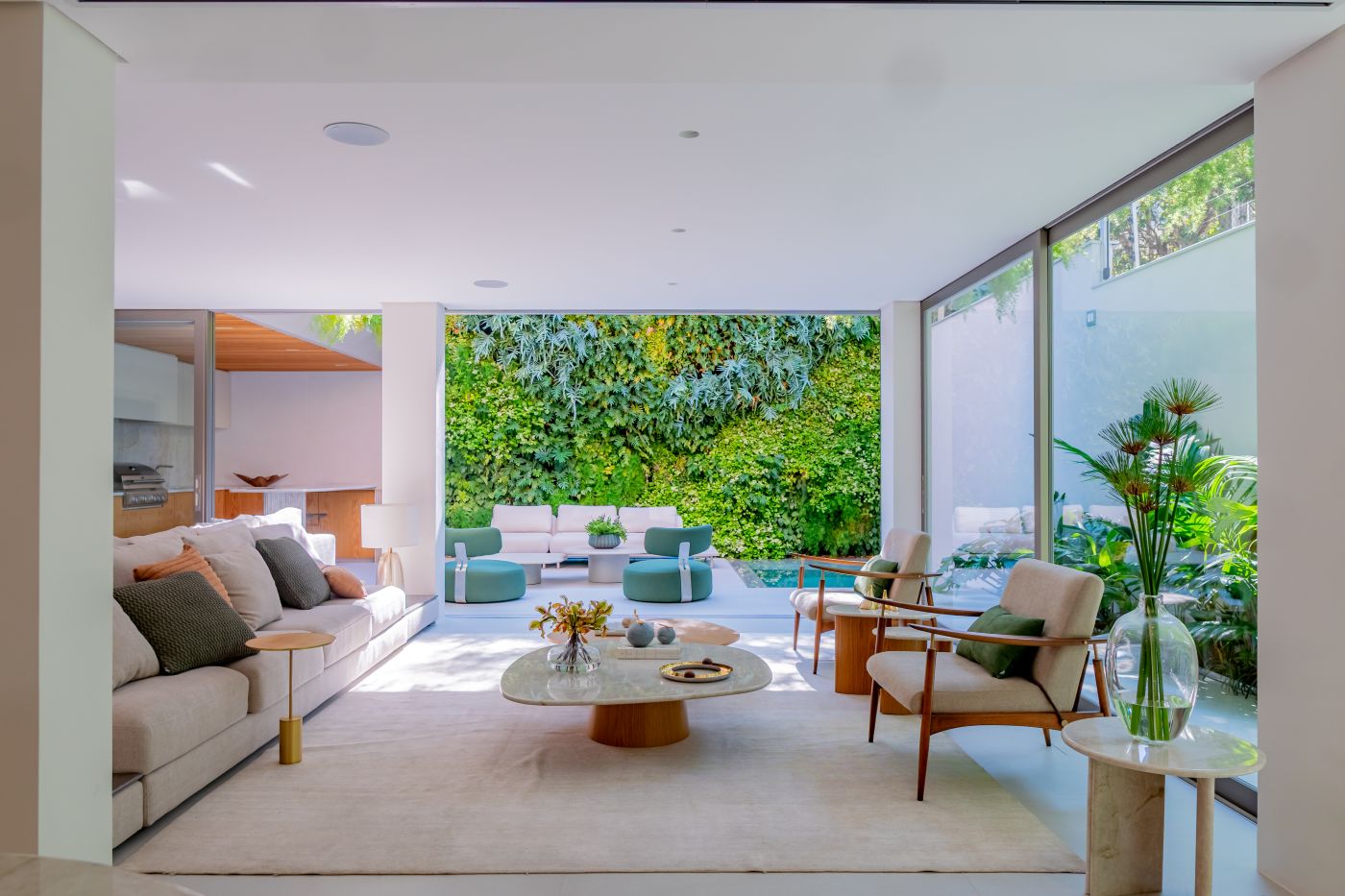
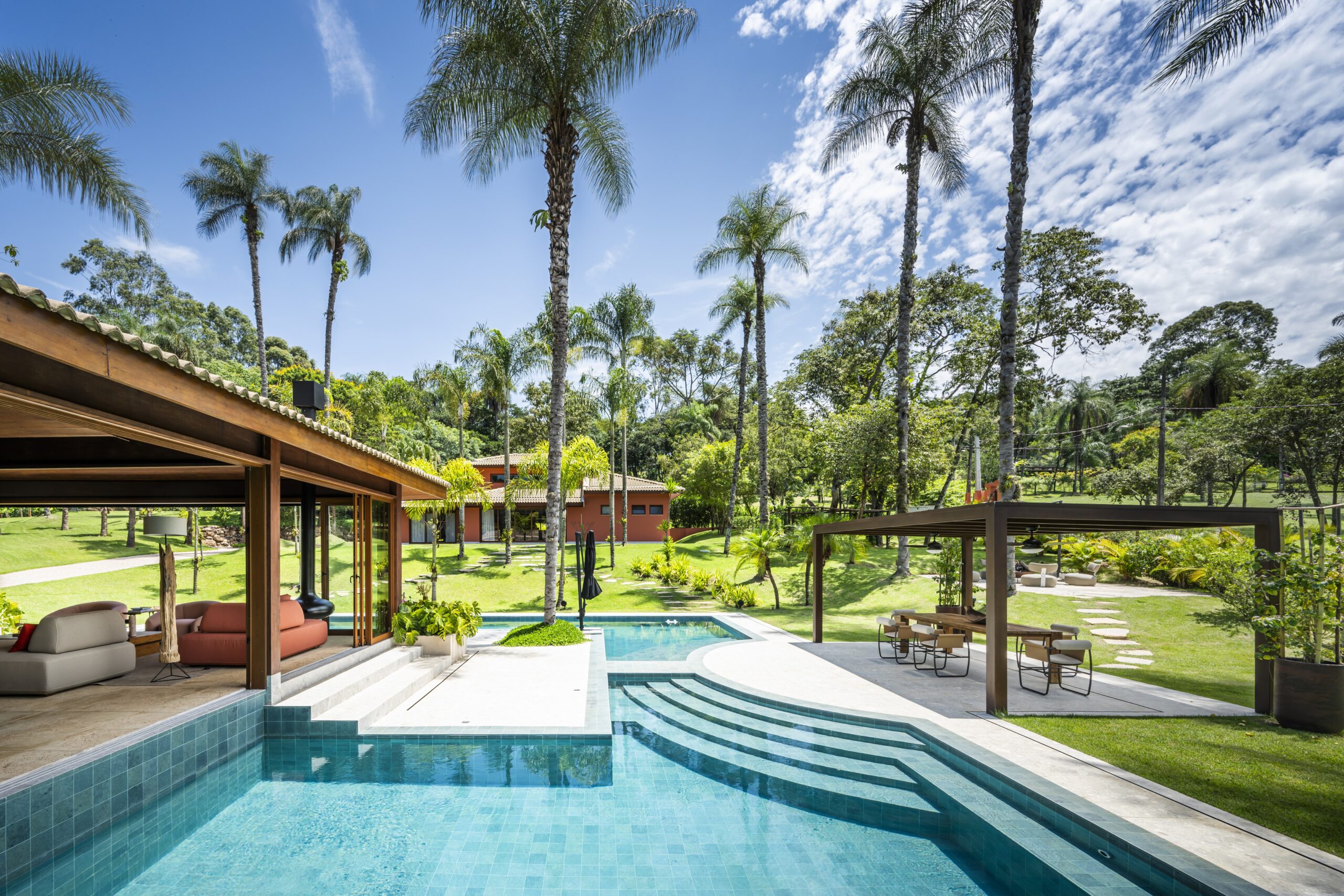
Designed for adaptability, the office floors at GABRIEL 1825 span from 340 to 1,374 sq m, accommodating a wide range of workplace configurations. A palette of timber, leather and tactile natural materials softens the corporate setting, drawing cues from the refined residential scale of Jardim Europa. Floor-to-ceiling glazing extends the workspace towards courtyards and gardens, reinforcing a fluid relationship between indoors and out.
Recent years accelerated trends that had already begun reshaping expectations around professional environments. As hybrid work models became increasingly common, companies faced a new challenge: creating spaces compelling enough to justify the daily commute.
Elements once considered secondary — access to daylight, natural ventilation, outdoor space and architectural identity — have become central components of workplace decision-making. Employers increasingly view physical environments not merely as operational assets but as tools for attracting talent, fostering collaboration and strengthening organizational culture.
Addressing these shifts, the project places human experience at the forefront of its design strategy. Large terraces, generous openings and strong visual connections to landscape contribute to an atmosphere more closely aligned with hospitality and residential architecture than with the conventional office tower.
Flexibility embedded within the floor plans plays an equally important role. Different workplace models can coexist within the development, allowing occupants to tailor spaces according to changing organizational needs.
Deep penetration of natural light, combined with cross-ventilation and direct access to outdoor areas, supports healthier and more comfortable daily routines.
More than an amenity, the central plaza functions as an extension of the professional environment itself. Informal encounters, spontaneous conversations and moments of pause occur within a setting intentionally designed to encourage interaction without imposing it.
Research spanning decades in management and innovation has demonstrated the value of these incidental exchanges in generating ideas, strengthening social bonds and reinforcing institutional culture. Spatial organization within GABRIEL 1825 acknowledges those findings by creating environments where collaboration emerges naturally rather than through prescribed programming.
Jardim Europa and the Expanding Business District
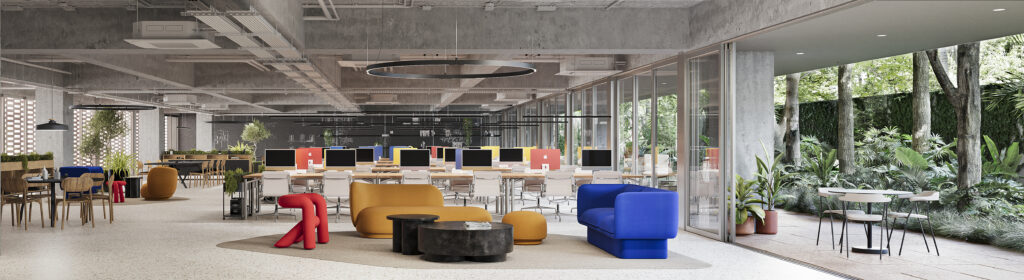
At GABRIEL 1825, Isay Weinfeld reimagines the workplace as an open, light-filled landscape. Generous spans and flexible layouts are complemented by retractable glass façades that establish uninterrupted views towards Ricardo Cardim’s lush Atlantic Forest planting. The interplay of exposed concrete, custom-designed furnishings and natural greenery creates a contemporary setting that balances productivity, wellbeing and architectural clarity.
Few of São Paulo’s neighborhoods embody the tension between preservation and transformation as clearly as Jardim Europa.
Defined by tree-lined streets, generous residential lots and a comparatively tranquil atmosphere, the district has long maintained a distinct identity within an increasingly dense metropolis. Yet its proximity to Avenida Faria Lima and the Itaim Bibi business district has subjected it to growing development pressures.
Addressing that condition became one of the project’s central urban challenges.
Rather than adopting the vertical expression typically associated with commercial expansion, GABRIEL 1825 embraces a lower and more horizontally distributed form. This decision allows the development to accommodate workplace demand while remaining sensitive to the scale and character of its surroundings.
Landscape architecture plays a critical role in that strategy. Native vegetation extends the visual continuity of the neighborhood’s tree canopy, while the open plaza establishes a more generous relationship with the public realm than is commonly found in contemporary office developments.
Equally important is the decision to prioritize permeability over enclosure. Instead of creating a defensive object isolated from its context, the project invites movement through and around the site, reinforcing connections between architecture, landscape and street life.
Framing the central open space through an L-shaped building configuration further strengthens that urban ambition. By stepping away from the property’s edges, the development generates a meaningful civic gesture within an area increasingly shaped by real-estate intensification.
For a neighborhood whose appeal derives largely from environmental quality and human scale, such decisions carry significance well beyond architectural form.
Legacy and Outlook
Seen within the broader trajectory of São Paulo’s urban development, GABRIEL 1825 represents more than the addition of another commercial address.
Combining architecture by Isay Weinfeld, landscape design by Ricardo Cardim and the long-term vision of Idea!Zarvos, the project proposes a different understanding of value within contemporary real estate.
Measuring success solely through density or leasable area is a framework the development deliberately refuses. It invests instead in qualities that are more difficult to quantify yet increasingly important to cities: public space, environmental performance, architectural character and long-term urban contribution.
Especially noteworthy is the convergence of two disciplines that are often treated separately. In this case, architecture and landscape operate as components of a single system, each reinforcing the ambitions of the other.
Weinfeld’s architecture creates opportunities for openness, permeability and collective use. Cardim’s landscape strategy restores ecological relationships that urbanization has largely erased. Together, these approaches produce a level of coherence rarely achieved in large-scale commercial developments.
Running deeper, the project advances a broader argument about the future of cities. As climate concerns intensify and expectations surrounding workplace environments continue to evolve, developments capable of integrating environmental responsibility with architectural quality are likely to become increasingly relevant.
Against that backdrop, GABRIEL 1825 offers a compelling case study. A public plaza, native woodland and carefully calibrated architectural presence replace the more familiar formulas of maximum occupation and visual spectacle.
Ultimately, the project’s significance lies not in its size but in the quality of the relationships it establishes — between building and landscape, private enterprise and public space, contemporary work and urban life.
Grounded in its surroundings while looking toward the future, GABRIEL 1825 demonstrates how commercial development can contribute meaningfully to the city rather than simply occupy it.
TECHNICAL DATA
Project: GABRIEL 1825
Developer: Idea!Zarvos
Architecture: Isay Weinfeld
Landscape Architecture: Ricardo Cardim
Location: Alameda Gabriel Monteiro da Silva, 1825, Jardim Europa, São Paulo, Brazil
Gross Floor Area: 86,000 sq. ft.
Public Plaza: 16,000 sq. ft.
Floors: 3
Office Suites: 7 (3,660–14,780 sq. ft.)
Retail Spaces: 3
ARCH GALLERY & DESIGN MAGAZINE
ISSN 3086-4267
Published by ARCH Gallery & Design
archgallerydesign.art.br